Why Nature Has Never Evolved a Wheel
Wheels are mechanically simpler than eyes, yet evolution produced the eye in roughly 400,000 years while never producing a wheel in over 500 million years of animal evolution. This article explores the five fundamental biological barriers that make wheeled locomotion almost impossible to evolve.
I rarely write articles prompted by reader comments, but occasionally someone says something in the discussion thread that deserves a full treatment. In response to a piece about animal locomotion, user @idimus observed: "I haven't seen any animal with a wheel as part of it." This observation sparked a cascade of discussion. Let me give it the space it deserves.
The thesis: in living nature, the wheel is absent, and rolling as a mode of locomotion occurs extremely rarely and almost never becomes established through convergent evolution. This is not an accident. There are deep structural reasons for it.
When Did Humans Invent the Wheel?
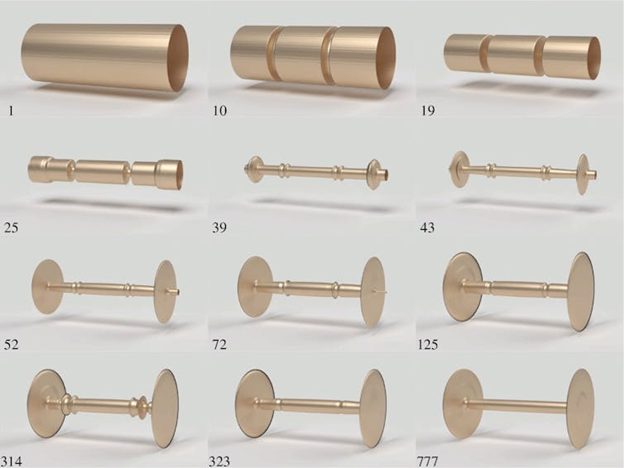
A 2024 computer simulation study from the United States suggests the wheel was independently invented around 6000 BCE, most likely by miners transporting ore. The evolutionary pathway of human wheel technology appears to have been: shaft → disc → wheel, with each stage providing incremental practical benefit. This matters because it shows that even for a hyper-intelligent, tool-using species with deliberate intention, the wheel took hundreds of thousands of years of prior technological development to arrive at.
Animals That Roll — Almost
Nature is not entirely without rolling motion. A small number of animals use it defensively or occasionally for locomotion:
- Armadillos — curl into a ball as a defense mechanism, occasionally roll downhill
- Certain caterpillars and beetle larvae — curl and roll to escape predators
- Mantis shrimp — some species roll along the seafloor
- California mountain salamanders — documented rolling down slopes to escape
- Ancient trilobites — fossil evidence suggests some species could roll up, possibly for defense
Plants are more interesting. Tumbleweed — the dispersal strategy of rolling across arid landscapes — has evolved independently in seven separate plant families. This is significant: it proves that rolling as a locomotion strategy is ecologically viable in specific environments. Seven independent evolutions is the signature of genuine adaptive advantage.
And yet no animal has evolved a true wheel. Why?
Five Evolutionary Barriers to the Wheel
1. The Developmental Cost Problem
Any organism evolving wheel-like appendages must pass through intermediate stages where those appendages are partially formed. During this period, the organism sacrifices the full function of its existing locomotion system — legs, fins, or whatever it has — while gaining essentially nothing from the proto-wheel, which cannot yet roll effectively.
For bilateral symmetry to be maintained (necessary for straight-line movement), you would need not just one pair of wheels but ideally two pairs — meaning the developmental cost is multiplied. Juveniles in the proto-wheel stage would be particularly vulnerable. Natural selection would eliminate these organisms before the wheel could become functional.
2. The Immediate Survival Advantage Requirement
Evolution does not plan ahead. Every intermediate stage of an evolving structure must provide some immediate survival or reproductive advantage — or at minimum must not reduce fitness — or it will be selected against.
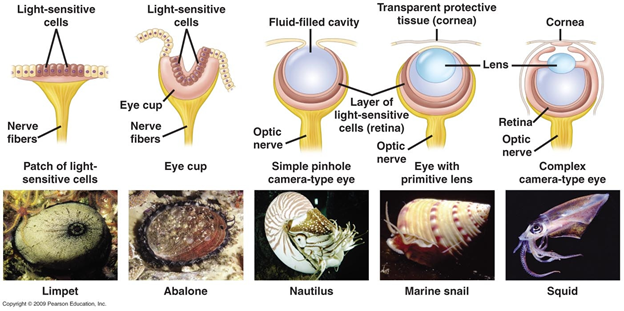
A partially-formed wheel is worse than a leg. A leg that has partially transformed toward a wheel is worse than either. The transition through the valley of reduced fitness is the core problem. Eyes can avoid this because a simple light-sensitive patch — the very first proto-eye — already provides useful information. There is no analogous "proto-wheel" that provides immediate benefit.
3. The Symmetry Requirement
For a wheeled animal to move in a straight line, its wheels must be of nearly identical diameter. A difference of even a few percent would cause the animal to drift in circles — fatal in most ecological contexts. This imposes an extraordinarily tight constraint on bilateral development. Limbs can tolerate much greater asymmetry.
4. The Multi-functionality Requirement
Successful anatomical structures in nature almost always serve multiple purposes. Wings in bats enable flight but also allow vertical climbing. Fins in dolphins provide propulsion but also temperature regulation. Mammalian forelimbs serve locomotion, grasping, digging, and social interaction.
What would a biological wheel do besides roll on flat ground? It cannot dig. It cannot grasp. It cannot climb. It cannot groom. It cannot fight. The wheel is a highly specialized, single-function structure — and evolution strongly disfavors structures with only one use.
5. The Metabolism-Rotation Paradox
This is the deepest barrier, and it is a genuinely hard physical problem. A wheel must rotate freely around its axle — yet for a biological organism, the wheel is living tissue that requires continuous metabolic exchange: blood supply, nerve signals, muscle attachments.
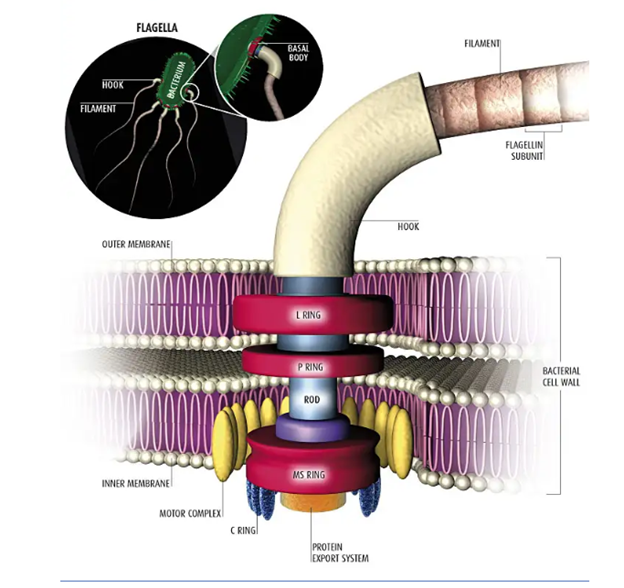
Consider what rotation implies: every revolution, any blood vessel, nerve, or muscle running from the axle to the wheel would be twisted by 360 degrees. After a few revolutions, these tissues would be destroyed. There is no biological mechanism that allows unlimited free rotation while maintaining vascular and neural continuity. Even the bacterial flagellum — which does rotate — does so using an ion-gradient motor with no direct physical connection between the rotating and stationary parts, a mechanism that cannot scale to multicellular tissue.

Eyes vs. Wheels: Irreducible Complexity Inverted
The comparison to eyes is instructive. Eyes appear vastly more complex than wheels. A vertebrate eye contains photoreceptors, a lens, a cornea, an iris, extraocular muscles, a retina with multiple cell layers, an optic nerve, and extensive vascular supply. Wheels, by comparison, seem trivially simple: a disc rotating on an axle.
Yet evolution produced the vertebrate eye from a flat patch of light-sensitive cells in approximately 400,000 years — an evolutionary eyeblink. The key is that every intermediate stage is useful. A flat photoreceptor patch detects light versus dark — useful. A slightly cupped patch gives directional information — more useful. A pinhole provides coarse imaging — useful. Each improvement gives an immediate survival benefit.
The wheel exhibits what could be called functional irreducible complexity in the opposite direction from how that phrase is usually misused: a wheel that is slightly too small, slightly warped, or whose axle is slightly misaligned does not work a little bit worse than a perfect wheel — it works catastrophically worse than a leg. The fitness function has a cliff, not a slope.
The Bacterial Flagellum: Nature's Only Wheel
The bacterial flagellum is the single true rotational structure that evolution has produced. It is driven by a proton-motive force — effectively a molecular turbine powered by ion gradients across the cell membrane. The hook protein creates a universal joint between the motor and the filament. This is genuine rotation, not reciprocating motion.
But it is completely irrelevant to the macroscopic wheel problem. It operates in liquid, where the physics of friction and viscosity are entirely different from terrestrial locomotion. It involves no living tissue in the rotating component — the flagellar filament is extracellular protein. And it generates thrust through drag in a viscous medium, not traction on a solid surface. Flagellar rotation cannot be scaled up.
The Environment That Would Be Needed
For wheeled organisms to evolve at all, they would need a very specific ecological niche — and it would have to persist for millions of years to allow selection to operate:
- Maximally flat terrain — any obstacle larger than the wheel radius is impassable, especially for juveniles with smaller, still-developing wheels
- Extremely arid conditions — any moisture creates mud that stops wheels; a single rain event is catastrophic
- Minimal vegetation — even grass creates enough resistance to eliminate the wheel's speed advantage
- No flooding, no landslides, no erosion — the terrain must remain stable over geological timescales
The Salar de Uyuni in Bolivia comes closest to meeting these requirements. It is almost perfectly flat, extremely dry, and largely free of obstacles. But even there, seasonal flooding covers the surface with a thin layer of water. And "almost flat" is not flat enough for a wheel without roads.
The Infrastructure Problem
This is the final and perhaps most elegant observation. The wheel does not just require flat ground — it requires roads. Specifically, roads that lead somewhere useful rather than ending in swamps or cliffs.
Humans built roads before they built wheels for transportation (or nearly simultaneously). The wheel and the road are a co-dependent technology pair. Roads are infrastructure — they require intentional construction, maintenance, and planning. Evolution cannot build infrastructure. Natural selection operates on individual organisms in their current environment; it cannot modify the environment to make a new body plan viable.
As Richard Dawkins wrote, "the watchmaker is blind." We might extend this: the watchmaker is not merely blind but uninventive and forgetful. Evolution cannot conceive of a wheel-and-road system as an integrated solution and work toward it. It can only favor what works right now, on the terrain that exists right now.
Conclusion
The wheel is absent from biology not because evolution is limited or slow, but because the wheel faces a unique combination of problems that other complex structures — including the eye — do not face: no useful intermediate stages, a catastrophic fitness cliff, the metabolism-rotation paradox, the infrastructure dependency, and the near-impossibility of finding a stable multi-million-year flat-terrain niche.
When humans invented the wheel around 6000 BCE, it required metallurgy, engineered pathways, domesticated draft animals, and deliberate abstract reasoning about mechanical principles. None of those prerequisites are available to natural selection. The wheel is perhaps the purest example of a technology that required intelligence to exist — not because it is complicated, but because it requires context that evolution cannot create.