Why Is the Mouse Cursor Tilted at 45 Degrees?
A visitor on StackExchange asked a seemingly silly question: why are all cursors in every operating system slightly crooked? The answer traces back to Xerox PARC and the pixel limitations of early displays.
A visitor to the Q&A site StackExchange asked a seemingly silly question: why are all cursors in every operating system slightly "crooked" — that is, tilted at a certain angle instead of pointing straight up? Indeed, why isn't the cursor positioned vertically, since that would be the most convenient for selecting text and other tasks?
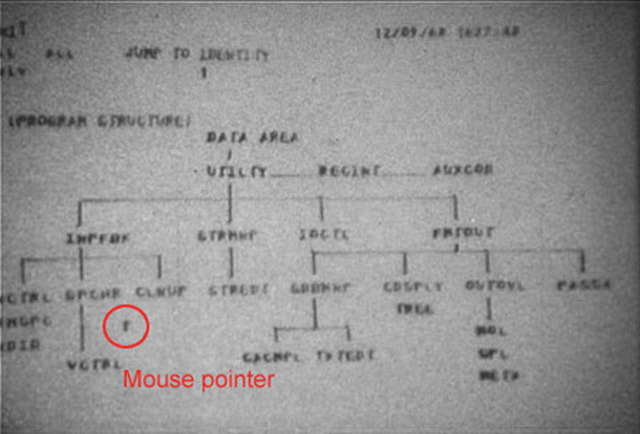
The answer comes from an expert well-versed in the history of computing. He confirms that the inventor of the mouse, Douglas Engelbart, did indeed depict the cursor as an upward-pointing arrow, as the most logical option for selection (see the screenshot above).
However, the graphical user interface was first practically implemented by Xerox — specifically, its research division, the Palo Alto Research Center. In particular, the cursor is described in a document from 1981 that lists the characteristics of the XEROX PARC, the first computer in history with a graphical user interface.
During the design of this machine, it was discovered that due to the low resolution of displays at the time, it was impossible to create a normal small-sized vertical cursor out of pixels. The decision was made not to increase the pointer's size, but instead to tilt it slightly so that one edge was vertical and the other angled at 45 degrees.
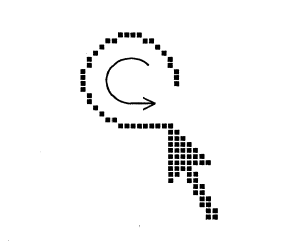
Image from the Palo Alto Research Center documentation
More than 30 years have passed, high-resolution displays have appeared, but the tradition of depicting the cursor tilted at 45 degrees has survived.
FAQ
What is this article about in one sentence?
This article explains the core idea in practical terms and focuses on what you can apply in real work.
Who is this article for?
It is written for engineers, technical leaders, and curious readers who want a clear, implementation-focused explanation.
What should I read next?
Use the related articles below to continue with closely connected topics and concrete examples.