Why Is a Bullet Round but the Hole Square?
When a spherical projectile hits kevlar fabric at cosmic velocities, the resulting hole is square — a counterintuitive phenomenon explained by Rakhmatulin waves and the anisotropic mechanics of woven fibers.

"Why is a bullet round but the hole square?" This isn't exactly a question that worries many people regularly. Nevertheless, it sometimes arises, and the farther we venture into space, the more often we must answer even the most unexpected questions.
Space Is Not Empty
Looking at the surfaces of the Moon and Mars is enough to understand what happens without atmospheric protection. Satellites and space stations face constant bombardment from rocky debris and micrometeoroids traveling at speeds comparable to orbital velocity — approximately 10 kilometers per second.
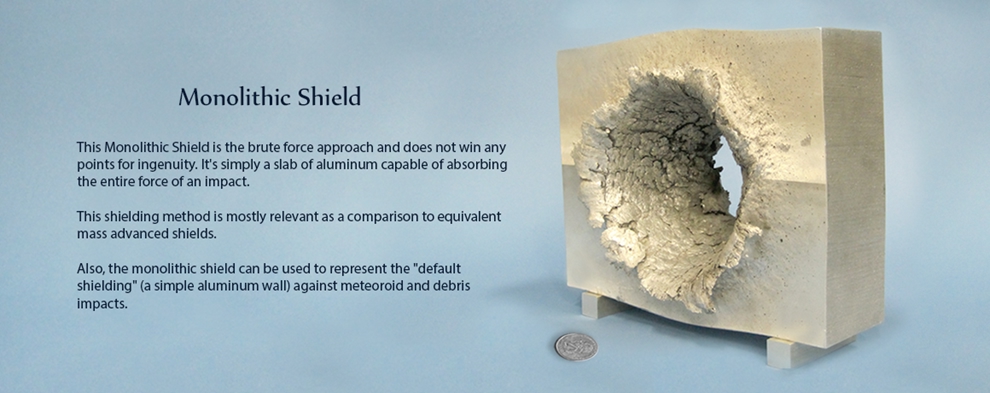
Traditional armor — thick aluminum or steel layers — proves prohibitively expensive when you consider launch costs of roughly $20,000 per kilogram to orbit. Every extra gram of shielding means less payload for actual mission equipment.
The Whipple Shield
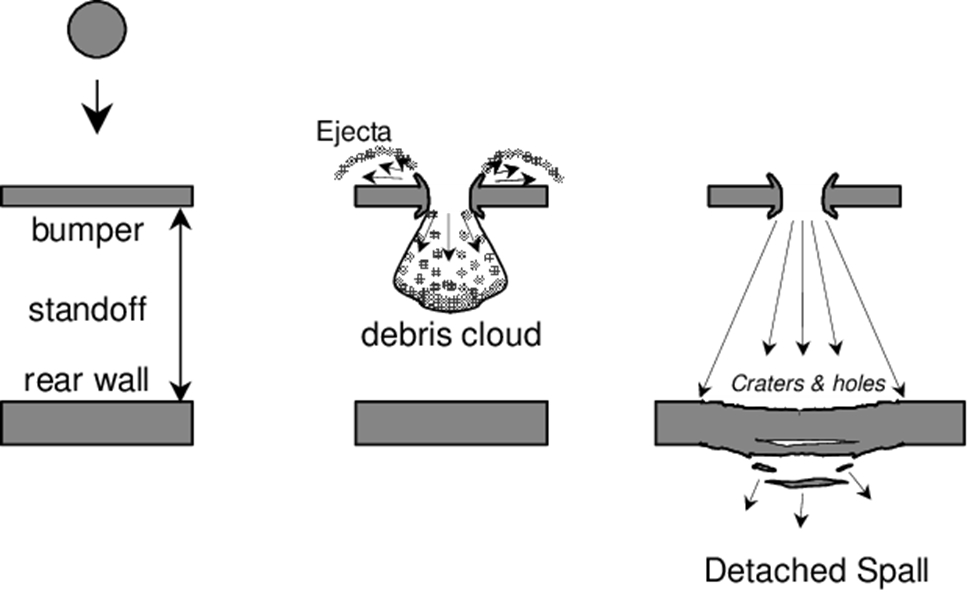
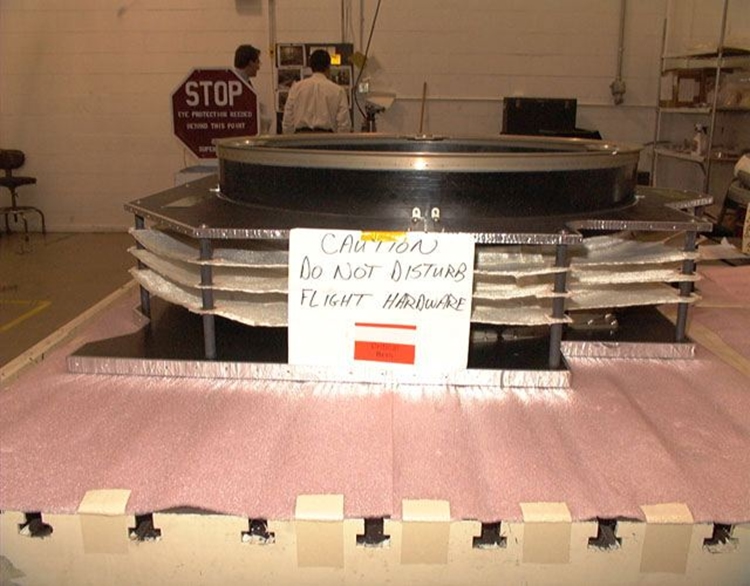
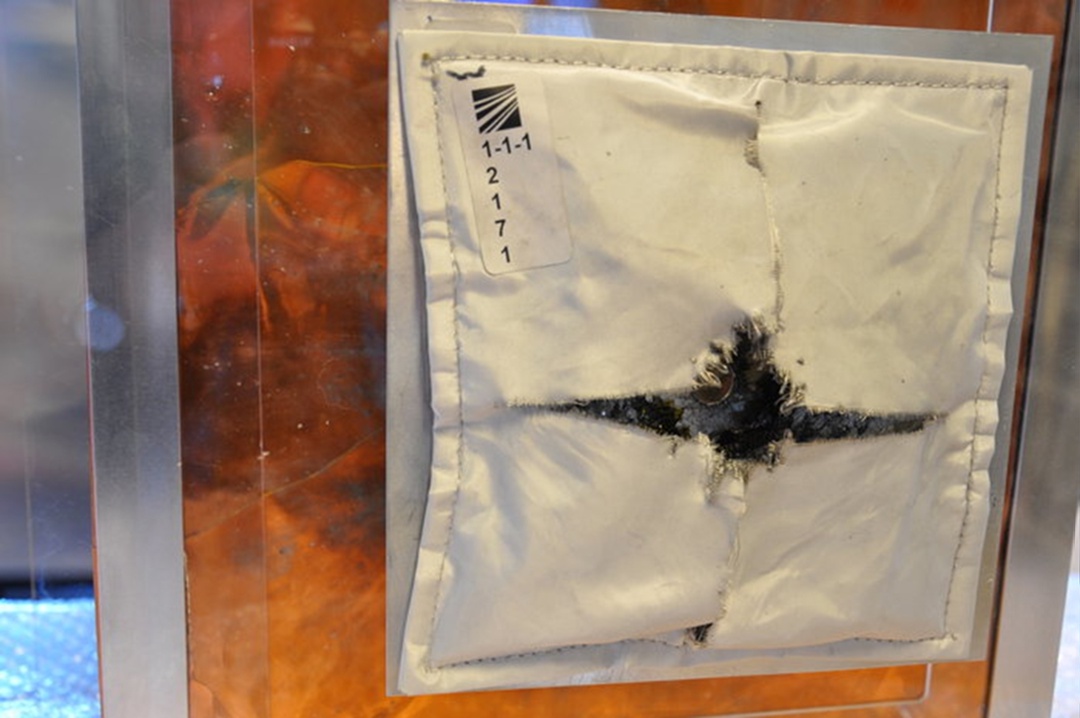
A more efficient approach uses the Whipple shield, invented by Fred Whipple in the 1940s. The concept is elegant: two thin metal walls separated by a gap. The outer "bumper" layer doesn't need to stop the projectile — it just needs to fragment it. When a micrometeoroid hits the thin outer wall at hypervelocity, both the projectile and the wall material vaporize and scatter into a cloud of particles. This dispersed cloud then impacts the inner wall across a much larger area and at reduced velocity, distributing the energy rather than concentrating it at a single point.
The Space Constraint Problem
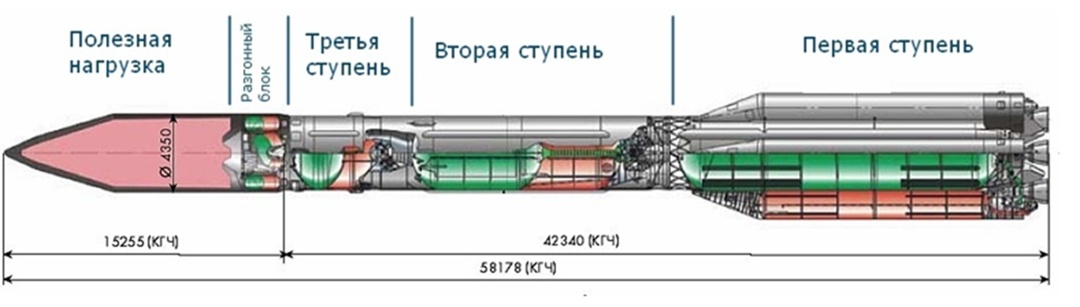
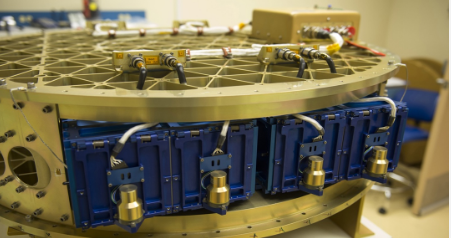
Rocket payload capacity severely limits shield spacing. Launch vehicles dedicate most of their volume to fuel across multiple stages, leaving minimal space for protection systems. The wider the gap between Whipple shield layers, the better the protection — but the less room remains for everything else.
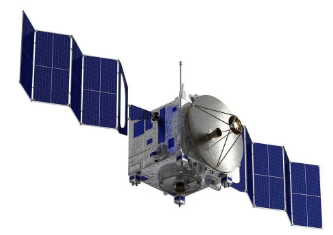
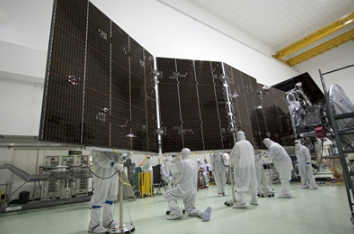
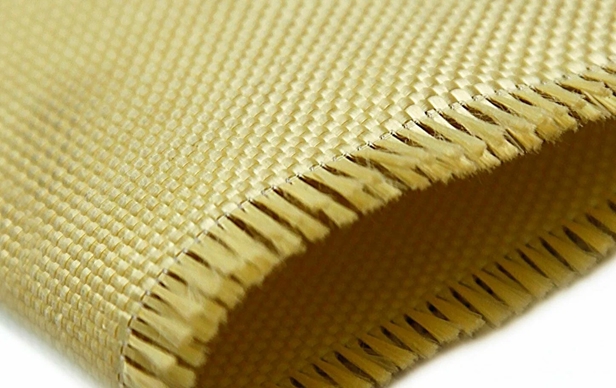
Engineers considered borrowing technology from body armor — kevlar and composite fabrics. These materials are lightweight, can be folded compactly for launch, and deployed or expanded in orbit. The question was: how do woven fabrics actually behave under hypervelocity impact?
Rakhmatulin's Waves: A Historical Digression
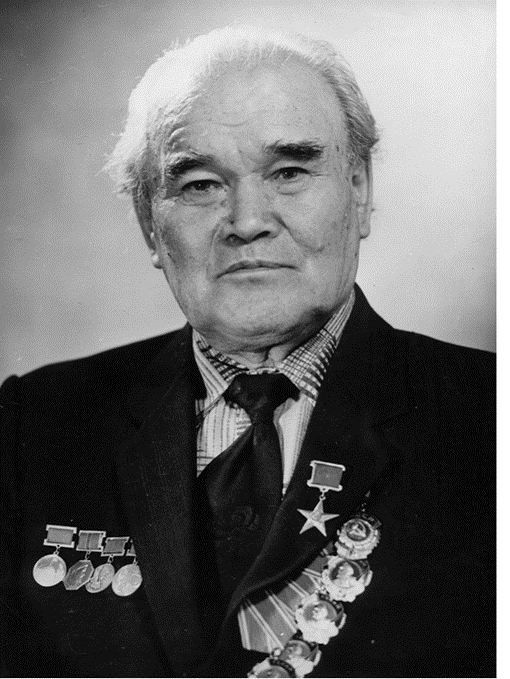
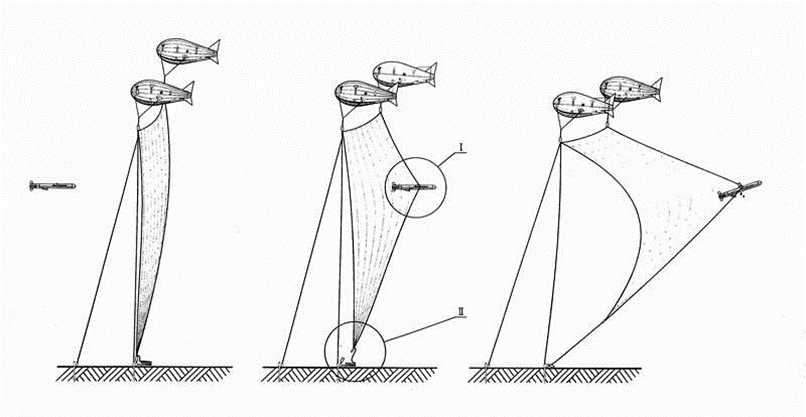
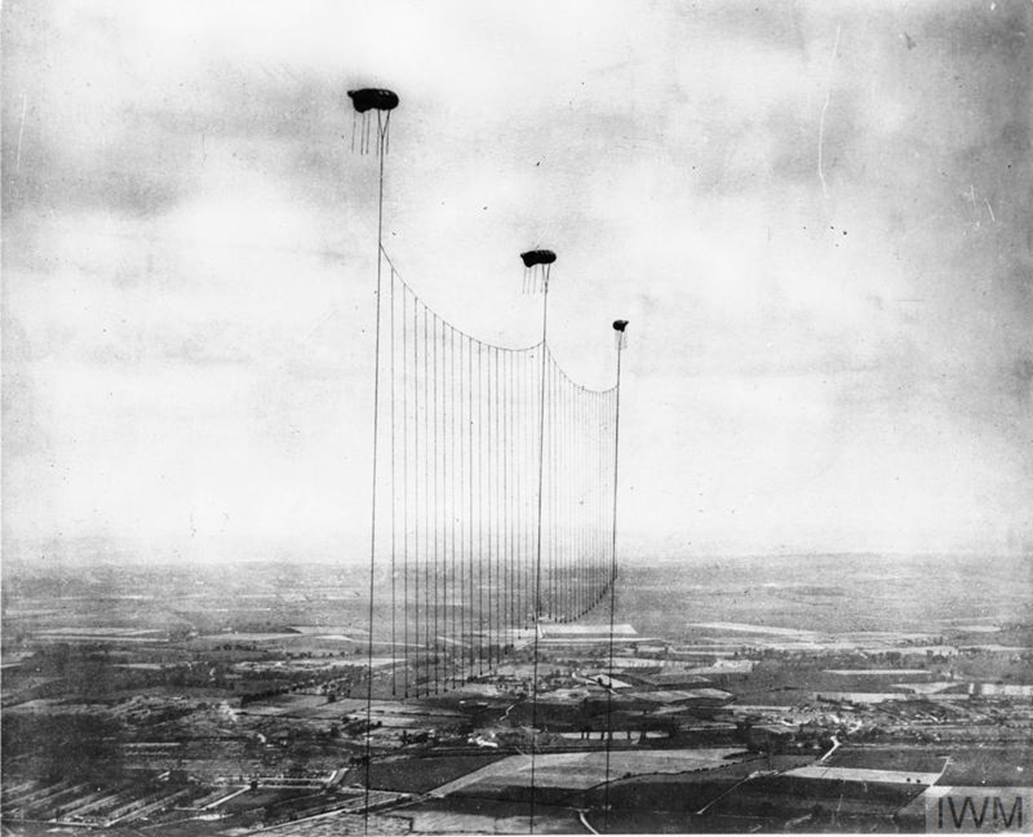
Academician Khalil Akhmedovich Rakhmatulin made a critical discovery about how high-velocity objects interact with flexible threads. During World War II, barrage balloon cables were used as an air defense measure. These steel cables, strung between balloons, could cleanly sever aircraft wings — a seemingly impossible feat for a thin, flexible wire.
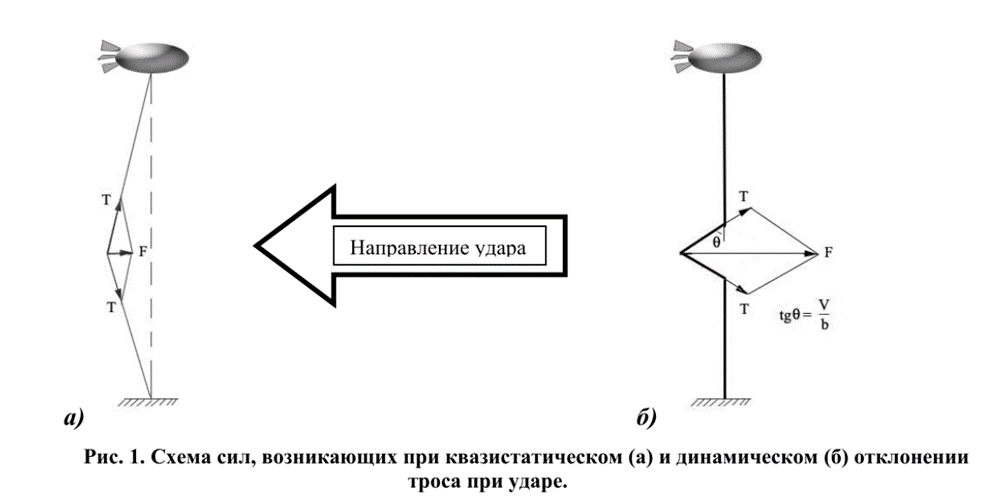
Rakhmatulin explained the paradox: elastic disturbances propagate through a rope at a finite speed. When an aircraft's velocity approaches or exceeds this propagation speed, the wire doesn't have time to "learn" it's been hit along its full length. The aircraft interacts only with a tiny segment of rope, which is held effectively rigid by its own inertia. A short, rigid rod is quite capable of cutting through a wing.
This counterintuitive effect stems from the finite propagation speed of elastic disturbances in solid materials — a principle that beginning physicists sometimes overlook, assuming that forces transmit instantaneously through rigid bodies.
What Happens at Different Speeds
At low velocities, a projectile striking woven fabric produces significant deformation. The fabric stretches, fibers pull out of the weave, and energy is absorbed over a large area and a long time.
At higher velocities (around 2 km/s), the interaction changes dramatically. There's minimal deformation — the projectile punches straight through, ejecting a neat "plug" of material while continuing forward with little energy loss.
The Square Hole: The Cross-Bell Model
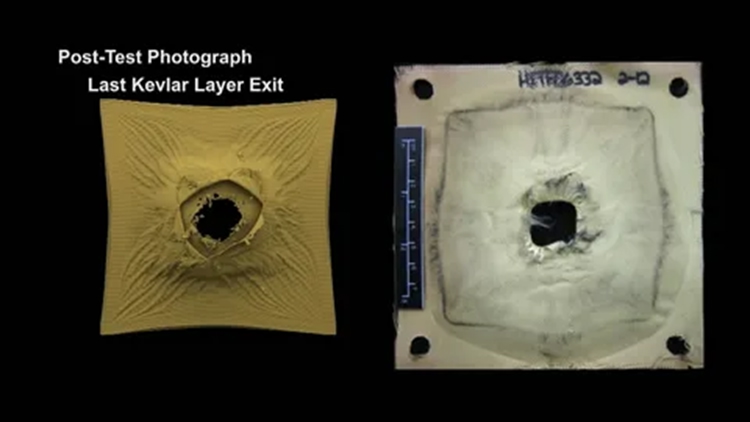
At cosmic speeds (~10 km/s), something truly strange happens. The fabric develops a square hole from a round projectile. The "cross-bell" model explains the pattern:
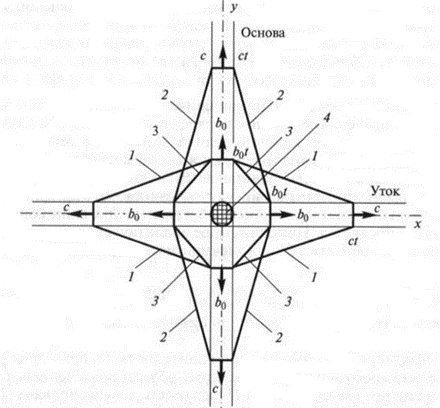
- In a woven fabric, fibers run in two perpendicular directions. The fibers directly under the projectile (running vertically and horizontally through the impact point) form the "cross."
- The fibers running at 45 degrees to the impact point form the "bell" — the diagonal zones between the cross arms.
- Rakhmatulin waves propagate along the cross fibers at a finite speed. At hypervelocity, these waves cannot reach the bell fibers before the projectile has already passed through.
- The cross fibers, directly loaded by the projectile, accelerate to velocities that exceed the tensile strength of the perpendicular bell fibers at the intersection points.
- The bell fibers rupture cleanly at these intersections.
- Four triangular flaps remain, bent outward and slightly twisted — creating a distinctly square opening.
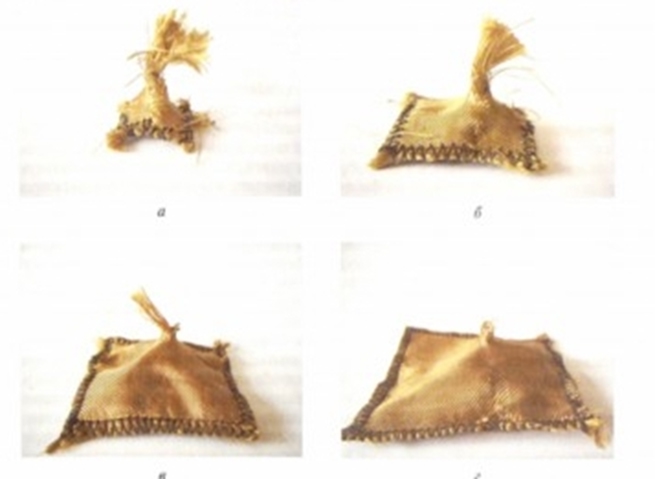
The result is a distinctly square hole despite a round projectile impact. The shape is dictated entirely by the weave geometry, not by the projectile geometry.
Why This Matters
Kevlar composites behave fundamentally differently than metals. Their anisotropic, heterogeneous properties — influenced by weave patterns, fiber tension, and manufacturing defects — challenge engineering intuition built on isotropic metal behavior.
Understanding these effects requires examining fiber-level mechanics from first principles rather than relying on traditional material behavior expectations. Professional engineering intuition requires separate training for novel materials, and this training is best accomplished through studying strange, seemingly incomprehensible phenomena — like square holes from round bullets.
References
- Rakhmatulin, K. A. (1945). On oblique impact with flexible threads at high velocities with friction.
- Kobylikin, I. F., & Selivanov, V. V. (2014). Materials and structures of light armor protection.
- Petrov et al. (2022). Numerical modeling of fiber deformation and destruction under impact load.



