Why I Hate Certain Individual Marketers
A detailed investigation into deceptive marketing practices found in everyday grocery stores and retail — from misleading packaging and ingredient manipulation to exploiting consumer laziness and scientific illiteracy.
Meet this ordinary "liter" milk carton:
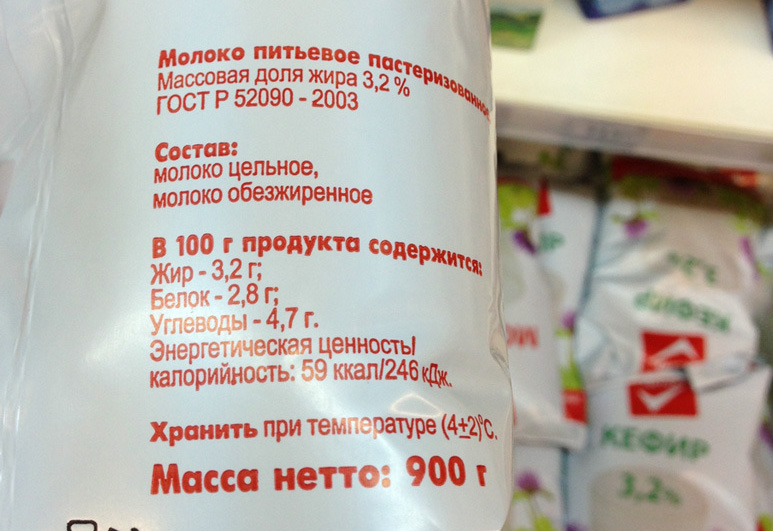
- Attention test: it contains 900 grams. Next to it are several at 950. But the package can easily be mistaken for a liter.
- Physics knowledge test: right next to it lies similar kefir. Volume is measured in milliliters, mass in grams. The density of kefir is tragically higher than that of water. So 900 grams of 3.2% fat kefir is approximately 874.5 milliliters.
Second patient:
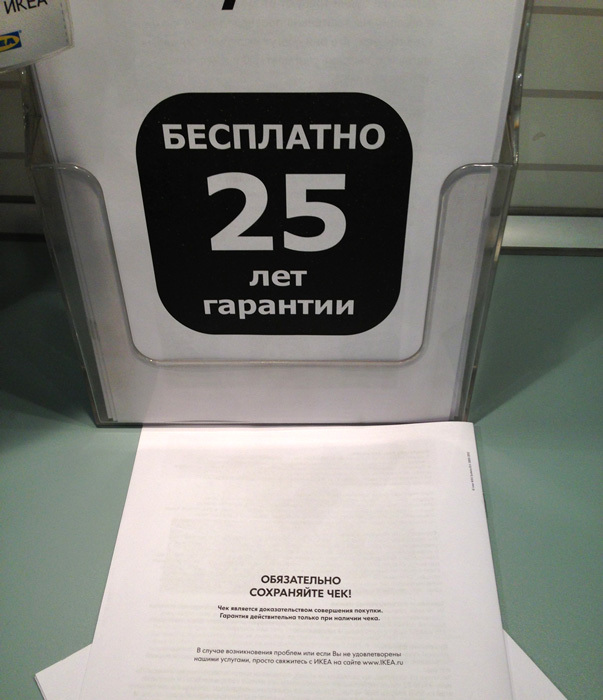
25-year warranty. Cool, right? There's one problem. You need to keep the receipt. Another physics knowledge test. Their receipt is printed on standard thermal paper (I checked on the spot). I have plenty of receipts in my office. We photocopy them because after a year or two they completely fade. The oldest receipt my colleague has seen lasted 3 years in a folder in the archive. UPDATE: see the bottom of this post — IKEA responded.
In short, we took a little walk through the stores in debug mode. Sorry for straying a bit from the usual hub topic, but understanding some of these things requires basic technical knowledge and thinking.
Warning, heavy on images: lots of findings with photographs below.
Disclaimer
Let me say right away that I don't sell any of these products, and I'm not connected to them or their competitors in any way. I chose products from their respective categories simply because they were closer and more accessible on the shelf. Or because they caught my attention more than their neighbors. I'm not fixated on specific brands or SKUs — there are plenty of similar examples out there. All judgments, particularly regarding specific products and brands, are subjective — I may be wrong due to lack of domain knowledge. If I'm mistaken, please correct me. Below we'll talk about my personal feelings and emotions. Alright, let's go.
"Now Asbestos-Free"
A product may state something completely obvious that competitors forgot to mention. Here's cholesterol-free cooking oil, exploiting the buyer's biological illiteracy:
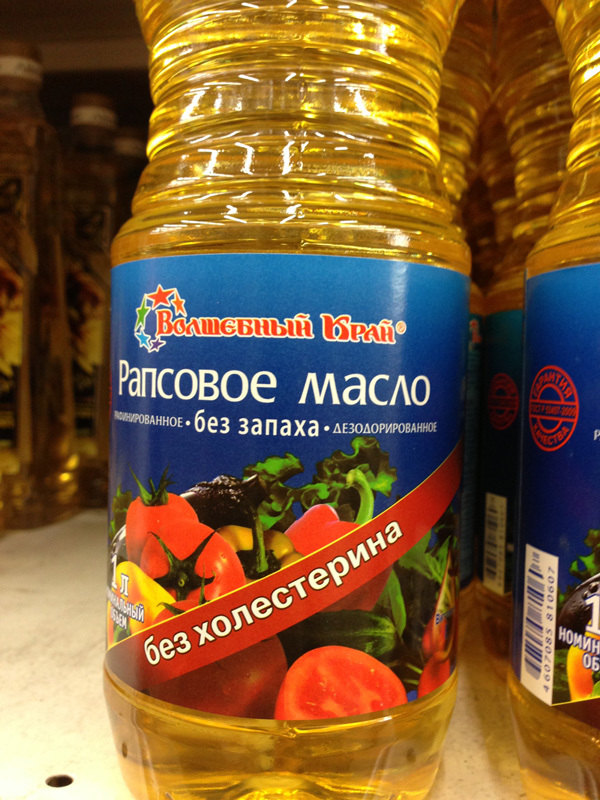
And free of nuclear waste. Strange they didn't put that on the label.
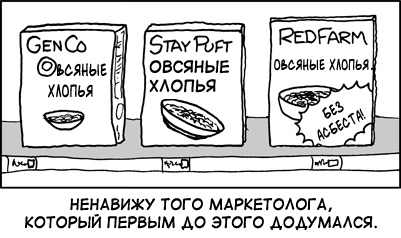
Biochemistry check: vegetable oil simply cannot contain cholesterol. But you still have to write it. Remember the comic, right?
Another example — soy-free sausages. Very roughly speaking, if you don't make them from meat, there are only two options left — soy textured protein or a fat emulsion. So on the ones without textured protein, it makes perfect sense to write "soy-free." The problem is that the buyer may conclude that this claim is equivalent to "made from real meat."
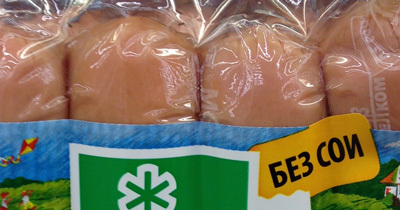
Nice try
Mimicry
You can disguise a product as a well-known product category. For example, there's margarine, and there's butter. All you need to do is package margarine to look like butter and write neither the word "butter" nor the word "margarine" on it. Oops, what do we have here?
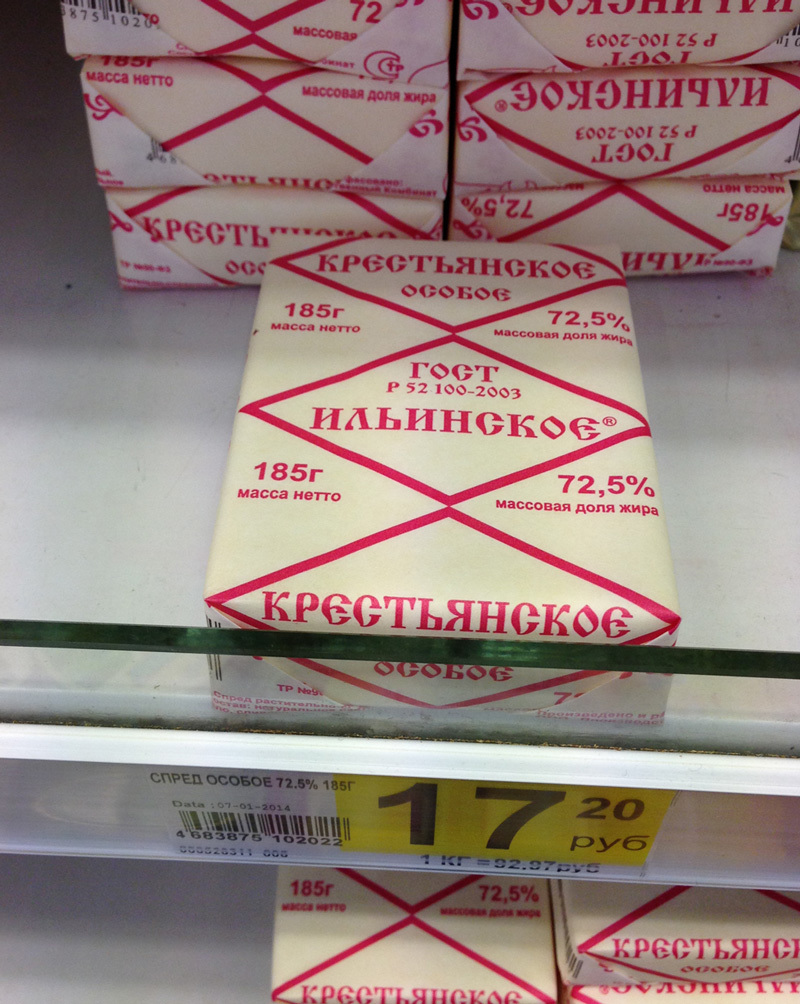
First, appreciate the packaging design. Looks just like butter, doesn't it? Second, notice the product name — you'll only guess it on the third try (it's on the price tag). The grammatical gender of the name is very important. Third, the price tag itself. Relatively recently, standards changed, and stores were required to indicate the product type on the price tag — in this case, it's not butter but "spread." But somehow, no law ever required stores to display butter and margarine on separate shelves.
Here's another specific example of mimicry: a store's own-brand product is shuffled into a pile of chocolate bars (if it weren't a store brand, it would be placed separately):
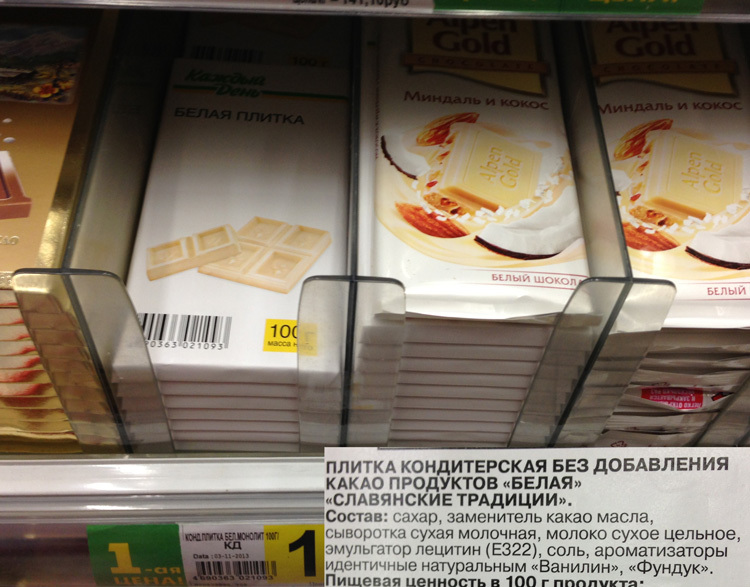
A confectionery bar with no cocoa added, sitting on a shelf with chocolate to the left and right.
Read the Ingredients Carefully
Let's move on to sleight-of-hand with ingredients.
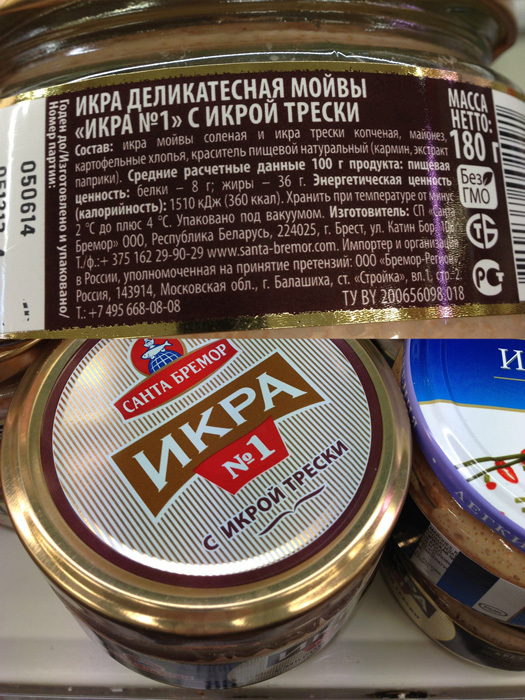
Caviar. The word "delicacy" doesn't commit them to anything. Well, maybe someone likes potato more than roe, right? There is some actual roe inside. And they probably just forgot to put the capelin on the lid.
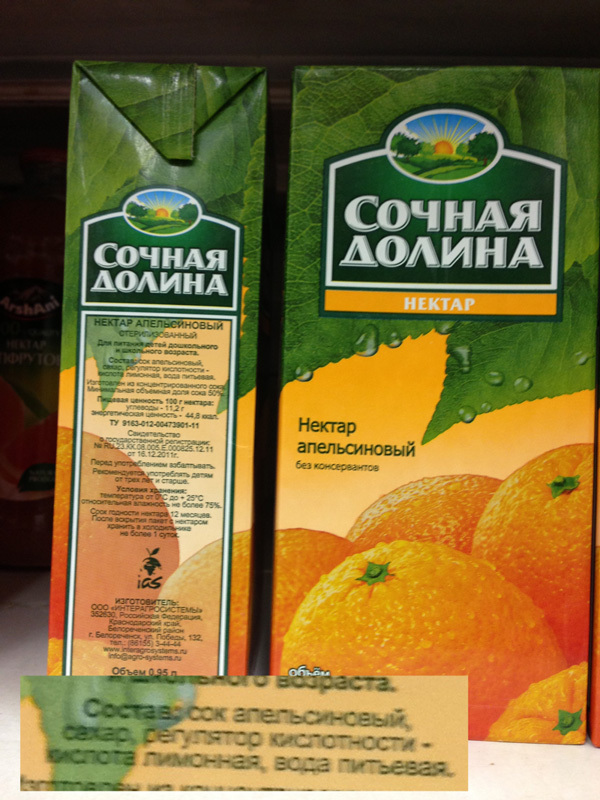
"No preservatives" — but citric acid is in the ingredients. The thing is, this substance is simultaneously a flavoring agent, an acidity regulator, and a fairly strong preservative. If you classify it as an acidity regulator in the ingredients, preservatives magically disappear from the composition. A miracle!
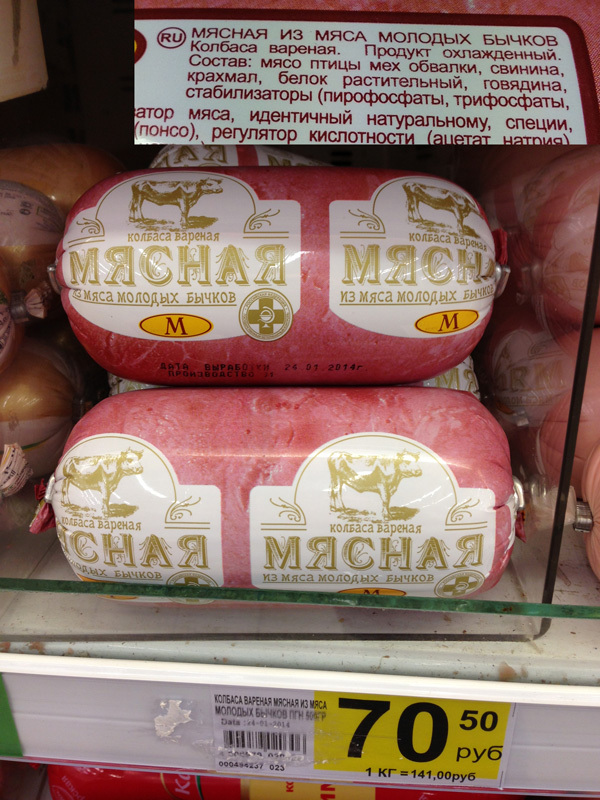
I was always insanely curious about who these "young bulls" at this price could be. Well, now I found out.
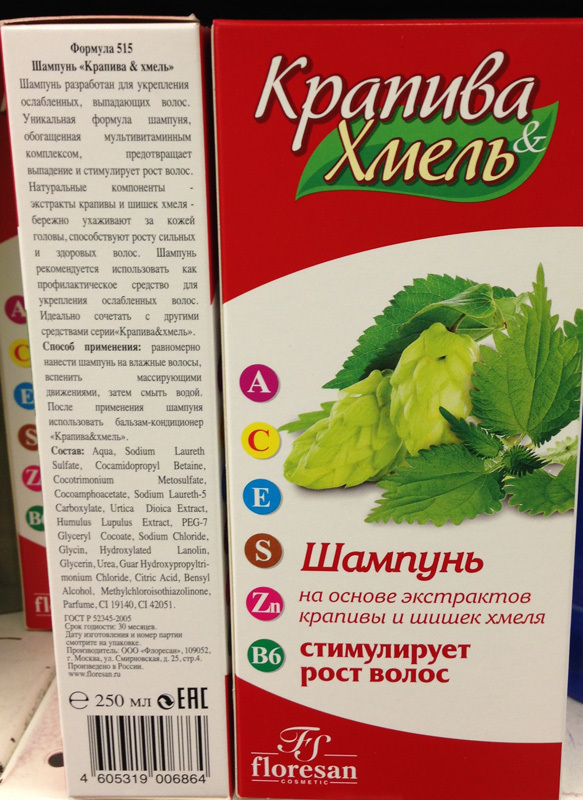
The impression is created that "based on" means "literally made from them." I'm no expert, of course, but judging by the ingredients, there aren't many pine cones in there — instead, there's the familiar Sodium Laureth Sulfate and some elegantly named Aqua. Sodium lauryl sulfate is a strong cleaning agent that, according to Wikipedia, can also be a strong allergen. And the finishing touch — it seems like it's vitamin B6 that stimulates hair growth, not the product itself — at least based on the packaging. You don't need to prove that about the vitamin. So what if the others aren't labeled?
And here are the good old crab sticks. Even though they're not made from crab (which, it seems, everyone already knows), the manufacturer still honestly warns on the packaging that they're made from fish:
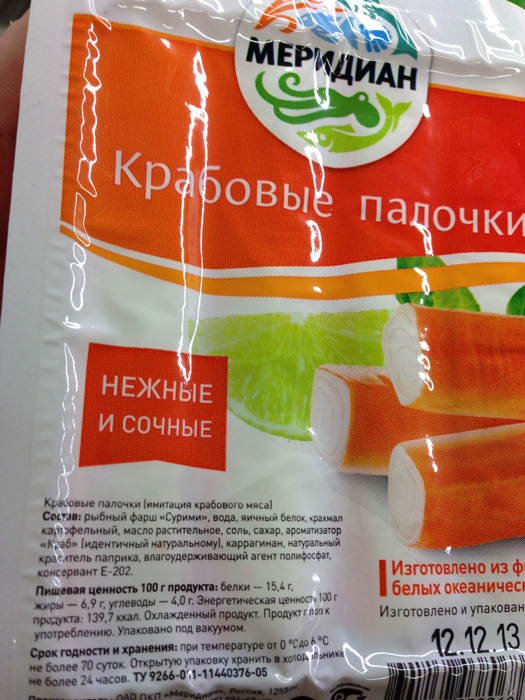
Just an established name
Names and Terms
Now let's go buy some water. If you dive into the classification, you'll discover that what we're primarily looking for is the standards-defined word "table" — in simple terms, this is water that a healthy person can drink every day without restriction. Note that it differs from "drinking" water. You can drink "drinking" water, but "table" water is a subset of drinking water — it's the kind you can drink every day without any consequences. And then there's "medicinal-table" water, which you can drink almost as often, as long as you don't overdo it.
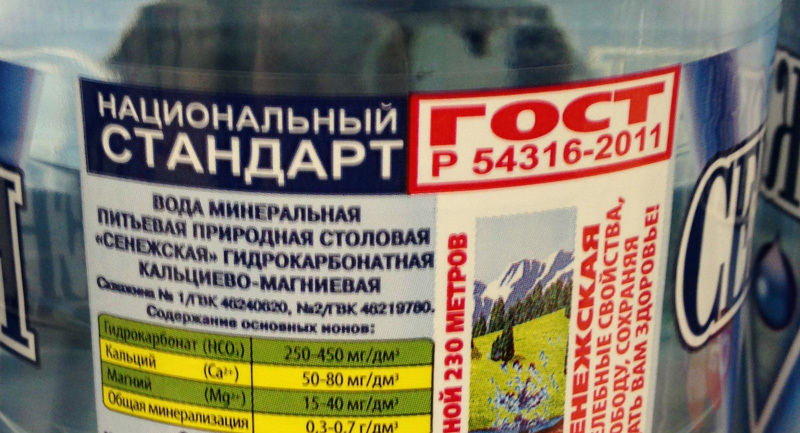
Table water. They write it on the back.
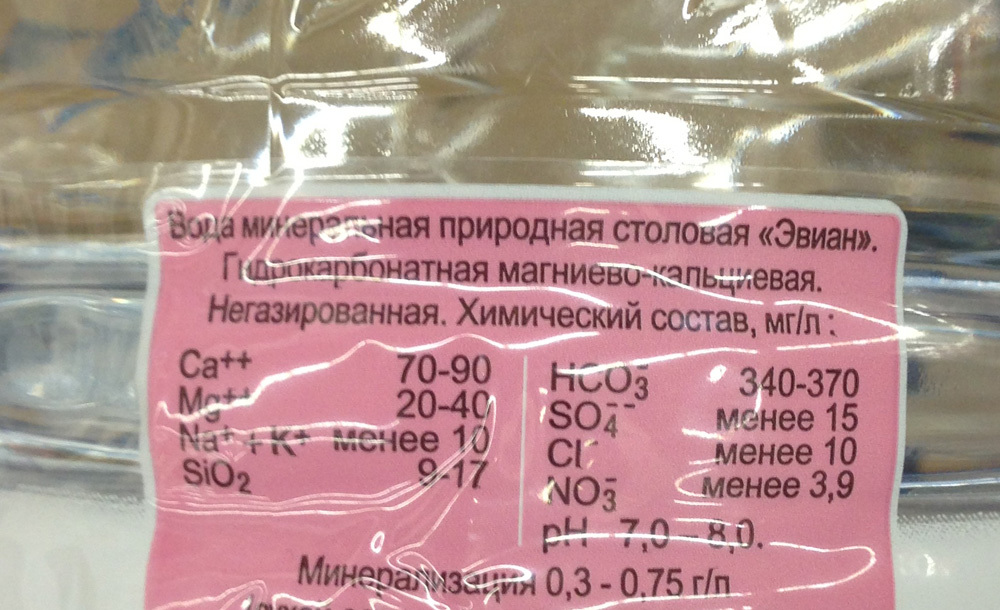
Another table water. Also writes it on the back without pretension (well, considering the price — understandable).
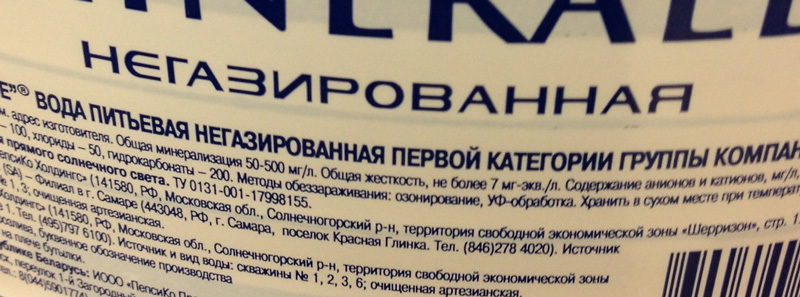
Also good, but you probably shouldn't drink only this for a whole year straight.
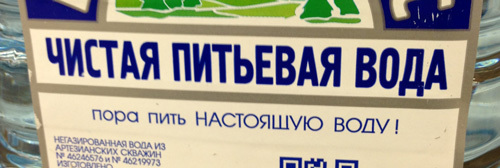
Now this is marketing talent. The word "authentic" isn't defined in any standard, but it sure sounds impressive.
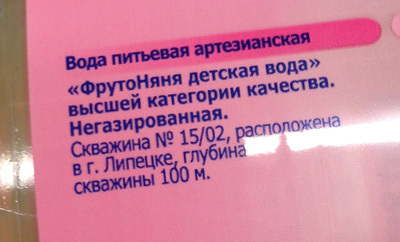
Children's water? What is that? Is there homework water too?
Standards and Names
I couldn't find examples for this particular workaround on this trip. I remember seeing beer with a water purification standard on the label, plus candy where "Natural Products" was written in large letters on the front. On the back, it turned out to be the name of the LLC — "Natural Products LLC."
Reading the Fine Print
My girlfriend drags me to the cosmetics section to show me something:
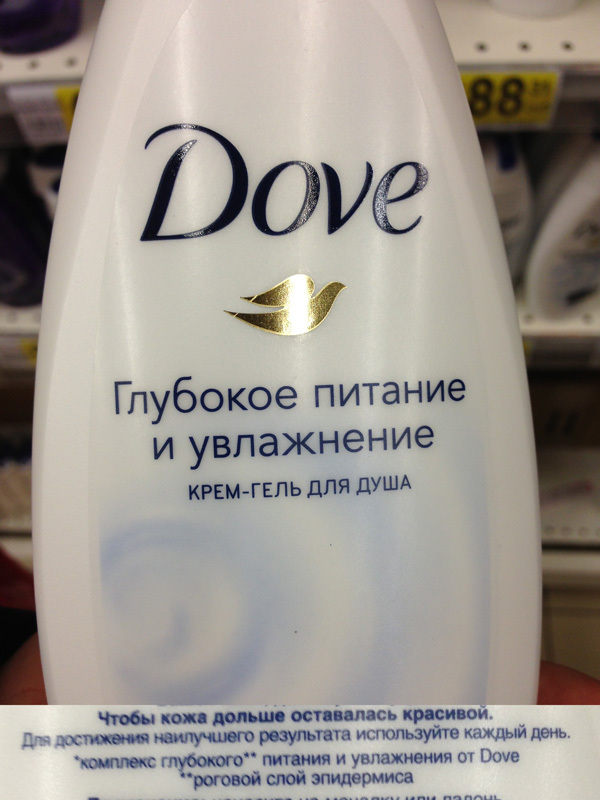
The correct way to read this is: "(Deep nourishment) and (moisturizing)." The moisturizing isn't deep at all. Just the skin surface. But the target audience doesn't include programmers.
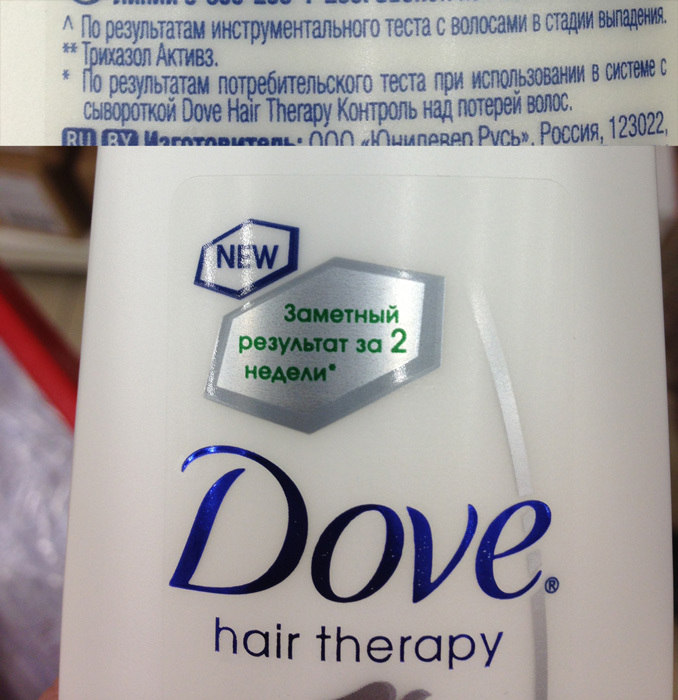
Now this is something I never even thought about. Let me repeat: they promise me noticeable results in two weeks. How did they test it? They washed hair with this product and — attention, here's the trick — another separate product. And these two products together produced a noticeable result. Almost perfect logic.
Reading footnotes turned out to be quite entertaining. Here's an example from food products:
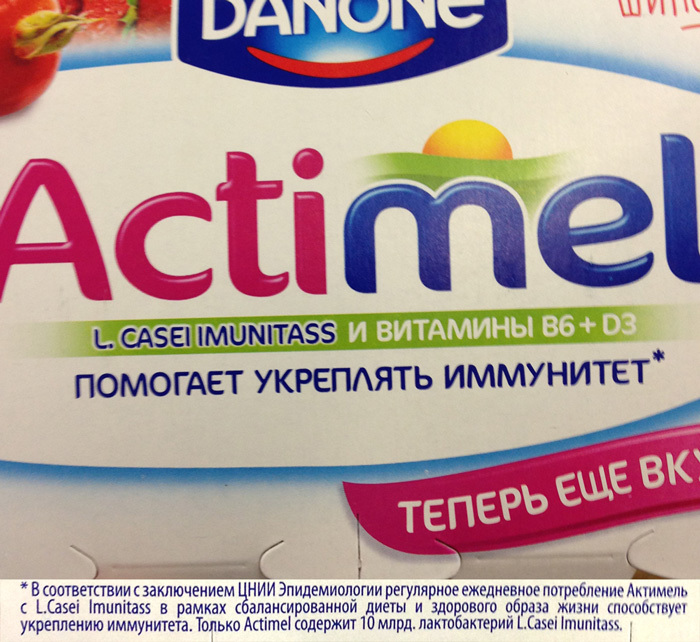
Almost the same logic
Exploiting Laziness
Here's a beautiful example of aggressive laziness exploitation. Pre-packaged expensive carrots on top, but if you push aside 5-6 bags, you can find regular loose ones. I knew what to look for because I needed a couple of carrots, not a whole bag.
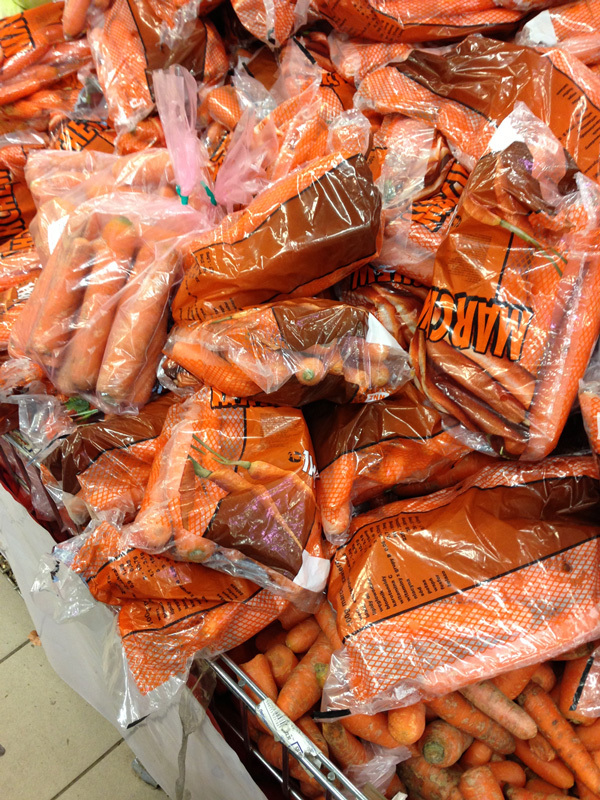
As long as they're not hiding the loose carrots, I'm fine with just the packaged ones.
Miscellaneous
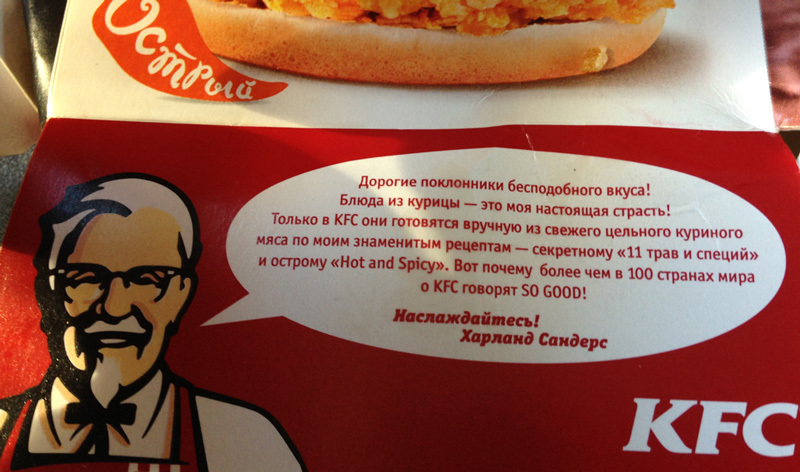
Colonel Sanders died in 1980. UPDATE: in the comments, a user points out he served as a private for only 3 months.
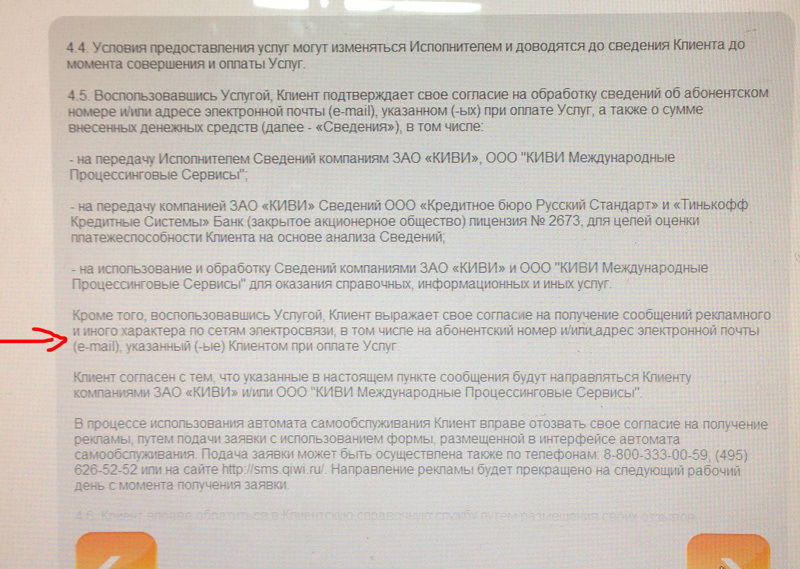
A photo of a payment terminal's terms of service. I drew the arrow to highlight one of the clauses. Topped up your balance? Here comes an ad.
Prices
About three times I've bought a product at a higher price because the price tag below it was actually for a different, cheaper item. The most vivid example — "mixing up" price tags between a large can of green peas and a small one. I couldn't find an example of this on today's trip.
But here's an even better one for you.
A fast food joint. Look at this picture:
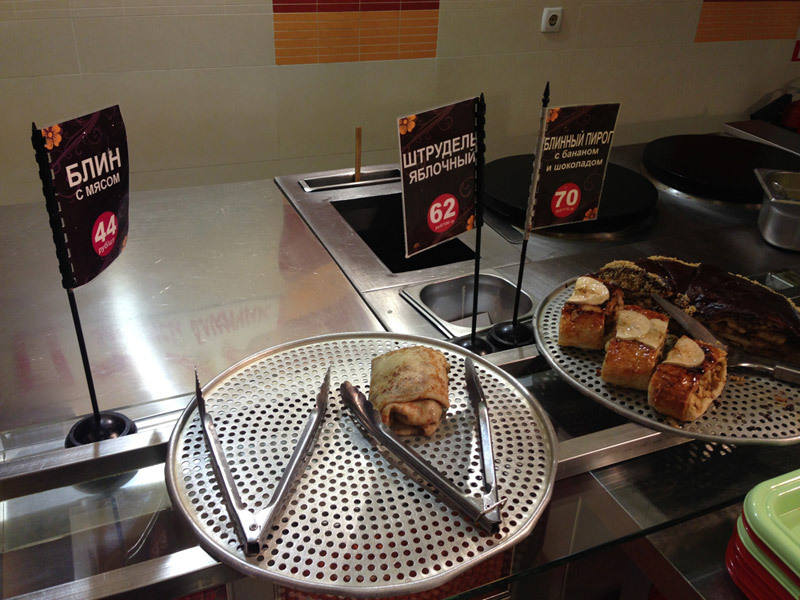
See the catch? Here's a crepe, there's a pie... Everything looks fine, right? But there's one nuance. Squint harder:
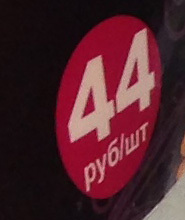
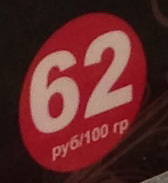
This is roughly the kind of thing that makes me hate certain marketers.
What Is This Post Doing in a Corporate Hub?
Very simple. If you've read about Mosigra here before, you know that we're trying to build a business we wouldn't be ashamed of in any aspect. For example, it surprised me when I once got upvoted simply for the fact that we don't send SMS to our thousands of customers who left their phone numbers and consent for data processing. Do you understand the depth of the problem? Gratitude for what is considered within our company to simply be the norm of honest business. So here's the thing. I want such practices to stop being something notable and become the actual norm. And I don't want to have to switch to "paranoia mode" when buying groceries for dinner.
UPDATE: About 3 months after publishing this post, I was contacted by Maria Kirienko from IKEA:
IKEA uses BPA-free thermal paper for receipt printing, which guarantees the receipt's preservation for 25 years, and also ensures its environmental friendliness. To avoid possible misunderstandings, we have decided to add information about the receipt image's durability (provided it is stored in a dry and cool place) to all warranty communications, including the website section, brochures, IKEA catalog, and information on the back of the receipt.
Thank you, that's good to hear.
UPDATE 2:
A user commented on July 3, 2017 at 17:14:
An IKEA receipt successfully partially faded well after this update. Quite quickly, in fact — in about 3 months.