Why Airships Never Took Off. Part 3: Birth of the German Zeppelins
We have already discussed the birth of the idea of controlled aeronautics, the first unsuccessful experiments and how airship construction developed in France and Britain. However, most often airships are associated not with the French who invented them, but with Germany. The g
Editor's Context
This article is an English adaptation with additional editorial framing for an international audience.
- Terminology and structure were localized for clarity.
- Examples were rewritten for practical readability.
- Technical claims were preserved with source attribution.
Source: the original publication
Series Navigation
- Why Airships Never Took Off. Part 1: From Montgolfier to a Borodino Bomber
- Why Airships Never Took Off. Part 2: Rise and Fall of French Airships
- Why Airships Never Took Off. Part 3: Birth of the German Zeppelins (Current)
- Why Airships Never Took Off. Part 4: The Kaiser's Airships Go to War
- Why Airships Never Took Off. Part 5: Shadows Over Britain
- Why Airships Never Took Off. Part 6: London Under the Bombs
- Why Airships Never Took Off. Part 7: Fire in the Sky
- Why Airships Never Took Off. Part 8: The End of Wartime Zeppelins
- Why Airships Never Took Off. Part 9: Ashes of War and New Opportunities
- Why Airships Never Took Off. Part 10: The Most Famous and Successful Zeppelin
- Why Airships Never Took Off. Part 11: Aircraft Carriers in the Sky
- Why Airships Never Took Off. Part 12: Italian Semi-Rigid Airships
- Why Airships Never Took Off. Part 13: Through the North Pole aboard the Norge
We have already discussed the birth of the idea of controlled aeronautics, the first unsuccessful experiments and how airship construction developed in France and Britain. However, most often airships are associated not with the French who invented them, but with Germany. The grandiose skyships of rigid construction, created by the company of Count von Zeppelin and other German companies, eventually wrote themselves into history in some places in a rather gloomy way: military zeppelins with black crosses on the skin ushered in the era of strategic bombing of cities, and the tragic death of the passenger Hindenburg became the symbolic finale of the era of airships. On the other hand, it was German airships that can be called the peak of the development of airship construction, and no one has ever built so many and such large machines of this class.
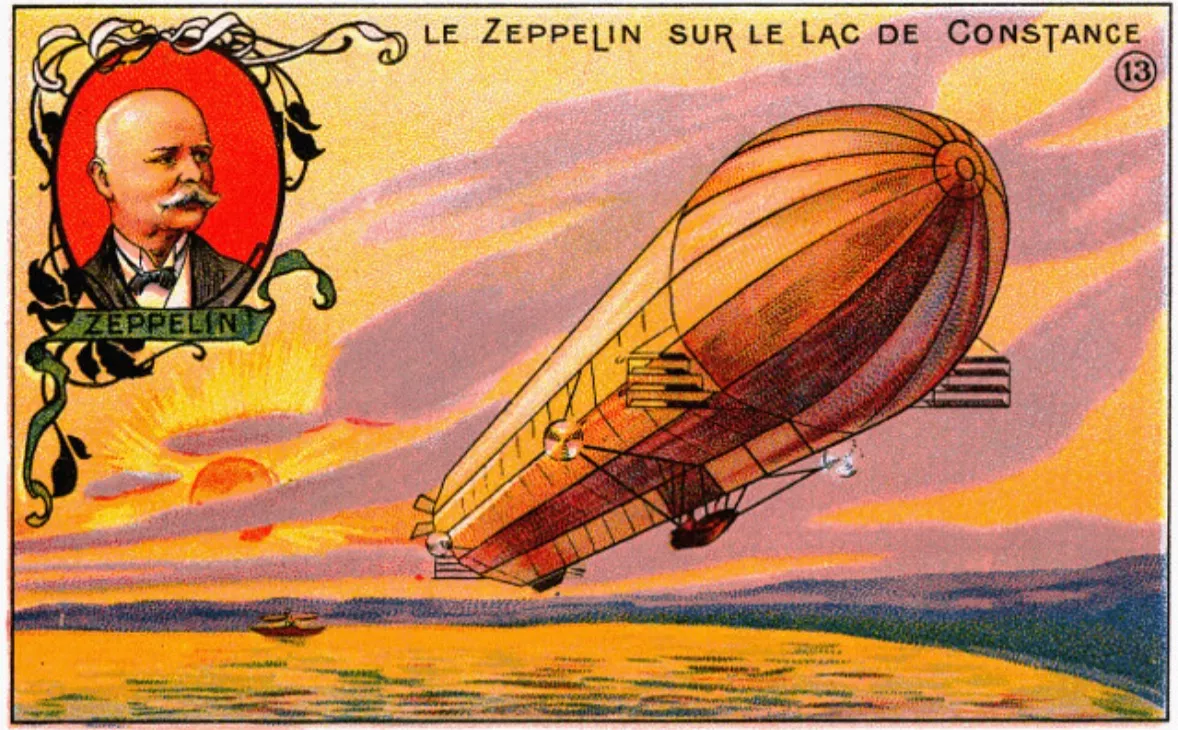
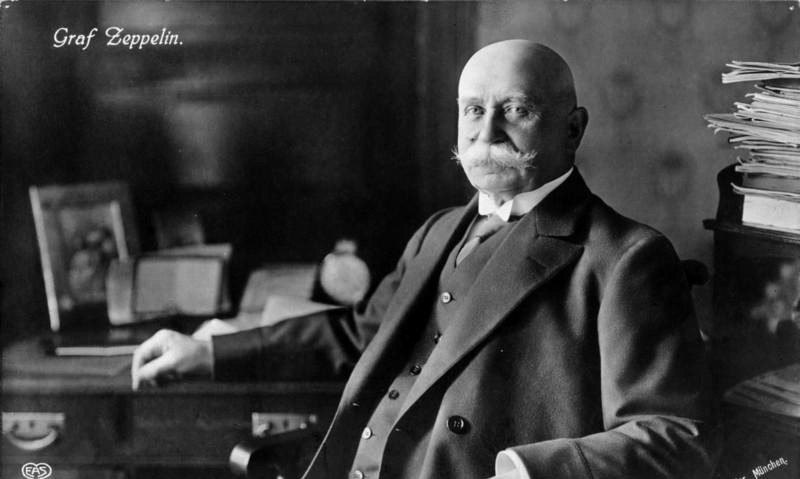
The history of German airship construction is inextricably linked with the name of its founder, Count Ferdinand von Zeppelin. He was born in 1838 into the old noble family of the von Zeppelins, known since the 13th century and receiving the family name from the property of the same name in Mecklenburg, founded by German settlers in the recently conquered lands of the Slavic Obodrites. In subsequent centuries, the family moved around various German lands, during which it acquired the Reichsgrave title, which gave the right to sit in the Imperial Diet, and settled in Württemberg, where its representatives owned lands with castles and occupied high positions at the ducal and royal courts. However, in the 19th century, times changed, and even in aristocratic families many things began to be looked at more simply. The father of the creator of German airship construction, being a Württemberg minister and court marshal, not only was engaged in commerce himself, but also chose to marry the daughter of a not very noble, but wealthy manufacturer with French roots.
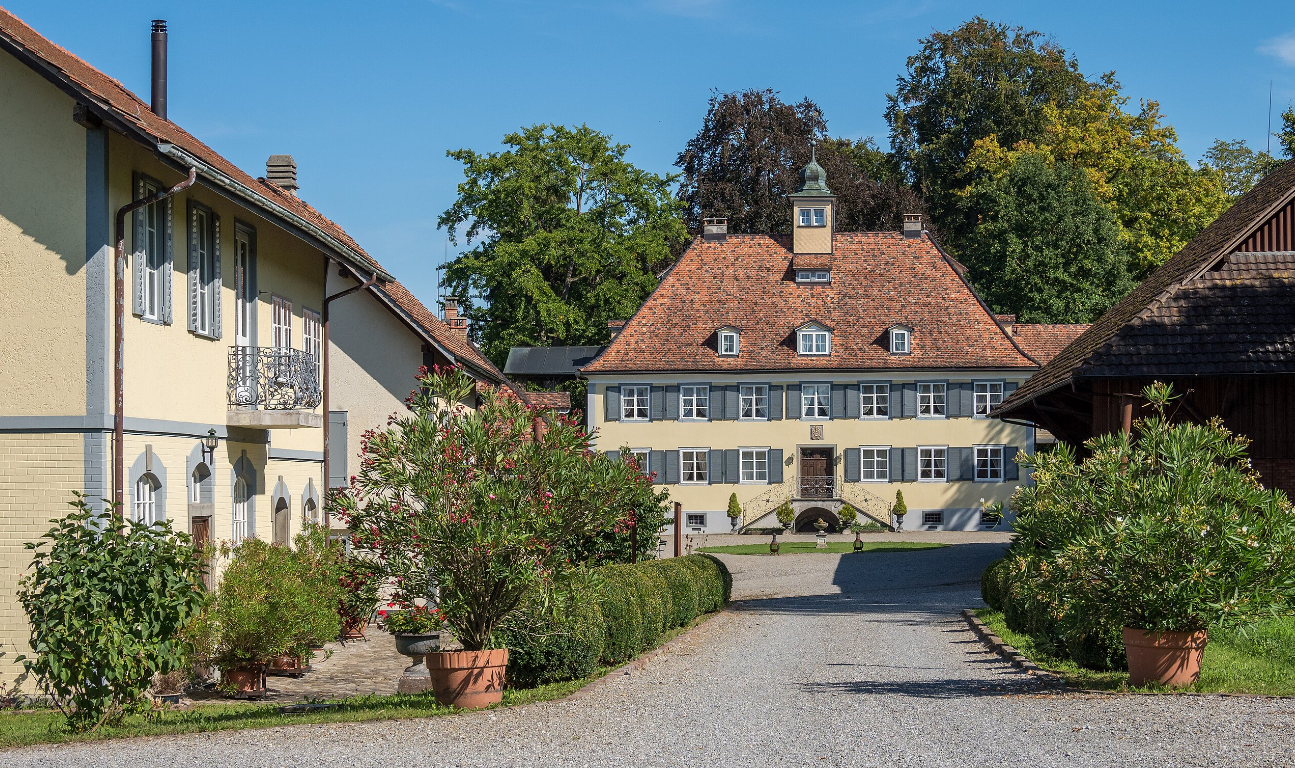
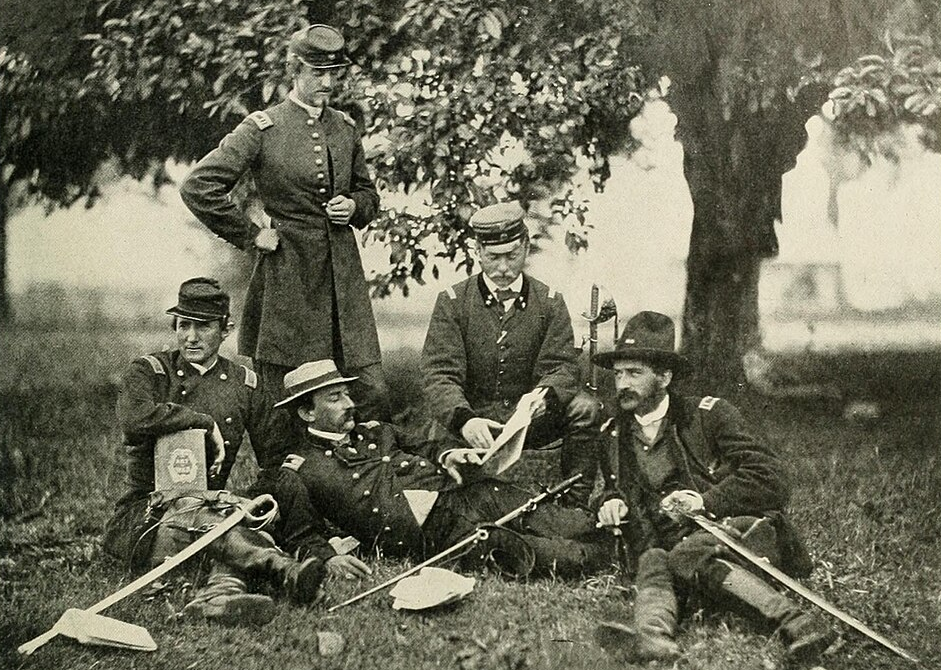
The young heir graduated first from the Polytechnic Institute and then from the Military School, choosing the path of a professional military engineer. Already with the rank of lieutenant in the Württemberg engineering corps, he continued his education in the fields of engineering, chemistry and natural sciences. As a talented representative of one of the families closest to the throne, already in 1861 he was sent by the king on an unofficial diplomatic and intelligence-analytical tour of European capitals: he had to find ways to preserve the independence of Württemberg in the face of the growing ambitions and power of the Kingdom of Prussia. In 1863, he received a new assignment and went as an observer to the Northern army fighting in the American Civil War. There he carefully studied the experience of modern warfare with a special emphasis on the latest technologies. It was on the battlefields of the war between the North and South that he gained experience in ascent in observation balloons, which is where von Zeppelin's interest in aeronautics began.
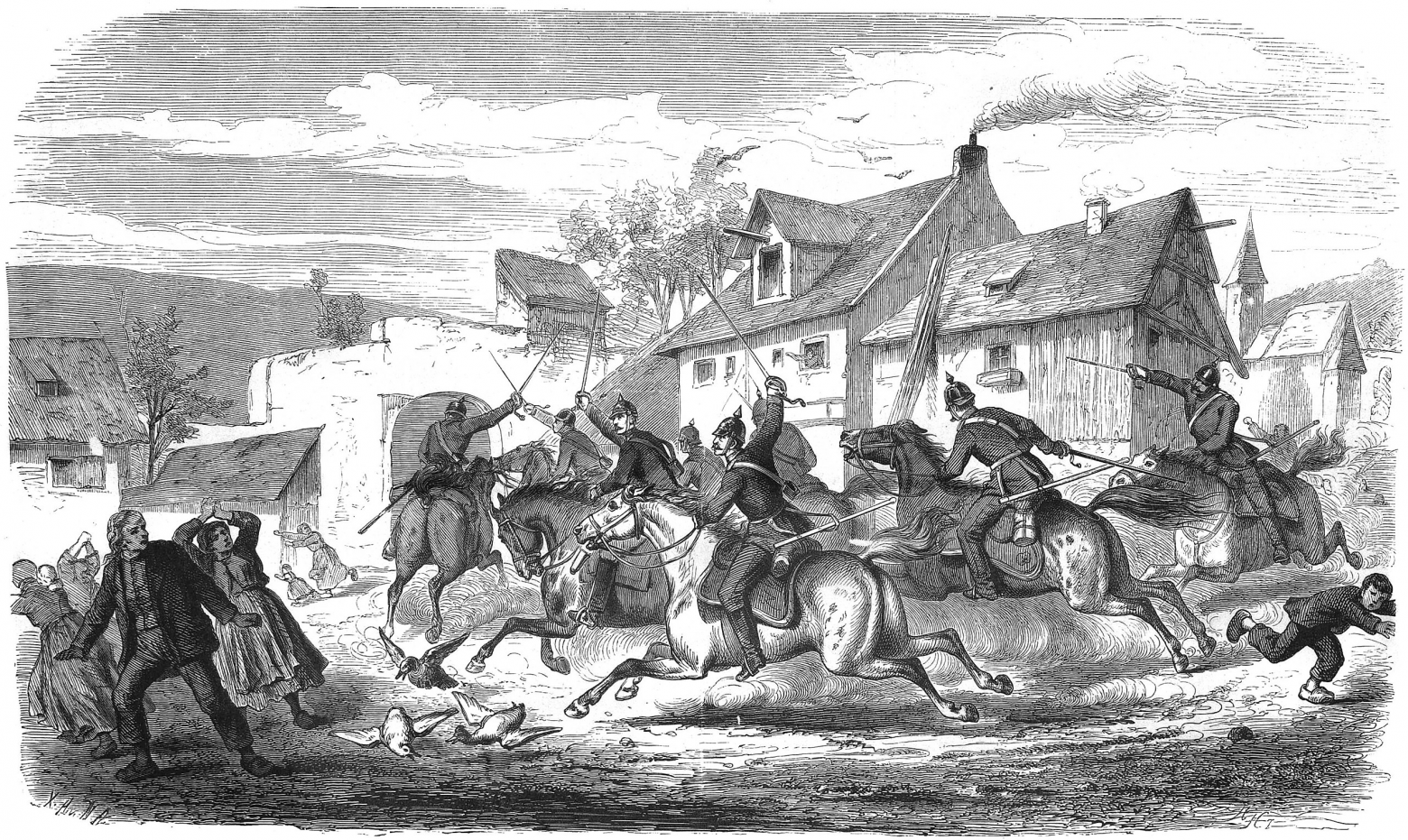
When the war ended, Ferdinand returned to Württemberg, where he received the high post of personal aide-de-camp to the king. In the Austro-Prussian War of 1866, where Württemberg sided with the Habsburgs against Prussia, he served as an officer on the General Staff. Despite the fact that the Austrians and their allies were completely defeated in this war, he was awarded the Knight's Cross for successful staff work in the interests of the Württemberg army. In the ensuing Franco-Prussian War, the 32-year-old General Staff officer took part along with the entire kingdom on the side of Prussia, and in a much more risky manner. At the head of a cavalry detachment of 13 people, he dashingly broke through the French lines and conducted a 12-day strategic reconnaissance raid in the direction where the Württemberg troops allied to the Prussians were to advance as part of the 3rd Army. The French tried very hard to intercept his group, and as a result the detachment ended up in a fatal ambush by the rangers. Only von Zeppelin managed to break through to his own on a captured French horse. But he managed to deliver to headquarters the necessary intelligence information about the weakness of the French forces in the direction - and on the same day, the army of Crown Prince Frederick crossed the border, forming the southern wing of the German offensive. Two more days later, she completely defeated the main forces of the French Marshal MacMahon at Woerth - exactly where the route of the scouts' raid lay. Journalists wrote about this - and von Zeppelin received all-German fame for the first time.
As far as is known, he did not take part in the siege of Paris and did not personally see how the besieged French organized communication with the rest of the country through dozens of balloons. The first notes about the need to create airships appear in his notes only in 1874, after listening to a lecture on this operation. However, for a long time he did not develop his thoughts, moving up the career ladder, first receiving the rank of colonel, and then becoming the official representative of Württemberg in Berlin, where he became an ardent supporter of Chancellor von Bismarck. In 1887, when experimental airships based on the French model were already in full swing in different countries, he submitted a memorandum on the need for controlled aeronautics to the king of Württemberg, already one of the autonomies within the German Empire. However, he was not interested in the idea, while his military colleagues laughed at it. In 1890, Bismarck died, for the Württemberg command his closeness to the Prussians looked outrageous, for the Prussians he was a suspicious southerner and almost half-French on his mother’s side, and von Zeppelin was forced to leave military service. For our now 52-year-old hero, this was quite a blow - but it was from that moment that he decided to devote the rest of his life to airship building.
Unlike most enthusiasts in this field, von Zeppelin set his sights on creating airships of rigid construction. In principle, this idea has been floating around since the mid-1870s, it was pursued by the French inventor Joseph Spies and the Russian astronautics theorist Eduard Tsiolkovsky, but for a long time no one got around to practical implementation. Even “ordinary” airships for that time took a fair amount of money to build - and the rigid structure was much more complex and expensive. Both the advantage and the problem of rigid airships was that they could only be efficient and worth their cost if they were large. But they could reach these sizes, unlike soft ones. Accordingly, carry more, fly further and higher. As a professional officer, von Zeppelin had from the very beginning envisioned primarily a military application of aeronautics in future wars of the German Empire.
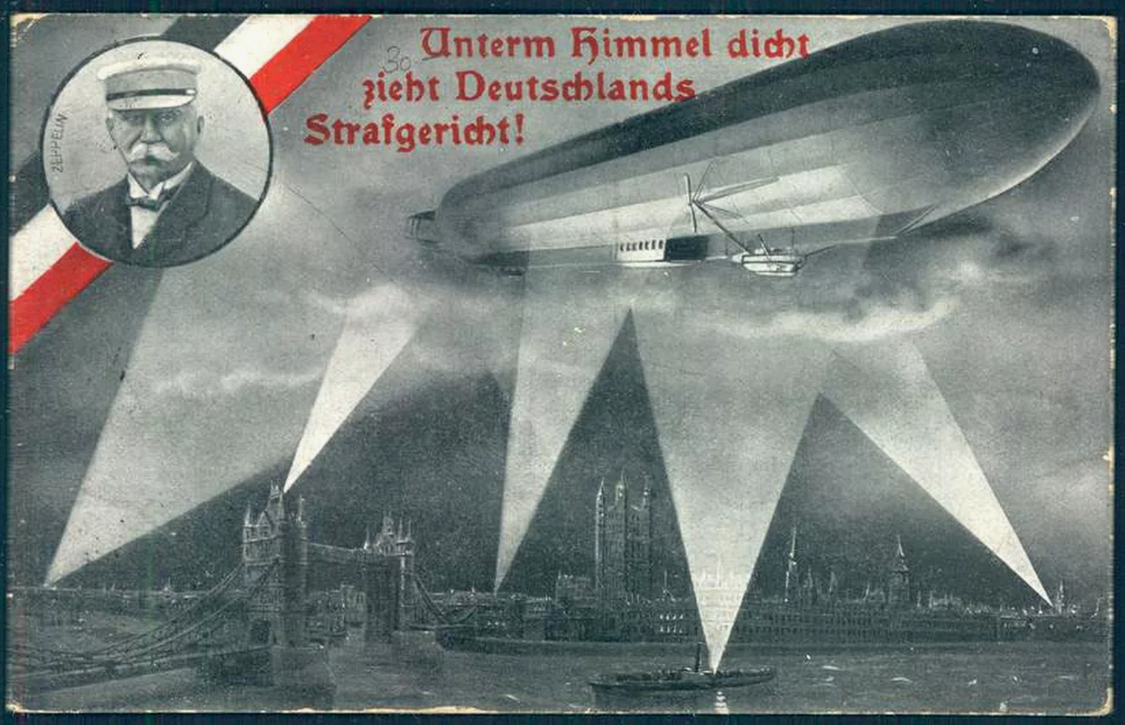
But things frankly didn’t go well at first, partly because of the conservatism of many former colleagues. By the mid-1890s, the count not only failed to build anything or at least raise the required amount of money: he was considered a mad projector and almost crazy, sometimes ridiculed to his face right on the streets. Moreover, Kaiser Wilhelm II personally joined the persecution, publicly calling the count “the biggest idiot of all the southern Germans,” whom the harsh northern Prussians already treated with some contempt. However, some of his early ideas, such as “sky trains” from chains of articulated airships led by an “air locomotive,” were indeed eccentric. It was only in 1898 that things got off the ground: he raised money through his “Joint Stock Company for the Promotion of Aeronautics” and with the help of the royal family of Württemberg, extracted aluminum bought by his deceased competitor David Schwarz for the project of an all-aluminum airship, and began construction on a floating boathouse on Lake Constance. The construction and storage of the airship on a floating platform was chosen for two reasons: firstly, the count considered an emergency splashdown safer for the structure and crew than hitting the ground; secondly, such a platform could be relatively easily rotated in the desired direction relative to the wind.
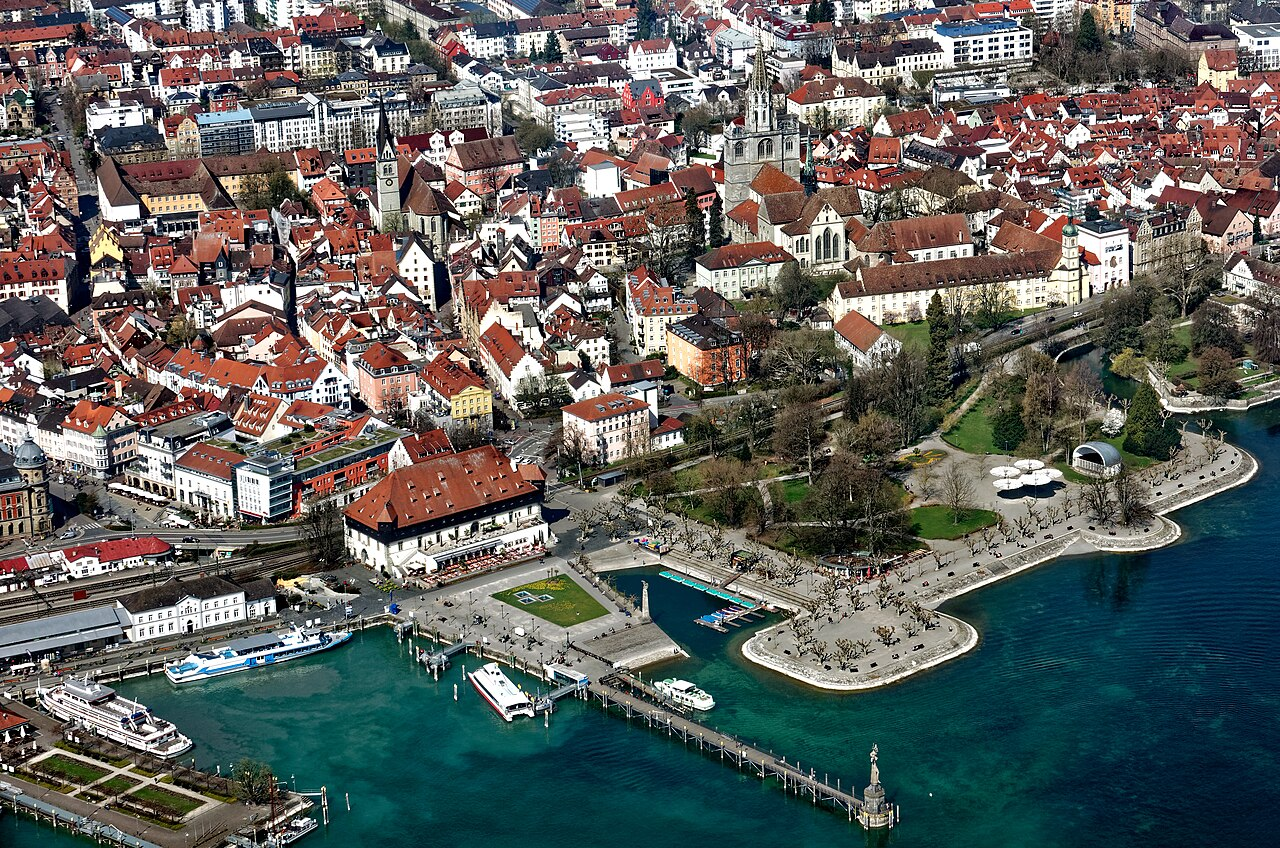
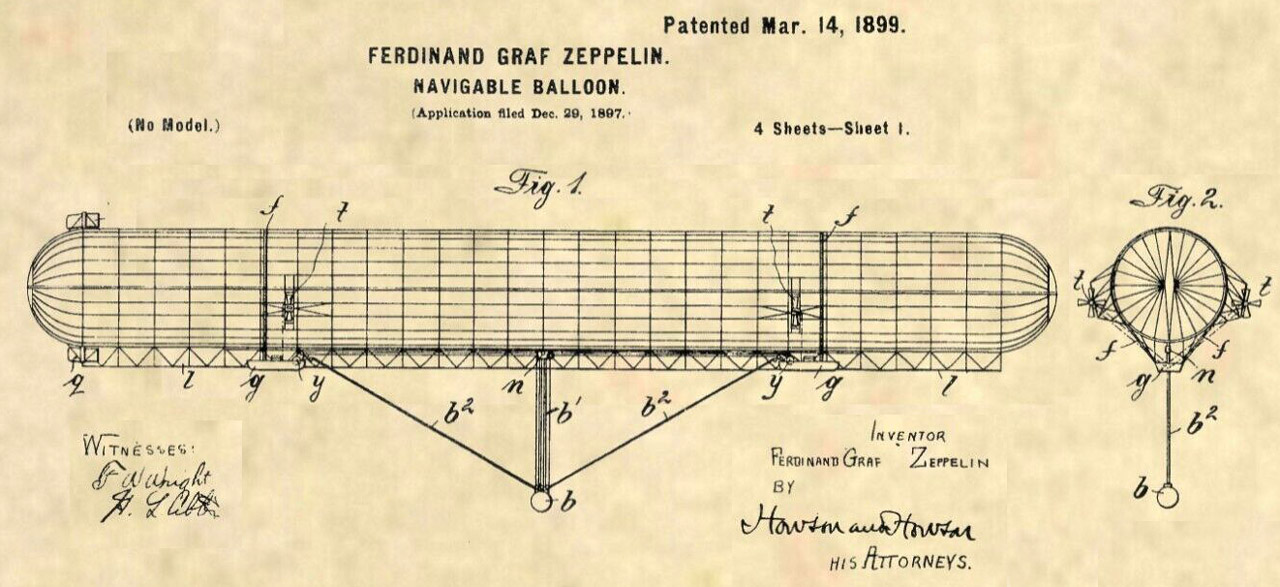
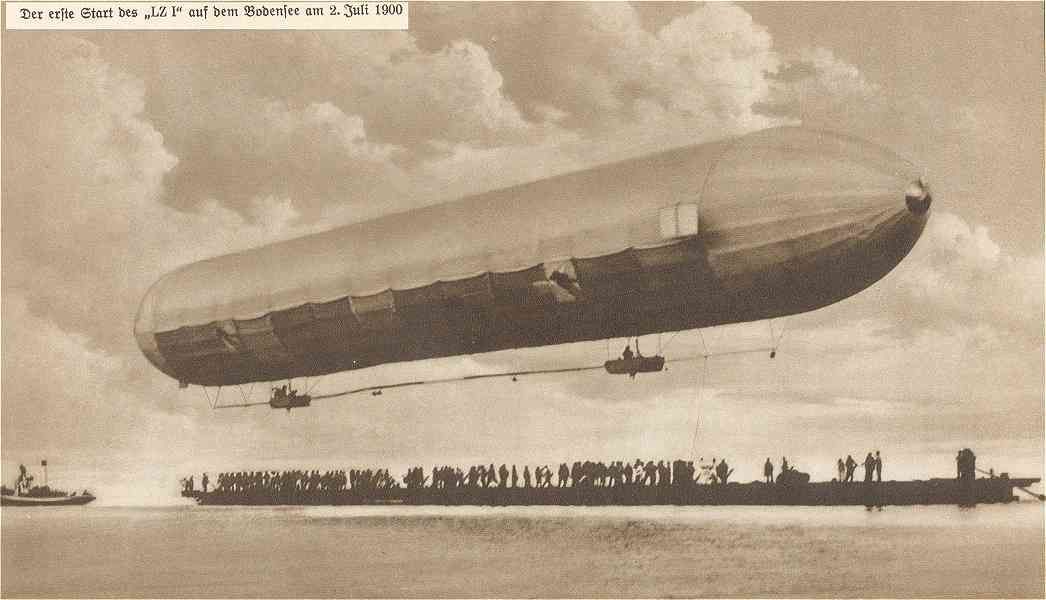
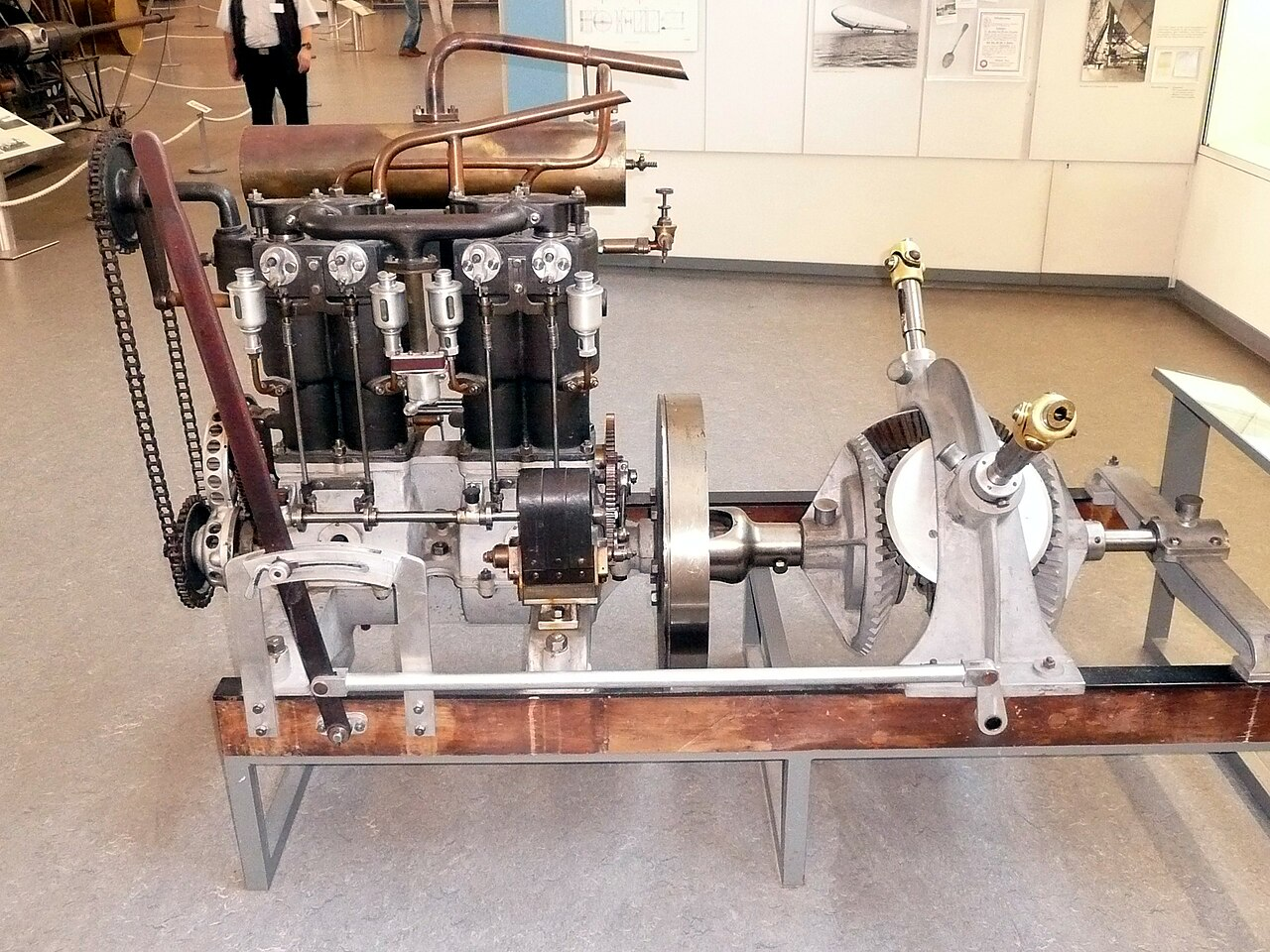
By July 1900, the airship, named LZ-1, after the name of the Luftschiffbau Zeppelin (Zeppelin Airship Construction) company, was ready. It had a length of 128 and a diameter of about 12 meters: already the first, smallest German airship of rigid construction was almost equal in size to the largest French soft "Pilâtre de Rozier", although due to the design it carried less carrier gas, 11 thousand instead of 14 for the Frenchman. The outer shell was stretched over an aluminum frame. Inside there were 17 cylinders made of rubberized fabric with hydrogen. Below were two gondolas connected by a bridge for passage. The trim was controlled using a 130-kilogram lead weight, which moved along the beam using a motor from a winch; there were also air rudders. The device was driven by two Daimler engines with a power of 14.2 horsepower each, each rotating two propellers. This design cost about 800,000 marks: a mind-boggling sum at that time, comparable to the cost of building a small warship.
The device first took to the air on the evening of July 2, 1900, in front of 12 thousand spectators gathered on the shores of Lake Constance, on boats and pleasure craft. This happened at 20:03 and caused massive applause and jubilation. The crew of five was led by engineer Fritz Burr and Hauptmann Hans Bartsch von Zigsfeld from the Prussian Aeronautical Battalion. However, the first pancake turned out to be a bit of a mess. Soon after takeoff, everything that was possible began to break down. The mechanism for moving the cargo failed, structural elements that were not thick and strong enough began to bend, one of the engines went out, the outer casing began to tear, and the carrier gas began to leak from the hydrogen cylinders. In 18 minutes of flight, the device managed to reach a speed of only 15 km/h, less than the calculated one. During the emergency splashdown, the structure received additional damage and was returned to the boathouse using a tugboat.
After a long period of repairs and amendments to the design, three new flights took place on October 17, 20 and 24 of the same year. Now everything was going a little more normally. On the second mission, the airship flew for a full 80 minutes until the engines failed due to water entering the gas tank. The third flight set a world speed record: LZ-1 managed to reach almost 30 km/h, 50% ahead of the French La France record, but was forced to splash down after 23 minutes due to the wind suddenly increasing to dangerous levels. Finally, on October 24, again in front of a large crowd of people and in the presence of the Württemburg King William II and his retinue, who had invested heavily in the project, the airship again took to the air and solemnly paraded through the skies at almost maximum speed.
The public was delighted, Kaiser Wilhelm II changed his mind, and already in January 1901 he awarded Count von Zeppelin the Order of the Red Eagle, 1st class, the second most senior award of the Prussian crown. However, the conclusion of the War Ministry of the German Empire was disappointing for von Zeppelin: “a valuable experimental model, currently unsuitable for military use.” Meanwhile, the money ran out, hopes for military budgets did not come true, no new investors were found, the joint-stock company had to be dissolved, and the airship was dismantled and sold for scrap. A long break again began in von Zeppelin’s work, until the Württemberg king, who believed in the Count’s ideas, was unable to raise the funds necessary to continue the work.
The second device, LZ-2, was ready by the end of 1905. Its development and assembly was now almost entirely supervised by professional military engineer and mechanic Ludwig Dürr - who would become the chief designer of Luftschiffbau Zeppelin and the designer of almost all of its airships until the company's closure in 1945. He took into account most of the problems of the first device, removed the moving ballast mechanism from the design, completely entrusting the control to air rudders and valves on the cylinders, and used stronger triangular beams. However, the fate of this airship was even sadder than that of the first. During the first launch attempt in November 1905, immediately after leaving the floating boathouse, it was hit by a strong gust of wind, requiring two months of repairs.
The first and last flight took place on January 17, 1906, now Count von Zeppelin himself was on board. Due to not entirely accurate calculations of the volume of the carrier gas and the weight of the ballast, the airship immediately rushed upward, and it was possible to stop the rise only at an altitude of half a kilometer. At the same time, it tilted forward at an angle of 20 degrees, and fuel stopped flowing into the engines at such an angle. The uncontrollable airship was blown east by strong winds, von Zeppelin ordered the gas to be released and to land - but even then everything went wrong. The chain of the dropped anchor broke, before which the gondolas hit the ground several times. They managed to slow down only on two birches that got in the way, after which the damaged airship finally landed near the city of Kisleg. LZ-2 was finally finished off by a snow storm that broke out at night.
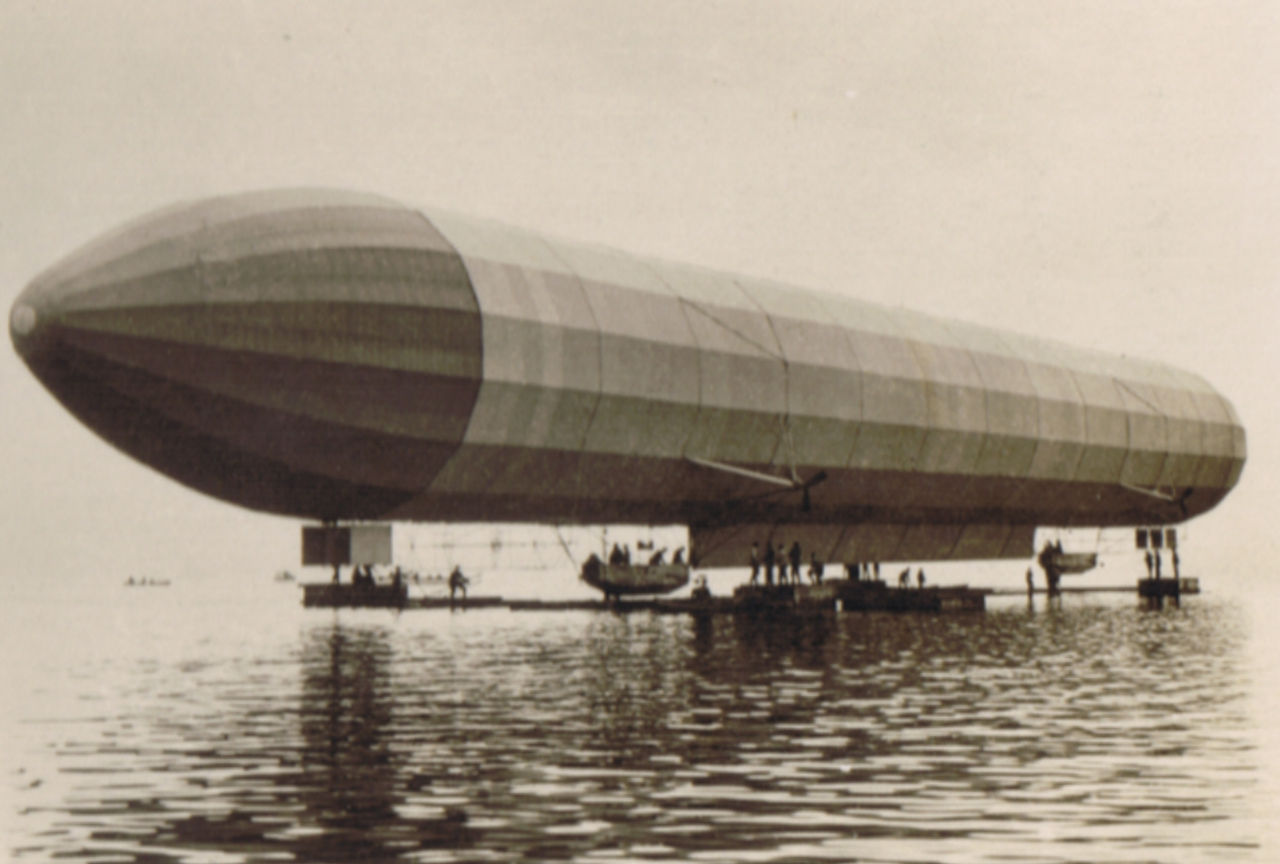
However, the remains of LZ-2 were collected, delivered to Lake Constance, and used for the construction of the new LZ-3. In general, the design was the same as its predecessor, the main innovation being enlarged elevators and added horizontal stabilizers. It took off in October 1906, and now flew quite confidently and reliably, in some cases with passengers and for hours. Now the imperial military department began to look at the developments of Count von Zeppelin with growing interest. In 1907, he was allocated half a million marks from the treasury, but set a condition: further funding and consideration of the adoption of his airships was possible only after a successful flight lasting at least 24 hours. The LZ-3 simply could not carry enough fuel for this. Having rolled the heir to the throne, Crown Prince Wilhelm, it was put into storage in October 1907, while von Zeppelin and Ludwig Duerr focused on a new project, the LZ-4.
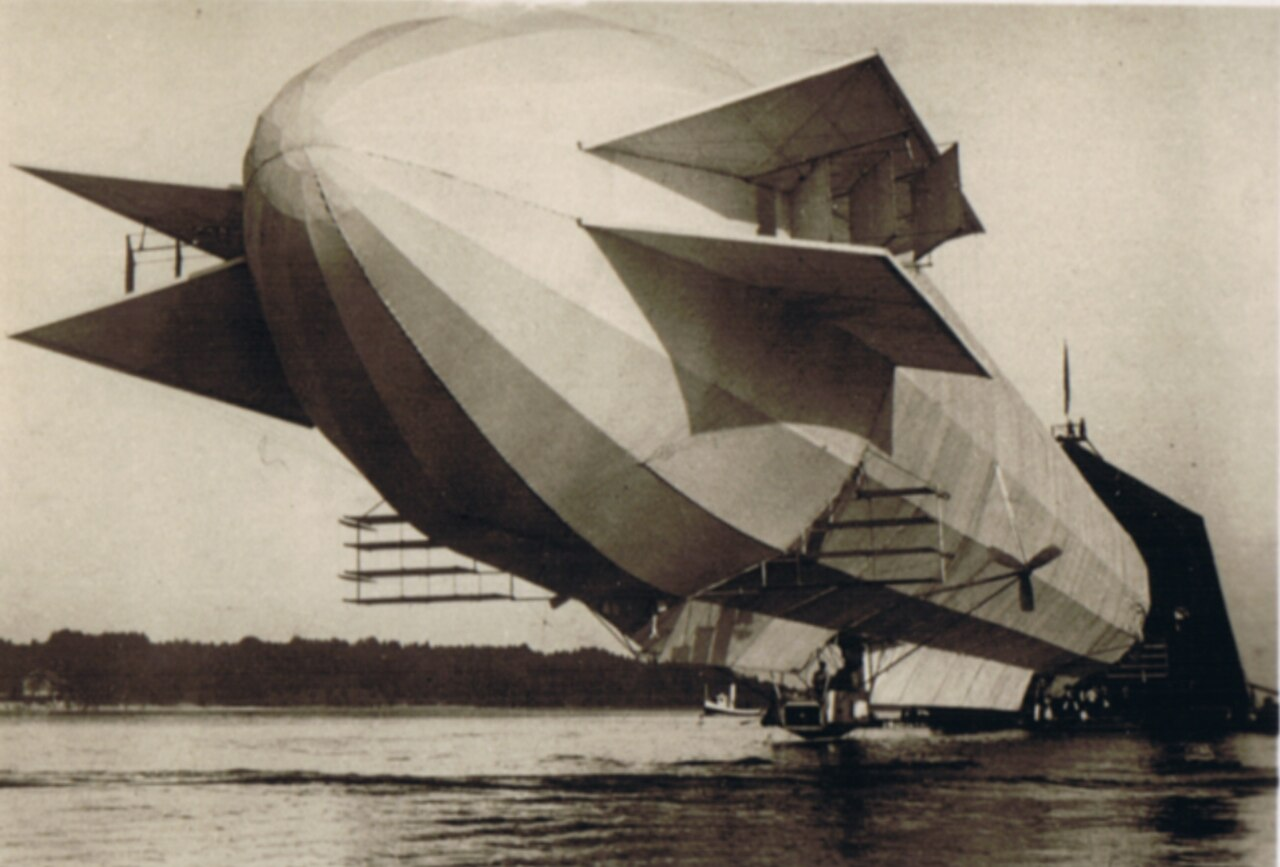
It was a larger airship with a length of 149 meters and a diameter of 14 meters, capable of reaching a speed of 50 km/h and continuing to move for up to 30 hours. It was powered by two internal combustion engines produced by Daimler with a power of not 14, but 105 horsepower each. The rudders and stabilizers were improved, and a staircase was installed inside, allowing an internal staircase to be climbed to an upper platform for stargazing for navigation at night. The aircraft first flew on June 20, 1908, after which improvements were made to the control system. Further flights were quite successful - including a 12-hour flight to Zurich and back, almost 400 kilometers at an altitude of up to 800 meters.
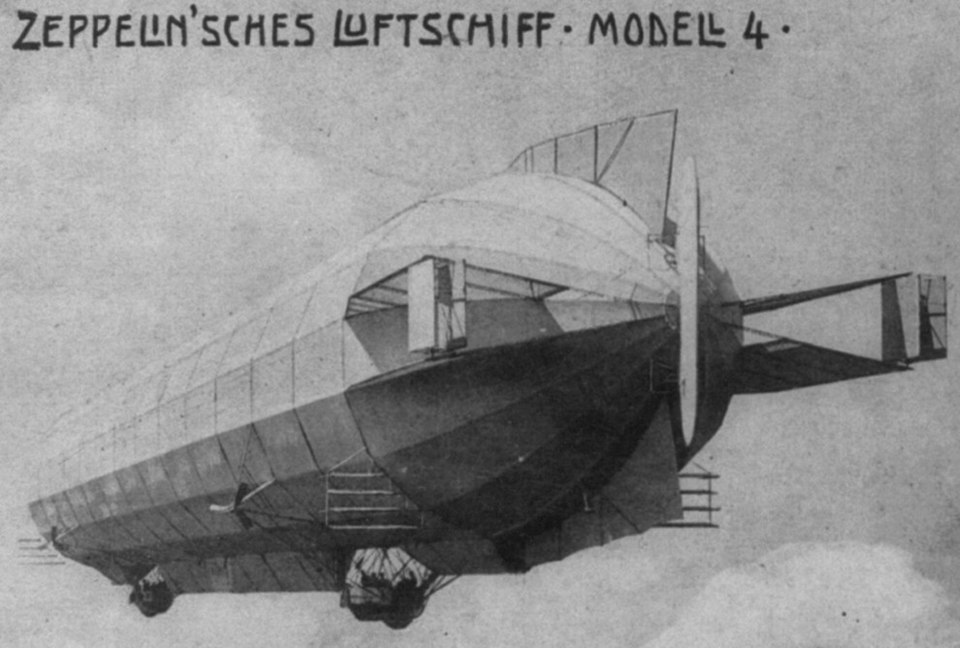
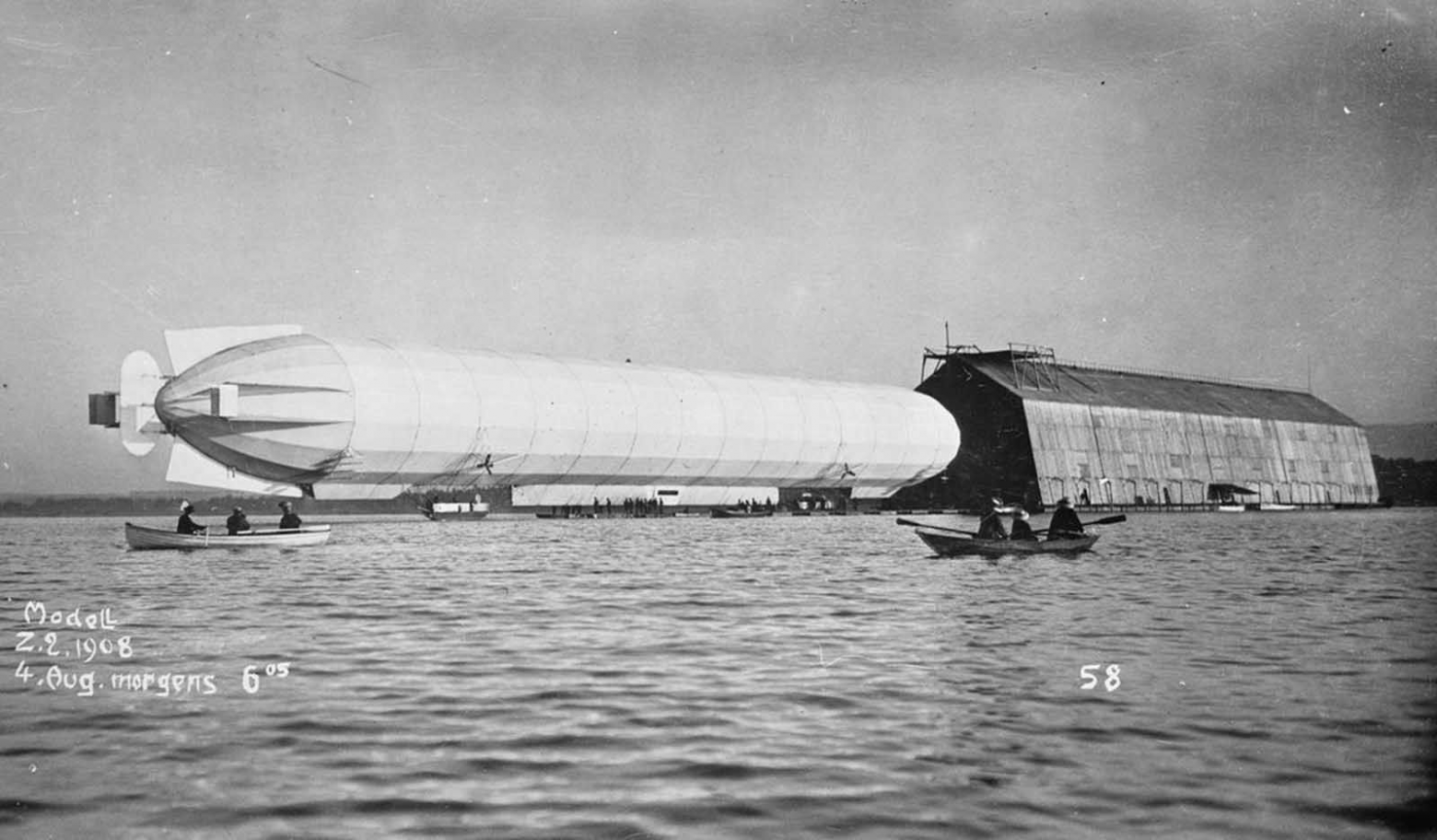
However, attempts to fulfill the War Ministry's condition and conduct a 24-hour flight to Mainz and back to Lake Constance almost ended in tragedy. First, in July, the engine failed at the very beginning of the flight, and we had to return. Then, on August 4, 1908, the airship with 12 crew members took off again. The flight was widely announced in advance; spectators gathered along the entire published route through large cities along the way. After passing Strasbourg, due to poorly thought out refueling procedures - the main fuel supply was stored separately from the gas tanks associated with the engines - the airship rose above the permissible altitude of 800 meters, which caused an accelerating leak of hydrogen, which soon became critical. Before reaching 23 kilometers from Mainz, the LZ-4 made an emergency landing on the Rhine, where everything unnecessary was unloaded from it and five crew members were dropped off so that the lightweight vehicle could reach the end of the route. The airship successfully turned around over Mainz and turned back on course - but now a bearing in the front engine had melted, speed and controllability dropped, and further flight became too difficult. The ship was landed and moored near Stuttgart in order to quickly repair the engine - but it was soon torn from its anchors by rising winds. The remaining crew member on board managed to relieve the gas and land the airship - but the gas cylinders were pierced by the branches of an unfortunate tree. Either lightning or static electricity immediately ignited the hydrogen. Fortunately, there were no fatalities, only two crew members and one soldier on the ground were injured.
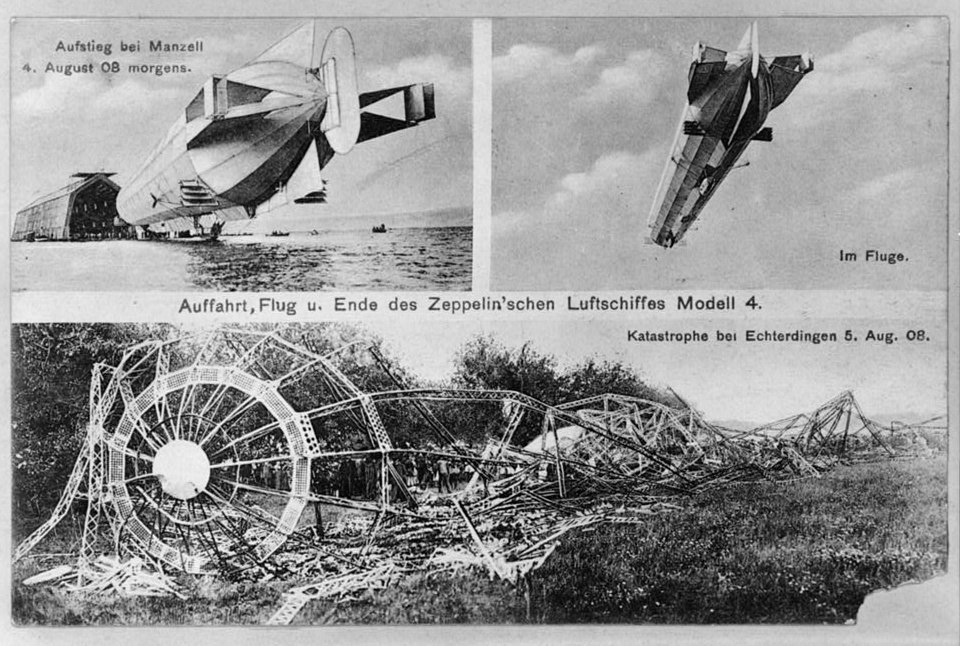
The disaster occurred in front of tens of thousands of people who had gathered to gawk at the miracle of technology. In another country or at another time, perhaps this would have led to a wave of criticism, disappointment in the idea and the closure of the topic. But the German Empire of the late 1900s was powerfully electrified by the sentiments of German nationalism - albeit not as radical as in the next Reich - and militarism with the desire to annoy all its neighbors on land, the British at sea, and take “in fairness to the deprived German nation” more neighboring lands and distant colonies. The explosion of LZ-4 did not lead to disappointment, but to a strong wave of enthusiasm, a mass desire to “restore the honor of national aeronautics.” An urgent fundraiser was announced for the development of German airship construction, and the money already collected over the next 24 hours was enough to build a new airship. And in total, during the campaign, which included the sale of themed souvenirs and even aluminum spoons from the remains of the lost airship, a mind-boggling 6 million marks were collected, enough to build not only an airship, but an entire cruiser for the Kaiser’s High Seas Fleet. This allowed von Zeppelin to found the company Luftschiffbau Zeppelin GmbH and the Zeppelin Foundation.

Now von Zeppelin's company was provided with funds, and the military lifted the requirement for a 24-hour flight. The prospects for serial production of airships opened up, but first of all, funds were spent on the reconstruction and modernization of the LZ-3, which took off again in October 1908. After a series of test flights, on November 7, the airship made a ceremonial 80-kilometer flight, delivering Admiral Prince Heinrich, Commander-in-Chief of the High Seas Fleet, to Kaiser Wilhelm II in Donauenschigen. The LZ-3 was officially transferred to the Kaiser's army under the name Z-I. From now on, when commissioned, von Zeppelin's airships will have numbers with the index LZ, those transferred to the army will receive Roman numbers with Z, and naval ones will receive Arab numbers with L.
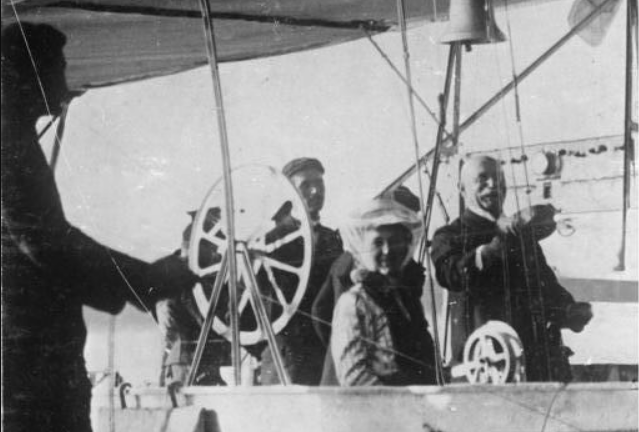
At the end of 1908, the new LZ-5 was laid down, which, in general, repeated the LZ-4 project. In May 1909, he took to the air for the first time, and soon managed to greatly exceed the initial requirements of the military, making a successful 38-hour flight to Bitterfeld and back, covering almost 1,200 kilometers. At the same time, he also managed to crash into a tree at some point, but fate turned out to be more favorable to him. It was then transferred to the Army as the Z-II and would be stationed at the first military airship base near Cologne and serve as the Army's first training airship for aircrews. True, after 16 successful flights it crashed due to a storm in April 1910.
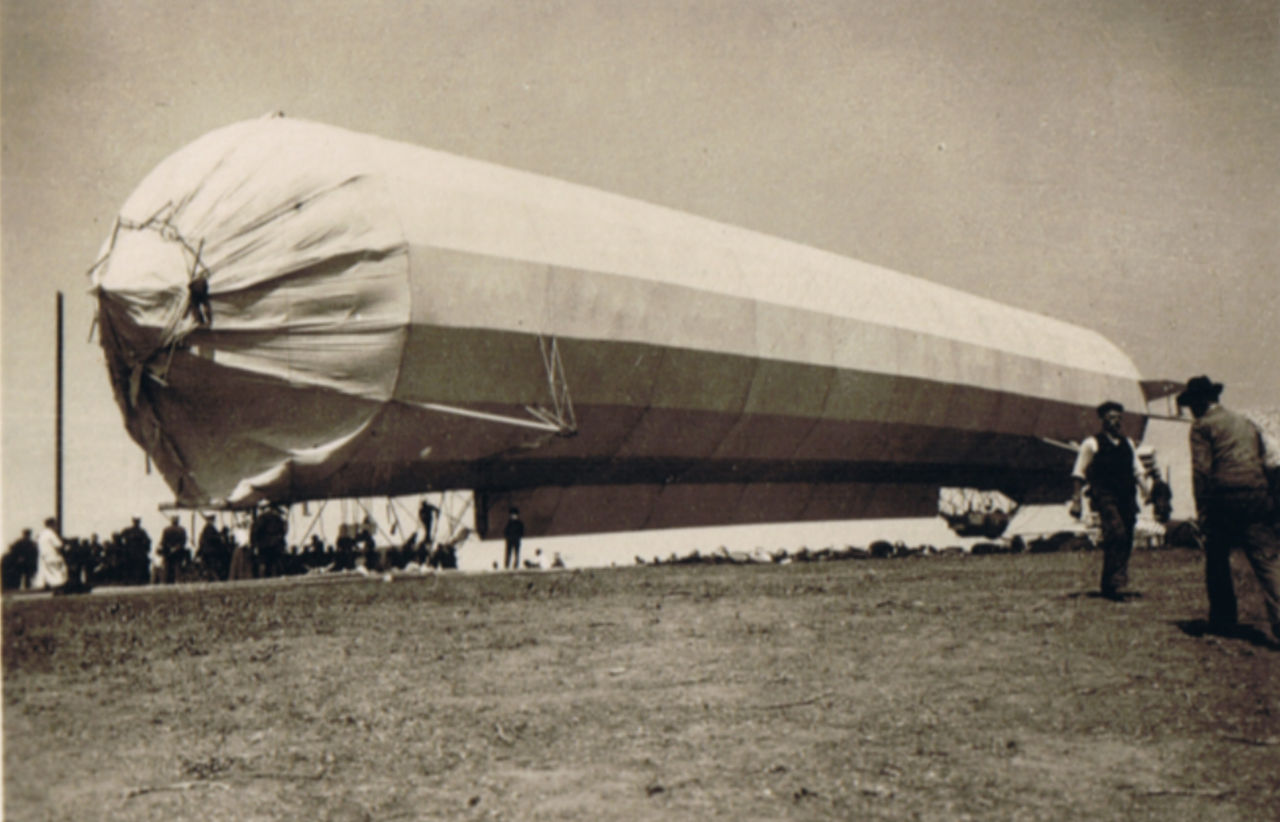
But LZ-6 and six more airships from subsequent assembly vehicles faced a slightly different fate. Despite the objections of Count von Zeppelin, who insisted that the German airship was primarily a celestial weapon of the German Empire, commercial director Alfred Kolsman succeeded in creating the first airline in history for civil air transport. It was created in November 1909 and was named DELAG: Deutsche Luftschiffahrts-Aktiengesellschaft, "German Aeronautical Joint Stock Company". After the conversion, the initially experimental LZ-6 was transferred to him, after which specially built vehicles for passenger transportation were sent: LZ-7, LZ-8, LZ-10, LZ-11, LZ-13 and LZ-17.
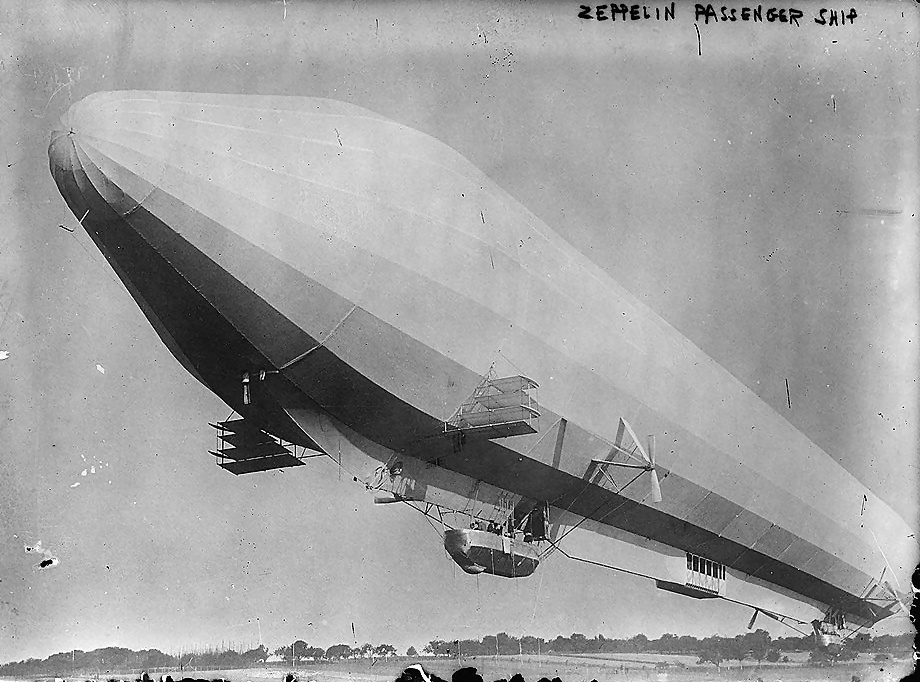
All of them, except the first LZ-6, received civilian names based on the model of German ships and ships: “Germany”, “Germany II”, “Swabia”, “Victoria Louise” (in honor of the Kaiser’s daughter), “Hansa” and “Saxony”. True, the first four did not live to see the outbreak of the First World War due to accidents and storms - but there were no deaths on commercial flights. From the start of their first scheduled flights in June 1910 until the outbreak of World War II in August 1914, they carried a total of 34,028 passengers on 1,588 commercial flights. During this time, they covered 172,535 kilometers in 3,176 flight hours with an average speed of 54 km/h and an average flight range of 110 kilometers (they mainly worked on intra-German lines).
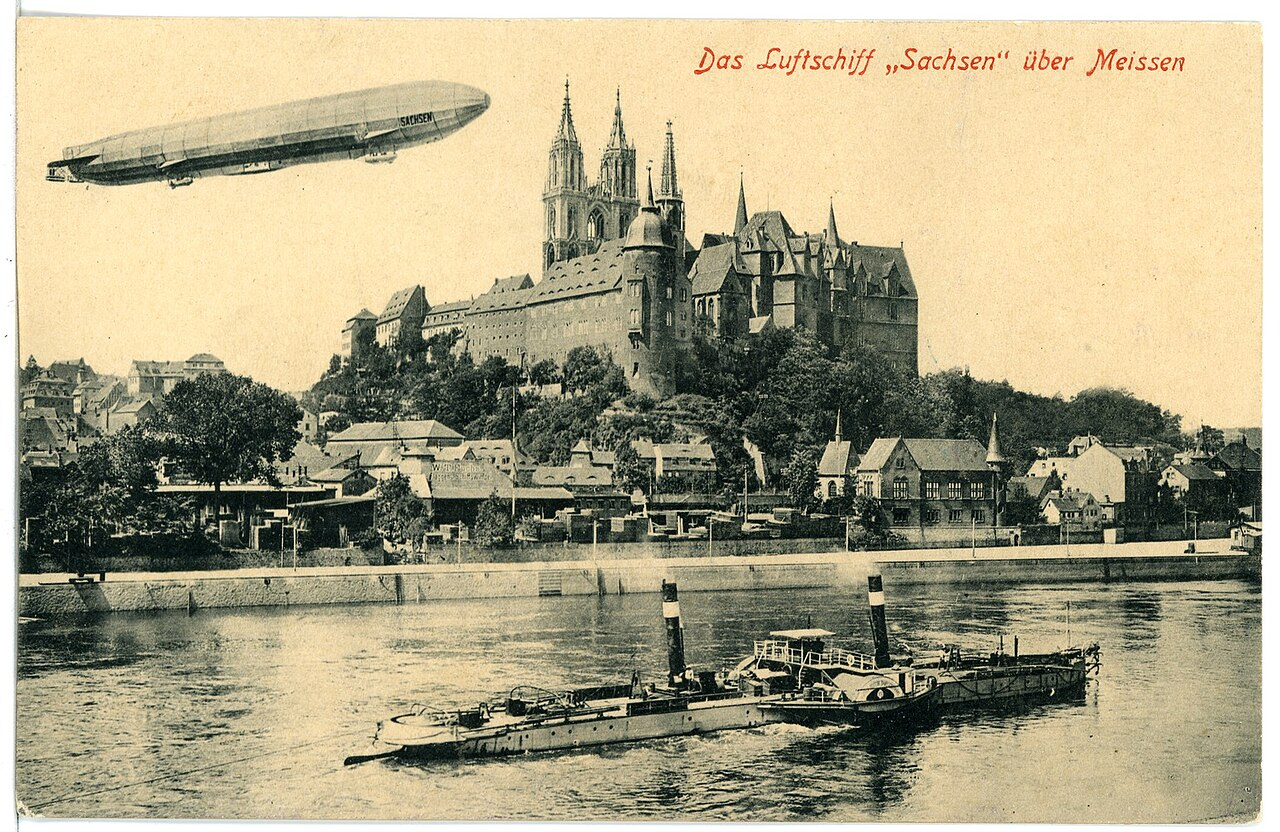
Well, after the outbreak of war, the remaining three DELAG airships were requisitioned for military purposes, while Luftschiffbau Zeppelin and its smaller competitors completely switched to mass production of rigid airships for the needs of the German army and navy. Until the end of the First World War, when the rapid progress of combat aviation and anti-aircraft artillery made the giant airships too vulnerable, they would remain an important trump card, the “long arm” of the German Empire on land and at sea. However, the military and post-war history of German Zeppelins is a subject worthy of separate analysis.
© 2025 MT FINANCE LLC
Why This Matters In Practice
Beyond the original publication, Why Airships Never Took Off. Part 3: Birth of the German Zeppelins matters because teams need reusable decision patterns, not one-off anecdotes. We have already discussed the birth of the idea of controlled aeronautics, the first unsuccessful experiments and how airship construction...
Operational Takeaways
- Separate core principles from context-specific details before implementation.
- Define measurable success criteria before adopting the approach.
- Validate assumptions on a small scope, then scale based on evidence.
Quick Applicability Checklist
- Can this be reproduced with your current team and constraints?
- Do you have observable signals to confirm improvement?
- What trade-off (speed, cost, complexity, risk) are you accepting?