Why Airships Never Took Off. Part 12: Italian Semi-Rigid Airships
Italy at the beginning of the twentieth century was a poor and backward country by European standards, but very ambitious. In some areas it managed to remain quite at the world level, and aircraft were among them. Suffice it to say that it was the Italians, during the conquest of
Editor's Context
This article is an English adaptation with additional editorial framing for an international audience.
- Terminology and structure were localized for clarity.
- Examples were rewritten for practical readability.
- Technical claims were preserved with source attribution.
Source: the original publication
Series Navigation
- Why Airships Never Took Off. Part 1: From Montgolfier to a Borodino Bomber
- Why Airships Never Took Off. Part 2: Rise and Fall of French Airships
- Why Airships Never Took Off. Part 3: Birth of the German Zeppelins
- Why Airships Never Took Off. Part 4: The Kaiser's Airships Go to War
- Why Airships Never Took Off. Part 5: Shadows Over Britain
- Why Airships Never Took Off. Part 6: London Under the Bombs
- Why Airships Never Took Off. Part 7: Fire in the Sky
- Why Airships Never Took Off. Part 8: The End of Wartime Zeppelins
- Why Airships Never Took Off. Part 9: Ashes of War and New Opportunities
- Why Airships Never Took Off. Part 10: The Most Famous and Successful Zeppelin
- Why Airships Never Took Off. Part 11: Aircraft Carriers in the Sky
- Why Airships Never Took Off. Part 12: Italian Semi-Rigid Airships (Current)
- Why Airships Never Took Off. Part 13: Through the North Pole aboard the Norge
Italy at the beginning of the twentieth century was a poor and backward country by European standards, but very ambitious. In some areas it managed to remain quite at the world level, and aircraft were among them. Suffice it to say that it was the Italians, during the conquest of Libya, who for the first time in history used aviation for military purposes, and by the end of the First World War the country had one of the strongest air fleets in the world. Of course, the Italians were most passionate about airplanes, including because of the great love for them on the part of Mussolini, who came to power in 1922, and many of his colleagues. But they also had many bright pages in airship construction. Moreover, it was Italian projects of semi-rigid airships that would later form the basis of the Soviet airship program.
Part 1: from hot air balloon to bomber for Borodino
Part 2: the birth and death of French airship construction
Part 3: the birth of the German Zeppelins
Part 4: The Kaiser's skyships go to war
Part 5: Shadows over Britain
Part 6: London under the bombs
Part 7: Fire in the Sky
Part 8. finale of military zeppelins
Part 9: Ashes of War and New Opportunities
Part 10: the most famous and successful of Zeppelins
Part 11: Aircraft Carriers in the Skies
Part 12: semi-tough Italians ← you are here
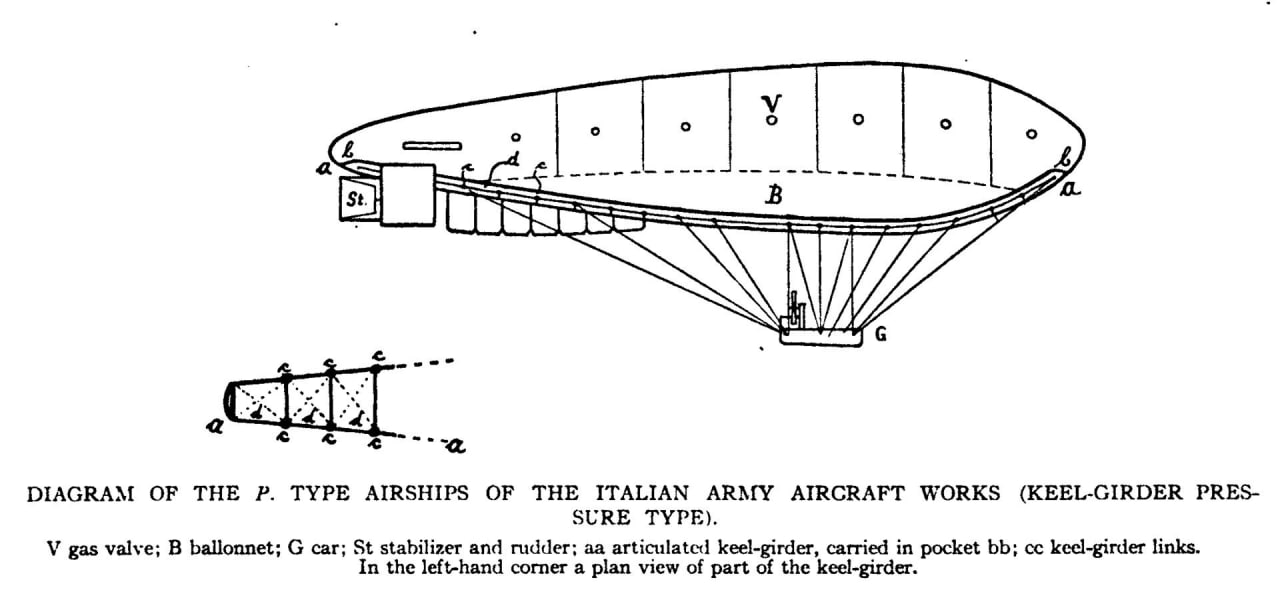
The idea of semi-rigid airships belonged to the Brazilian inventor and politician Augusto Sever de Albuquerque Maranhão. In 1892, he developed a project that was supposed to combine the best features of soft and hard type machines without their disadvantages. Soft ones are simpler and cheaper, but more vulnerable, and the more, the more difficult to create. Rigid ones, where the dome is completely stretched over the internal frame, are stronger and more reliable, but much more expensive and difficult to manufacture and maintain, and it only makes sense to build them large. Augusto de Albuquerque proposed, instead of a full-fledged frame, to build a rigid truss into the lower part of the dome, to which the gondola and engines would be attached, and which would help the dome maintain the proper shape and strength. The rest of the dome was simply inflated using the soft construction principle.
The inventor ordered the dome in France, where the construction of soft-structure airships was in full swing, and in 1893 he began assembly in Rio de Janeiro. The machine, 60 meters long and carrying gas volume of 2000 cubic meters, was named “Bartolomeu Lourenço de Gusmão” in honor of the Brazilian Jesuit of the early 18th century, who proposed one of the first airship designs in history. To reduce weight, the frame of the truss was made not of metal - aluminum could not be obtained in the required quantity - but of bamboo. In 1894, Augusto de Albuquerque made several lifts on a leash, but then a storm destroyed the improvised boathouse along with the airship.
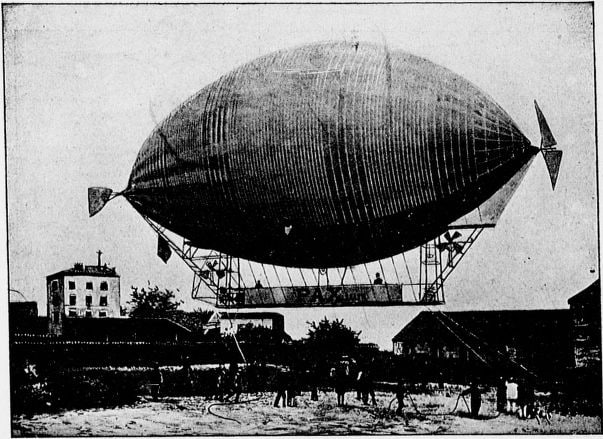
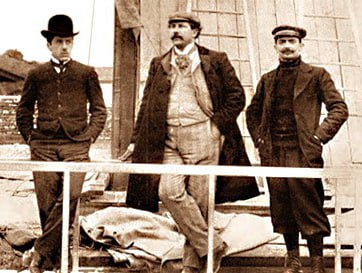
The inventor did not give up, moved to Paris and built a larger device of a semi-rigid design called “Pax” - already 30 meters long and with a volume of 2500 cubic meters. After successful tethered ascents, Augusto de Albuquerque and his French mechanic Georges Sachet took off in the Parisian suburb of Issy-les-Moulineaux on the morning of May 12, 1902 and headed towards the center of the capital. However, after 12 minutes of flight, hydrogen ignited due to engine failure - and the apparatus, engulfed in fire, crashed from a height of 400 meters directly onto Avenue du Maine, to the horror of thousands of eyewitnesses. Two neighboring streets in Paris were named in honor of the fallen balloonists.
However, the idea of a semi-rigid airship did not die with the author - and before the First World War they were experimented with in France, Germany, and Great Britain. But it received no serious development almost anywhere; the Germans focused on large zeppelins, the French and British preferred to pay the most attention to the usual soft structures. But in Italy they decided to rely on de Albuquerque’s scheme. Moreover, this idea arose in parallel from two Italian inventors: Enrico Forlanini, the first in history to fly an unmanned helicopter prototype in 1877, and military engineer Gaetano Arturo Crocco.
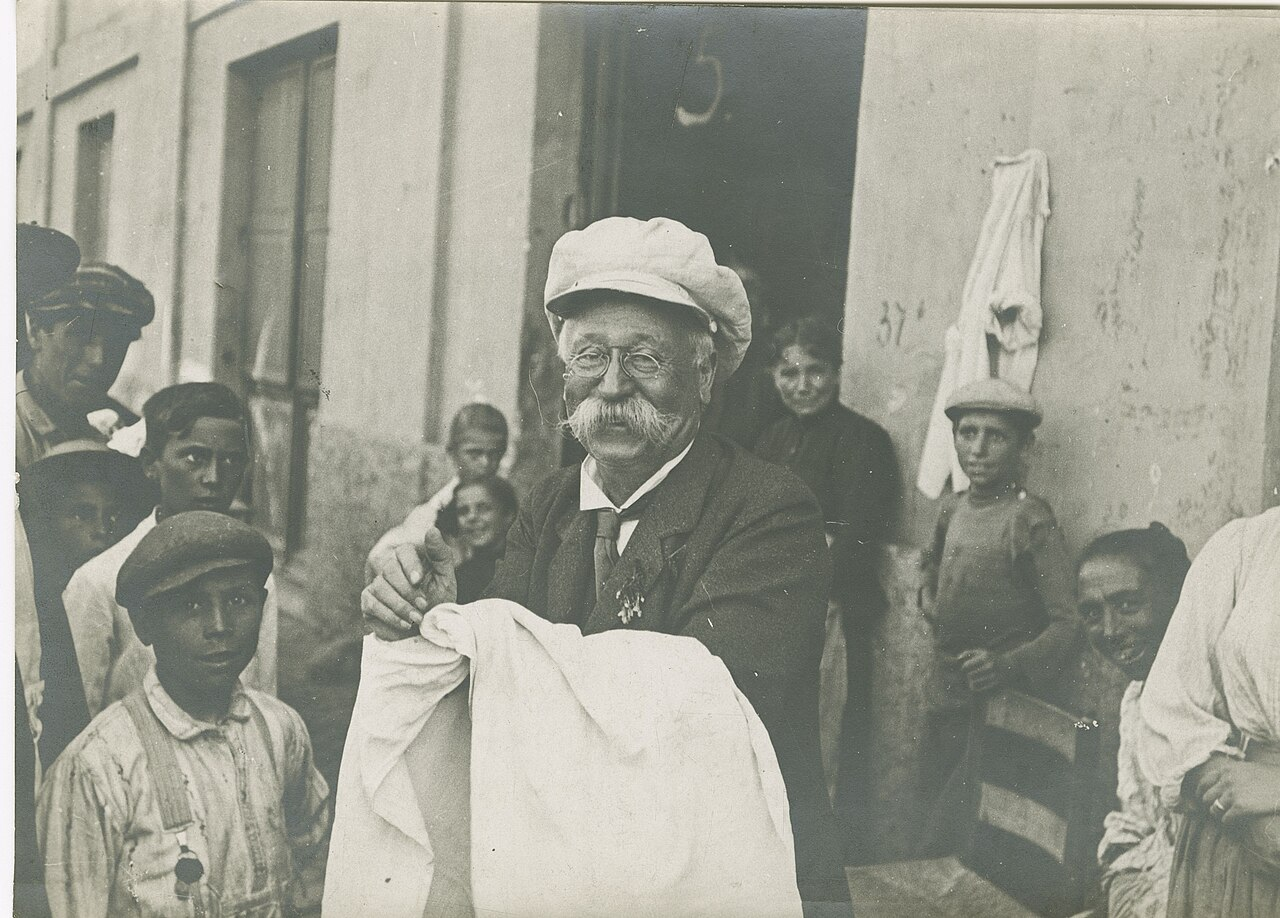
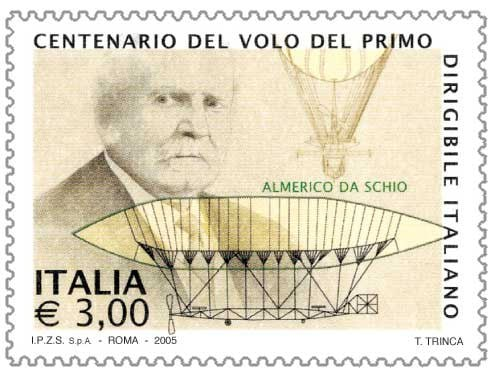
Strictly speaking, Forlanini was the first; he began work on his project back in 1900 - but priority in the first flight of the Italian airship belongs to the professor of meteorology Almerico da Schio. His 38-meter soft-construction craft, called Aeronave Italia - literally "Airship Italy" - was built according to French designs using money raised by a crowdfunding campaign from across the country, both the royal family and the military department invested in it. It took off in controlled flight on 17 June 1905 at Schio near Vicenza, and demonstrated confident control at speeds of up to 60 km/h, after which it made repeated flights in front of spectators, including Queen Margherita. Da Schio did not build any other airships, but the traveler-mountaineer Celestino Usuelli took over the baton for the development and creation of Italian soft-construction devices.
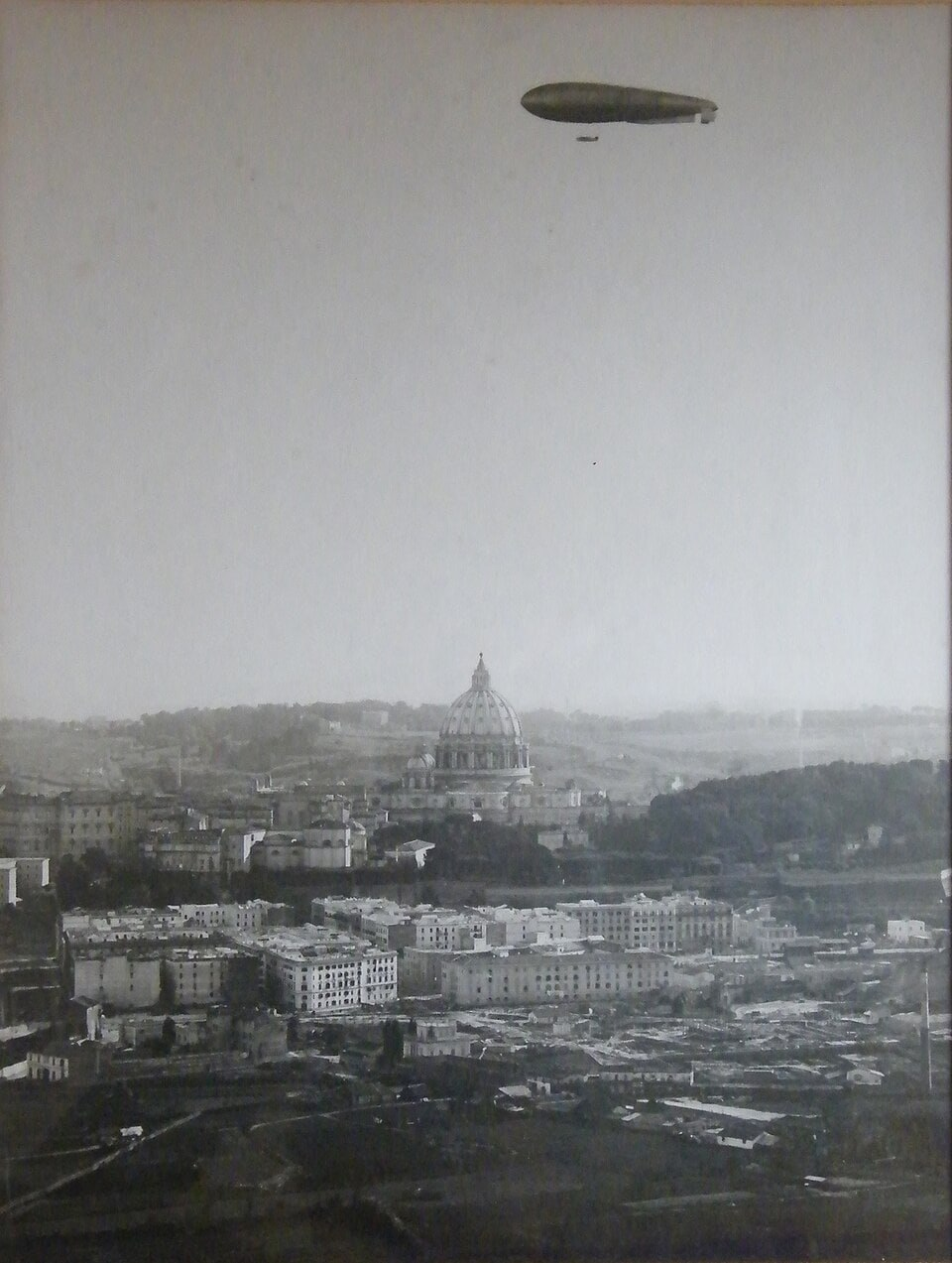
The first Italian airship of a semi-rigid design was also not lifted into the air by Forlanini - he was ahead of Gaetano Crocco, who in 1906 was entrusted with the development of such a device through the military department. In this case, the choice of design was determined precisely by military considerations: soft airships were considered too vulnerable, and relatively poor Italy could not afford large rigid zeppelins of the German type. Already on October 31, 1908, a device called N-1, under the control of Crocco and his colleague Ottavio Ricaldoni, successfully completed an 80-kilometer flight from Lake Bracciano to Rome in an hour and a half, where it solemnly flew over the center of the ancient city at an altitude of half a kilometer. The airship was 63 meters long, contained more than 2,700 cubic meters of carrier gas, and reached speeds of up to 50 km/h.
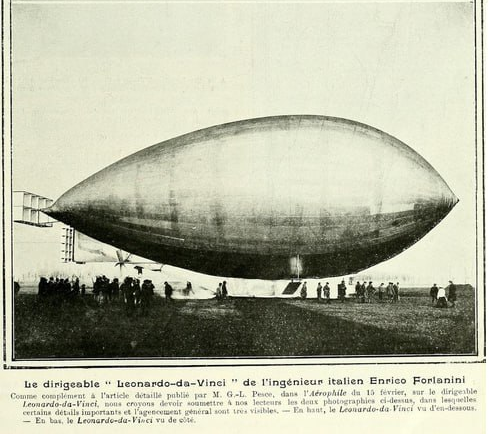
Enrico Forlanini first flew his F-1 Leonardo da Vinci on July 2, 1909. With a length of 40 meters, it contained more than 3,200 cubic meters, and was much more “potbellied” than the streamlined N-1 - but it could also accelerate to 50 km/h. The main customers of Forlanini’s company, and even more so of Crocco’s initial military projects, since 1915 were the royal army and the royal navy of Italy, which entered the First World War on the side of the Entente. In total, during the war, the army operated 8 airships of the Crocco and 2 Forlanini designs, the navy - 5 Crocco, 1 Forlanini and two more machines of semi-rigid design by Rodolfo Verduzio.
The chosen semi-rigid scheme allowed the Italians already in 1915 to use devices quite comparable in size and capabilities to pre-war Zeppelins: up to 90-100 meters with a carrier gas volume of about 15,000 cubic meters and a bomb load of more than a ton. They conducted patrols against the Austro-Hungarian fleet in the Adriatic, at night they bombed the front line near the Isonzo and enemy fleet targets in Kotor and Fiume, and at the end of the war they scattered propaganda leaflets over the cities of the collapsing Habsburg empire. Some of the vehicles were killed by enemy fire or in stormy conditions. But the number of devices produced, of course, could not be compared with the German scale, and Italian airships in 1918 did not differ as strikingly from pre-war devices as the German high-altitude super-zeppelins of the end of the First World War.
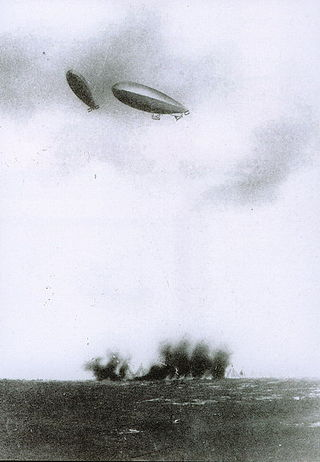
After the war and the rise to power of Mussolini's fascist party, Italian airship construction was on the verge of closure. The military finally relied on airplanes - which the Italians then produced were among the best in the world. They would fall behind the more industrially and scientifically advanced powers only by World War II, and even then individual models would demonstrate outstanding achievements. Suffice it to say that the Macchi 202 and 205 fighters are considered the most aerodynamically advanced aircraft of the Axis countries, and the Savoia-Marchetti SM.82 long-range bombers in October 1940 managed to fly from Rhodes to British oil refineries and the port in Bahrain, and bomb them “before it became mainstream.” By all indications, the history of Italian airship construction should have ended in the early 1920s: Enrico Forlanini was unable to interest either the government or investors with the idea of passenger airships modeled on the German DELAG, and Gaetano Crocco focused on jet engines and space flight calculations. And so it would have been if not for one man named Umberto Nobile.
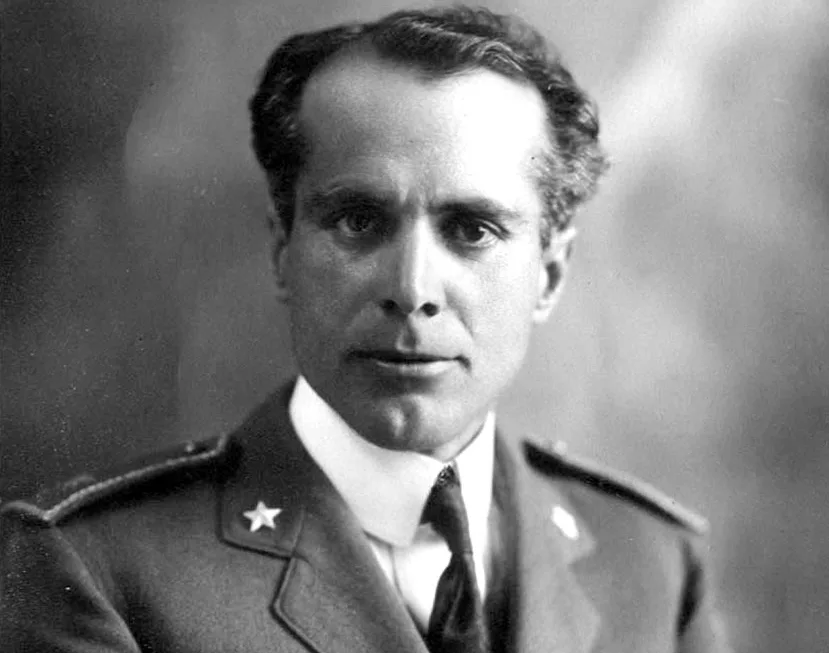
He was born in 1885 in the town of Lauro near Naples in the family of civil servant Vincenzo la Torraca. The family was poor but of aristocratic origins - and were stripped of their titles after the unification of Italy for their unwillingness to recognize the dominance of the Royal House of Savoy to replace the overthrown Neapolitan Burboons. Therefore, the family name la Torraca was replaced by Nobile, which simply meant “noble.” Umberto graduated from the University of Naples in 1908 with a degree in industrial engineering, after which he worked for some time for the state railway company. However, he soon became interested in aviation and enrolled in courses on this topic with the Italian Royal Army.
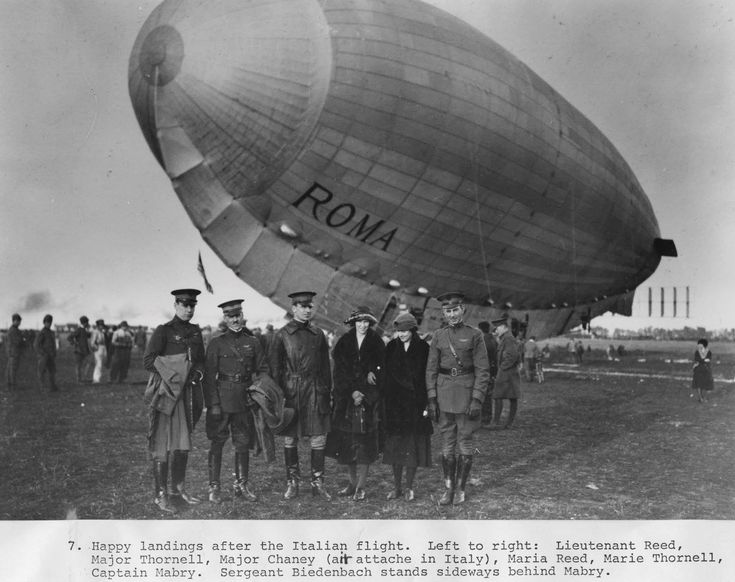
With the outbreak of war, Umberto tried to volunteer to join the active forces - but he was rejected several times due to poor health. Then he became a military engineer and went to work at a Roman aircraft factory, where he took part in the design and construction of the airships Verduzio and Crocco. There he finally fell in love with airships, and before the end of the war, together with several like-minded people, he founded the company “Stabilimento Costruzioni Aeronautiche”. With the support of Colonel Gaetano Crocco, Umberto Nobile and his colleagues designed a new, unprecedentedly large airship of a semi-rigid design, which they planned to use on transatlantic passenger lines. At first it had the working name T-34, but then received the name “Roma” in honor of the Italian capital.
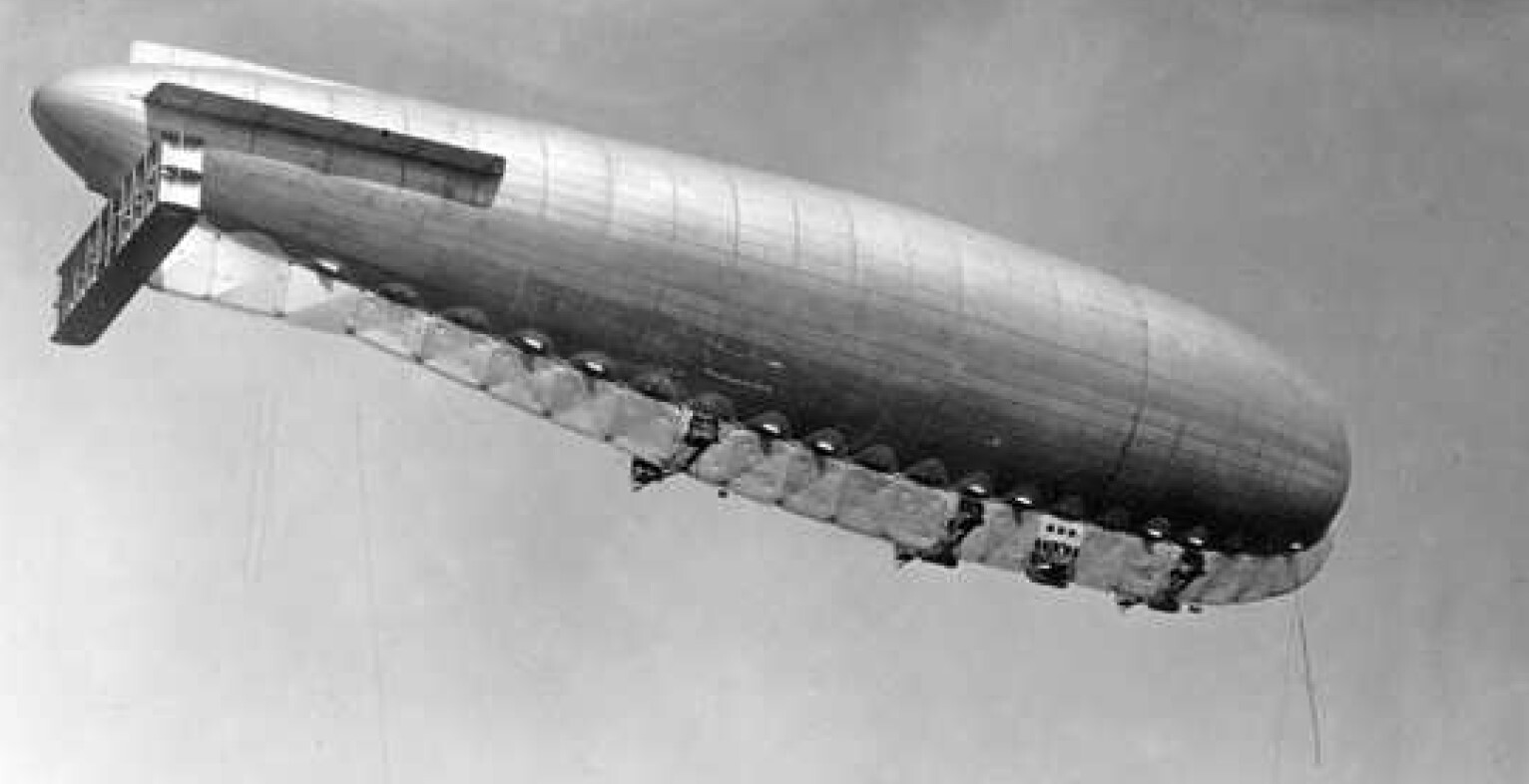
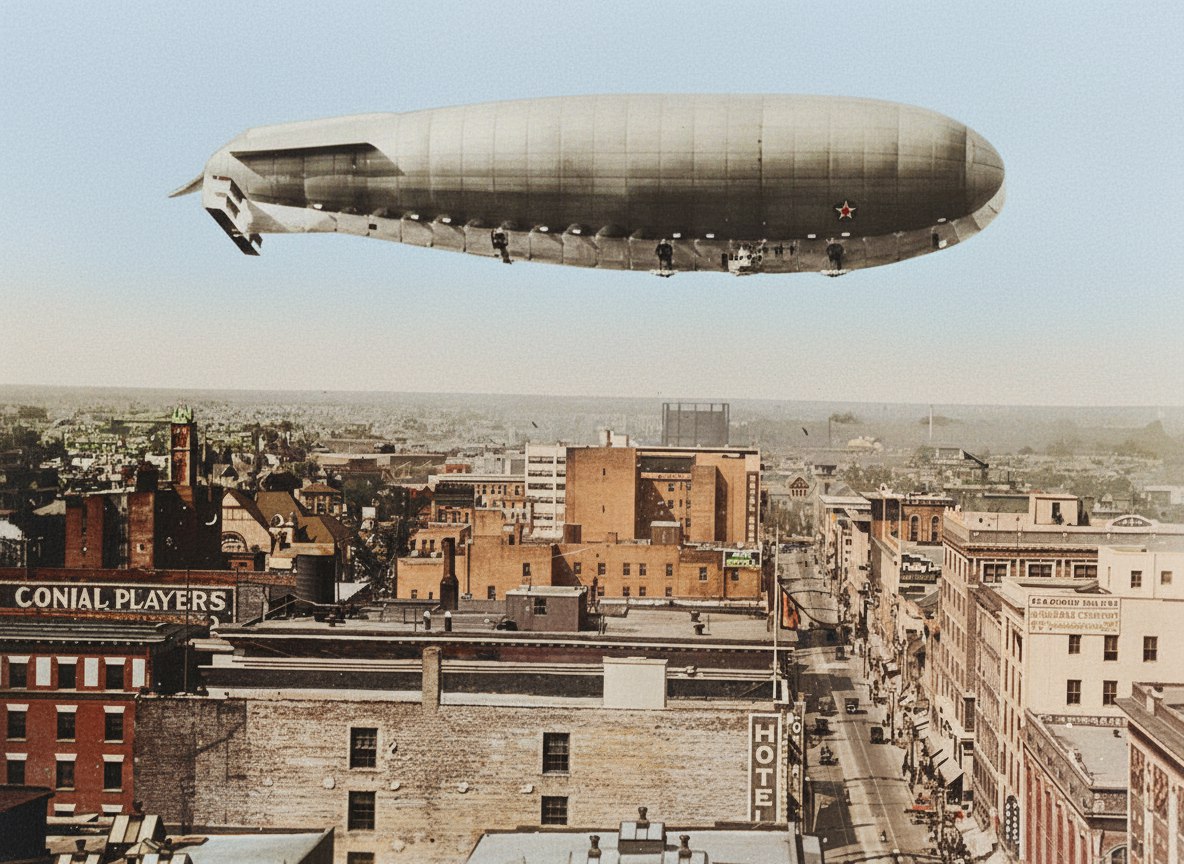
"Rome" had a length of 128 meters and a dome diameter of 22 meters with a carrier gas volume of about 34,000 cubic meters. Six engines from the Ansaldo company accelerated it to 110 km/h. The design was quite unusual: the rigid truss included a gondola for a hundred people, stretched from nose to tail, and on the latter there was a lattice stabilizer, similar to the wings of a triplane. The first flight was made in September 1920, and after a series of test flights over Italy, including with the participation of King Victor Emmanuel III, the military became interested. But not Italian, but American. And not the fleet, which has already relied on large zeppelins of rigid construction for long-distance ocean patrols, but the US Army aviation, which has not yet been allocated to a separate air force, with less ambitious requirements. It was supposed to be stationed in San Antonio, Texas, not far from the Mexican border, and used mainly to train crews of future reconnaissance airships capable of making long flights over the wastelands of the southern and western United States.
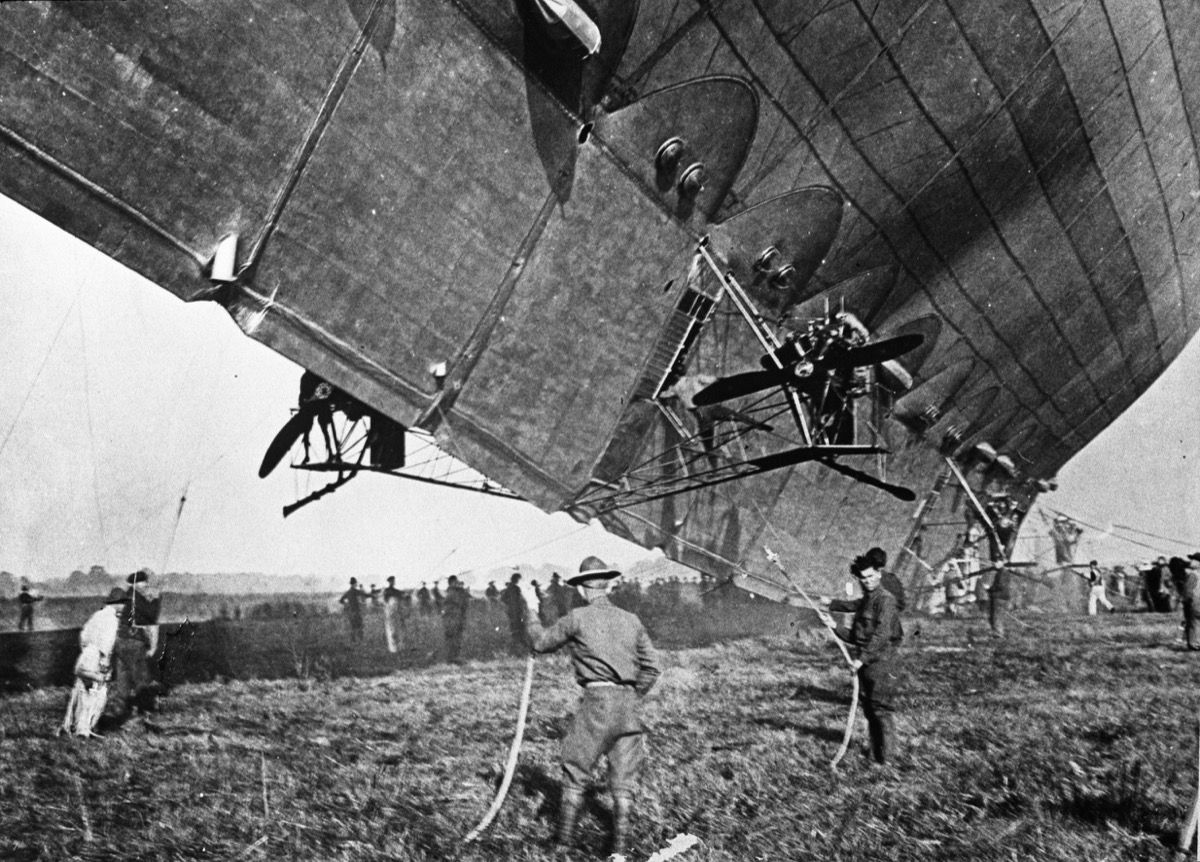
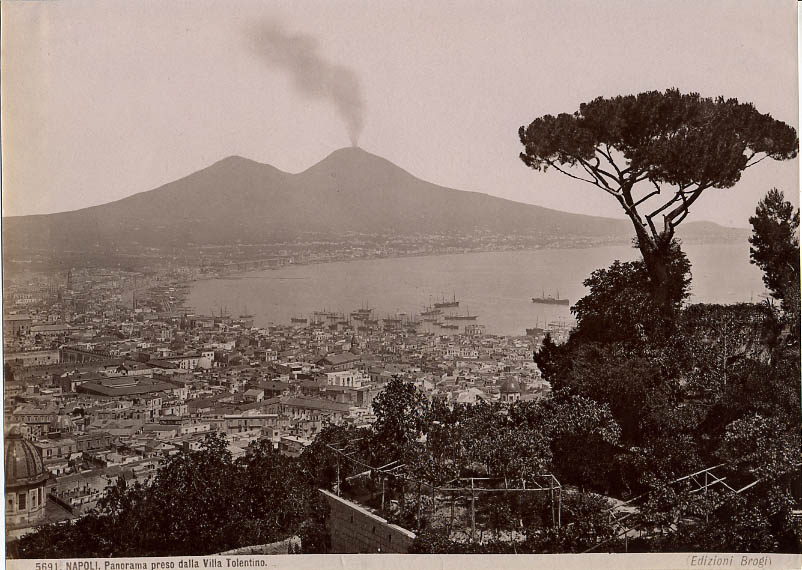
At the beginning of 1921, “Rome” was bought by the Americans for 184 thousand dollars (about 3.3 million in modern prices). This was noticeably less than the costs that were required to build the airship, but by that time it became obvious that in war-ravaged Italy there were somehow not very many people willing to make transatlantic flights on airships. In March 1921, after the official transfer ceremony, Nobile conducted a flight from Rome to Naples and back for the American ambassador with his wife and representatives of the US Army, during the flight the participants were offered a sumptuous lunch with wine and views of the island of Capri and Mount Vesuvius.
Initially, it was assumed that the Rome would cross the Atlantic under its own power, but the new owners chose to disassemble it and transport it on a ship, delivering it to Langley Air Force Base in Virginia in August of the same year. During the journey across the ocean and storage in boxes, the shell managed to become moldy, parts were damaged, and reassembly turned out to be a much longer and more difficult task than expected. They did not rename the aircraft, they just applied the tactical designations of the US Army Aviation, and hung the Stars and Stripes flag on the tail. The first test flights, in which joint American-Italian crews operated, were fraught with problems: already on the first flight on November 15, 1921, a piece of a cracked propeller blade tore the shell, and the aircraft had to be urgently landed. Then it turned out that the Italian engines did not perform well in the winter skies in the Chesapeake Bay area, and it was decided to replace them with the proven American Liberty L-12.
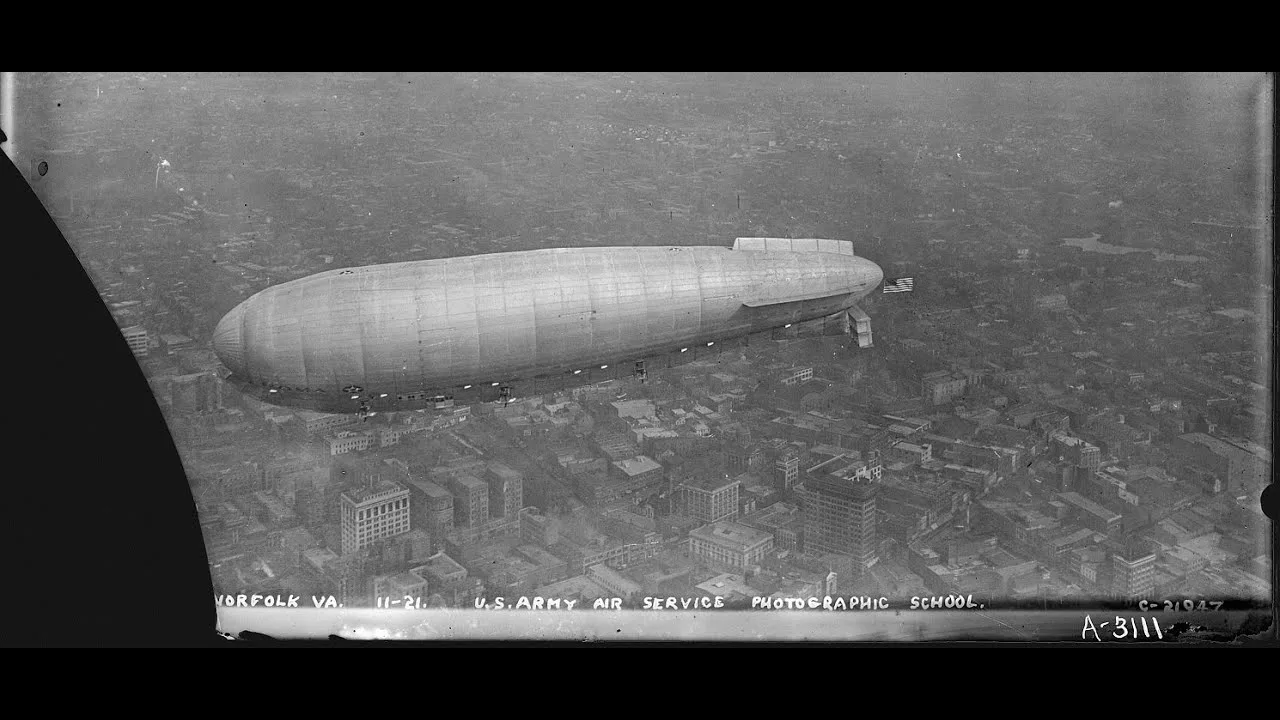
After changing the engines, which took a fair amount of time, on February 21, 1922, the Rome set off on a new test flight from Langley Air Force Base to the main Atlantic base of the US Navy Norfolk. The engines worked well, stably, we managed to accelerate to 120 km/h - but it turned out that the balancing of the aircraft had changed: the nose began to lift up, and it turned out to be difficult to control the airship until it leveled off. Then a gas leak was discovered. However, it was decided to continue the flight. What happened next is still not entirely clear. Strong vibration began on board, followed by a rapid leak of gas from the bow and the collapse of part of the structure. Control was lost and the crew attempted an emergency landing. The location for this turned out to be extremely unfortunate: the car crashed onto a high-voltage power line, and the live wires ignited the hydrogen. 34 people died in the fire, 8 received severe burns, and only three escaped with relatively minor injuries. During the investigation, it turned out that there were plans to fill the dome with safe helium - but they decided to save budget funds. From that moment on, all American airships were filled exclusively with helium, despite the disproportionately higher cost.
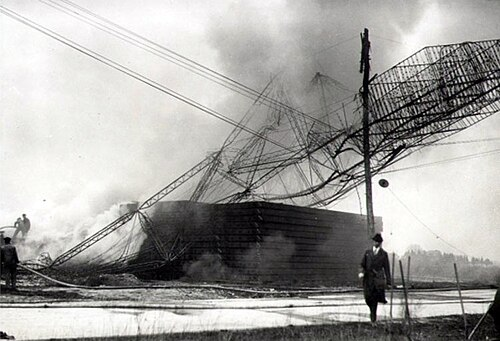
For Umberto Nobile, this disaster was a big blow. For some time he even moved away from designing airships and joined the famous aircraft designer Giovanni Caproni in developing a project for Italy's first all-metal aircraft. Caproni will most likely be familiar to modern domestic audiences as the character in “The Wind Rises” by Hayao Miyazaki, but in the 1920s his name and bold projects thundered throughout the world. Then, in the summer of 1922, Nobile went to the USA to consult for the Goodyear company, which was also involved in the production of domes for soft naval airships. However, already in 1923, Umberto Nobile returned to the main work of his life, and began work on a new project for an airship of a semi-rigid design.
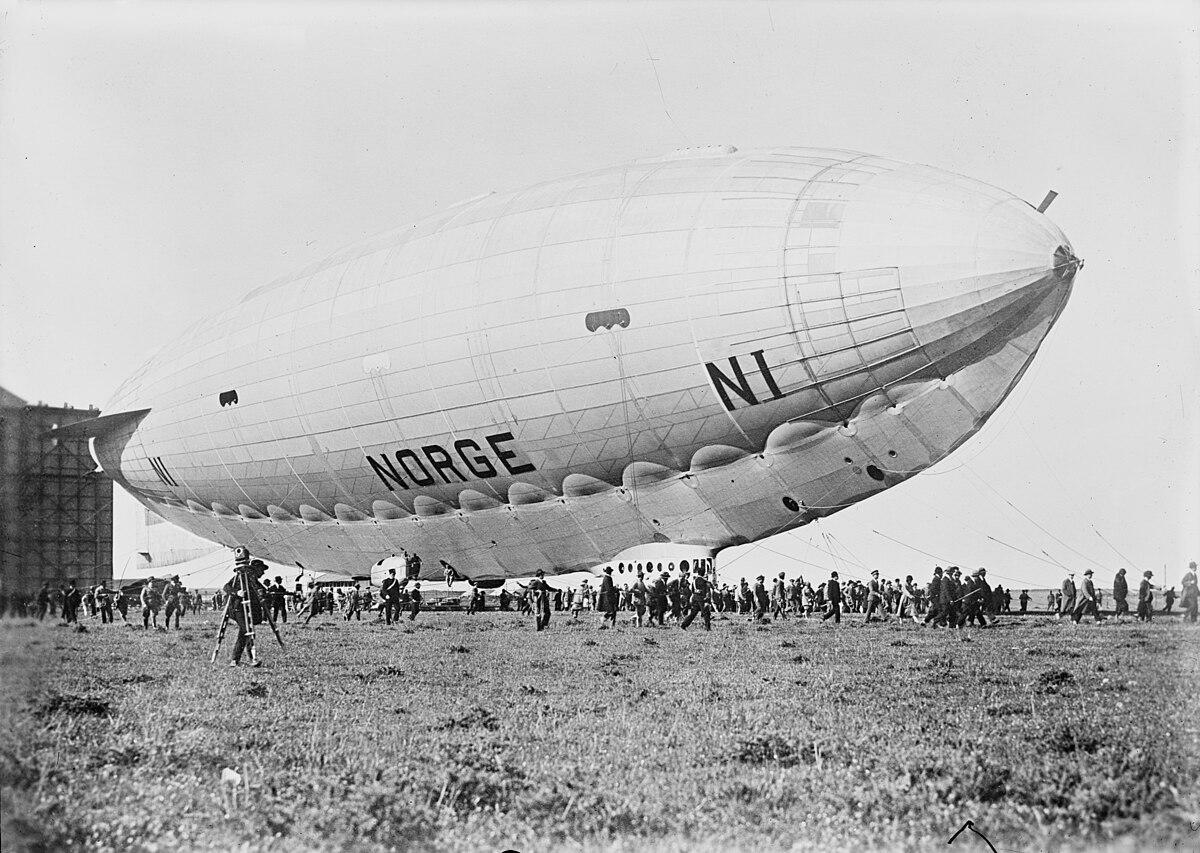
This will lead to the appearance of smaller than “Rome”, but much more successful machines “Norge” and “Italia”, which will add bright pages to the history of polar expeditions. They will also form the basis for the design of the largest Soviet airship ever built, the USSR V-6 Osoaviakhim - and thus, decades later, will serve as the reason for the characteristic shape of the famous KIROVs from the Red Alert games. But all this deserves a separate story.
© 2026 MT FINANCE LLC
Why This Matters In Practice
Beyond the original publication, Why Airships Never Took Off. Part 12: Italian Semi-Rigid Airships matters because teams need reusable decision patterns, not one-off anecdotes. Italy at the beginning of the twentieth century was a poor and backward country by European standards, but very ambitious. In some areas it...
Operational Takeaways
- Separate core principles from context-specific details before implementation.
- Define measurable success criteria before adopting the approach.
- Validate assumptions on a small scope, then scale based on evidence.
Quick Applicability Checklist
- Can this be reproduced with your current team and constraints?
- Do you have observable signals to confirm improvement?
- What trade-off (speed, cost, complexity, risk) are you accepting?