Why Airships Never Took Off. Part 10: The Most Famous and Successful Zeppelin
After the end of the First World War, the Entente countries banned Germany from building rigid airships, and all surviving zeppelins were to go to the victorious countries as reparations - some of the machines were destroyed by the crews themselves as a sign of protest. The Zeppe
Editor's Context
This article is an English adaptation with additional editorial framing for an international audience.
- Terminology and structure were localized for clarity.
- Examples were rewritten for practical readability.
- Technical claims were preserved with source attribution.
Source: the original publication
Series Navigation
- Why Airships Never Took Off. Part 1: From Montgolfier to a Borodino Bomber
- Why Airships Never Took Off. Part 2: Rise and Fall of French Airships
- Why Airships Never Took Off. Part 3: Birth of the German Zeppelins
- Why Airships Never Took Off. Part 4: The Kaiser's Airships Go to War
- Why Airships Never Took Off. Part 5: Shadows Over Britain
- Why Airships Never Took Off. Part 6: London Under the Bombs
- Why Airships Never Took Off. Part 7: Fire in the Sky
- Why Airships Never Took Off. Part 8: The End of Wartime Zeppelins
- Why Airships Never Took Off. Part 9: Ashes of War and New Opportunities
- Why Airships Never Took Off. Part 10: The Most Famous and Successful Zeppelin (Current)
- Why Airships Never Took Off. Part 11: Aircraft Carriers in the Sky
- Why Airships Never Took Off. Part 12: Italian Semi-Rigid Airships
- Why Airships Never Took Off. Part 13: Through the North Pole aboard the Norge
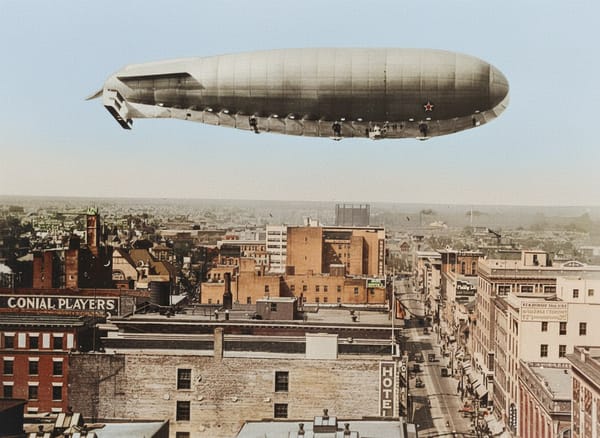
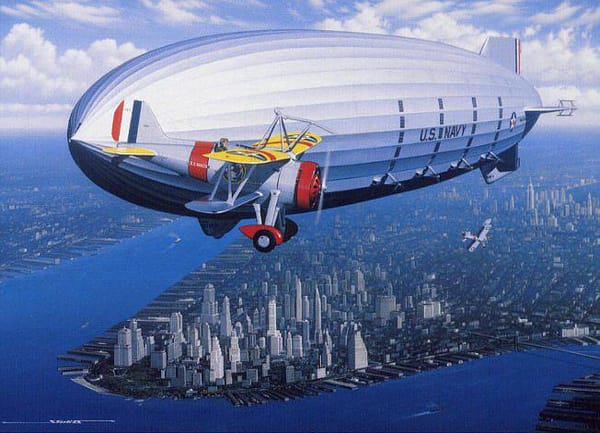
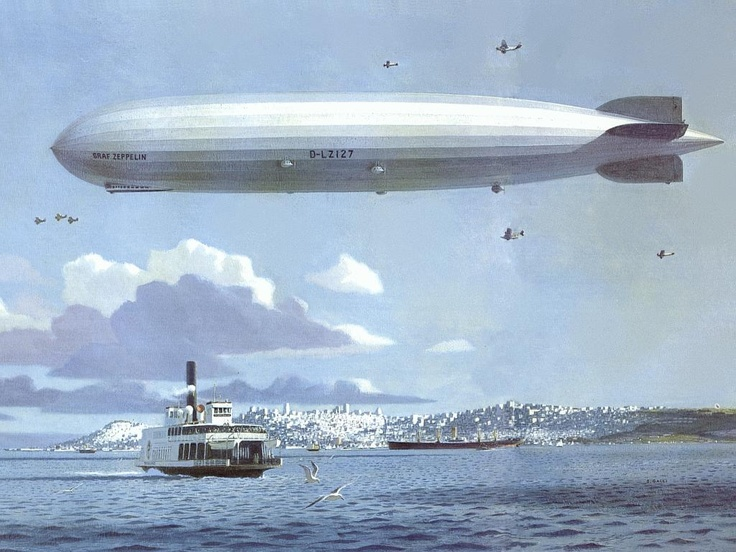
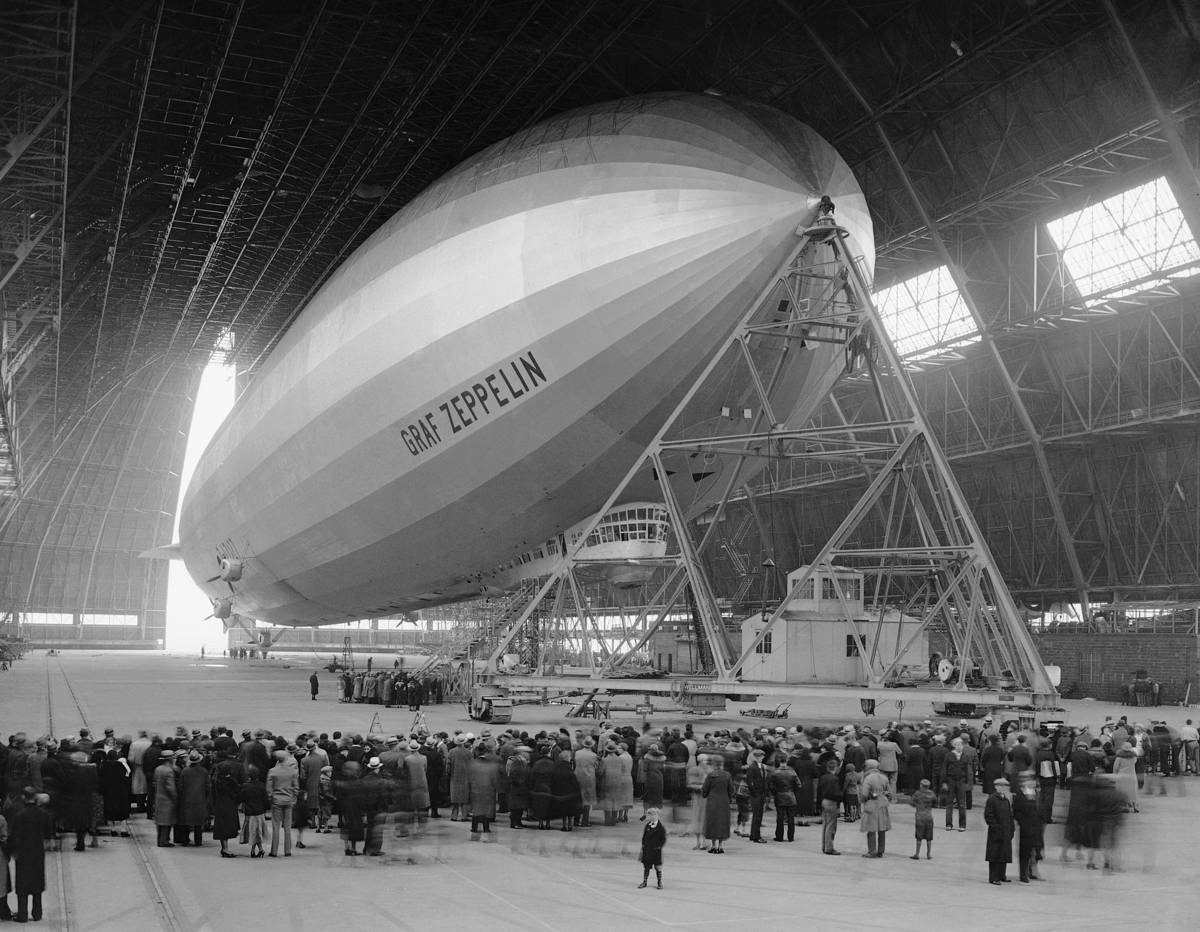
After the end of the First World War, the Entente countries banned Germany from building rigid airships, and all surviving zeppelins were to go to the victorious countries as reparations - some of the machines were destroyed by the crews themselves as a sign of protest. The Zeppelin Luftschiffbau company was on the verge of closure or radical repurposing. However, its new leader, the most experienced airship captain Hugo Eckener, was not going to give up. Even before the signing of the Treaty of Versailles, two small passenger airships were built under his leadership - which, however, were soon also taken by the winners. Then he managed to get a contract to build a zeppelin from the US Navy - so, despite the indignation of the British, the USS Shenandoah appeared. In the late 1920s, restrictions were relaxed, and on September 18, the LZ-127 “Graf Zeppelin” took off: the largest and most advanced airship ever built. Glory awaited him, without exaggeration, as a world superstar in the history of vehicles, many absolute records, long journeys to exotic countries, scientific expeditions and much more. It was “Graf Zeppelin” at the turn of the twenties and thirties that made many believe that airships as a form of transport were too early to be consigned to the archives.
Part 1: from hot air balloon to bomber for Borodino
Part 2: the birth and death of French airship construction
Part 3: the birth of the German Zeppelins
Part 4: The Kaiser's skyships go to war
Part 5: Shadows over Britain
Part 6: London under the bombs
Part 7: Fire in the Sky
Part 8. finale of military zeppelins
Part 9: Ashes of War and New Opportunities
Part 10: the most famous and successful of Zeppelins ← you are here
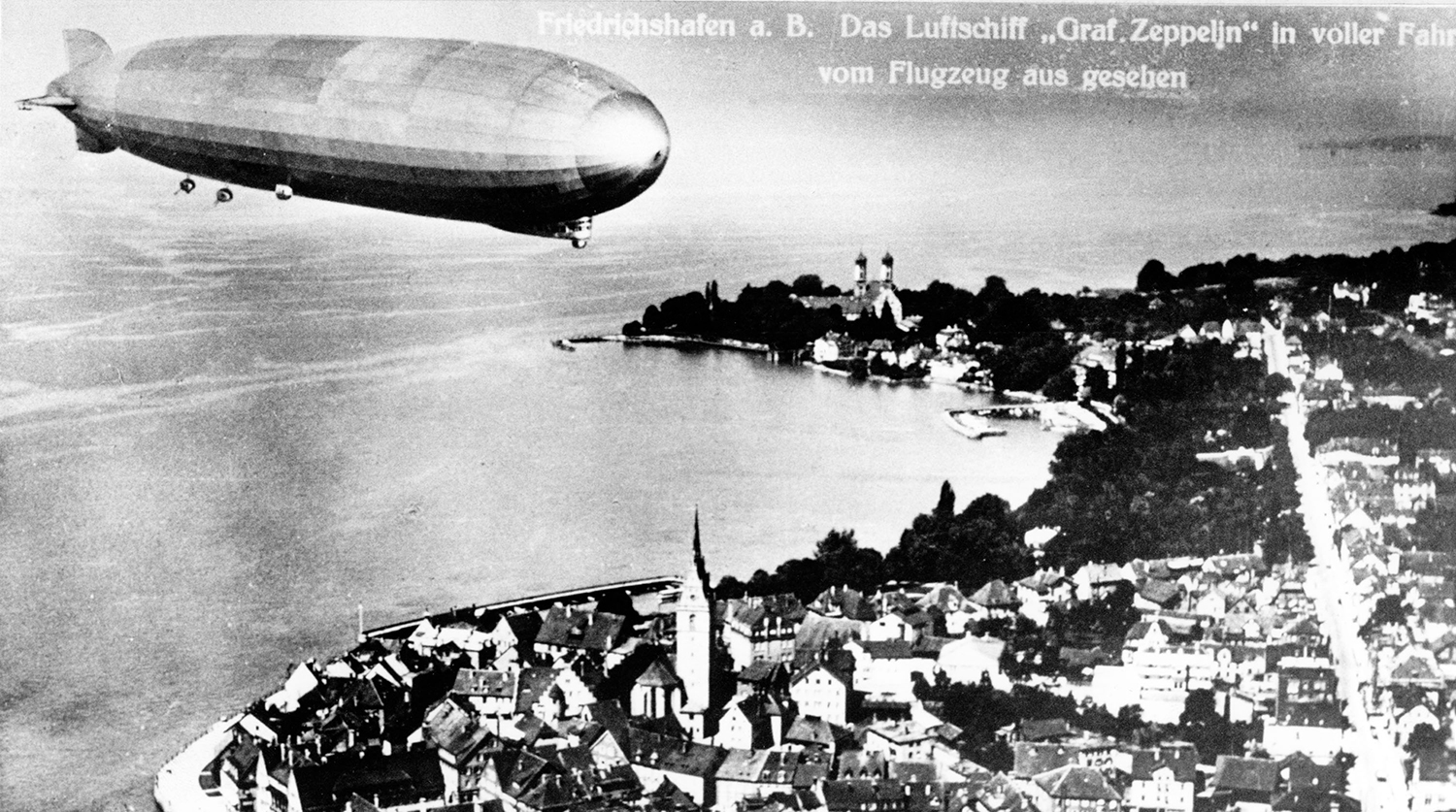
The Graf Zeppelin had truly impressive dimensions: 237 meters in length, only 30 meters shorter than the Titanic, the largest diameter was 30.5 meters. When its construction ended, the space in the construction shed almost ran out: there was only a meter left to the sides and only 60 centimeters on top. True, this forced the abandonment of the most efficient aerodynamic shape, which suggested a wider middle and more cigar-shaped outlines - but size and load-carrying capacity were considered more important. The structure was assembled from a new, especially durable duralumin alloy.
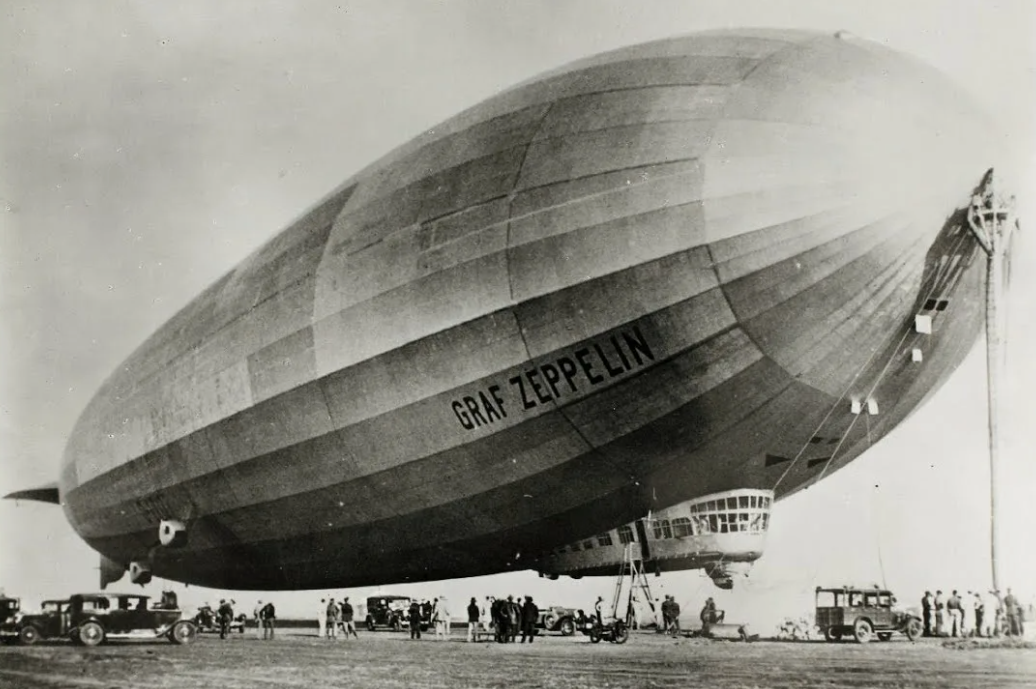
105 thousand cubic meters of carrier gas cylinders were partially filled not with hydrogen, but with special “Blau gas”: it could also be used by engines, and also had air density, which simplified altitude control. Five engines with a total power of 2650 horsepower could reach speeds of up to 128 km/h with a cruising speed of 115. Without refueling, it could fly more than 20 thousand kilometers. If necessary, the airship could rise several kilometers - but for reasons of advertising, PR and prestige through demonstration to everyone during the flight, as well as comfort for passengers and crew members, the cruising altitude was usually several hundred meters.
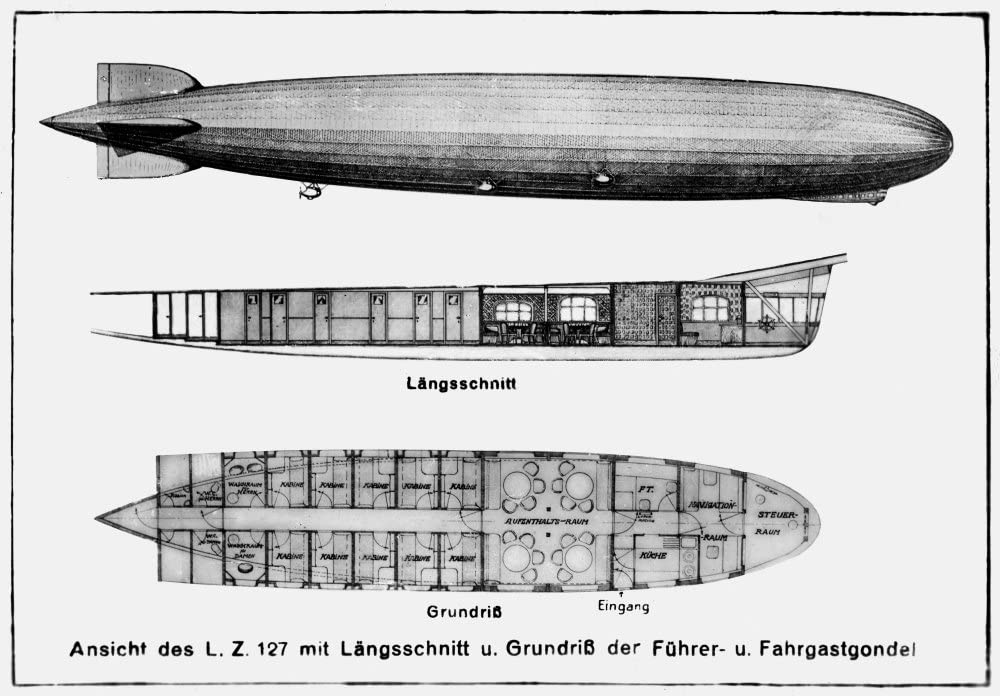
The largest streamlined gondola in the history of airship construction had a length of 40, a width of 6 and a height of more than 2 meters: approximately the same as 4 passenger train cars put together. It accommodated more than 40 crew members and about 25 passengers - who were no longer accommodated in armchairs, but in 10 comfortable cabins. Moreover, there was also a fairly large salon that could accommodate about 30 people with dining tables, as well as a galley with stewarts, washrooms with hot water and latrines. The passenger accommodations were no worse than those in first class on transatlantic liners.
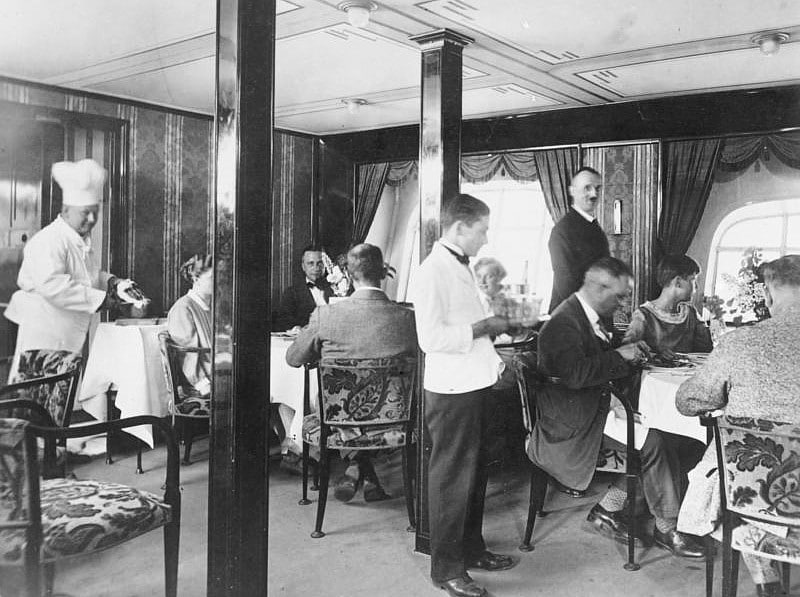
To save space in the gondola, the crew had to rest in rooms inside the hull: there was a wardroom, cabins for officers and rooms with hammocks for enlisted personnel. There was also a luggage compartment, a place for mail, cargo compartments and water ballast, which, if necessary, could be collected with hoses and pumps directly in flight from any body of water. During flights, the helmsman was instructed, outside of emergency situations, to perform vertical maneuvers as smoothly as possible, without changing the pitch of the zeppelin by more than 5 degrees from the horizontal - so that passengers’ wine glasses did not spill out of their glasses and plates did not fall from the tables. But heating was not provided: the power of wind power generators and batteries that powered the equipment and lighting was not enough for this, while almost any flame on board was strictly prohibited due to the flammable carrier gas. In the cold season or when the altitude increased, passengers sometimes had to keep warm clothes on even in cabins and during meals.
On the morning of October 11, 1928, Hugo Eckener took Graf Zeppelin on its first long-distance flight. His company, thanks to the construction of the USS Shenandoah, had good relations with the Americans - and the destination of the trip was the US naval airship base in Lakehurst near New York. There were 20 passengers and journalists on board. At first everything went well, but soon after entering the Atlantic the weather began to deteriorate. Attempts to bypass the area of the incipient storm failed: the maximum speed of 128 km/h was too insufficient. South of the Azores, the Graf Zeppelin was forced to dive into an approaching wall of black thunderclouds.

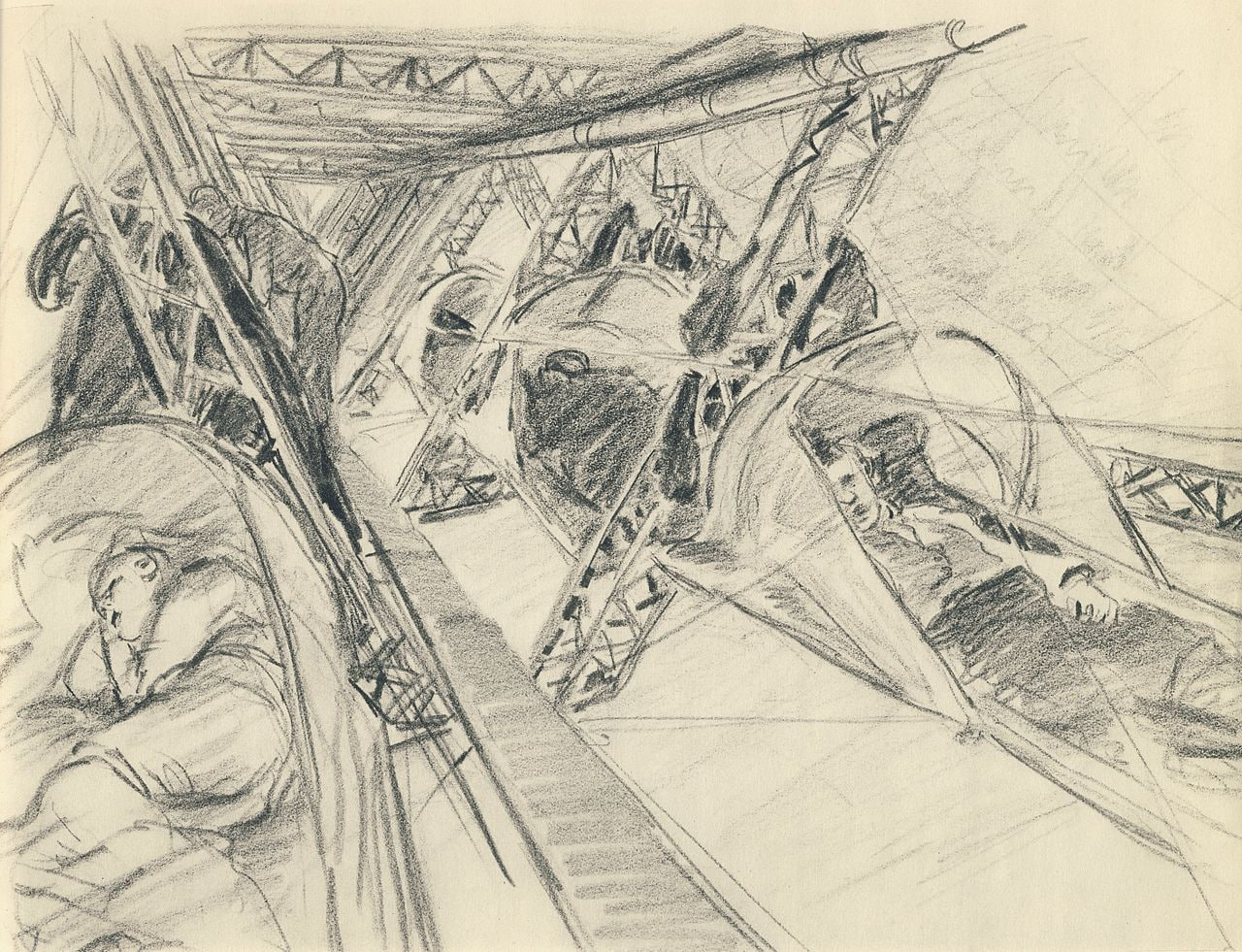
Older cars would have been doomed in such a situation, but the vast experience of engineers, designers and crews, accumulated at the cost of hundreds of deaths, played a role. The huge car was violently shaken by gusts of hurricane winds, everything and everyone on board was thrown from side to side, almost all the branded china was broken - but the Graf Zeppelin passed through the storm without fatal damage. An examination showed, however, that the fabric covering of the left stabilizer was partially torn off, which complicated maneuvering and created risks during landing. Hugo Eckener's son, Knut, and six crew members made their way to the site of the damage and began dangerous repairs at height, in the spirit of the ending of the Soviet film "Crew".
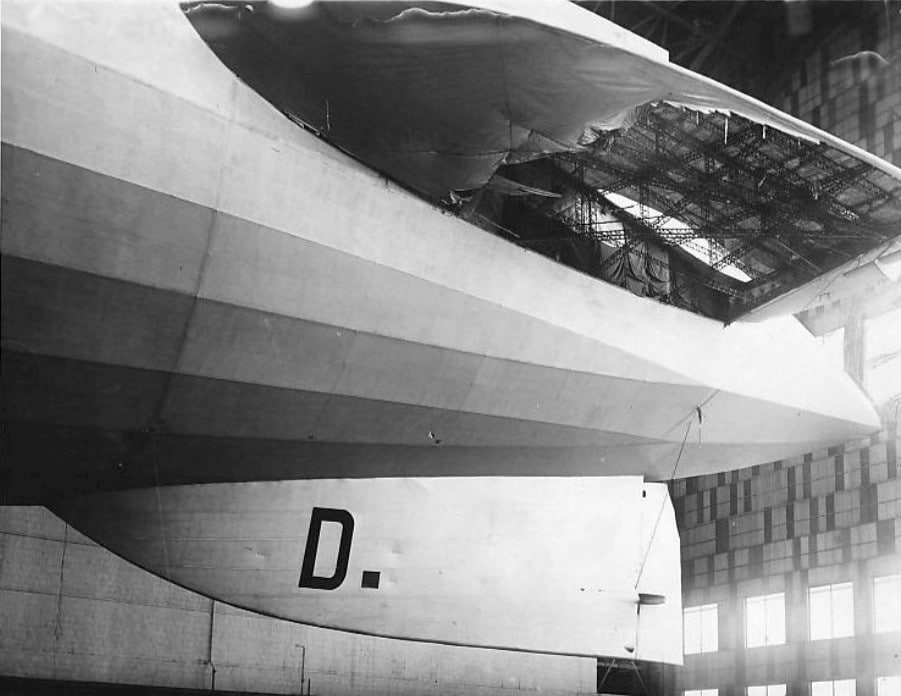
After several hours of hard and risky work, the stabilizer coating was restored using ropes and proprietary wool blankets. The speed had to be significantly reduced to reduce the danger for repairmen and prevent the improvised covering from being torn down - because of which the powerful on-board radio station stopped working, and the wind power generators did not provide sufficient power. The airship could not answer repeated inquiries about its location and the situation on board, the darkest suspicions grew at the base, and in the United States newspapermen were already preparing articles about the mysterious disappearance or tragic death of the Graf Zeppelin with everyone on board. Finally, after 111 hours of flight, on October 15, the airship appeared in the sky and began to land in Lakehurst, where it was greeted by a huge crowd of spectators. After two weeks of repairs in the US, she returned back to Friedrichshafen on 1 November. And on November 6 he arrived in Berlin - where he was met by an even more jubilant crowd and personally by the President of the Republic, former Field Marshal General Paul von Hindenburg.
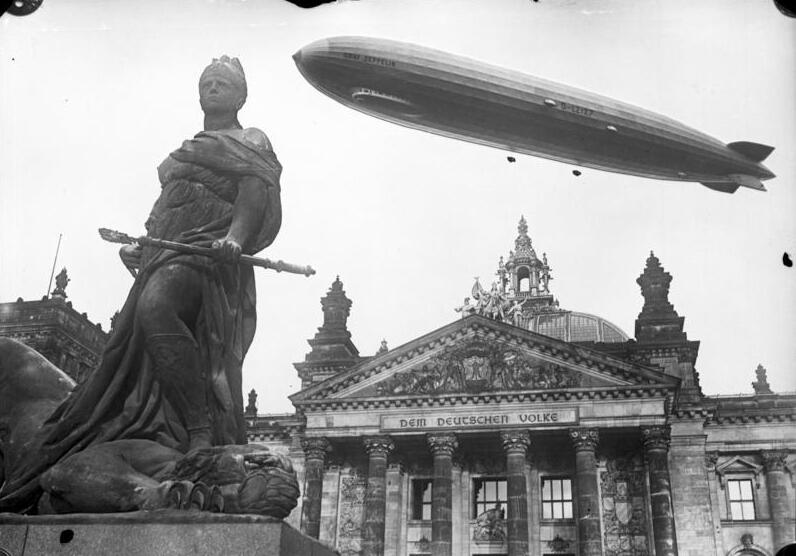
On March 25, 1929, the airship set off on a new long-distance voyage - now it was supposed to pass over the Balkans and the Mediterranean Sea, visiting British Mandatory Palestine and along the way delivering 16 thousand letters to several large cities. He took off from Friedrichshafen, passed over the French Rhone Valley and Corsica, and due to another vagary of the weather, he had to move for some time at a temperature on board of −20 Celsius. Arriving in Rome, Eckener delivered mail and a personal message from von Hindenburg for King Victor Emmanuel III and Benito Mussolini.
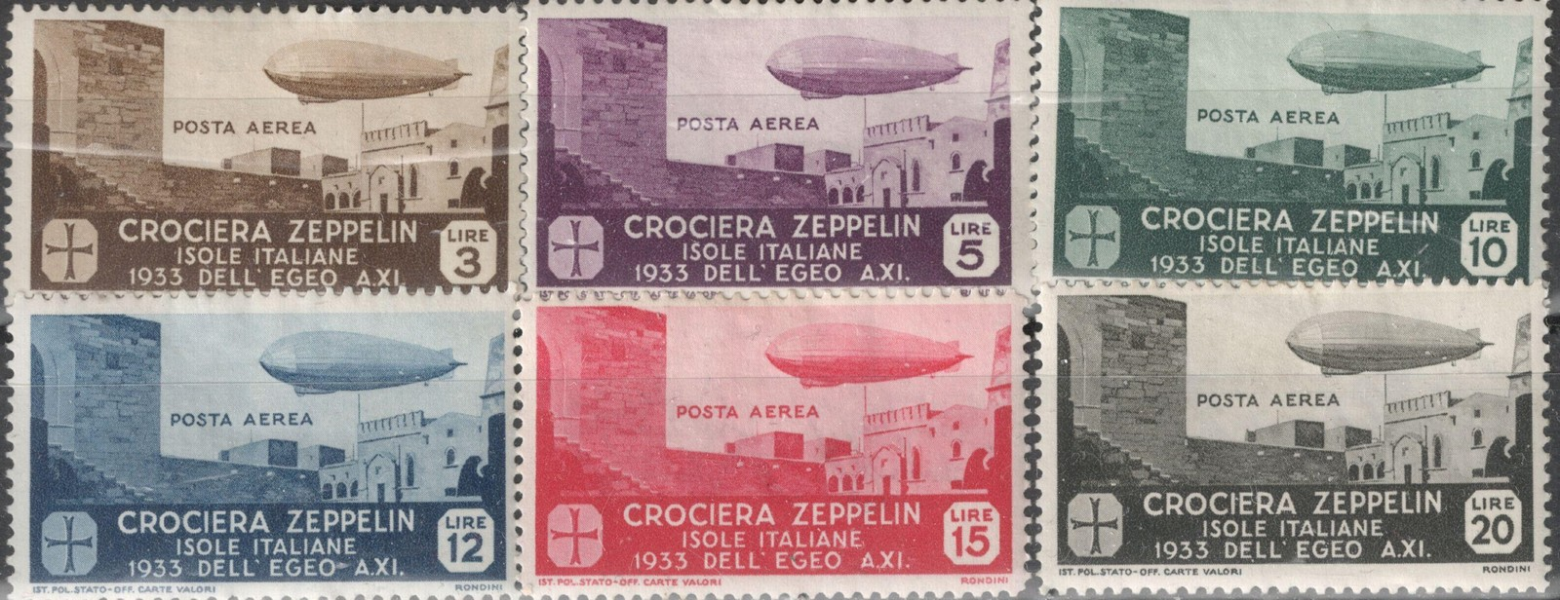
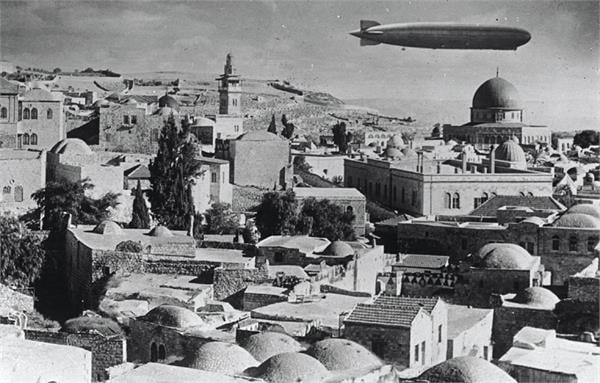
Then the zeppelin moved to the southeast, entered the Mediterranean Sea, and through Crete and Cyprus reached Jaffa, present-day Tel Aviv, and from there it soon reached Jerusalem. There, taking advantage of the calm, as a sign of respect, he hung for some time with the engines turned off directly above the Temple Mount and the Church of the Holy Sepulchre. From Jerusalem, the Graf Zeppelin went south and set a record impossible anywhere else on the planet: due to the location of the Dead Sea in a deep depression, it sank almost to its surface, and thus reached a flight altitude of −70 meters from sea level. And then he set off on a return course through Athens, Budapest and Vienna. In April, a new flight was made, now in the western Mediterranean, to Tangier in French Morocco and back.
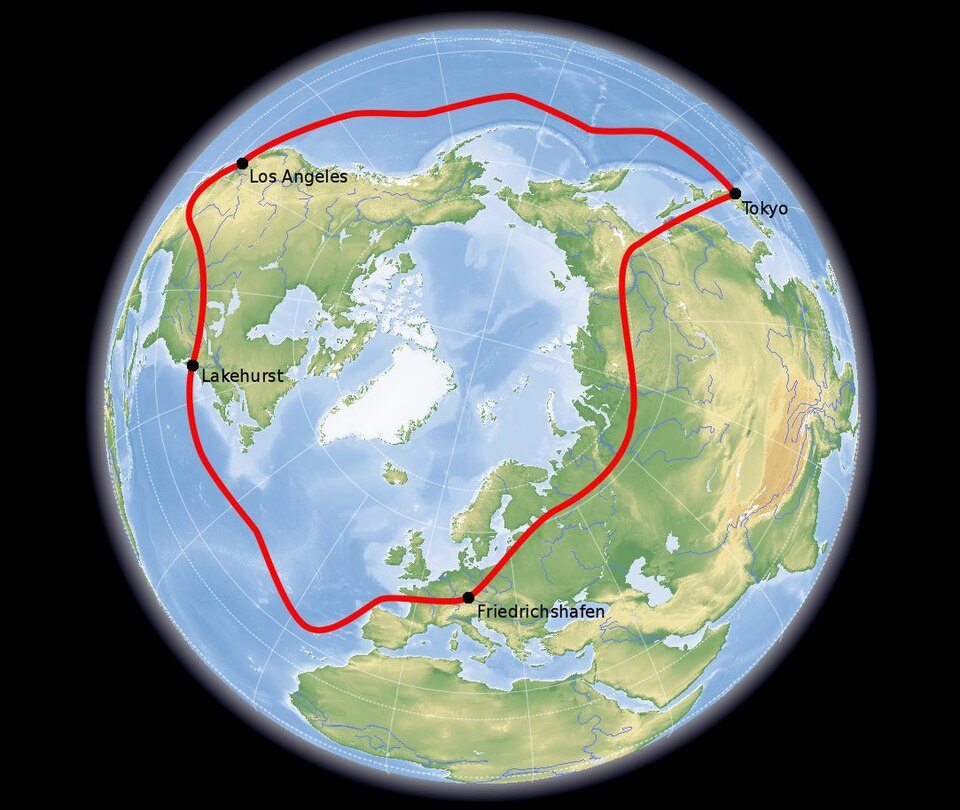
Then the idea arose of nothing less than a trip around the world on the Graf Zeppelin. Half of the expenses for advertising his newspapers and exclusive coverage for his journalists were covered by the scandalous American media tycoon William Hearst. Strictly speaking, the journey began on August 1 from Friedrichshafen, from where the zeppelin moved to the USA - but Hearst, for reasons of PR for himself as an American patriot, insisted that Lakehurst should be officially considered the starting point of the round the world trip. From there, the airship took off on the evening of August 7 and headed east across the Atlantic back to Friedrichshafen, where it landed and underwent maintenance. On August 15, the second stage of the flight began: after passing over Germany and the Baltic republics, the airship entered the Gulf of Finland and entered Soviet airspace over Kronstadt and Leningrad. Having crossed the Ural Mountains, passing through the skies of Siberia and turning south over Yakutsk, the “Graf Zeppelin” reached Japan and landed at an airbase near Tokyo - where there was a boathouse for Zeppelins that was transferred along with the reparation airship. In the landing area he was greeted by up to 250 thousand spectators.
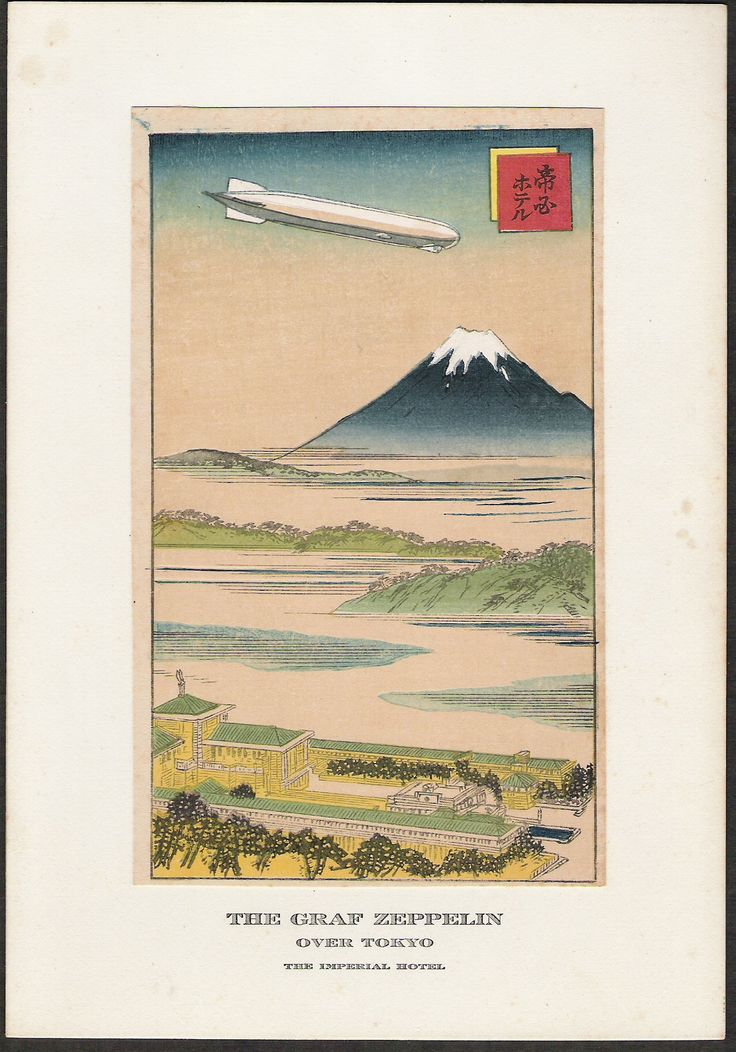
The crew, journalists and passengers were given a tour of Tokyo, and then they were even received at the palace by Emperor Hirohito. On August 23, the airship took to the skies again and headed east across the Pacific Ocean. Slightly battered by its winds, the zeppelin reached the west coast of the United States - and Hugo Eckener specially timed it to appear over the Golden Gate Bridge in San Francisco in the rays of the evening sun on its silver casing. From there he moved south and landed at an air base near Los Angeles. The third leg of the route ran over the United States from coast to coast, and the route was laid out so as to appear over the largest number of major cities. On August 29, after 21 days and 33 thousand kilometers traveled, the Graf Zeppelin landed at Lakehurst. The crew was given a triumphal parade in New York, and then a reception at the White House by President Herbert Hoover. Finally, on September 4, the ship returned to Friedrichshafen, where it was greeted by 40 thousand spectators on the shores of Lake Constance.
Then there were several more trips. Relations with Britain warmed, the trauma of war and bombing became a thing of the past, and in April 1930 the Graf Zeppelin became the first German airship to appear in British skies since 1918. He solemnly passed over London's Wembley Stadium in honor of the final game between Arsenal and Huddersfield Town in the presence of King George V, after which, in front of a large crowd of people, he landed next to the newest British rigid airship, the R-100. In May he traveled to Brazil for the first time and reached Rio de Janeiro via Recife - this city would later become the main destination of most of his regular flights.
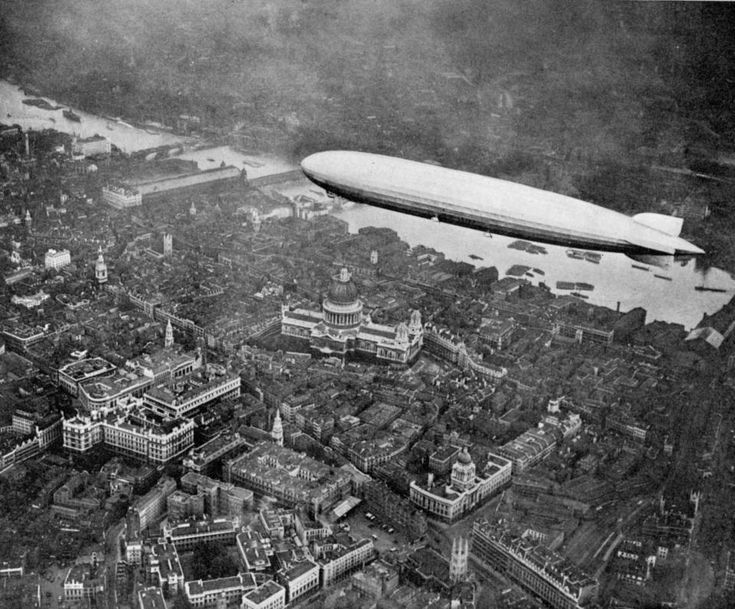
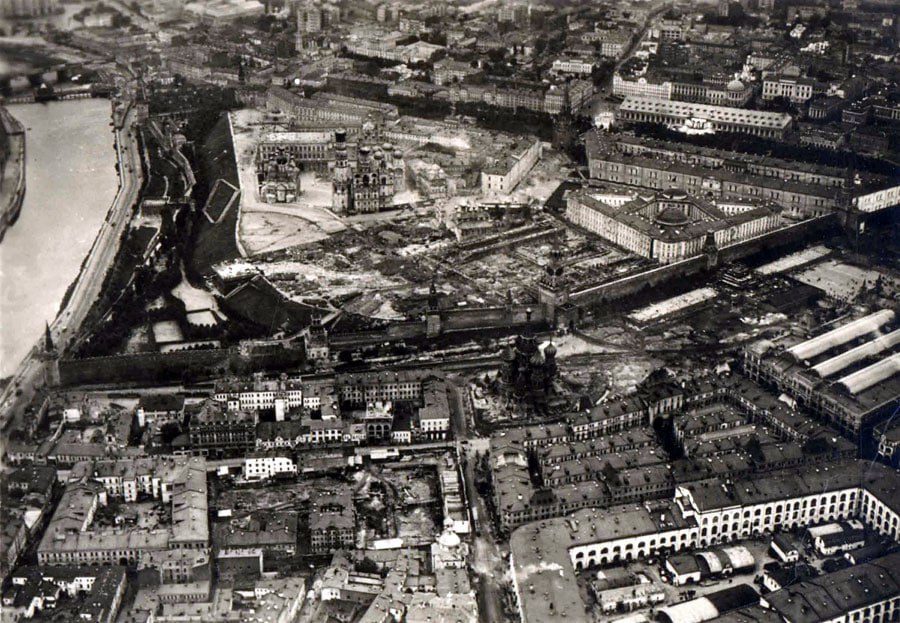
On September 10, 1930, the Graf Zeppelin again crossed the border of the USSR and appeared in the skies over Moscow. It circled over the Soviet capital for two hours, arousing great interest among Muscovites, and then landed on Khodynskoye Field at noon in the presence of thousands of spectators, with the help of 200 military school cadets and firefighters. It delivered 21 kg of mail and 23 passengers to Moscow. After two and a half hours of parking, he took off again and headed back through Rzhev, Latvia, Lithuania and the Baltic Sea, bypassing Poland, which was unfriendly to Germany. True, on the way back, after crossing the Lithuanian border, the Graf Zeppelin was fired upon by someone and received several rifle hits. Apparently, some of the Lithuanians had a grudge against the Germans since the occupation during the war, or simply preferred only edible zeppelins.
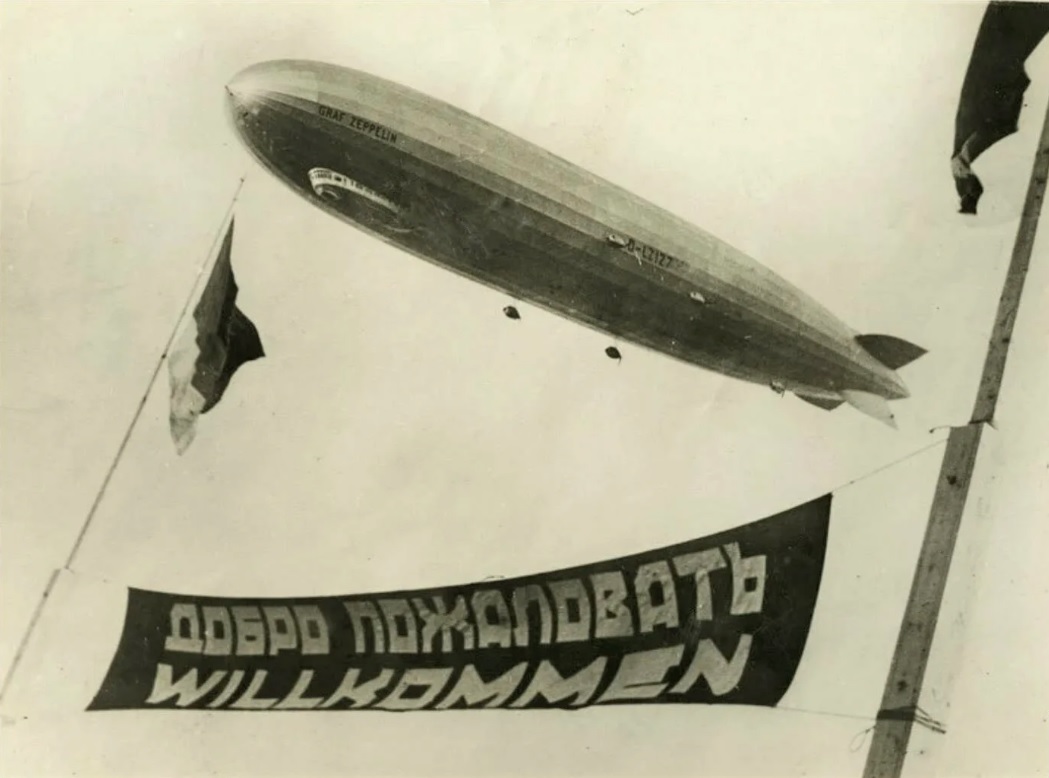
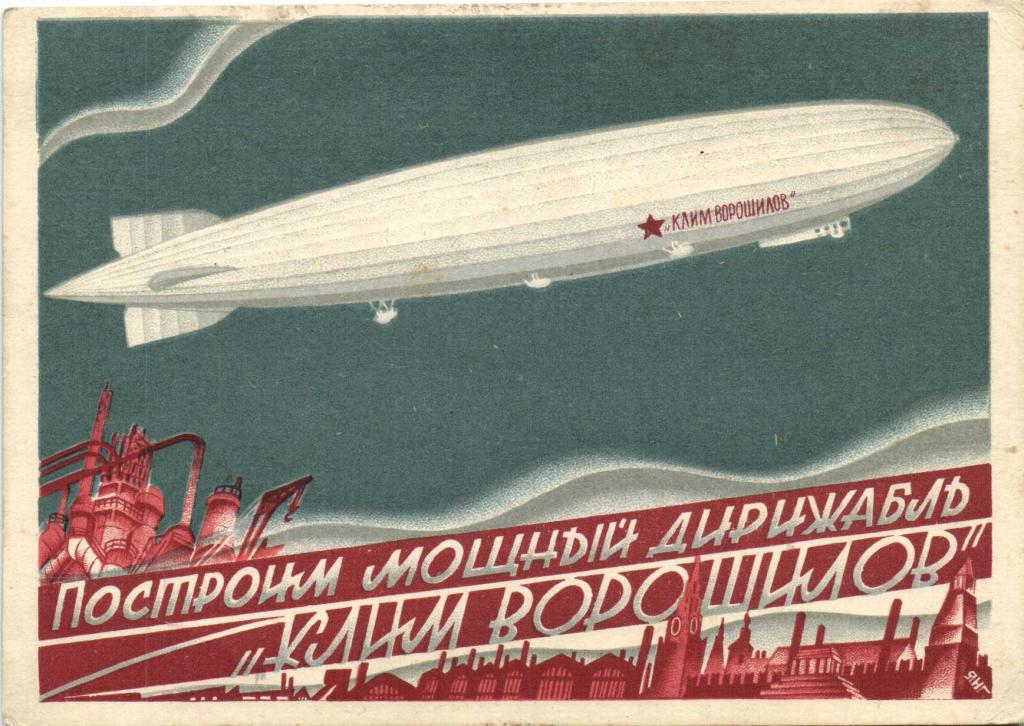
In Moscow and the USSR in general, the airship’s visit made a noticeable impression. Nadezhda Alliluyeva wrote to Stalin, who was then in the south: “all of us in Moscow were entertained by the arrival of the zeppelin, the spectacle was truly worthy of attention, all of Moscow looked at this wonderful machine.” In some places, workers began spontaneously collecting money to build “our answer to the bourgeois airships.” The poet Demyan Bedny reflected the public mood with a poem that immediately became popular:
Moscow looked up today,
I almost lost my mind.
The steel bird flew by
over the fiery heart of Moscow.
German guest on a zeppelin
We were greatly honored.
Hello! Calm from now on
Now I can neither sleep nor eat.
What are we? Isn't it from toads?
Shall we show how fast we are now?
I want our airships
The Germans could cover it!
I felt offended on the roof:
- We wish we had airships!..
Yes, so that they are faster and higher...
...I contribute a HUNDRED RUBLES to the construction site!
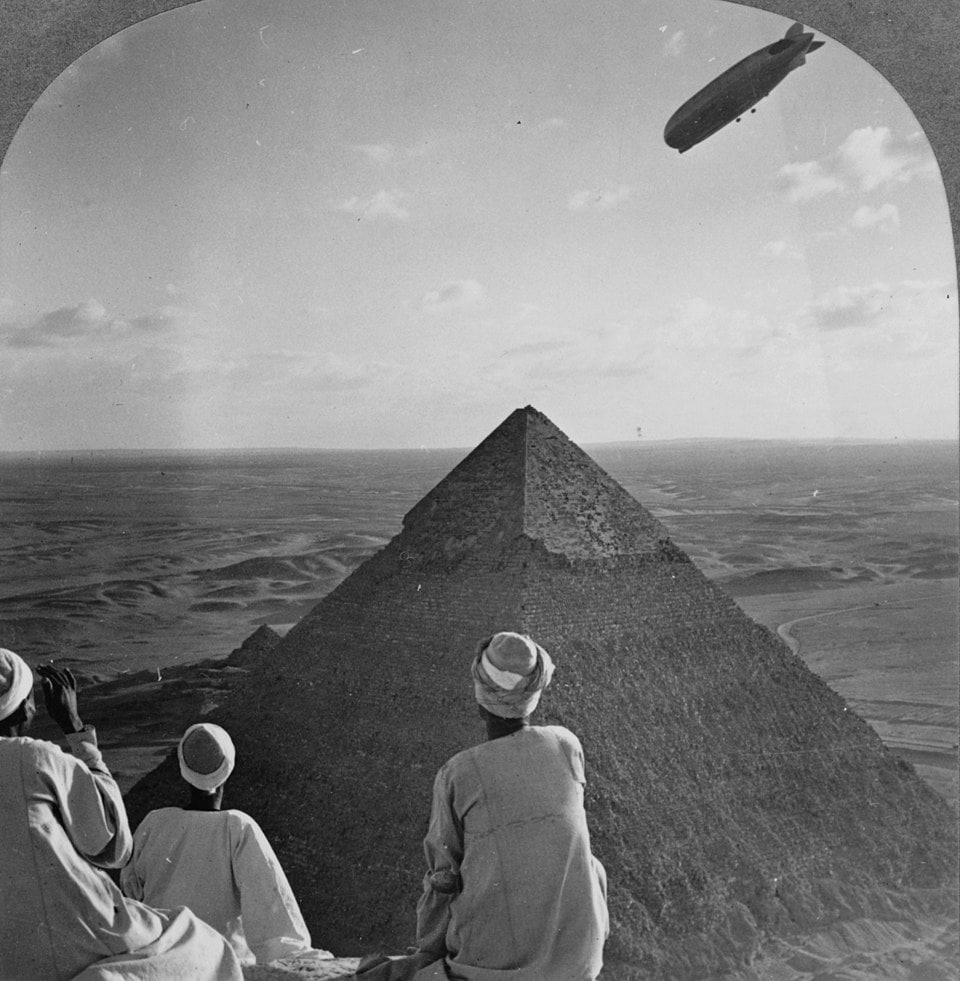
In April 1931, Graf Zeppelin set off for Africa, through Libya to Egypt. It flew over Alexandria and Cairo, and hovered for some time over the Great Pyramids of Giza and the Pyramid of Djoser at Saqqara, the first of the Egyptian pyramids built by the great architect Imhotep. Early the next morning, the zeppelin landed at a British airbase near Cairo. At the same time, the 30 thousand local residents who had gathered went into such a frenzy that the soldiers in the cordon had to use prudently prepared water cannons to contain the crowd. Eckener went to an audience with King Fuad, and the airship, under the command of the chief mate, again reached Jerusalem and performed the same ritual. Returning to Cairo and picking up her captain, the Graf Zeppelin steamed through the Siwa oasis and the Sahara to Tripoli in Italian Libya, and then through Greece, the Balkans and Vienna back home to its base at Friedrichshafen. And he began to prepare for an expedition that was much more unusual and risky than all the previous ones.
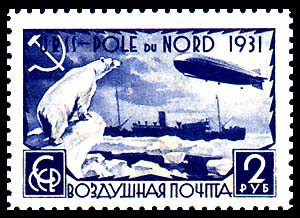
Hugo Eckener decided to conquer the dangerous Arctic latitudes on an airship, inscribing the company's name and his own into the then very popular topic of polar research. At first, he was going to do this with the Americans and, no less, meet at the North Pole with the specially converted submarine USS Nautilus - but tests showed that the submarine of those years would not be able to make such a trip. Surfacing from under the ice at the pole would only be possible for an incomparably more advanced, equipped and powerful underwater ship of another era - in 1963 it would become the Soviet nuclear submarine K-181. Hugo decided to change the plan and came up with the idea of a joint polar expedition to Moscow.
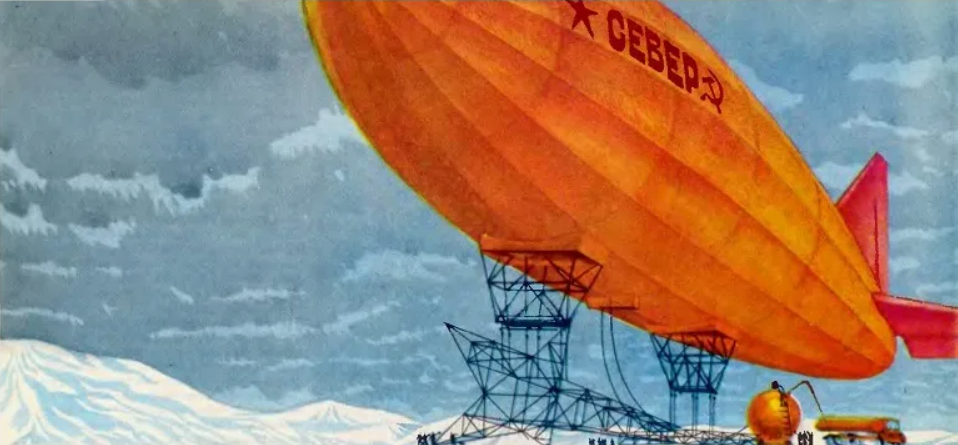
There were still two years left before the Nazis came to power, relations between the USSR and the social democratic Weimar Republic remained quite good, and the Soviet leadership approved the idea. In addition, Moscow has already thought about its own airship construction program, mainly for work in the North, and it would be unreasonable to refuse to test a ready-made machine in real Arctic conditions. The gondola was re-equipped for a polar expedition: unnecessary luxury was removed and, in general, everything superfluous, the bottom was redone in case of a forced splashdown, bulkheads between the cabins were removed and scientific equipment was placed. After two test flights, first to Spitsbergen, then to Iceland, it was concluded that they were ready for a long journey to the Soviet islands of the Arctic Ocean.
Polar explorer Rudolf Lazarevich Samoilovich, experienced since pre-revolutionary times, was appointed head of the joint Soviet-German expedition. In 1928, he led a rescue operation on the icebreaker Krasin to evacuate the crew of the airship Italia and its captain Umberto Nobile that crashed near Spitsbergen. Now Rudolf Lazarevich himself boarded the airship for the polar expedition. One of the most important tasks was high-quality aerial photography of remote polar coasts and islands, for which powerful cameras were installed on board. Along the way, the Graf Zeppelin was supposed to meet with the Soviet icebreaker Malygin and transfer mail and stamps to it for cancellation - in fact, canceled stamps from the zeppelin from various unusual places, sold at a very high price, were one of the important sources of financing for the non-commercial flights of the airship. Ironically, on board the Malygin, along with the famous Soviet polar explorer Ivan Dmitrievich Papanin, was Umberto Nobile, who was saved by the Krasin - he and Lazarevich, in a sense, swapped places. In addition, Lazarevich hoped to stumble upon the legendary warm “Sannikov Land,” the existence of which had not yet been definitively refuted.
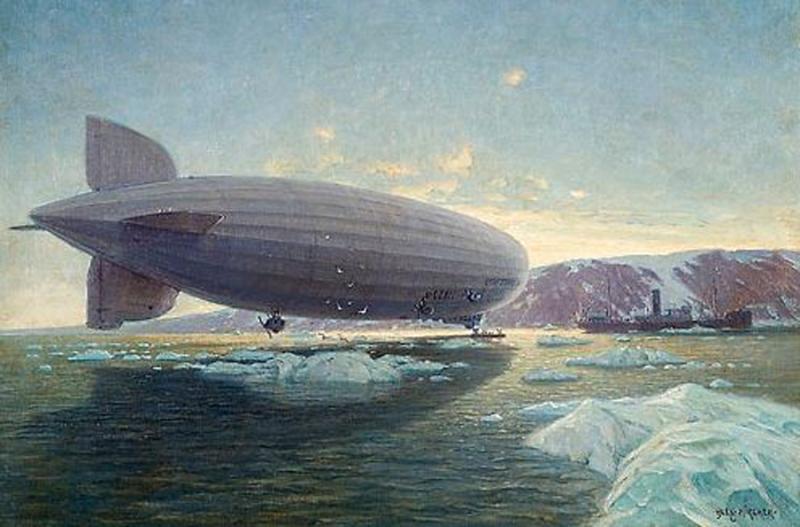
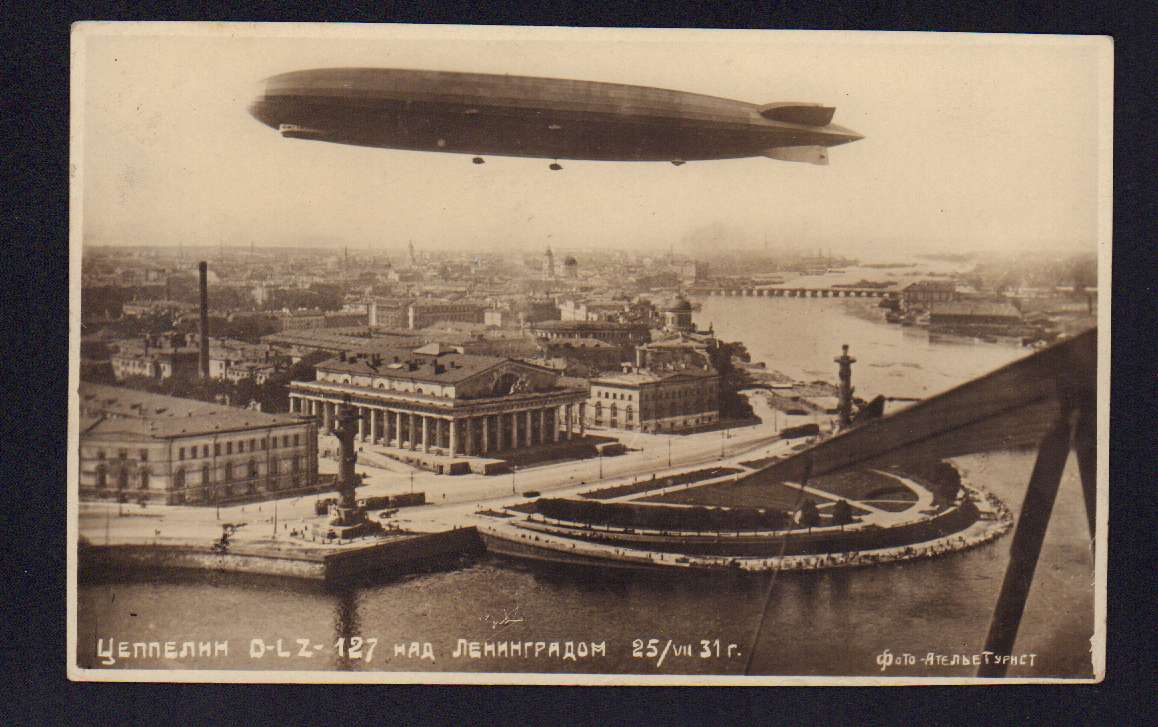
On July 24, the expedition on the Graf Zeppelin set off. She reached Leningrad, then Arkhangelsk, and from there moved further to the northeast. The airship reached Franz Josef Land, Cape Chelyuskin on Taimyr, and near the Severnaya Zemlya archipelago successfully transmitted mail to the Malygin, approaching the pole at a distance of 910 kilometers. Along the way, three aerosondes were launched to study the high-altitude layers of the atmosphere in the polar latitudes. The return course lay through Novaya Zemlya and Arkhangelsk. All targets were successfully photographed, and copies of the images, after development, were sent to the USSR. True, this story also had not the most pleasant consequences. Some of the photographs of Franz Josef Land were not found in Moscow: the Germans referred to the damaged film. And in 1951, it was in this area that traces of a secret German base left at the end of 1944 for several dozen (!) personnel were found. She took meteorological data and reported it to German bases in occupied Norway - which made it easier for Nazi submarines and bombers to operate against polar convoys from Britain to the USSR. "Coincidence?..."
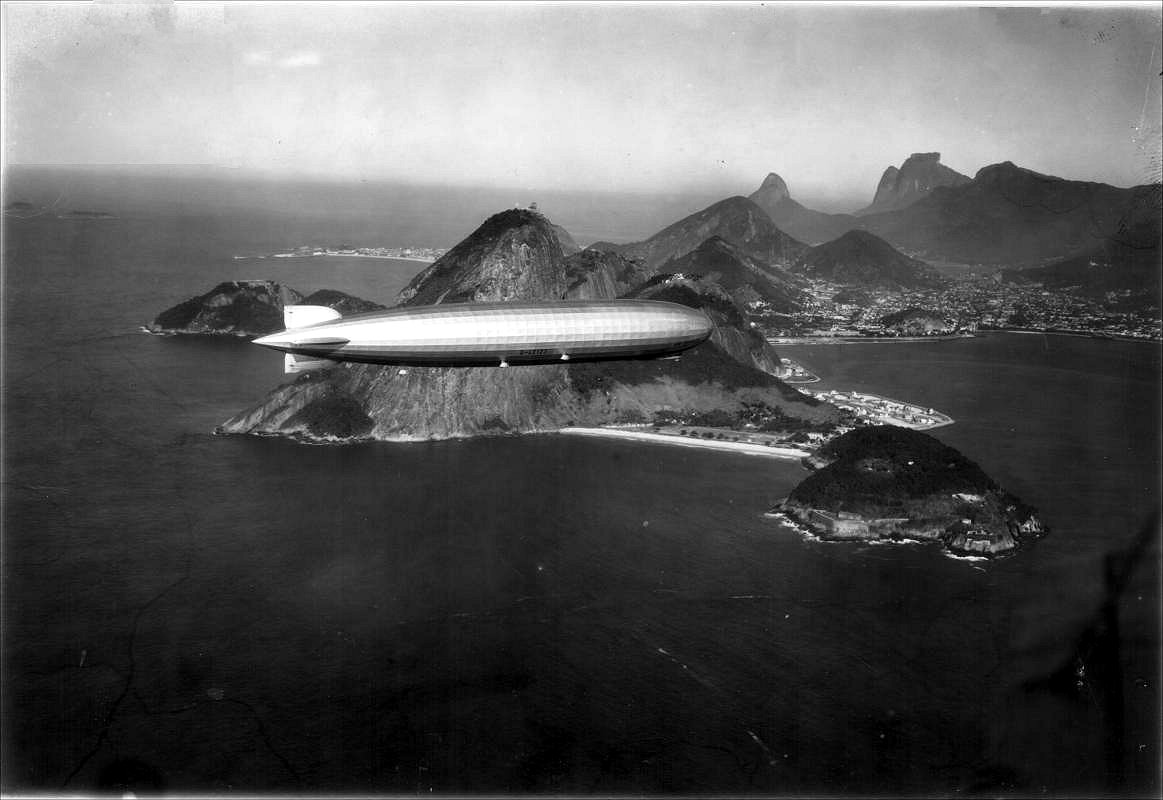
Let's go back to 1931. After the northern expedition, the Graf Zeppelin, which confirmed the reliability and professionalism of the crew in a wide variety of latitudes and conditions, finally began regular passenger operation. It began flights between Germany and Rio de Janeiro in Brazil, sometimes as far as Buenos Aires in Argentina. Of course, flying to the USA would be much faster and easier - but on the intensive routes between them and Europe, it was difficult for even the most fashionable airship to compete with passenger airliners. But on the South American route with regular passenger service, everything was much poorer - and longer. The Graf Zeppelin gave wealthy passengers the opportunity to reach cities in Brazil and Argentina in about three days rather than two weeks. This pleasure cost about 1,500 Reichsmarks - something like 7,500 modern euros.
After the Nazis came to power in 1933, Hugo Eckener found himself in a difficult situation. He himself always had rather moderate views; he openly, although not very loudly, did not like the Nazis and was even going to compete with Adolf Hitler from the Social Democrats in the 1932 elections. In 1933, Joseph Goebbels, who had seized previously unprecedented opportunities for himself, was inflamed with a desire to make the most of the “Graf Zeppelin” as a miracle of German technical thought for the purposes of Nazi propaganda and agitation. At first, the Reich Minister demanded nothing less than to completely paint the zeppelin red, and paint huge white circles with swastikas on the sides.
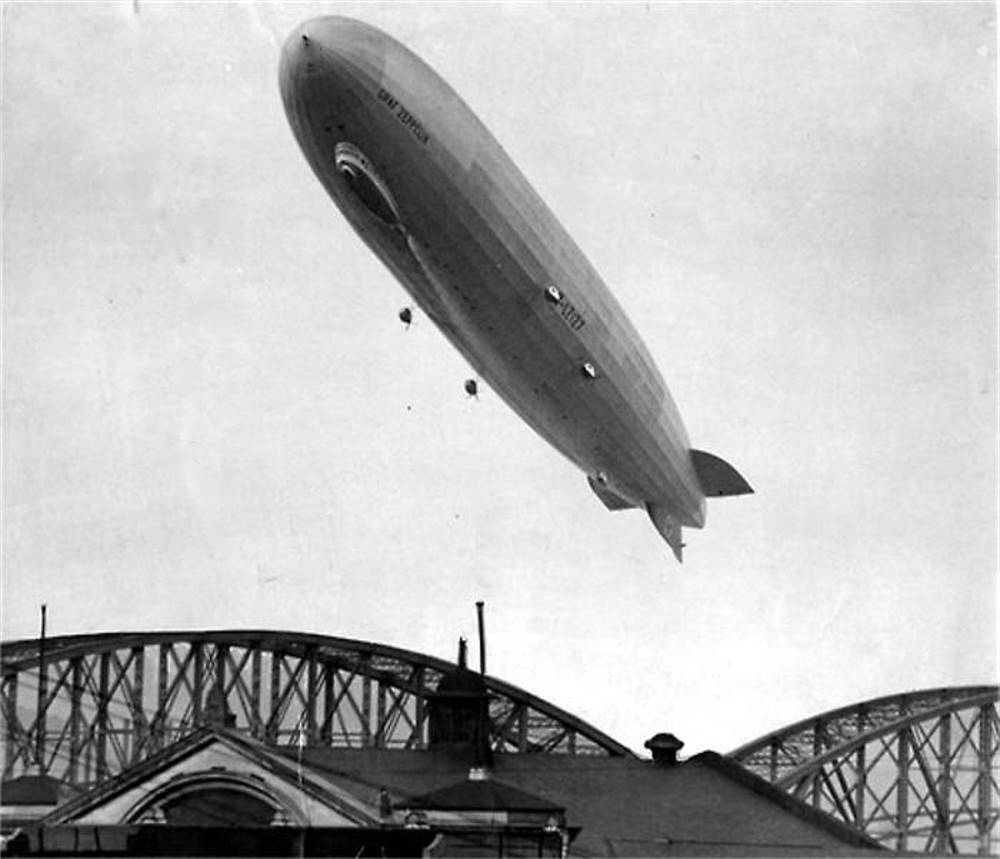
However, Hugo Eckener was a highly experienced negotiator - and the matter was limited to the image of the flag of the Third Reich on the tail fin. And only on the left: on the right side, Eckener placed the flag of the German Empire, justifying this with the memory of the Zeppelin crews who died during the war. In the USA, Eckener and the captains who replaced him tried to fly near large cities, passing them on the starboard side. It was also not possible to refuse the participation of the airship in the filming of the large-scale propaganda film “Triumph of the Will” by Leni Riffenstahl, and in scattering propaganda leaflets from the board over German cities. On the other hand, the Reich Minister of Aviation, former fighter ace Hermann Goering passionately did not digest airships and considered them categorically outdated, unnecessary and, in addition, taking away valuable resources such as duralumin from his beloved Luftwaffe aircraft.
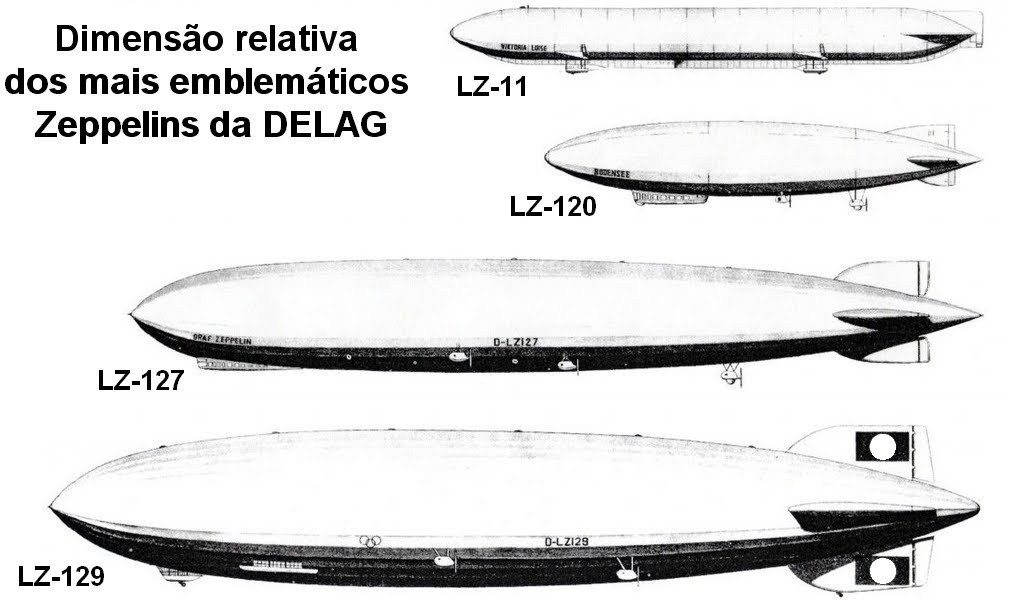
And yet, despite everything, Zeppelin Luftschiffbau managed to build two more passenger airships, even larger and more advanced sisterships LZ-129 “Hindenburg” and LZ-130 “Graf Zeppelin II”. The first Graf Zeppelin also continued active operation, flying mainly to South America and the USA. In total, he covered about 1.7 million kilometers over 590 flights and spent 17,177 hours in the air—about two years. It crossed the Atlantic Ocean 139 times to North and South America, carrying 34,000 passengers and 80 tons of mail and cargo.
The denouement came on May 6, 1937, when the Hindenburg suddenly burst into flames and crashed to the ground while landing at Lakehurst in front of many spectators and movie cameras, killing 35 people. In addition to the terrible reputational damage, Goering took advantage of the situation and categorically prohibited any further use of airships in passenger transportation, from now on they could only be used in the interests of the Reich. If the LZ-130 “Graf Zeppelin II” continued experimental and even reconnaissance operation until the start of the war, then at first they decided to turn the old “Graf Zeppelin” into a museum. But when World War II broke out, Goering demanded duralumin from both remaining airships for Luftwaffe aircraft - and the most famous zeppelin in history was dismantled, like its “big brother”.
© 2026 MT FINANCE LLC
Why This Matters In Practice
Beyond the original publication, Why Airships Never Took Off. Part 10: The Most Famous and Successful Zeppelin matters because teams need reusable decision patterns, not one-off anecdotes. After the end of the First World War, the Entente countries banned Germany from building rigid airships, and all surviving zeppelins were to...
Operational Takeaways
- Separate core principles from context-specific details before implementation.
- Define measurable success criteria before adopting the approach.
- Validate assumptions on a small scope, then scale based on evidence.
Quick Applicability Checklist
- Can this be reproduced with your current team and constraints?
- Do you have observable signals to confirm improvement?
- What trade-off (speed, cost, complexity, risk) are you accepting?