Why Airships Never Took Off. Part 1: From Montgolfier to a Borodino Bomber
In our time, airships are most associated with the gloomy Teutonic genius and the name of Count von Zeppelin. Indeed, the Germans were very active in building and using aircraft, and their huge airships bombed London in the First World War and made commercial flights across the A
Series Navigation
- Why Airships Never Took Off. Part 1: From Montgolfier to a Borodino Bomber (Current)
- Why Airships Never Took Off. Part 2: Rise and Fall of French Airships
- Why Airships Never Took Off. Part 3: Birth of the German Zeppelins
- Why Airships Never Took Off. Part 4: The Kaiser's Airships Go to War
- Why Airships Never Took Off. Part 5: Shadows Over Britain
- Why Airships Never Took Off. Part 6: London Under the Bombs
- Why Airships Never Took Off. Part 7: Fire in the Sky
- Why Airships Never Took Off. Part 8: The End of Wartime Zeppelins
- Why Airships Never Took Off. Part 9: Ashes of War and New Opportunities
- Why Airships Never Took Off. Part 10: The Most Famous and Successful Zeppelin
- Why Airships Never Took Off. Part 11: Aircraft Carriers in the Sky
- Why Airships Never Took Off. Part 12: Italian Semi-Rigid Airships
- Why Airships Never Took Off. Part 13: Through the North Pole aboard the Norge
In our time, airships are most associated with the gloomy Teutonic genius and the name of Count von Zeppelin. Indeed, the Germans were very active in building and using aircraft, and their huge airships bombed London in the First World War and made commercial flights across the Atlantic into Interbellum. However, the honor of inventing and creating the first airships still belongs to the French, and their very name is the French dirigeable - “controlled”. The very first attempt to create an aeronautical vehicle driven by propellers dates back to 1784, almost immediately after the first balloon flights of the Montgolfier brothers. Attempts to create an airship also took place in Russia - moreover, they wanted to use them against Napoleonic army in 1812.
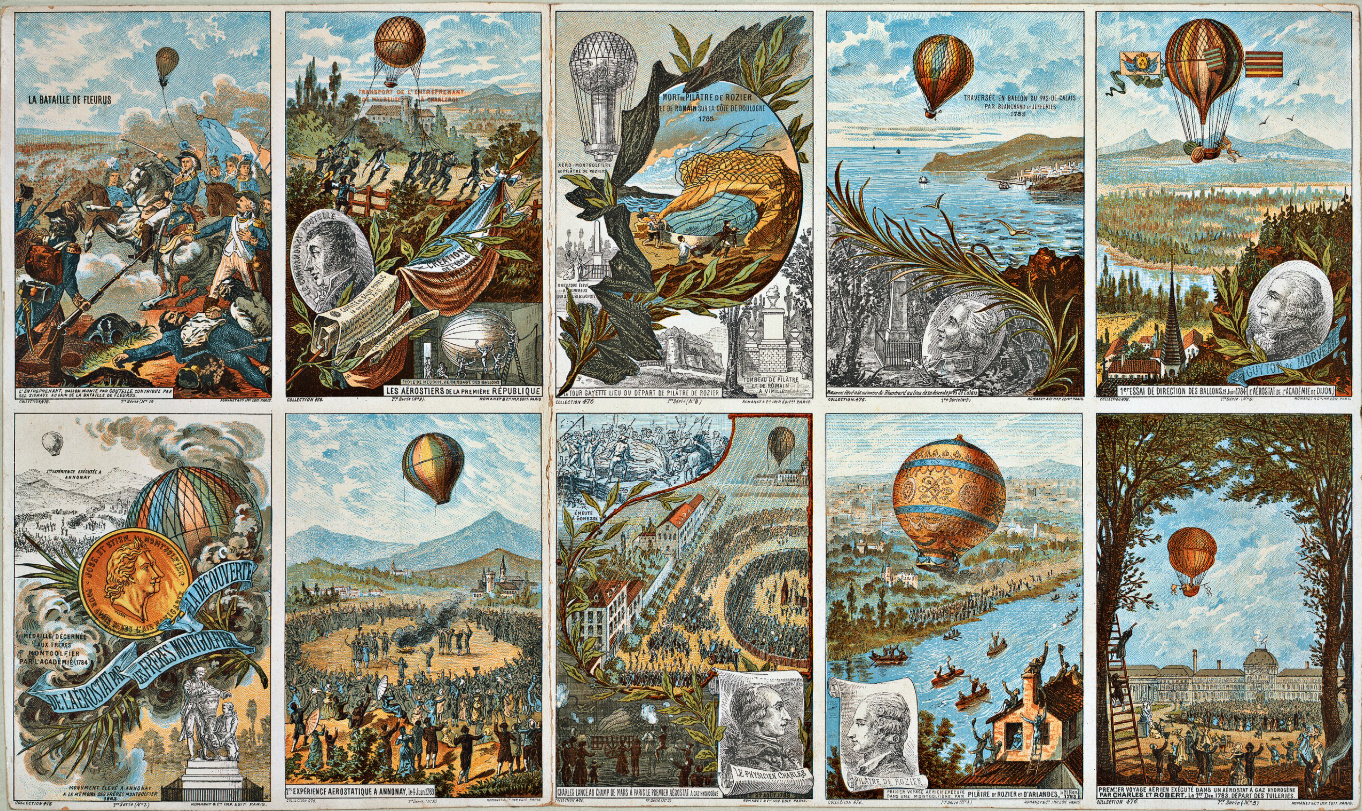
It is now assumed that the credit for the original invention of the hot air balloon principle goes to the Chinese: the now well-known aerial lanterns. Legends claim that they were invented in the 3rd century BC by the cunning commander Zhuge Liang during the Wars of the Three Kingdoms: he found himself surrounded and called for help with his help. Others suggest that the Mongols frightened European knights at the Battle of Lingitsa in 1241 with aerial signal lanterns borrowed from the Chinese. However, the first reliable mentions of such products in China date back to the 17th century, at the turn of the Ming and Qing dynasties, which is somewhat earlier than in Europe, but by no means many centuries. And in China, as far as we know, there is no confirmed data on attempts to enlarge the structure for transporting people, although there are references to similar amusements at the court of the emperors of the Mongol Yuan dynasty at the beginning of the 14th century.
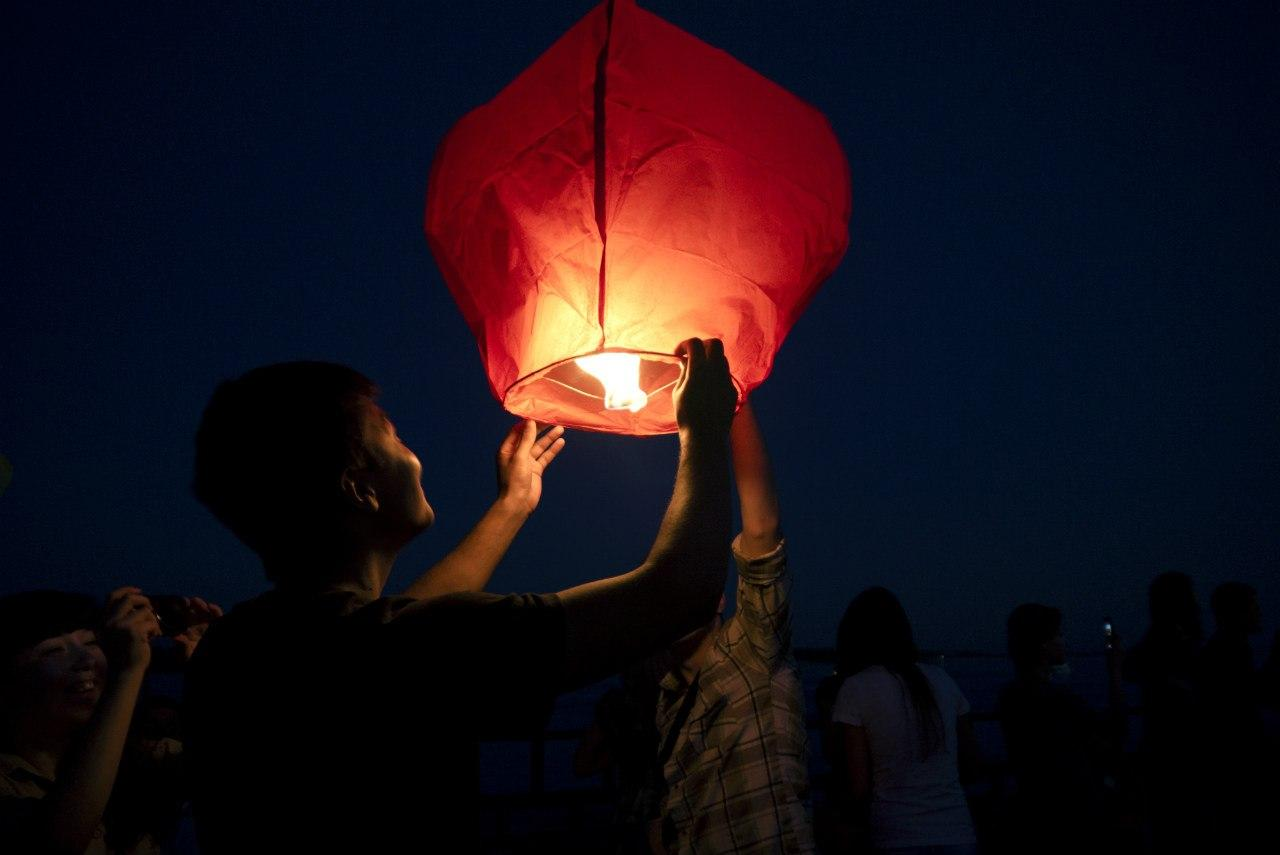
The first European mention of hot air balloons is considered to be the treatise Prodromo by the Italian Jesuit, mathematician and naturalist Francesco Lana de Terzi, published in 1670 in Brescia. Inspired by the experiments with vacuum of the German physicist Otto von Guericke, he proposed creating an aircraft lifted by four thin and durable spheres from which air was pumped out. It was supposed to be controlled using an ordinary oblique sail, common in the Mediterranean Sea. It was not so much a project as a mental physical experiment and mathematical exercise: de Terzi did not deny that it was impossible to create sufficiently light and yet strong spheres that would not undergo implosion from the pressure of external air from any imaginable material.
Moreover, the author directly expressed the hope that his idea would never be put into practice, being the first in history to predict the possibility and inevitability of aerial bombing when flying machines appeared in the hands of mankind:
God will never allow the creation of such a machine, because everyone understands that no city will be safe from attacks: iron loads, fireballs and bombs can be dropped from great heights.
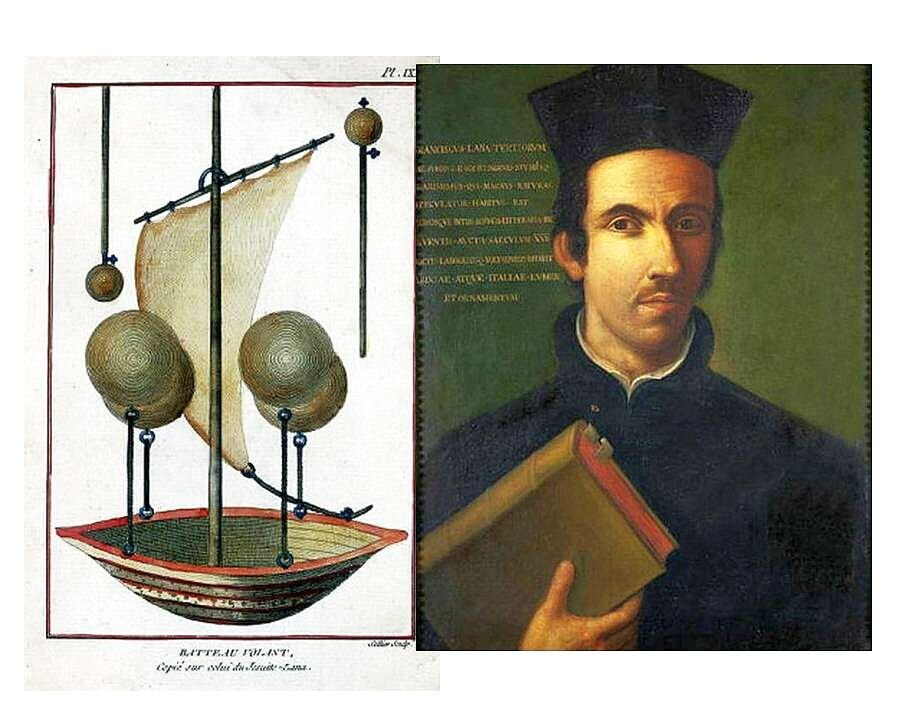
From de Terzi's idea grew a more realistic project of another priest-naturalist, Portuguese-Brazilian Bartolomeu de Guzman. In 1709, he sent documents to King John V describing the invention and requesting an official patent. The invention, called “Passarola,” was a boat with a sail attached above it, into which hot air was pumped. The horizontal propeller in this case was supposed to be a pair of mysterious vacuum spheres with magnets, and the sail in the attached image of the aircraft would not be able to lift this structure into the air even theoretically. Perhaps de Guzman deliberately distorted his idea in the image so that the idea would not be stolen before he received a patent, but the further fate of the invention remains unclear. Later, in the 1780s, after the flights of the first hot air balloons, the Portuguese tried to justify their historical priority, claiming that de Guzman had staged a successful demonstration flight in the presence of the king, but no documentary evidence was found for this.
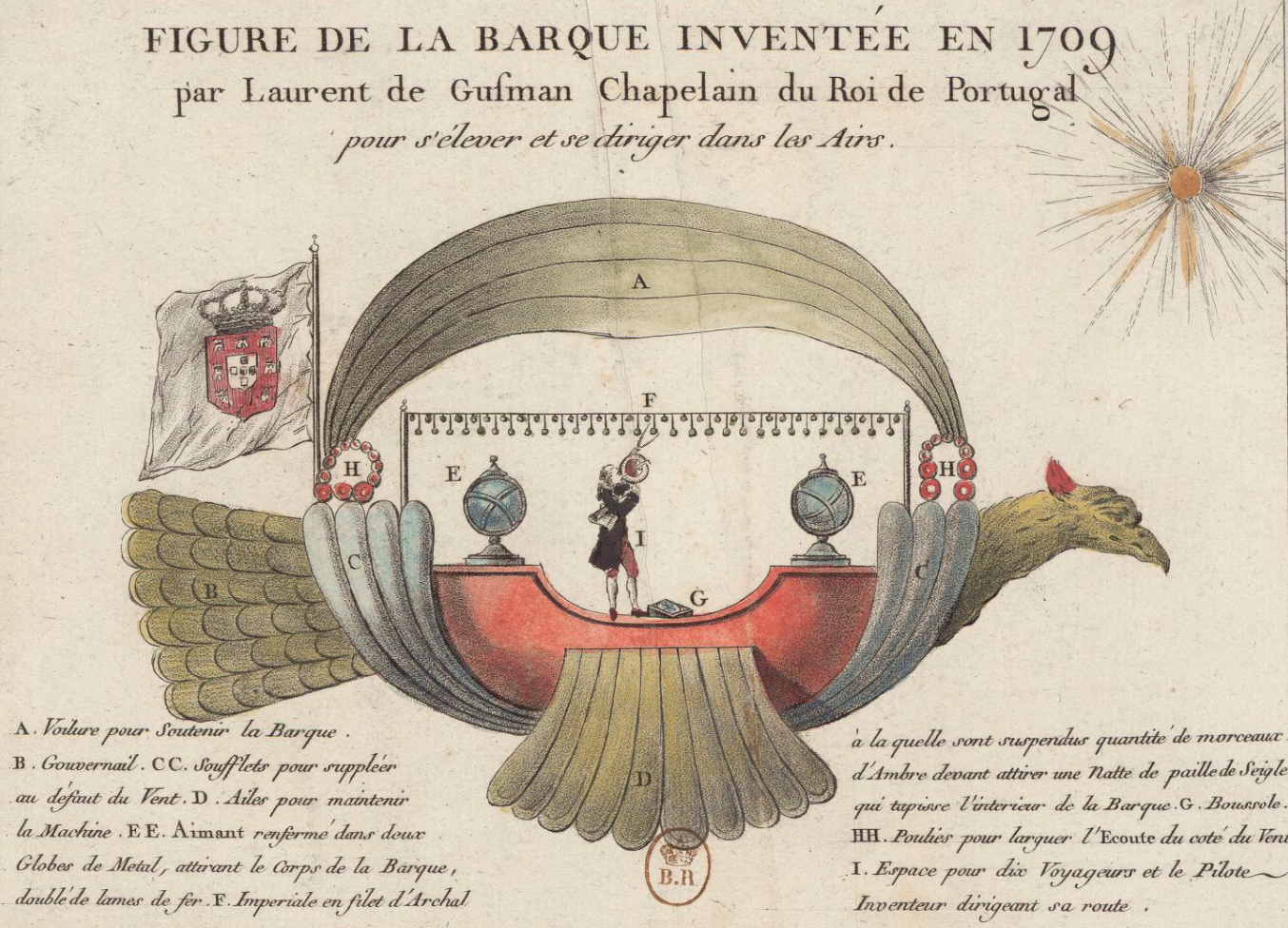
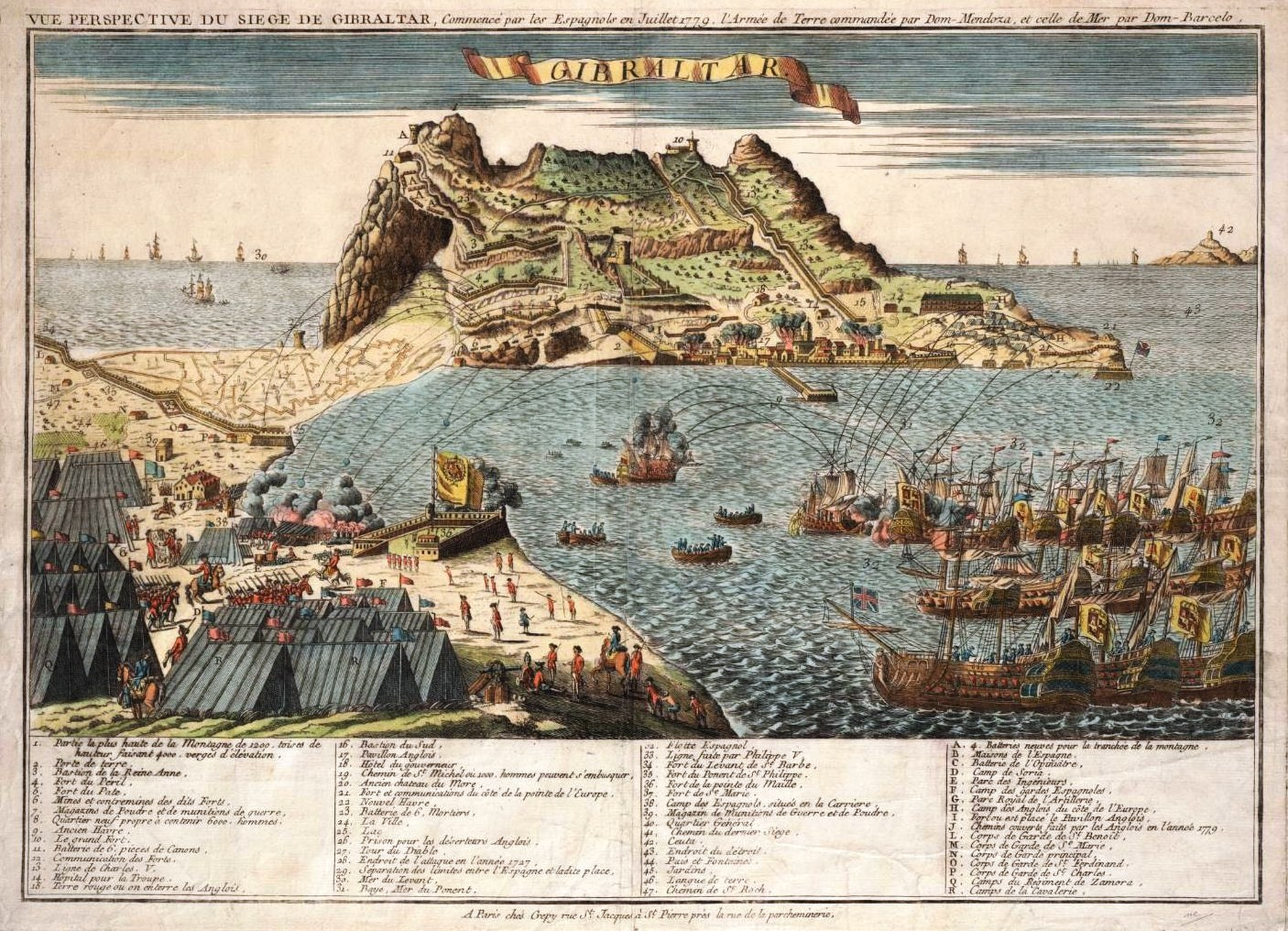
Documentary evidence of successful experiments with launching hot air balloons dates back only to 1782. Then the brothers Joseph-Michel and Jacques-Etienne Montgolfier, members of the family of owners of a paper mill in Annonay near Leon, passionate about physics, thought about the practical implementation of aeronautics. The first idea that came to Joseph's mind was when he noticed how the laundry drying on the lines inflated and tried to fly up when hot air from the fire blew into it. He thought that if airships were made according to this principle, then they could be offered to serve the royal army and navy. And to make possible, no more nor less, an air landing on the impregnable rock fortress of Gibraltar, which was in the hands of the British and controlled the entrance to the Mediterranean Sea.
In November 1782, while in Avignon, he built a frame of very thin poles measuring 1.2 x 0.9 x 0.9 meters, covered it with light but very dense taffeta fabric, and placed smoldering paper on a stand in the center. The structure rose into the air and hit the ceiling. The delighted Joseph immediately wrote a letter to Etienne urging him to immediately repeat his experience - and soon he himself returned to Annone. There the brothers built a box three times larger, and it flew safely into the sky, powered by burning wool, after which it made a hard landing.
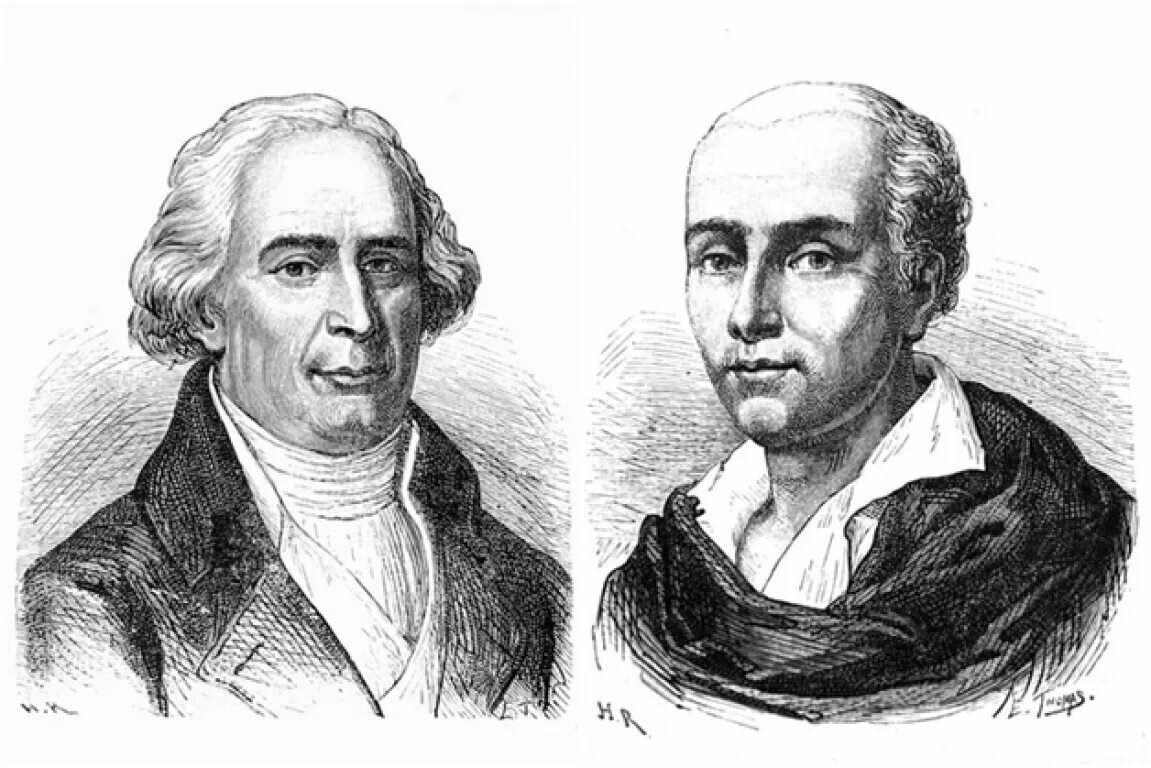
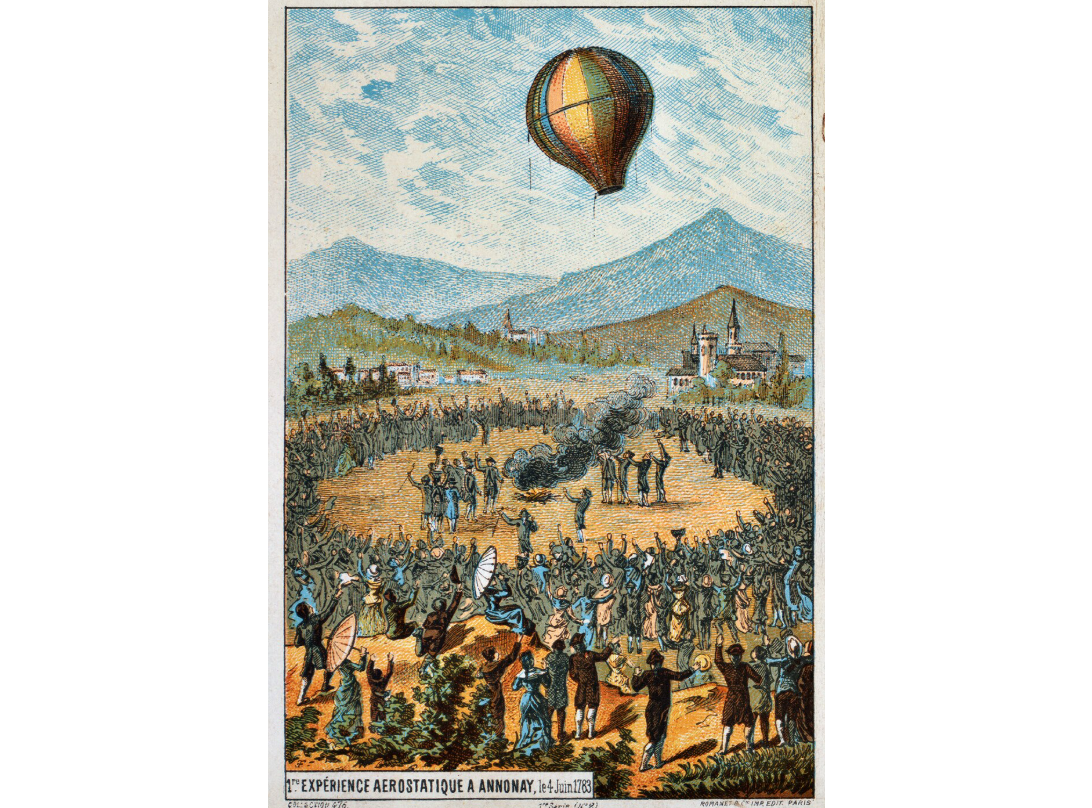
The brothers conducted several more private experiments, after which they decided to officially present the invention and obtain a patent for it. For the presentation, they built a spherical structure with a diameter of 11.5 meters from canvas, covered on the inside with branded paper from the Montgolfier factory. On June 4, 1783, in the presence of officials from the provincial states and a large crowd of people, the launch took place in the market square in Annonay. The balloon rose to a height of about one and a half to two kilometers, and in ten minutes flew about two miles, landing in a meadow after the fire died out. Everything was carefully documented with the signatures of officials, after which the reports were sent to the royal palace and the Academy of Sciences.
Louis XVI became personally interested in the idea, and the brothers began to prepare a new ball for display at Versailles to the royal family and court. Naturally, it had to look appropriate; in the gallant 18th century they would not have understood otherwise - and for the design, the brothers turned to the owner of the royal tapestry manufactory, Jean-Baptiste Reveillon. He, as the official supplier of the court, knew the tastes of the royal couple very well, so the new balloon was covered with magnificent azure wallpaper with gold monograms and other decorations.
However, while the Montgolfier brothers were preparing their model for the royal presentation, another balloon had already taken to the skies in Paris. Moreover, a more progressive device: not using hot air, but using hydrogen. Its creator was the Parisian inventor, Professor Jacques Charles, who drew the correct conclusions from the works of Robert Boyle on the properties of gases. He made his ball with the brothers Anne-Jean and Nicolas-Louis Robert in their workshop completely independently of the Montgolfier brothers. Even the principle of ensuring the airtightness of the shell was different: according to the idea of the Robert brothers, they covered dense silk with a solution of rubber in turpentine. Hydrogen was produced by the brutal process of dousing scrap iron with sulfuric acid and then pumping it into the ball through a lead tube.
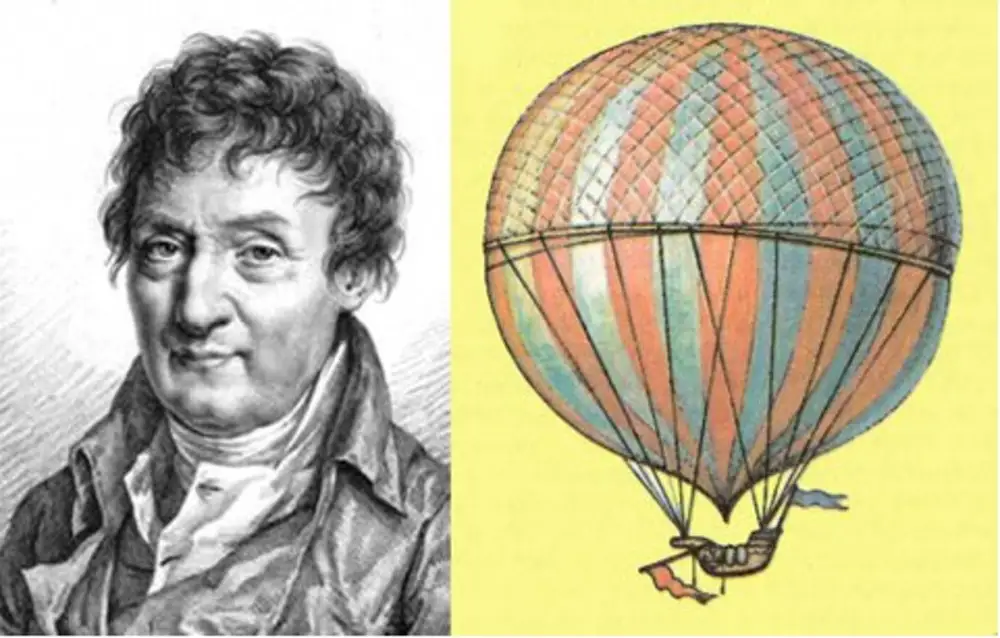
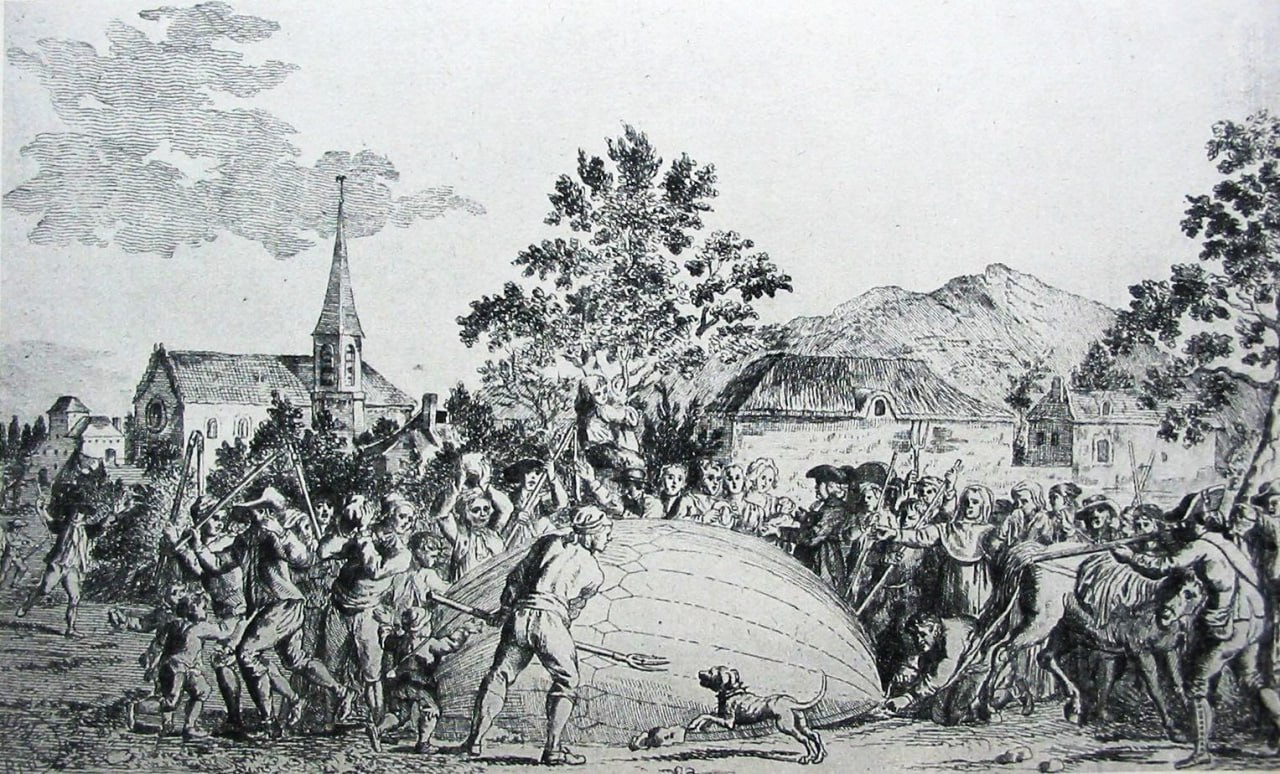
The balloon of Charles and the Robert brothers took off on the Champ de Mars in Paris - now the Eiffel Tower rises there - on the morning of August 27, 1783, with a large crowd of people. The launch was also observed by Benjamin Franklin, who was passionate about physics, then the US envoy to France, who was engaged in concluding peace between Great Britain and the rebel North American colonies. A sphere of red and yellow stripes with a diameter of about 4 meters with a 9-kilogram load quickly soared into the sky and rushed to the north. She was followed by a group of horsemen who decided to see what would happen to her next. The balloon flew 21 kilometers in 45 minutes and landed in the village of Gonesse, where the villagers, pretty frightened by such devilry, stuck it with pitchforks. On this occasion, the royal government even issued an official statement that balloons are harmless and useful for science, and one should not be afraid or harm them if they are discovered.
Finally, the Montgolfier brothers' ball was ready at the manufactory of Jean-Baptiste Reveillon. In gratitude for his help, he received the name Aérostat Réveillon. On September 11, its test launch was successfully carried out, and an official presentation to the king in Versailles was scheduled for September 19. To make it even more interesting, the first balloon passengers were a sheep named Montauciel, as well as an unnamed rooster and a duck. They were put in a cage and placed in such a way that it would not be harmed by the heat and smoke that filled the dome with hot air. Finally, the balloon took off to the delight of the royal couple and courtiers. It took off at one o'clock in the afternoon, reached a height of half a kilometer, flew 3-4 kilometers in 10 minutes, and safely made a soft landing after the air cooled. None of the passengers were injured, fortunately there were no peasants with pitchforks nearby either.
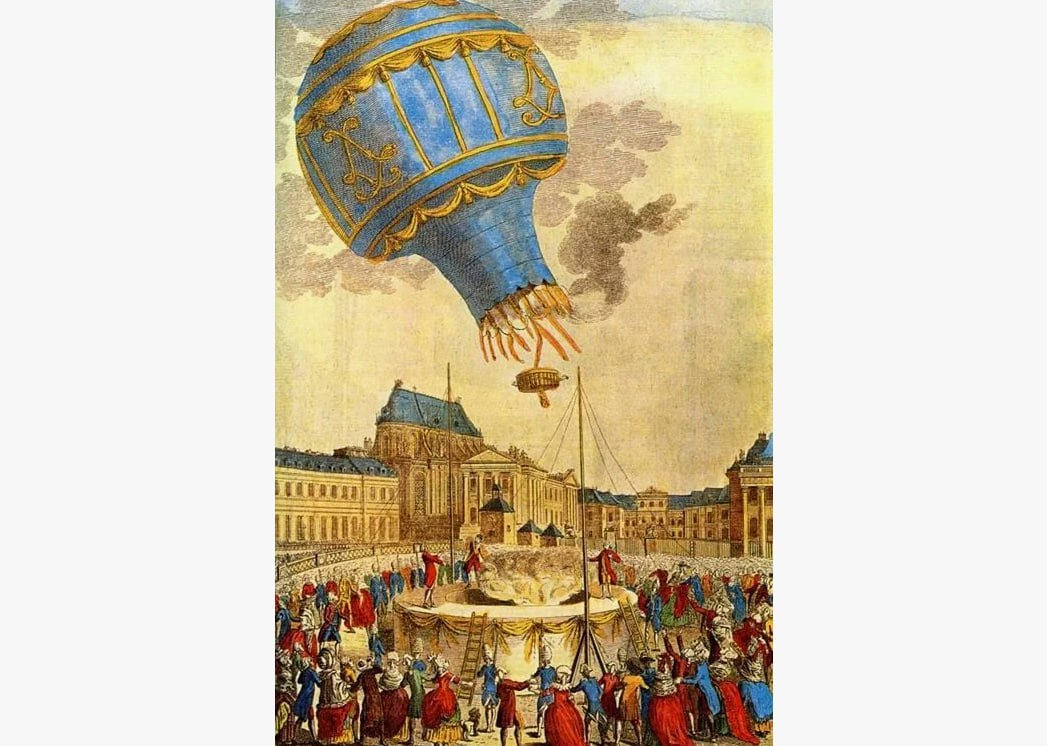
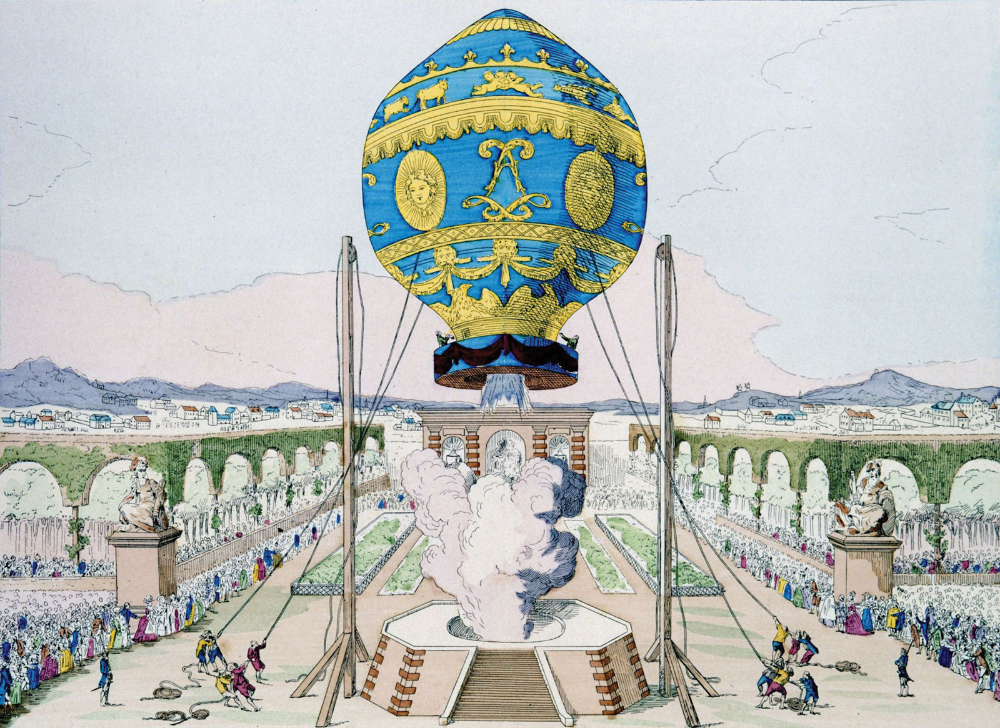
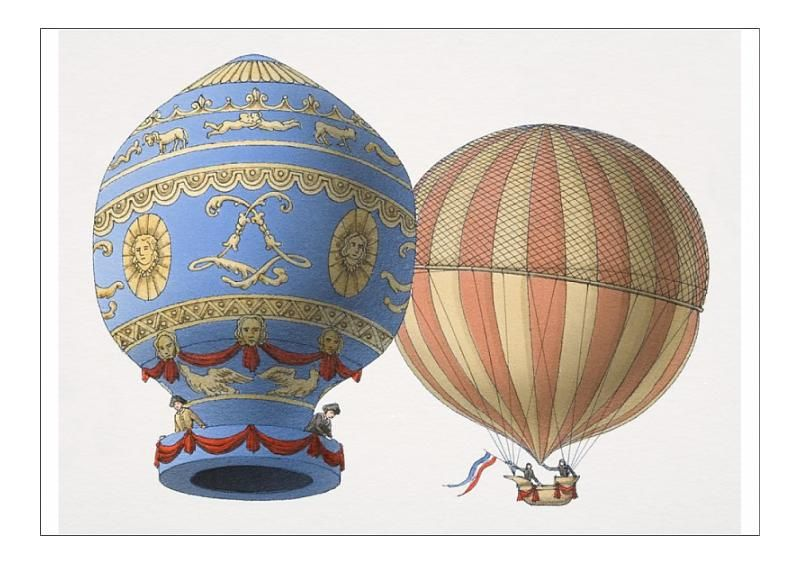
Now it was a matter of lifting a person into the air. To do this, an even larger and more luxurious dome with a diameter of 15 and a height of 21 meters was built at the same Revellon manufactory. It was covered with the same sky-blue fabric, beloved by the royal family, on which were a variety of golden images: portraits of the king, monograms, the eight winds and the twelve signs of the zodiac. Below, due to the principle of filling the dome with hot air from the flame, a “balcony” was built surrounding its base, capable of supporting two adults. In addition to the external fire, on the launch pad the structure had an internal iron basket, where the crew maintained, changed or stopped the combustion of the fuel taken on board to control the flight altitude.
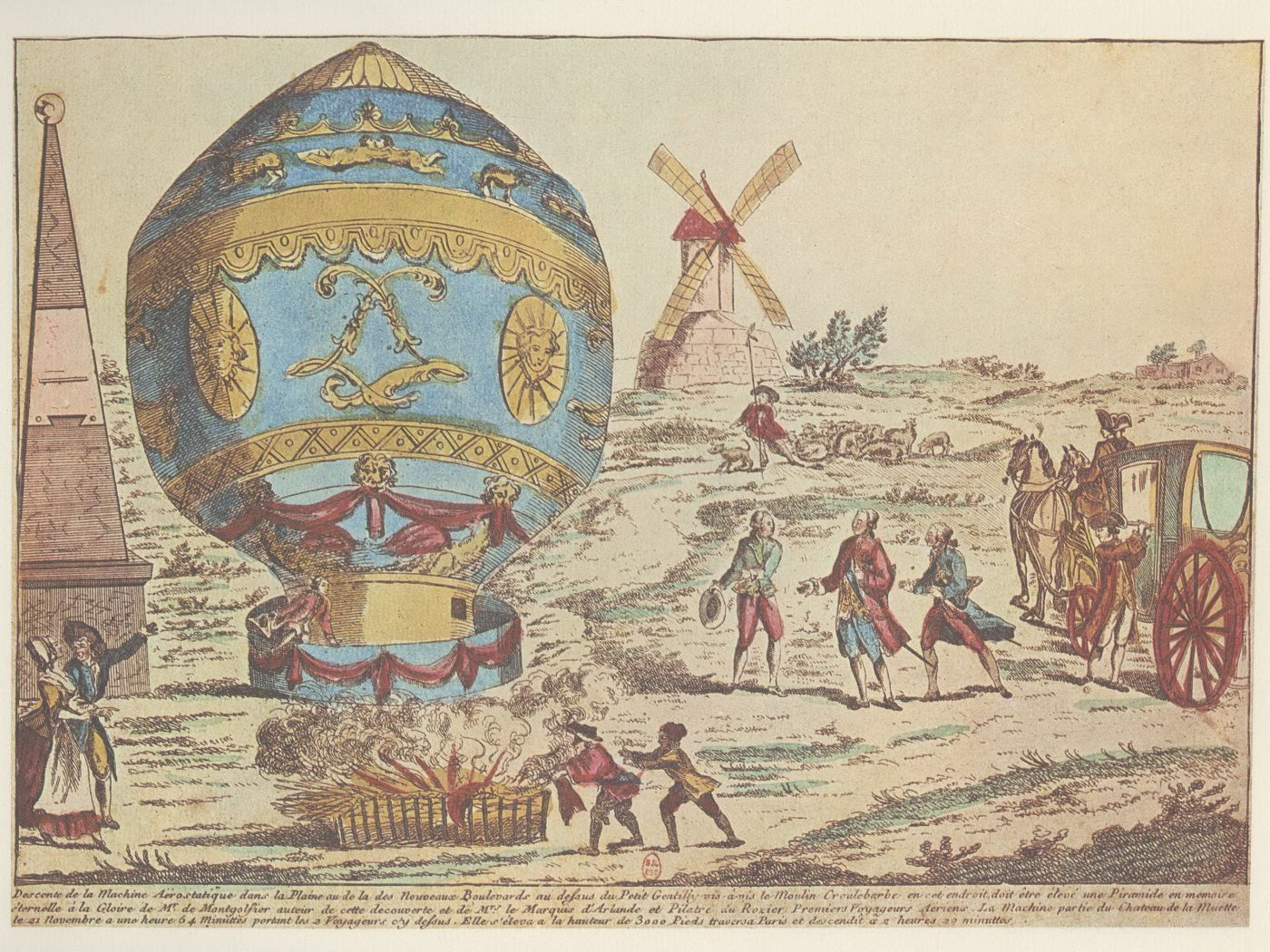
The first person to take to the air during tests on the territory of the manufactory was Etienne Montgolfier on October 15: the ascent was carried out to a height of only 25 meters, the length of the cables holding the ball. On the same day, physicist Pilatre de Rozier, participating in the project, followed his example. After this, the manufactory carried out several more test runs on a leash to ensure the reliability of the design. Louis XVI, fearing the loss of inventors, categorically forbade the Montgolfier brothers to take their first flight themselves. Instead, he proposed launching criminals sentenced to death into flight for the first experiment. However, de Rosier and the Marquis Francois Laurent d'Arlandes, who joined him, an officer of the royal guard and a lover of jumping with the first parachutes, convinced the king of the need for air priority of representatives of the French nobility in the person of themselves.
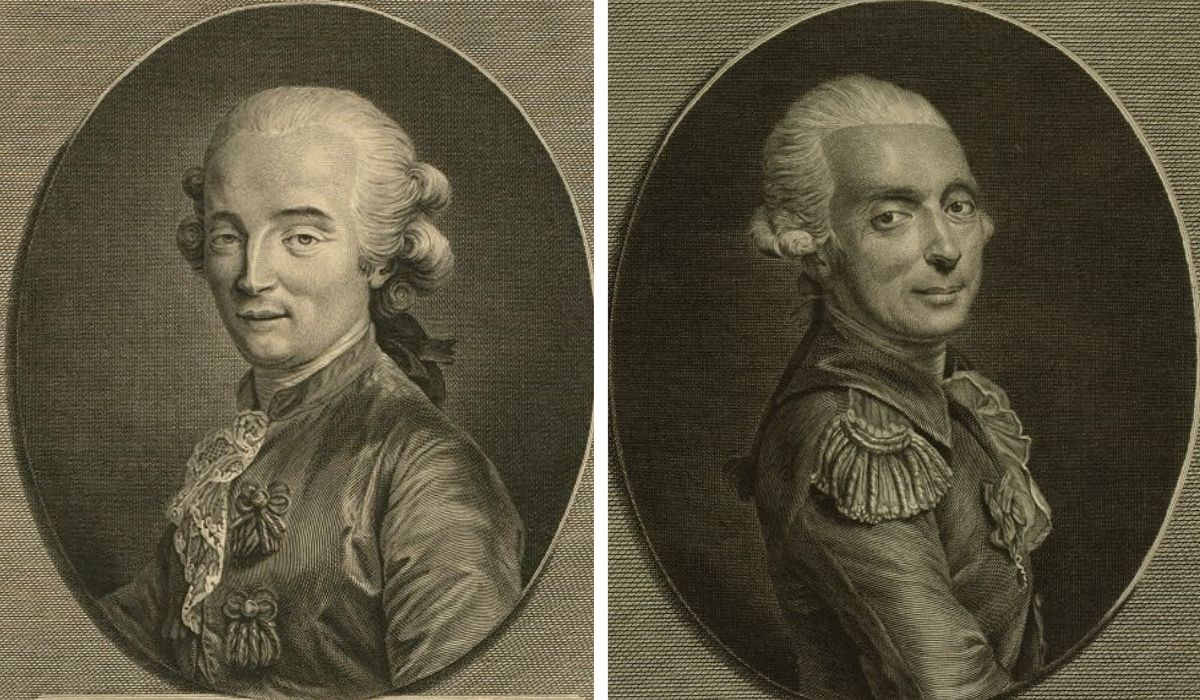
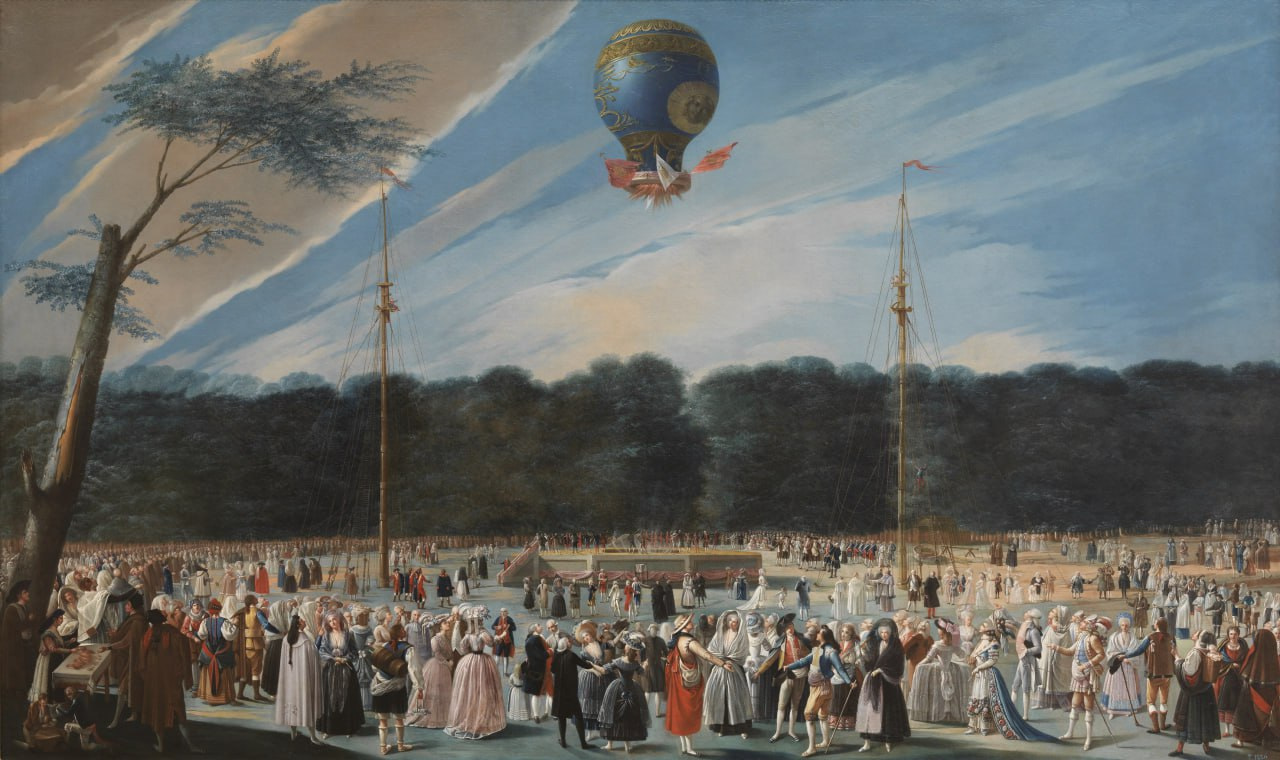
Finally, on November 21, on the territory of the royal castle of La Muette on the edge of the Bois de Boulogne, a ball was installed on a special structure. In the presence of the royal couple, courtiers, Benjamin Franklin and numerous spectators, at 13:54 de Rosier and d'Arlande took to the air, the ropes were released, and the balloon set off in free flight. It flew southeast at an altitude of about a kilometer for about 9 kilometers in 25 minutes, after which it made a soft landing on the Buttes aux Cailles hill. After landing, the first thing the balloonists did was drink the bottle of champagne they had brought with them, establishing a tradition that continues to this day. There was still enough fuel, it was possible to fly further, but there was no point in moving too far from Paris, and the sparks from the burner almost set fire to the fabric several times.
Then it was the turn of the flight of the team of Professor Charles and the Robert brothers, who by that time also received very favorable attention at court. On December 1, in the garden of the Royal Tuileries Palace, in front of a large crowd of people, the launch ceremony of a hydrogen balloon with a crew took place. It was named after the inventor "Charlière", had a diameter of about 9 meters with a volume of 380 cubic meters and, like the first, consisted of red and yellow stripes without any decoration. A small gondola in the form of a symbolic ship was attached below. The creation of a new ball, capable of lifting two people, was financed by crowdfunding: each donor received the right to watch the launch from a special area closest to the ball. Among the special guests on a special platform were the Montgolfier brothers, who before the start launched a small balloon to test the strength and speed of the wind, as well as the same Benjamin Franklin. The royal family did not participate in the event this time, but the balloon was solemnly taken to the launch pad, held by ropes, by four representatives of the highest aristocracy of the kingdom, including two current marshals of France. The crew was composed of Professor Jacques Charles and Nicolas-Louis Robert themselves.
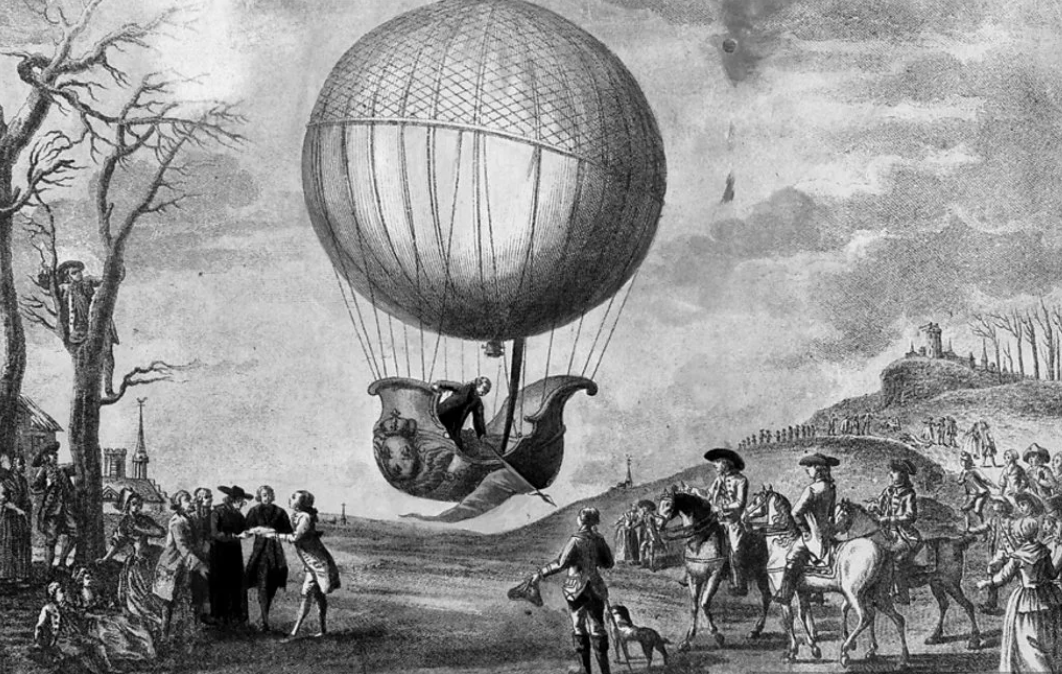
The balloon rose to a height of half a kilometer and covered a distance of 36 kilometers in two hours, landing near the village of Nelle-la-Vallée north of Paris. Unlike the first hot air balloon crew, Professor Charles took measurements of physical parameters during the flight using instruments he took with him. The landing was assisted by grasping and holding the cables by a group of horsemen following the balloon, led by Louis Philippe, Duke of Chartres (and also Grand Master of the Grand Orient of France). However, when the ball had already landed, the professor decided to take to the air again, alone, to make additional measurements at a higher altitude. Jean Charles climbed into the gondola, the cables were released, and he began to throw out bags of ballast - but miscalculated somewhat. The ball rushed upward and reached a height of three kilometers. The professor again saw the sun, which had already set for an observer from the ground, but at the same time he felt severe pain in his ears due to a sharp drop in pressure. Having made measurements, he began to release the gas, and descended to the ground again at a distance of three kilometers from the first landing site. After this story, Louis XVI categorically forbade Professor Charles to take to the air, so that the scientist and inventor would not become a victim of his passion for research.
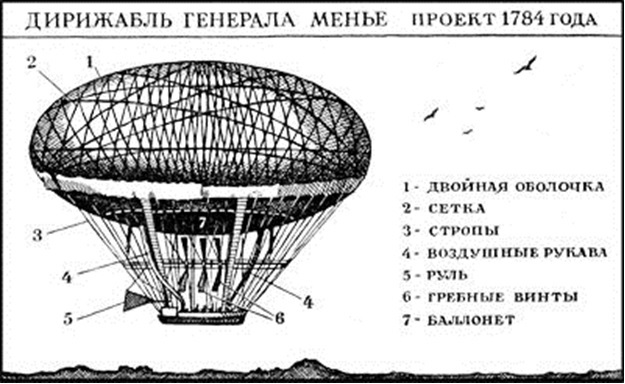
After this, the actual path to creating an airship begins. Mathematician and officer of the Royal Army Engineering Corps Jean Baptiste Meunier de la Place, who was very interested in hot air balloons, submitted a design for an aircraft to the Academy of Sciences. This project was a very deep development of the ideas of the Montgolfier brothers, Charles and the Robert brothers. If such a device were created and could fly as the author intended (spoiler: it couldn’t), the task of an air assault on Gibraltar would become quite feasible. It was an 80-meter-long ellipsoid with a volume of 1,700 cubic meters, elongated to reduce air resistance and course stability, consisting of outer and inner shells. The inner shell had a variable volume according to the principle of a modern ballonet for soft and semi-rigid airships. The airship was propelled by three propellers, which were rotated by the efforts of 80 crew members - after landing, they could also serve as a landing force. The design was also equipped with air stabilizers.
The Robert brothers became interested in Meunier’s idea and began to build an experimental model: an elongated balloon with an internal ballonet, called “Carolina”. The oars were supposed to set the structure in motion in the desired direction. On July 15, 1784, the brothers launched a proto-airship called "La Caroline" into the air in the Parisian suburb of Saint-Cloud from the residence of the Dukes of Orleans. The already mentioned Louis-Philippe, Duke of Chartres, and a scientist named Collin-Yullen went on the flight with them. Alas, the oars, despite their clever design, turned out to be completely unsuitable as propulsion. Worse, the ballast relative to the lifting force was not enough, the balloon rose too high, and at an altitude of 4.5 kilometers the Duke had to pierce the balloon with a sword - otherwise he would risk rupture from the difference in pressure, and all passengers would inevitably die. After 45 minutes, they landed safely in Meudon, having flown in a straight line for only about three kilometers: this flight turned out to be rather vertical.
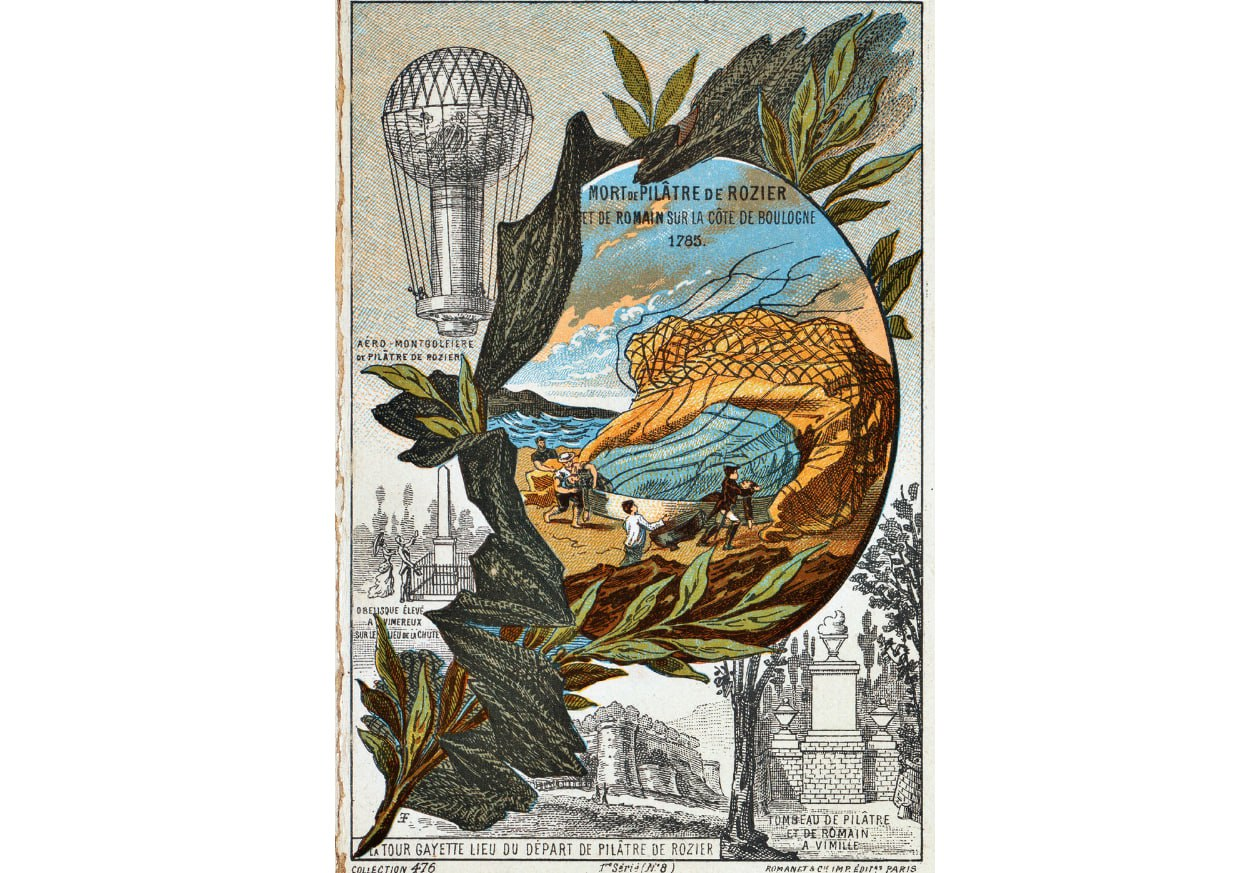
The brothers, however, did not give up, and on September 19 they made another flight on their proto-airship. This time the oars were special, with wide blades, folding and opening like an umbrella. They were again accompanied by Monsieur Collin-Yullin. This time, everything was in order with altitude control, and the company made a record six-hour flight over a distance of 186 kilometers from Paris to Beuvry. Alas, their long attempts to take control of the horizontal movement of the aircraft with the help of umbrella oars were unsuccessful this time too. The original idea of Jean Baptiste Meunier with eighty rotors was impossible for purely physical reasons, although the very idea of a propeller as an aircraft propulsion device turned out to be absolutely correct. All that was required was another engine, more advanced, lighter and more compact, but such engines did not yet exist at the end of the 18th century. But history is silent about why the Robert brothers did not try to make a device with a propeller. Although in 1870, the French military, despairing of losing the war with Prussia, built such an airship - and it was able to fly at a speed of about 2 kilometers per hour with the efforts of six sailors. True, only in calm weather.
Then the revolution began in France, and for some time everyone had no time for experiments with aeronautics. They remembered him only in 1793, when the young republic found itself in a fiery ring of fronts and in a state of war with most of monarchical Europe. The Committee of Public Safety - the same one headed by Robespierre, without breaking away from the Jacobin terror - decided to begin experiments on the military use of balloons, including controlled ones that had not yet received the name of airships. As before, all experiments using human power to propel aircraft failed. However, by October 1793, during experiments at the former royal residence of the Tuileries, chemist Jean-Marie-Joseph Coutel managed to find a way to produce hydrogen without the use of expensive and scarce sulfuric acid. This opened up prospects for using hydrogen-powered balloons in the field to monitor the battlefield and conduct reconnaissance of the surrounding area from high altitudes.
After successful experiments with one of the hydrogen balloons confiscated from the “enemies of the people,” Coutel and engineer Nicolas Lomont were sent with everything they needed to the active Northern Army, which was repelling another attempt by the Austrians to attack Paris. However, they were unable to reach the army commander Jean-Baptiste Jourdan, the future marshal of France, who had just defeated the Austrians at Wattigny. It all came down to the “commissar”, the representative of the Committee under the army, Ernest Duquesnoy - until recently an ordinary dragoon who did not understand much about the art of military leadership and innovation, but easily handed out death sentences right and left. Despite an official letter from, in fact, the Committee of Public Safety, which strongly recommended that Coutel and his balloon be taken seriously, Duquesnoy drove them out under threat of execution with the words: “I need fresh battalions, not balloons.”
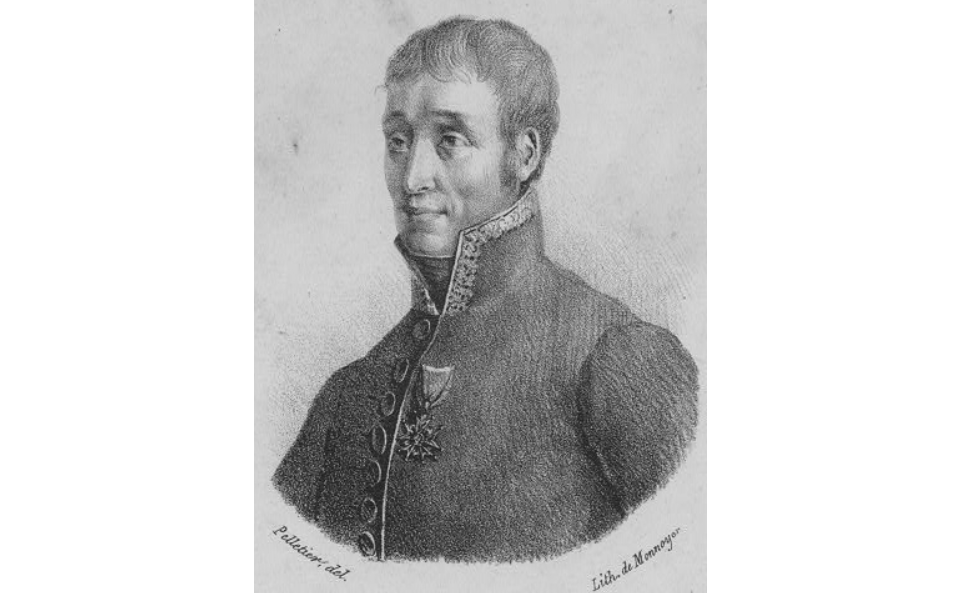
Upon returning to Paris, Coutel received not just official confirmation of the Committee’s support, but also funding, people, and the entire Meudon castle, turned into the Center for the Development of Aerostatics of the French Republic. In it, Coutel and Lomon developed a specification and design for specially built military observation balloons. They were supposed to have a diameter of about 10 meters, a special dense coating based on rubber, which made it possible to fill the cylinder with hydrogen only once every two months, and to lift two people in a wooden cabin to a height of up to half a kilometer. Ground personnel had to move the ball with observers using cables and secure it in the right place. In March 1794, the first ball, called Entreprenant, was ready.
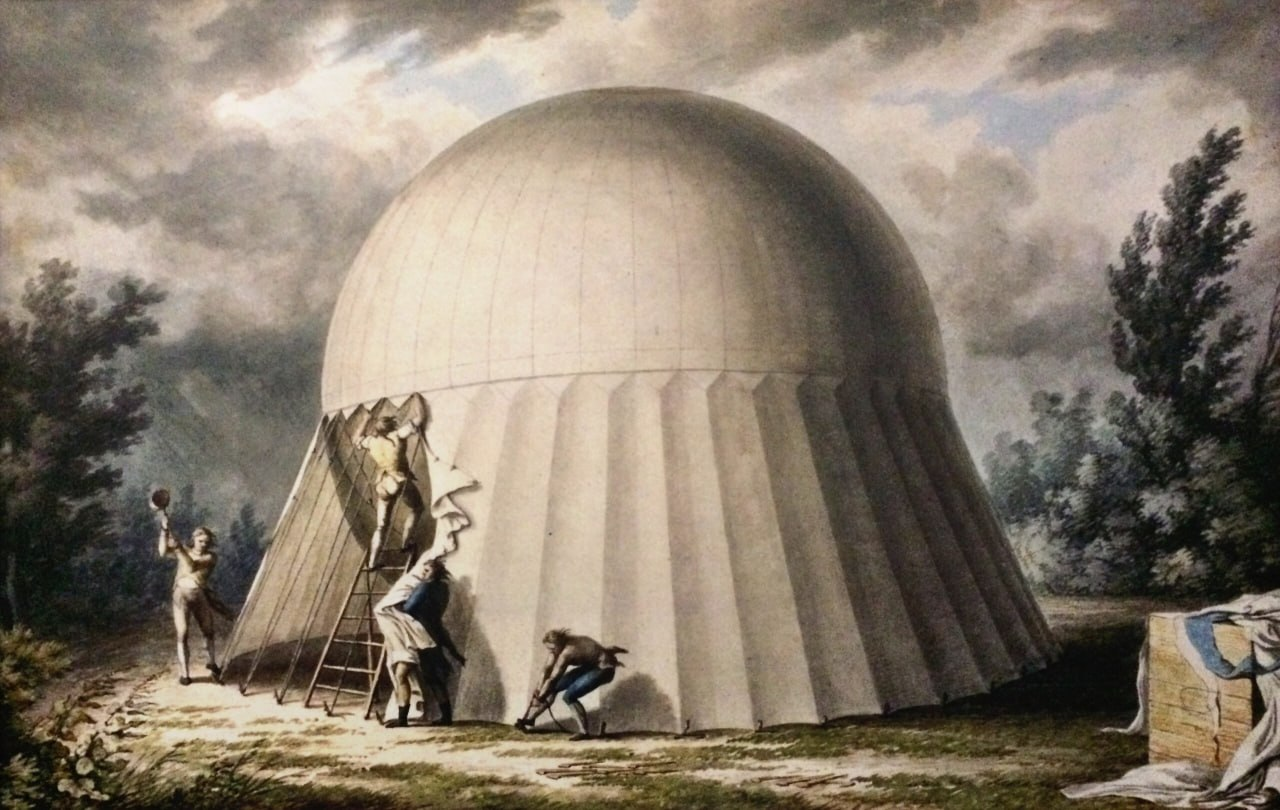
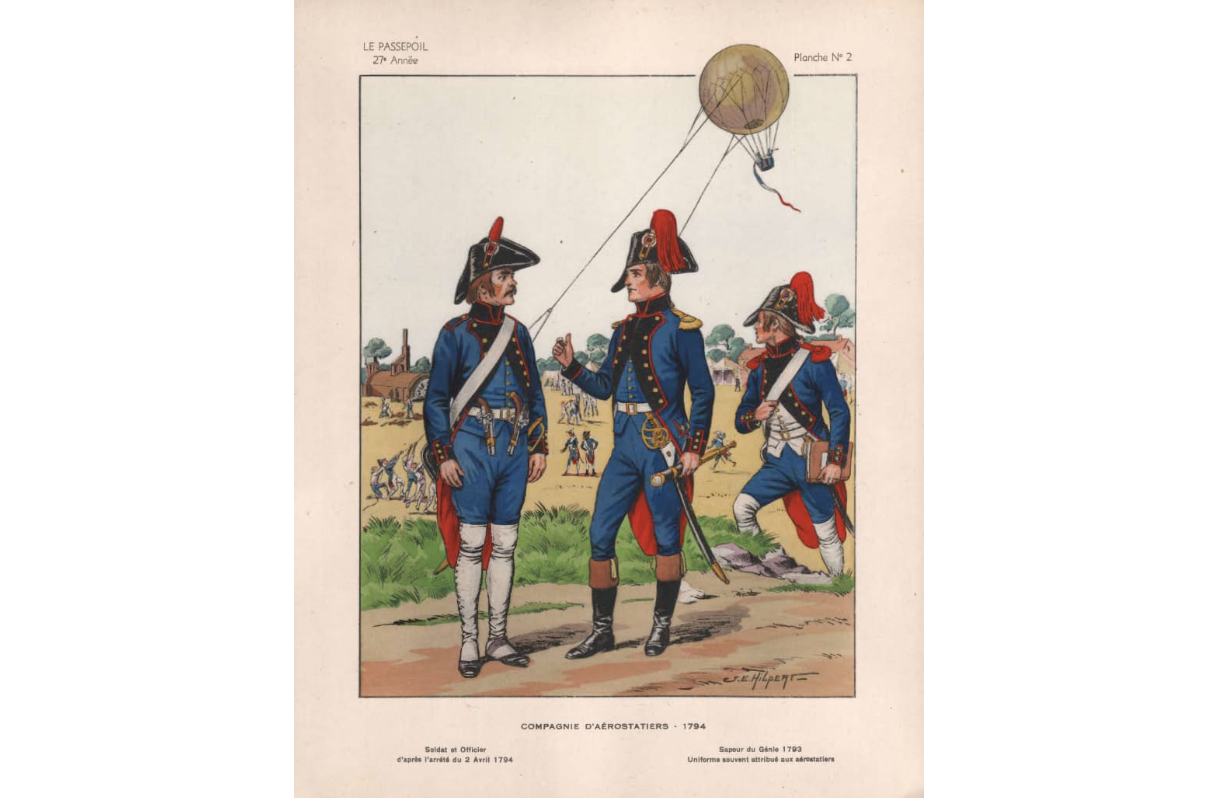
After successful tests in the presence of the leadership of the Committee of Public Safety, the Balloon Company was officially created on April 2, 1794. Kutel became its captain, Lomon became a junior lieutenant, in addition to them there were five non-commissioned officers and 26 privates specially trained in everything necessary. They receive an artillery-style uniform with special buttons with images of a hot air balloon. In May, the company, already in the status of an official military unit, is again sent to the Northern Army at the disposal of the same General Jourdan. Fortunately, the army commissar had already been replaced by that time - and instead of the blockhead Duquesnoy, he became an ardent supporter of balloons, the famous chemist Louis Bernard Guiton de Morveau, who himself had been taking to the air since 1784 and built several balloons.
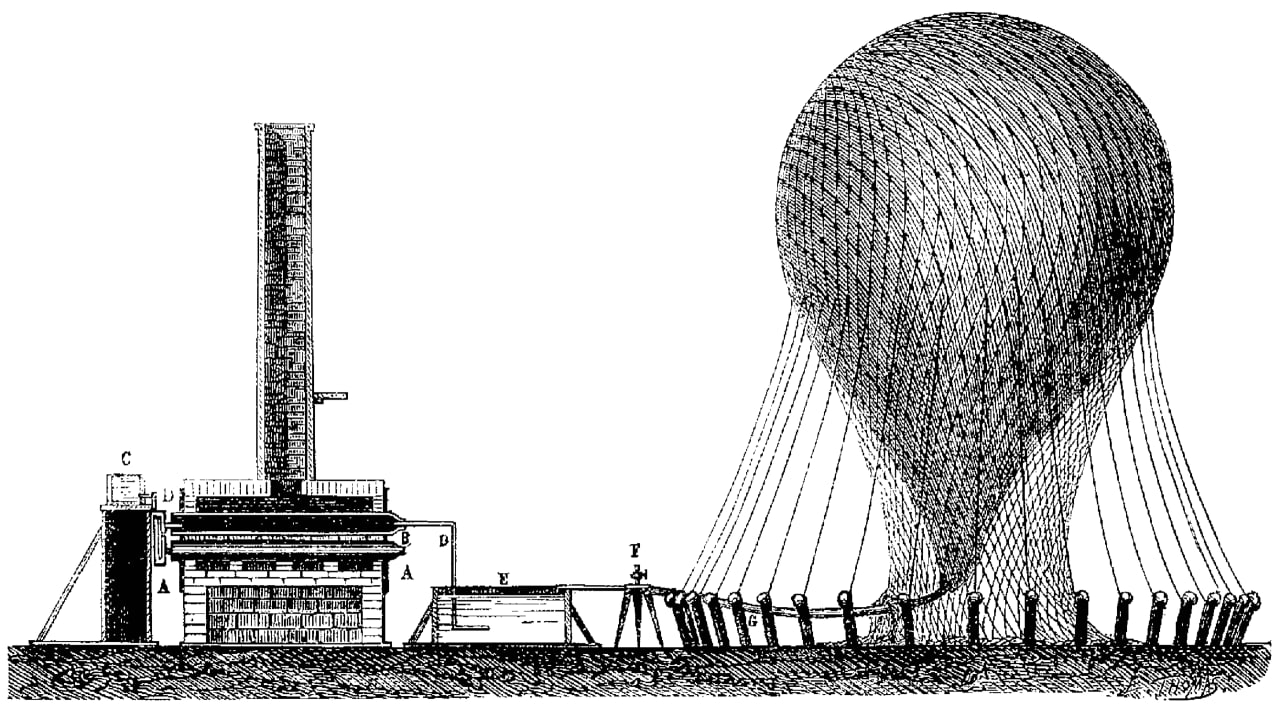
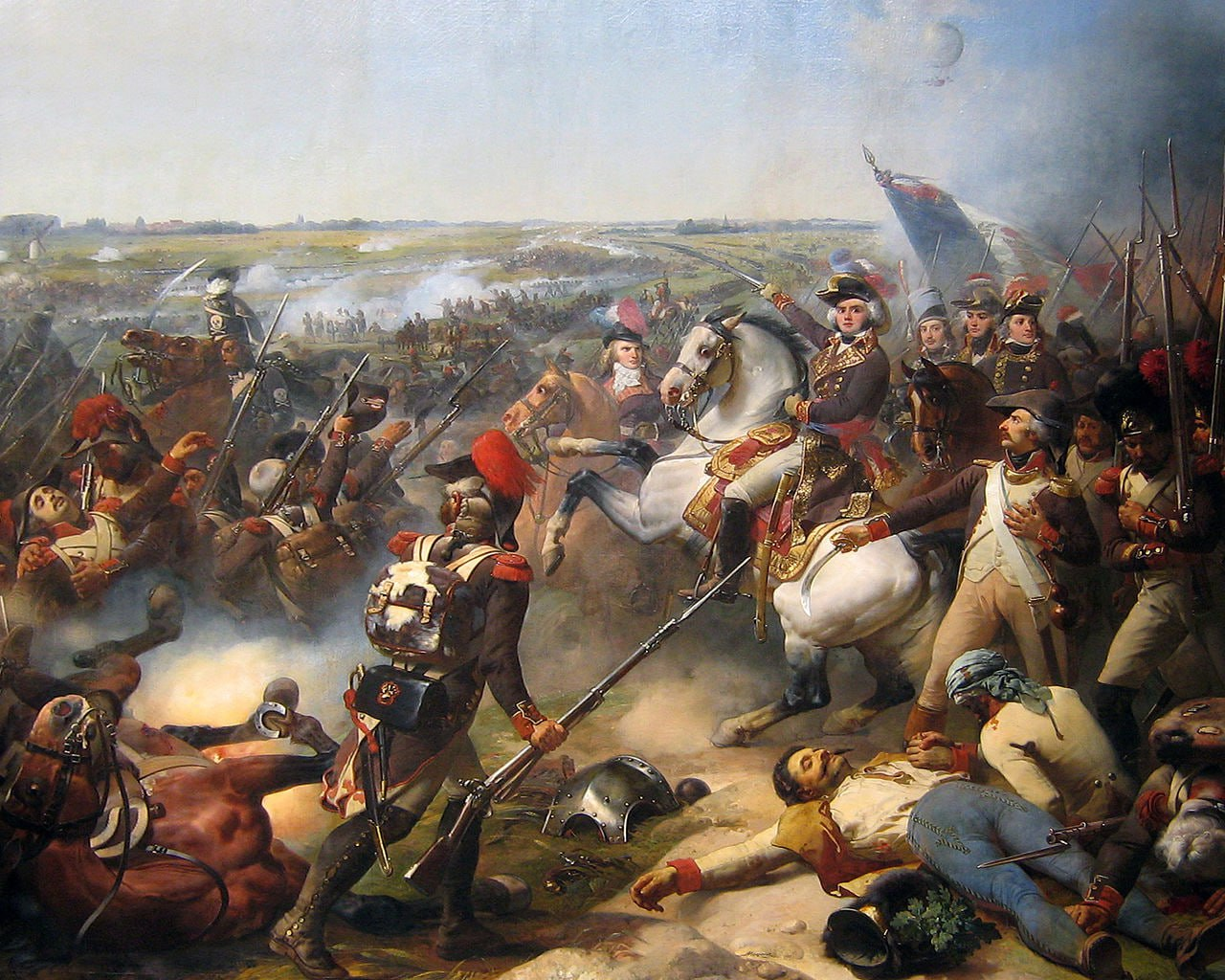
Upon arrival at the front, the Entreprenant balloon was filled with hydrogen and began to be used to monitor the movements of the Austrians and identify their artillery positions. The culmination of the balloon company's actions in this campaign was participation in the Battle of Fleurus: Coutel spent ten hours in the air, tracking enemy movements and dropping notes with information in special containers. The Austrians quickly realized what was happening and for some time tried to shoot down the balloon with artillery fire, but to no avail. The battle was won by the French, although not too decisively, and it marked a turning point in the campaign: after it, the anti-French coalition had to leave the territory of modern Belgium for strategic reasons. But opinions were divided about the role of the balloon in the victory: de Morveau argued that without his data, the Austrian attacks would not have been able to be parried in time, and everything would have turned into defeat, while Commander Jourdan believed that he had not changed anything significant.
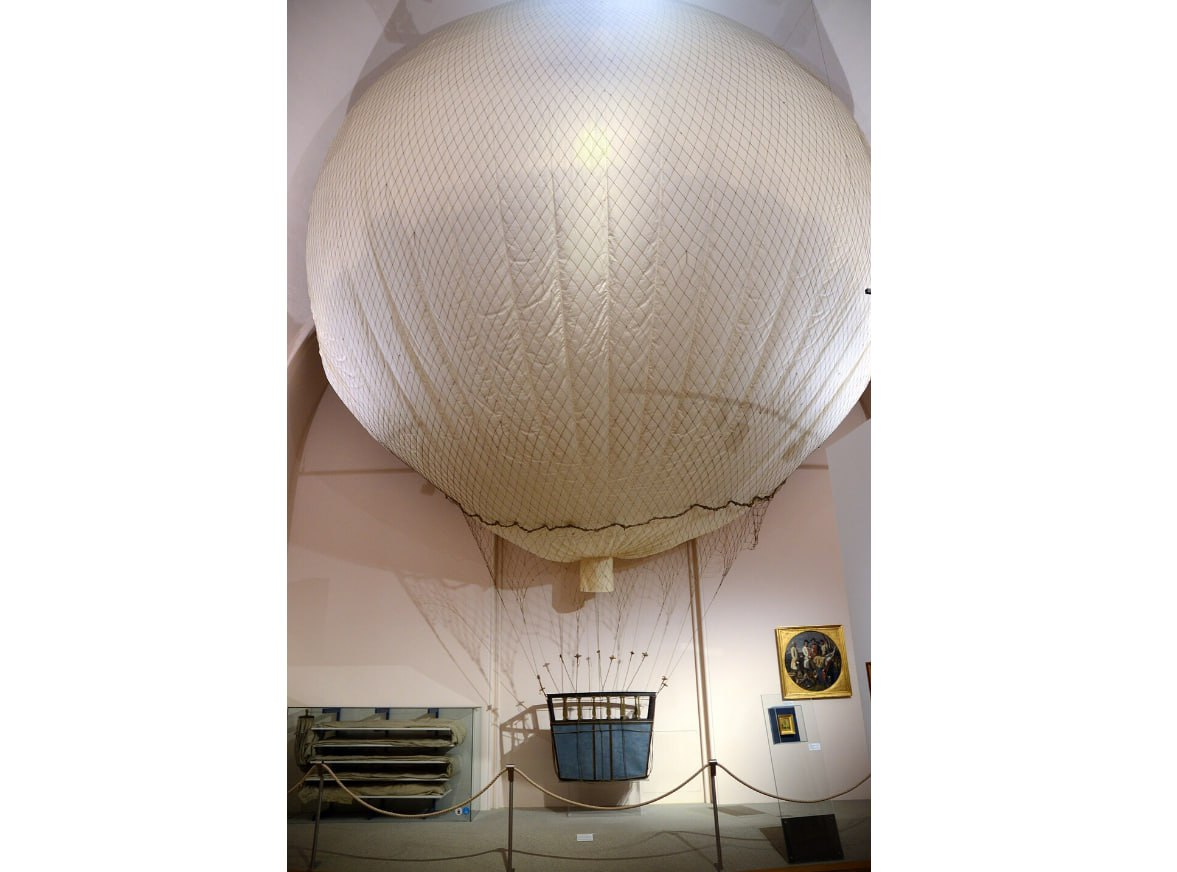
Be that as it may, the experiment was officially recognized as successful, and soon the company was deployed into an entire Aerostat Corps (strictly speaking, only a two-company battalion, but with a special separate status). At its peak in 1799, it had 13 first-class balloons for battlefield observation, and 10 second-class for various auxiliary duties. A training center was established at Meudon Castle to train personnel. Two companies with balloons that grew in number were attached to the French armies and were actively used in battles - however, in 1796, General Jourdan was defeated by the Austrians at Würzburg, and the veterans of the first company, along with the first military balloon Entreprenant, were captured. But it was preserved as a trophy, and to this day is on display at the Military History Museum in Vienna.
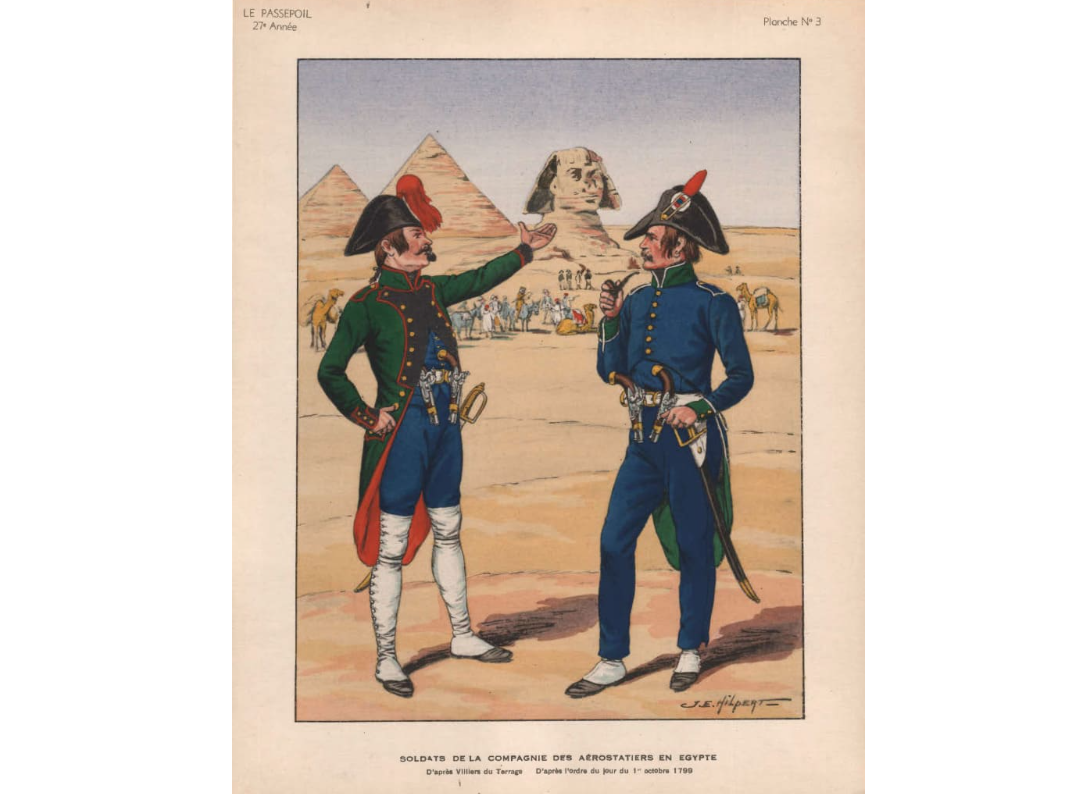
In 1798, the recreated first company went with Napoleon on an Egyptian expedition - but disaster awaited it there. After arriving in Alexandria, the balloons and equipment could not be unloaded for a long time due to the traditional military chaos. And then, in August, the British Royal Navy, led by Admiral Nelson, suddenly came to the French fleet stationed in the Gulf of Abukir. The flagship battleship "Orient", in the hold of which the balloons were still lying, was shattered into pieces by the explosion of the artillery magazines, taking the lives of Admiral de Bruyet and almost the entire crew. The Patriot transport, which had equipment for hydrogen production, tried to escape, hit a rock and sank. The company was already on shore, but due to the loss of specialized equipment, it spent the rest of the campaign performing various engineering tasks. The chance to impress Napoleon, who commanded the Egyptian expedition, with the benefits of balloons was irretrievably lost.
Meanwhile, the new commander of the second company, who replaced the seriously ill Kutel, quarreled with commander Lazar Ghosh, and he simply stopped using balloons, declaring their complete uselessness. In 1799, the balloon companies were officially disbanded, and the personnel were transferred to engineering units. True, the first company in Egypt learned about this only in 1802, since communications with France were completely blocked by the supremacy of the British fleet at sea. However, at some point in 1804, Napoleon became interested in the idea of an airborne assault on Britain using balloons. However, consultants quickly dispelled the cunning plan - starting with the fact that the unpredictability and strength of the winds in the English Channel made the enterprise too risky, and a colossal amount of scarce resources would be required to equip an entire army with balloons. At this point, the military use of balloons almost ceased for half a century, until the 1850s - although they were used very actively for entertainment and research purposes in the first half of the 19th century.
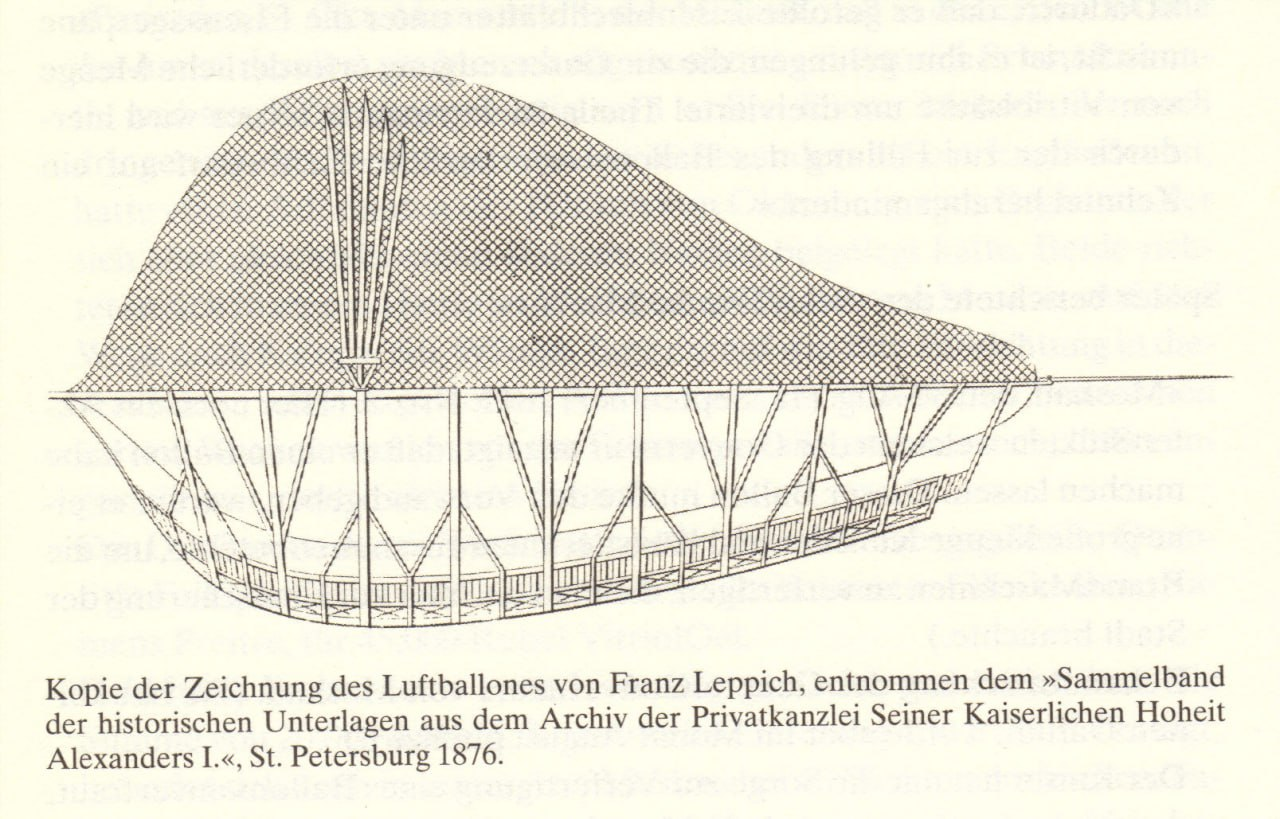
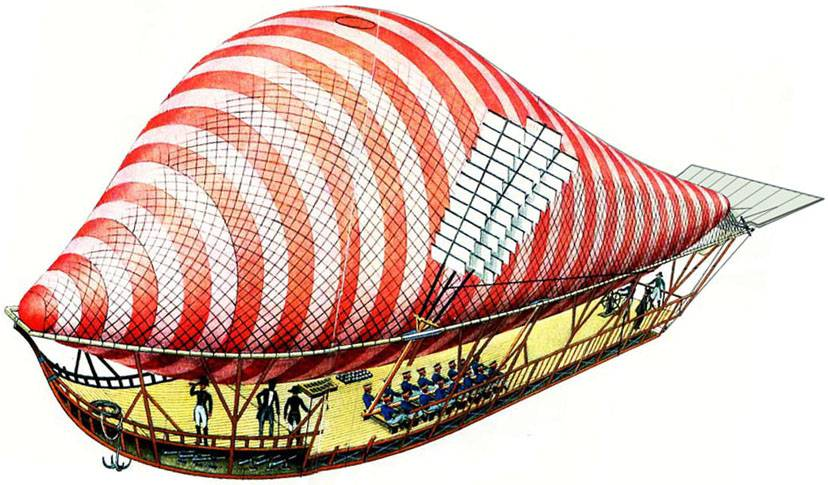
The only exception was the Russian Empire. The fact is that at the beginning of 1812, the German mechanic Franz Leppich approached the Russian envoy in Stuttgart and proposed building not just a controlled balloon, but a natural airship-bomber for use in field battles and sieges. Undoubtedly, the source of inspiration was the balloons of the French balloon companies, which mainly operated in German lands. Perhaps he also received information about the project of Jean Baptiste Meunier and the experiments of the Robert brothers: the device was supposed to be moved by special oars driven by the muscular power of the crew. The information reached Emperor Alexander I, and he approved the project. A colossal amount of 163 thousand rubles at that time was allocated for it.
On May 1, Leppich and his apprentices arrived on the territory of the Russian Empire. In the village of Vorontsovo near Moscow, which belonged to Prince Repnin, a workshop was urgently built for Leppich through the military department and 150 artisans of various profiles were provided. By August, the first experimental model, reminiscent of the elongated models of the Robert brothers, was flying. The balloon had a length of 57 meters with a maximum diameter of 16 meters with enclosing hoops and a flat, strong bottom - to some extent, Leppich can be called the inventor of airships of a semi-rigid design. True, a huge gondola 20 meters long and 10 meters wide for 50 (!) people was supposed to be attached underneath it. Even a non-specialist at this point will suspect that the idea will literally not take off. And so it happened: at the moment of emergency “state tests”, when Napoleonic army was already approaching Borodino and the Russian command was thinking about using at least an observation balloon in the general battle, only a small balloon with a load was able to take off. Neither the larger one for two people, nor the more monstrous structure for 50 crew members, were able to get off the ground - which was urgently reported to Emperor Alexander I.
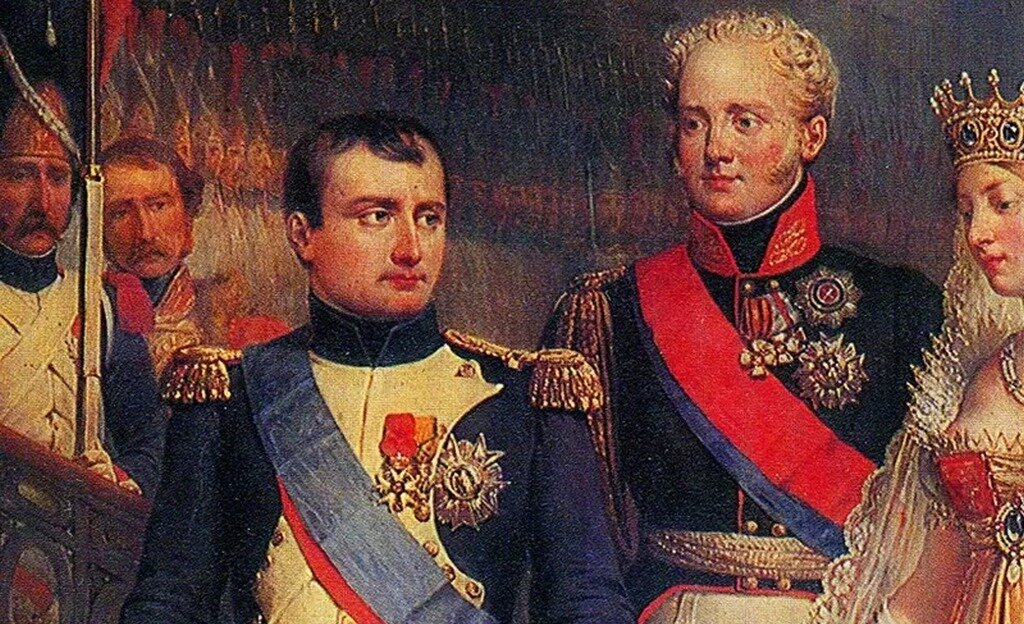
The fact is that, in reality, Herr Leppich was more of an enthusiast and adventurer than a professional; he had not built balloons before, he was a master of making musical instruments, and he was not very good at making the necessary calculations. In 1811, he managed to propose the same project to Napoleon - but after consultations with experts, the emperor became furious and ordered Leppich to be sent outside the empire. After which he turned to the Württemberg king, promising that, subject to funding and providing him with materials and people, in four months he would build a series of 50 vehicles for the armies of the German states, and they would allow them to throw the Franuz out of German lands.
After consultations with professors and engineers, Leppich was expelled from here, and the agents of the all-powerful French Minister of Police Fouche, who found out about the second proposal, received orders to get Leppich from anywhere in Europe and deliver him to Paris in shackles. It was then that the Russian envoy turned up to him. However, Franz Leppich was by no means mediocre: his balloons, despite the lack of experience, turned out to be quite flying - just not with the initially stated weight parameters, which he calculated incorrectly over and over again. But in the process of his work, he discovered a method for producing hydrogen based on simple sawdust, as well as how to make lightweight hollow lances for the Cossacks and Lancers.
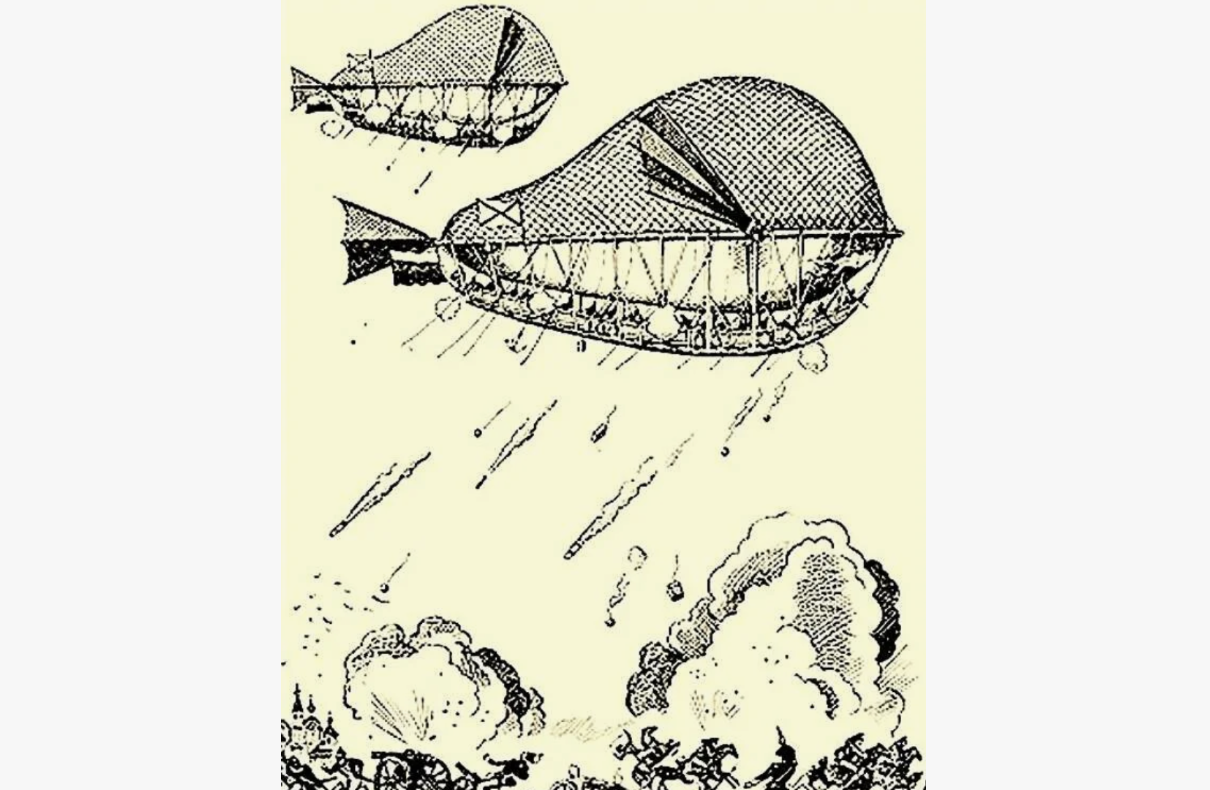
However, Alexander I, despite Count Rostopchin’s report and his direct statement that Leppich was a charlatan, decided to postpone curtailing the project. Moreover, in the turmoil of the evacuation of Moscow in front of Napoleon’s approaching army, they managed to find 130 carts to transfer the secret facility to Oranienbaum to remove samples and equipment. Which was successfully accomplished. The French, having entered Vorontsovo and finding obviously chemical equipment there, did not understand what they had found - and decided that it was a center for preparing to set fire to Moscow, which had already burned out in a huge fire after the entry of enemy troops. In Oranienbaum, Leppich stubbornly tried to achieve the desired result, promising the Russian emperor that everything would work out. Once he promised to fly from Oranienbaum to the Tauride Garden in St. Petersburg this time, and the emperor personally in the company of Minister of War Arakcheev were waiting for him there, but another sample managed to burst without even being able to rise. Over and over again, the balls either did not fly at all, or could lift a maximum of one person in the seat.
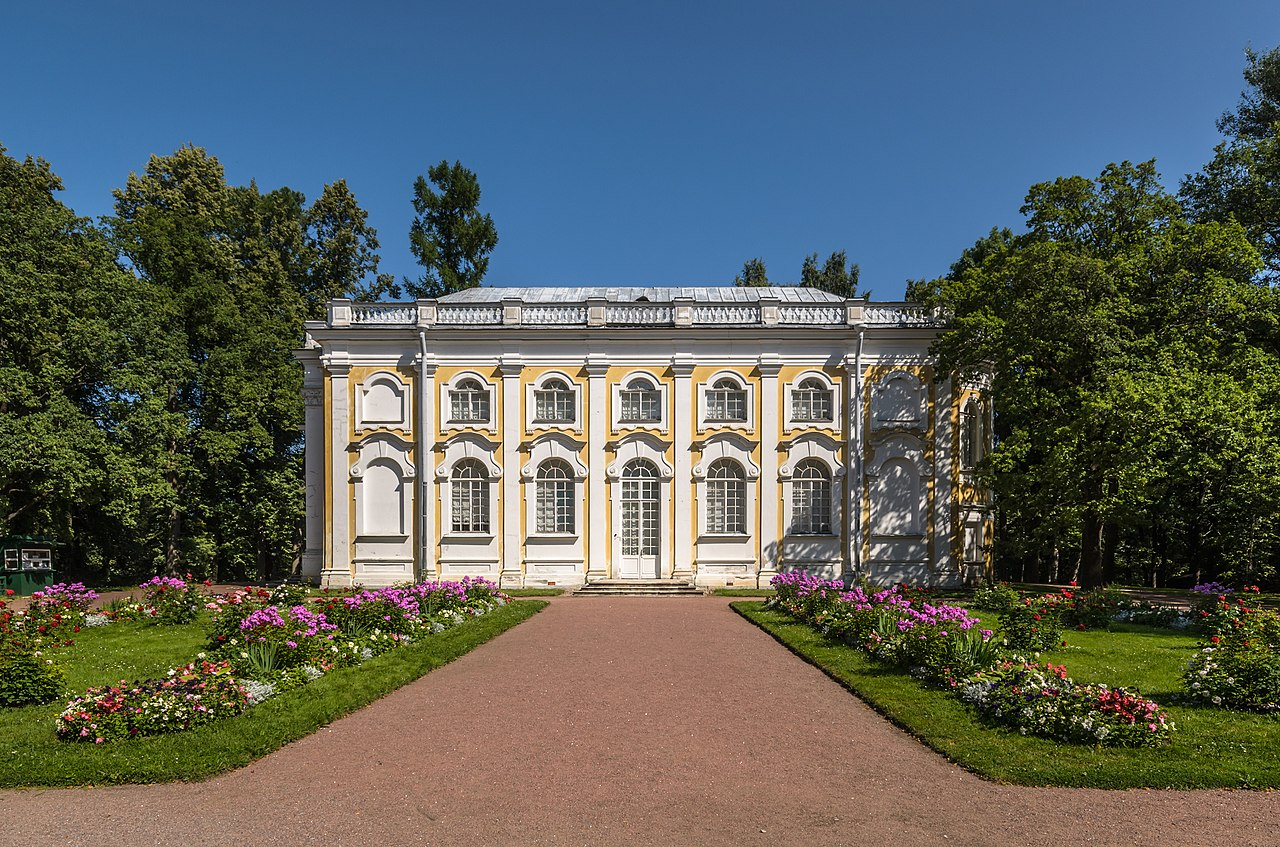
At the end of 1813, the patience of Alexander I had already burst. Leppich rushed to the imperial headquarters, which was moving closer and closer to Paris, reached it already in the French Troyes - but received a final refusal and never returned to Russia. Moreover, for several more years, at his own expense, he tried to build his own airship, now for the transportation of commercial cargo - but he could not achieve success. But again he made several small inventions, like a machine for automatically processing nails. After 1819, his traces are lost, and experiments with airship construction and military use of balloons disappear for a long time.
Well, for now we will conclude the story with a quote from Lev Nikolaevich Tolstoy from the third volume of War and Peace, where Leppich’s project is mentioned:
On this day, Pierre, in order to have fun, went to the village of Vorontsovo to see a large balloon that was being built by Leppich to destroy the enemy, and a test balloon that was supposed to be launched tomorrow. This ball was not ready yet; but, as Pierre learned, it was built at the request of the sovereign. The Emperor wrote to Count Rastopchin the following about this ball:
«Aussitôt que Leppich sera prêt, composez lui un équipage pour sa nacelle d'hommes sûrs et intelligents et dépêchez un courrier au général Koutousoff pour l'en prévenir. Je l'ai instruit de la chose. Recommandez, je vous prie, à Leppich d'être bien attentif sur l'endroit où il descendra la première fois, pour ne pas se tromper et ne pas tomber dans les mains de l'ennemi. Il est indispensable qu'il combine ses mouvements avec le général-en-chef»
(“As soon as Leppich is ready, assemble a crew for his boat of loyal and intelligent people and send a courier to General Kutuzov to warn him. I informed him about this. Please instruct Leppich to pay careful attention to the place where he will go down for the first time, so as not to make a mistake and not fall into the hands of the enemy. It is necessary that he coordinate his movements with the movements of the commander-in-chief.”)
© 2025 MT FINANCE LLC