What Would the Web Look Like If Gopher Had Won Instead of WWW
An alternative history exploring what the internet would look like today if the Gopher protocol had prevailed over the World Wide Web -- from text-only menus and phlogs instead of social media to the absence of banner ads.
Prehistory
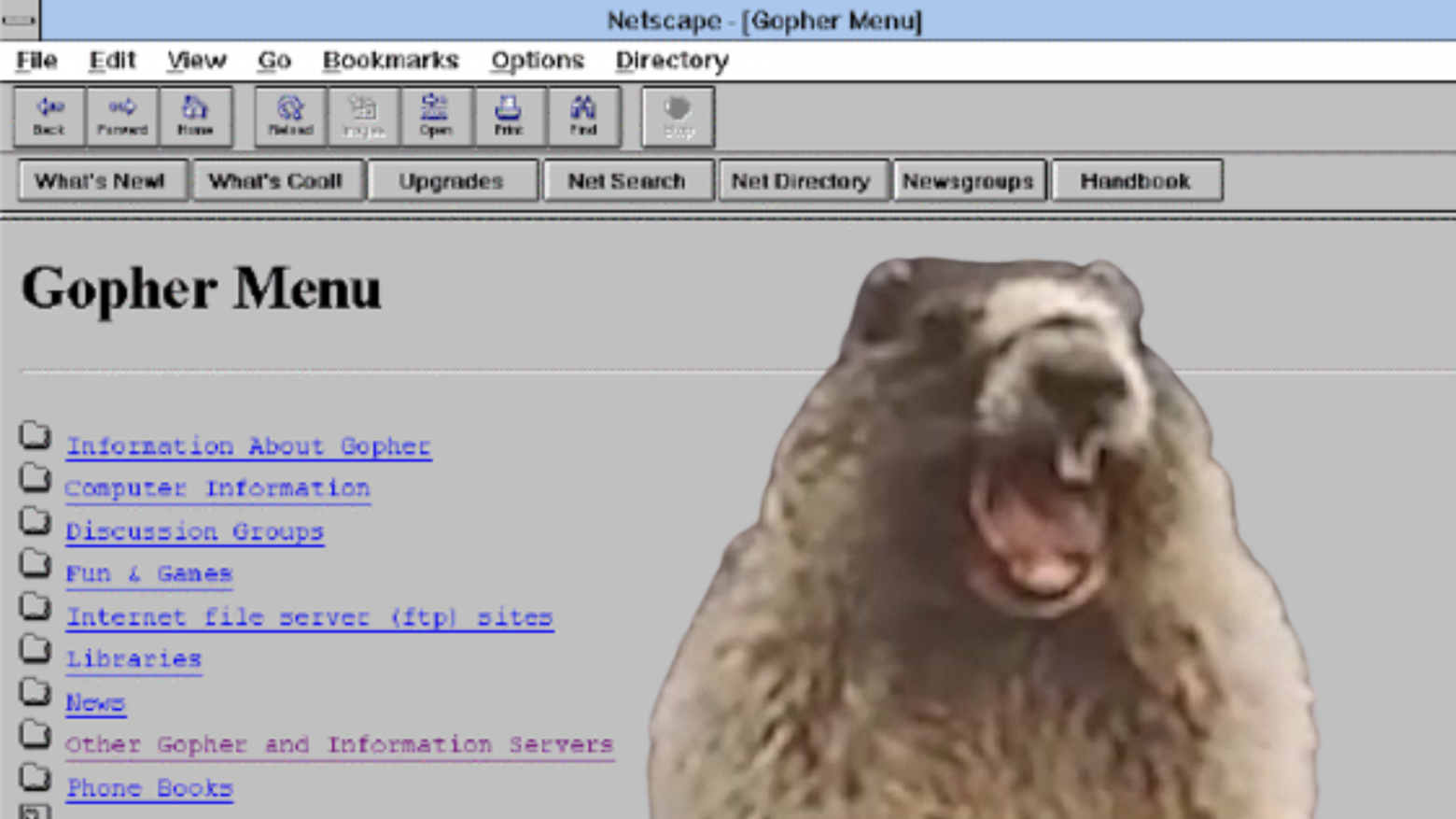
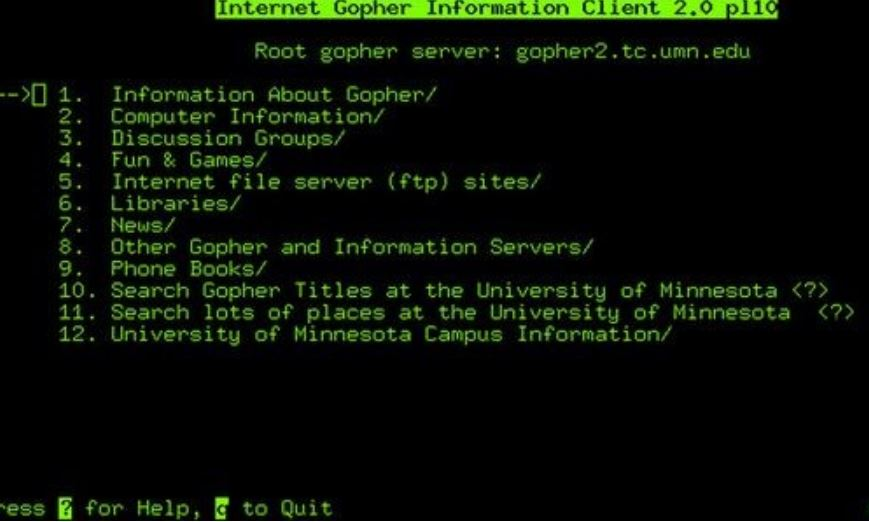
Gopher emerged in 1991 at the University of Minnesota under the leadership of Mark McCahill. It was a simple menu-based navigation system for accessing files and reference information. The name was a triple play on words: "gopher" (the animal, the university's mascot), "go-fer" (an errand runner who fetches things), and "go for" (to seek something out).
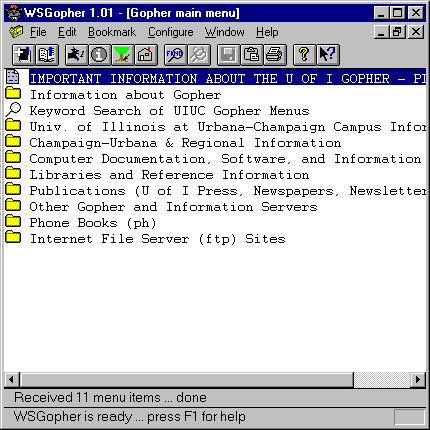
The system spread rapidly. Setting up a Gopher server was so simple that universities, libraries, and companies adopted it en masse. Users didn't see web pages but rather hierarchical menus in a space called Gopherspace, where each item led either to a file or to another menu.
Growth was impressive: in 1993, Gopher traffic increased by nearly 1000%, and by April 1994, approximately 7,000 servers existed. For comparison, the nascent WWW in early 1993 accounted for just 0.002% of internet traffic.
Why the Web Won
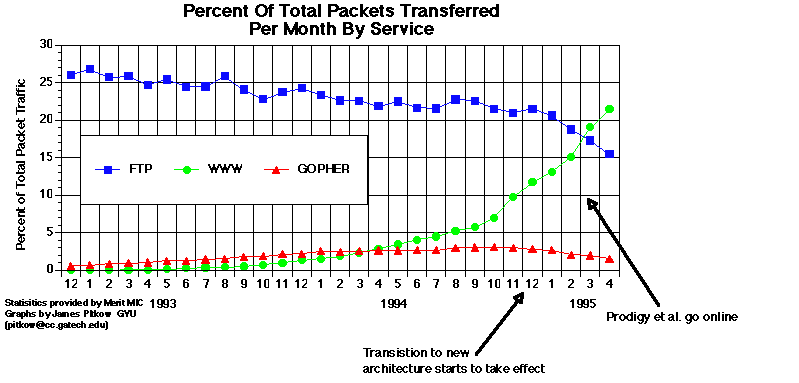
The key factors behind Gopher's decline:
Licensing: In February 1993, the University of Minnesota decided to charge fees for using its server software. Simultaneously, CERN declared WWW public domain, royalty-free. This single decision shifted the momentum. Free always beats paid when the technologies are roughly comparable, and developers flocked to the platform that wouldn't send them an invoice.
Search: Veronica (the search engine for Gopher, whose name stood for "Very Easy Rodent-Oriented Net-wide Index to Computer Archives") indexed only menu titles and worked unreliably. By 1994, the web already had quality search engines that could crawl and index actual page content.
Hypertext: WWW supported hyperlinks, inline images, and multimedia, while Gopher's "monochrome interface" seemed primitive by comparison. The ability to click a word and jump to another document anywhere on the internet was revolutionary — Gopher's nested menus felt like navigating a filing cabinet.
Security: Gopher lacked encryption; data could be easily intercepted. In a world moving toward online commerce, this was a fatal flaw.
By the late 1990s, Gopher had become a "technological relic." By 2022, Veronica indexed just 325 servers.
An Alternate Reality with Gopher
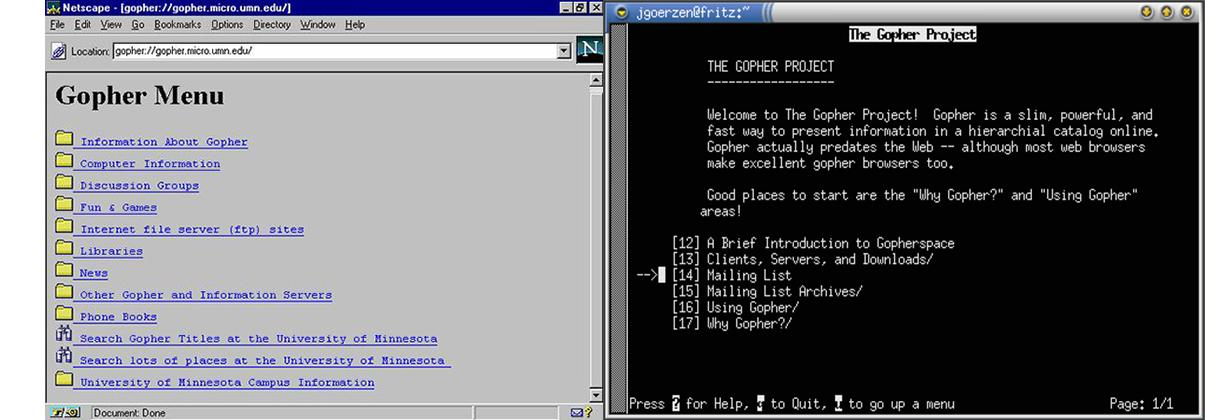
But what if history had gone differently? What if the University of Minnesota had never charged licensing fees? What if CERN's project had stalled? Let's imagine a world where Gopher became the dominant internet protocol.
A Uniform Interface
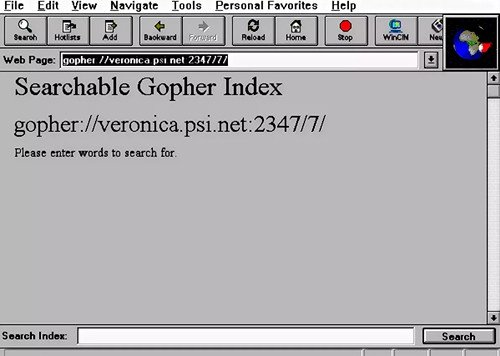
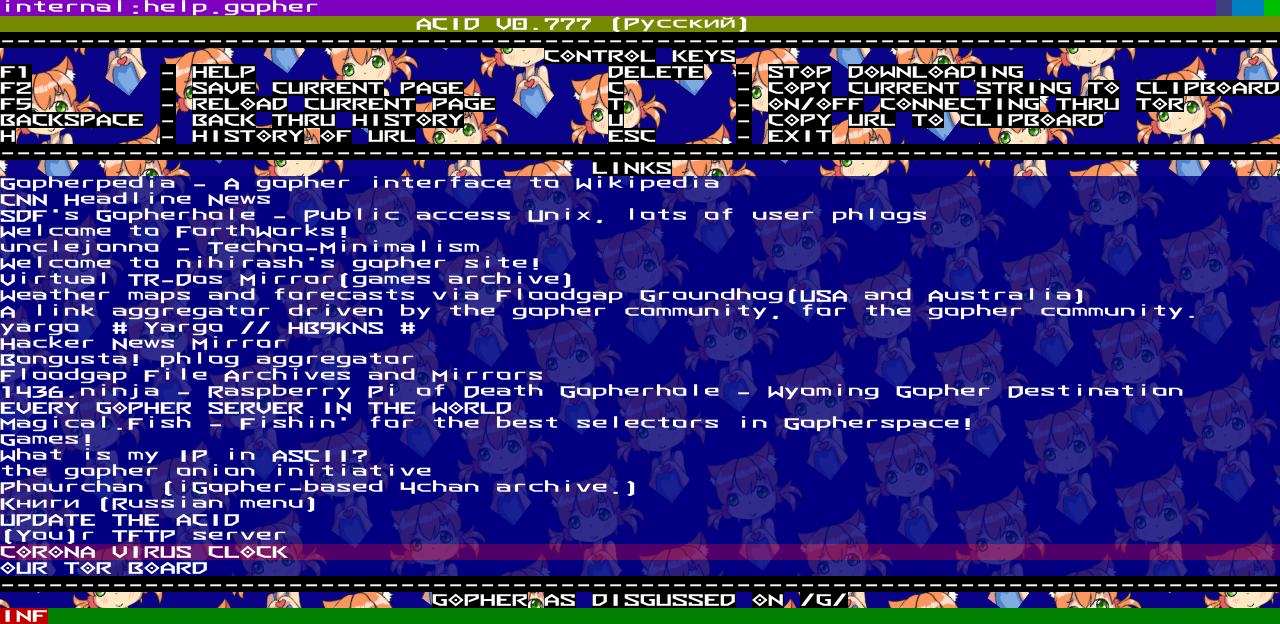
The internet would be a single structure of text menus without arbitrary design. All sites would use the same format, ensuring fast loading even on slow networks. Pop-up windows and banner ads simply wouldn't exist — there would be no mechanism for them. Every "website" would look essentially the same: a list of items in a monospaced font.
This might sound limiting, but consider the advantages. No more cookie consent banners. No auto-playing videos. No layouts that shift while loading. No dark patterns. The internet would be blindingly fast and completely predictable. Accessibility wouldn't be an afterthought — it would be inherent in the protocol.
Centralized Information
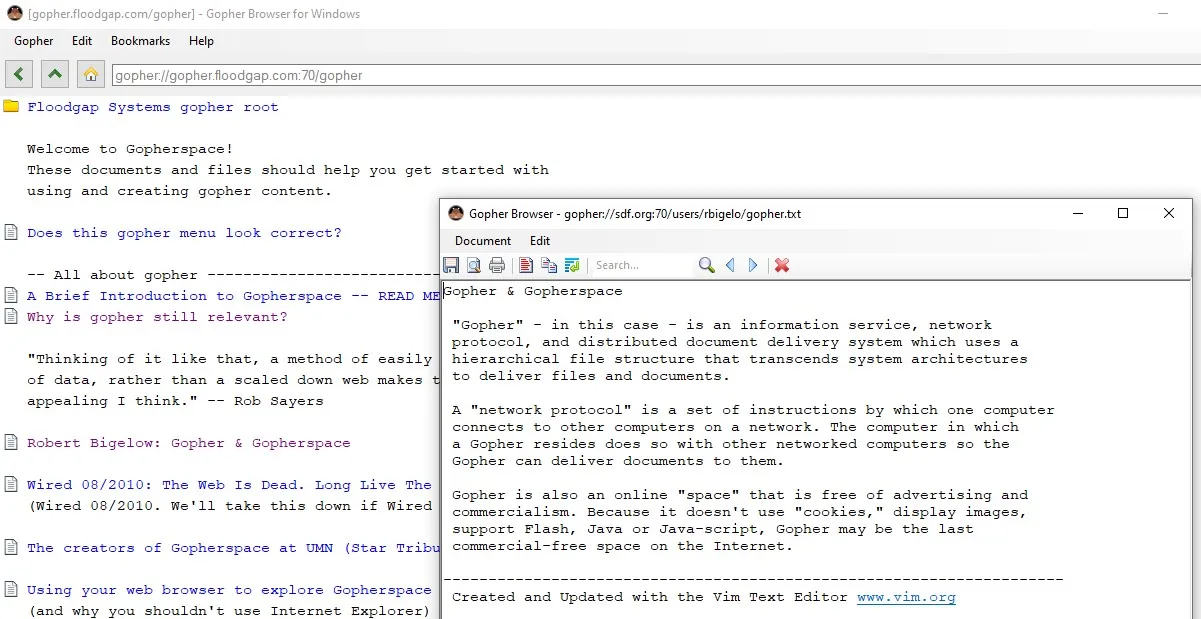
Server administrators would play a key role, organizing menus and managing links. The profession of online librarian would be valued more highly than web designer. Maintaining order would be simpler thanks to centralized control — each server admin would curate their corner of Gopherspace like a library shelf.
Universities and government institutions would be the backbone of Gopherspace, not corporations. The internet would feel more like a public library system than a shopping mall. Information architecture would be a respected discipline, and the people who organized knowledge would wield real influence.
Restrained Multimedia
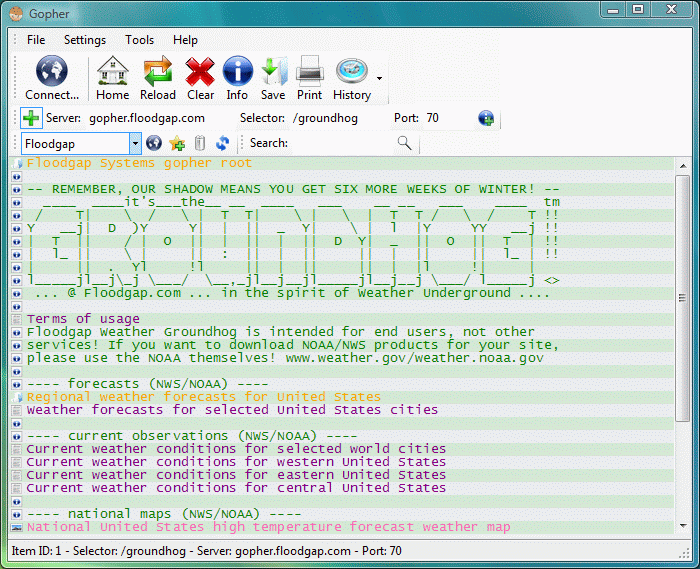
Images, video, and audio would exist as separate files for download, not embedded in text. Inline graphics would have appeared much later, if at all. You'd browse a menu, select "Photos" or "Video," and download files to view in a separate application.
This separation would have profound consequences. The attention economy as we know it — built on infinite scrolling feeds of images and videos designed to capture eyeballs — would never have developed. Content consumption would be deliberate rather than passive. You wouldn't "doom scroll" through Gopher menus.
Forms and Interaction
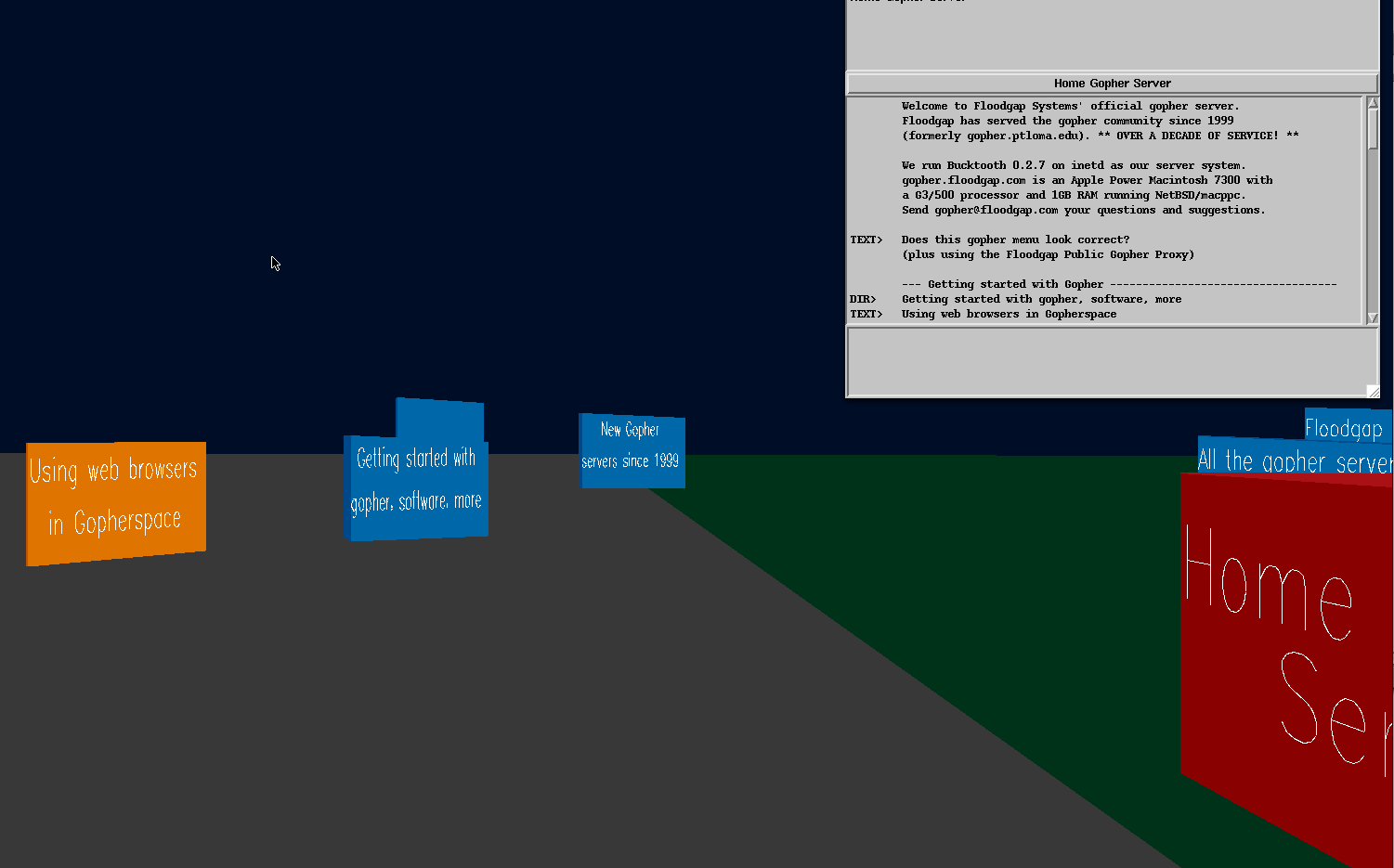
Gopher already supported basic interactivity (search via menu type 7). This could have evolved into fully functional forms, though less flexible than modern web applications. Perhaps a "GopherScript" would have emerged for dynamic menu generation — though it would likely be far simpler and more constrained than JavaScript.
E-commerce would exist but look radically different. Instead of flashy product pages with rotating images and "Buy Now" buttons, you'd navigate a catalog menu: Category > Subcategory > Product > Description (text file) > Order (form). Less impulse buying, more deliberate purchasing.
Phlogs Instead of Social Media
Without interactive feeds with likes, social media as we know it wouldn't have developed. Instead, "phlogs" (Gopher logs) would exist — text entries in personal menus, with comments via mailing lists or feedback files. Think of it as blogging stripped down to its absolute essence: just text, organized chronologically in a menu.
The psychological manipulation machinery of modern social media — likes, retweets, algorithmic feeds designed to maximize engagement — wouldn't exist. "Influencer" as a profession would be impossible in a medium that offers no visual branding, no follower counts, and no algorithmic amplification. Fame in Gopherspace would be earned by the quality of your writing, not the aesthetics of your selfies.
Security and Privacy
Encryption would have appeared as a necessity for online banking (analogous to HTTPS). Without complex tracking scripts, greater transparency would be preserved, but targeted advertising would be unlikely to proliferate. There would be no cookies, no browser fingerprinting, no invisible tracking pixels — the protocol simply wouldn't support them.
The trade-off: less convenient services. Without sophisticated client-side scripting, every interaction would require a round trip to the server. But the privacy benefits would be enormous. Your internet activity would leave a far smaller footprint, and the surveillance capitalism business model would never have found fertile ground.
Informational Calm
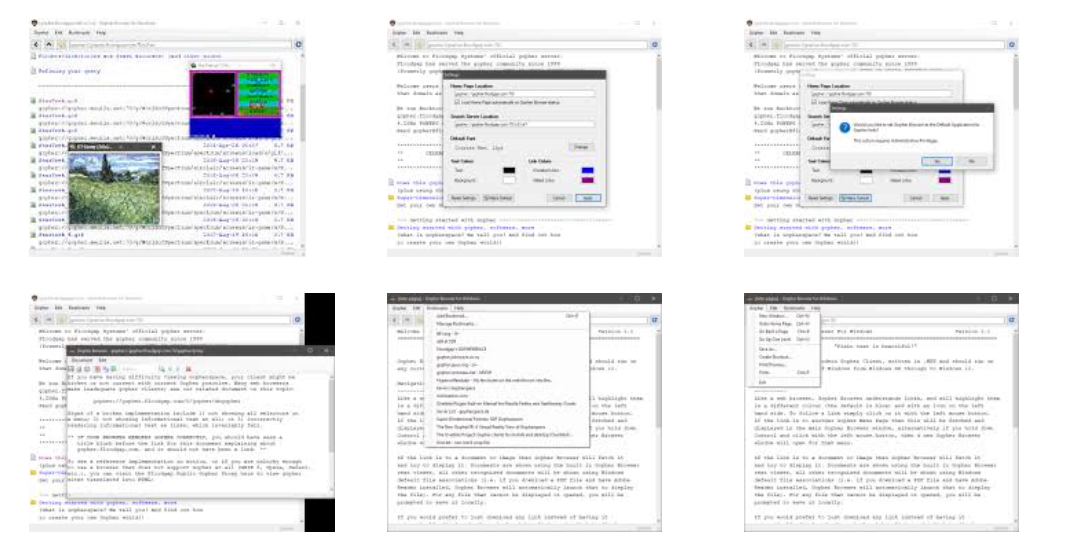
The internet would be less visually noisy and "media-quiet." A single standard would simplify access from any device. However, chaos would still emerge in the form of endless forums and proliferating files — humans find ways to create disorder in any system.
Mental health outcomes might be dramatically different. Without the dopamine-driven feedback loops of social media, without the visual overstimulation of the modern web, without algorithmically personalized content designed to provoke outrage — the internet might be boring, but it would be far less psychologically harmful.
Conclusion
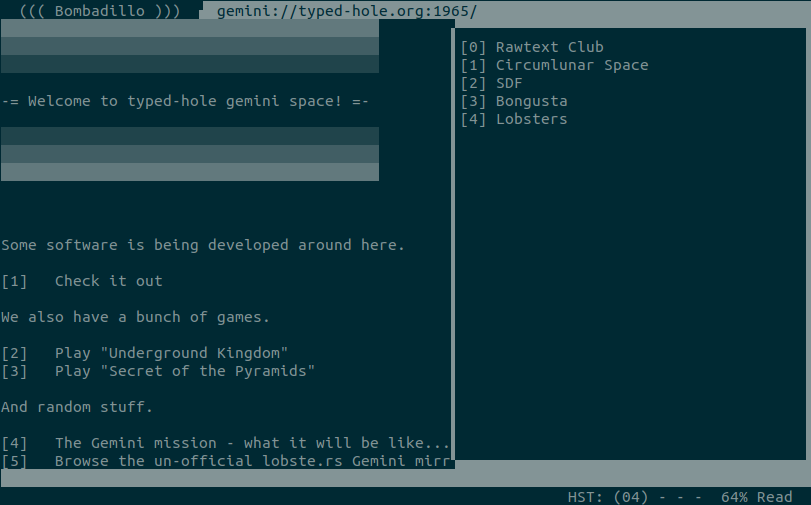
History chose WWW, determining the modern face of the internet. But interest in Gopher's simplicity has endured — the Small Internet movement attempts to revive these ideals through new protocols like Gemini, demonstrating that alternative evolutionary paths for the internet remain relevant.
Gemini, created in 2019, is essentially a modern Gopher: text-first, no scripting, no tracking, minimal design. It has a small but dedicated community of users who prefer its calm simplicity to the overwhelming cacophony of the modern web. They're not Luddites — they're people who remember (or imagine) what the internet felt like before it became an attention-harvesting machine.
Perhaps the most telling thing about the Gopher-versus-WWW story isn't which protocol won, but what we lost in the winning. The web gave us incredible power and creativity — and also gave us popup ads, data breaches, social media addiction, and a generation of children who can't concentrate for more than thirty seconds. Whether the trade was worth it is a question each of us answers every time we open our browser.
FAQ
What is this article about in one sentence?
This article explains the core idea in practical terms and focuses on what you can apply in real work.
Who is this article for?
It is written for engineers, technical leaders, and curious readers who want a clear, implementation-focused explanation.
What should I read next?
Use the related articles below to continue with closely connected topics and concrete examples.