What I Specifically Hate About Certain Marketers — Or: How a Programmer Went Grocery Shopping
A board game company founder catalogs the deceptive marketing tactics he encountered in a single grocery run — undersized "liter" packages, 25-year warranties printed on thermal paper that fades in two years, "cholesterol-free" vegetable oil, and margarine masquerading as butter — and asks why honest business practices are still the exception rather than the rule.
I run a board game company. We've built the business on a simple principle: we shouldn't be ashamed of anything we do. So when I go shopping and see how other companies behave, it bothers me. Not in a personal way. In a professional way.
Here is a catalog of the things I found in a single shopping trip.
Meet the "One-Liter" Milk Carton
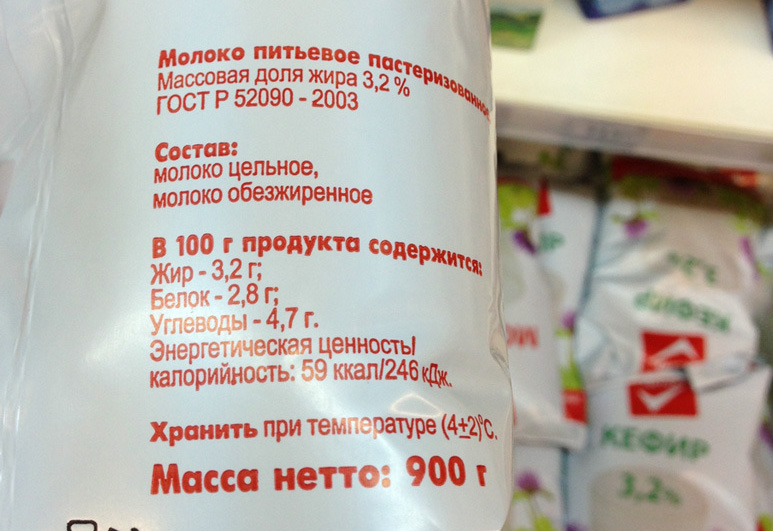
A standard milk carton at the store is positioned as a liter. Look more carefully and it contains 900 grams. Next to it sits an identical-looking carton with 950 grams. Both look like a liter at a glance.
There's a physics problem layered on top of the labeling problem. Volume is measured in milliliters, mass in grams. The density of kefir (fermented milk) is higher than water. So 900 grams of 3.2%-fat kefir is approximately 874.5 milliliters — not even close to a liter by either measure.

IKEA's 25-Year Guarantee
IKEA offers a 25-year warranty — with one condition: you must keep your receipt. IKEA prints receipts on standard thermal paper. Thermal paper fades. In office conditions, a receipt loses its print in one to two years. The longest-lasting receipt I've personally held onto survived three years before becoming unreadable.
A 25-year warranty requiring a receipt printed on paper that lasts three years is not a warranty. It's a marketing claim.
Update: IKEA later clarified that their thermal receipts use BPA-free technology rated for 25-year preservation under proper storage conditions. If true, the concern is moot — but the clarification came after the fact, not on the sign.
"Now Without Asbestos"
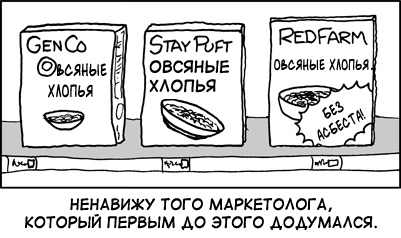
Marketers love putting "obvious" claims on packaging to make competitors look bad for not saying the same thing.
Vegetable oil without cholesterol. Cholesterol is an animal product. It is physically impossible for plant-based oil to contain cholesterol. Labeling vegetable oil "cholesterol-free" exploits biological illiteracy to make it sound like a health feature.
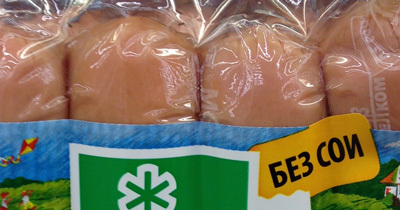
Sausages without soy. If a sausage doesn't use soy filler, it uses one of two alternatives: soy-based textured protein, or a fat emulsion. Saying "no soy" when the alternative is a fat emulsion is technically true — and designed to make you think the product is made from normal meat.
Camouflage
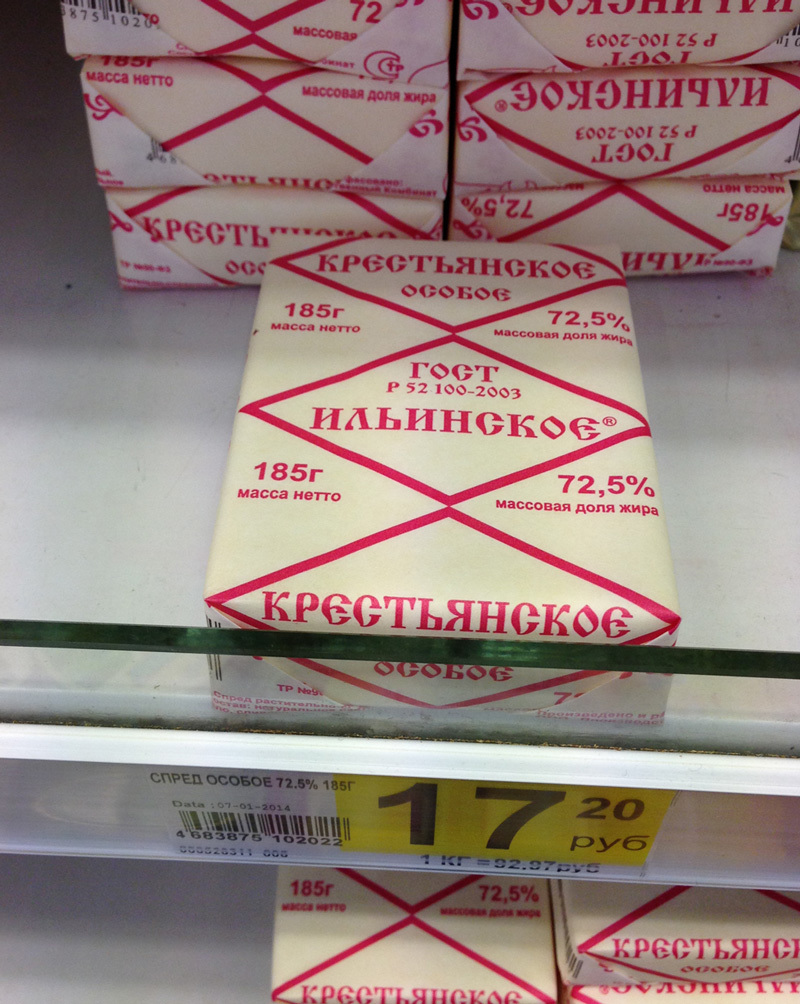
Margarine packaged to be visually indistinguishable from butter. The product name is on the price tag in small print. The front of the package looks like butter. There is no law requiring margarine and butter to be shelved separately.
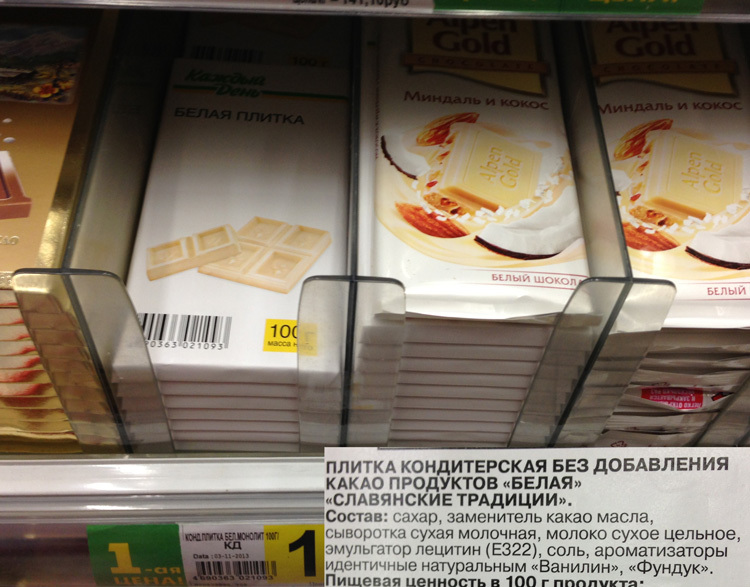
Store-brand products are sometimes shuffled in among name brands rather than grouped in their own section — exploiting the fact that most shoppers grab without reading.
Read the Ingredients
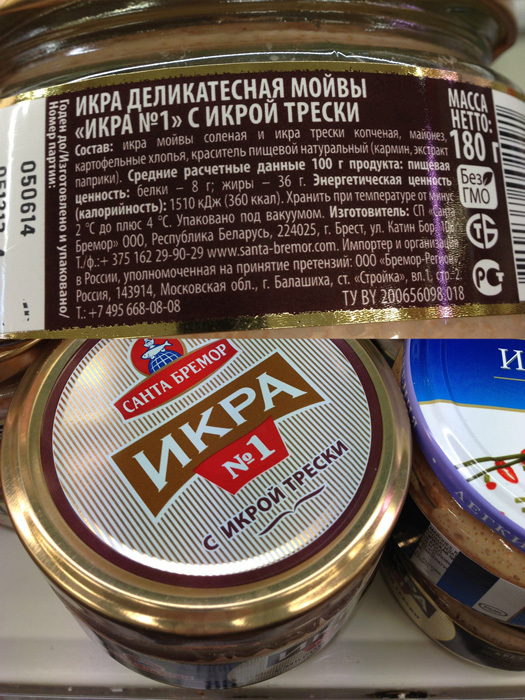
"Delicacy" caviar with potato as the primary ingredient. The word "delicacy" carries no legal definition and imposes no requirements on the contents.
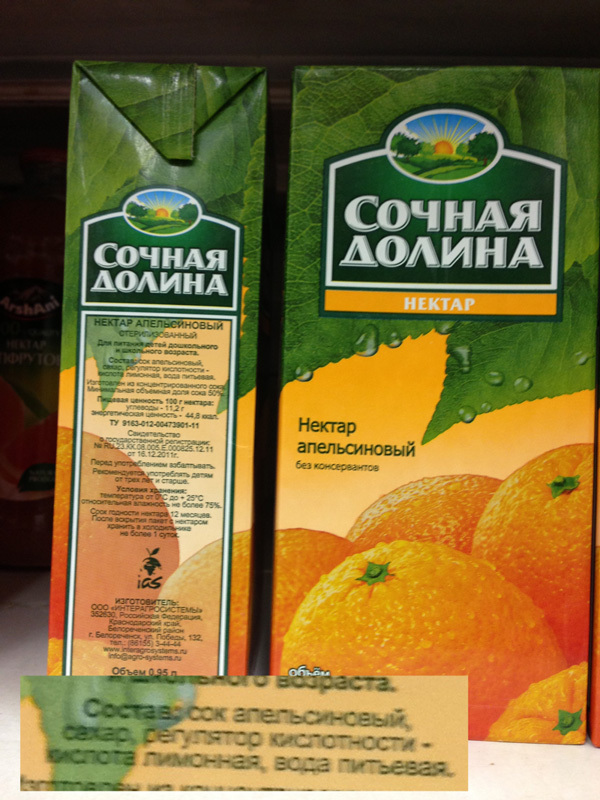
"No preservatives" — but contains citric acid. Citric acid is simultaneously a flavoring agent, an acidity regulator, and a preservative. When a manufacturer classifies it as an "acidity regulator" on the label, the preservative magically disappears from the ingredient list. Technically legal. Deliberately misleading.
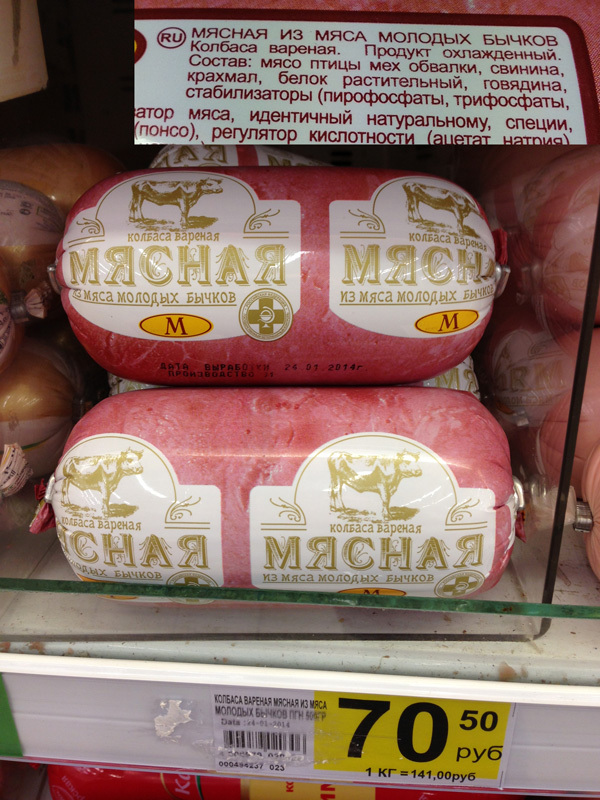
"Young beef" at a suspiciously low price — mechanically separated meat. The term sounds premium. The contents are not.
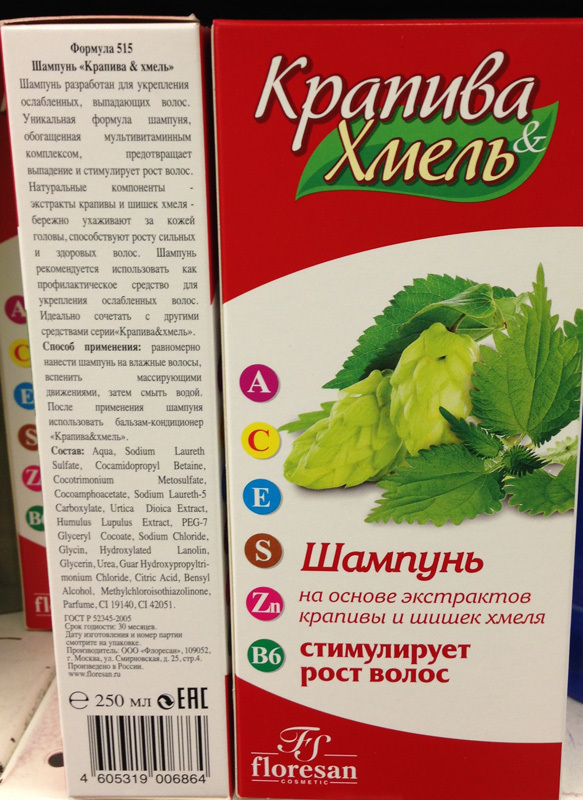
Shampoo "based on hop cones" — with sodium lauryl sulfate as the primary active ingredient (a powerful detergent and potential allergen). Hair growth is stimulated by the vitamin B6 also in the formula — not by the hops, which are present for marketing purposes.
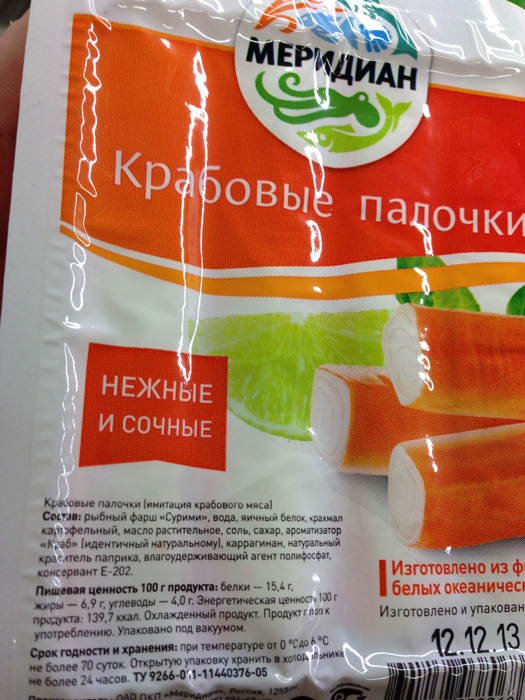
Crab sticks honestly label themselves as made from fish — despite the name. That's actually refreshing in this list.
The Mineral Water Classification Game
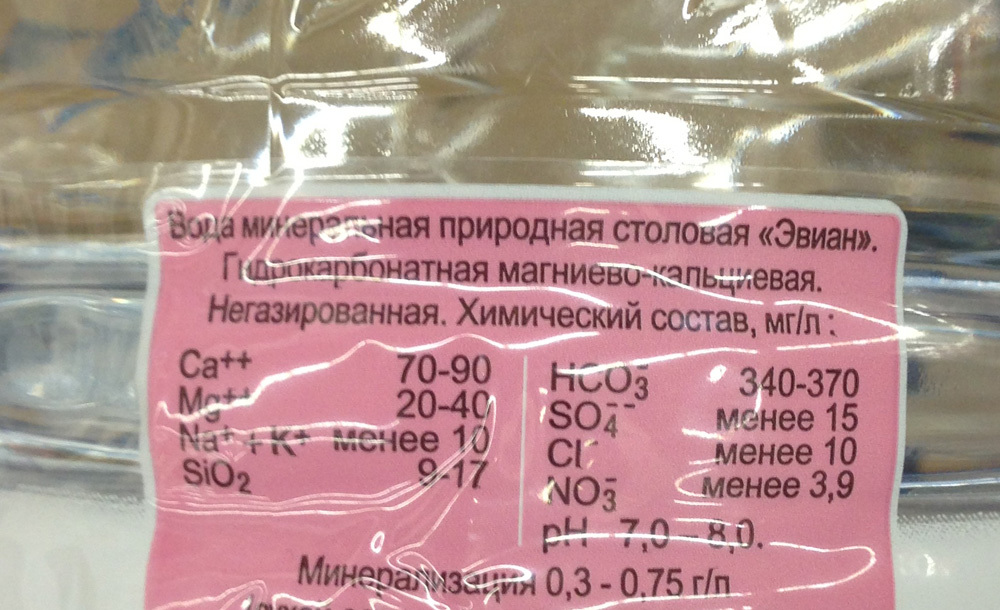
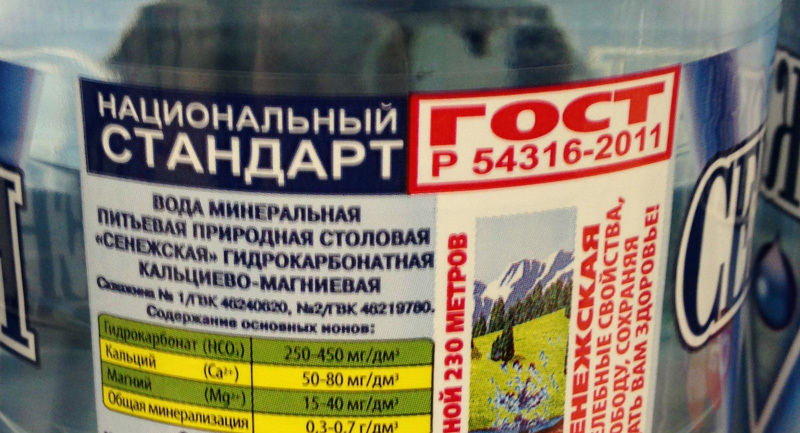
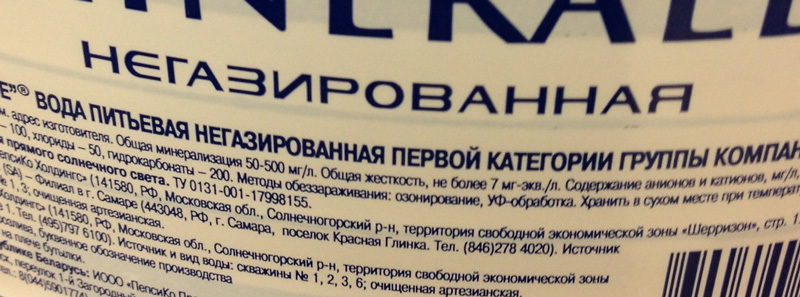
Water is classified as "table water" when it can be consumed daily by a healthy person without restriction. That is a subset of drinking water. There is also "medicinal-table" water, which can be consumed frequently but perhaps not daily.
Some manufacturers use the term "real water" — undefined by any standard, present purely for its sound.
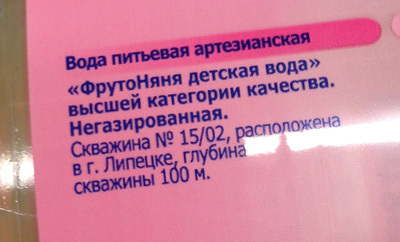
"Children's water" is a marketing category with no definition in regulatory documents.
Asterisks and Fine Print

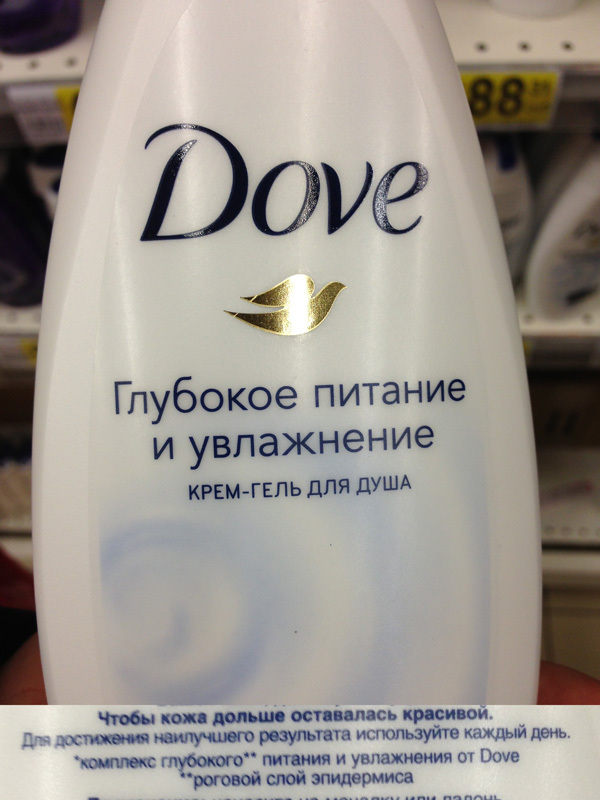
A cosmetics package promises "deep nourishment* and hydration." The asterisk leads to fine print clarifying that the hydration is surface-level only, not deep. The asterisk reverses the main claim. Most people don't follow asterisks.
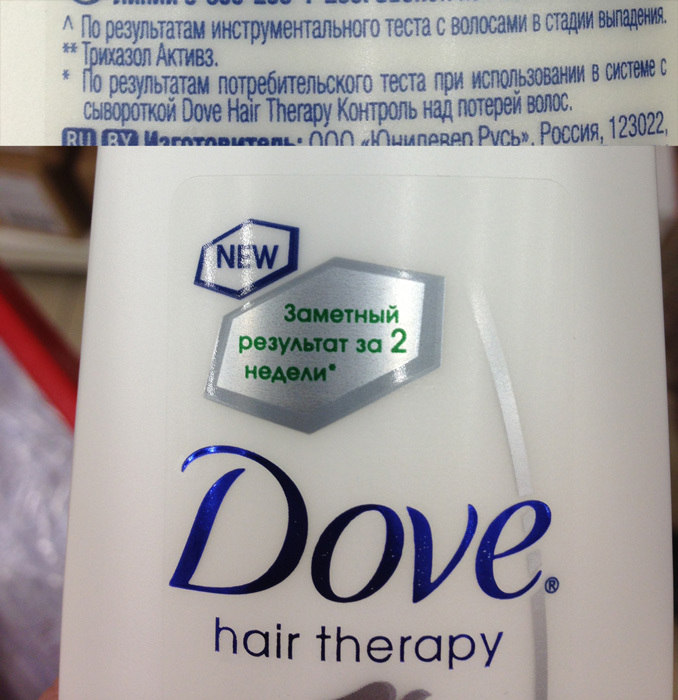
A shampoo promises visible results in two weeks — when used in combination with another product in the same line. The two-product requirement means it's impossible to tell which product produced the result. Or whether either did.
Exploiting Laziness
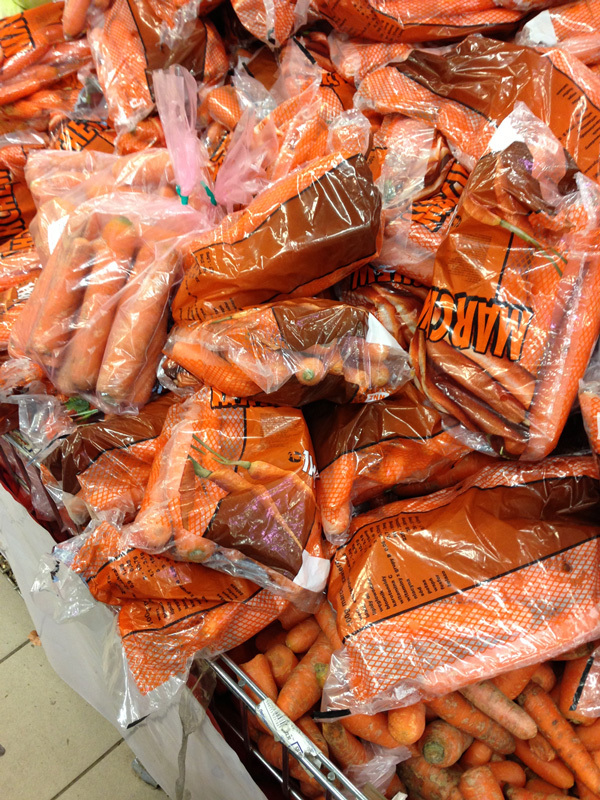
On the shelf, expensive pre-packaged carrots sit at eye level. Push a few packages aside and underneath is bulk loose carrots at a much lower price. This is shelf placement as a deliberate exploitation of the shopper's reluctance to look.
Miscellaneous
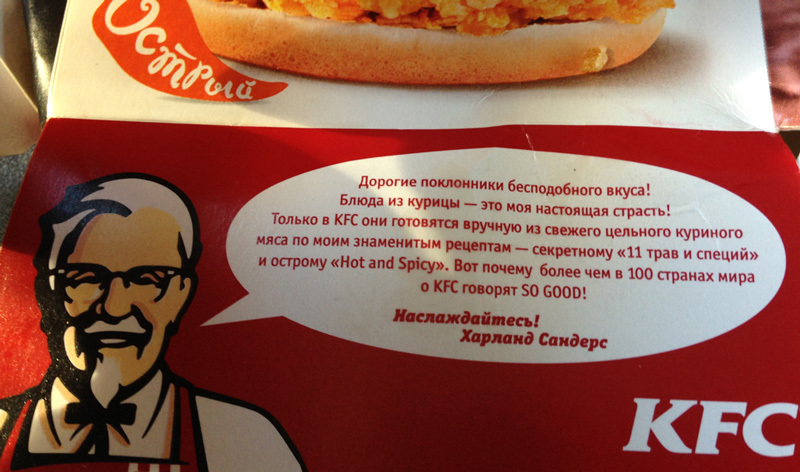
A fast food chain uses the image of its founder, who died in 1980, on current packaging. He has no say in what's in the food.
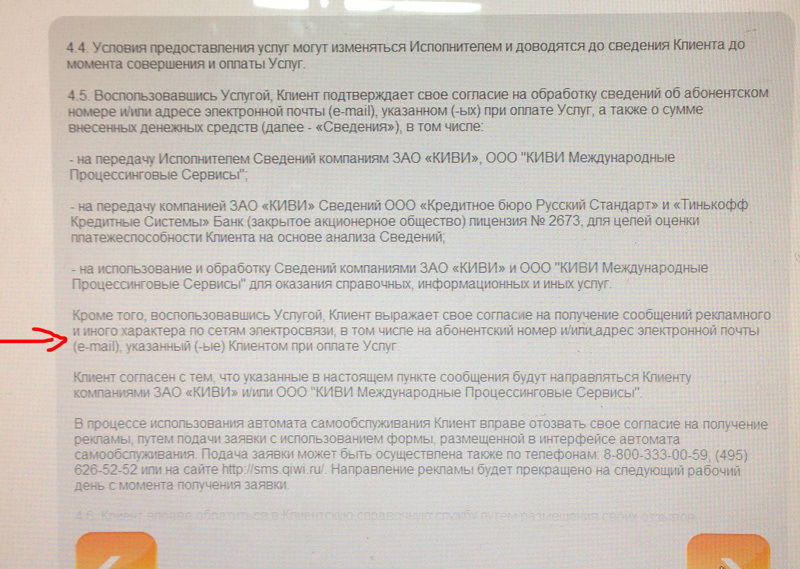
A payment terminal requires you to accept advertising as a condition of topping up your phone balance. The requirement is stated in small print after you've already started the transaction.
Prices at Fast Food Outlets
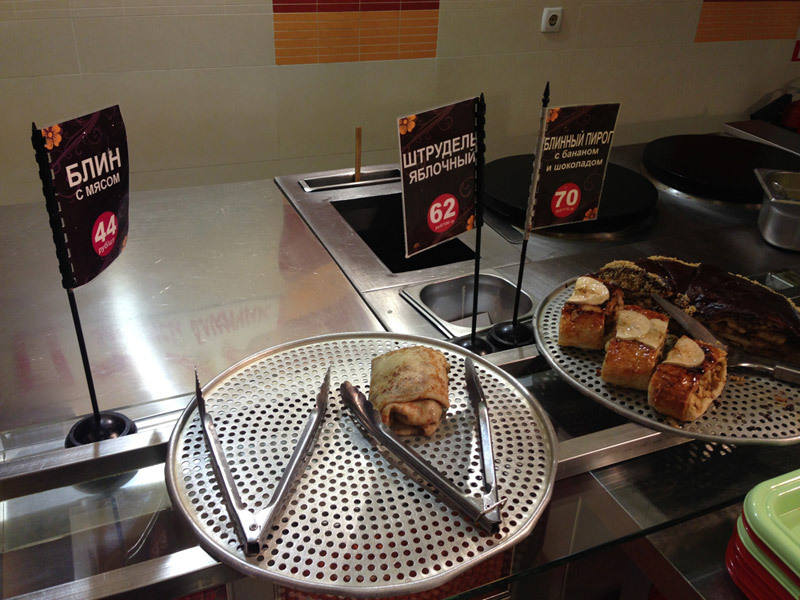
A menu board lists various items — pancakes, pies — at different prices. In small print are details that make the pricing relationship between items confusing and difficult to compare at the moment of decision.
Why I'm Writing This in a Company Blog
At Mosigra, we've made a decision to build a business we're not ashamed of — not of a single aspect of it. That's harder than it sounds. It means every label, every promotion, every fine print has to be something we'd be comfortable explaining in detail to any customer who asked.
The goal isn't to be a unicorn. It's to make honest practice the norm, not the exception — and to eliminate the need for customers to operate in a permanent state of suspicion just to do their grocery shopping.