Internet Is Down, but You're Still Chatting: What Is VarAC and How Shortwave Radio Fits In
An exploration of VarAC and VARA — modern digital tools that enable real-time chat and file exchange over shortwave radio frequencies, providing communication when internet infrastructure fails.
Introduction
What if the internet goes down, but you still need to communicate? It turns out there's a modern solution built on top of one of the oldest communication technologies — shortwave radio. In this article, we'll look at VarAC, a free chat application, and VARA, the digital protocol that powers it.
A Brief History of Radio Communication
Radio communication has come a long way since Alexander Popov's 1895 demonstration of wireless signal transmission and Guglielmo Marconi's subsequent commercialization of the technology. What started as simple Morse code transmissions has evolved into sophisticated digital protocols that can carry text, files, and even images across thousands of kilometers without any internet infrastructure.
Today, amateur radio operators (hams) worldwide use a variety of digital modes — from the popular FT8, which is limited to 13-character messages, to more advanced protocols that enable extended conversations. Among these modern protocols, VARA stands out as a particularly capable system.
What Is VARA?
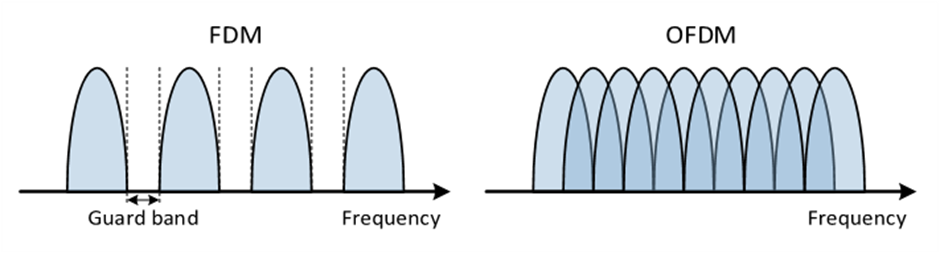
VARA is a modern software modem designed for shortwave (HF) radio communication. It employs adaptive OFDM (Orthogonal Frequency-Division Multiplexing) modulation — a technique that divides the available bandwidth into multiple subcarriers, each of which can be independently modulated based on current channel conditions.

Unlike simpler protocols that use a single fixed modulation scheme, VARA dynamically adjusts each subcarrier. On strong, clean channels, it uses denser modulation for higher throughput; on noisy or fading channels, it switches to more robust encoding to maintain reliability.
Bandwidth Modes
VARA offers three bandwidth modes to suit different operating conditions:
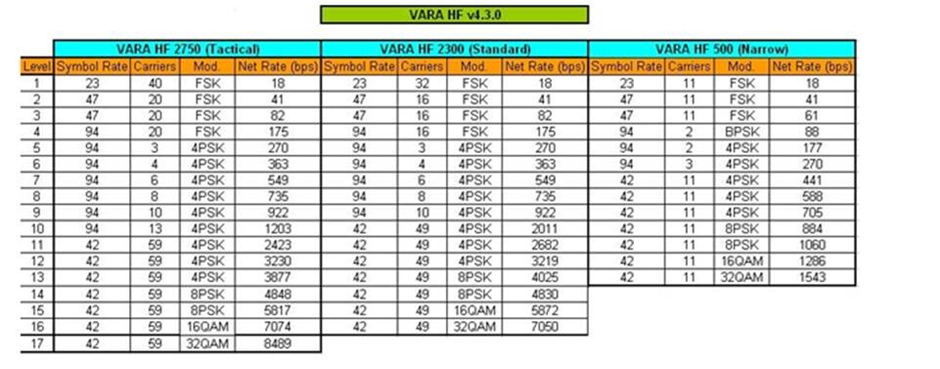
- Narrow (~500 Hz) — designed for weak signals and challenging propagation conditions. Best for long-distance (DX) contacts where signal strength is minimal.
- Normal (~2,300 Hz) — the standard mode for typical SSB (Single Sideband) operation. Offers a good balance of speed and reliability.
- Tactical (~2,750 Hz) — provides the highest data rates for situations where bandwidth is available and signal strength is adequate.
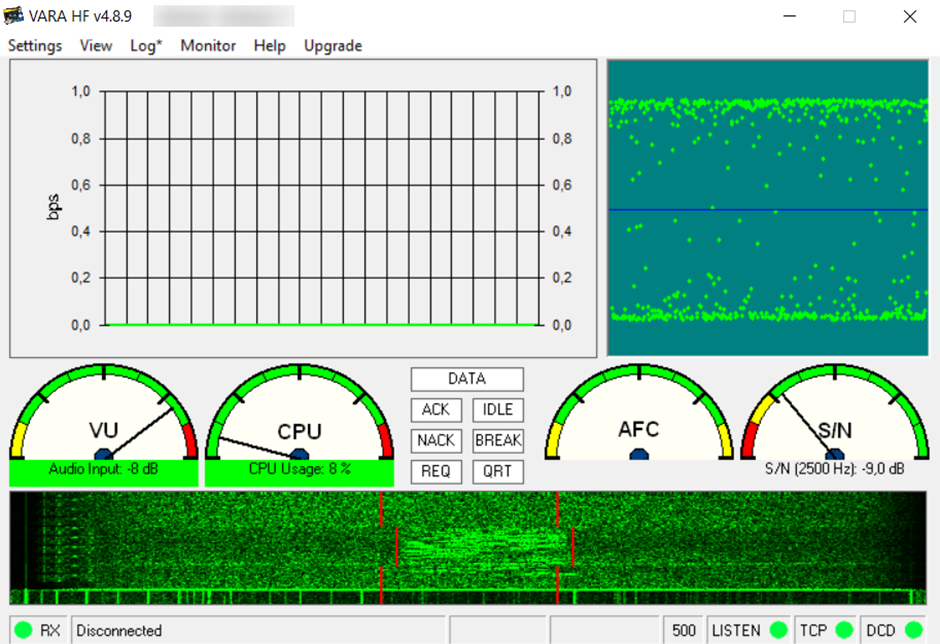
VARA HF Modem Software
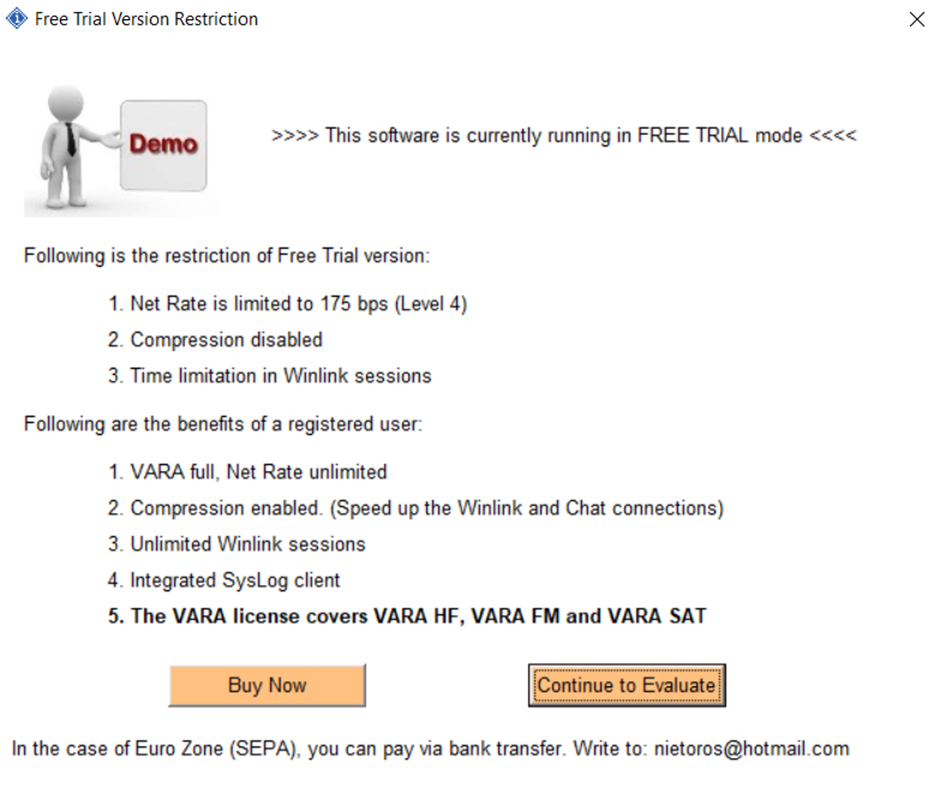
The VARA modem is distributed as shareware. The free version is limited to 175 bps, while the paid version (€64) removes this speed restriction, enabling full-speed operation.
The application manages communication through three TCP ports:
- Port 8300 — command channel for modem control
- Port 8301 — data channel for actual message transmission
- Port 8100 — APRS packet forwarding
What Is VarAC?
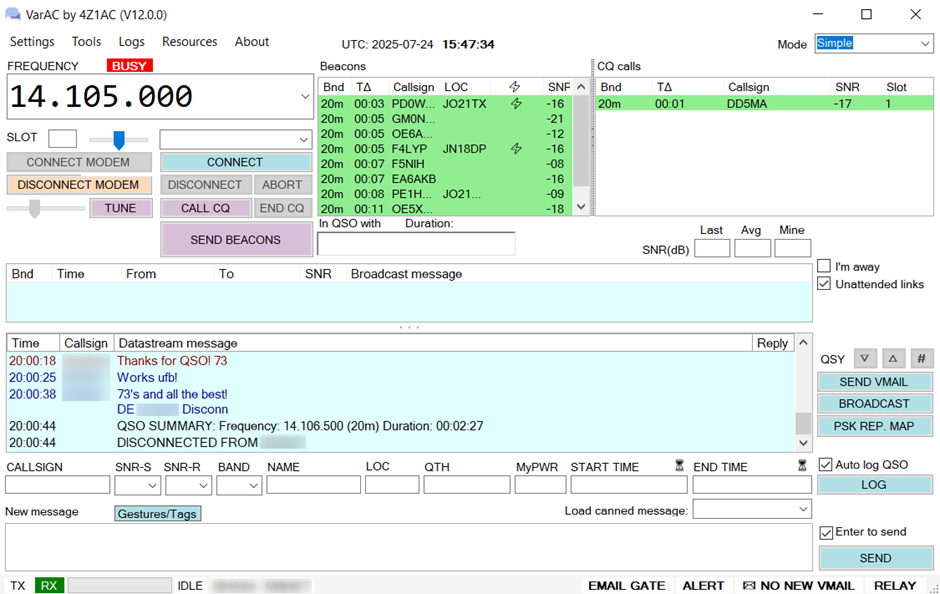
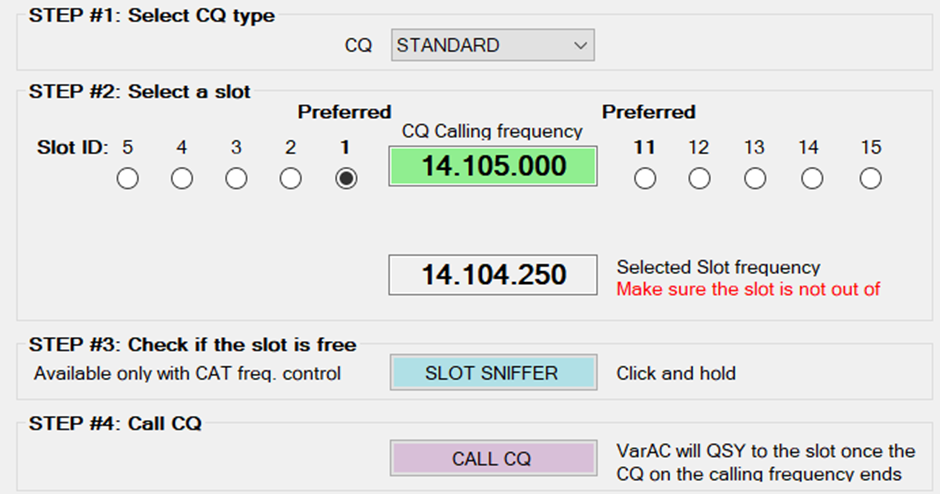
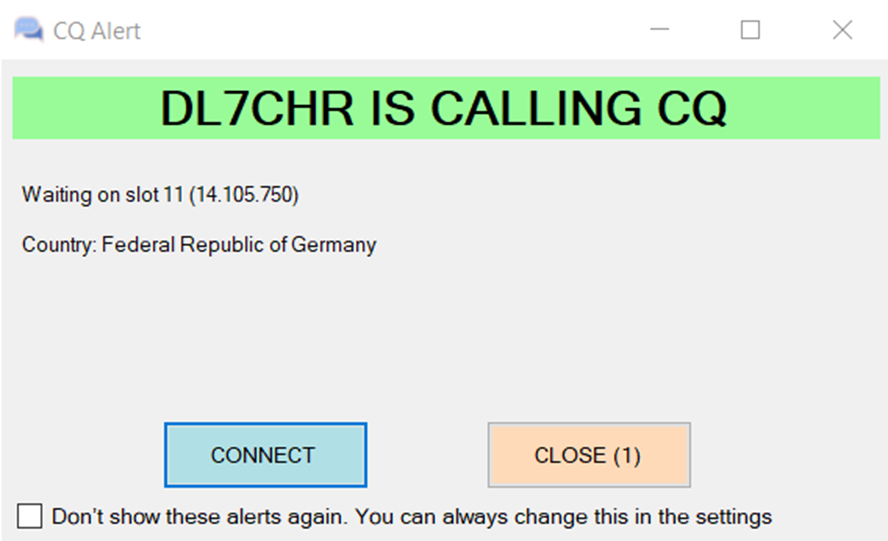
VarAC is a free application developed by Irad Deutsch (4Z1AC) and Larin Deutsch that provides a chat interface built on top of the VARA modem. Think of it as something resembling the classic ICQ messenger, but operating entirely over radio frequencies — no internet required.
VarAC supports several communication modes:
- P2P (Point-to-Point) — direct private conversations between two stations
- Broadcast — one-to-many messages visible to all stations on the frequency
- File Transfer — sending files directly over radio
- VMAIL — voice mail messages that can be sent as audio files
Reliability and Protocol Design
One of VARA's key advantages is its acknowledgment-based reliability system, similar in concept to TCP in the internet world. When a packet is transmitted, the receiving station sends back an acknowledgment. If the acknowledgment isn't received within a timeout period, the packet is retransmitted. This ensures data integrity even on unstable channels with fading and interference.
Compared to FT8, which is limited to 13-character messages and operates on fixed time slots, VARA enables extended conversations with arbitrary message lengths. While FT8 excels at making brief contacts under extremely weak signal conditions, VARA provides a richer communication experience when signal strength permits.
Practical Setup
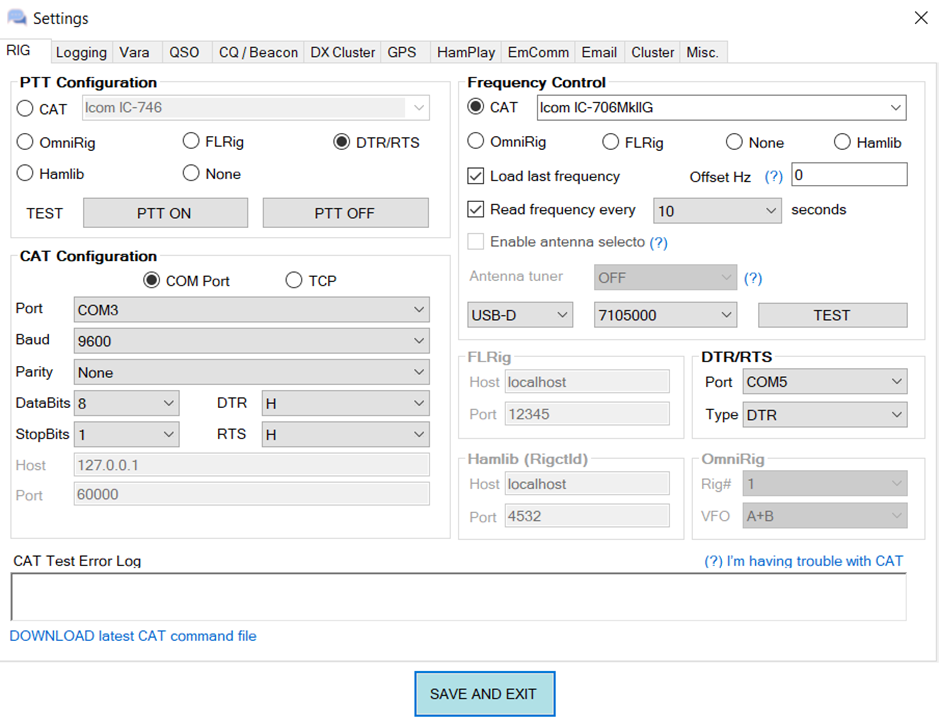
To get started with VarAC, you need:
- An HF radio transceiver with SSB capability
- A computer with a sound card interface to the radio
- The VARA modem software
- The VarAC application
- A valid amateur radio license (callsign)
Why Does This Matter?
In an age of ubiquitous internet connectivity, it might seem strange to communicate over radio. But consider scenarios where the internet is unavailable: natural disasters, remote expeditions, infrastructure failures, or even deliberate shutdowns. In these situations, shortwave radio remains one of the few communication methods that works independently of any infrastructure — no cell towers, no fiber optic cables, no satellites required.
VarAC and VARA represent a modern evolution of this capability, making radio communication accessible and user-friendly while maintaining the fundamental advantage of infrastructure independence.
Conclusion
Modern digital modes like VARA have transformed amateur radio from a hobby of Morse code and voice communication into a platform capable of reliable text messaging, file transfer, and more. VarAC makes this technology accessible to anyone with an amateur radio license and basic equipment, providing a genuine communication alternative when the internet fails. The technology is not just a novelty — it's a practical tool that bridges the gap between vintage radio communication and modern messaging expectations.
FAQ
What is this article about in one sentence?
This article explains the core idea in practical terms and focuses on what you can apply in real work.
Who is this article for?
It is written for engineers, technical leaders, and curious readers who want a clear, implementation-focused explanation.
What should I read next?
Use the related articles below to continue with closely connected topics and concrete examples.