Useful trains. Part 1: Introduction to Railway Modeling
Which of you, dear readers, did not feel delighted when you first saw a model railroad - miniature trains that look and, most importantly, drive like the real thing? It seems that in any era it was a top toy for teenagers and a cool hobby for adults. But everything often ended wi
Editor's Context
This article is an English adaptation with additional editorial framing for an international audience.
- Terminology and structure were localized for clarity.
- Examples were rewritten for practical readability.
- Technical claims were preserved with source attribution.
Source: original publication
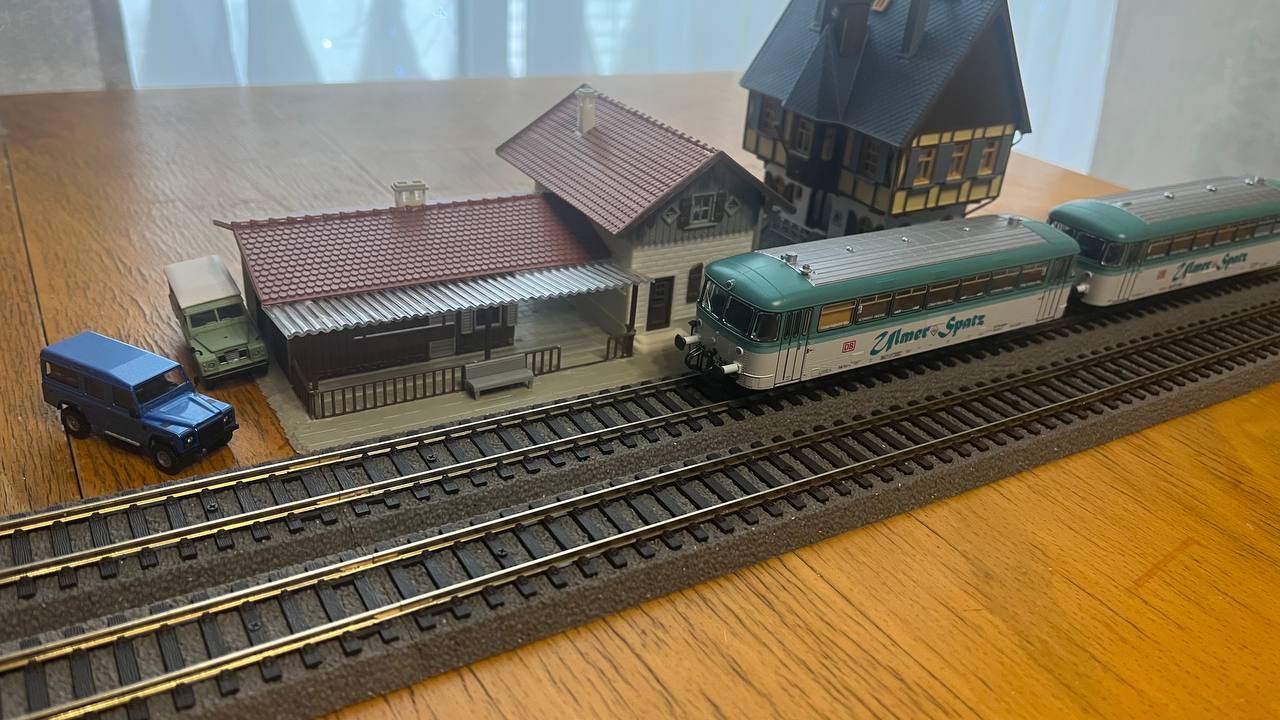
Which of you, dear readers, did not feel delighted when you first saw a model railroad - miniature trains that look and, most importantly, drive like the real thing? It seems that in any era it was a top toy for teenagers and a cool hobby for adults. But everything often ended with the first delight - the older brother or uncle said that he would never give it up (my case!), the price tags in stores or on Avito were supported (a beautiful composition with good detail, even without digital control, can match the cost of an RTX4090!), and there seemed to be no place at home.
And yet, I am sure that many of you will be interested in the story about such a cool hobby, and someone may even want to plunge into it, because in addition to beautiful trains, there is a lot of interesting things here.
For me, the railroad began about five years ago, when my youngest son asked for a starter set as a New Year’s gift, and I decided that since I didn’t have one as a child, then my son definitely should have one. Models are for children, they said... I, of course, already guessed that no - by that time I was already collecting model cars of my favorite brand, but you don’t understand, this is different)))
The beginning was smooth - a starting set with a diesel locomotive, freight trailers, an oval of tracks and a minimal control panel. A year later, a steam locomotive and a pair of passenger cars were added. When I was buying carriages for my son, I looked at a couple of beautiful carriages for myself, and things started to happen... I learned about model levels, the interaction of devices from different manufacturers, eras, and, finally, about layouts and control systems! Now bear with me, I will try to tell you about all this!
In the first part, I will tell the very basics - I will plunge into history, show different scales and briefly go through control systems. In the second, we’ll take a deeper dive into the theory - we’ll look at trends in model making, interesting features of models and useful (or simply beautiful) accessories, different types of rail material and look at key manufacturers. Then the most interesting thing will happen - I will tell you how I assembled the digital control system. What components did you choose, how did you configure them, and how to turn an analogue model into a digital one.
Now let's go!
❯ A little history
It won’t be easy to fit into the “a little” format, because the history of this hobby goes back more than a hundred years! The first model clubs appeared in the middle of the 19th century, but these were very tough guys who did everything with their own hands and strived for maximum realism, and the engines of their models were mechanical (clockwork!) or steam, because the electric era was just beginning and there were no available electric motors or power sources.
Towards the beginning of the twentieth century, technical toys began to appear; it is difficult to call them models, but they were already relatively accessible - roads and trains, also with mechanical, but sometimes steam engines. And soon electric ones were added.
One of the key milestones was the appearance of industrial toys and models from Märklin in 1891. To this day, this company remains one of the trendsetters in the world of modeling, and its products are coveted acquisitions by many collectors.
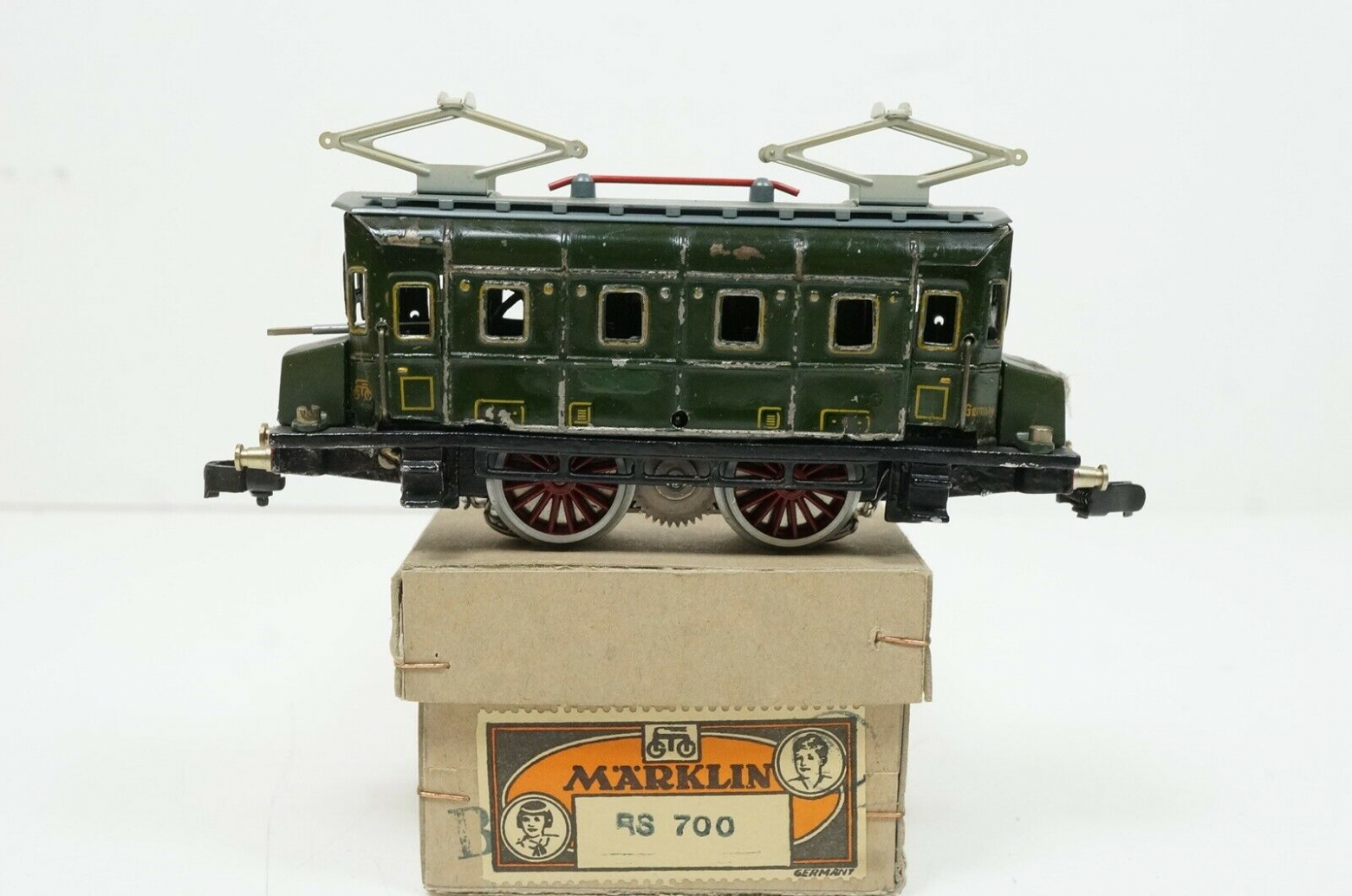
The rapid development of this type of hobby began and for a long time the toy and model directions practically merged - factory-produced sets provided a higher level of realism than most enthusiast products. The peak of popularity was in the 30-50s of the 20th century. At this time, many well-known manufacturers appeared, the scale of models familiar today was formed, and the range of accessories expanded.
Но вскоре мода меняется — автомобильные, авиационные и космические игрушки выходят на первый план. But at the same time, in an effort to retain customers and expand into new markets, legacy railroad toy makers are beginning to appeal to collectors and modellers by adding more complexity to their control systems and increasing the level of detail and realism in their models.
Interestingly, many famous figures from the history of IT also indulged in this hobby. An interesting example of the influence of the hobby on the industry is given by Kenneth Olson of DEC in his September 1988 interview: “We used Japanese model railroad lamps, one for each trigger. We joked that we probably confused and puzzled industry watchers with this order!”
Also in the 70s, the railway at the intersection of toys and modeling became popular in the USSR. Moreover, in addition to locally produced kits, often quite good in their level, but available mainly to advanced modelers, a significant part of the market was occupied by East German PIKO and Berliner TT Bahnen.
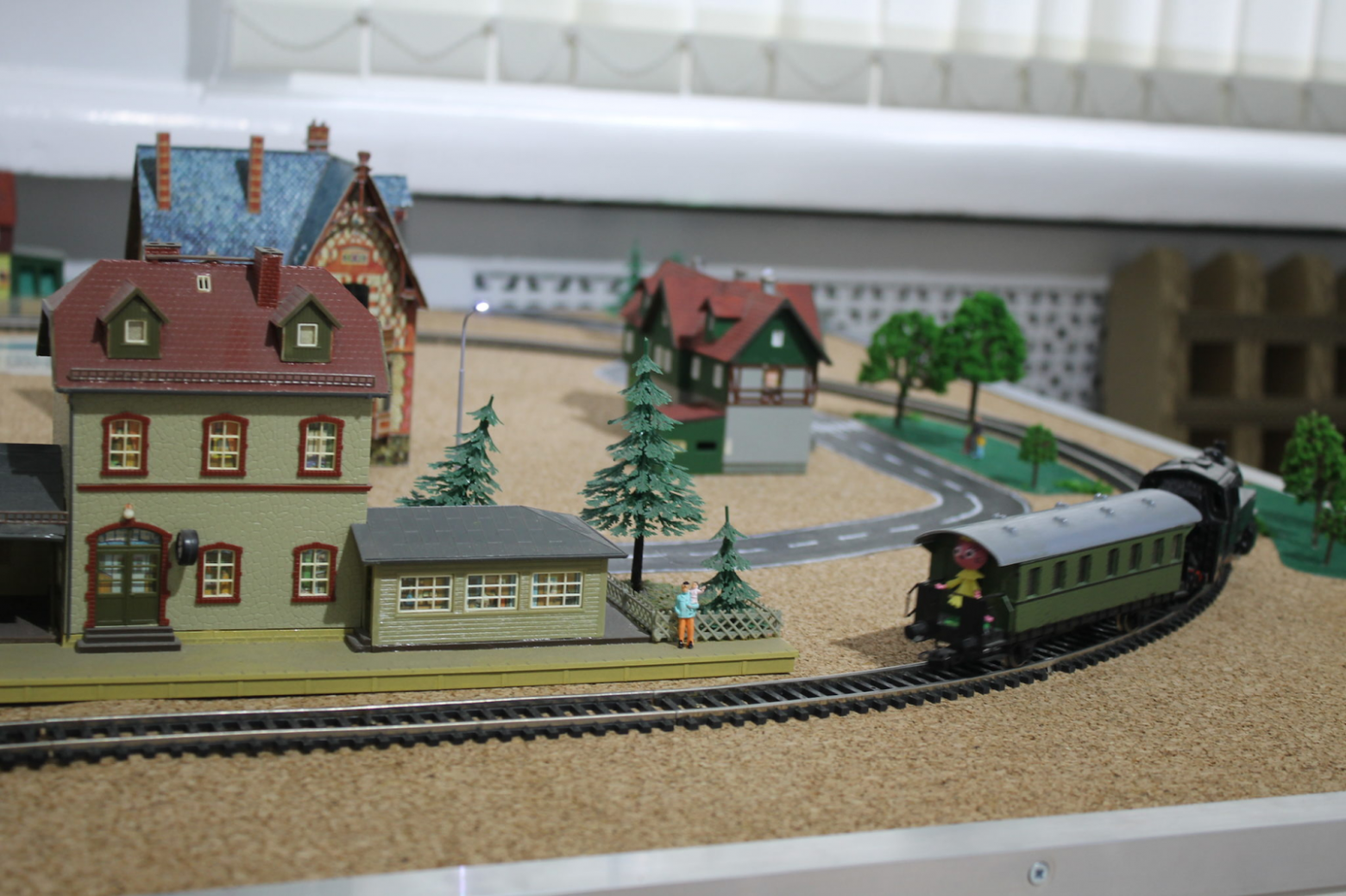
By the early 1980s, the first digital control systems began to appear in Europe and America; they made it possible to simplify the control of large and complex layouts with many trains and accessories, as well as add new capabilities associated with additional effects.
However, analog systems were also very advanced by that time - steam locomotives with steam generators, block sections, semaphores and traffic lights, various lighting and even sound effects.
Development continues today - digital control systems are becoming more accessible and popular, detail is improving, new functions of models and control systems are appearing. But due to the focus on wealthy enthusiasts, most of the features that go beyond the basic ones are popularized rather slowly, and control systems develop much more slowly than technical progress. But more on this in a separate article about digital modeling!
❯ Standards? Standards!
What was surprising to me is that in this hobby there are official standards (and not just a set of standard scales, as in the case of car modeling). Back in 1935, in the USA, to develop standards related to this hobby, the NMRA modeling association appeared, which was joined in 1954 by the European MOROP (German. MOdellbahn + EuROPe), which created the NEM series of standards. Thanks to them, we can now assemble models from different manufacturers in one composition, control them with one remote control, and even combine digital components from different brands!
Key standards for us:
Scales - H0 (1:87), TT (1:120) and N (1:160) and their derivatives for narrow gauge, as well as garden scale G (1:22.5).
NEM 362 is a “shaft” (fastening) standard for couplings, which allows you to assemble trains from cars from different manufacturers (for example, my M62 diesel locomotive from PIKO drives cars from Eurotrain).
DCC is the most popular digital control standard.
RailCom, RailcomPlus - DCC extensions for bidirectional data exchange with rolling stock.
NEM 652 and 658 are interfaces for connecting 8-pin and PluX decoders (actually there are more of them, but these are the most popular).
❯ Scale. More or less?
Scale is where a modeller's path always begins. If everything else, even the management system, can be replaced with relatively reasonable resources, then a change in scale means replacing almost the entire model economy. Rails and rolling stock are just the beginning; as a rule, all “near-track” accessories and even buildings on the layout have to be changed. And if you have cars in your layout, then those too! Unless the control system can be left in most cases.
Therefore, it is better to make the right choice from the very beginning. And in fact, this choice is not so difficult. If in doubt, choose H0 (1:87) - it is the most popular and you can always find any models and accessories for it. Let's start with it.
1:87 (H0 / H0m / H0e)
The most popular model railway scale in the world. Half (Half 0) from the earlier 1:43.5 (also known as simply 0), from which the most popular scale among motorists grew - 1:43.
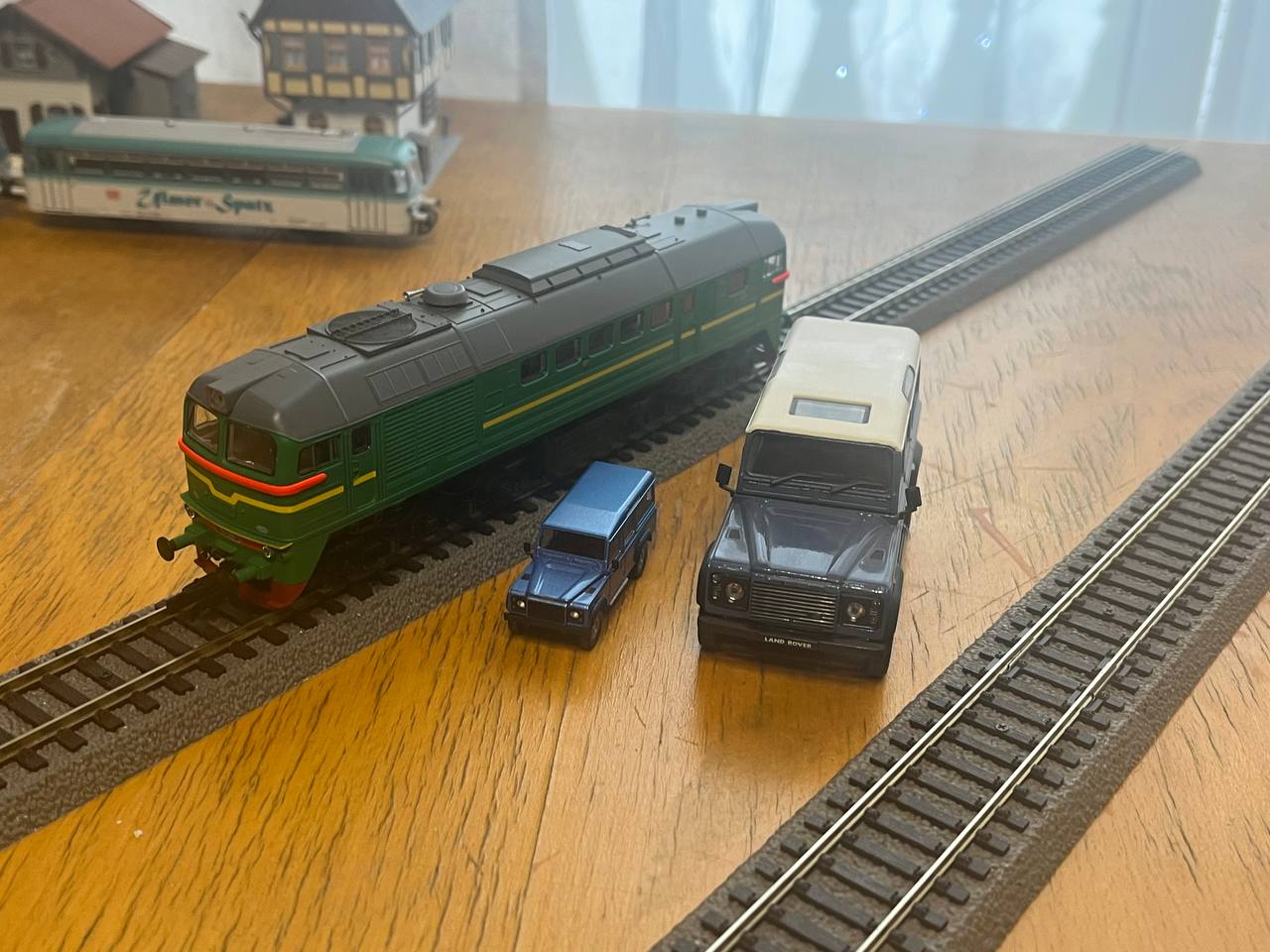
With fairly reasonable dimensions of models and layouts in general, it provides good detail and functionality. In the models it is not so difficult to find a place for a decoder, speaker and additional lighting. Also, due to their popularity, the models have fairly reasonable prices.
For standard gauge models (1435/1520 mm), the width of the model track is taken to be 16.5 mm, for meter gauge - 12 mm (same as standard for TT scale), for narrow gauge - 9 mm (same as N). For other scales, narrow gauge versions are much less common.
The main disadvantage is that even a simple layout will require enough space, for something larger - a separate room. My plans are to build a railway nest in the attic.
The length of model cars often reaches 300 mm or more, even despite the reduced number of cars in the trains compared to real trains, the length of the train will exceed a meter (locomotive and three cars).
On this scale, many things are produced that enliven the layout - houses, street objects, cars. It is on this scale that the most famous model of Russia, the “Grand Model,” was built.
1:120 (TT, TableTop)
It ranks second in popularity and has many loyal fans around the world. Some companies work exclusively at this scale. It is valued for its compactness (targeted for desktop installations) and retains decent detail, although it is inferior to H0. Uses 12 mm gauge.
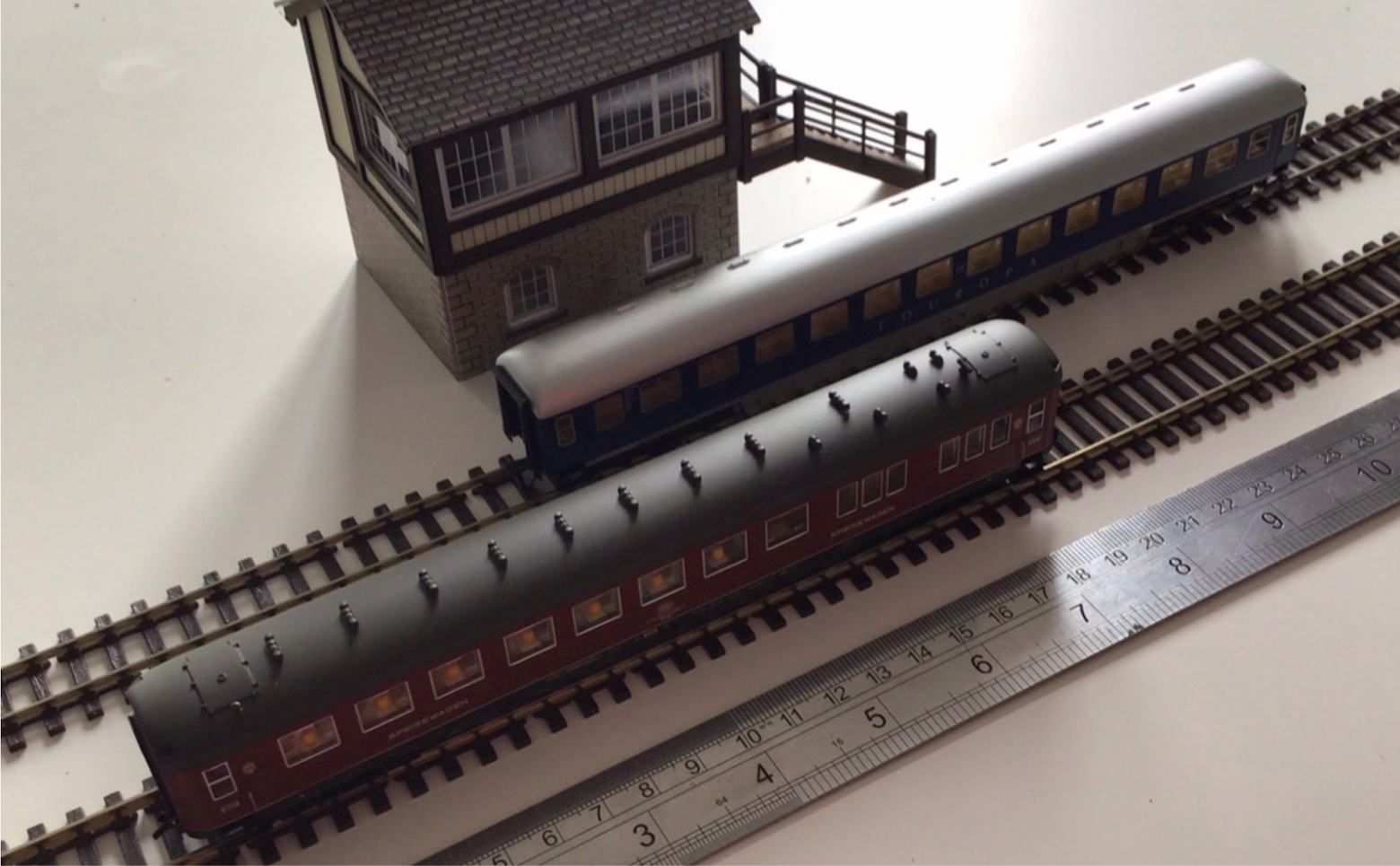
It was very common among USSR collectors. Nowadays it has lost some popularity. The models are somewhat more expensive due to the smaller scale of production and the difficulty of detailing on a smaller scale.
Models usually use buildings of the appropriate scale, but sometimes buildings at 1:87 also look appropriate. Models of cars in TT scale are already quite simplified, but still quite recognizable.
1:160 (N)
The most compact of the popular scales. It uses 9 mm gauge and allows you to make a full-fledged model of a very small size, less than a meter by meter. Models usually (but not always!) have noticeably simplified detailing. Due to the small wheels, it is very demanding on the quality of the track, otherwise derailment and poor electrical contact are possible.
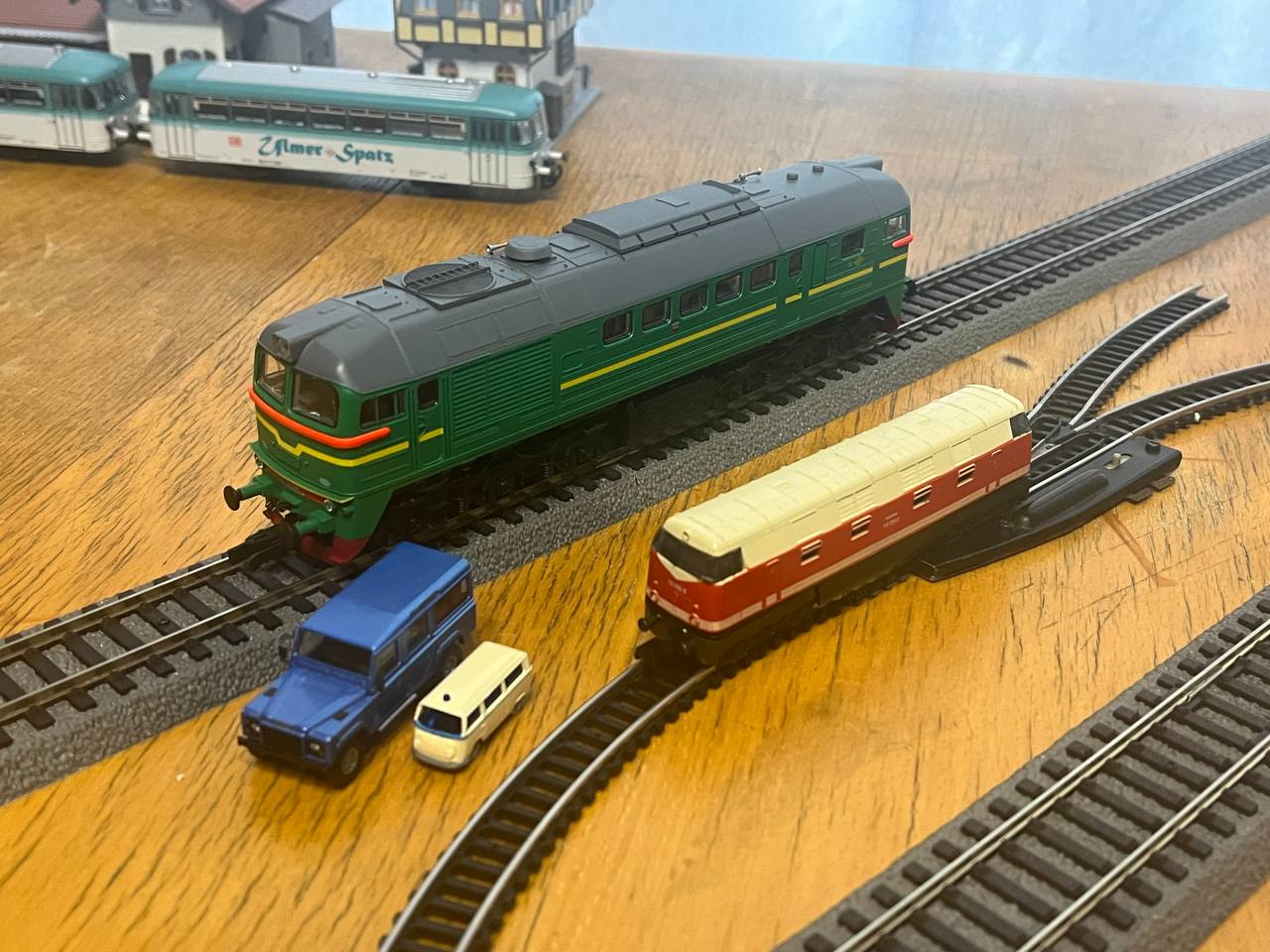
Models in this scale are generally more expensive than those in H0 and TT due to the complexity of manufacturing and lower production volumes.
Due to its compact size, it is very popular in Japan; thanks to Japanese companies, many very interesting models are available.
For digital control it requires special miniature decoders. It requires buildings and car models of the appropriate scale, and the car models are already very simplified and are recognizable mainly to the cars that stand out in design.
1:22.5 (G, Garden)
This scale stands apart. With fairly large sizes, the detailing is somewhat simplified (not always!), but this is not so important, because this scale implies outdoor use. Based on this, models are created, and slightly less detail is determined by a greater observation distance and more severe operating conditions.
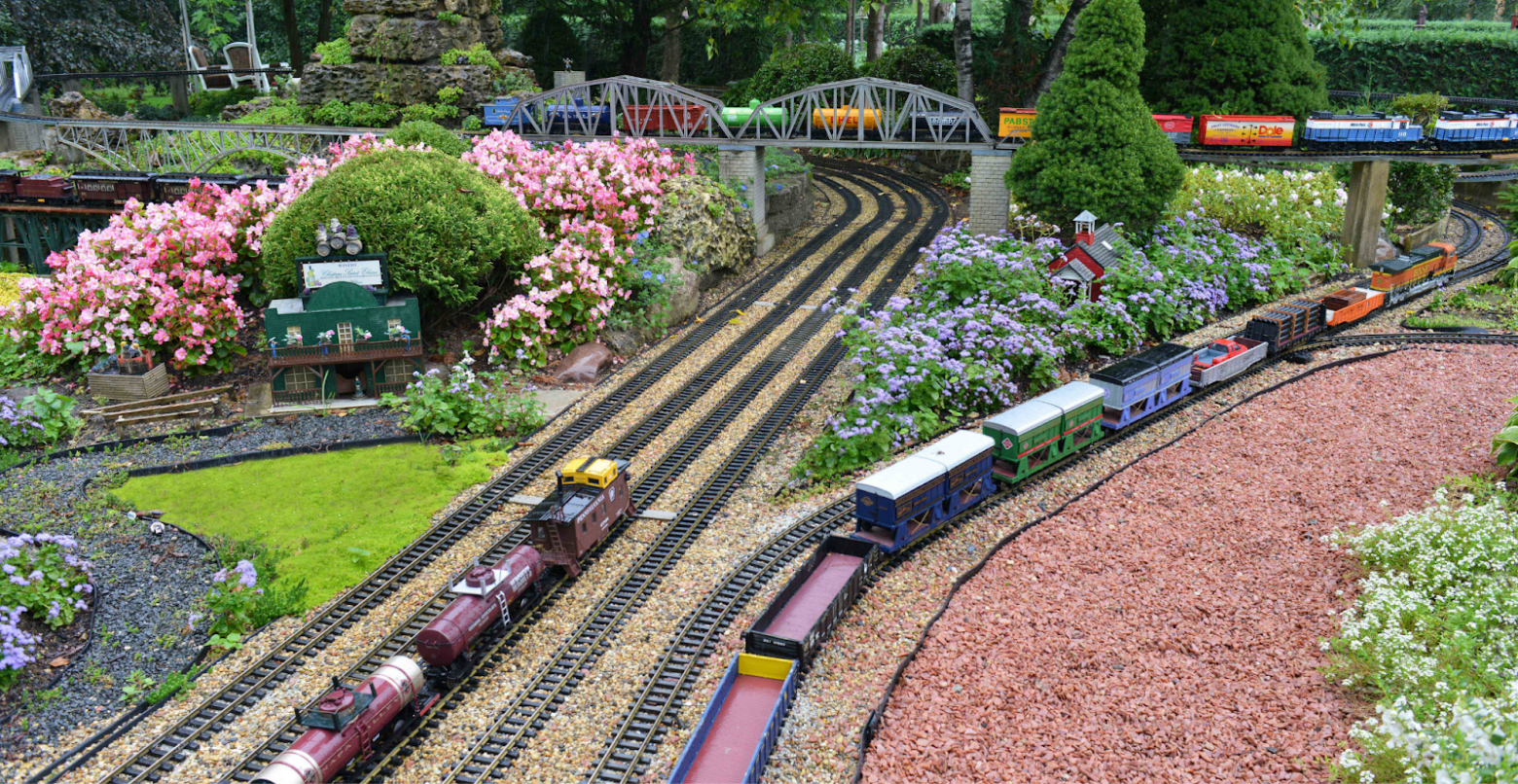
Models of buildings are also produced in this scale. Car models are often taken at 1:24 scale. But they often do without them altogether.
Due to the size of the models, the current consumption is also increased, so reinforced components are often used for control systems; some manufacturers produce separate lines of systems for this scale.
Microscales (Z - 1:220, T - 1:450 and 1:480)
Scales with a track width of 6.5 mm and 3 mm are exotic not only here, but throughout the world. A thing in itself that allows you to carry your hobby with you, but does not have such a developed ecosystem as larger scales.
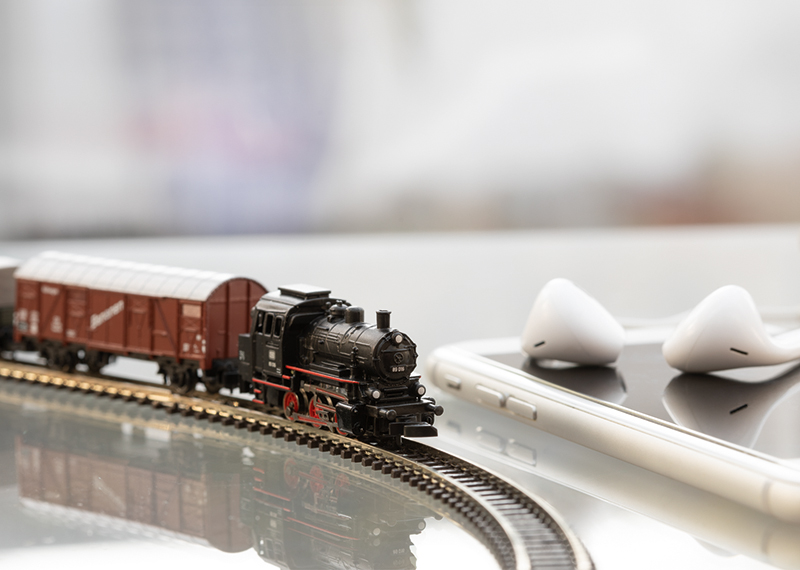
The Z scale was created by Märklin in 1972 to demonstrate the capabilities. In many ways similar to N, but allows you to build even more miniature layouts. Like larger scales, it allows the use of digital control systems.
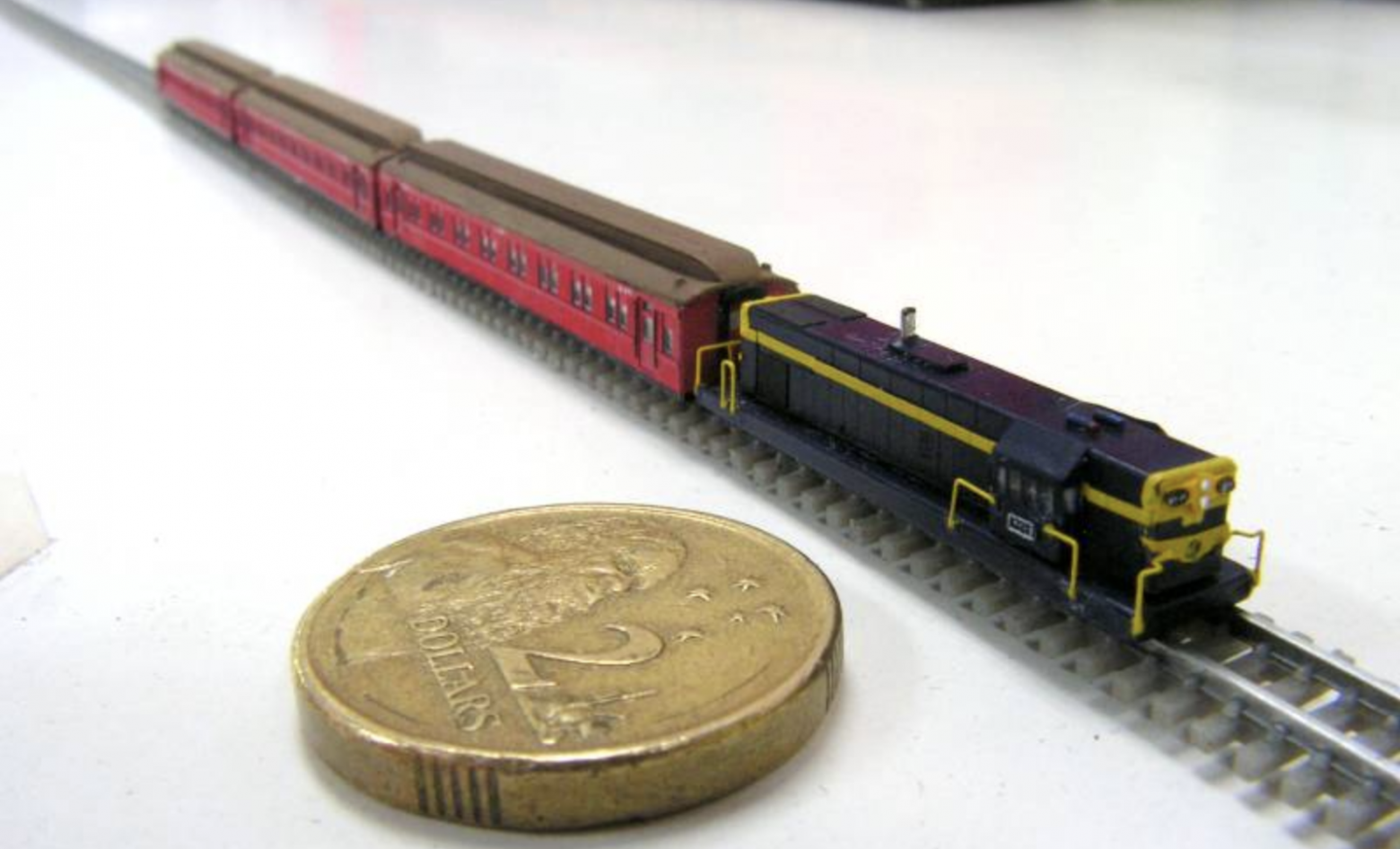
T-scale - created in 2006 by Japanese companies and is an example of extreme miniaturization. It goes well with models of ships and aircraft for which scale is not something special. I could not find digital systems based on this scale.
My choice
The set of scales is not limited to the above list, but others are worth considering if you have already taken your first steps in this hobby and understand that you want something special next.
As I already said, the choice of scale is a personal matter. But I decided not to go any particular way, but chose a popular and visually attractive scale - H0, at first with a simple analogue control system, but about a year ago I switched to digital DCC.
I also have a small N model, which I got in exchange for a couple of car models that had become uninteresting to me. I took it out of interest to get acquainted with the scale. In turn, my wife, although she does not particularly welcome my hobby (she prefers cars), wanted to build a G-scale road on the adjacent plot as an element of landscape design. But this is not a matter of the very near future.
❯ Control systems
Everything seems simple here. There are analogue systems and digital ones.
In an analog system, voltage is applied to the rails, regulated by a knob on the control panel (“transformer”, although in fact it is a rectifier) and depending on the applied voltage, all trains on the model will move faster or slower, and changing the polarity changes the direction of movement of the models. For individual control, you will need to divide the layout into sections, but you won’t be able to make enough of them - it will simply be inconvenient to control many knobs. Another drawback is that the brightness of the headlights and interior lighting will also depend on the voltage. But the dependence of the steam generator’s performance on voltage, on the contrary, adds realism.
Arrows and semaphores in an analog system are controlled by push-button remote controls. This is more complex from a switching point of view, but the control is quite convenient. Therefore, “digital” is often used only to control rolling stock, and accessories are connected to analog remote controls.
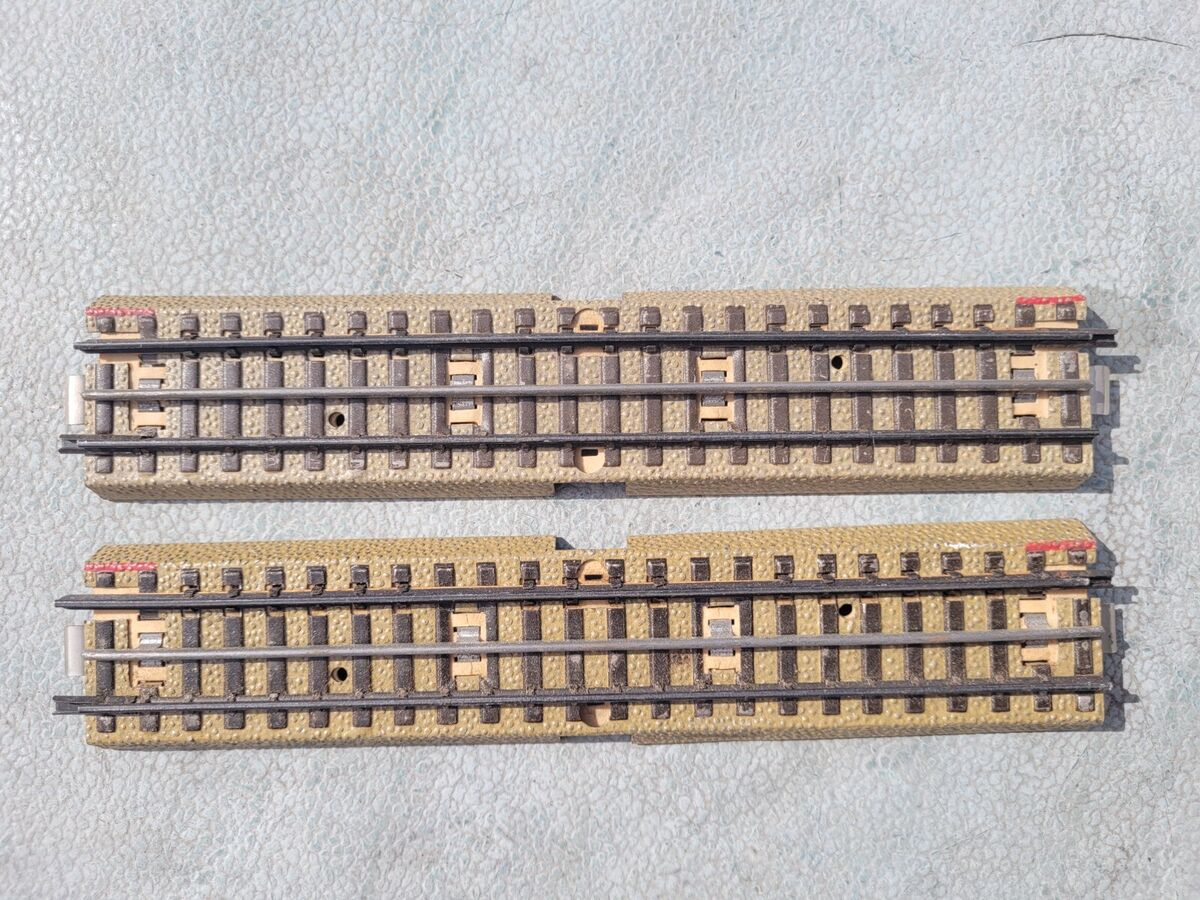
Most breadboards are DC powered, using a pair of rails to transfer the power. Märklin components have traditionally used a three-rail system - the side rails are connected to the ground, and the second contact is the third rail, which over time turned into subtle "mushrooms" in the middle of the sleepers. Power is supplied by alternating current.
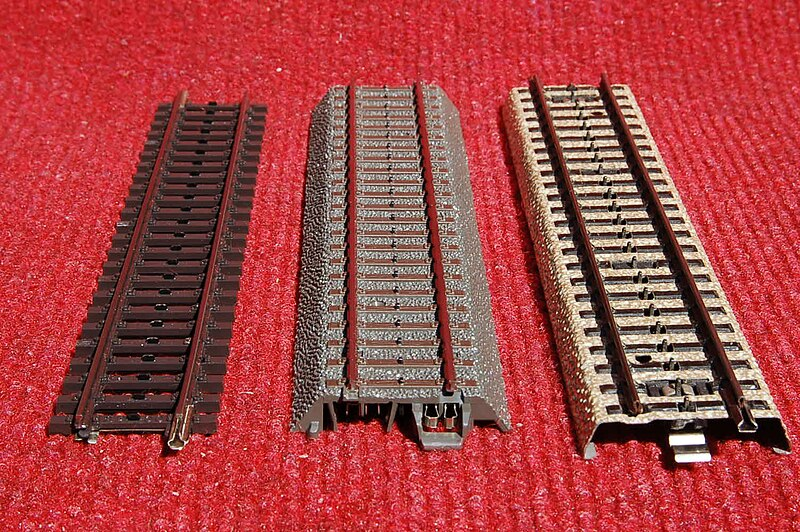
Such a system makes it easier to build track development - in a traditional system it is necessary to avoid loops due to the risk of short circuits and use the division of tracks into separate blocks, but at the same time it requires the use of special (or modified - most companies produce models in several versions, as well as kits for conversion) rolling stock with a special “ski” for interaction with the contact rail.
Digital control systems are free from the main disadvantages of analog ones, but are more difficult to master and more expensive. In turn, they allow you to obtain separate control of trains, which is convenient even at the first steps of a modeler, and also in the future to build automatic control, thanks to which the model will become more spectacular, and the process of controlling it even more exciting. Digital systems exist both on the basis of traditional two-rail roads with DC power (in the case of a digital system, a control signal is mixed into it), and on the basis of three-rail AC roads - such solutions are now gaining popularity.
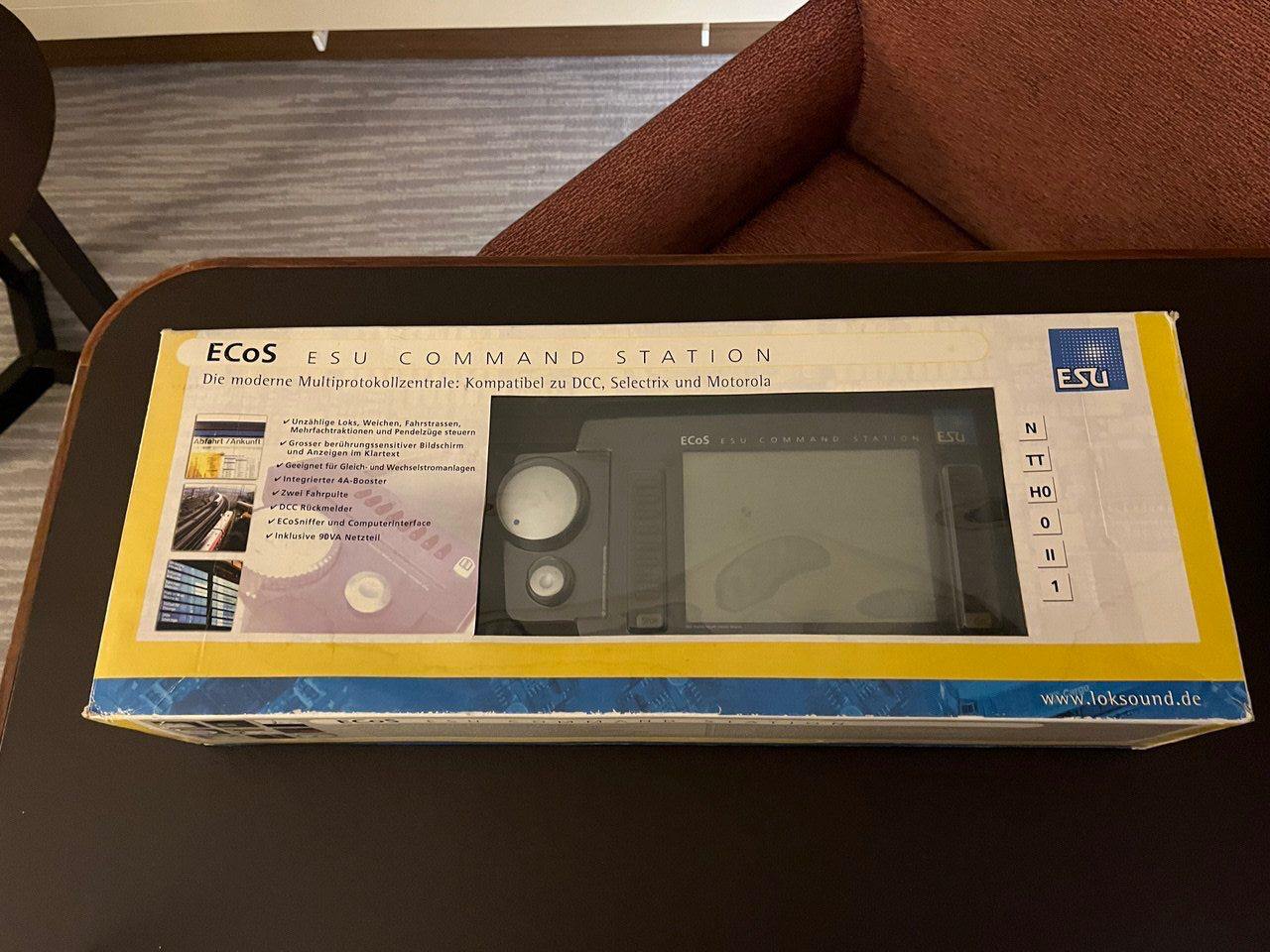
A separate feature of digital locomotives is the ability to voice the movement and other activities related to the train - the use of additional equipment, beeps, announcements, and so on. However, most digital locomotives can be used in analog mode. Voice acting and light switching depending on the direction of movement will work, but other functions will remain unavailable.
❯ Not really a conclusion
At this point, it’s worth taking a break - there’s a lot of information collected. The longread should be moderately long. See you in the sequel!
❯ Useful links
NEM Standards - https://www.morop.org/index.php/en/nem-the-norms.html
NMRA website - https://www.nmra.org/
Develop and develop your game (and more) with the help cloud hosting for GameDev ↩
Before payment, in the “Bonuses and promotional codes” section in the control panel, activate the promotional code and receive cashback on your balance.
Why This Matters In Practice
Beyond the original publication, Useful trains. Part 1: Introduction to Railway Modeling matters because teams need reusable decision patterns, not one-off anecdotes. Which of you, dear readers, did not feel delighted when you first saw a model railroad - miniature trains that look and, most importantly, d...
Operational Takeaways
- Separate core principles from context-specific details before implementation.
- Define measurable success criteria before adopting the approach.
- Validate assumptions on a small scope, then scale based on evidence.
Quick Applicability Checklist
- Can this be reproduced with your current team and constraints?
- Do you have observable signals to confirm improvement?
- What trade-off (speed, cost, complexity, risk) are you accepting?
FAQ
What is this article about in one sentence?
This article explains the core idea in practical terms and focuses on what you can apply in real work.
Who is this article for?
It is written for engineers, technical leaders, and curious readers who want a clear, implementation-focused explanation.
What should I read next?
Use the related articles below to continue with closely connected topics and concrete examples.