To the stars on the domestic BIS 1537ХМ2: we look at the module of the integrated inertial-astrosatellite system
Hello dear friends! I have always been interested in domestic computer technology. And when it came to stellar navigation, I could not remain indifferent. It should be noted that the photographs presented in the report are not a secret and the celestial navigation device is on pu
Editor's Context
This article is an English adaptation with additional editorial framing for an international audience.
- Terminology and structure were localized for clarity.
- Examples were rewritten for practical readability.
- Technical claims were preserved with source attribution.
Source: original publication
Hello dear friends!
I have always been interested in domestic computer technology. And when it came to stellar navigation, I could not remain indifferent. It should be noted that the photographs presented in the report are not a secret and the celestial navigation device is on public display in the Cosmos Museum, located at VDNKh.
Below the cut are photos and videos of a domestic large-scale integrated circuit, an “Equiprobable Random Sequence Generator” and a number of electronic components that were identified.
Anyone who cares about domestic developments is welcome!
As they say, it's better to see once, please take a look.
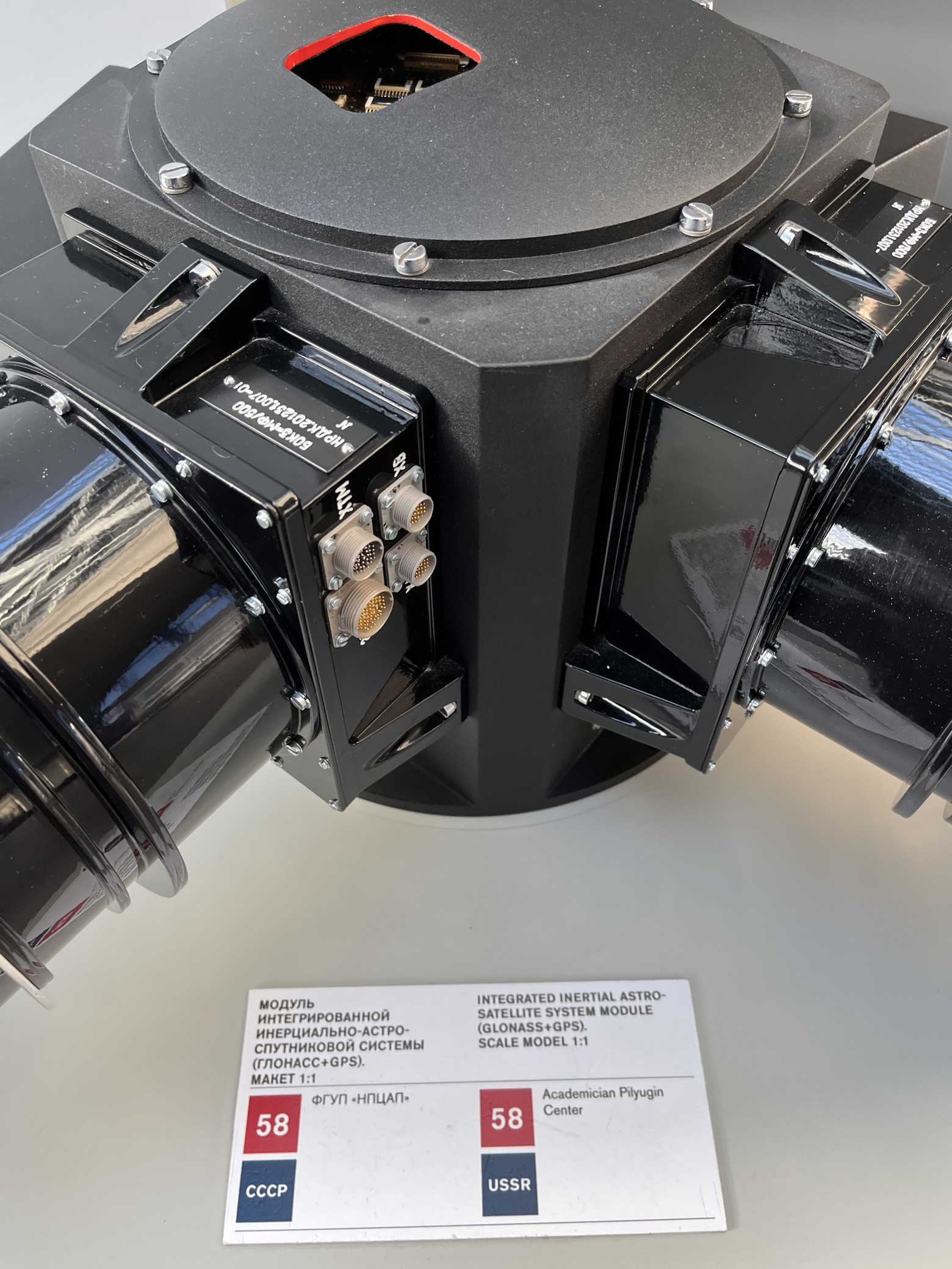
General view of the “module of the integrated inertial-astro-satellite system (GLONASS + GPS)” (hereinafter, for brevity, the device).
Video to give you an overview:
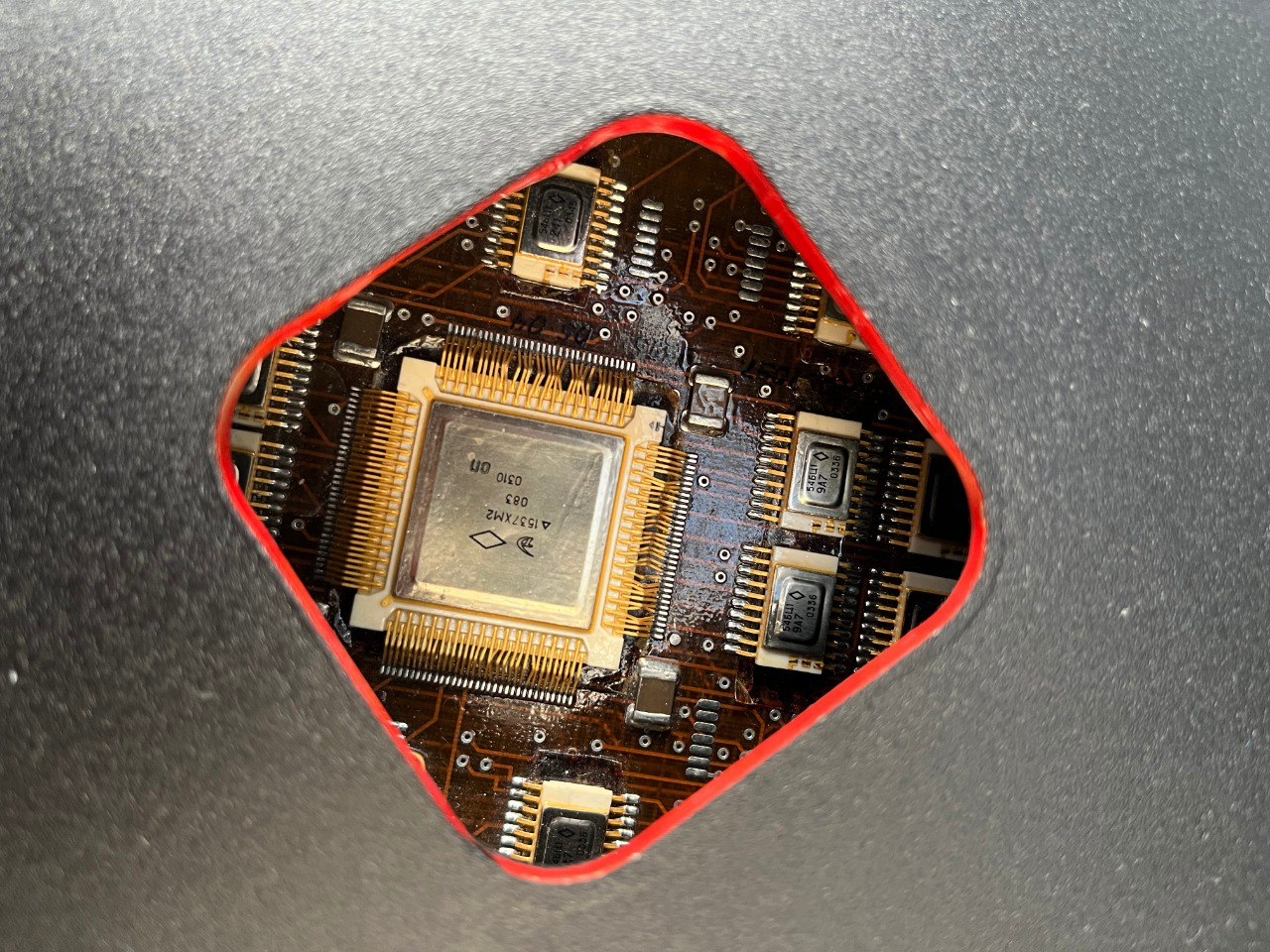
Presumably, one of the main elements of the design is the “Generator of an equiprobable random sequence”, made on a large integrated circuit “BIS RNG on BMK series 1537ХМ2”, the mention of which given here.
Admire this beauty:
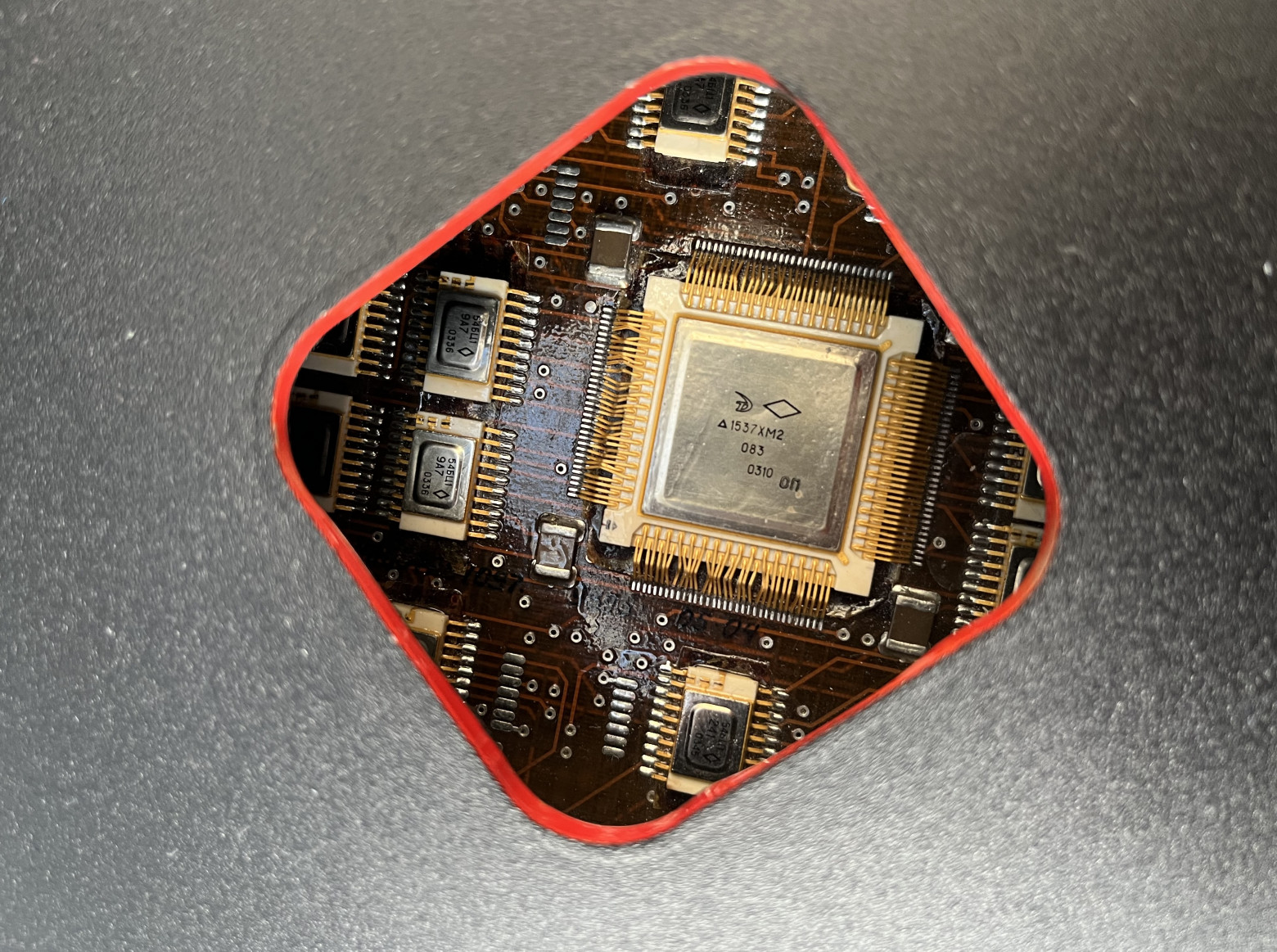
And closer:
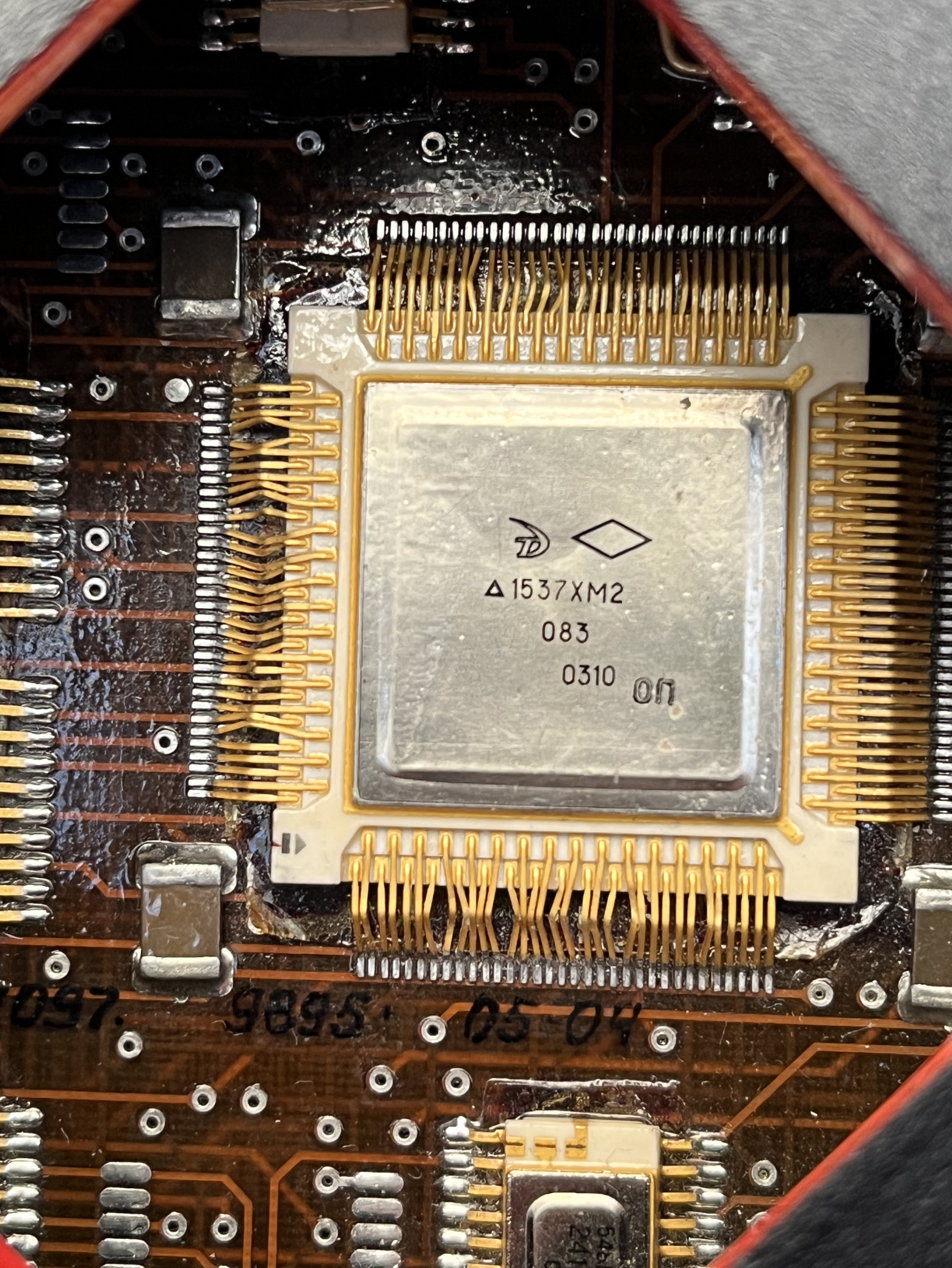
In the given model of the device, a square cutout with a red border is specially made. As far as possible, I tried to look inside.
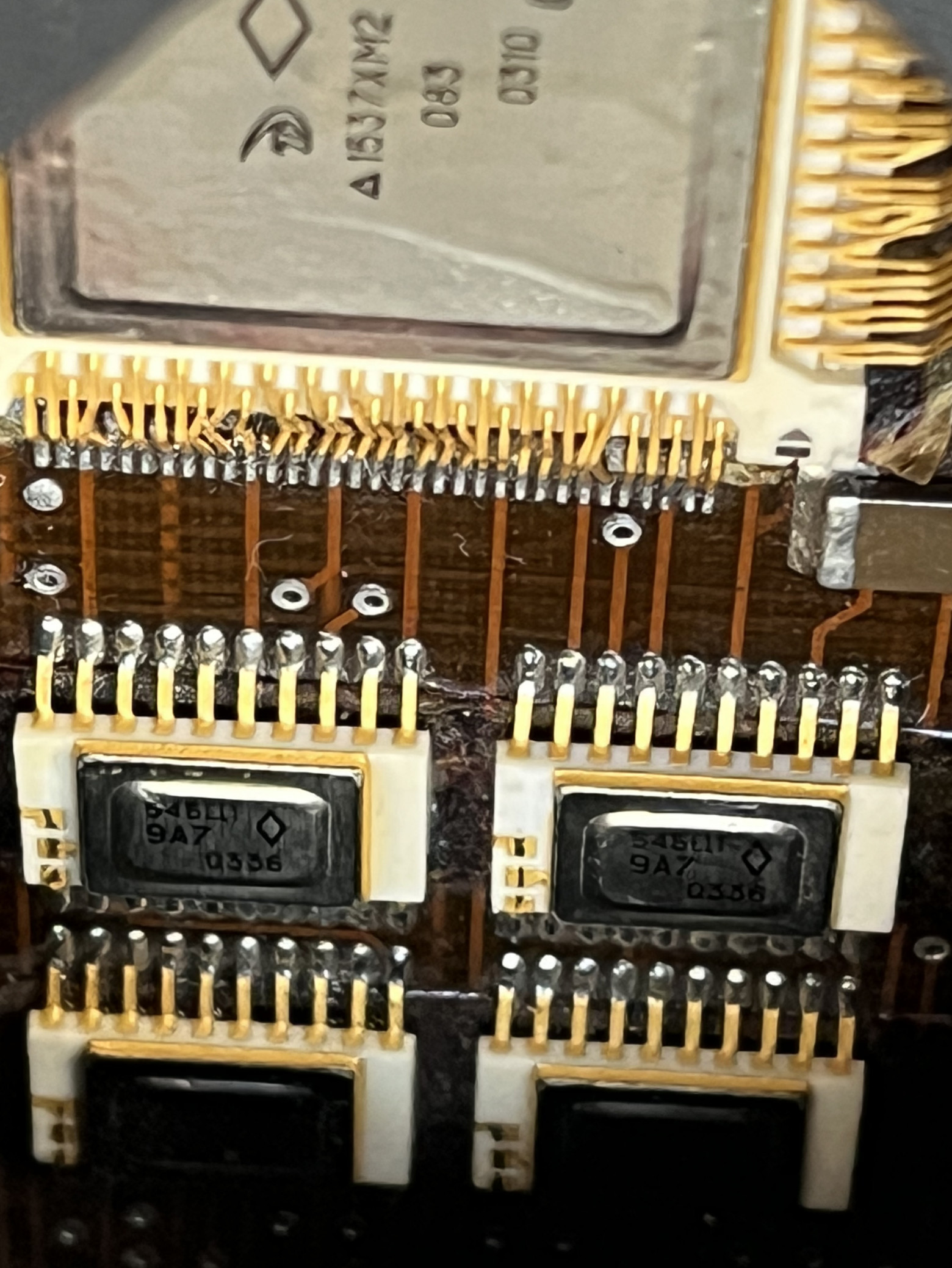
The legs of the large integrated circuit are wrinkled, perhaps even damaged, but the smaller elements appear to be in good working order.
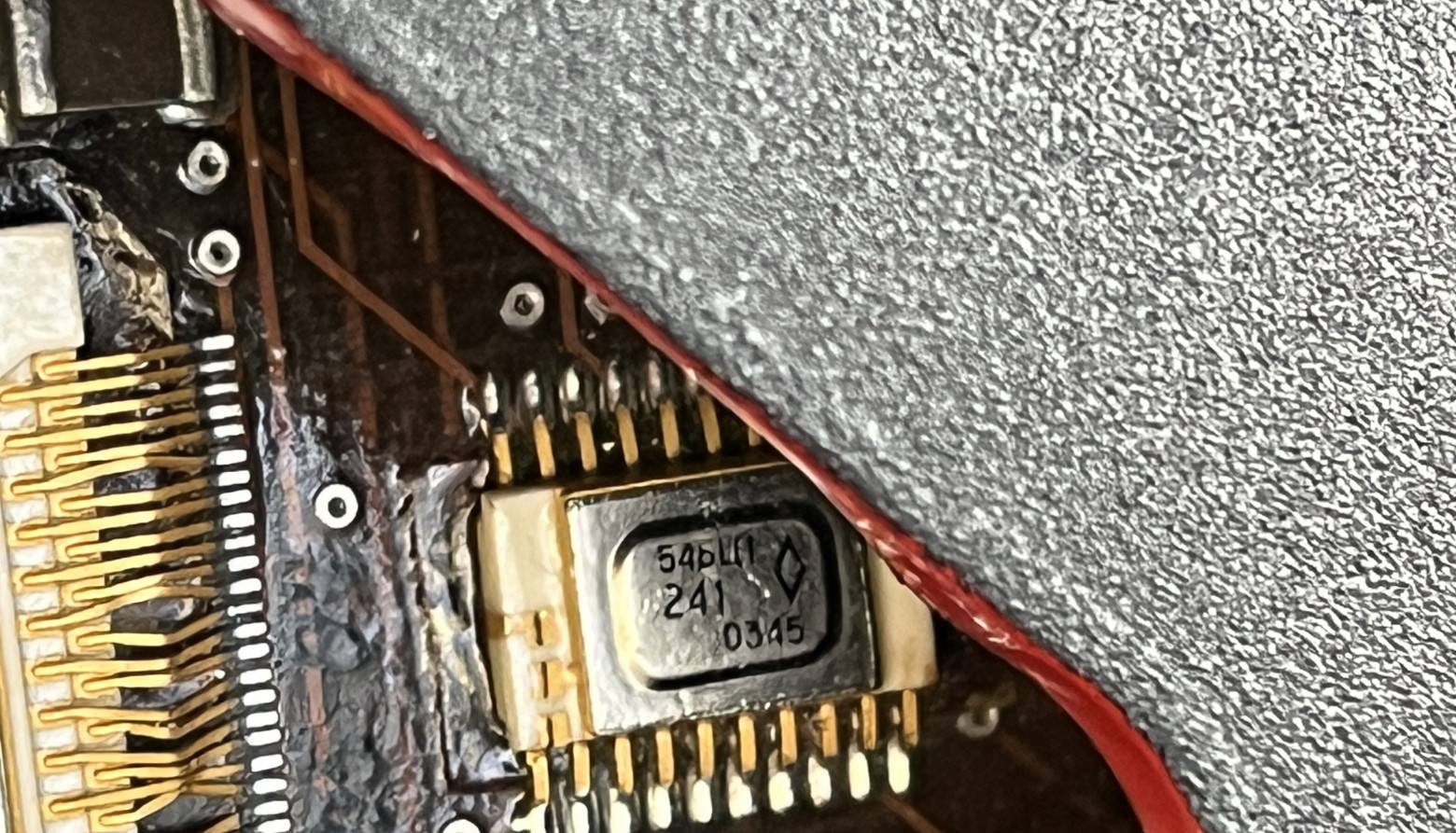
We see a series of CMOS integrated circuits 5514BTs1(T1-T7, U1-U2), implemented on
high-speed base matrix crystal, resistant to the effects of SVVF.
The characteristics are as follows:
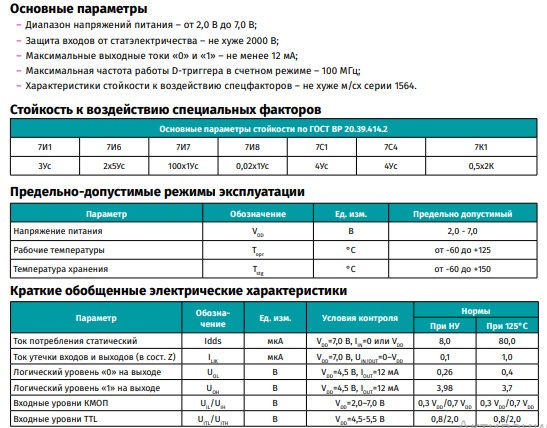
The SVVF point is of particular interest. SVVF are special external influencing factors, resistance to them already indicates special operating conditions, in other words, space operation. I will cite just some of the factors:
- Electromagnetic chromatic radiation of the visible, infrared and ultraviolet range;
- Aerodynamic heating;
- Radiation heating;
- Integral solar radiation;
- Atmospheric pressure;
- Corrosive environmental agent;
- Dynamic pressure/Static pressure;
- Sonic Boom/Shock Wave.
There is a GOST, where these factors are described in more detail, there are significantly more of them.
The manufacturer of these components is JSC Angstrem, located in Zelenograd. I think that at the time of production the organizational and legal form was different, but the name “Angstrem” was definitely preserved. As an off-topic, I note that I have a perfectly working ZX Spectrum, made on an FPGA manufactured by the above-mentioned company. His name is “Master”, and the amount of RAM is 48 KB.
Performance information taken from the manufacturer, from publicly available source.
And here is a video attempt to look under the cover, where the board with electronics is. This attempt was not particularly successful; I wanted to inspect the entire circuit, but the lid and glass got in the way.
The only thing that I have not yet been able to compare is the approximate time, chronology of production and use of this device. On the one hand, on the sign of the exhibit, it says USSR, this is understandable, the described BIS was produced even before the collapse of the Country, and on the other hand, GLONASS/GPS. What, modern developments are based on LSI produced in the USSR? On the third side, the device is placed in a museum. This is not clear to me yet. The plate does not show the year of manufacture. Perhaps an in-depth search for information on the Internet will put everything in its place...
Of course, using fragments of a printed circuit board containing several elements seen, it is impossible to reverse engineer the general circuit of the device, but the very fact of what was seen can be an incentive for further search for information and possibly in-depth research.
That's all we could see. This small report, containing a number of photographs and an overview video, is designed for someone more knowledgeable and competent to write a detailed, explanatory comment.
Thank you for your attention! :)
News, product reviews and competitions from the Timeweb.Cloud team - in our Telegram channel ↩

Read also:
- ➤ Bootable 4G modem, surfing in invisible OS Tails
- ➤ Cinema and space
- ➤ Spiral. Adventures in Metal
- ➤ Flashback Runner
- ➤ ECLZ. How the cash registers worked in the 2000s
Why This Matters In Practice
Beyond the original publication, To the stars on the domestic BIS 1537ХМ2: we look at the module of the integrated inertial-astrosatellite system matters because teams need reusable decision patterns, not one-off anecdotes. Hello dear friends! I have always been interested in domestic computer technology. And when it came to stellar navigation, I could not remai...
Operational Takeaways
- Separate core principles from context-specific details before implementation.
- Define measurable success criteria before adopting the approach.
- Validate assumptions on a small scope, then scale based on evidence.
Quick Applicability Checklist
- Can this be reproduced with your current team and constraints?
- Do you have observable signals to confirm improvement?
- What trade-off (speed, cost, complexity, risk) are you accepting?