The Plane That Wasn't Supposed to Fly
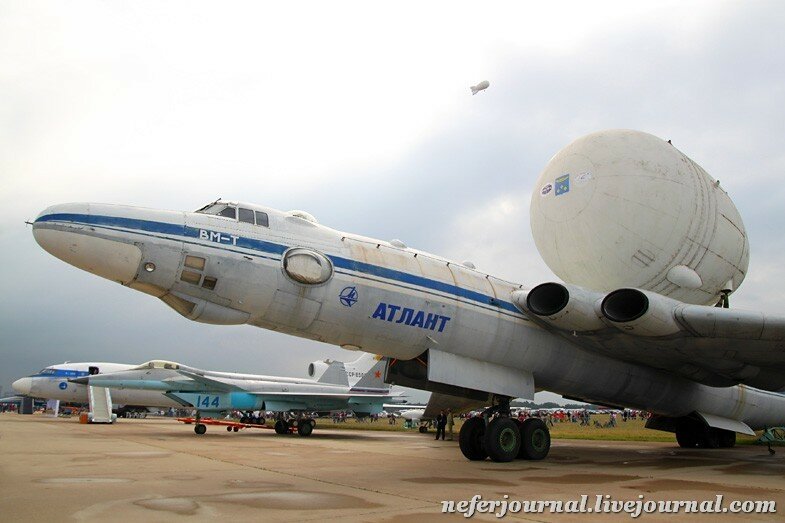
In spring 1981, a 1950s strategic bomber with a giant cylindrical barrel on its back prepared for its maiden flight over a Zhukovsky airfield. This absurd-looking machine was the VM-T Atlant — without which the Buran space shuttle would never have reached orbit.
Editor's Context
This article is an English adaptation with additional editorial framing for an international audience.
- Terminology and structure were localized for clarity.
- Examples were rewritten for practical readability.
- Technical claims were preserved with source attribution.
Source: the original publication
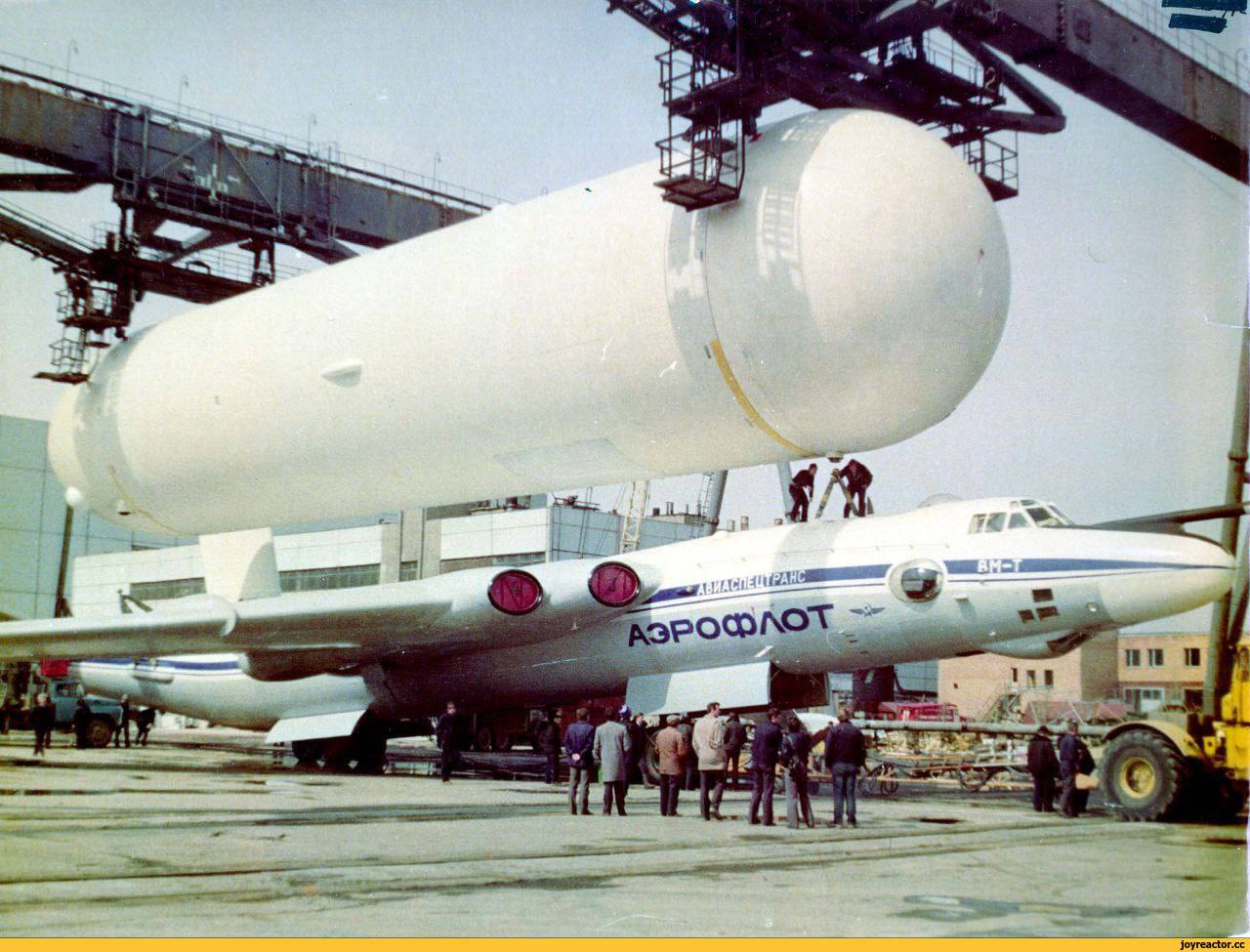
In spring 1981, something unimaginable appeared above the airfield in Zhukovsky: a 1950s strategic bomber with a giant cylindrical barrel on its back was preparing for its maiden flight. The sight was somewhat bizarre.
The monster with a 53-meter wingspan looked like an engineering joke, a violation of every law of aerodynamics. But it was no joke. It was a desperate solution to a problem that had stumped the entire Soviet space program.
The USSR was building its answer to the American shuttle — the reusable spacecraft Buran. But how do you deliver a 50-ton spacecraft with a 30-meter wingspan and enormous sections of the Energia rocket from factories scattered across the country to Baikonur in the Kazakh steppe? Railways were unsuitable, no appropriate aircraft existed, and the clock was ticking.
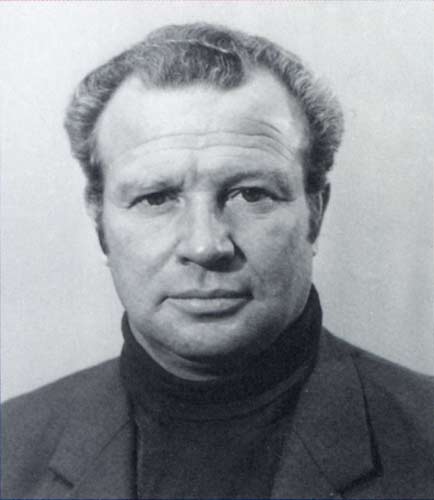
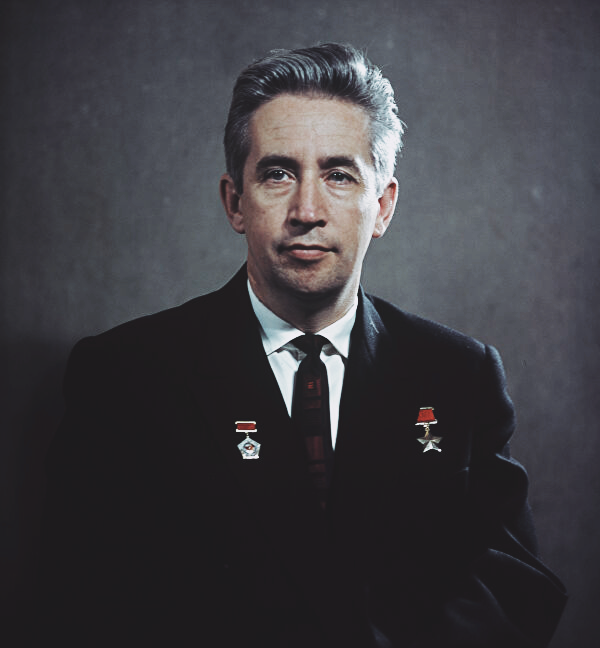
That's when chief designer Vladimir Myasishchev proposed turning a decommissioned bomber into a space cargo carrier.
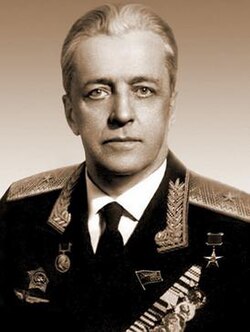
Thus was born the VM-T Atlant, without which Buran would never have flown into space.
Mission Impossible: Delivering the Buran
In the early 1970s, the USSR embarked on developing its own reusable spacecraft, Buran. By the end of the decade, the program had reached the assembly and testing stage, and a question arose: how to deliver the finished orbital vehicle and the enormous sections of the Energia launch vehicle from factory floors to the Baikonur Cosmodrome? The factories were scattered across the country, and locating production near the cosmodrome in the Kazakh steppe simply wasn't feasible.
As already mentioned, railways were ruled out immediately. The problem was that even the most robust flatcars couldn't accommodate rocket sections and a vehicle with a nearly 30-meter wingspan. In the US, they'd already devised a solution: they took a passenger Boeing 747 and adapted it to carry the shuttle on its back.
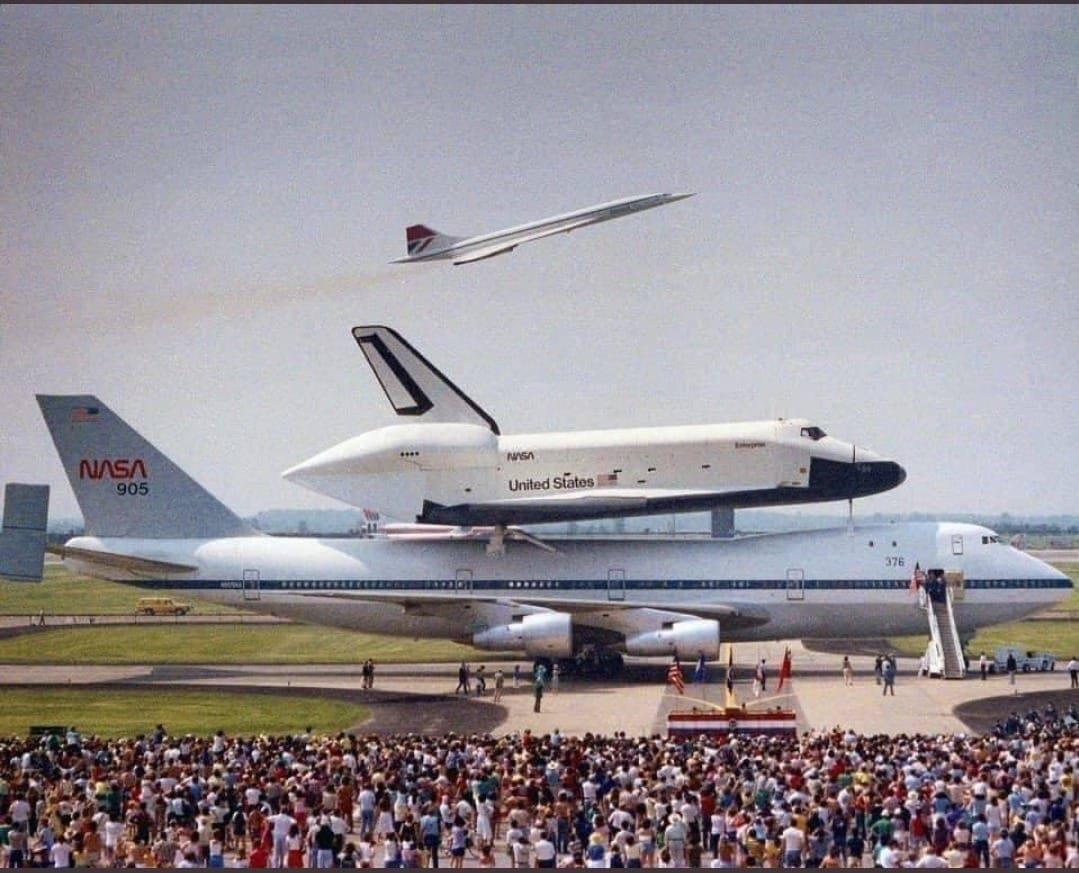
But the USSR had no civilian jumbo jets, and the cargo dimensions were different. Ideally, they needed a super-heavy transport aircraft — something like the promising An-124 Ruslan from the Antonov Design Bureau, but in the late 1970s it was still under construction. Time was running out. Urgent measures were needed.
First, they tried the largest available aircraft — the turboprop An-22 Antaeus.
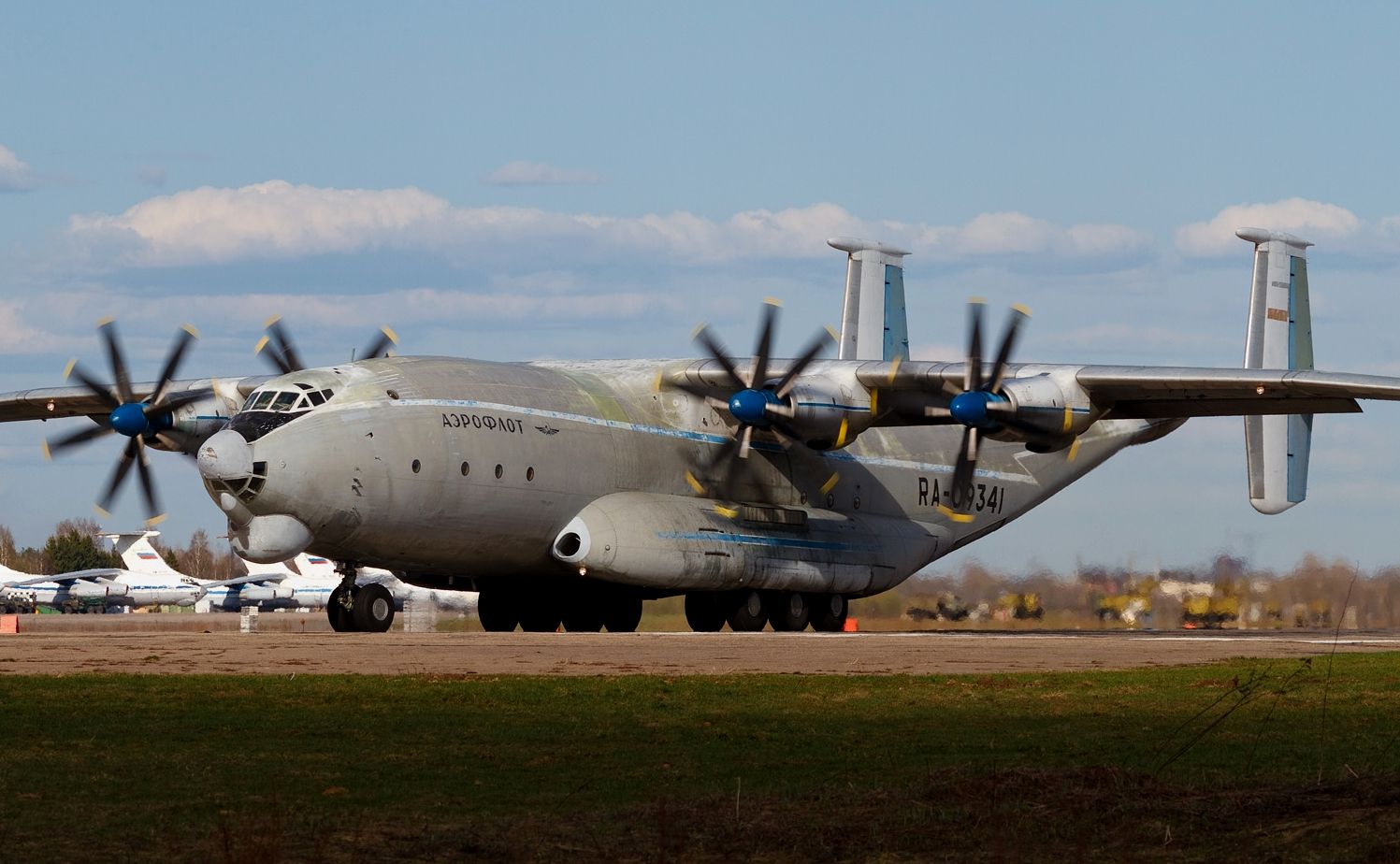
They considered two options:
Stuff the cargo inside,
Attach it on top.
Both failed. It didn't fit inside — there wasn't enough structural strength or space. Mounting it externally was even worse: the aerodynamics became a nightmare, and controlling the aircraft with a cylinder on its back was impossible. Theoretically, the An-22 could lift about 60 tons, but with that barrel on its back, it became uncontrollable.
By the early 1980s, they'd hit a dead end. But Soviet engineers are a stubborn breed. When standard solutions failed, a crazy idea was born — involving an old 1950s strategic bomber.
The initiative came from chief designer Vladimir Myasishchev. His design bureau happened to have decommissioned long-range M-4 and 3M bombers (NATO designation "Bison") gathering dust — once formidable nuclear weapon carriers, now morally obsolete. The airframe was sturdy, the engines powerful, and the range margin substantial. Why not give the old workhorses a second life?
The Birth of the Atlant
The idea seemed simultaneously brilliant and insane. There was no shortage of doubts: besides aerodynamic problems, the question of structural integrity arose. The 3M aircraft had served a quarter century and accumulated fatigue cracks. Could an old airframe withstand the new loads? But Myasishchev's team had an ace up their sleeve: in the 1950s, they had already built heavy aircraft and knew what their machines were capable of. Calculations showed that structural reserves still existed.
The project was codenamed "3-35." The designers had to completely redesign the tail section: instead of a single vertical stabilizer, they installed two stabilizers spread apart to the sides, like on the American Boeing 747 that carried shuttles. The new twin-tail assembly provided the necessary stability with cargo on top. The enormous bomb bay was sealed with a reinforced deck: bombs were no longer needed, but the spine needed strengthening for the container. The fuselage and wings were reinforced with additional spars, and the landing gear was recalculated for increased loads. All weapons, sights, and other military equipment were removed.
Simultaneously, they devised a cargo attachment method. Special hook mounts appeared on the 3M's back, capable of holding cylindrical modules weighing tens of tons. The airplane was transformed into a flying platform.
At the design bureau, they joked in verse:
"For transporting such a load,
Old methods simply couldn't go.
We sat and thought, and here's the plan:
A double-decker aircraft, man.
Although a hundred times cheaper still
Would be a great big blimp to fill..."
The official name was more elegant: the machine received the designation VM-T (decoded as "Vladimir Myasishchev — Transport"), and later its own name "Atlant." Just as the ancient Titan held the heavens on his shoulders, this aircraft was destined to carry spacecraft on its back.
At least four types of cargo needed to be transported:
OGT — the Buran orbital vehicle itself, without its vertical stabilizer. The heaviest and largest cargo, over 50 tons.
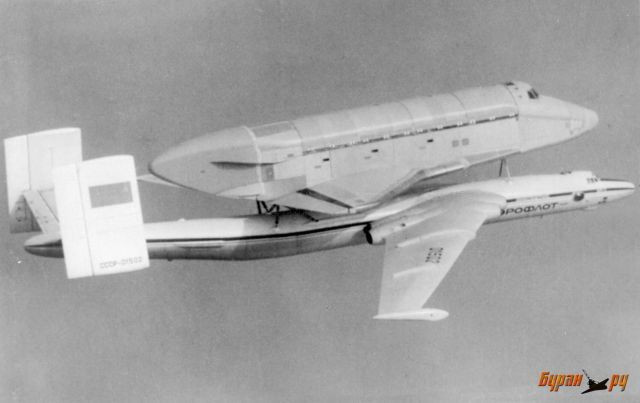
1GT — the central hydrogen tank of the Energia rocket. About 40 meters long and nearly 8 meters in diameter, with fairings.
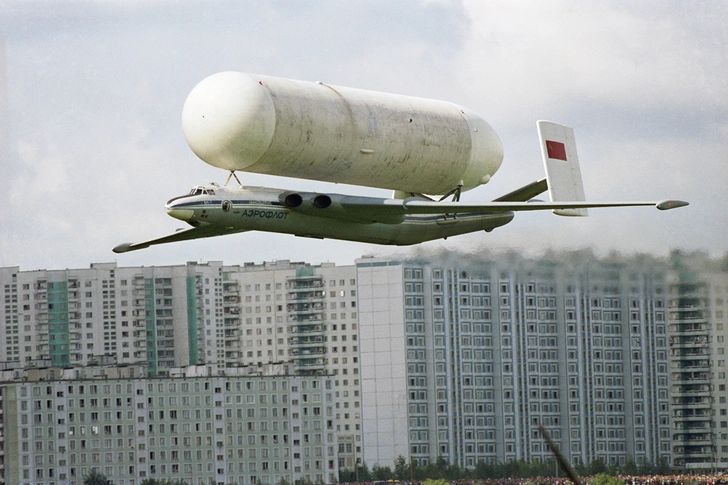
2GT — other large Energia components: the oxygen tank, instrument compartment, and tail section.
3GT — auxiliary elements: fairings, mockups, additional cargo.
Each cargo type had its own dimensions and aerodynamics. For each, a separate aircraft configuration had to be developed — the container position varied in length and height to achieve proper weight distribution.
At TsAGI and SibNIIA, dozens of wind tunnel tests were conducted. They checked how airflow moved around the barrel on the hump, and whether the aircraft might fall into a spin. The results confirmed: stability was acceptable, and the reinforced structure's strength was within norms.
Now it was up to the pilots.
A Grueling Exam in the Sky
The first VM-T was ready by early 1981. Tail number USSR-01402 — this was the machine that entered history as the Atlant. In March, runway tests began at the Zhukovsky airfield. During the first taxi run, the crew under the command of Anatoly Kucherenko barely saved the aircraft, nearly running off the end of the runway.
This incident, incidentally, demonstrated the reliability of the mounting hardware — the hydrogen tank mockup didn't budge even when the aircraft skidded almost sideways across the runway at speed.
On April 29, 1981, the Atlant took to the air for the first time. The enormous aircraft with a barrel-shaped container on its back lifted off the ground, proving the concept worked. The machine behaved unusually. Up top, the airflow roared and pressed down; the control response differed from a normal bomber. Each new cargo configuration effectively made the aerodynamics "new." But it flew!
Testing proceeded quickly. By January 1982, the VM-T was officially accepted into service. By that point, a second aircraft (tail number 01502) was under construction, and a third airframe was sent for static strength tests. Only two Atlants would fly.
Both received a gray-and-white livery with orange details and even an "Aeroflot" inscription, although they actually belonged to the Air Force. There's an amusing story: the fuselage originally bore the designation "3M-T," but some vigilant official demanded it be removed to avoid revealing the bomber heritage. The digit "3" was simply repainted into a "V" — resulting in "VM-T," exactly what the engineers had wanted.
While testing was underway, the Atlants found their first assignment. As early as April 1982, both giants made two flights each from the factory in Kuibyshev (now Samara) to Baikonur, delivering the first oversized components of the Energia rockets — enormous tanks and compartments without which the rocket couldn't be assembled. The aircraft performed excellently.
In 1983, it was time for the main cargo — a mockup of the Buran orbital vehicle. It was built without the vertical stabilizer (to fit within the size limits) and equipped with a simulated tail fairing. The mass came to just over 45 tons — slightly less than a real Buran with minimal equipment. From March 1 to 25, eight test flights were completed with the mockup on its back.
Imagine: an airplane flying on the back of another airplane! The sight was fantastic. It was some kind of aviation surrealism.
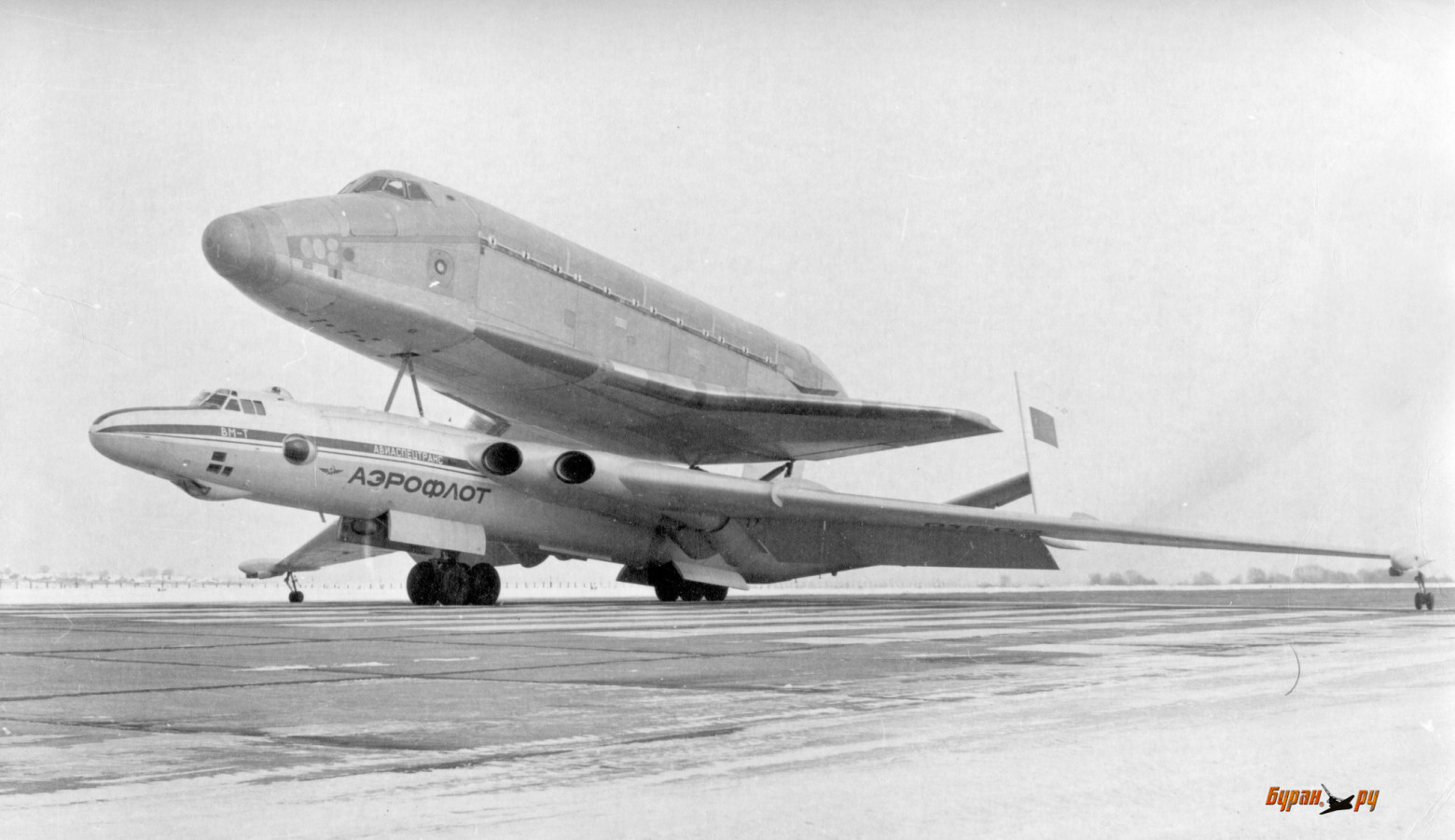
Testing with the Buran was generally successful, though not without incidents.
On March 25, a mishap occurred during landing — the nose landing gear failed to lock, it swiveled, and on touchdown the heavy aircraft veered to the side. The machine was carried off the runway, its nose gear bogging down in the soil. Fortunately, there were no casualties. The enormous shuttle mockup on its back was undamaged and was safely removed by cranes, but the aircraft itself needed serious repairs until November.
Piloting the flying barrel required the highest level of skill. There might not be a second chance on landing.
Nevertheless, by the mid-1980s, the program's main objective was achieved: all flight modes with different cargo types had been tested, and the aircraft were ready for operational transport missions.
150 Flights to the Cosmodrome
In 1987, the final act of the Energia-Buran program began. The rocket-space complex was preparing for its first launches, and components urgently needed to be transported to Baikonur. The two Atlants took on the job. In spring, they delivered the last components of the first rocket to the cosmodrome.
Unfortunately, the first launch of Energia on May 15 ended in failure. Due to an upper-stage malfunction, the enormous rocket along with an experimental satellite plunged into the ocean minutes after liftoff. The failure dealt a painful blow to the program.
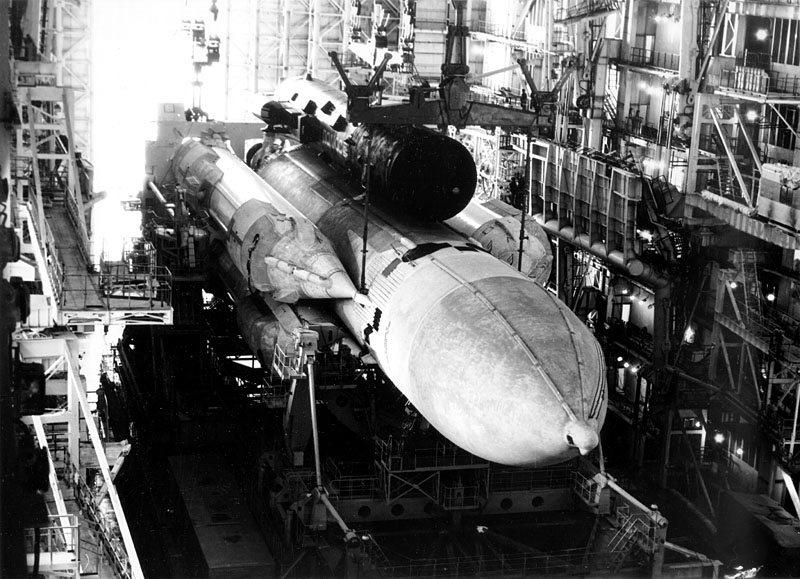
Voices emerged saying the game wasn't worth the candle. Not only party officials but also some leading scientists spoke against Buran. Legendary cosmonaut Konstantin Feoktistov criticized the project, considering it too complex and expensive.
But a team of enthusiasts isn't easily stopped. Buran was preparing for its finest hour. In 1988, the VM-Ts made another series of flights, delivering the second rocket and the 1.01 orbital vehicle — the very one destined to fly into space. This time, they decided to transport the shuttle with its vertical stabilizer already installed (previously, the tail assembly had been removed).
However, due to the 50-ton weight limit, some equipment was still removed from the Buran. The spectacle was breathtaking: the photograph of the Atlant carrying Buran on its back went around the world.
On November 15, 1988, the Buran spacecraft successfully launched from Baikonur atop the Energia super-heavy rocket, completed two orbits around Earth, and landed back autonomously. The first fully automatic shuttle flight in history. A triumph of Soviet space engineering. And a triumph of the Atlants, which had made an invaluable contribution to preparing for the launch. Myasishchev's cargo aircraft transported virtually all the major components of two launch vehicles and the reusable spacecraft itself. Without them, the program simply couldn't have happened.
Sadly, there was nothing more to celebrate after that. In 1989, following Buran's single space flight, funding was cut, and the program was soon officially closed (in 1993). The country was going through hard times. The two unique Atlants were left without a mission. By 1990, they had completed around 150 flights: test, transport, and demonstration. They had served their purpose fully — and then some.
The aircraft were displayed at air shows for some time afterward: for example, in August 1992, one Atlant was exhibited at the Moscow Aerospace Show with a rocket mockup on its back.
In the early 1990s, both aircraft were officially retired. One (01502) was transferred for storage to Ryazan, at the Dyagilevo airfield. The other (01402) remained at Zhukovsky on the territory of the Gromov Flight Research Institute — where the project was born. It can still be seen today: the Atlant is regularly exhibited at the MAKS air show.
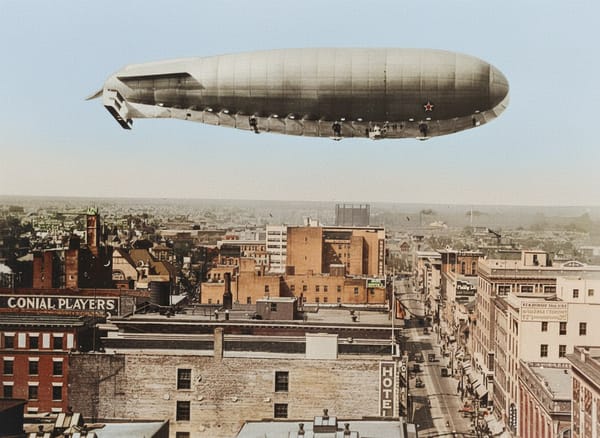
While creating the VM-T, the designers understood it was only an intermediate step. In the future, the "flying barrel" was to be replaced by a far more powerful aviation giant — the six-engine An-225 Mriya, capable of lifting up to 225 tons on an external mount.
The plan was for the Mriya to transport fully assembled Energia rockets and even launch with Buran on its back, becoming a flying cosmodrome. But history had other plans...
The Project's Legacy
What legacy did the VM-T Atlant leave behind? Above all, unique engineering experience.
Soviet engineers were the first in the world to convert a jet strategic bomber into a super-heavy transport for oversized cargo. The Americans carried shuttles on a Boeing 747, but their Enterprise weighed about 30 tons without engines, and the platform was a perfectly civilian airliner. Soviet designers, on the other hand, had to improvise using 1950s relics and transport objects weighing up to 50 tons whose diameter was twice the aircraft's fuselage! A task from the realm of science fiction.
Of course, the Atlant looked like an ugly duckling. But the aircraft turned out to be surprisingly hardy: empty weight was 75 tons, maximum takeoff weight reached 210 tons, wingspan 53 meters, length nearly 59 meters.
Despite all this, the Atlant flew confidently at 500-600 km/h, although with cargo it barely climbed above 6 kilometers — only dense air helped compensate for the extreme aerodynamics. The range was sufficient: transports to Baikonur flew direct, and if needed, the aircraft could refuel in flight.
Today, oversized transport aircraft exist, but they're all built on relatively modern airliners and carry cargo inside their fuselages. The concept of external placement — riding on top of the aircraft — is no longer used.
All the more valuable is the experience. It will surely prove useful again someday. For now, the legend rests well-deserved, remaining a monument to an era of bold engineering solutions and a symbol of the indomitable courage of thought that allowed humanity to send a spacecraft into the sky on the back of an old bomber.
Why This Matters In Practice
Beyond the original publication, The Plane That Wasn't Supposed to Fly matters because teams need reusable decision patterns, not one-off anecdotes. In spring 1981, a 1950s strategic bomber with a giant cylindrical barrel on its back prepared for its maiden flight over a Zhukovsky airfiel...
Operational Takeaways
- Separate core principles from context-specific details before implementation.
- Define measurable success criteria before adopting the approach.
- Validate assumptions on a small scope, then scale based on evidence.
Quick Applicability Checklist
- Can this be reproduced with your current team and constraints?
- Do you have observable signals to confirm improvement?
- What trade-off (speed, cost, complexity, risk) are you accepting?

?ref=hexkern.com#/media/File:Vladimir_Mikhailovich_Myasishchev.jpg)


