The Mystery of the Cheapest Linux Console
A deep teardown and comparison of the R36s portable retro gaming console — available for just $23 — revealing two very different variants: one with a MIPS clone processor and one with a quad-core Rockchip RK3326, both running Linux with RetroArch.
Preface
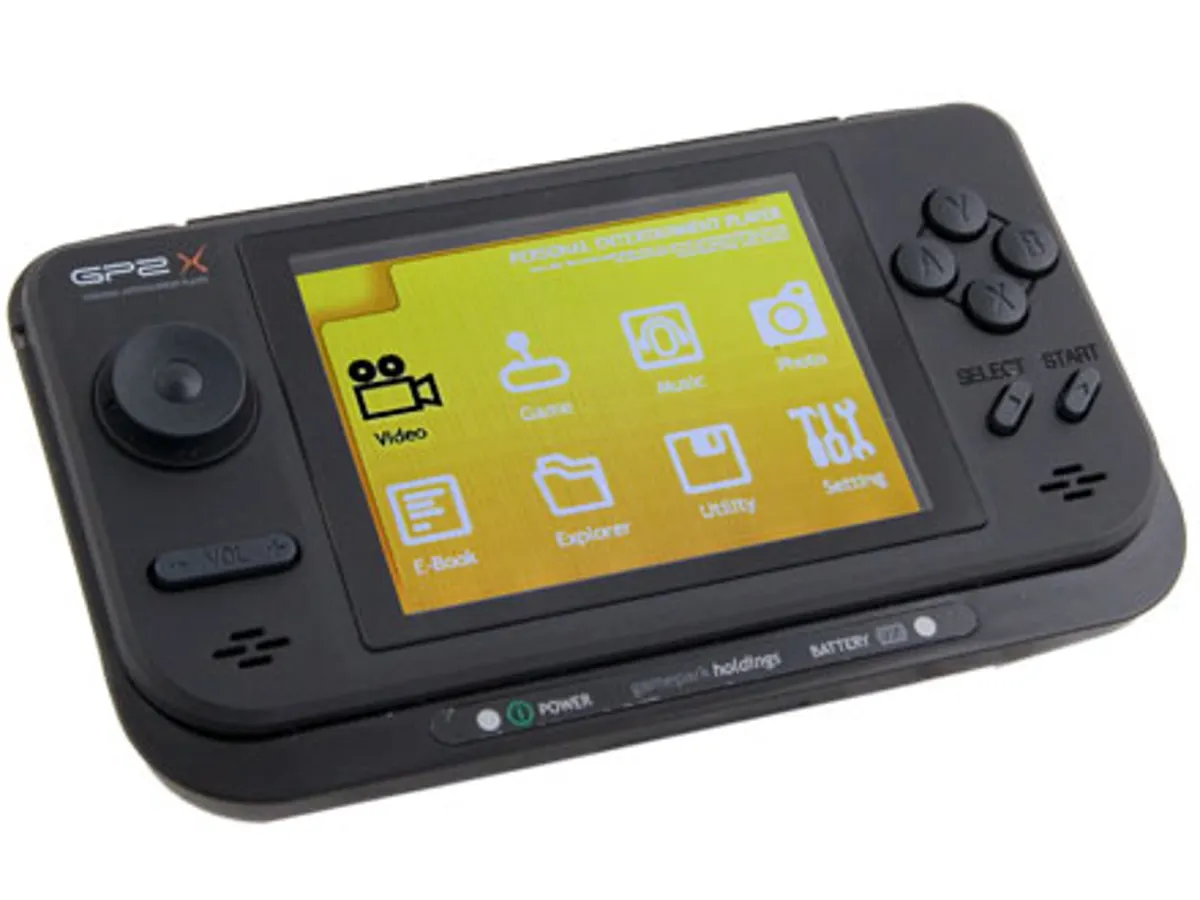
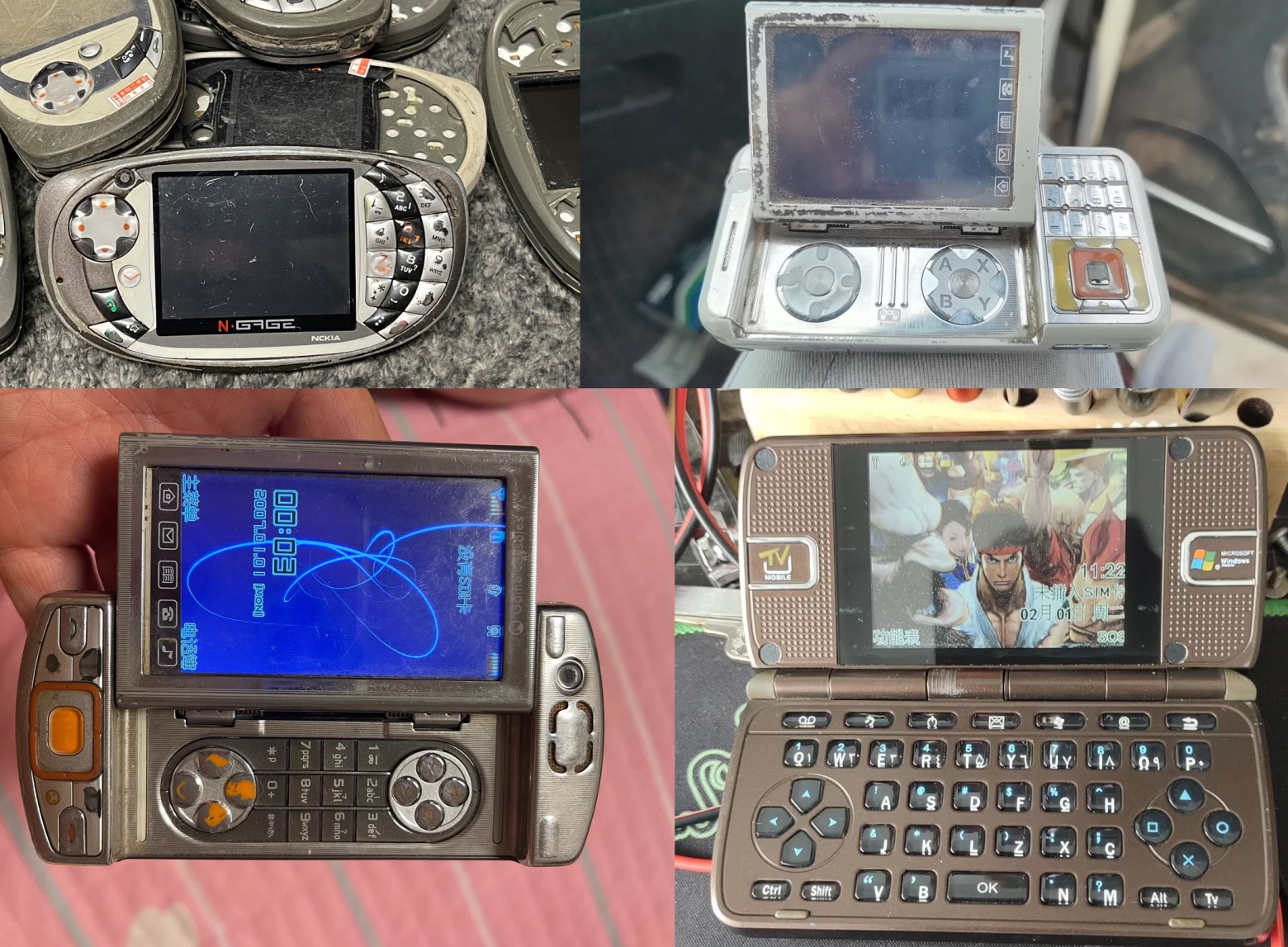
Portable Linux gaming consoles trace their roots to the 2000s. At first, they were expensive, low-volume gadgets for enthusiasts. One of the first was the GP2x from South Korean company GamePark Holdings, priced at $190.
In 2007, China experienced a boom in multimedia chipsets. MP4 players gained game buttons and became retro consoles with NES emulators.
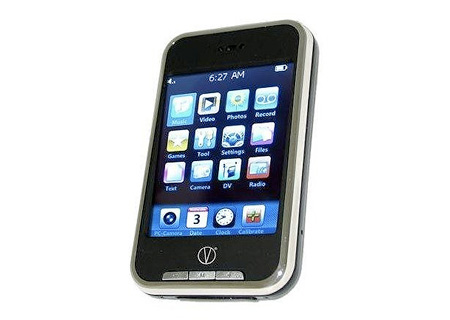
The Dingoo A320 (February 2009) revolutionized the market by offering a console for just $70 with support for GBA, NES, Neo Geo, SNES, and Sega Mega Drive. It used a MIPS-compatible XBurst core from Ingenic running at 400 MHz.
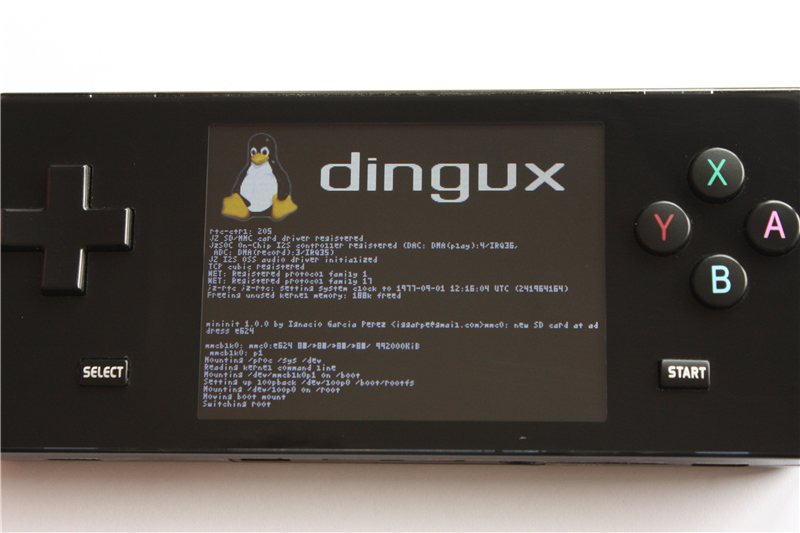
Spanish engineer Ignacio Garcia ported Linux to the A320, creating Dingux. This made it possible to port software from other consoles and develop original games.
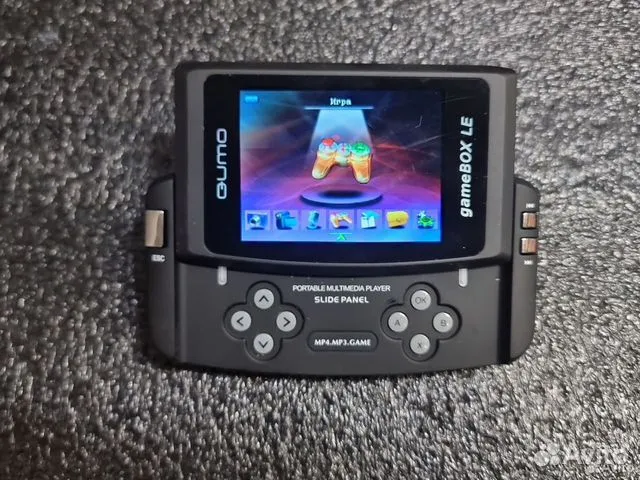
History of Development
As Android gained popularity, portable gaming shifted to smartphones and tablets. Budget tablet chipsets gave rise to hybrid consoles.
The GCW Zero from Kickstarter used the Ingenic JZ4770 chipset with a Vivante GC960 GPU but never achieved mass success.
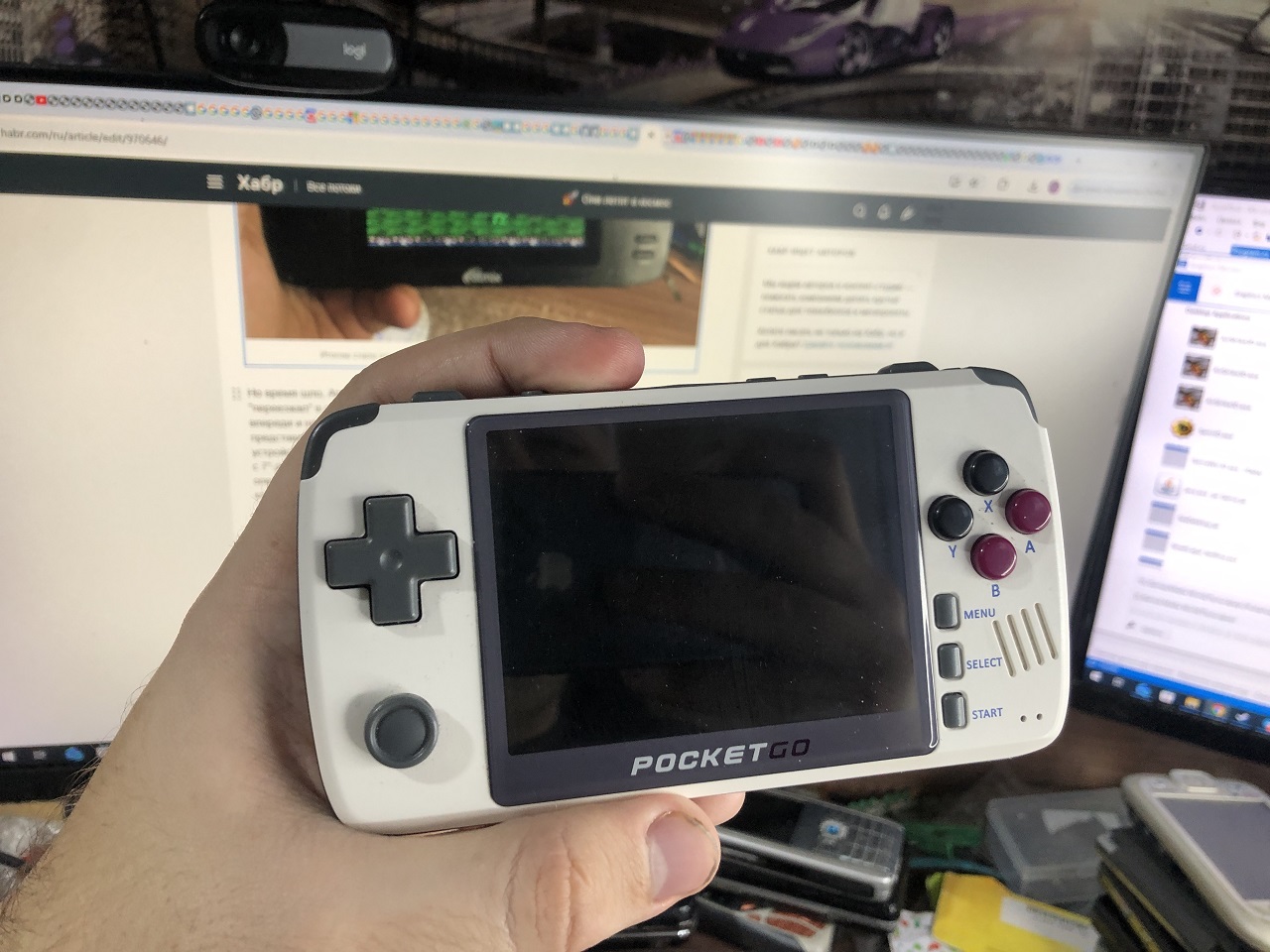
By 2019, a revival occurred: the Retro PocketGo V2 and Anbernic RG-350 — improved revisions of the GCW Zero with Type-C instead of MicroUSB.
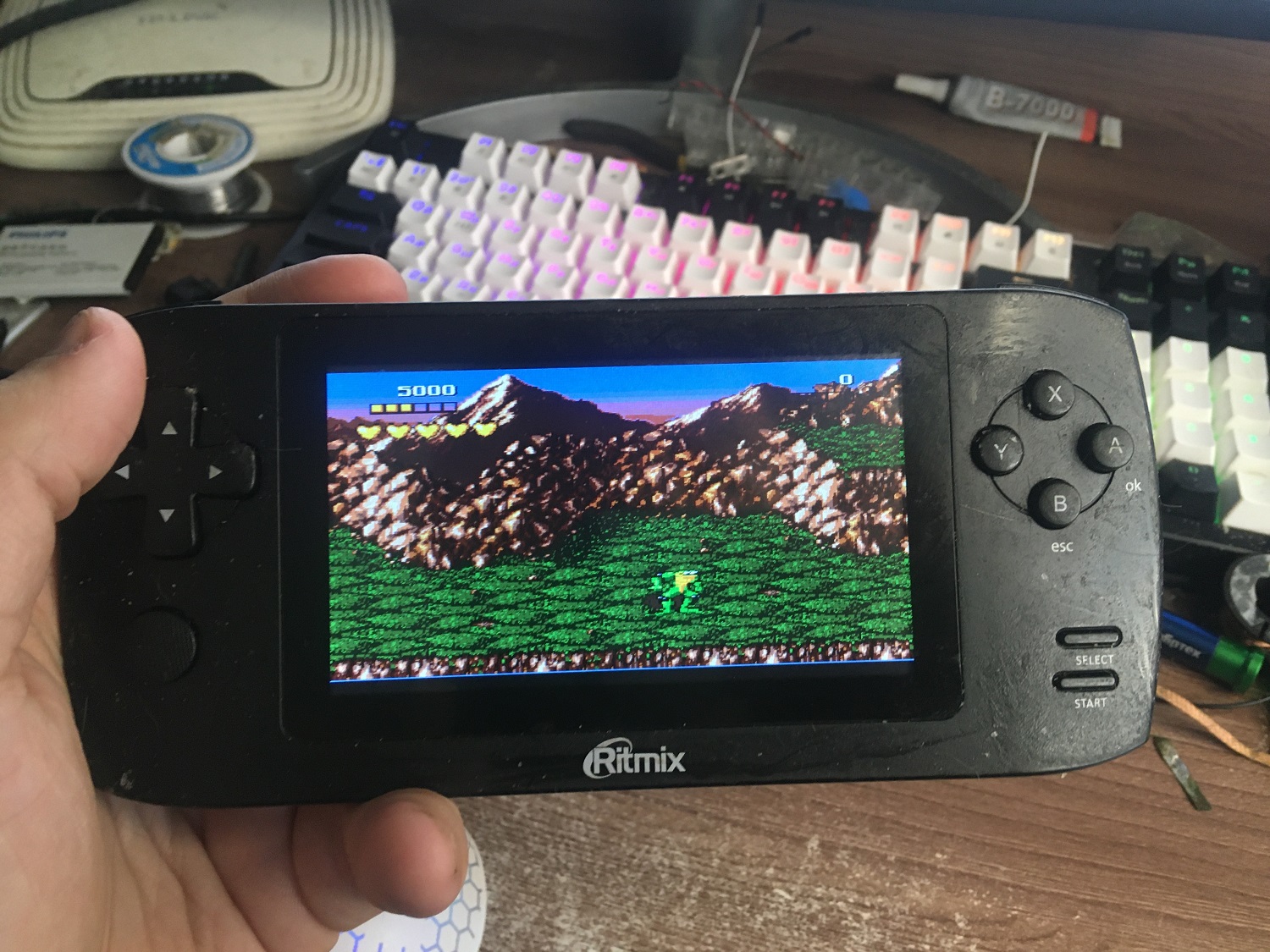
By 2020, consoles appeared based on AllWinner F1C100s and RK3326. Brands like Anbernic, Miyoo, and Data Frog entered the market, selling similar devices presumably from a single manufacturer.
Prices dropped: from $100 to $75, and now down to 1,800 rubles ($23).
Separating the Wheat from the Chaff
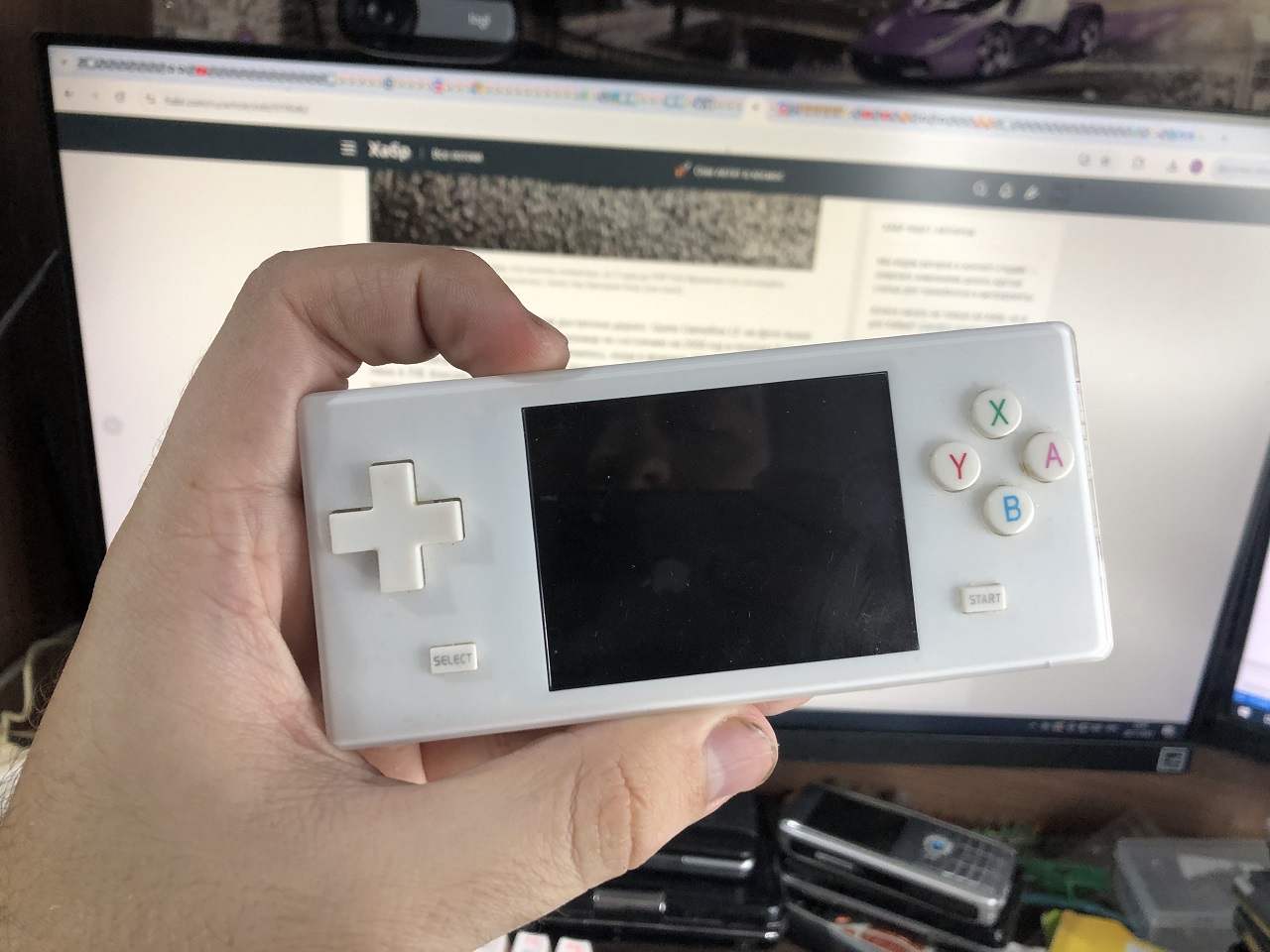
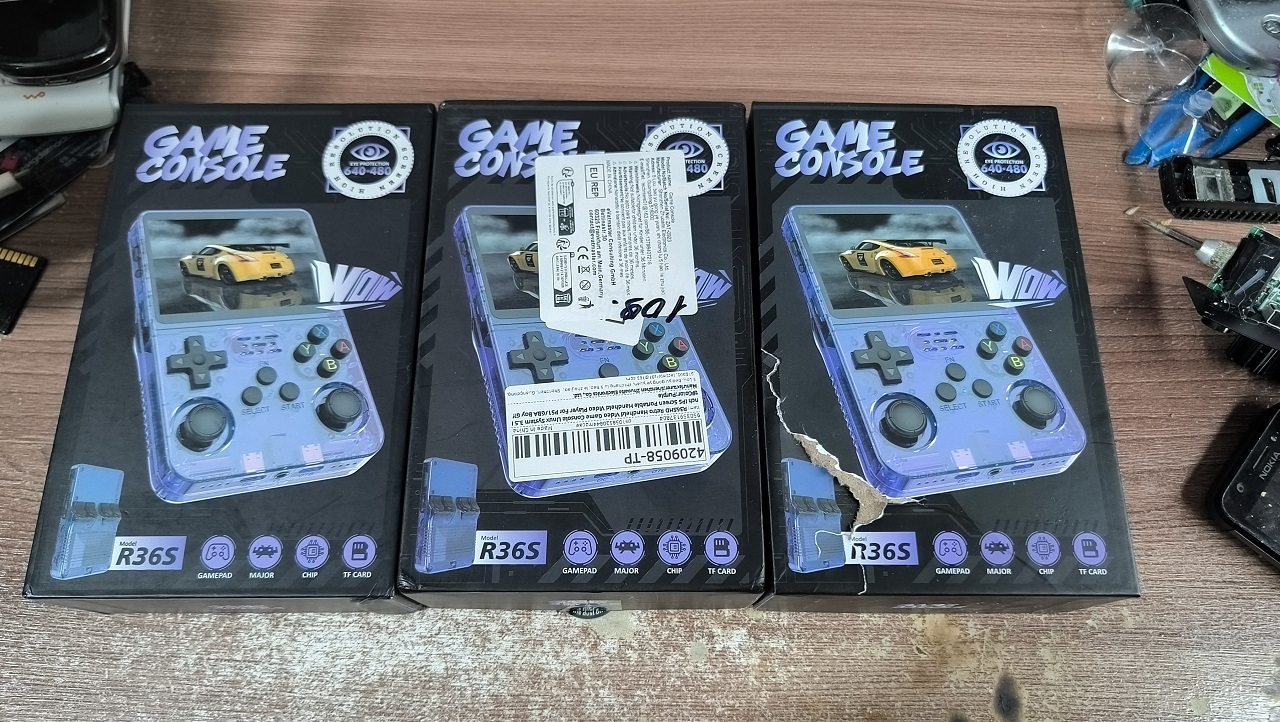
I purchased 3 variants of the R36s for analysis:
- A clone with a MIPS processor
- A new console for 1,800 rubles from Ozon
- Another clone
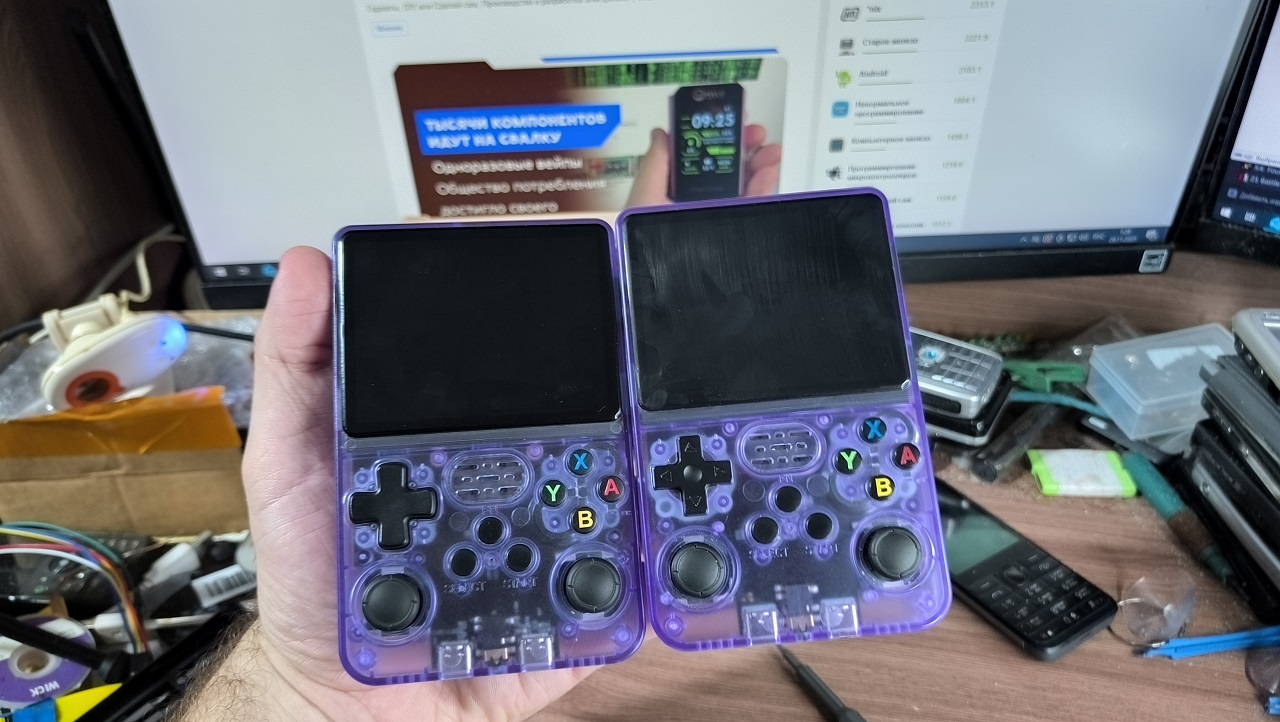
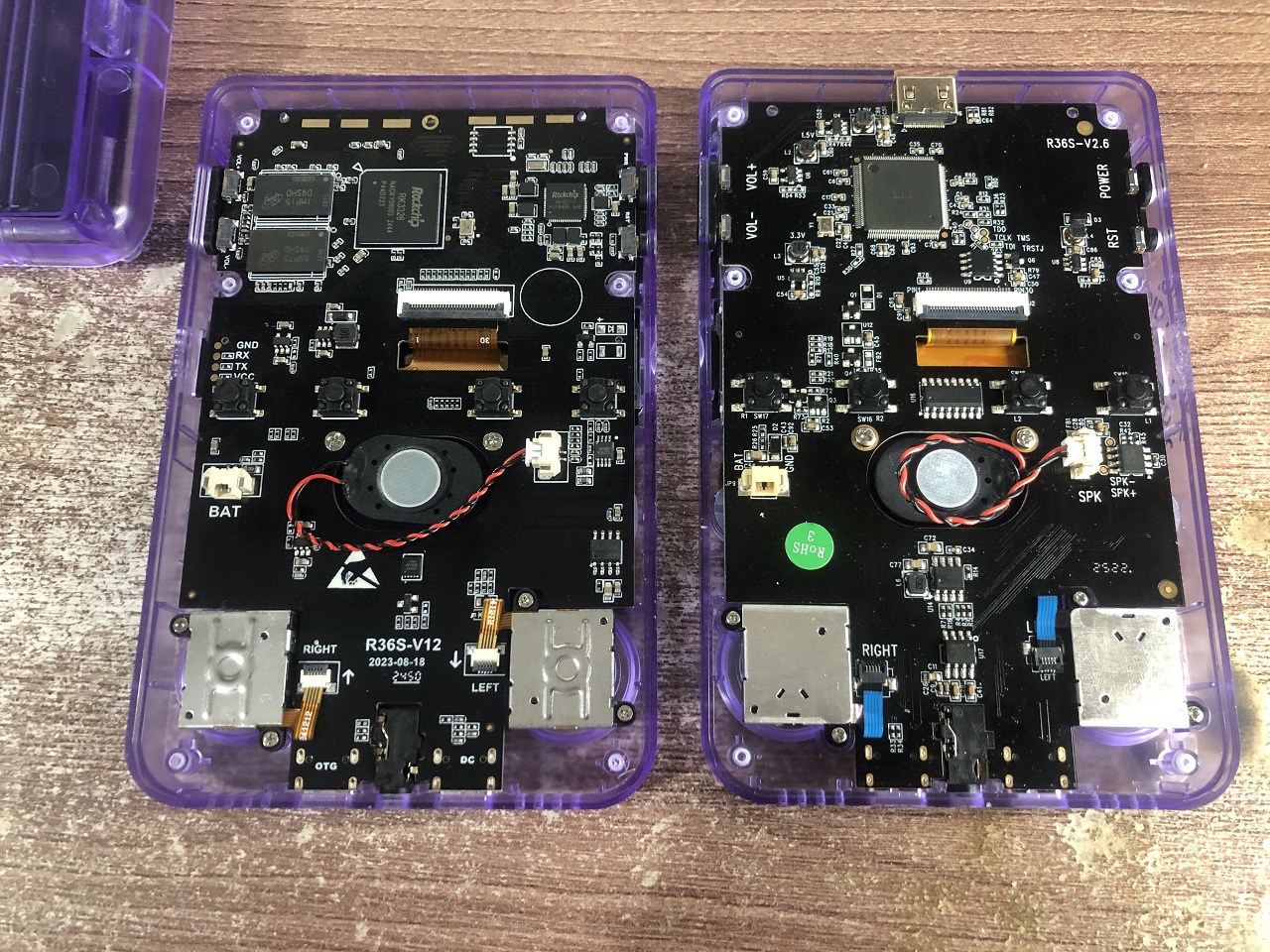
Both devices are well-built and repairable. Disassembly is simple: 6 screws around the perimeter, disconnect the battery, remove the back panel.
The main difference: the processor.
The MIPS Clone
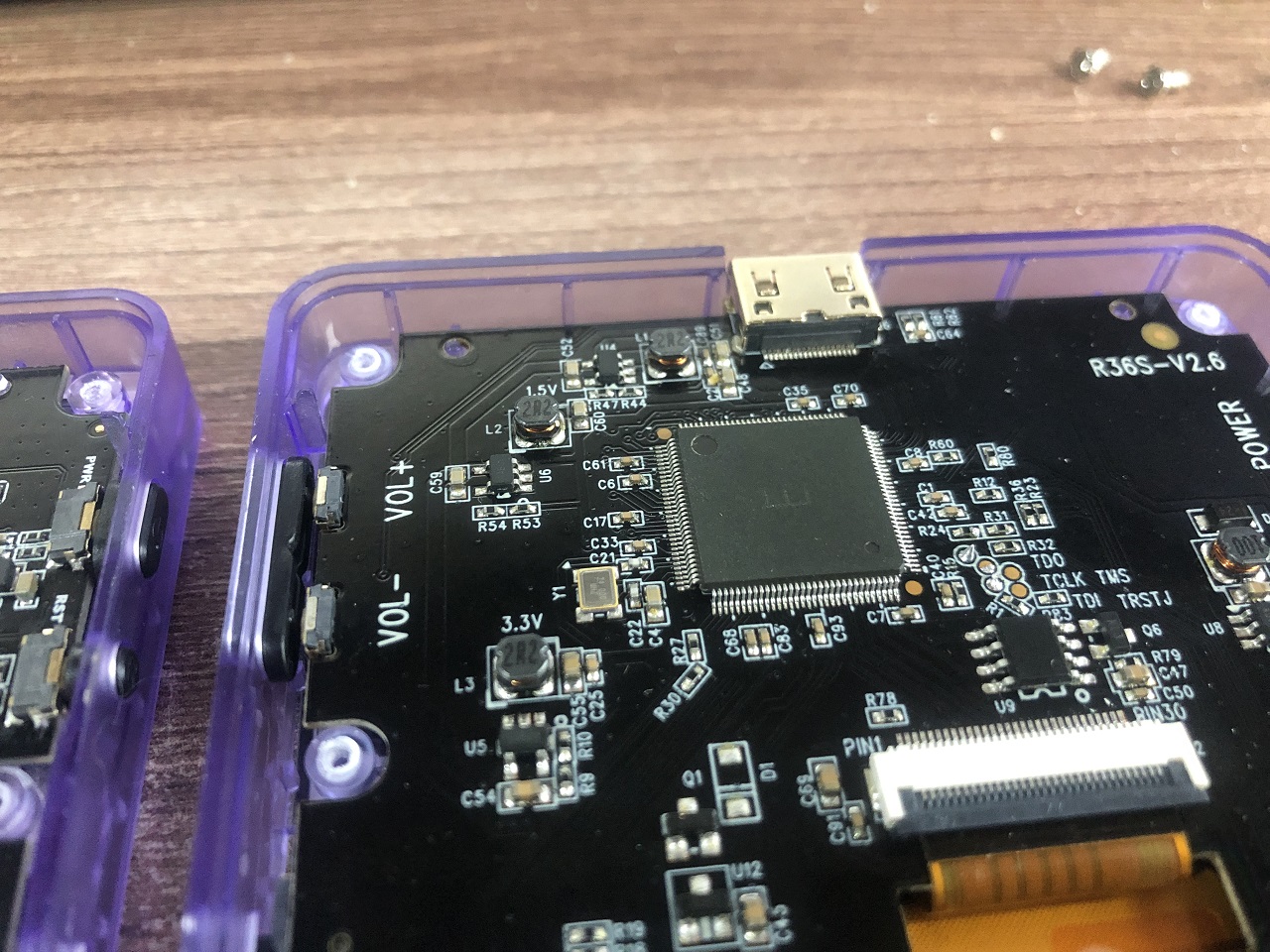
Uses the HiChip C3100 with a MIPS core running at 1 GHz. It's likely a licensed Ingenic XBurst II core or HiChip's own design.
C3100 specifications:
- DDR3 memory controller
- Peripherals: I2C, I2S, SPI, UART, USB, eMMC
- No dedicated GPU (no 3D games, no shaders)
- Has HDMI and NTSC/PAL output
Chips on the board:
- SPI flash (25-series) — OS bootloader and kernel
- Audio amplifier (unknown model)
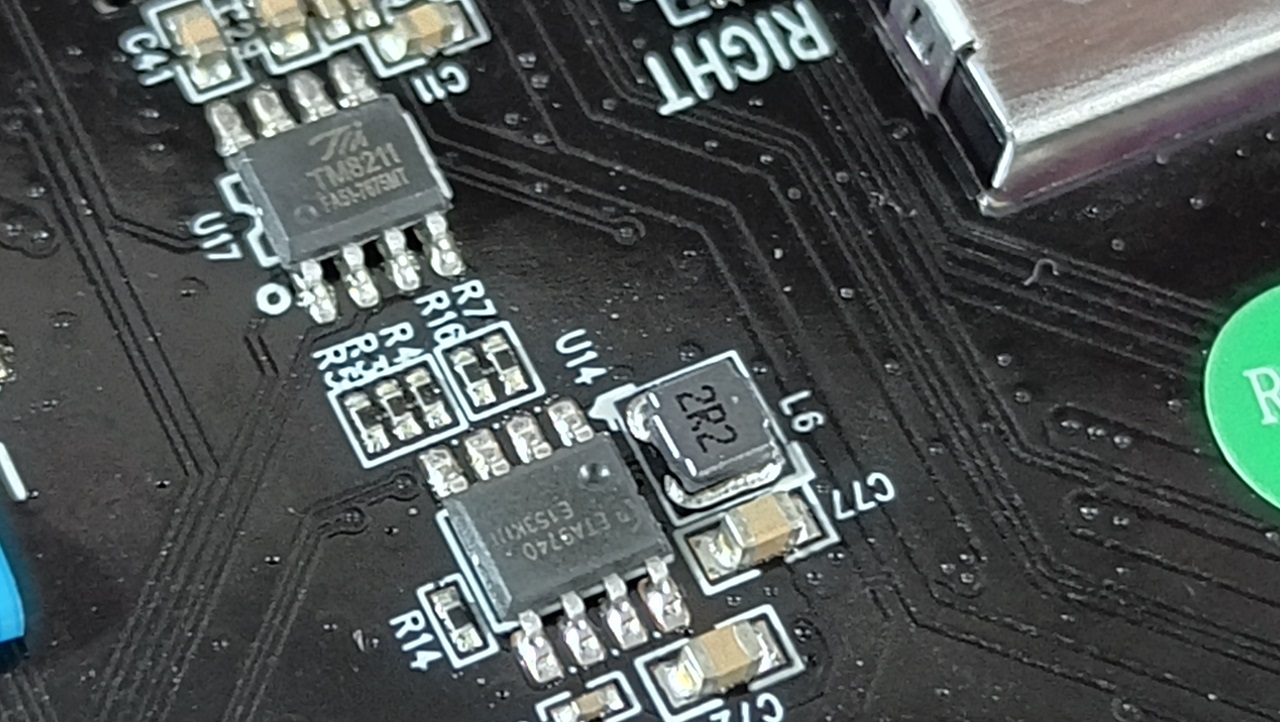
- I2S DAC TM8211 — for audio playback
- Charger ETA9740 — for lithium-ion batteries
- Samsung K4B2G1646E-BCK0 — 256 MB DDR3 on the back side of the board
How to tell it's a clone: Remove the MicroSD card with the OS — if the device asks you to insert a card, it's a MIPS clone.
The Original RK3326 Console
Processor: Rockchip RK3326
- 4 Cortex-A35 cores
- Up to 1.5 GHz clock speed
- Mali-G31 GPU (supports Vulkan)
- Controllers: SPI, I2C, UART, MIPI
RAM:
- Two Micron D9SHD (MT41K256M16TW-107) chips
- 512 MB each = 1 GB total
Other chips:
- Amplifier TCS7191A
- Charger 4057AN (similar to TP4056)
- No external DAC needed
No built-in storage: Uses two MicroSD cards (one for the OS and games, the second at the user's discretion).
Display
3.5" IPS panel, 640x480 resolution, MIPI DSI interface on both devices.
Problem: Display controllers differ between revisions. If you order a replacement from AliExpress, you risk getting a white screen or artifacts.
Solution: Find an appropriate dt-overlay with the correct display controller.
Battery and Analog Sticks
Both devices: 3,500 mAh lithium cell.
Analog sticks: Compatible with Nintendo Switch — they even fit in a Switch. Comfortable, though the author prefers the Xbox 360 feel.
RAM Variants
On marketplaces, you can also find an R36s variant with 512 MB RAM instead of 1 GB.
How to identify without disassembly: Transparent case + single memory chip = "clone" (actually a different revision).
Overall, both devices are structurally simple, easy to diagnose and repair. A possible business model: buy a broken console for 300 rubles, replace the charger, resell for 1,000-1,500 rubles.
Testing
Included is a 64 GB MicroSD card with the OS and a ROM collection.
Important: Immediately connect the flash card to a PC and copy files from the root FAT32 partition. The manufacturer uses rejected flash memory that can even in read-only mode start failing and "brick" the console.
If you don't have a backup — look for the appropriate dtb, kernel, or try the K36s firmware. There's a large community, and all backups are available online.
Firmware and Menus
MIPS clone: EmuELEC
Original device: ArkOS
The firmware can be updated by downloading an image from here. Other custom firmwares are also available.
RetroArch Emulator
The heart of the console is RetroArch with pre-installed cores:
- Classics: NES, SMS, Neo Geo
- Exotic: Amstrad
- Demanding: N64, PSP
Additionally:
- Pico-8 runtime (modern retro-style games written in Lua)
- Ability to install native applications (for example, reVC for GTA: Vice City)
Gaming Performance
Classic platforms (NES, SMS):
- Emulation is excellent
- No lag
- Minimal heat
- The 4:3 display creates a CRT television feel
- CRT shaders are available
PlayStation 1:
- The console comfortably handles anything up to and including PS1
- Classic games (Crash Bandicoot) work great
- 3D is decent; the GPU supports Vulkan
- But: the system only has GLES 3.0, no libvulkan
Nintendo DS:
- A special button for switching between displays
- Virtual cursor for stylus emulation
- New Super Mario is a pleasure to play
PSP:
- Real problems at native resolution
- Even with software effects skipped: if there's significant overdraw — terrible slowdowns
- Doubts: the Mali G31 can't handle PSP-level scenes
- Likely the issue isn't the CPU (the PSP had a hardware vertex pipeline)
Conclusion
What a time to be alive: a full-fledged Linux console with a square IPS display and a powerful chipset costs just 1,800 rubles.
For some, it's disposable junk, but in practice the R36s is a marvel of engineering.