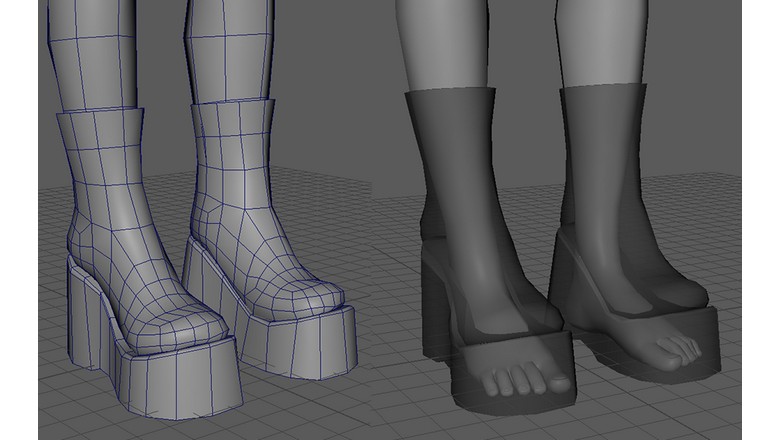
The High Heel Problem in Games
Different shoe heights create cascading technical problems across animation, rigging, IK systems, collision detection, audio design, and rendering optimization. This deep-dive examines how game developers at studios large and small have tackled — or quietly ignored — the surprisingly complex challenge of footwear in 3D games.
At first glance, giving a character high heels sounds like a trivial costume swap. In practice it touches almost every system in a game: skeleton rigging, collision volumes, inverse kinematics, animation blending, footstep audio, and GPU draw calls. This article examines each challenge in detail, with examples from real games.
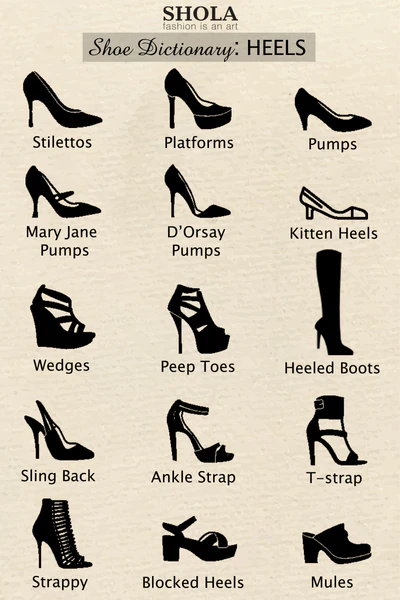
Character Height
The most fundamental problem is that heels make characters taller. That sounds obvious, but the downstream effects are significant:
- Button-press animations require the hand to reach a fixed point in world space — change the character's height and the hand misses.
- Cover mechanics in stealth games depend on the character being short enough to hide behind geometry.
- Collision capsules define hitboxes in competitive games; a taller capsule changes what bullets or attacks connect.
- Lip-sync and kissing animations require both characters' mouths to align — as illustrated beautifully by Dragon's Dogma 2's dynamic kiss system that adjusts camera and animation for different body sizes.
Solution A: Actually Change the Height
Three approaches accept the height change and deal with its consequences:
1. Hope for the Best
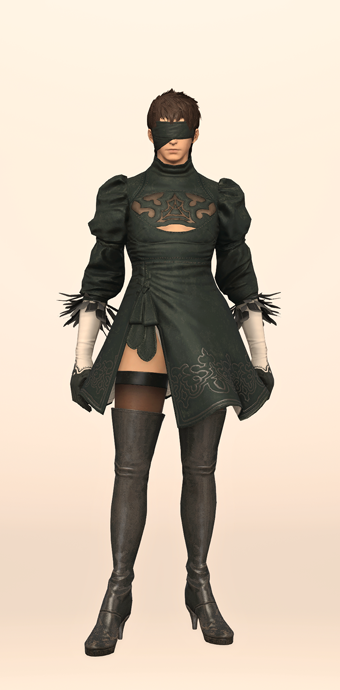
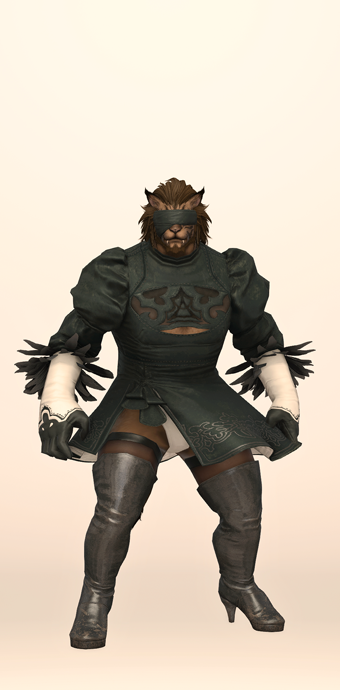
Games with minimal precise NPC interactions can let height changes slide without dedicated compensating animations. Infinity Nikki — a fashion-focused game where heels are a central mechanic — does exactly this, and because close interactions are rare or carefully designed around it, the approach works. Saints Row and Final Fantasy XIV go further and properly support heels across all character types, adjusting heights accordingly.
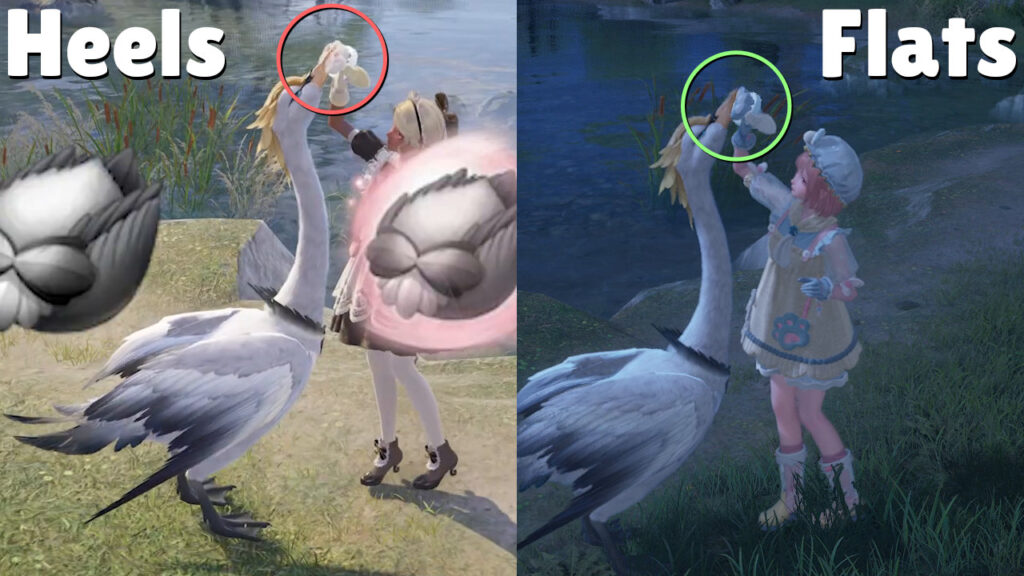
2. Manual Animation Variants
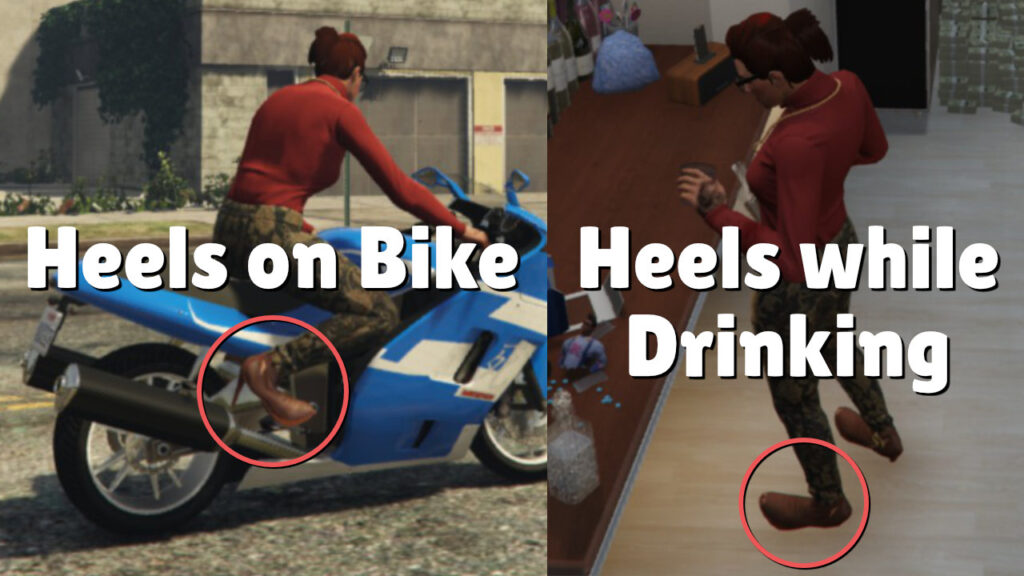
Animators create unique animation files for each shoe height. A naming scheme like stand_groom_barefoot.fbx, stand_groom_shoe_5cm.fbx, stand_groom_shoe_12cm.fbx makes the intent clear, but coverage gaps are common. In GTA Online, several animations — the golf swing, the drinking gesture — are simply locked to flat footwear and unavailable when wearing heels. Motorcycle poses are a particular challenge: the rider's legs must clear the frame geometry at exactly the right height.
3. Inverse Kinematics (IK)
Modern game engines provide real-time IK solvers that automatically adjust limb positions. A hand-press IK system can direct the hand to the exact world-space position of a button regardless of the character's current height. Terrain-following foot IK handles uneven ground. Dynamic hand-holding IK allows characters of different heights to hold hands naturally without any height-specific animations.
Solution B: Workarounds (Keep the Skeleton, Fake the Height)
1. Hiding
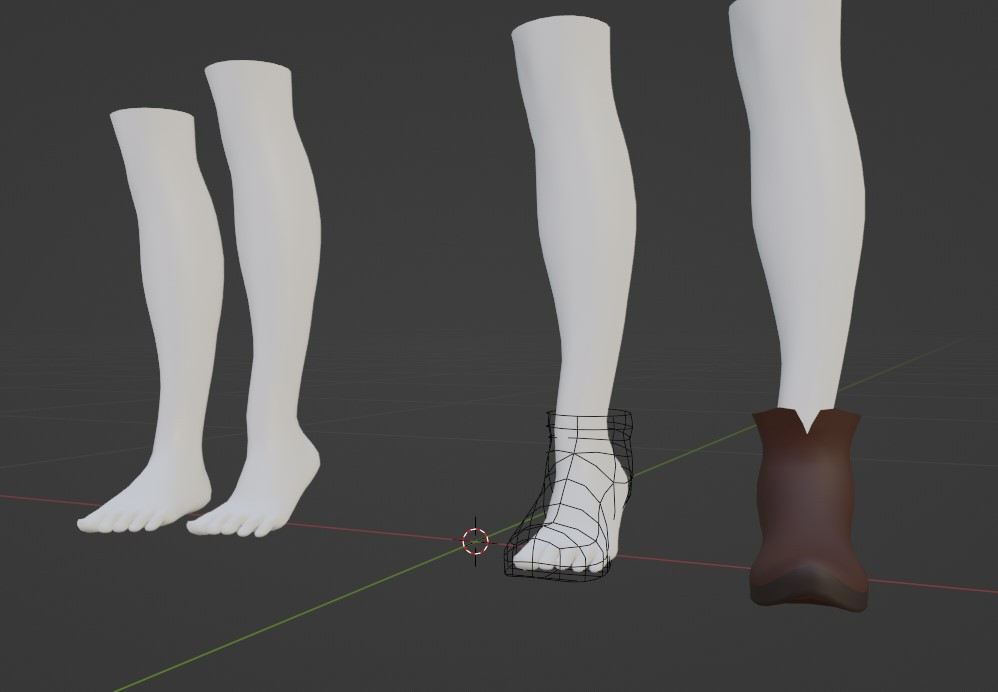
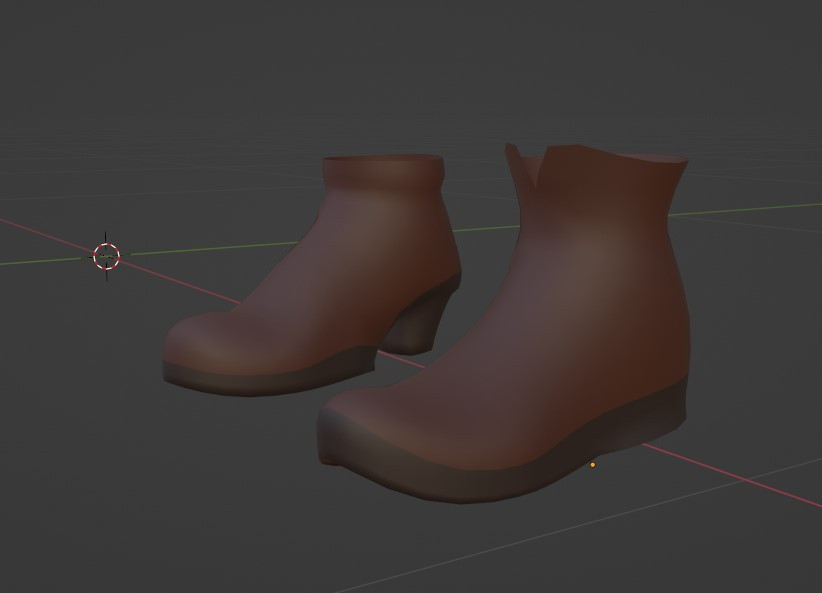
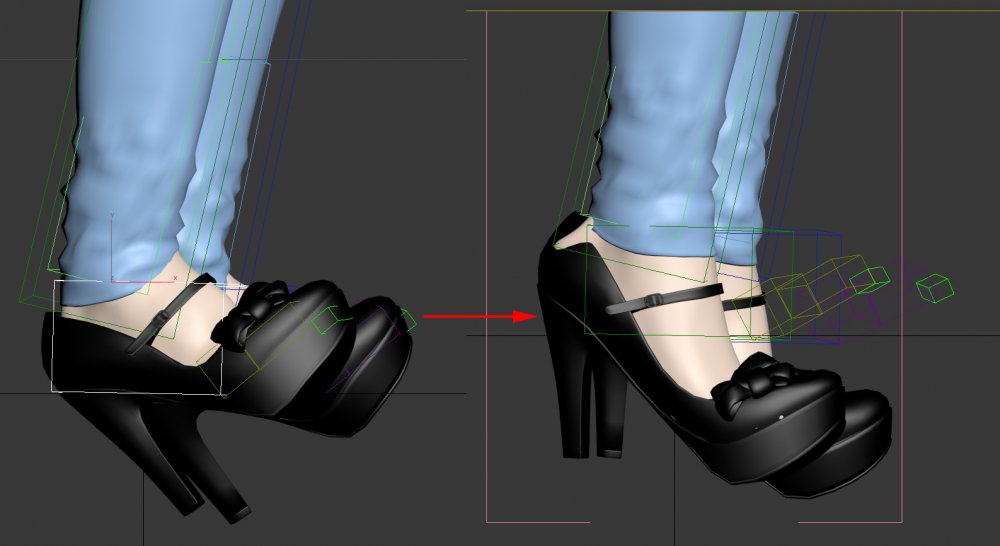
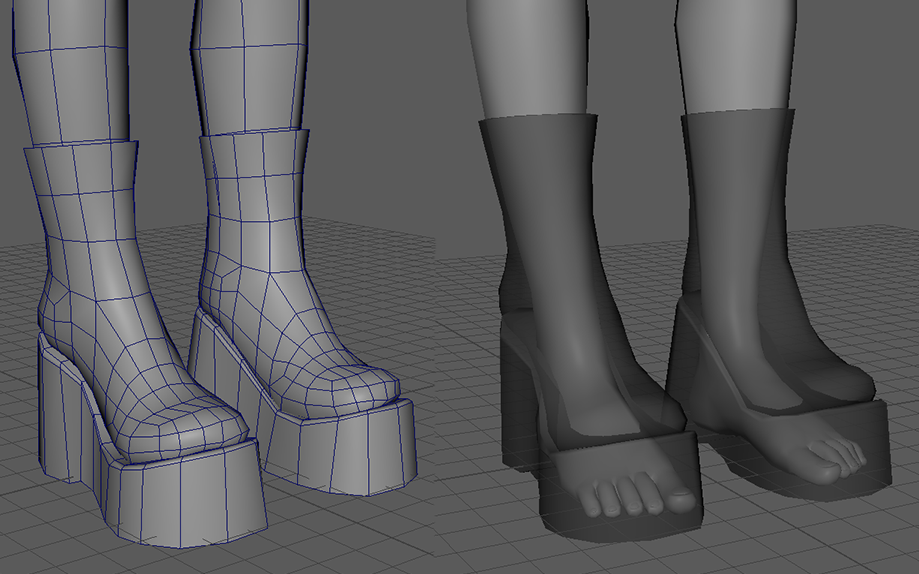
The foot geometry is tucked up inside the shoe sole. Visually the character appears to have shorter legs — the shoe's heel adds the apparent height without moving any bones. Simple, cheap, slightly dishonest.
2. Shortening (the Most Common Approach)
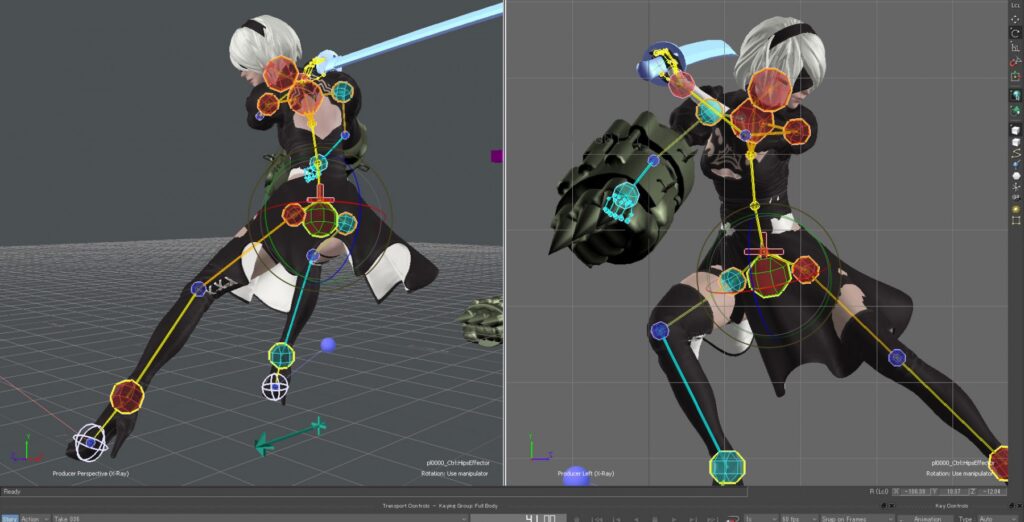
The calf mesh is compressed while the thigh length stays constant, keeping the hip at the same world height but making the lower leg appear shorter. The Sims 4, Watch Dogs: Legion, and Cyberpunk 2077 all use variants of this approach. The critical caveat: only the mesh changes, not the skeleton. The ankle joint stays at its original world position. This creates visual distortion — the ankle floats slightly above the shoe's ankle collar — most visible in Final Fantasy XIV where the seam is apparent in some footwear.
3. Bending
Instead of shortening, the knee bends slightly. The character's overall height is unchanged — useful when kissing or other precise interactions must work — while the heel is accommodated. 3D Sex Villa 2 (yes, it's cited) demonstrates this for scenarios where exact height matching is a core mechanic.
Posture
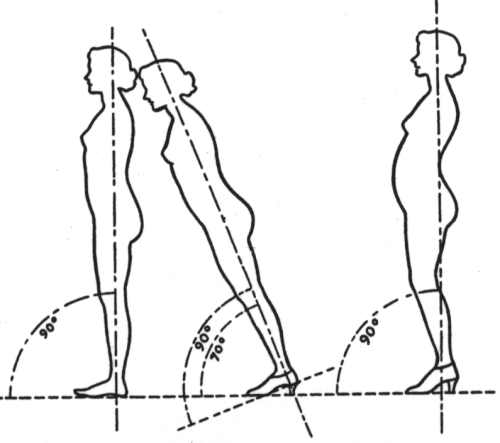
A character wearing high heels doesn't just stand taller — biomechanics forces a full-body postural shift. Research documents four consistent changes:
- Body weight redistributes forward.
- The pelvis tilts forward with a compensating lumbar curve.
- The calf muscles engage continuously.
- The gluteal muscles become more prominent.
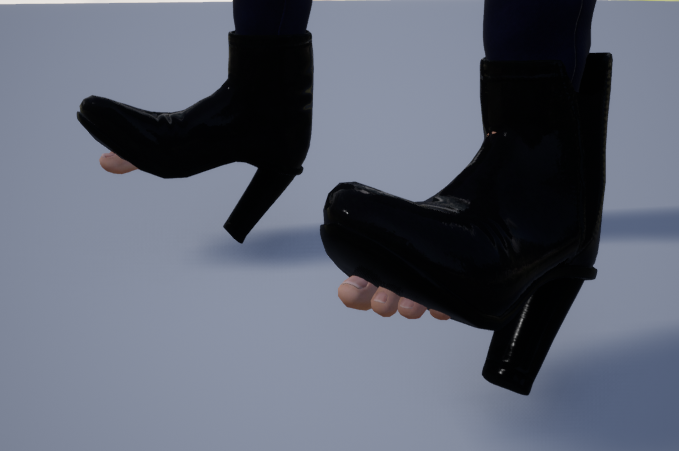
The author demonstrates applying these principles to a zombie character: raising the hips, rotating the feet for ground contact, adding pelvic tilt and spinal curvature as an additive animation layer on top of the base walk cycle. The result transforms a flat-footed shamble into something unmistakably heel-wearing. One often-missed detail: toes compress inside shoes, so the toe joint orientation must be adjusted to avoid the foot poking through the shoe geometry.
Cyberpunk 2077 implements stance shifts when the player changes footwear, showing this level of posture attention is achievable in a AAA production context.
Gait and Animation
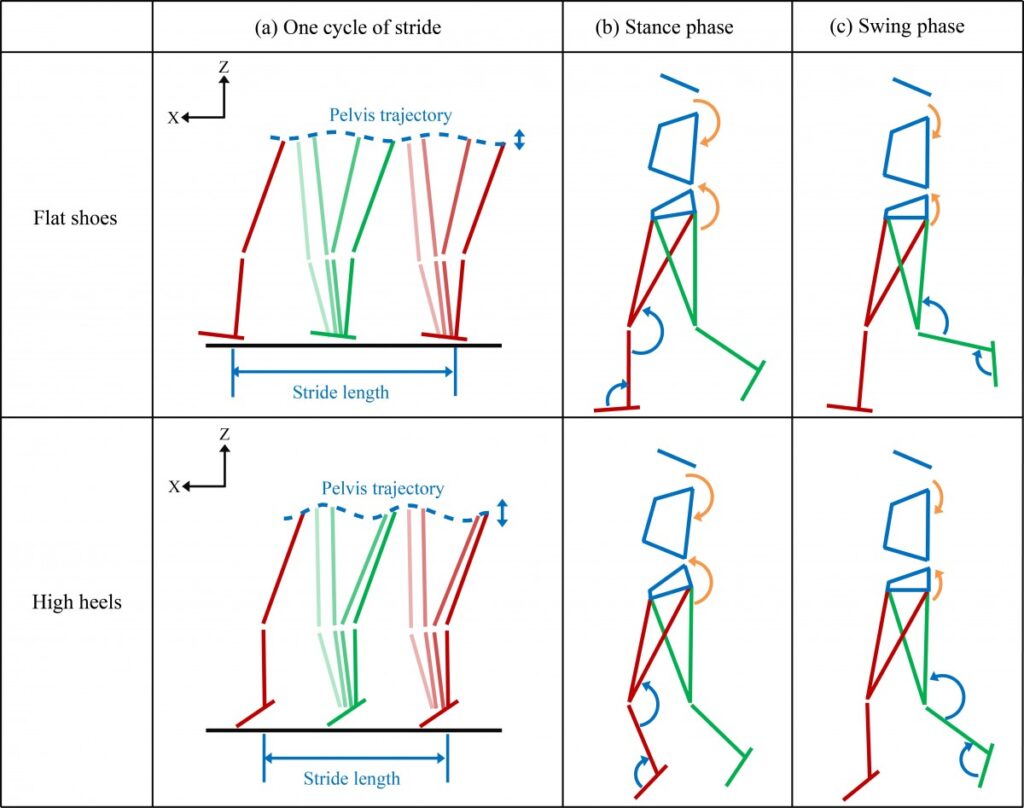
Peer-reviewed biomechanics research on 12 women wearing heels of varying heights found consistent gait changes: shorter stride length, more controlled foot placement, smoother overall motion. The data is presented in motion-capture graphs tracking ankle position and stride length across heel heights.
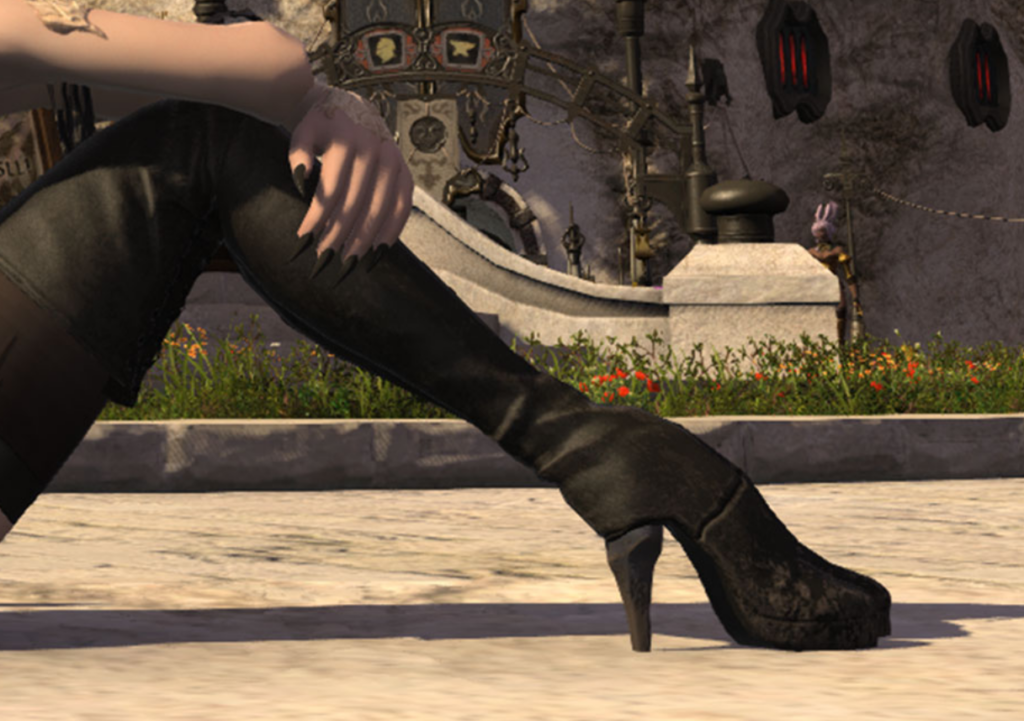
Despite this, most games reuse flat-sole animations for all footwear. The only dedicated example found in the wild is a Skyrim mod — "Conditional High Heel Walk" — that creates a specialized walk cycle with exaggerated hip sway and leg crossing. Leg crossing does occur naturally when walking in heels, but it also occurs in flat shoes; developers should not assume a 1:1 mapping between footwear type and gait style.
Infinity Nikki, despite being entirely about fashion, reuses the same walk animation across footwear types. It compensates with four distinct idle animations that vary by shoe type — a pragmatic middle ground.
Rendering Optimization
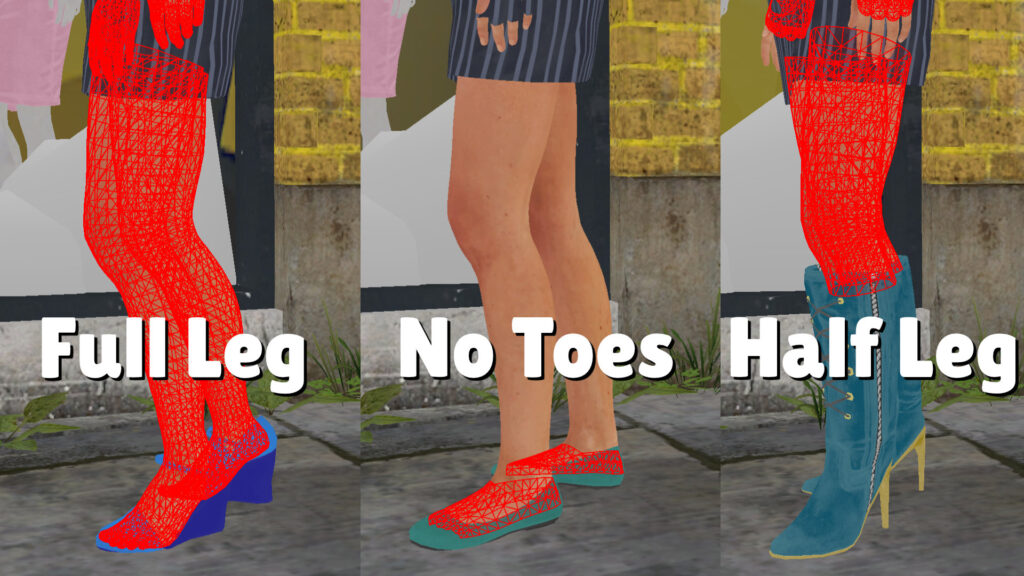
When a shoe covers part of the leg, that hidden geometry still costs GPU time unless explicitly removed. Studios handle this differently:
- Saints Row: Legs are segmented into separately toggleable mesh pieces (upper leg, lower leg, foot). Each piece is hidden or shown based on what footwear is equipped.
- Watch Dogs: Legion: High-heeled shoes keep complete leg geometry (toes included but hidden inside the shoe). Flat shoes split the leg into separate parts, and the toe geometry is removed entirely. Boots remove calves as well. Each configuration uses the minimum geometry needed.
- Cyberpunk 2077: Full leg geometry is rendered regardless of how much the shoe covers — the less optimized approach, but simpler to author and maintain.
The preferred technique for removing covered geometry is mesh replacement (swapping in a simpler mesh) rather than blend shapes. Blend shapes require the GPU to interpolate between two full vertex arrays, which is more expensive than simply loading a lower-poly mesh variant.
Audio
Heel strikes on hard surfaces produce a sharp, high-frequency click fundamentally different from flat-sole footsteps. Cyberpunk 2077 implements footwear-aware audio, triggering different sound assets based on the equipped shoe type. In competitive multiplayer games this creates a balance challenge: high heels are louder and easier for opponents to track acoustically, potentially requiring a stat adjustment or a gameplay decision about whether realistic audio should be used at all.

Further Challenges (For the Ambitious)
The article closes with a wishlist of features that no current game implements but that would complete the simulation:
- Real-time muscle simulation: calves visibly tense, glutes shift with each step.
- Long-term injury consequences: prolonged heel wear compresses nerves, shortens Achilles tendons, and degrades ankle joints — relevant for RPGs with health or condition systems.
- Terrain penetration: stiletto heels sink into soft ground (mud, grass, sand) while block heels do not.
- Combat balance: heels extend leg reach (increased kick damage radius) but increase slip probability on smooth surfaces.
Summary
- Different shoe heights modify character height and foot-bone position, potentially requiring collision volume updates.
- Precise environment and NPC interactions need either animation variants, IK systems, or creative geometry workarounds.
- Posture, gait, and footstep audio all differ meaningfully across shoe types and deserve individual attention.
- Most shipped games reuse a single animation set across footwear — reasonable for most interactions, problematic for a few edge cases.
- Covered leg geometry is best removed via mesh replacement rather than blend shapes.
- Graceful leg-crossing motion is possible in both flat and heeled footwear — don't over-specialize animation by shoe type.
A Historical Footnote
High heels were originally men's fashion — worn by Persian cavalry to keep feet in stirrups — before migrating to women's wardrobes in the 17th century as an act of what the BBC describes as "clothing masculinization." The next time a designer debates whether a male character should have the option, history is on the side of yes.