The Flying Palace of Doctor Dornier
The story of the Dornier Do X -- the largest, heaviest, and most powerful aircraft of its time -- a three-deck flying boat with 12 engines, a smoking salon, and sleeping cabins that ultimately became the most ambitious failure of aviation's golden age.
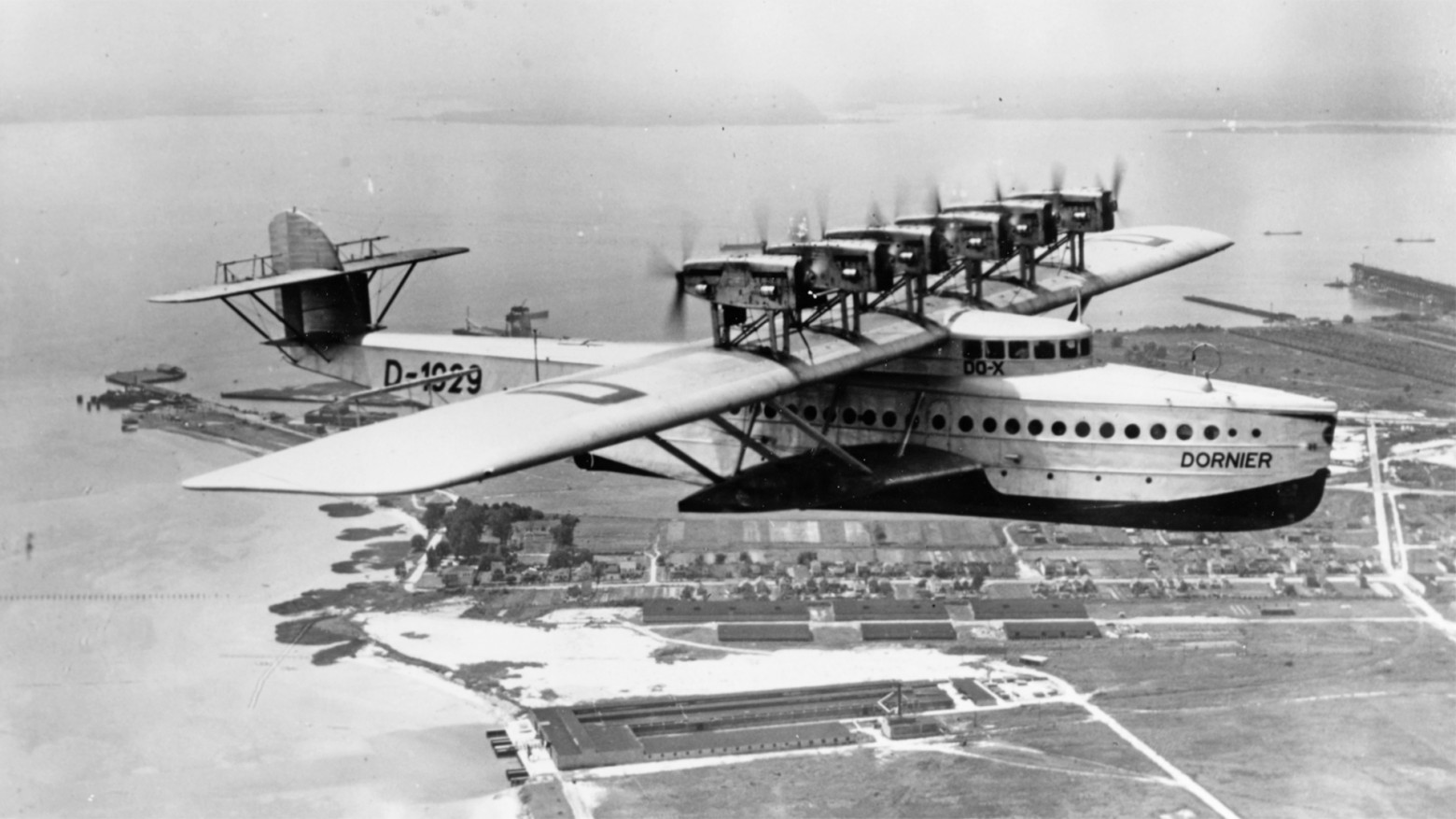
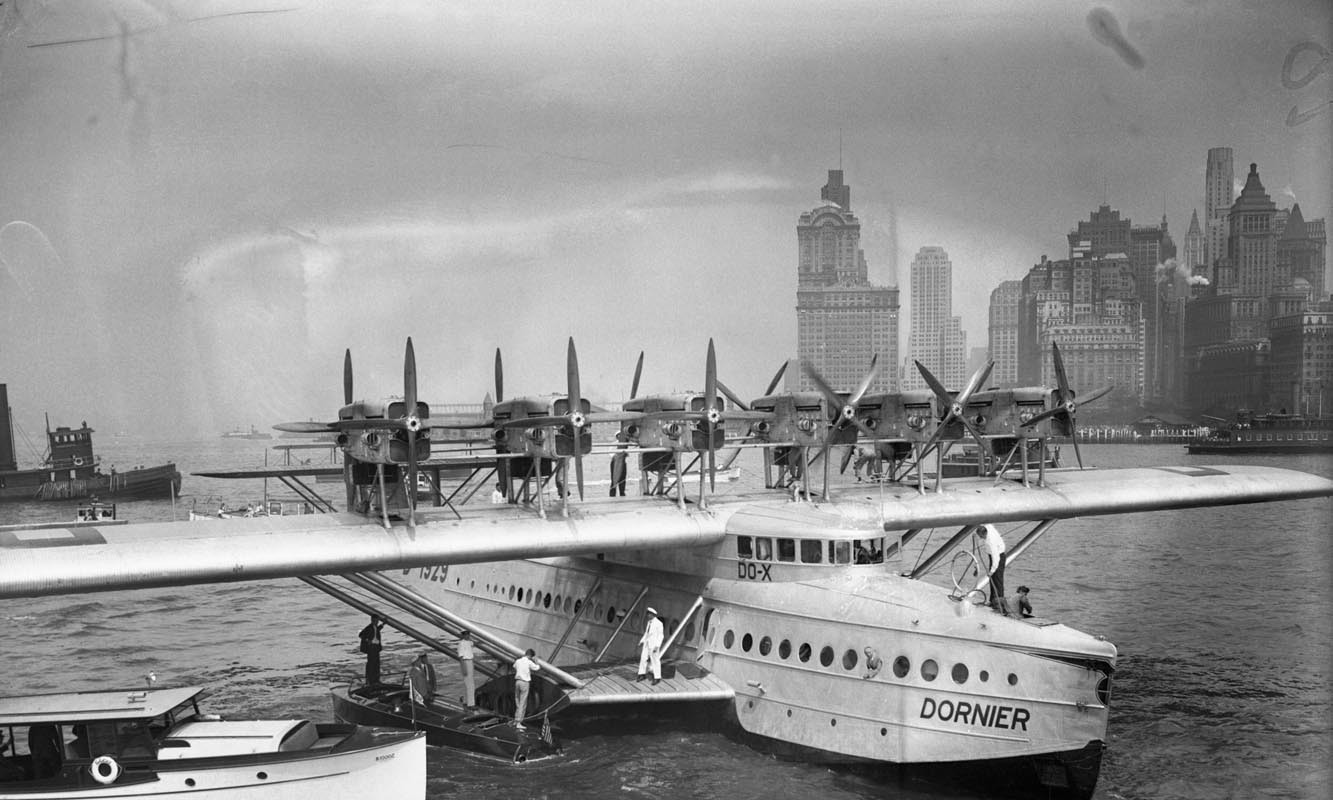
On July 12, 1929, crowds gathered at Lake Constance near the Swiss town of Altenrhein to witness something extraordinary: "the largest, heaviest, and most powerful aircraft. Three decks, a smoking salon with bar, dining hall, sleeping cabins, and 12 engines." The Dornier Do X had taken flight.
The Engineer Behind the Dream
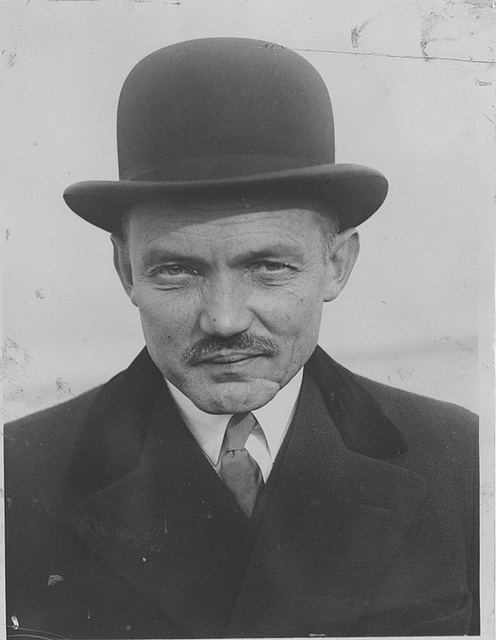
Claude Honoré Désiré Dornier (1884-1969) was born in Kempten, Bavaria, the son of a French wine merchant and a German mother. After studying mechanical engineering at Munich Technical University in 1907, he worked on structural calculations -- work that would define his career. By 1910, he joined Luftschiffbau Zeppelin, where Count Ferdinand von Zeppelin recognized his talent for lightweight metal construction.
While others built wooden aircraft, Dornier pioneered all-metal machines from duralumin. His Dornier Wal became famous when polar explorer Roald Amundsen used two for his 1925 North Pole expedition. But Dornier wanted something bigger.
Circumventing Versailles
Post-WWI Germany faced strict restrictions under the Treaty of Versailles, limiting aircraft speed and range. The Do X violated these limits immediately with its 175 km/h cruising speed. The solution: build in neutral Switzerland. Dornier constructed a shipyard in Altenrhein across Lake Constance from Germany. "Formally built on neutral territory, actually a German state project disguised as a private initiative." Construction began December 19, 1927, consuming 240,000 worker-hours over 570 days.
Technical Marvel
Dimensions:
- Length: 40 meters
- Wingspan: 48 meters
- Height: 10.25 meters
- Maximum takeoff weight: 56 tons
- Capacity: 66-100 passengers

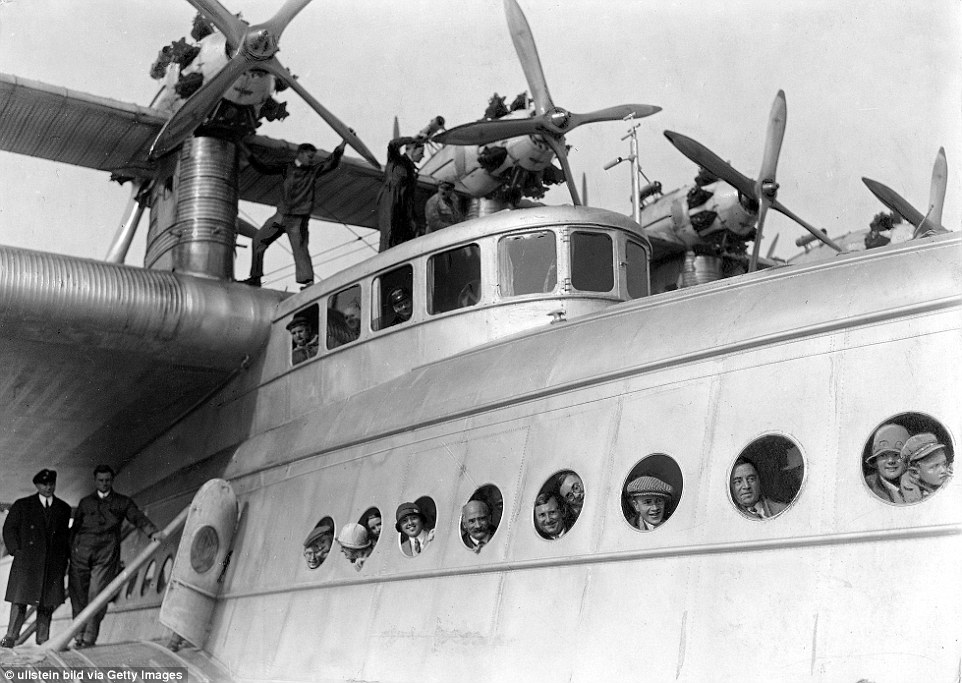
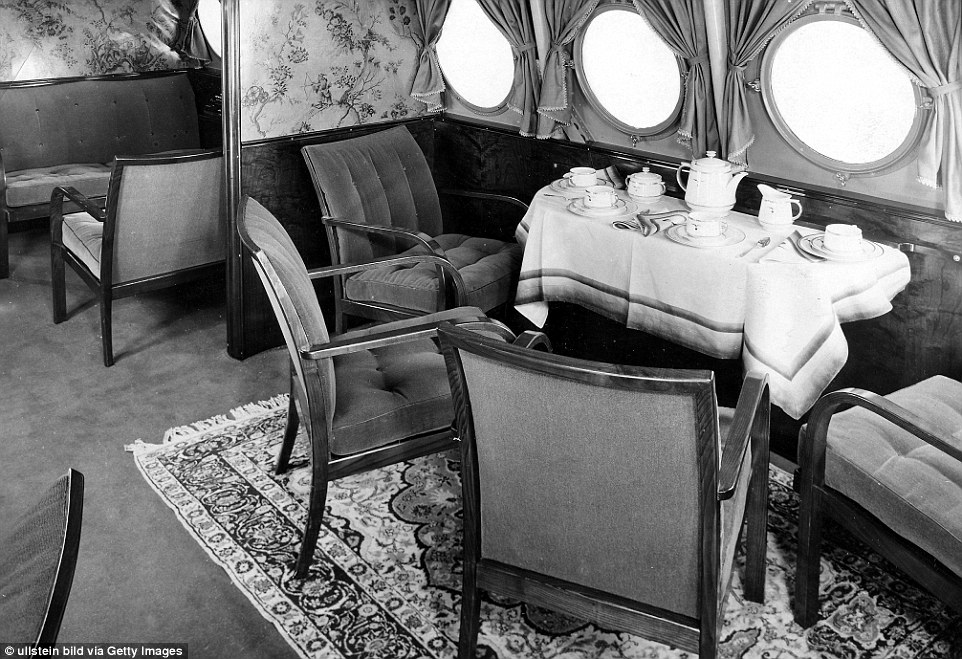
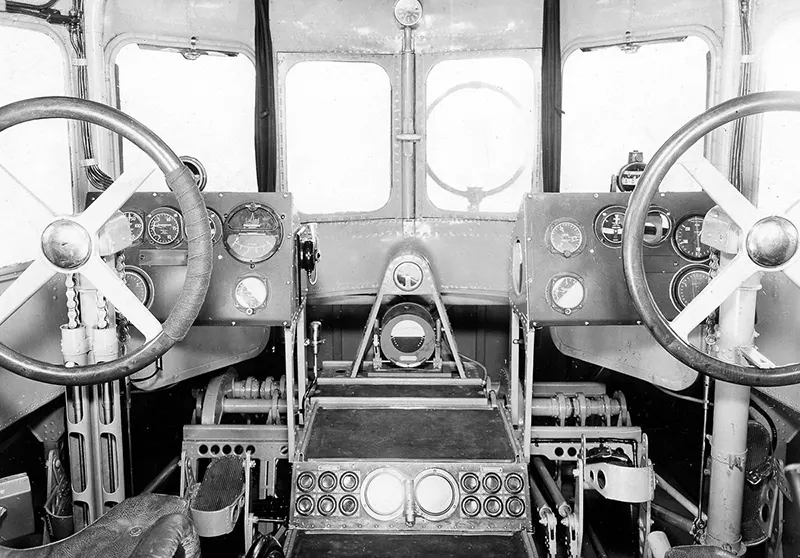
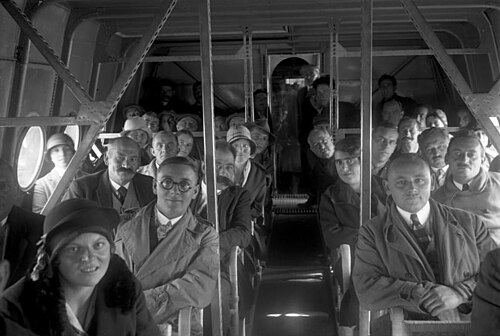
Structure: Nine watertight compartments (seven needed for full buoyancy). Corrugated duralumin hull with three decks. The lower deck featured 16,000-24,600 liters of fuel tanks plus 3,600 liters of oil. The middle deck accommodated 66 reclining seats that converted to sleeping berths, plus a smoking salon with bar, dining hall with Persian carpets, kitchen, and lavatory. The upper deck held the flight deck, chart room, radio station, and engine room.
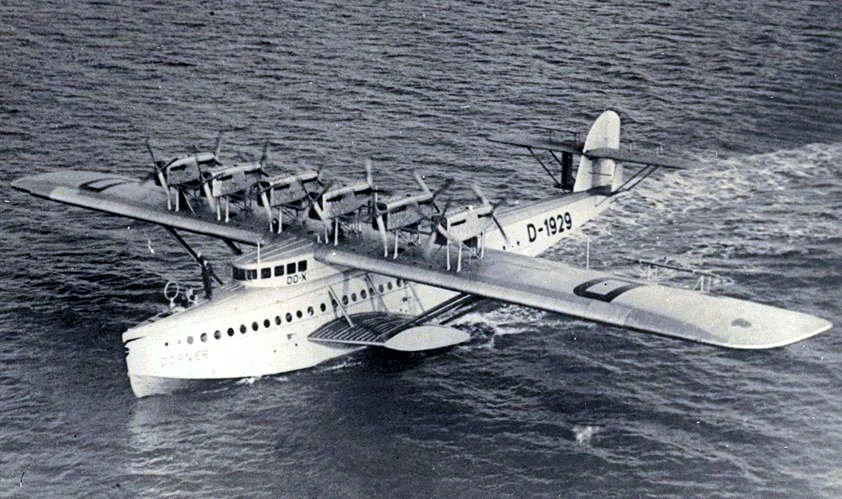
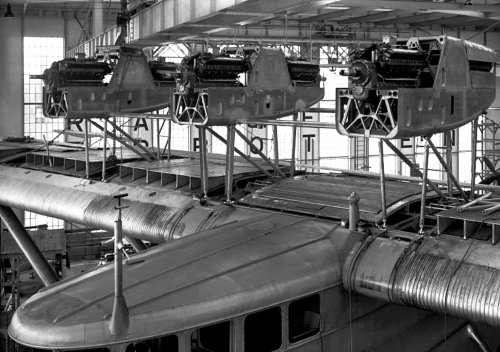
Wings: Upper semi-cantilever wing with 486 square meters of area, supported by three struts per sponson. Park-bench balances on control surfaces reduced pilot effort on the 56-ton aircraft.
Sponsons: Instead of floats, short wing-like protrusions provided stability, passenger boarding platforms, and additional lift in flight.
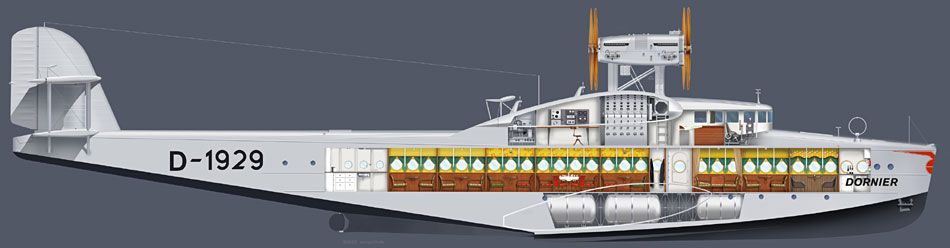
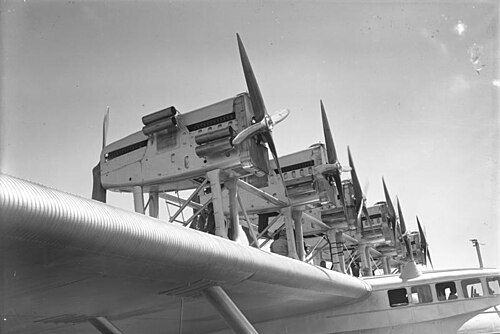
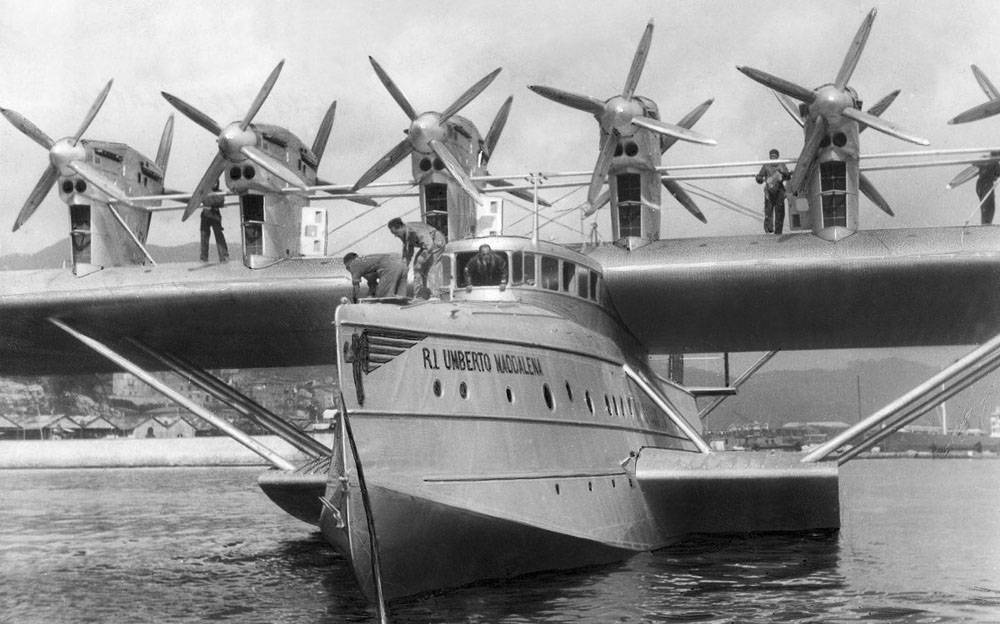
Engines: Initially twelve Siemens-built Bristol Jupiter air-cooled radials (524 hp each) in tandem push-pull pairs on six pylons. Total power: 6,288 hp. After 103 flights, the engines overheated excessively. They were replaced with Curtiss V-1570 Conqueror liquid-cooled twelve-cylinder motors (610 hp each), increasing total power to 7,320 hp and the service ceiling to 500 meters with payload.
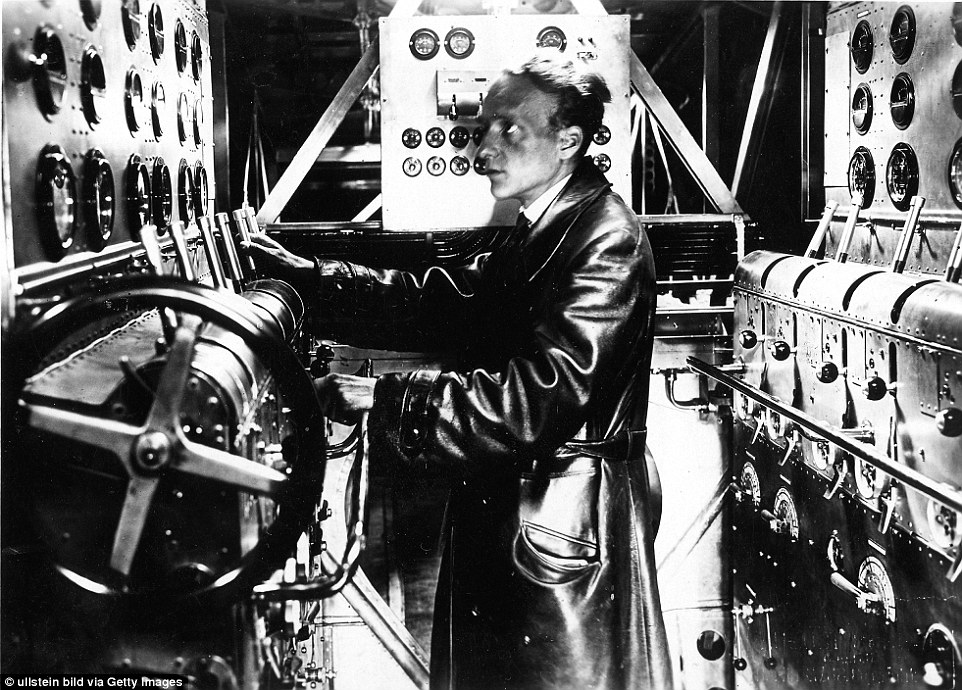
Controls: The pilot had no throttles. The captain communicated desired power through an engine telegraph to a flight engineer managing twelve fuel levers and twelve instrument sets in a separate engine room -- functioning like a ship's engine room.
The Record Flight
The first flight on July 12, 1929, proceeded normally. On October 21, during the seventieth test flight, Dornier crammed the aircraft with 150 passengers, 10 crew, and 9 stowaways -- 169 people total. "After a 50-second takeoff run, the Do X struggled airborne to 200 meters." Passengers shifted from side to side to help the aircraft turn. The 40-minute flight at 170 km/h set a world record for the number of persons aboard a single aircraft -- a record that stood for 20 years.
The Transatlantic Journey
November 3, 1930: Captain Friedrich Christiansen departed Friedrichshafen for New York via Holland, England, France, Spain, Portugal, and along Africa's coast -- an indirect route, since a direct transatlantic crossing was impossible. The range with full commercial load was only 1,100-1,500 km versus the 3,200 km minimum ocean crossing distance.
Problems multiplied. November 29: canvas covering touched hot exhaust; a wing fire required six weeks of repairs in Lisbon. Motors overheated repeatedly at African ports lacking spare parts. June 5, 1931: reaching Cape Verde. August 27, 1931: arriving in New York after nearly ten months -- "a brilliant, epic, but completely failed flight."
Commercial Failure
New York embraced the giant enthusiastically; thousands toured the aircraft. But the timing was catastrophic: 1931 meant the Great Depression. Airlines cut routes, banks refused credit. "Who needed a flying palace with 12 fuel-guzzling motors when half of America was queuing for bread?"
The return journey proved the aircraft's capability: May 21-24, 1932, home to Berlin's Muggelsee in three days without incident.
Italian Variants and Final Fate
Two Do X aircraft were built for Italy: X2 "Umberto Maddalena" and X3 "Alessandro Guidoni." Equipped with Fiat A-22R motors (600 hp each), performance degraded further. Both were scrapped in 1937.
The German original continued as a tour attraction, but during a 1933 landing near Passau, Bavaria, pilot error caused tail separation. Repaired and transferred to Berlin's German Aviation Museum in 1936, the Do X survived seven years until November 23-24, 1943, when 383 British bombers destroyed Berlin, burning the aircraft completely.
A month later, the Italian Do X2 suffered identical tail failure during landing -- a design flaw or poor handling tolerance? The answers died with the aircraft.
Legacy
What remains: dented tail fragments in Friedrichshafen's Dornier Museum. "The flying ship never became a transatlantic liner. The Great Depression, overheating motors, a 500-meter ceiling, and a dreadnought-sized appetite killed its prospects." Yet it paved the way: the Boeing 314 Clipper, Martin M-130, and eventually the three-deck Boeing 747 with its upper-deck bar all echoed Dornier's vision of flying luxury.