The Energy-Independent Solution
A satirical short story about corporate absurdity in IT, where a team is tasked with building an energy-independent software module for a country with no electricity — and delivers exactly what was asked for.
Published in the collection "IT AS IS" (it-as-is.ru)
Monday. The Problem Statement
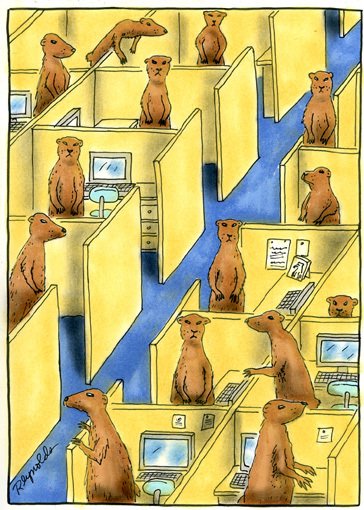
I arrive at the office. Our company is a large international firm with branches in Omsk, Kalachinsk, and headquarters in Cyprus. I work on a project called COCORESH — the "Comprehensive Corporate Solution." It's a massive system with dozens of modules and hundreds of thousands of lines of code, so complex that nobody truly knows what it does.
Our project manager Yegor is in the Democratic Republic of the Congo, meeting with potential clients. We connect via Skype for the morning standup. The connection is terrible — static, echoes, occasional screams in the background that Yegor assures us are "just the local wildlife."
"Guys, we have a critical issue," Yegor says, his face pixelated beyond recognition. "There's no electricity here, and my laptop battery is almost dead. We need an energy-independent version of the system."
"Energy-independent?" I ask.
"Yes. The client needs it. They have no power grid. No generators. Nothing. The module must work without electricity. Deadline: end of the week."
The call drops. Team lead Kostya takes charge: "You heard the man. We need an energy-independent module of COCORESH by Friday. Grisha, you're on architecture — have it ready by tomorrow morning."
Grisha, our architect, nods solemnly.
Tuesday. The Architecture
Grisha presents his architecture using two posters taped to the whiteboard.
Poster 1 — COCORESH (current): A blue rectangle with a battery icon next to it.
Poster 2 — ENECOCORESH (Energy-Independent COCORESH): The same blue rectangle, but without the battery icon.
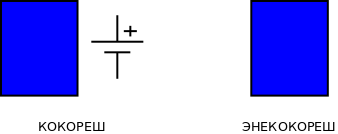
"As you can see," Grisha explains, gesturing at the posters, "the architecture is straightforward. We simply remove the energy dependency."
"But..." I begin, "computers don't work without electricity. The software runs on hardware. Hardware needs power. This is physically impossible."
Everyone stares at me. Kostya laughs: "Have you tried it, though? Have you actually attempted to run software without electricity? Maybe it works! You don't know until you try."
"Just write the program and that's it," Grisha adds.
I look around the room. Nobody else seems troubled by the fundamental laws of thermodynamics being casually dismissed.
Wednesday. Development
Kostya assigns me as the senior developer for the energy-independent module. My partner is Sergei, a man who has elevated the art of appearing busy to unprecedented heights. He spends the entire day watching movies on his phone, while occasionally — and I mean roughly once every forty minutes — hammering on his keyboard with theatrical intensity. The keyboard, I notice around lunchtime, is not actually connected to his computer.
I try to access documentation for the existing COCORESH modules. This requires a ticket to the helpdesk, which requires approval from the project manager.
"Yegor is in the Congo," I tell the helpdesk.
"We need his written approval."
"He has no electricity. His laptop is dead. He might have been eaten by now for all we know."
"Written approval is required. Those are the rules."
I spend the rest of Wednesday contemplating the nature of corporate bureaucracy.
Thursday. More Development
I compose a carefully worded email to regional management with a modest proposal: instead of building energy-independent software (a physical impossibility), perhaps we should send the Congolese clients a set of wooden abacuses. They require no electricity, perform basic calculations, and have a proven track record spanning several millennia.
The response arrives within the hour, from regional manager Belokryly: "Rank-and-file developers should not concern themselves with architectural matters. Please proceed with the implementation as specified."
I sit at my desk and stare at my monitor. Around me, the office hums with activity. People typing emails about emails. Managers managing the management of other managers. Meetings being scheduled to plan future meetings about the outcomes of previous meetings.
I realize that we are all, in a sense, producing nothing. We are engaged in the elaborate, collectively maintained fiction of productive work — a fiction so deeply ingrained that questioning it feels like madness. The entire apparatus of corporate life — the standups, the sprints, the architecture reviews, the performance evaluations — exists primarily to perpetuate itself. We are hamsters on a wheel, and the wheel is connected to nothing.
Friday. The Release
I come in with a solution. I've written a small executable — 4 kilobytes. When launched, it displays a single message:
"Energy-Independent COCORESH cannot be launched in an energy-dependent environment. Please ensure your hardware is running in energy-independent mode before proceeding."
Kostya reviews the deliverable. He clicks the executable. He reads the message. He nods slowly.
"This is good," he says. "This is really good. The module works correctly — it detects the environment and reports incompatibility. Very professional."
"But what about the energy-independent environment?" I ask.
"That's a hardware issue. We'll submit a procurement request to the supply department. If they can source energy-independent hardware, we'll be golden."
"And if they can't?"
Kostya shrugs. "Then it's a supply chain problem, not a software problem. Our module is done. Ship it."
He types up the release notes. I watch Sergei slam his disconnected keyboard one final time with an air of triumphant accomplishment. Somewhere in the Congo, Yegor is presumably still alive, still without electricity, still waiting for the software that will solve all his problems.
We mark the sprint as completed. All tasks closed. Velocity: nominal. The standup tomorrow will be brief and self-congratulatory.
I go home.