Teardown of a Fake Car Charger That Will Destroy Your Gadgets
A teardown and analysis of a cheap car charger from AliExpress that claims 120W PD 3.1 support but actually delivers only 41W — and worse, can instantly destroy connected devices by feeding 12V to a 5V port due to a critical design shortcut.
Overview
Cheap chargers often fail to meet their stated specifications and produce high ripple. But the unit examined here poses a special danger: under certain conditions, it will instantly destroy any connected device.
What the Manufacturer Promises
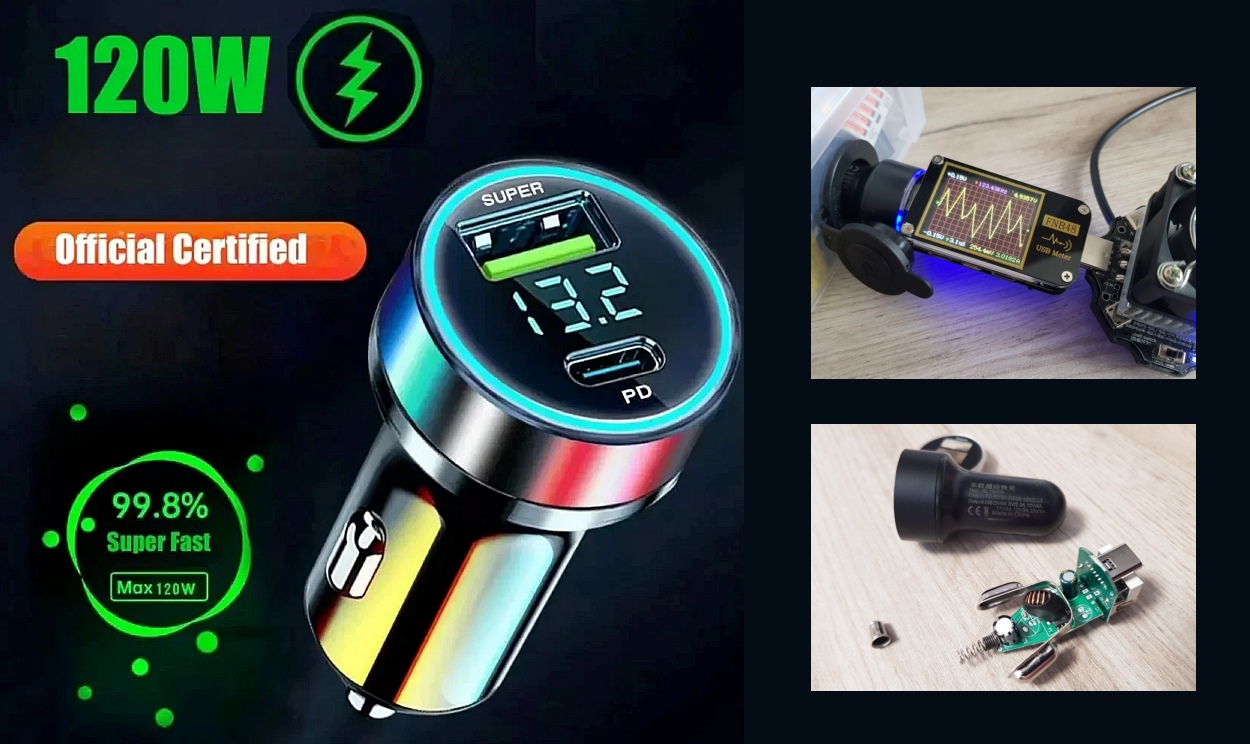
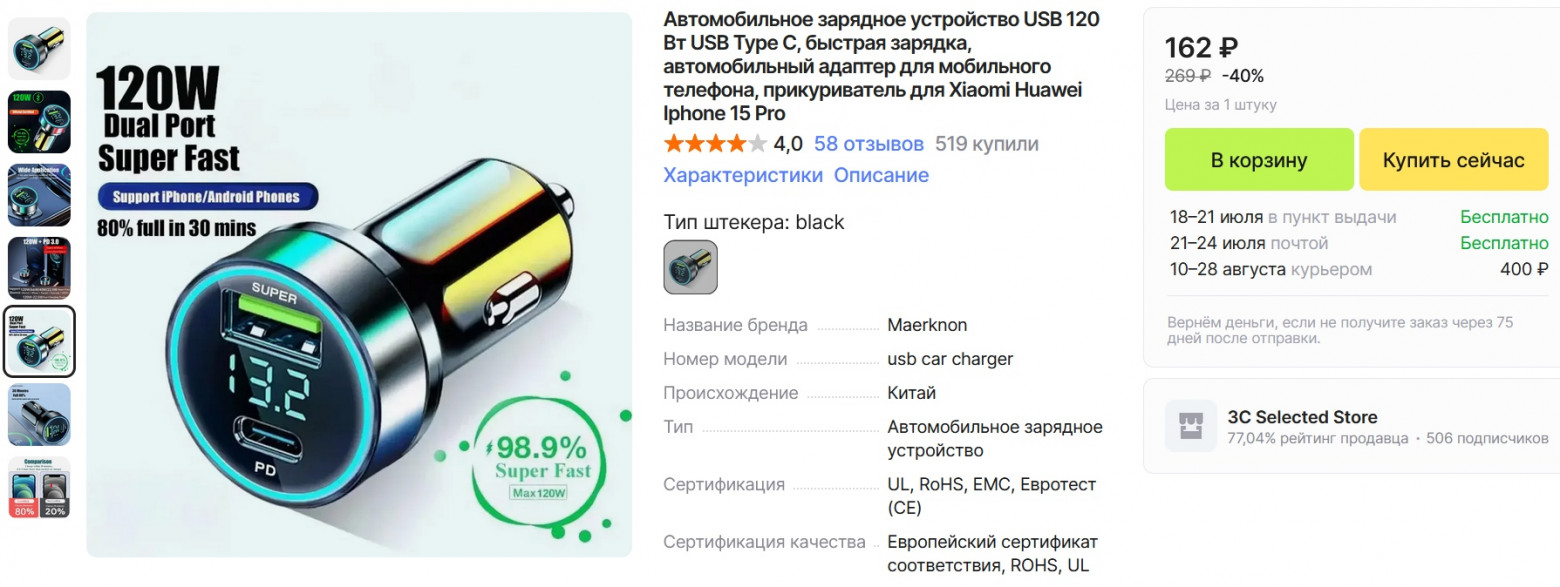
This nameless charger costs about 160 rubles on AliExpress. The manufacturer claims 120W of power, PD 3.1 support, all fast charging protocols including VOOC, a digital voltmeter, and various certifications.
Why It's Dangerous
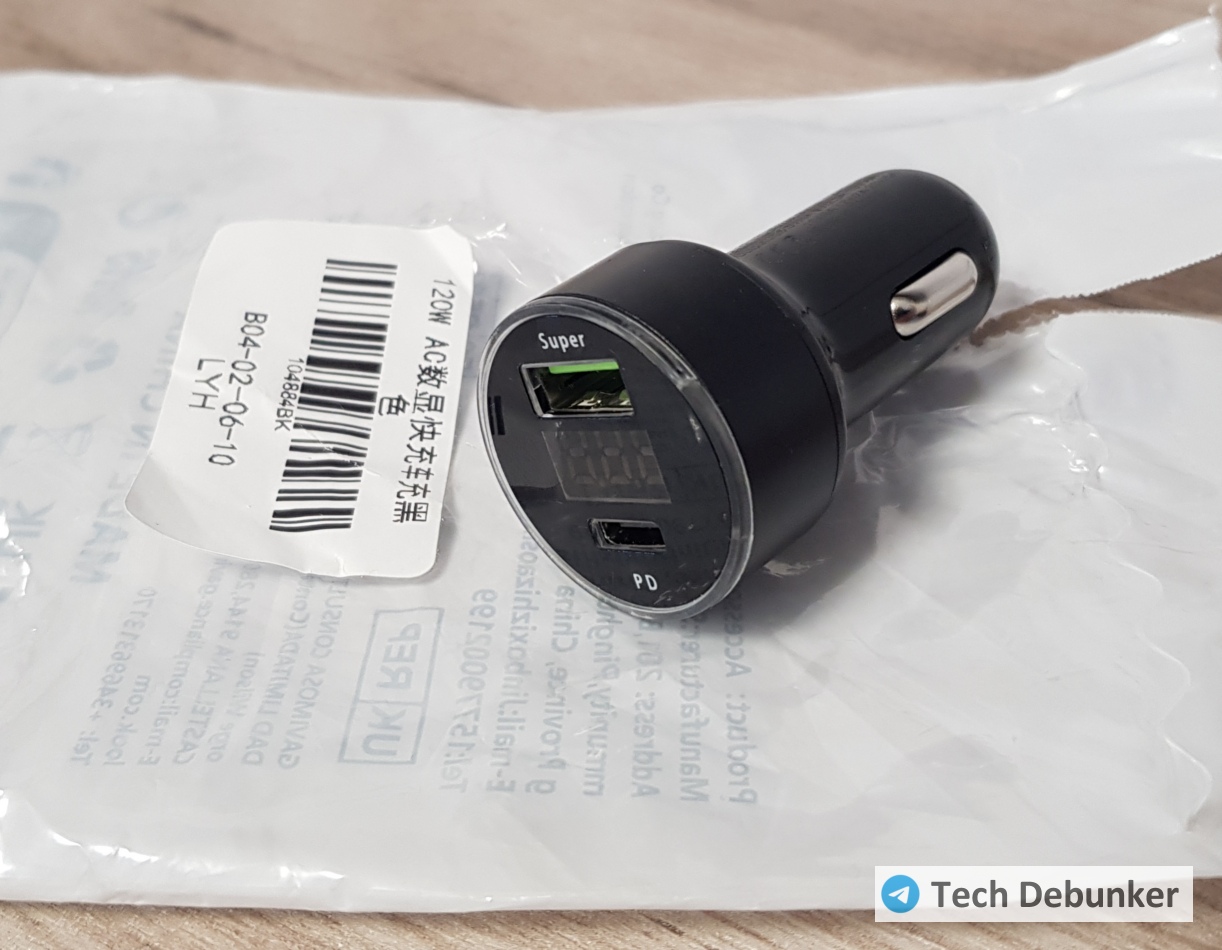
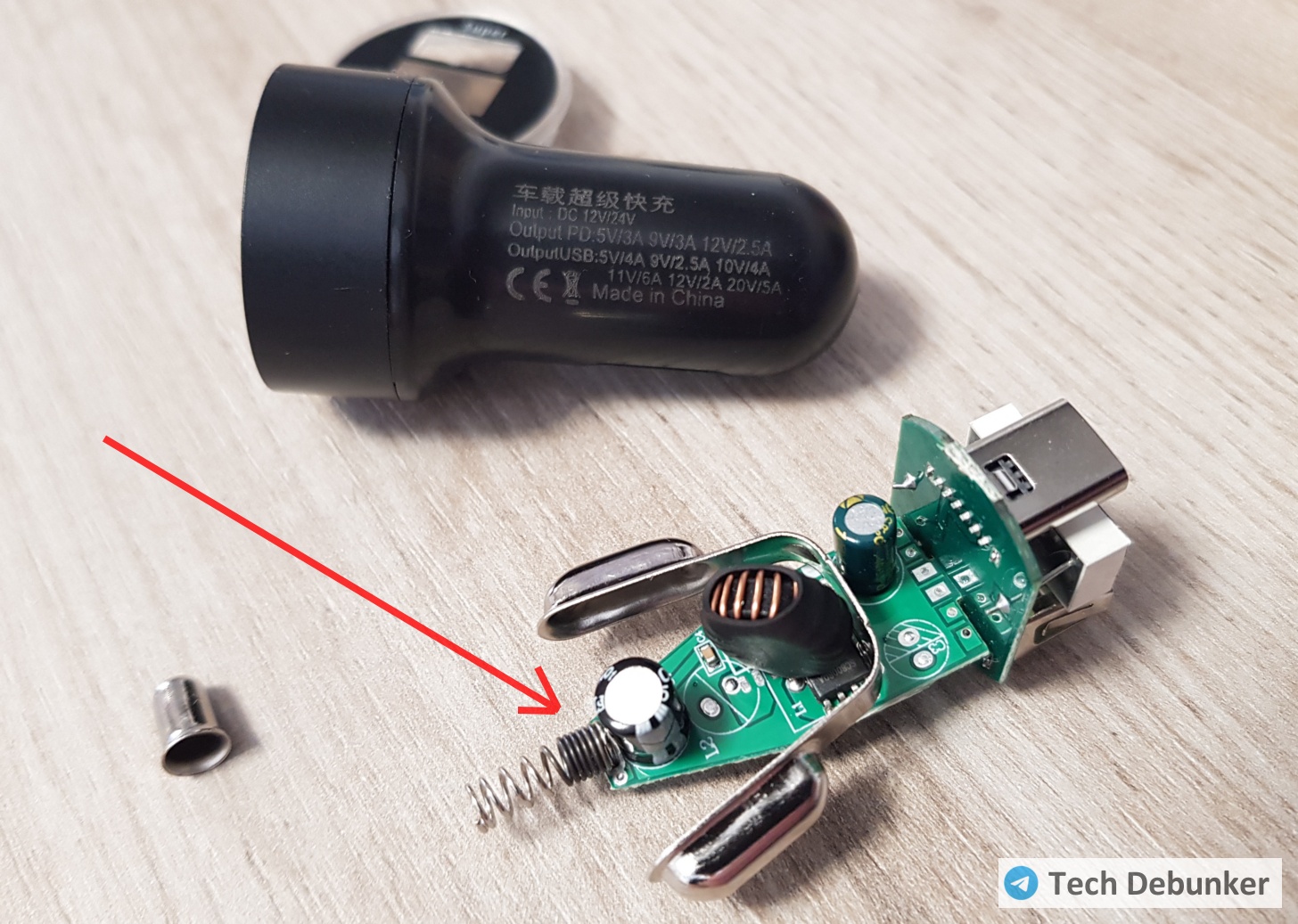
The core problem: the designer removed one of the controllers and soldered both USB ports to the same contacts. This is a common practice in cheap chargers without fast charging protocol support, but here it creates a critical vulnerability.
When using a fast charging protocol, one device switches the charger to an elevated voltage (9V or 12V). Since both ports are wired in parallel, the second port also receives this voltage. If another device rated for standard 5V is connected there, it receives excessive voltage and is destroyed.
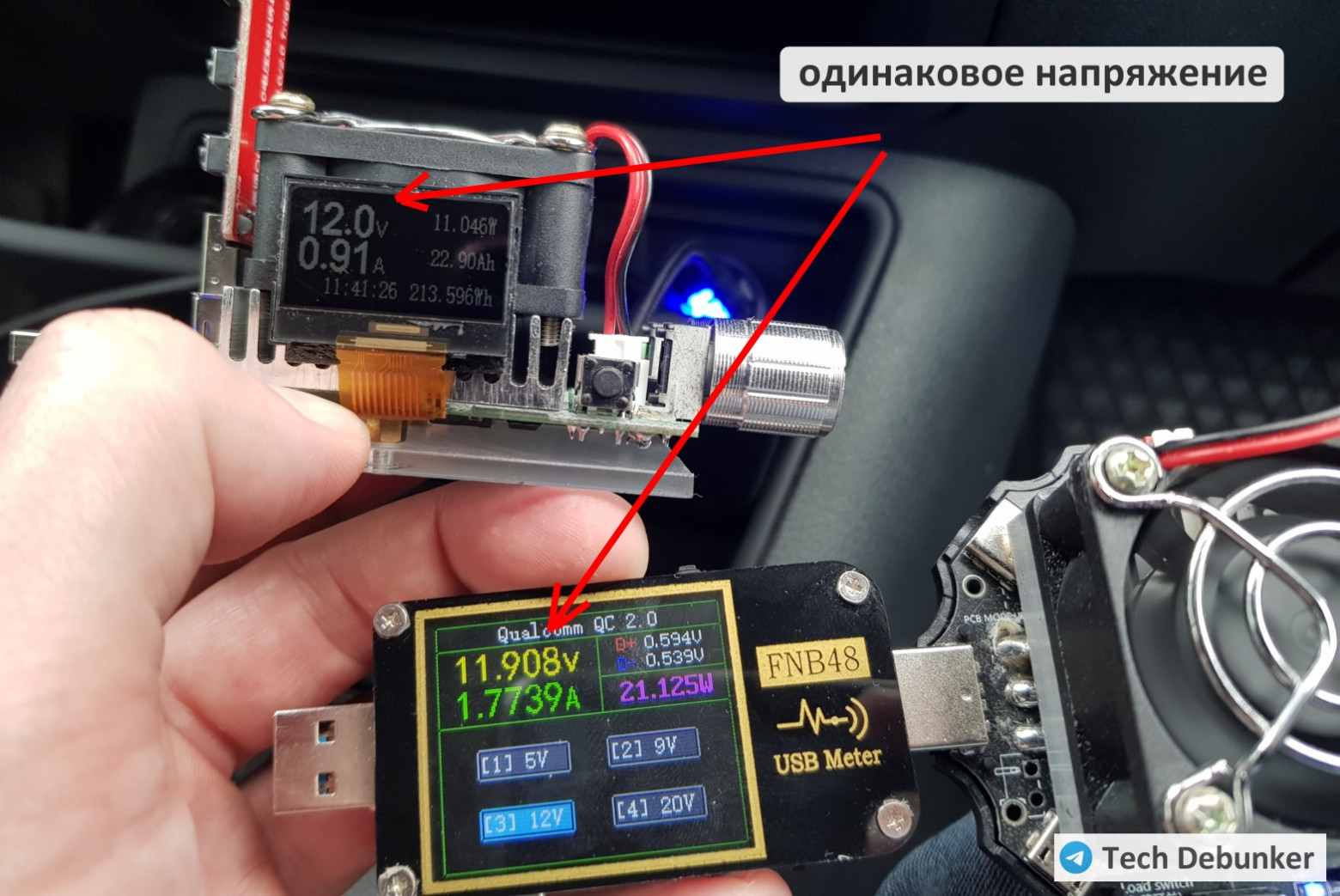
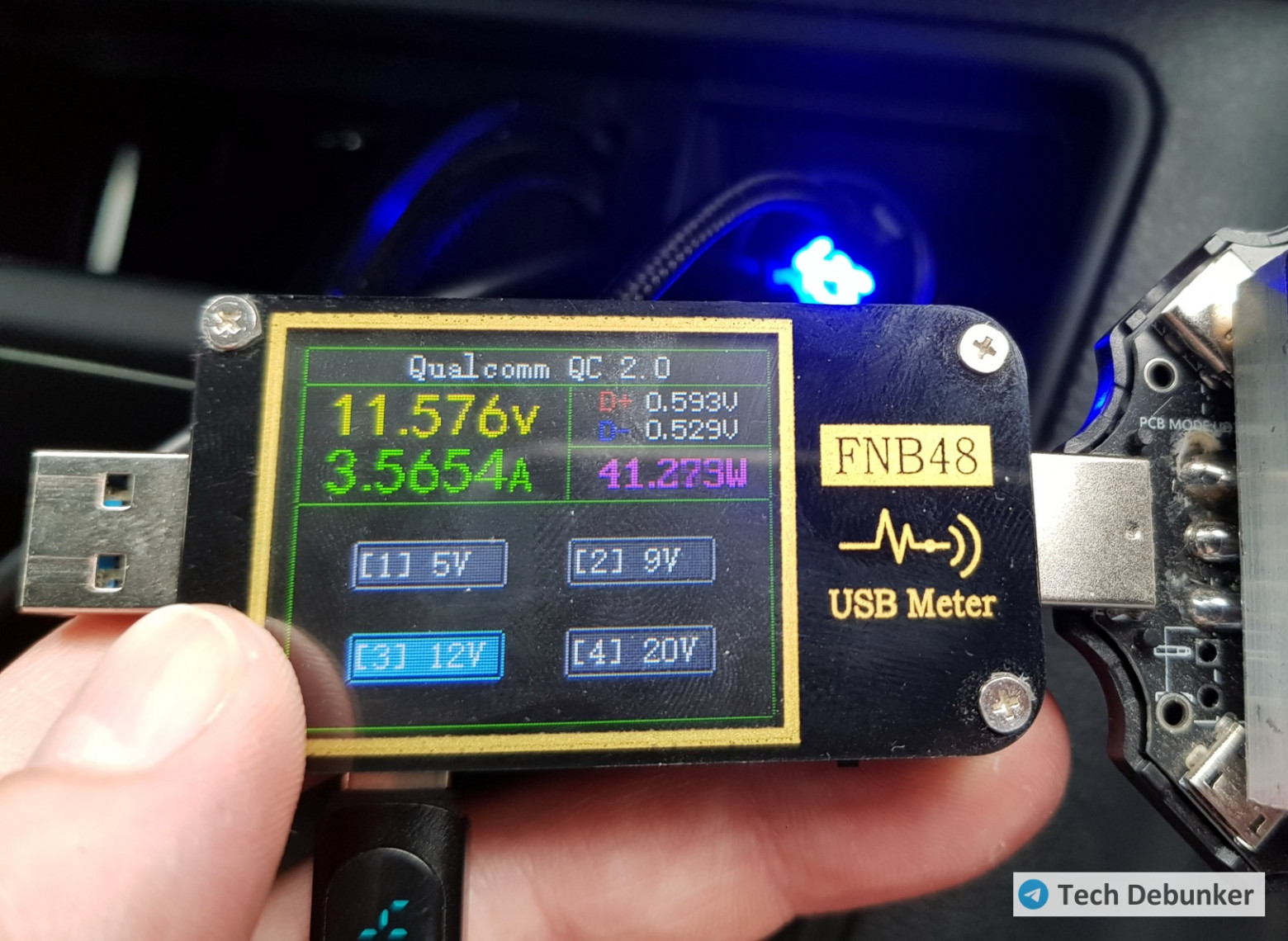
During testing, both ports simultaneously switched from 5V to 12V at the command of just one connected device.
Actual Performance
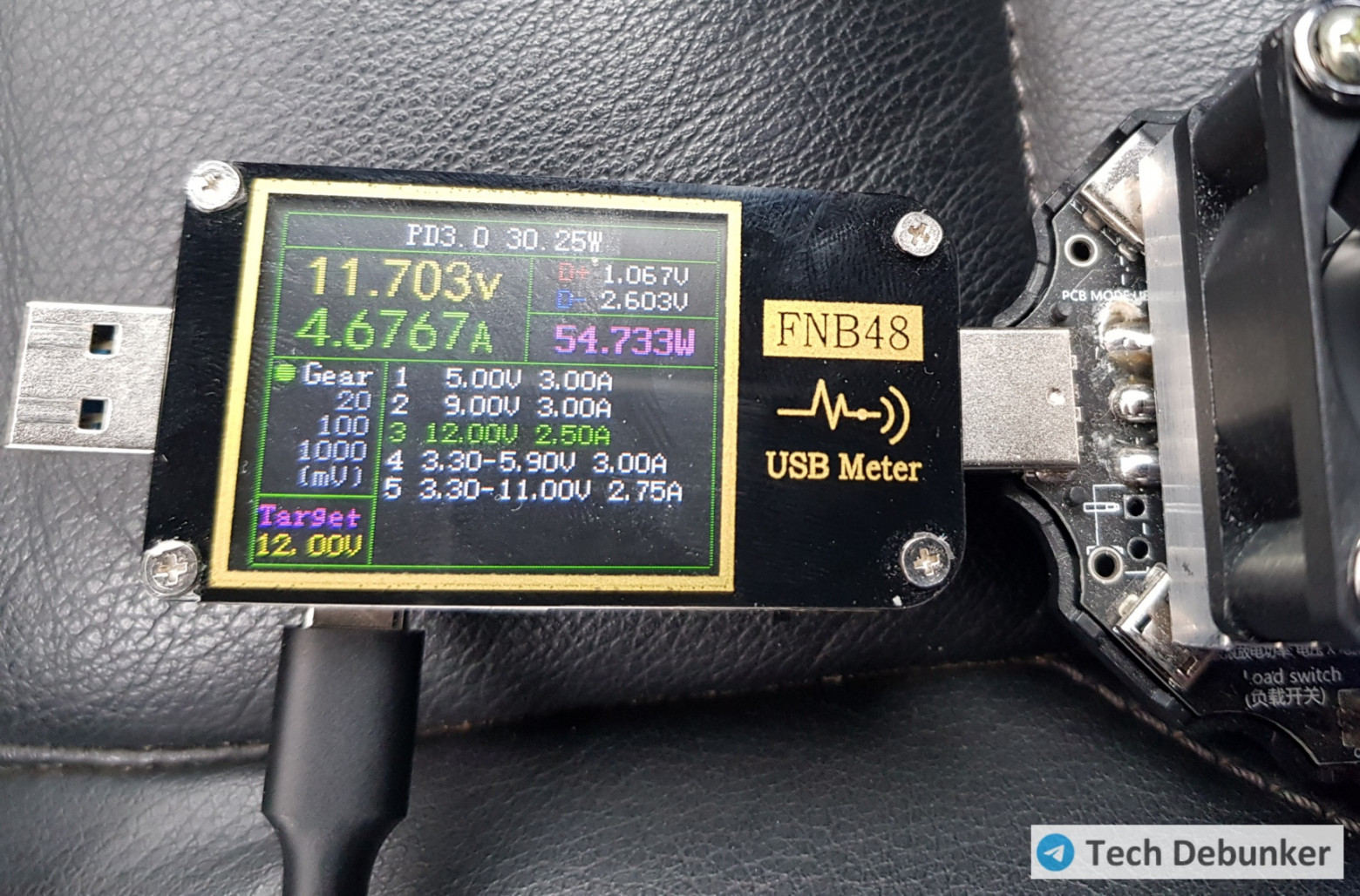
Of the promised 120W, the charger delivers a maximum of 41W, but quickly overheats and within a minute drops to 32W in sustained mode.
Housing Issues
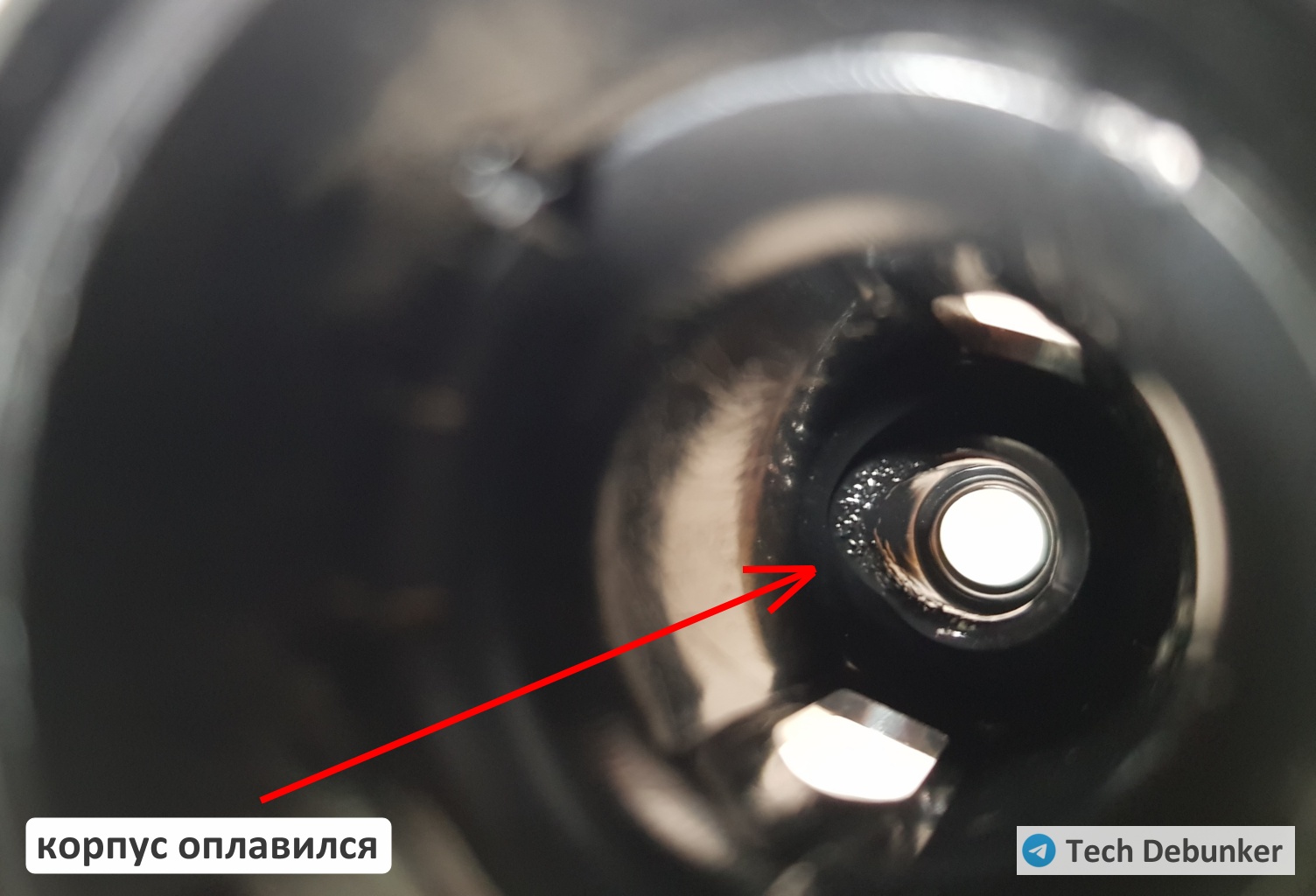
During extended testing under load, the spring beneath the center contact deformed from overheating. The skewed contact melted the charger's plastic housing, breaking the circuit.
Additional Defects
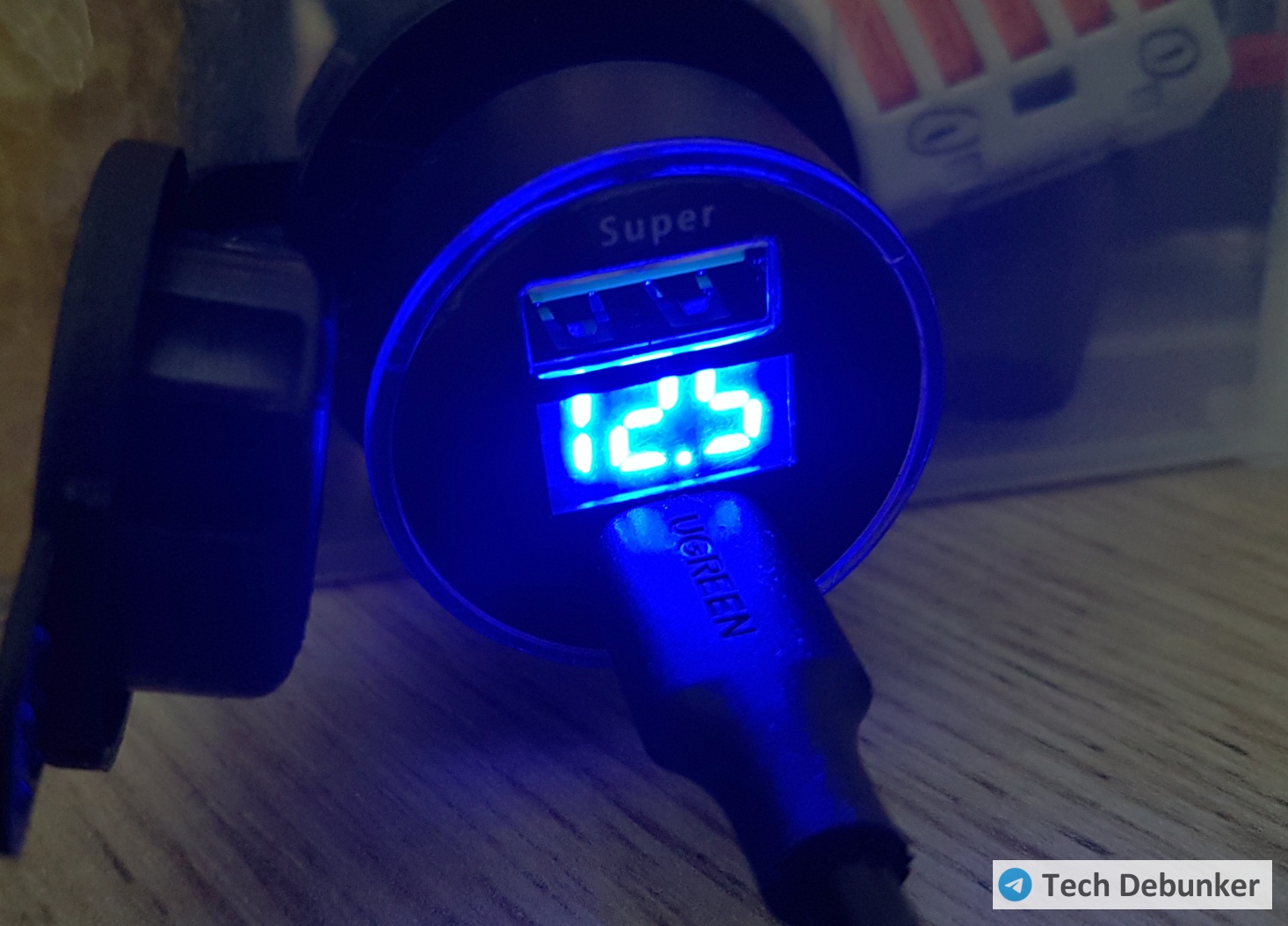
- The voltmeter is non-functional, permanently displaying 12.5V
- No actual PD support
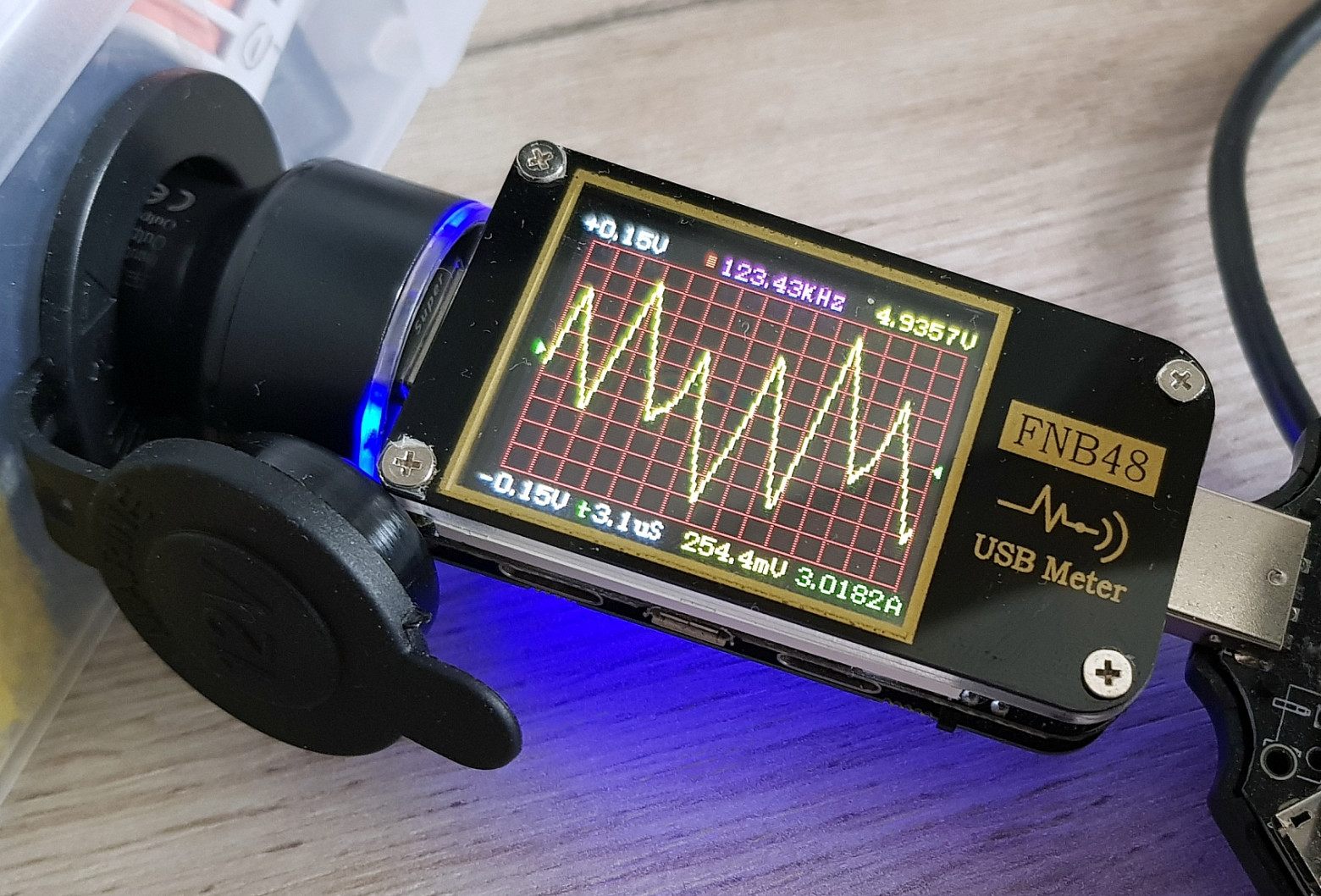
- Ripple measures 254mV at the base 5V level (instead of the standard 1-2%)
The Car Charger Market Problem
Out of roughly fifteen models tested, only two were able to maintain their claimed power output for more than 40 minutes. The rest throttle down after 5-20 minutes due to overheating.
Examples:
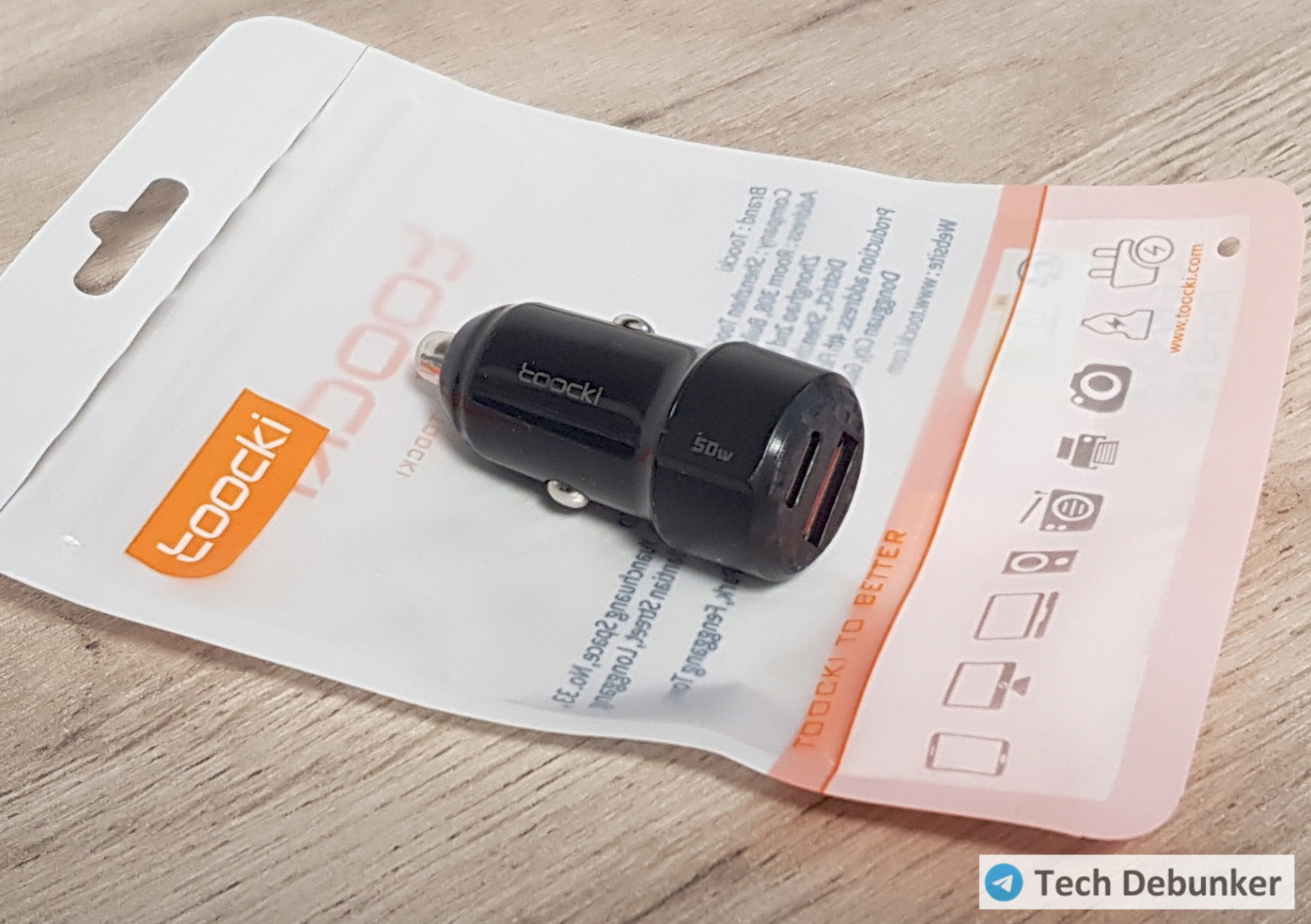
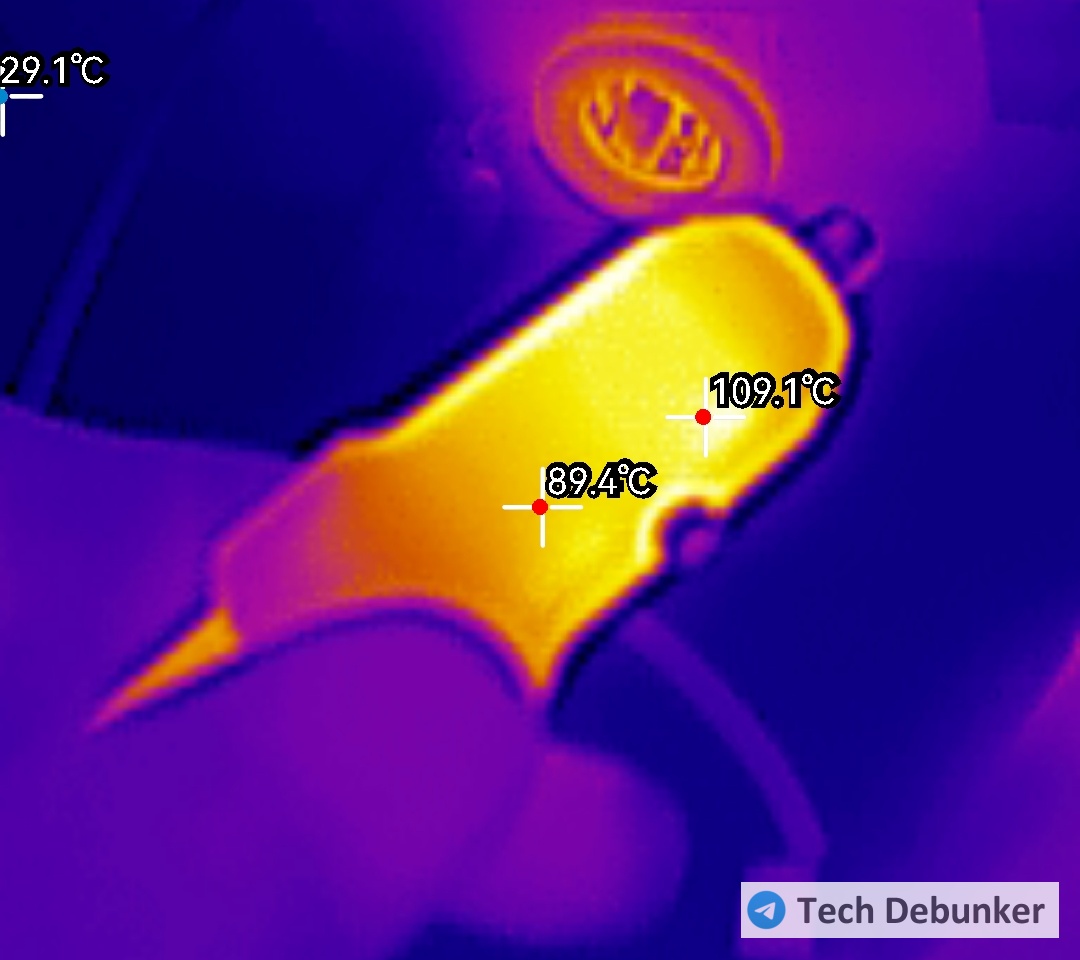
- Toocki TQ-CC25 (claimed 50W) delivers up to 60W maximum, but in regulated mode drops to lower power levels and reaches 109°C on the housing
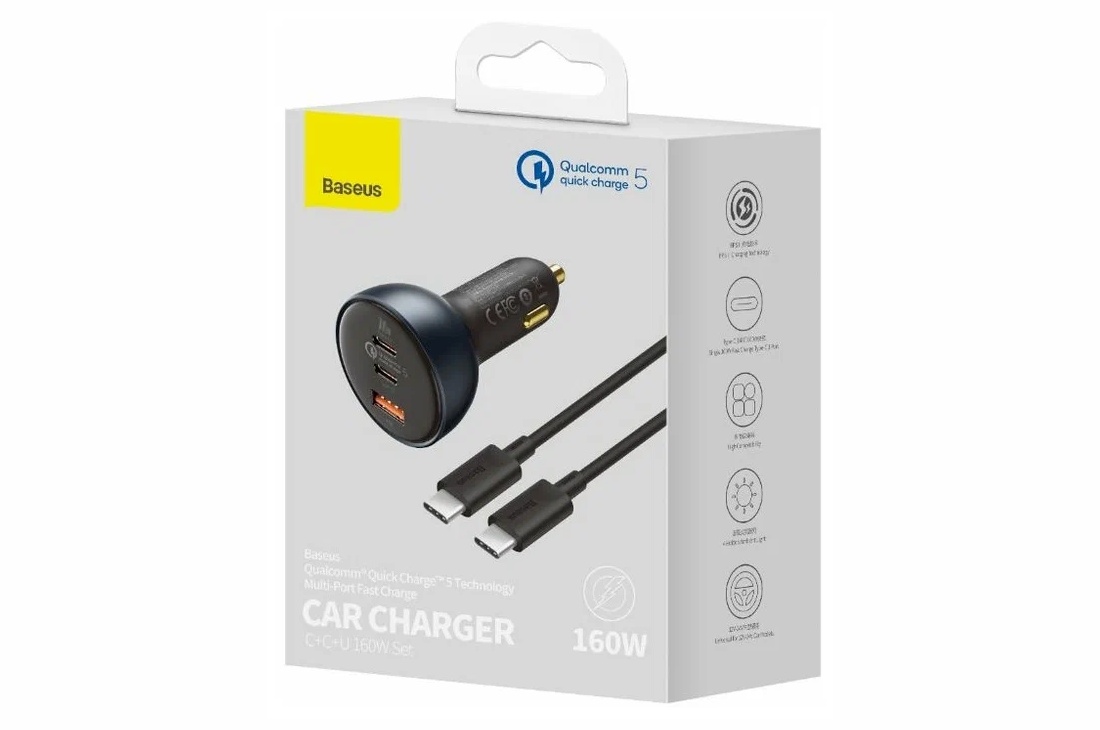
- Baseus CCZX-160C overheats within 10 minutes, only stable at 80W
Ugreen chargers tend to be more reliable, though there is no universal recommendation.
Recommendations
When choosing a car cigarette lighter charger, select a model with 30-50% more power than you need. At peak loads, devices will overheat and throttle, and some will shut down entirely. Manufacturers count on users not noticing power drops, since gadgets don't report reduced consumption.
FAQ
What is this article about in one sentence?
This article explains the core idea in practical terms and focuses on what you can apply in real work.
Who is this article for?
It is written for engineers, technical leaders, and curious readers who want a clear, implementation-focused explanation.
What should I read next?
Use the related articles below to continue with closely connected topics and concrete examples.