The Soviet "PlayStation": A History of Domestic Game Consoles
The history of Soviet game consoles from the late 1970s through the early 1990s, covering pioneering devices like the Palestra-02, Turnir, Elektronika Eksi Video, and the Videosport series that introduced millions of Soviet children to electronic entertainment.
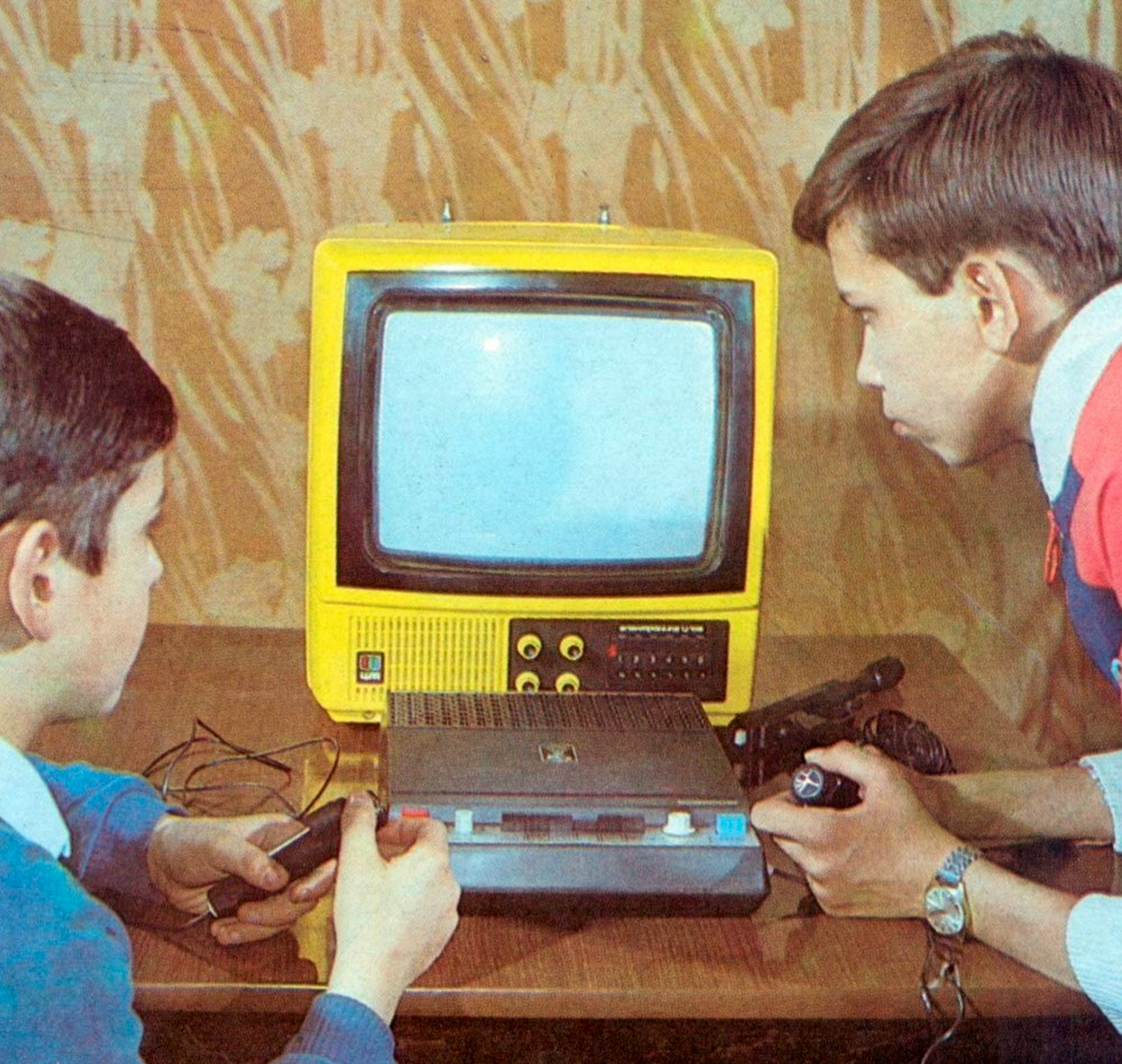
Author Valentin Kholmogorov recalls his cousin who owned an "Elektronika Videosport-3" device. For a child growing up in the mid-1980s, this was a truly wondrous thing: the television could show not only state broadcasts but actual graphics with two paddles, a bouncing ball, and targets for a light gun.
Predecessors: Palestra-02
The first Soviet game console appeared in 1978 in Lvov. The device, bearing the Greek name "Palestra-02," was a Pong console assembled on discrete TTL logic without a processor. It output a black-and-white image through the antenna input on channel IV.
The device offered five games: tennis, mini-football, volleyball, squash, and training mode. The game controllers consisted of small boxes with rotary knobs connected to variable resistors. The console cost 200 rubles — roughly a month's salary for an engineer.
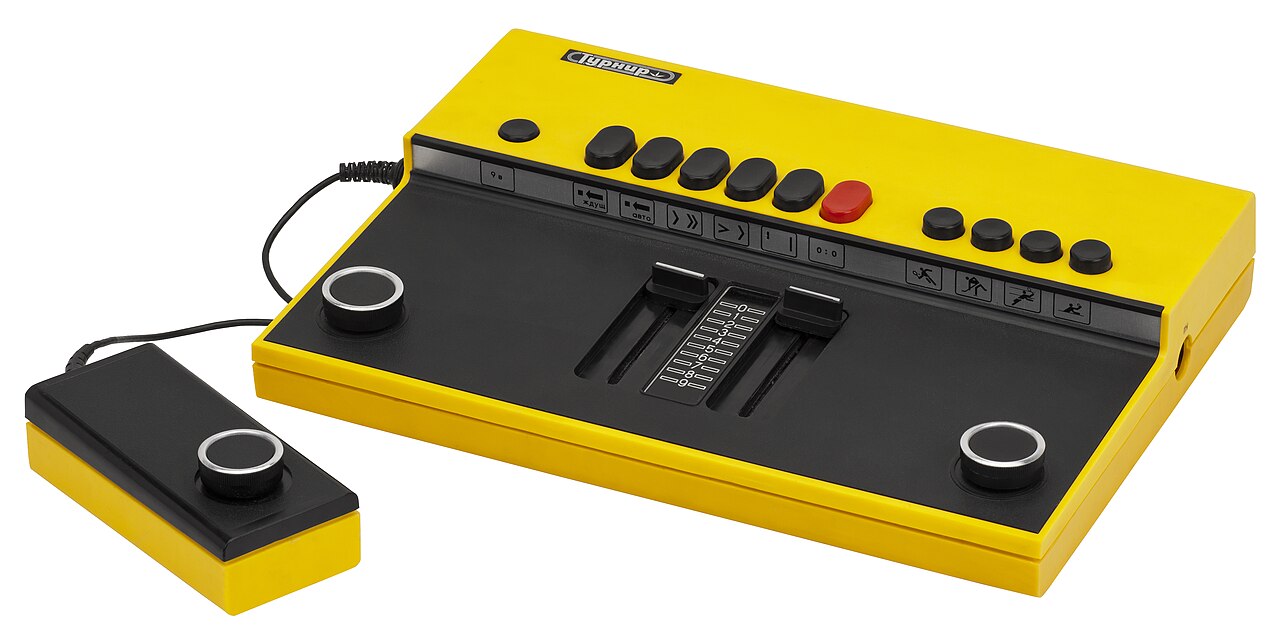
Turnir
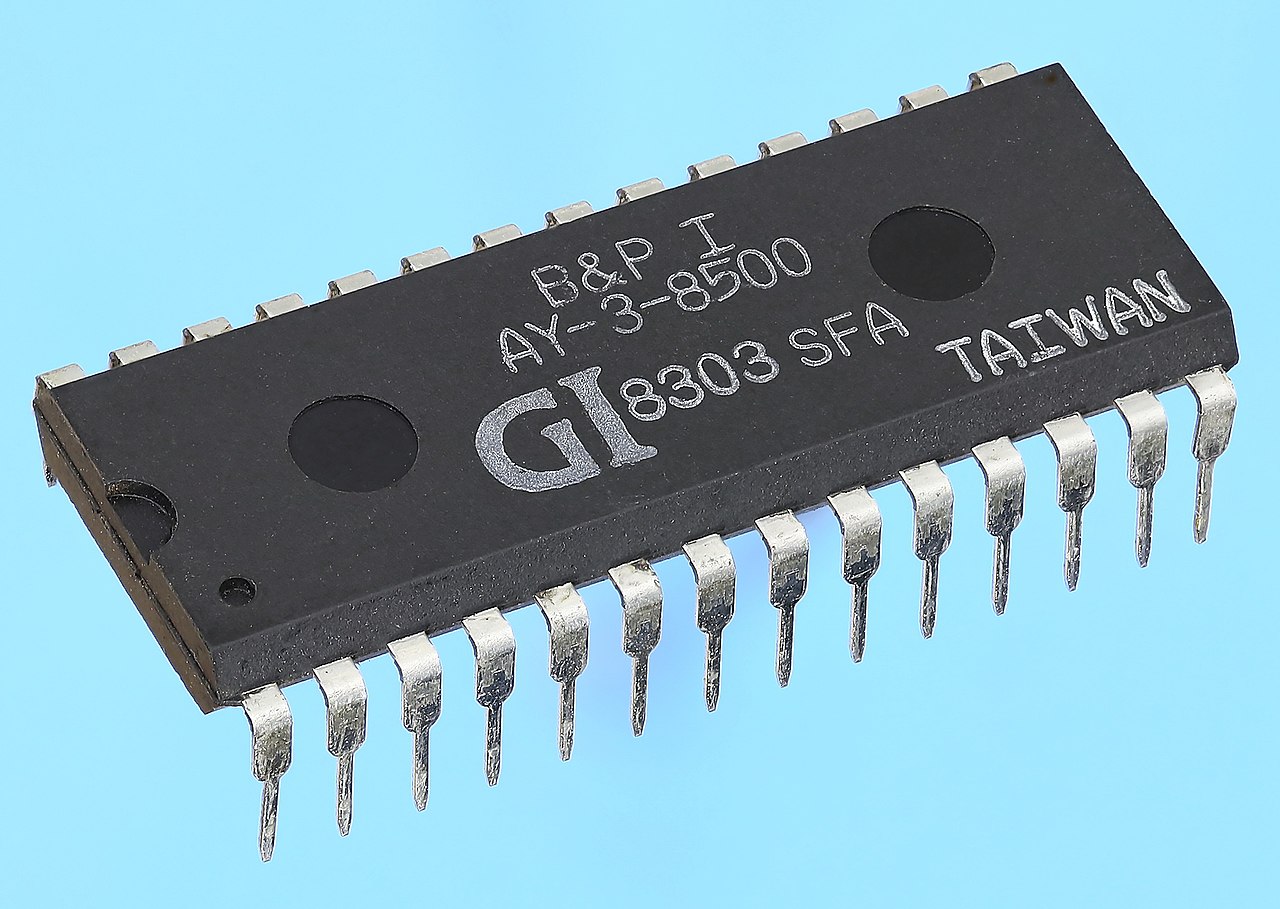
In the same year of 1978, a Moscow competitor appeared — the "Turnir" (Tournament), created at the Research Institute of Long-Range Radio Communications. This device used an imported General Instrument AY-3-8500 microchip called "Ball & Paddle." Although the chip was designed for the PAL standard, Soviet television sets didn't support it, so the creators built their own RF modulator.
The console could run on either mains power or batteries. It was cheaper than its predecessor at 150 rubles and contained four games. According to user reports, there was a hidden fifth game — "hockey with a handicap" — accessible through a certain key combination.
Elektronika Eksi Video
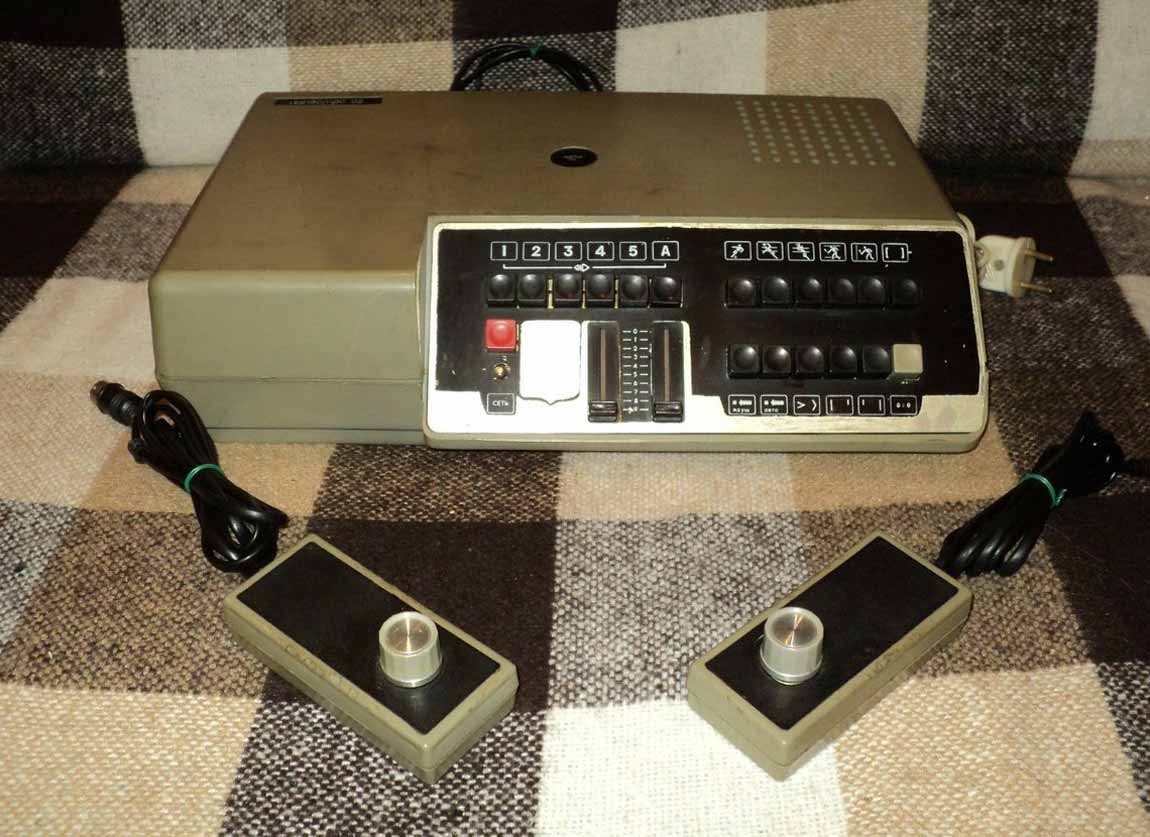
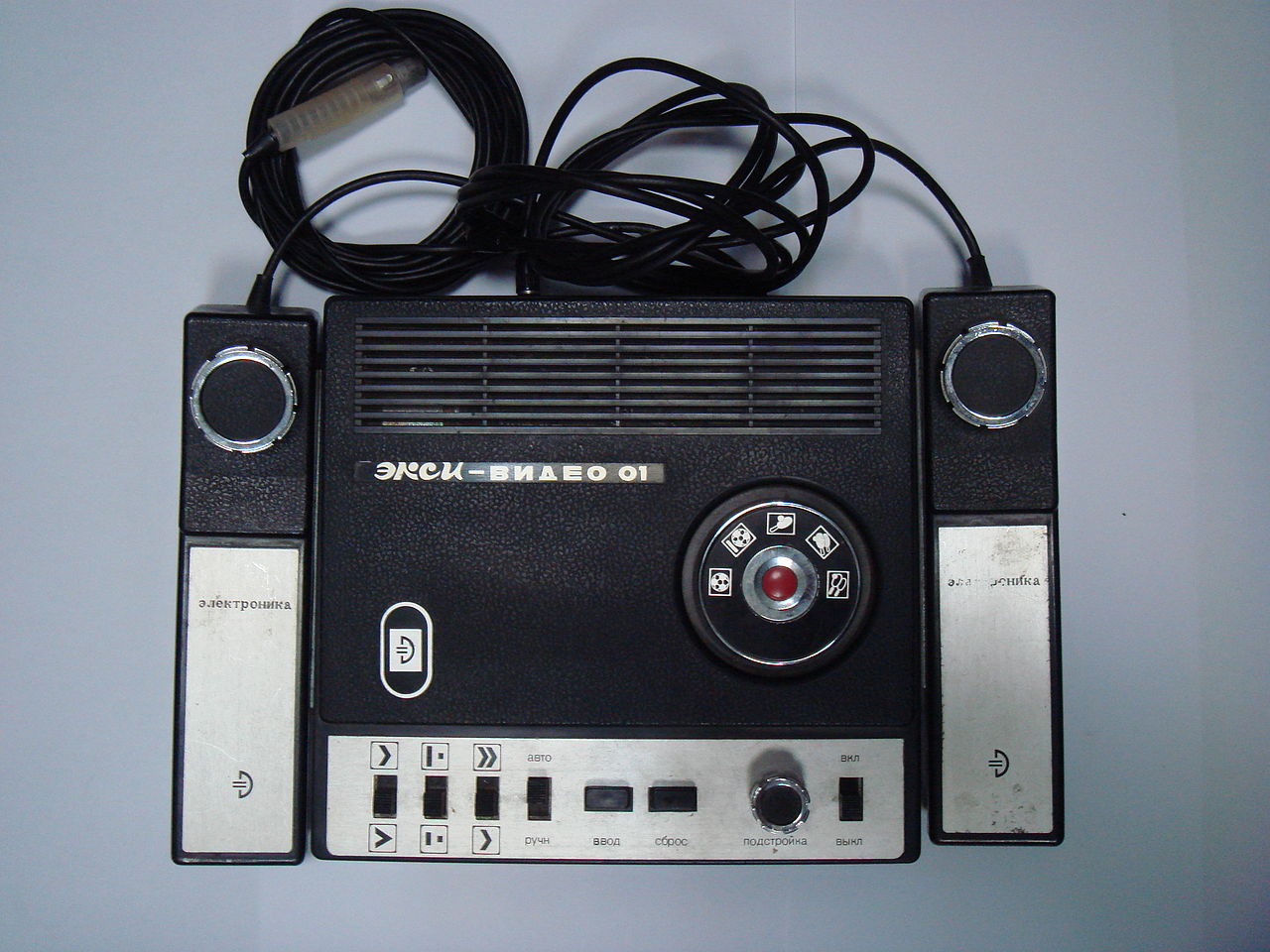
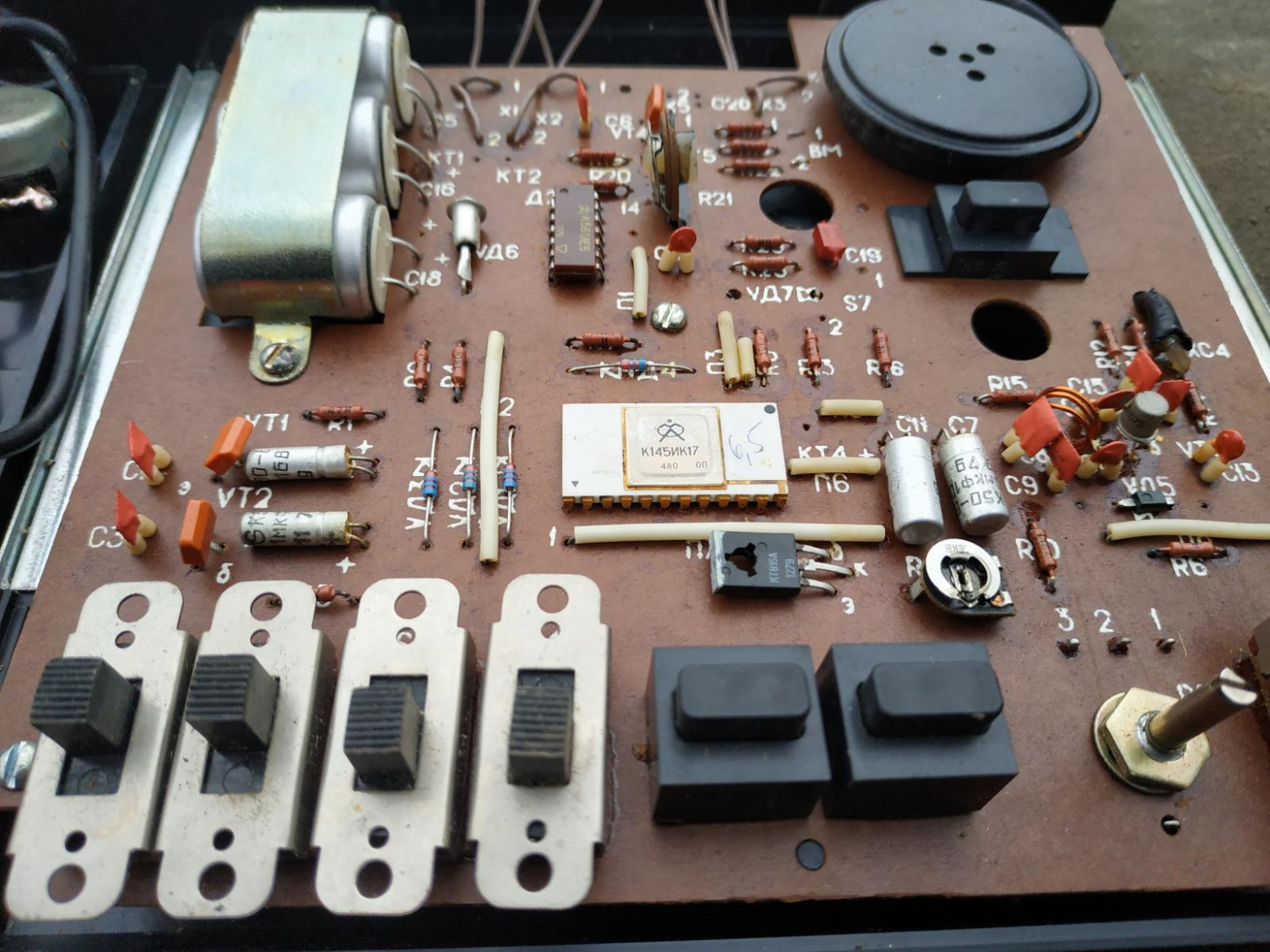
Almost simultaneously, the "Eksiton" factory in Pavlovsky Posad began producing the "Elektronika Eksi Video 01" console based on the domestic K145IK17 microchip. This was a Russian version of the AY-3-8500 chip. The device looked like a serious military piece of equipment with a metal case and switches resembling rocket or tape recorder controls.
The console offered five games and cost 120 rubles. In 1981, the "Elektronika Eksi Video 02" version was released with a light photogun. Both models became the most popular Soviet "TV games."
The Elektronika Videosport Series
The "Binom" production association in the city of Ordzhonikidze (now Vladikavkaz) began producing consoles in the "Videosport" series in 1981. The first model was based on the same K145IK17 microchip and contained five standard games.
Modifications soon appeared: the "Videosport-M" and "Videosport-2" with updated casings. This was the cheapest console in the USSR — just 93 rubles.
Elektronika Videosport-3
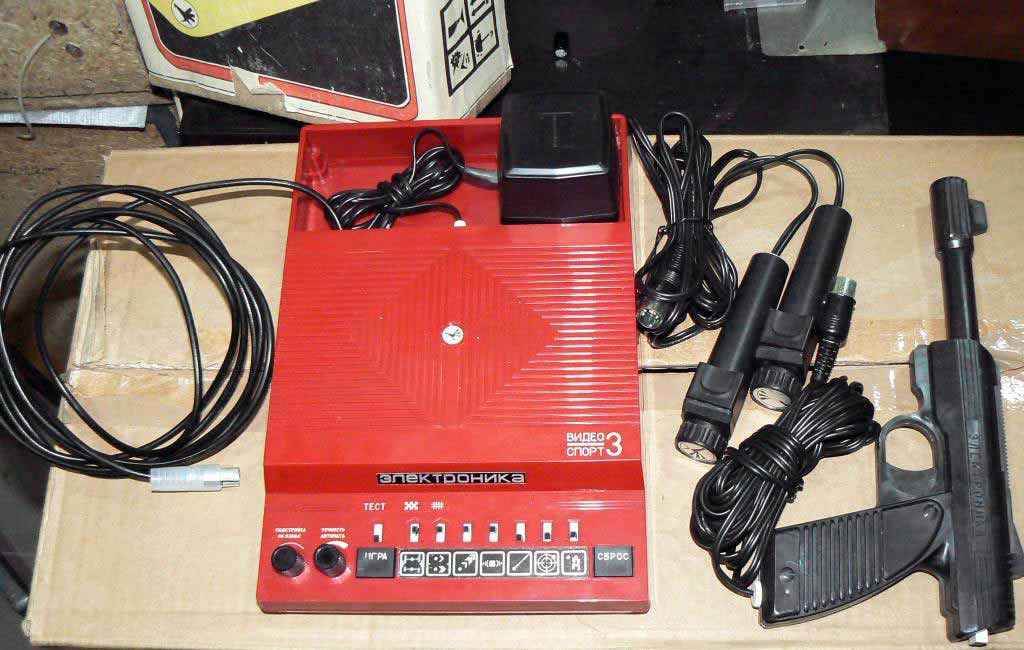
A true step forward came with the 1984 modification — the "Elektronika Videosport-3." The kit included a light photogun and added four shooting game variants: shooting at a stationary target, at a target moving left to right, at a bouncing target, and at a chaotically moving target.
The photogun worked on the light-sensing principle: the console generated a video signal with alternating lines — black and white for the target. When the trigger was pulled, a photosensor in the barrel detected the light, registering a hit.
The video subsystem used a more complex solution with pull-up resistors, diodes, and inverters, allowing the image to display with a gray background — thus adding a third color.
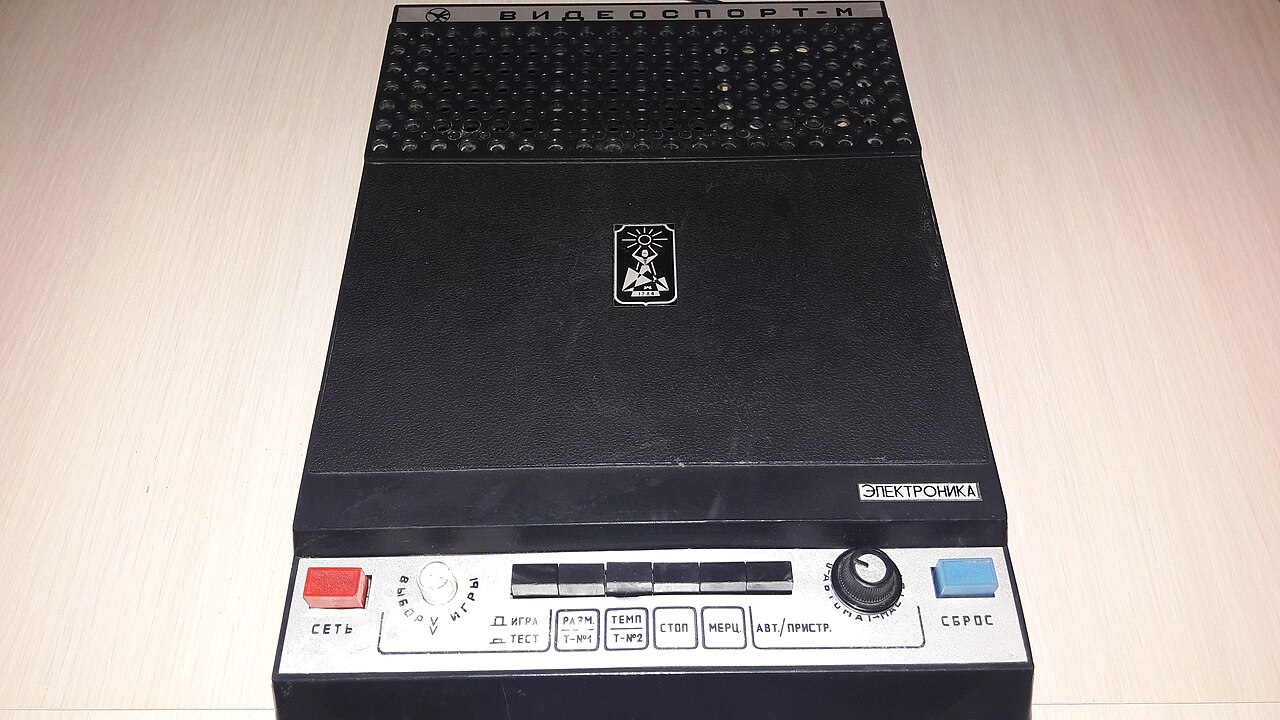
The game controllers differed from competitors: the knobs were made cylindrical for a comfortable grip in the fist, and the dials were placed on top. The console was produced in black, red, and blue cases. It cost 115 rubles.
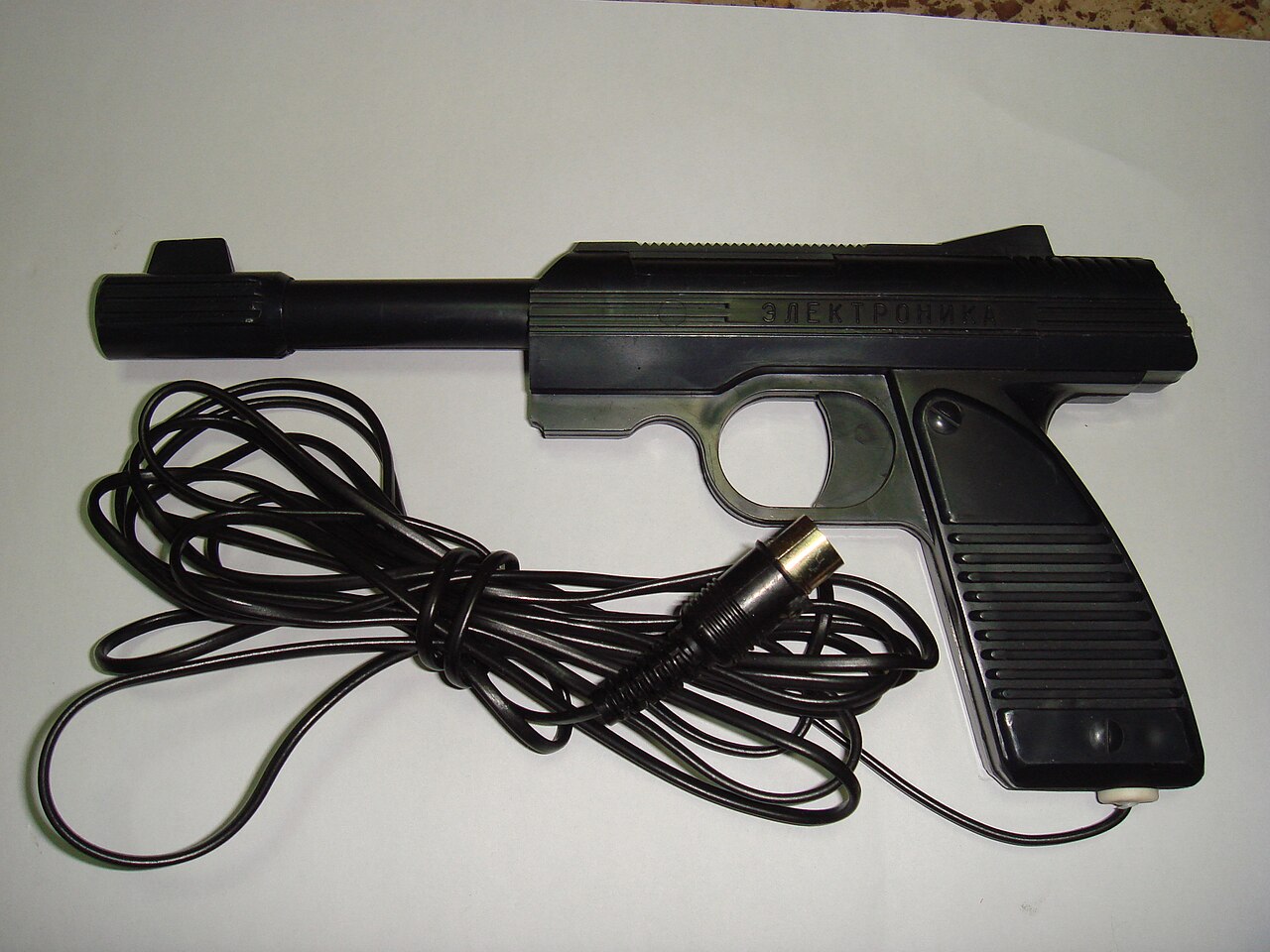
The author notes that the shooting games were the most interesting. Unfortunately, only one gun could be connected, which often caused arguments between brothers.
The End of an Era
By the late 1980s, the first Spectrum clones appeared on the market with a large selection of games and color graphics. On December 17, 1992, the Dendy console finally buried Soviet black-and-white consoles for good.
The author concludes by reflecting that such simple devices became many people's first encounter with electronics and perhaps inspired some of them to pursue radio clubs, university education, and professional careers in the IT industry.