Neither Helicopter Nor Airplane: The History of the Soviet Ka-22
The Ka-22 convertiplane promised to combine a helicopter's vertical takeoff with an airplane's speed and range, setting eight world records before two fatal crashes ended the program in 1964.
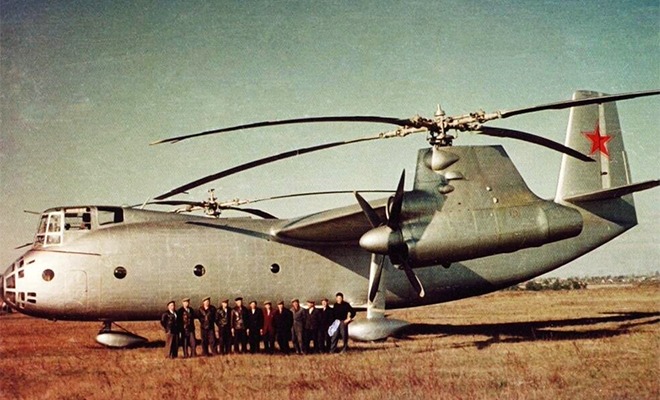
The machine looks like an airplane with the wings and fuselage of a transport aircraft, but on the wingtips spin powerful lifting rotors, like a helicopter. The Ka-22 promised to combine a helicopter's vertical takeoff with an airplane's speed and range, but its path proved dramatic.
Background
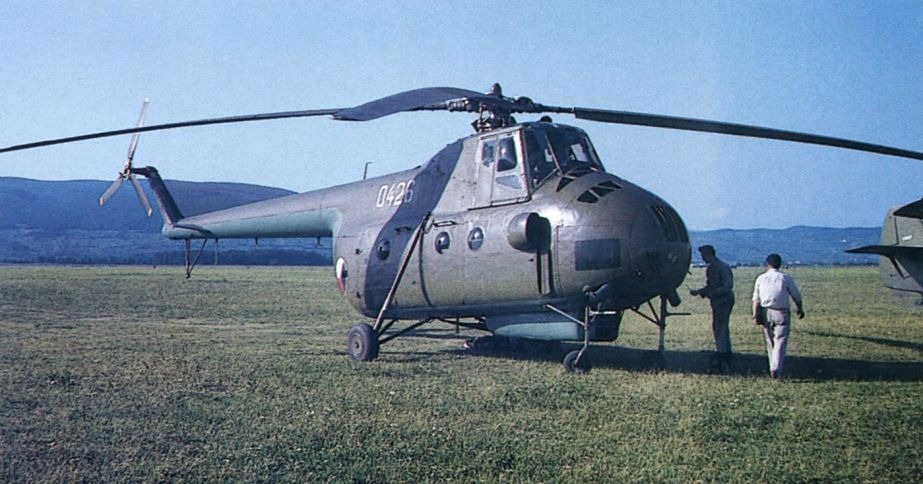
In the early 1950s, Soviet military leadership demanded an aircraft capable of rapidly delivering cargo without airfields. Helicopters like the Mi-4 had vertical takeoff but were slow and had low payload capacity. Airplanes carried cargo quickly but required long runways.
The Mil Design Bureau was developing the Mi-6 helicopter, while the Kamov Design Bureau proposed a radically new rotorcraft scheme (code name "Project X", NATO designated it "Hoop").
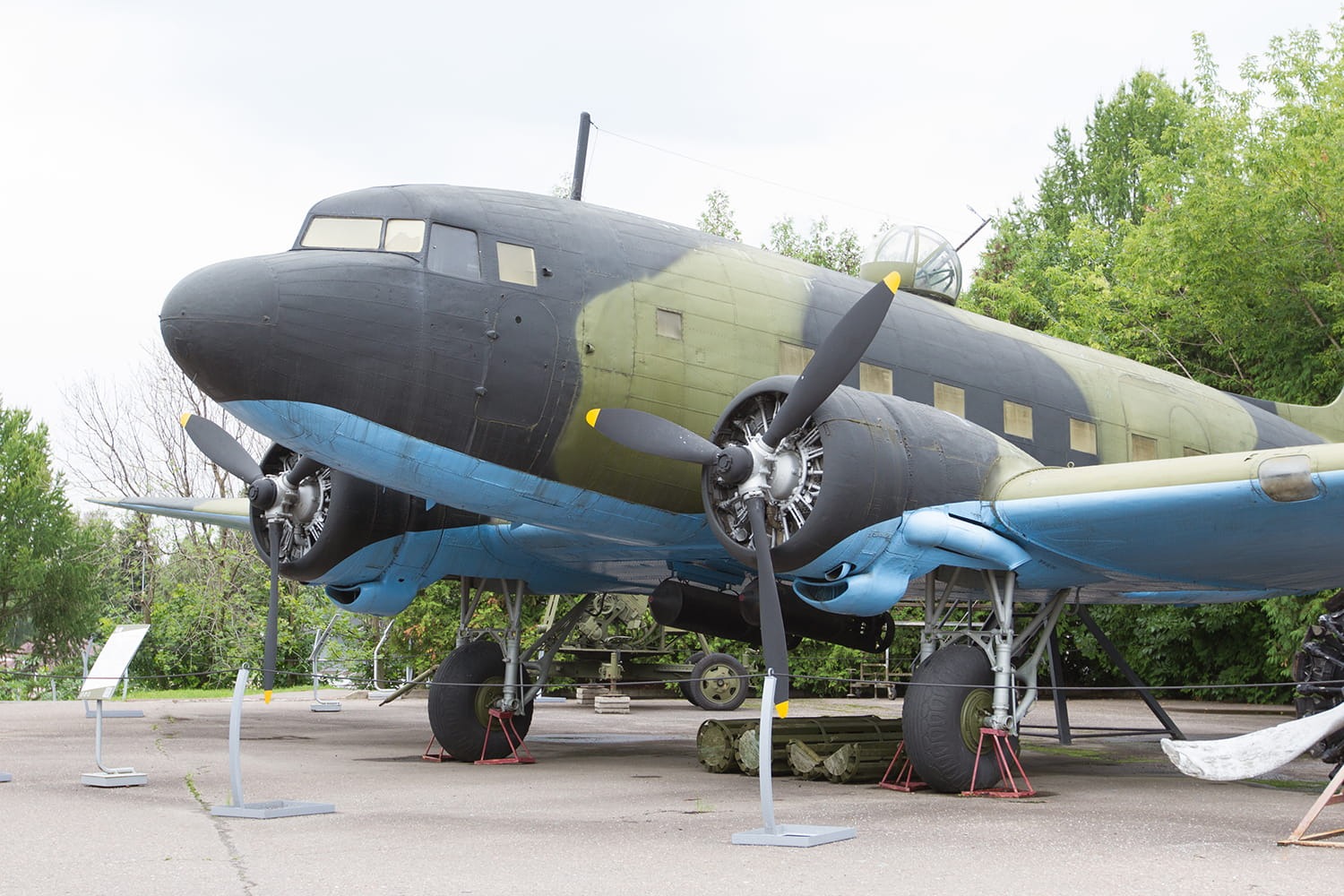
They took the Li-2 transport aircraft (a licensed DC-3) as the basis. In 1956, requirements were refined: the machine needed to carry 5 tons over 700 km or 4 tons over 1,500 km at 350-400 km/h.
Design
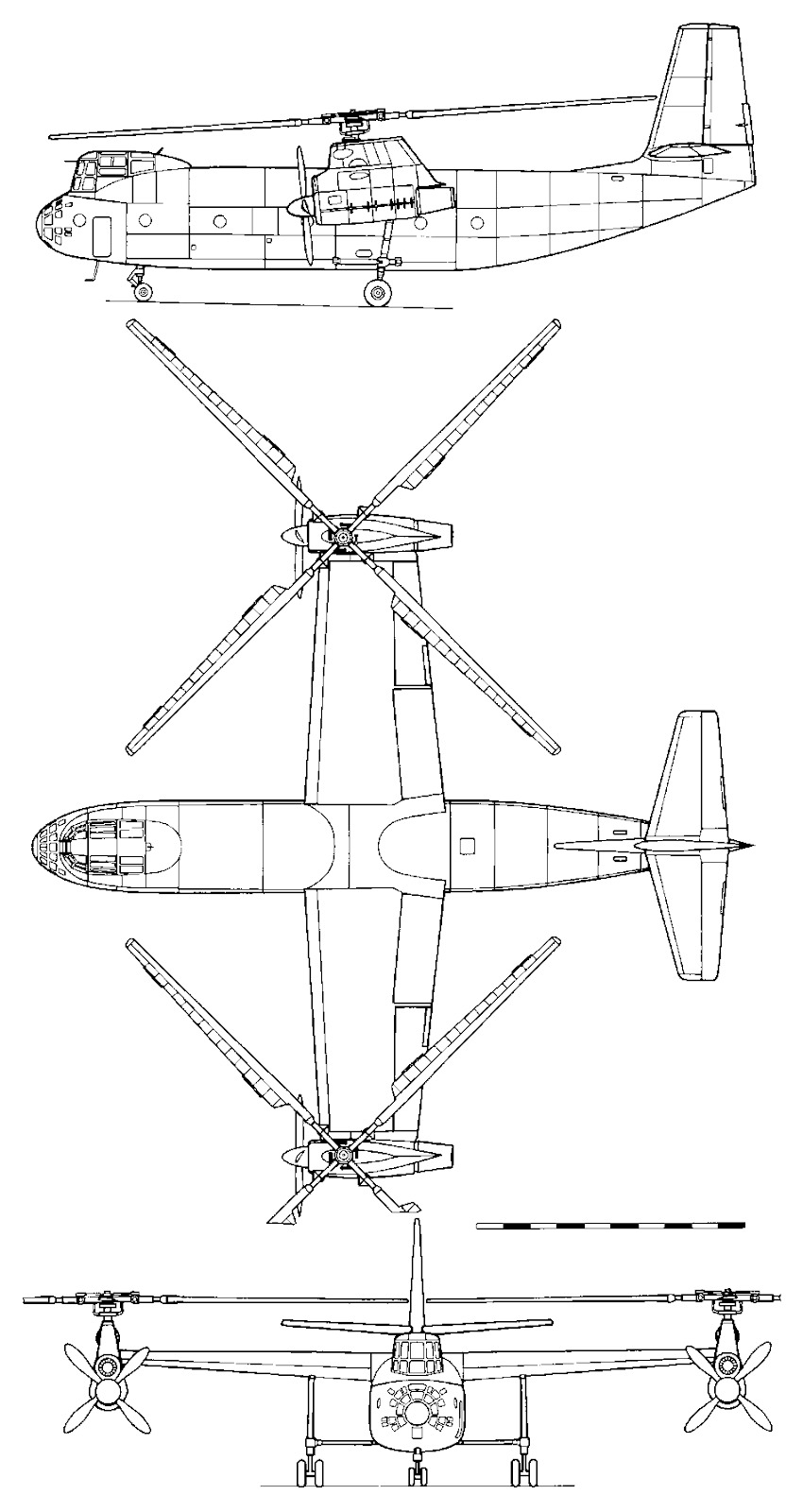
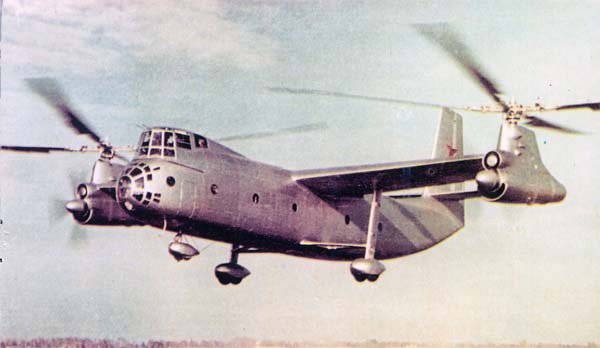
The Ka-22 used a transverse twin-rotor layout: two engine nacelles were mounted on the wingtips, each with a tandem arrangement of rotors -- a lifting rotor on top and a tractor propeller in front.
Specifications:
- Two Soloviev TV-2VK turboprop engines at 5,900 hp each
- Four-blade rotors for lift on top of the nacelles
- Propellers on the noses for horizontal thrust
- Rotors spinning in opposite directions (left counterclockwise, right clockwise)
- No tail rotor required
Transmission: Each engine could transfer power through gearboxes to either the lifting rotor or the tractor propeller. During takeoff and hover, most power went to the lifting rotors. At cruising speed, 90% of lift was generated by the wings, with rotors operating in autorotation mode. The calculated maximum speed exceeded 400 km/h.

Design problems: Flutter plagued the designers. During hovering, the machine experienced severe vibrations, and on one occasion a blade piece 1.5 meters long broke off in mid-air. They had to change blade shapes, materials, and even the direction of rotor rotation. Takeoff weight reached 37-42 tons.
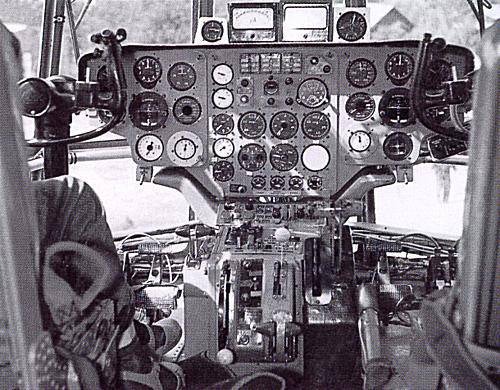
Cockpit: It combined control elements from an airplane (control columns) and a helicopter (levers for controlling blade pitch). Piloting required simultaneously flying both an airplane and a helicopter; the slightest error in power distribution threatened disaster.
Tests and Records
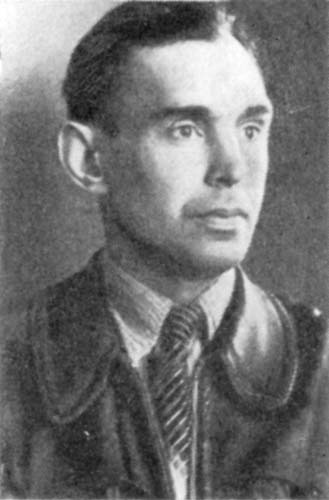
- August 15, 1959: Test pilot Dmitry Efremov first lifted the machine off the ground (tethered hover)
- April 20, 1961: First circuit flight. A flutter incident occurred, but they managed to land
- July 1961: Display at the Tushino air parade
Dimensions:
- Length: ~26 meters
- Wingspan: ~28 meters
- Rotor diameter: 22.5 meters each
- Capacity: up to 80 paratroopers or heavy equipment
Records in 1961:
- November 7, 1961: Speed of 356.3 km/h (world record for rotorcraft)
- November 24, 1961: Payload of 16,485 kg lifted to 2,557 meters
- Eight world records total for speed, altitude, and payload
However, testing did not go smoothly: transmissions regularly failed, gearboxes overheated, and engine problems arose. By 1962, three prototype units had been brought to working condition.
Disasters
August 28, 1962: The first tragedy. The convertiplane was being ferried from the Tashkent aircraft factory to Moscow. During an intermediate landing at the Dzhusaly airfield, the machine suddenly banked sharply to the left, lost altitude, and crashed. On impact it broke apart and caught fire -- all seven crew members perished. The cause: an ordinary nut securing a control cable had unscrewed and come off in the control mechanism.
The death of the crew, including the experienced pilot Efremov, was a devastating blow to the program, cooling the enthusiasm of its supporters.
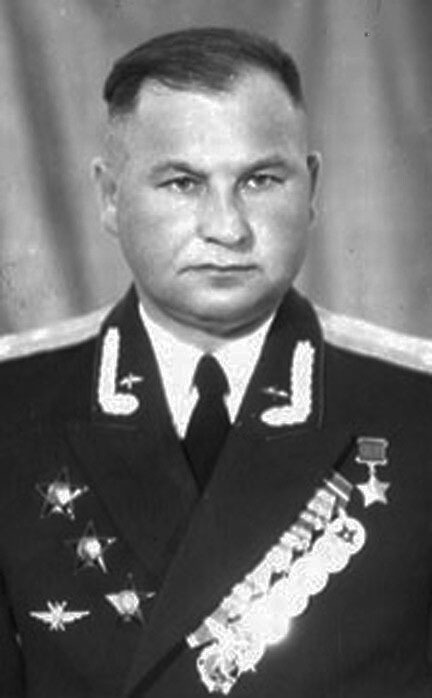
July 16, 1964: The second tragedy. During a test flight near Moscow, the crew of S.G. Brovtsev was performing a right turn. The machine suddenly entered an uncontrolled dive at a 60-70° angle, rolled onto its side, and rapidly lost altitude. The pilot's attempts to correct the fall were unsuccessful. The Ka-22 slammed into the ground. The commander and flight engineer were killed.
End of the Project
After two disasters, military confidence evaporated. Simultaneously, the competing Mi-6 had successfully completed testing. The "Bear" was inferior to the Ka-22 in speed but nearly matched it in payload capacity and range, while being far simpler and more reliable.
1964: The State Commission issued its verdict -- the Ka-22 would not enter serial production. All work was terminated. The four units built were scrapped; not a single one survived.
Production problems: Serial assembly was planned at the Tashkent aircraft factory, but quality there was unsatisfactory -- problems with part precision, vibrations from misaligned assemblies, unfinished gearboxes. The aircraft demanded jeweler-like manufacturing precision that the factory simply did not possess.
Legacy
Despite its sad ending, the Ka-22 left a notable mark on aviation. It became the progenitor of the tiltrotor concept -- machines with tilting rotors combining the properties of helicopters and airplanes.
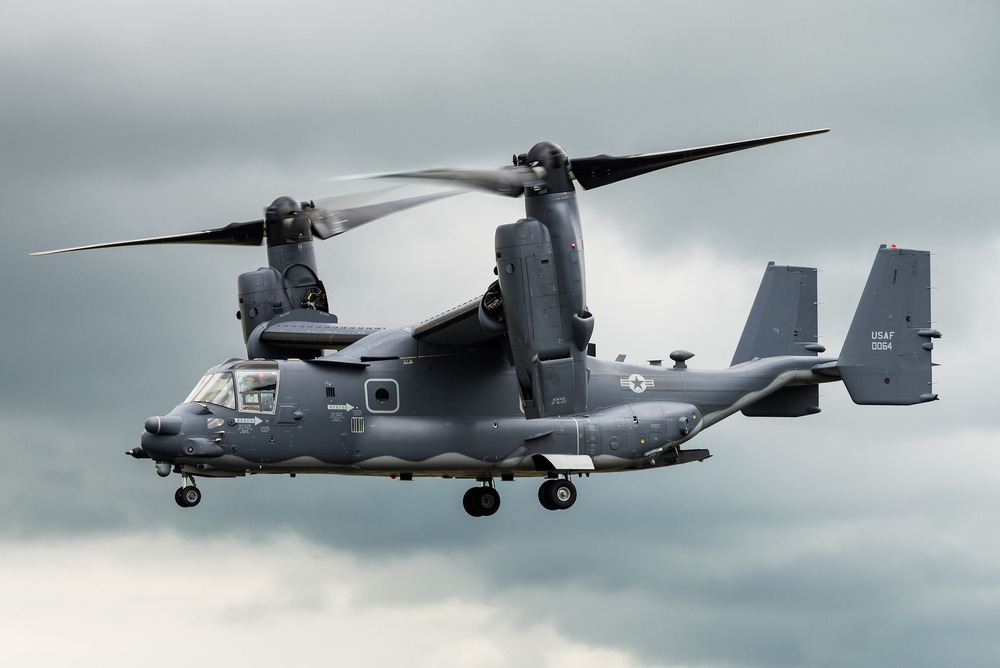
Abroad, American prototypes like the Bell XV-3 appeared, followed by the famous V-22 Osprey.
Records: A number of the Ka-22's world records for speed and payload remain unbroken to this day.
Scientific legacy: For the Kamov Design Bureau, the experience was not in vain. The knowledge gained in large-blade aerodynamics, gearbox vibration loads, and complex system control proved invaluable in developing subsequent helicopters.
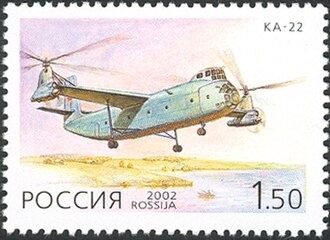
Memory: Today, only archival photographs and a postage stamp issued in Russia in 2002 remain as reminders of this remarkable machine.