The Sounds of Music: Sega Mega Drive
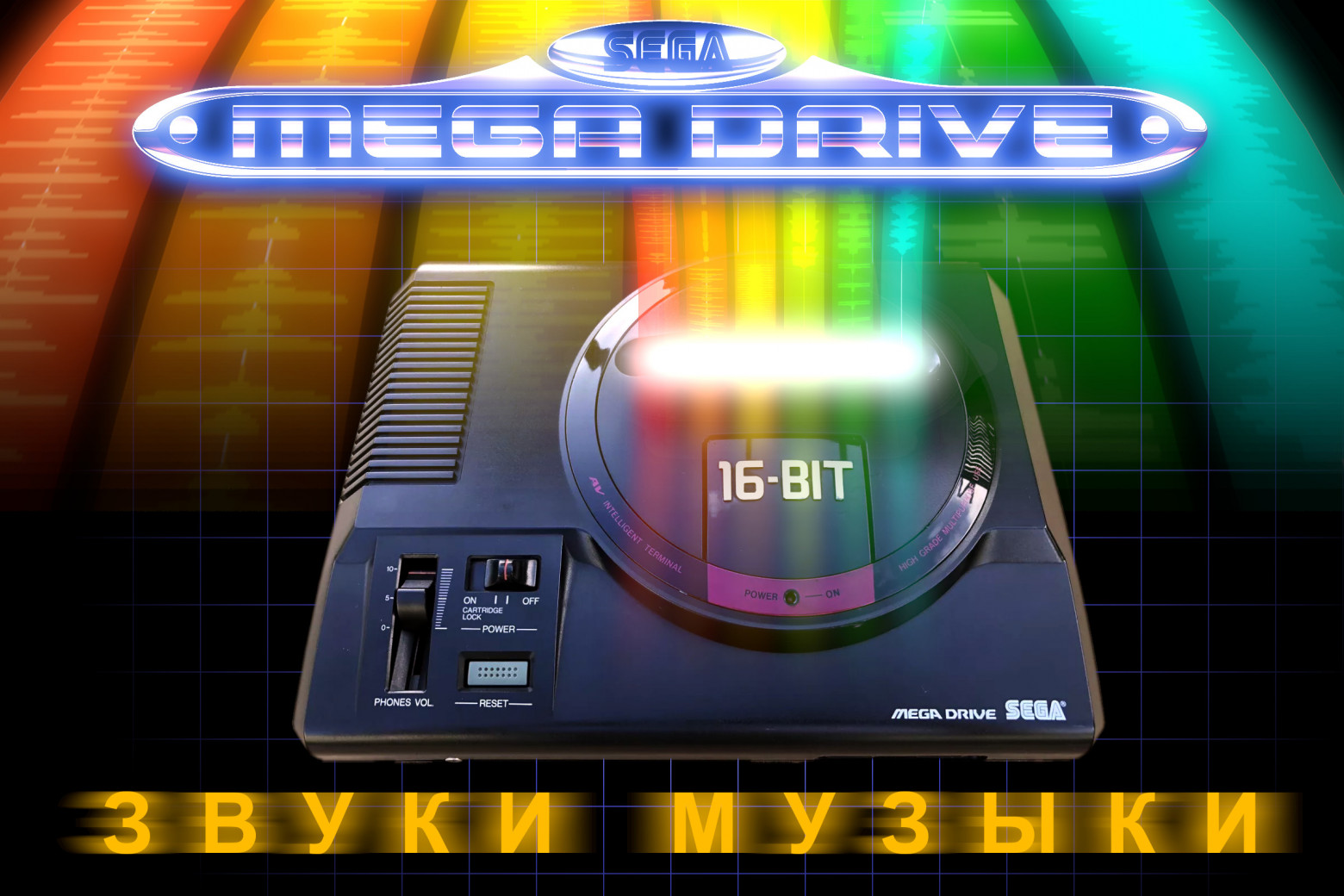
A deep technical dive into the sound architecture of the Sega Genesis/Mega Drive, covering its dual-chip audio system, FM synthesis, the Z80 co-processor, sound drivers like GEMS and SMPS, and how developers pushed the hardware to its limits.
Historical Context
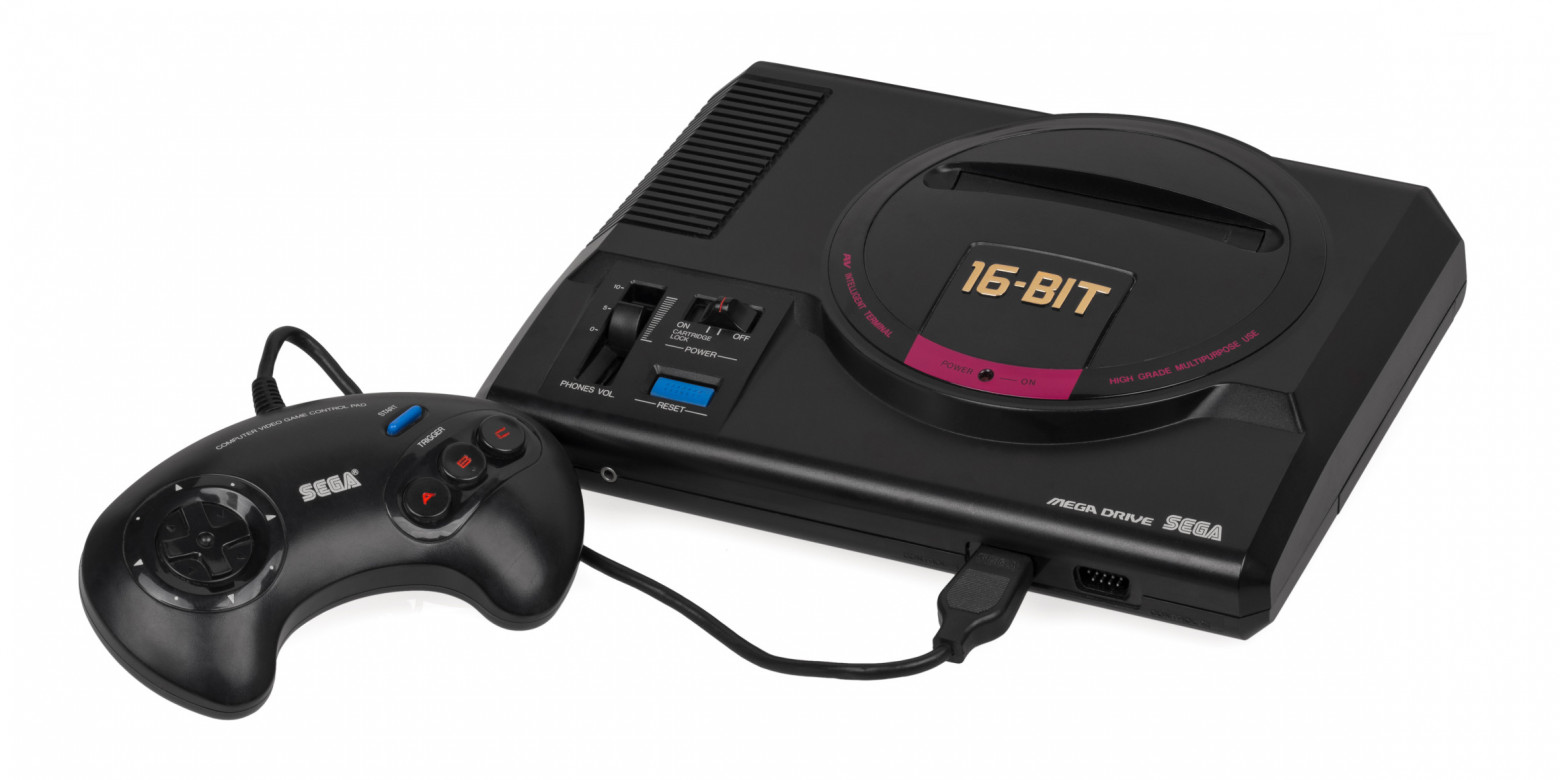
The fourth generation of game consoles represented a pivotal moment in gaming audio. Two competing philosophies emerged: Sega's Genesis used synthesizers that generated sounds from parameters, while the Super Nintendo employed a digital sample player with limited memory. This fundamental difference shaped the distinct sonic identities of both platforms for an entire era.
The Sound System Architecture
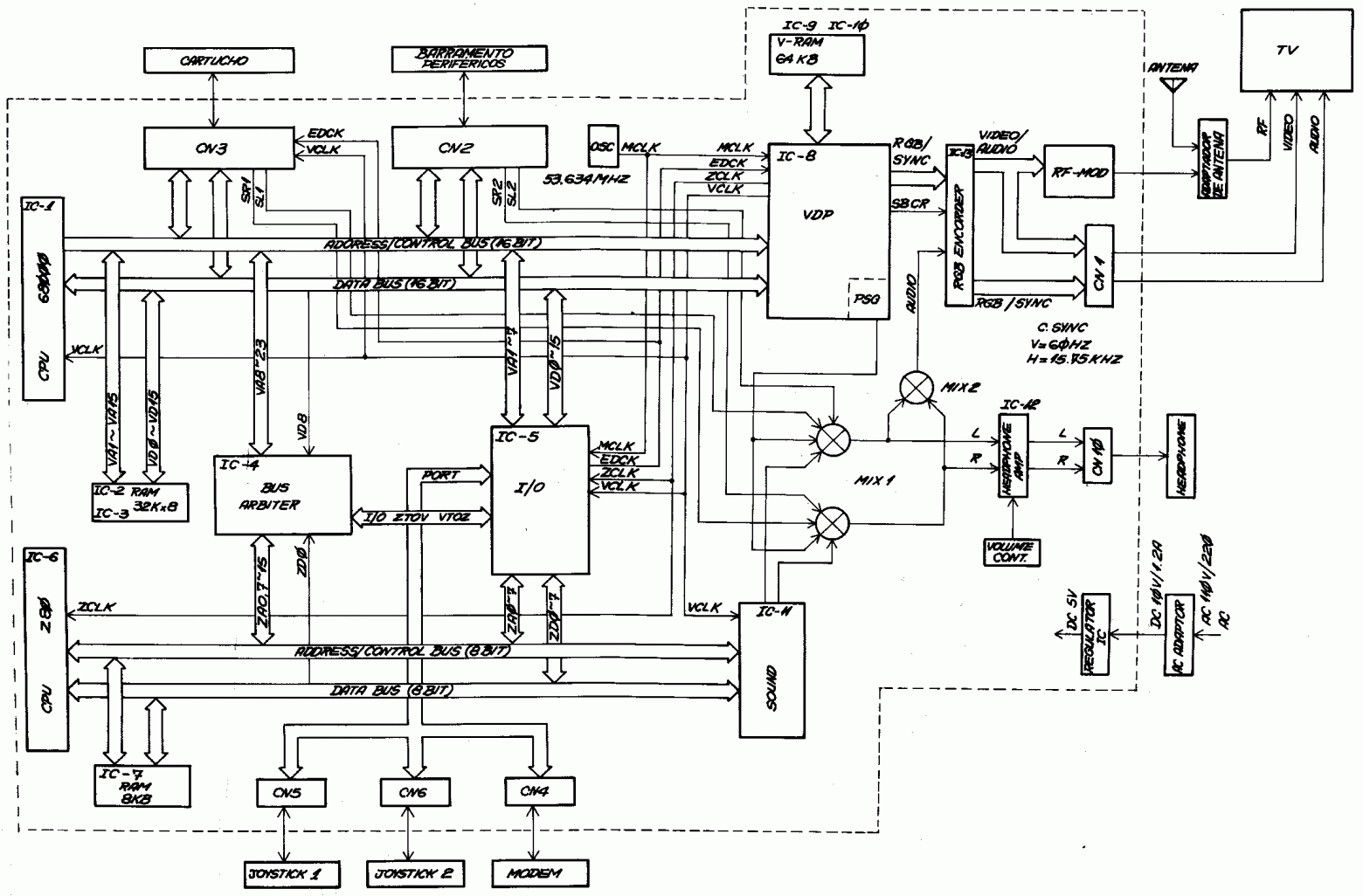
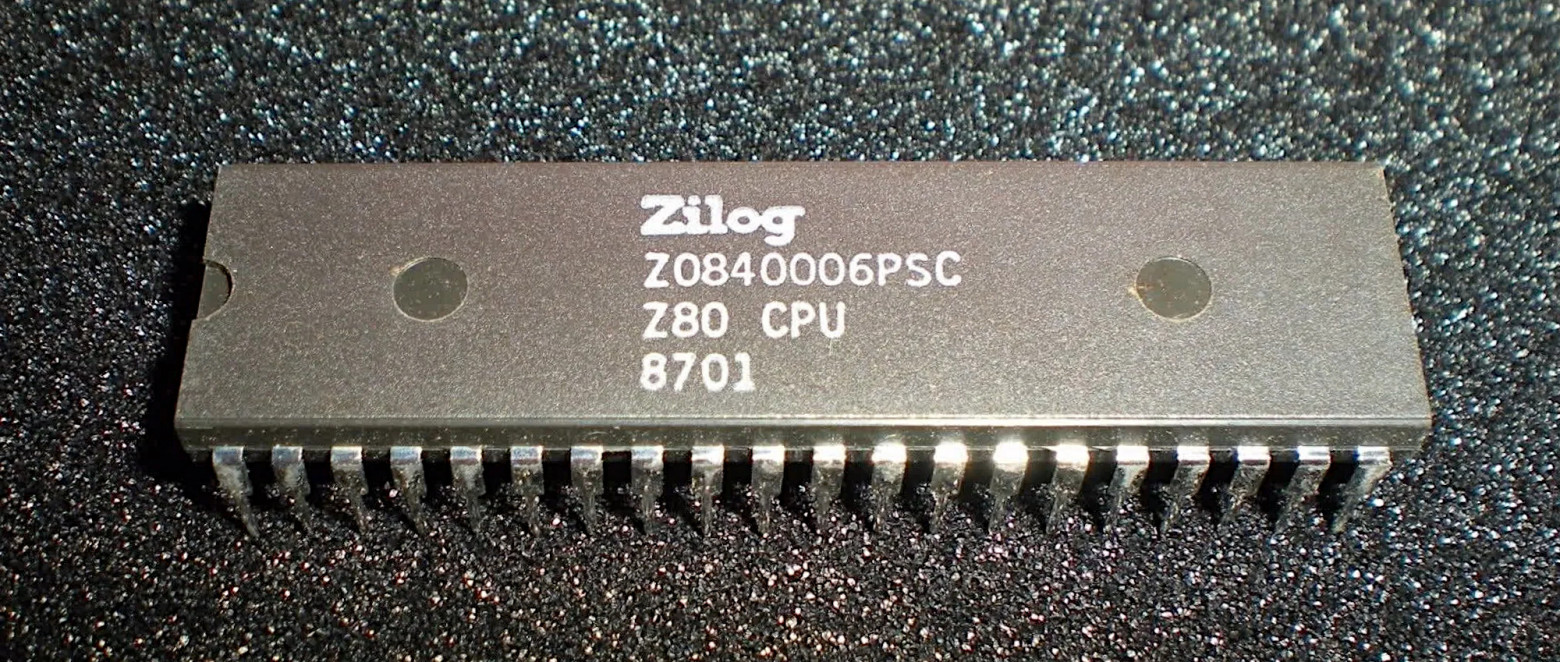
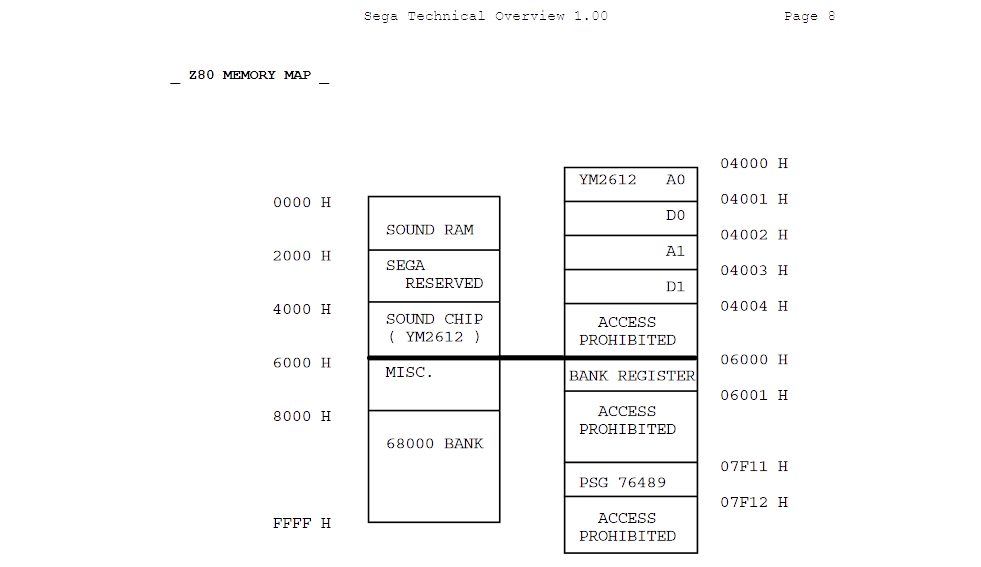
The Sega Genesis features two distinct sound synthesizers managed by a dedicated Zilog Z80 processor running at 3.58 MHz with its own 8 KB of RAM. The Z80 operates on an independent bus containing sound chip registers and a 32 KB window into the main system memory.
Z80 Memory Banking
Accessing the main 68000 address space from the Z80 requires a peculiar banking mechanism. Nine sequential writes to an 8-bit bank register are needed, with each write contributing one bit to a 9-bit shift register. This allows addressing up to 16 MB (2^9 x 32 KB), but the procedure is inherently slow.
The assembly code for bank switching:
ld bc,BANK_NUMBER  ;9-bit bank number
ld hl,0x6000

ld a,c
ld (hl),a      ;A15
rra
ld (hl),a      ;A16
rra
ld (hl),a      ;A17
rra
ld (hl),a      ;A18
rra
ld (hl),a      ;A19
rra
ld (hl),a      ;A20
rra
ld (hl),a      ;A21
rra
ld (hl),a      ;A22
ld (hl),b      ;A23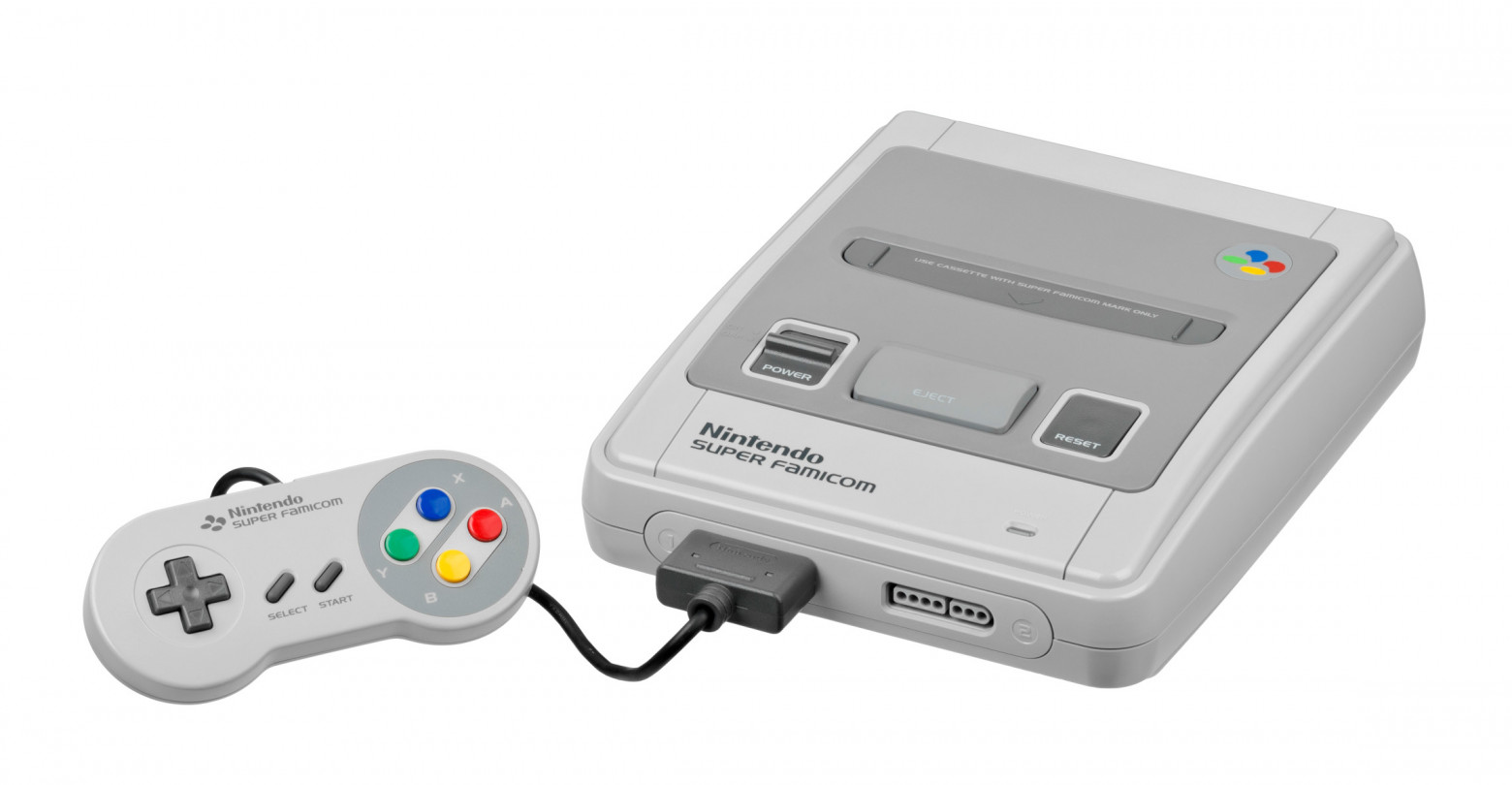
PSG: The Programmable Sound Generator
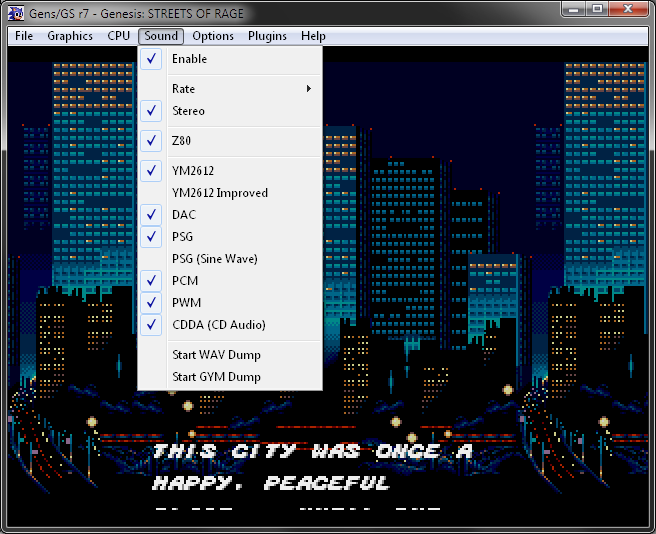
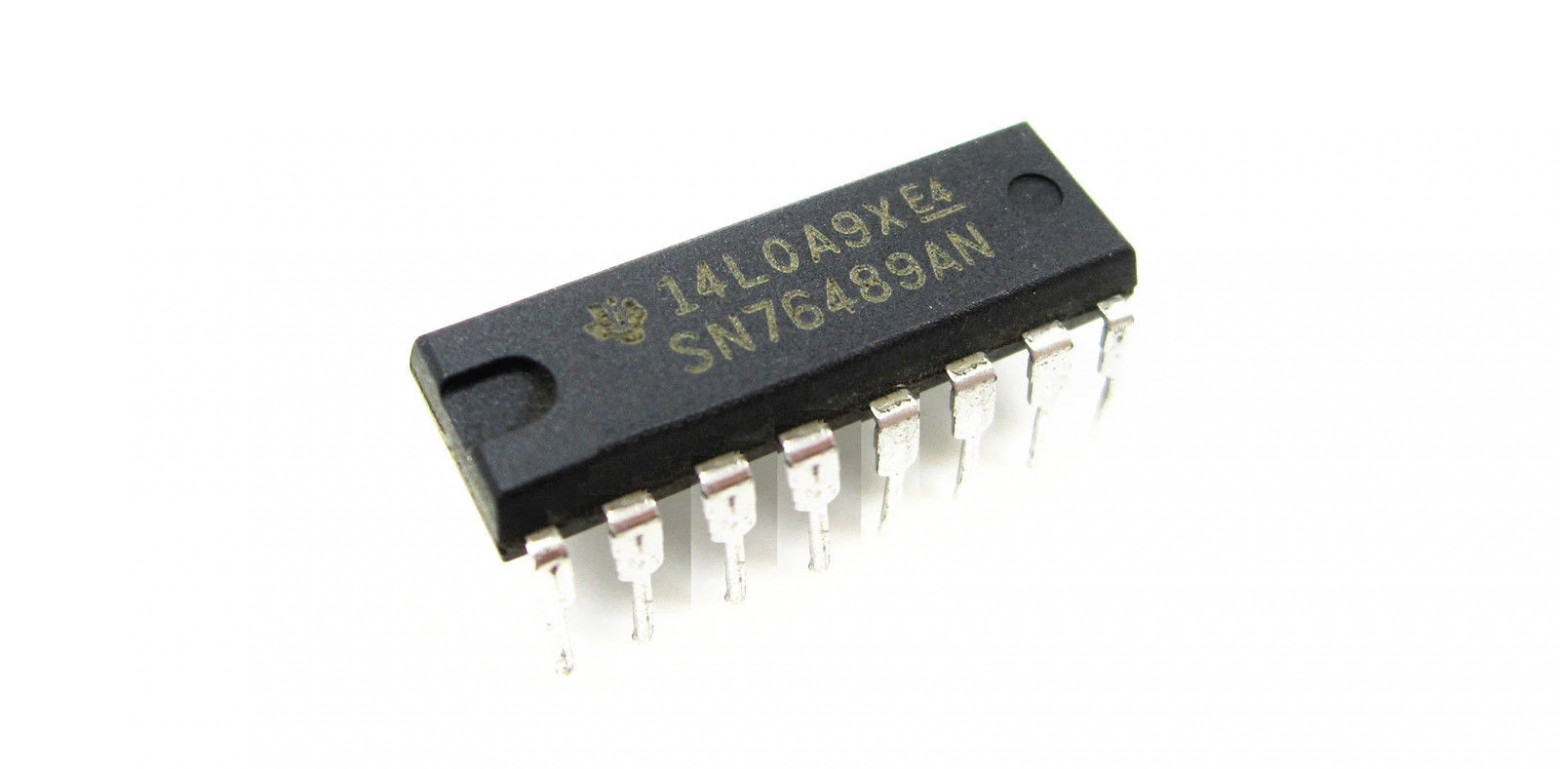
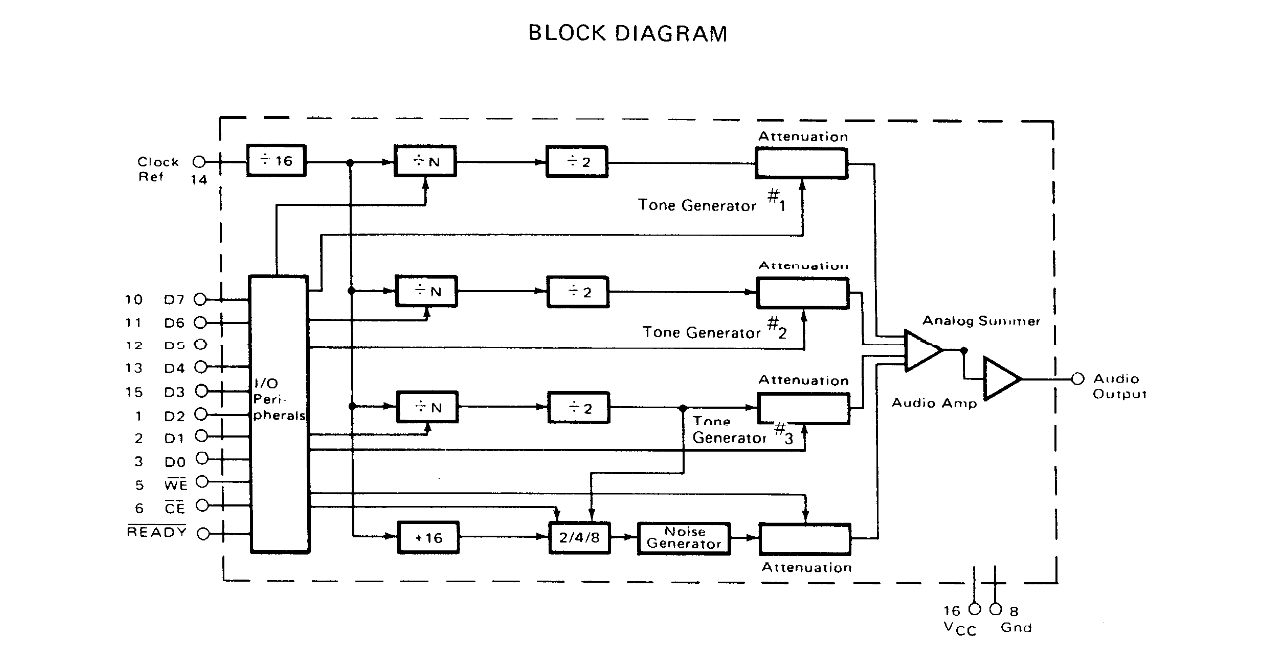
The PSG chip (SN76489, originally TMS9919 by Texas Instruments, 1977, also known as DCSG — Digital Complex Sound Generator) contains three tone channels with volume control and a separate noise channel. Each tone channel uses a 10-bit counter-divider, provides 16 attenuation levels, and the noise channel employs a 16-bit Linear Feedback Shift Register (LFSR).
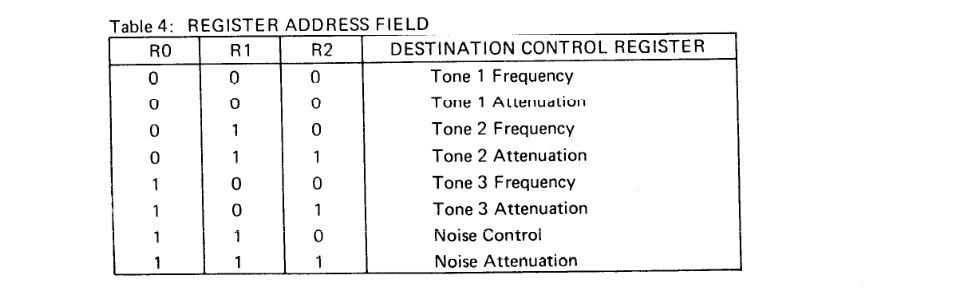
The chip is controlled through a single 8-bit external port that accesses eight internal registers. You select a register and write either 4 or 6 bits to it.
A significant limitation: the lowest achievable frequency is approximately 109 Hz (the A note in the second octave), which severely restricts bass capabilities. This explains why Master System music tends to have a relatively high-pitched sound, and why Genesis games typically use PSG for upper-register accompaniment rather than bass lines.
FM Synthesis: The YM2612
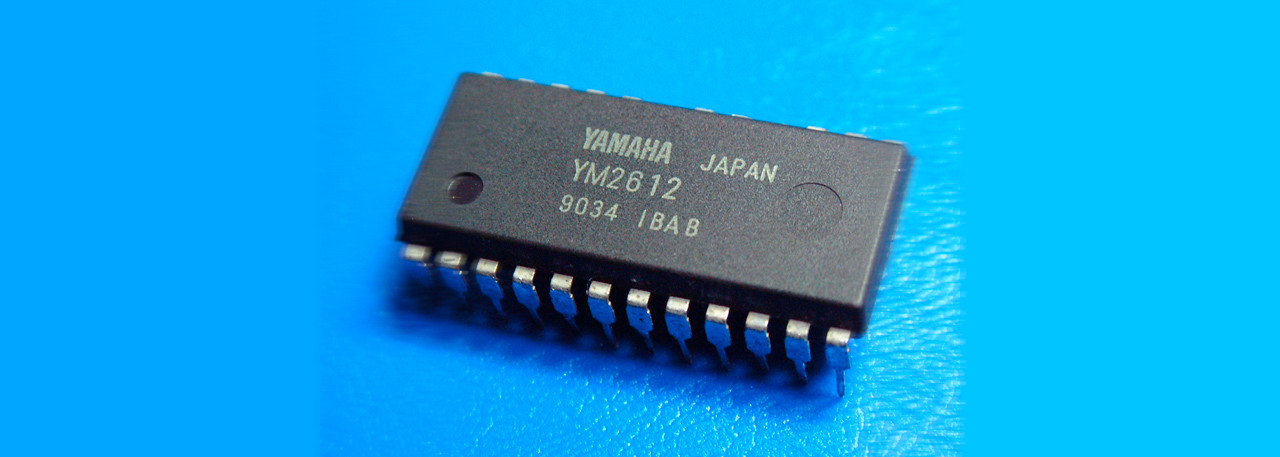
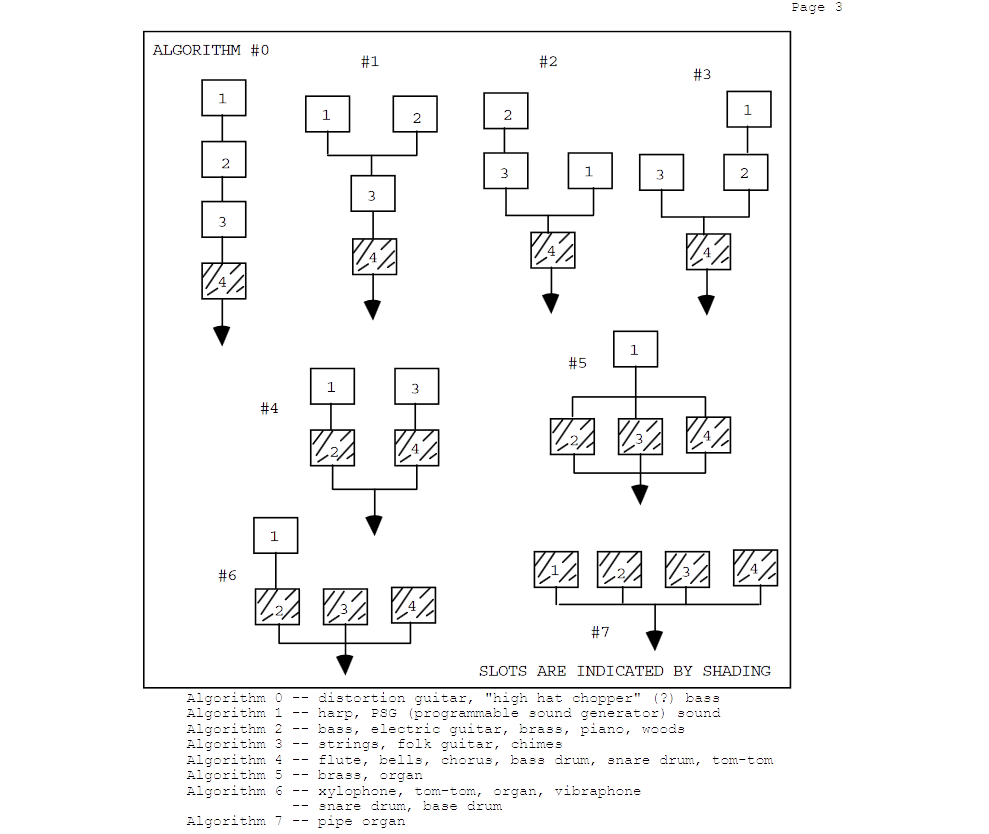
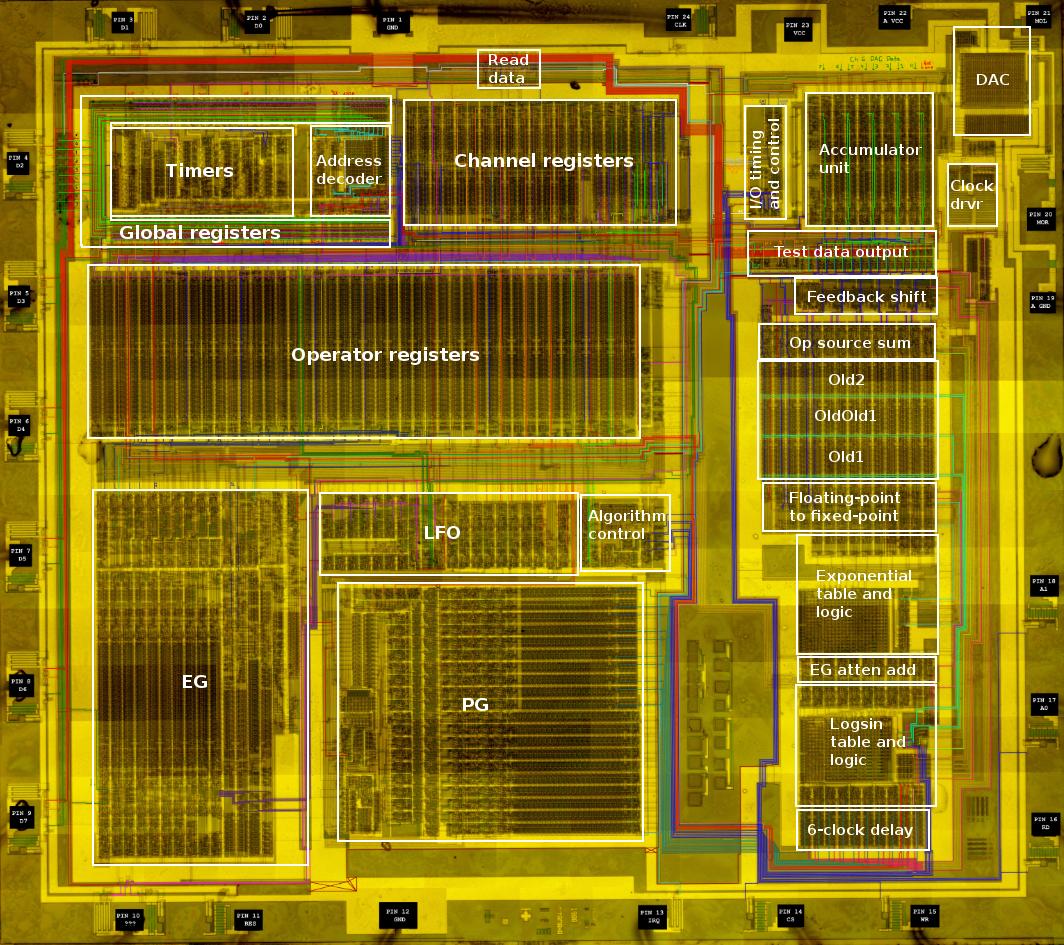
The heart of the Genesis sound is the Yamaha YM2612 FM synthesizer. It provides six FM synthesis channels, each with four sine-wave generators called operators, and eight connection algorithms that determine how operators interact.
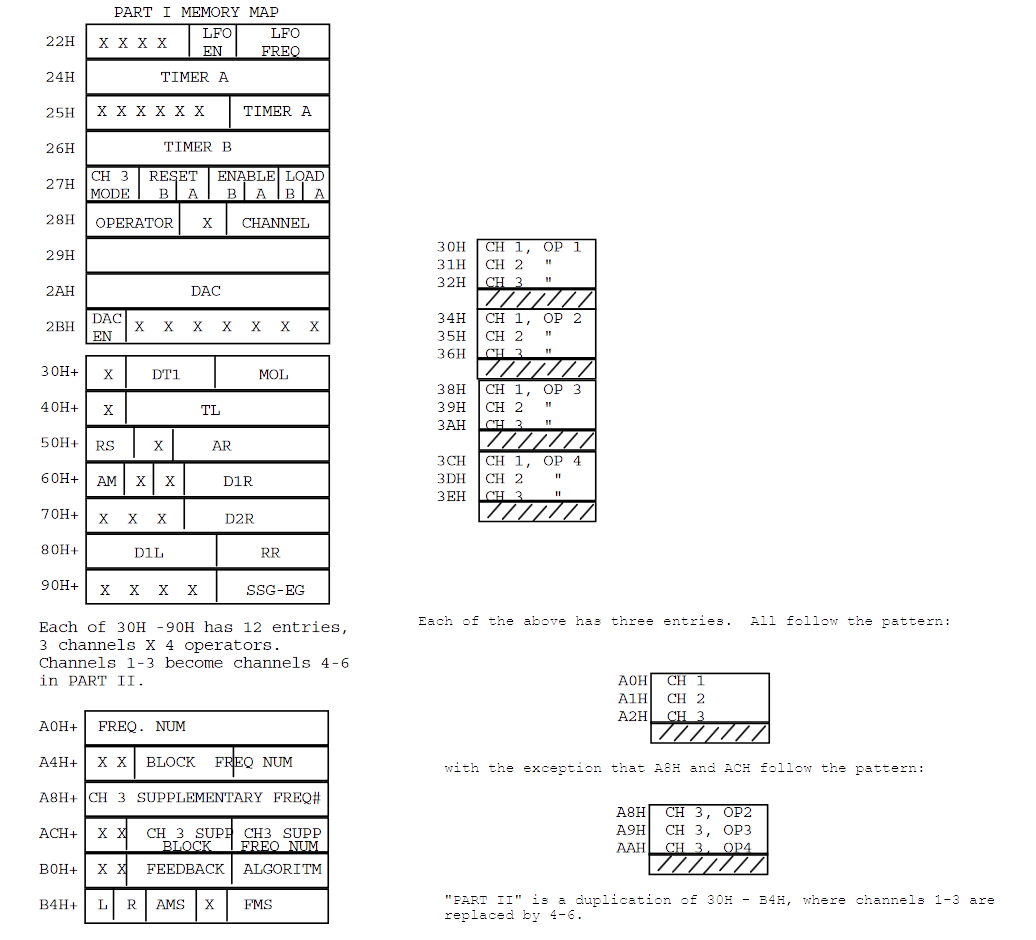
Each operator contains parameters for frequency multiplication and fine deviation. The frequency is set using a 14-bit value: 3 bits for the block (octave) and 11 bits for the pitch. The chip operates at an internal sampling frequency of 53 kHz.
ADSR Envelopes
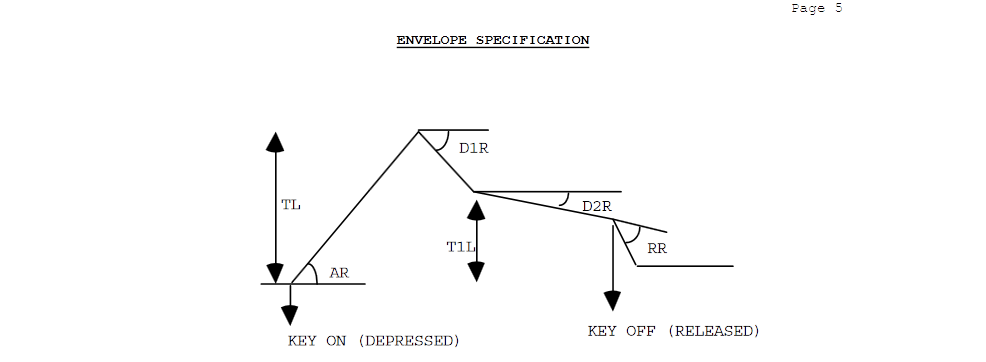
Each operator has a full ADSR (Attack, Decay, Sustain, Release) envelope controlling its amplitude over time. Operators can be triggered simultaneously or independently, allowing for complex timbral evolution within a single channel.
The Eight Algorithms
The eight algorithms range from all four operators connected in series (producing highly complex harmonics) to fully parallel configurations where each operator outputs its own independent pitch. This versatility is what gives the Genesis its distinctive ability to produce both rich, evolving timbres and multi-voice chord-like sounds from a single channel.
Register Access and LFO
The YM2612 exposes dozens of registers accessed through four 8-bit ports. Changing a channel's frequency requires two sequential writes. The chip also includes one shared low-frequency oscillator (LFO) with eight possible frequencies in the 4–72 Hz range, used for vibrato and tremolo effects across all channels.
The third channel can operate in a special "operator split" mode, where each of its four operators receives an independent frequency. This can be used for more complex timbres or to effectively create up to four simple additional voices.
DAC: Digital Sound Output
The YM2612 includes a simple passive 8-bit DAC, similar to the classic Covox device. Writing to a specific register switches channel 6 from FM synthesis to DAC mode, and the digital value is sent directly to the output with no buffering.
This means the software must ensure stable sample delivery. Poor Z80 synchronization results in "raspy, rough, discontinuous sound." The key optimization is that the Z80 must buffer sample data from ROM during the active video scan period and avoid ROM access during the vertical blanking interval (when the 68000 and DMA controller may be using the bus).
The maximum output frequency is limited to 53 kHz. As an alternative, PSG attenuation can function as a crude 4-bit DAC for additional digital channels.
Clean Sound: Hardware Revisions
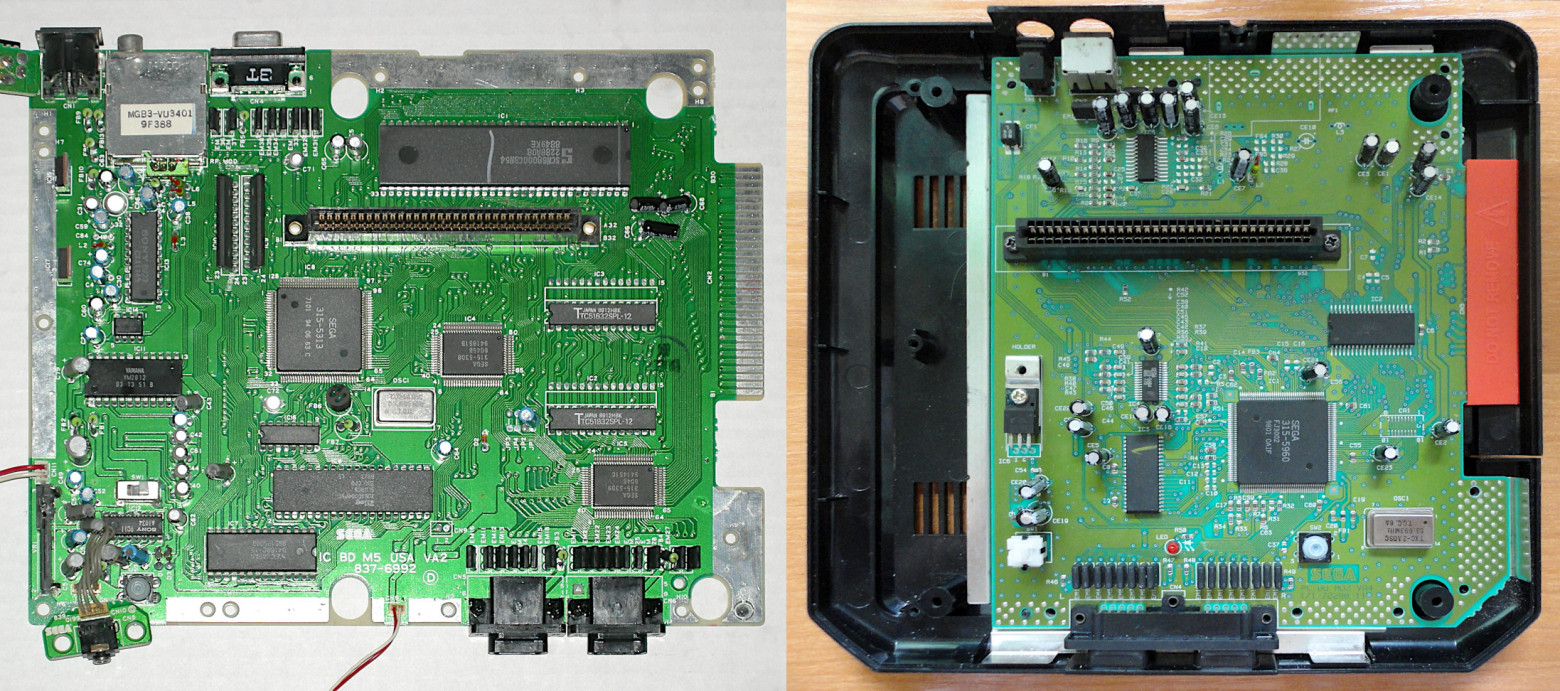
The Genesis underwent approximately 15 hardware revisions that significantly affected sound quality. Early versions used the original YM2612, which exhibited characteristic stepped volume changes at low levels — a quirk that some composers like Yuzo Koshiro deliberately exploited as an artistic effect. Later CMOS revisions replaced it with the YM3438, which reduced this artifact but changed the character of the sound.
The analog output section was often poorly designed, with low-quality operational amplifiers causing muffled, distorted sound with high noise levels in certain revisions. The community eventually developed the "Crystal Clear Audio Mod," which replaces the entire analog output circuit, eliminating all defects and removing high-frequency limitations. However, this mod can expose poorly arranged soundtracks that relied on the hardware's natural filtering.

Sound Drivers: GEMS
GEMS (Genesis Editor for Music and Sound effects), developed by Recreational Brainware for Sega of America, was used in approximately 200 games. It was a DOS-based graphical editor with a non-intuitive interface that included a MIDI cartridge and synthesizer hardware. The workflow involved MIDI conversion, FM instrument assignment, and sound editing.
GEMS was technically a competent, powerful solution but notoriously difficult to master and required frequent backups. Notable games using GEMS include Comix Zone, Dune II, Vectorman, and Earthworm Jim. The worst example of GEMS usage is widely considered to be the Doom port to the 32X.
Sound Drivers: SMPS
SMPS (Sample Music Playback System), developed by Sega of Japan, was the Japanese counterpart to GEMS. It existed in multiple variations with different capabilities, was available for both the 68000 and Z80 processors with various feature options, and appeared in dozens of games spanning the entire Genesis era.
Quality varied enormously depending on the historical period and specific version used. Notable high-quality SMPS titles include the Golden Axe series, Sonic the Hedgehog series, Shinobi, and the first Streets of Rage.
Japanese developers generally achieved superior results because they possessed prior experience with similar FM synthesizers in arcade and home computer contexts, while many Western developers lacked this technical foundation.
Other Notable Drivers and Games
Several third-party drivers produced distinctive results:
- Toy Story: Featured a MOD-format player on the title screen, reproducing four-channel music with realistic instruments — one of the best achievements in digital sound on the Genesis
- Contra Hard Corps: Dynamically changed FM instruments and implemented an advanced macro system
- Time Trax: An unreleased game by Tim Follin demonstrating a sophisticated macro system with additional software envelopes
- Red Zone, Sub-Terrania, The Adventures of Batman & Robin: Used the Zyrinx driver, producing a unique European techno sound
- Batman The Videogame: The Sunsoft driver, exemplifying high quality standards
- Castlevania Bloodlines, Contra Hard Corps, Rocket Knight Adventures, Sunset Riders, Lethal Enforcers: The Konami driver, representing what many consider the perfect quality standard for Genesis audio
Modern Tools
Contemporary tools for creating Genesis music include:
- Deflemask (2011): A multi-platform, multi-system tracker with Genesis support, including a converter to Echo driver format
- Furnace Tracker (2021): An open-source Deflemask-compatible project providing powerful development capabilities, supporting numerous sound chips plus fictional devices, with VGM format export and playback drivers
- Earlier trackers: MVS Tracker (2006, adapted for Neo-Geo MVS with four FM channels) and TFM Music Maker (2006–2011, supporting YM2203 with Genesis export)
- Native console trackers: Prodigy Tracker, YMDj, and Chaos Tracker (2014–2018, project discontinued); MDtracker (recent, with limited emulator and flash cartridge support)
- VST plugins: FMDrive and SPSG (commercial, accurate emulation); VOPM and YM2612 VST for FM synthesis; SN-EMU, Soft PSG, and ProtoPSG for PSG emulation
Conclusion
The Sega Genesis sound system, with its combination of FM synthesis and programmable sound generation managed by a dedicated Z80 processor, created one of the most distinctive audio identities in gaming history. The platform's limitations forced developers to become deeply creative, and the best results — from Yuzo Koshiro's Streets of Rage to Konami's Castlevania Bloodlines — remain benchmarks of what skilled composers could achieve within tight hardware constraints.
FAQ
What is this article about in one sentence?
This article explains the core idea in practical terms and focuses on what you can apply in real work.
Who is this article for?
It is written for engineers, technical leaders, and curious readers who want a clear, implementation-focused explanation.
What should I read next?
Use the related articles below to continue with closely connected topics and concrete examples.