Russian Arduino: Did They Just Slap a Label on a Chinese Device Again?
The story of ELBEAR ACE-UNO — an Arduino-compatible board from Siberia built on Russia's only domestically manufactured RISC-V microcontroller MIK32 Amur, from first failed prototype to educational robotics kits.
That question is often one of the first in the comments! And unfortunately, some companies do exactly that... But not us!
The Beginning
In February 2024, we released the first sample of an Arduino-compatible board v0.1 in the Arduino UNO form factor. Its standout feature: it's based on the Russian MIK32 Amur microcontroller from Mikron — the only modern microcontroller on the promising RISC-V architecture that is actually designed and manufactured in Russia! As is often the case, the first board came out ugly, and of course didn't work (we made mistakes in the rush)...
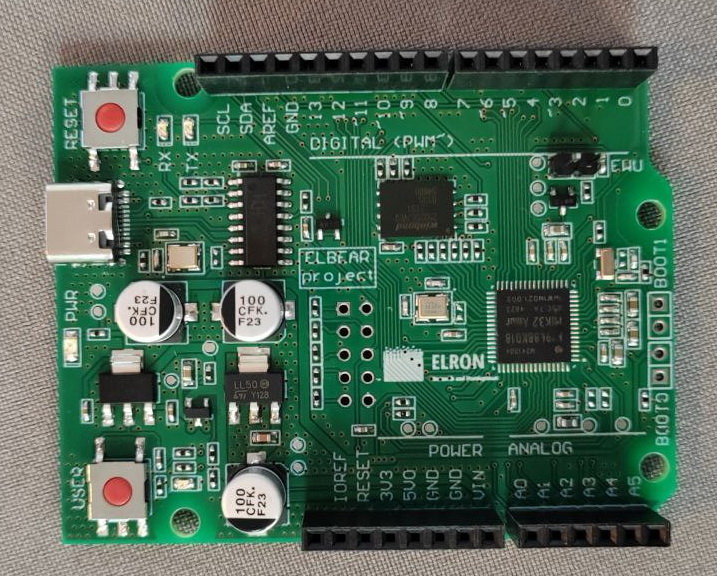
But we're persistent people from Siberia. We worked on the circuit design, worked on the aesthetics, re-manufactured the boards a couple of times, and in April 2024 we presented the working ELBEAR ACE-UNO.
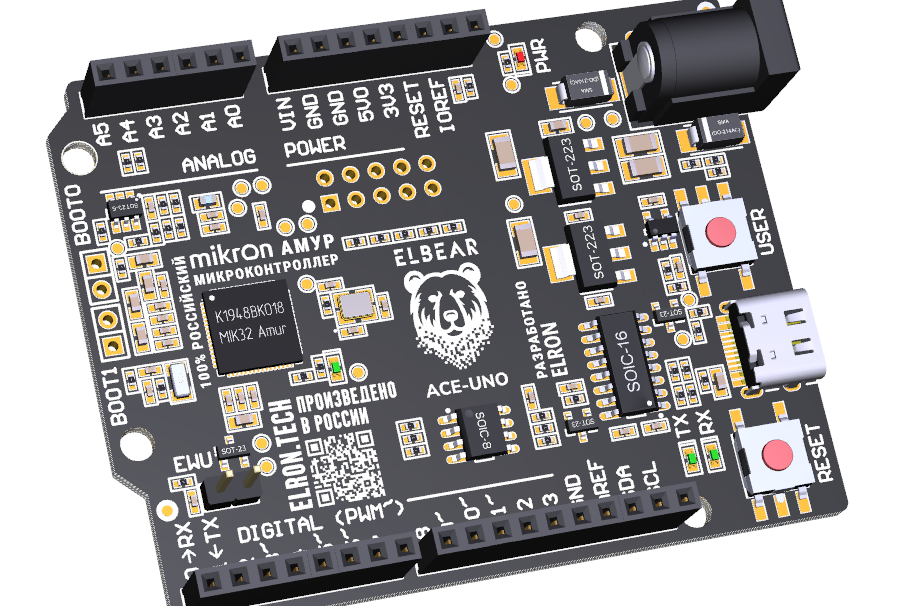
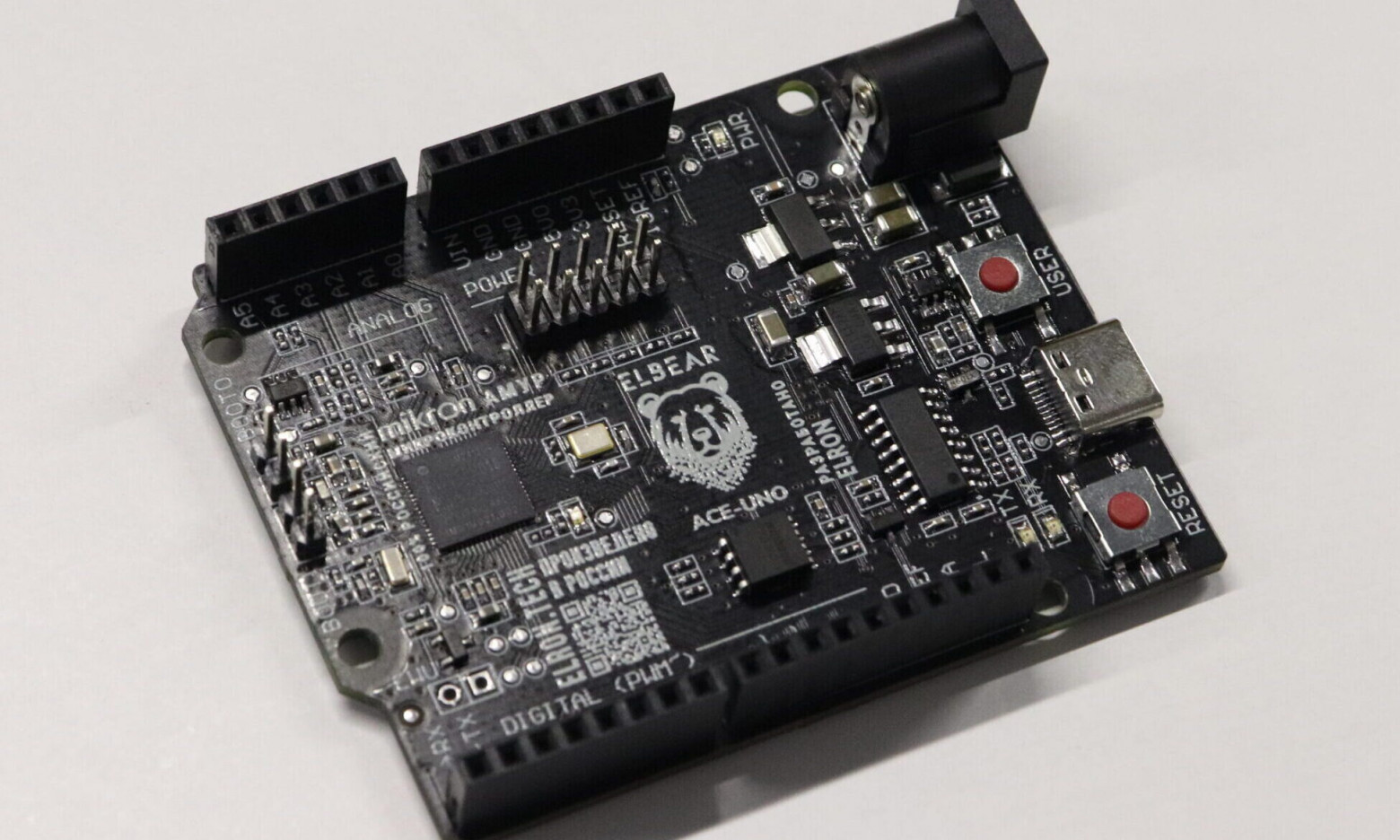
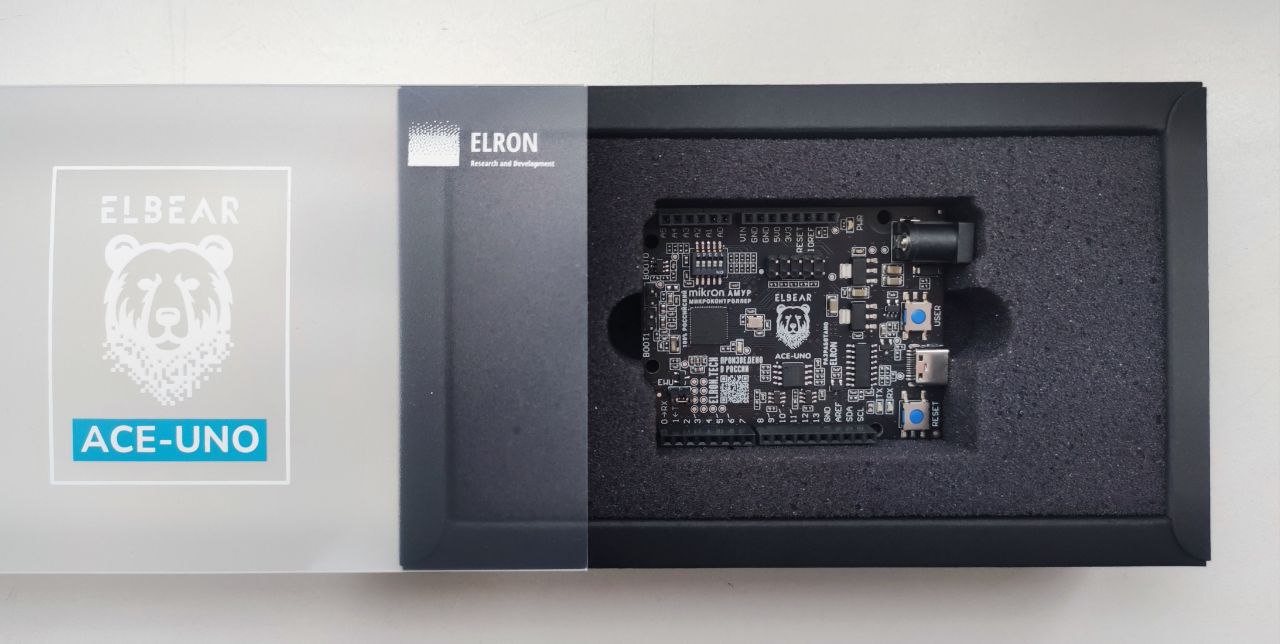
Shortly after, we prepared a BSP (Board Support Package) for the Arduino IDE — and voila, the board worked in the familiar environment! In 2024, we actively worked on expanding the BSP package, fixing discovered bugs, releasing new board revisions, and launched board sales on the OZON marketplace and through our partners at Arduino54.
Manufacturing
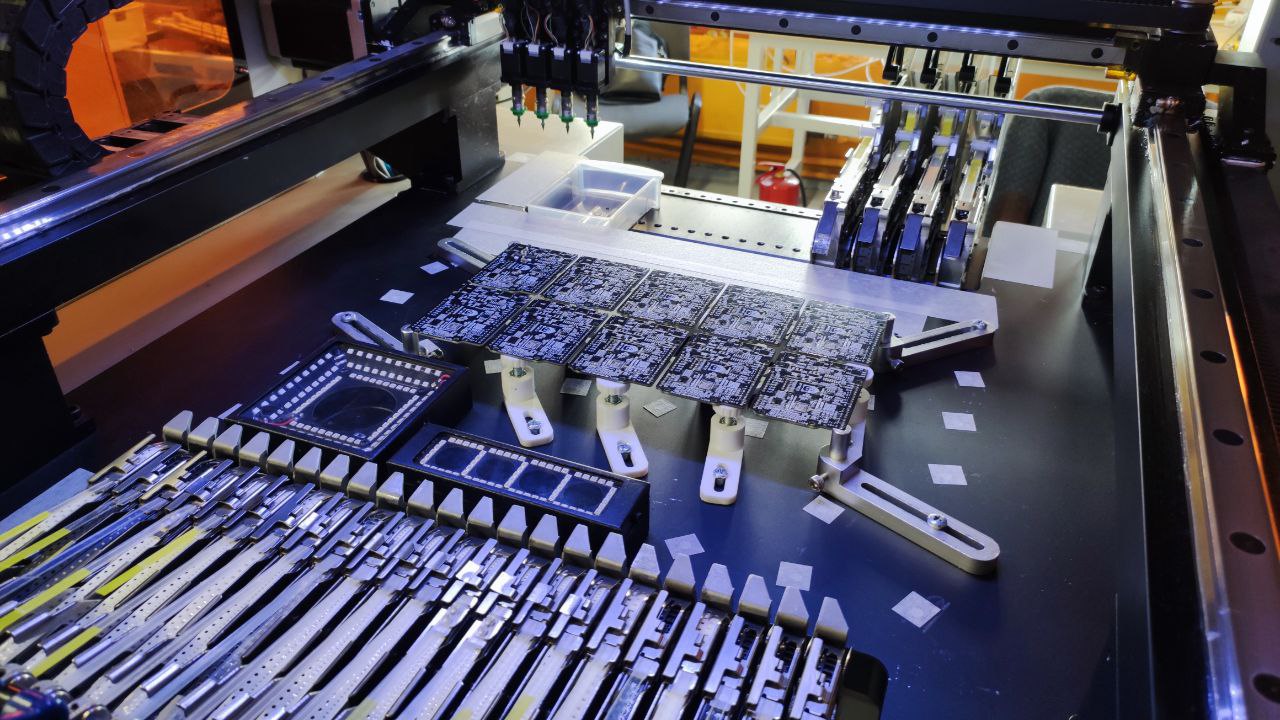
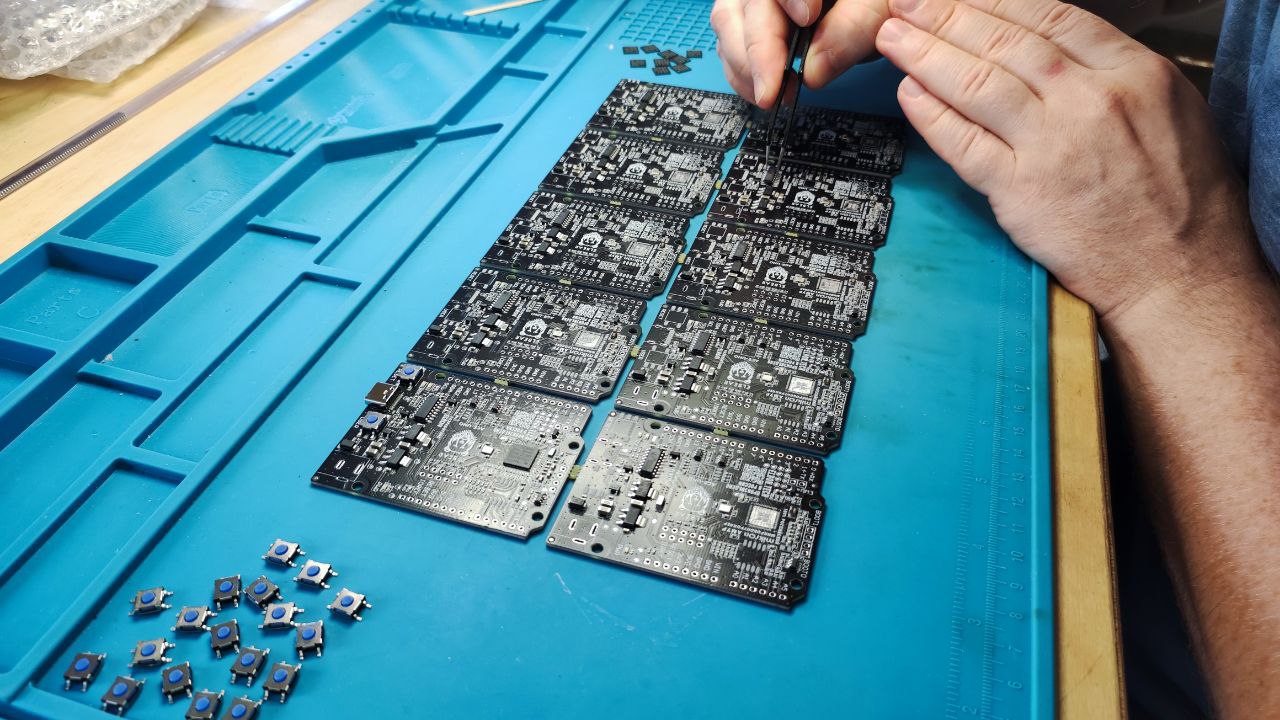
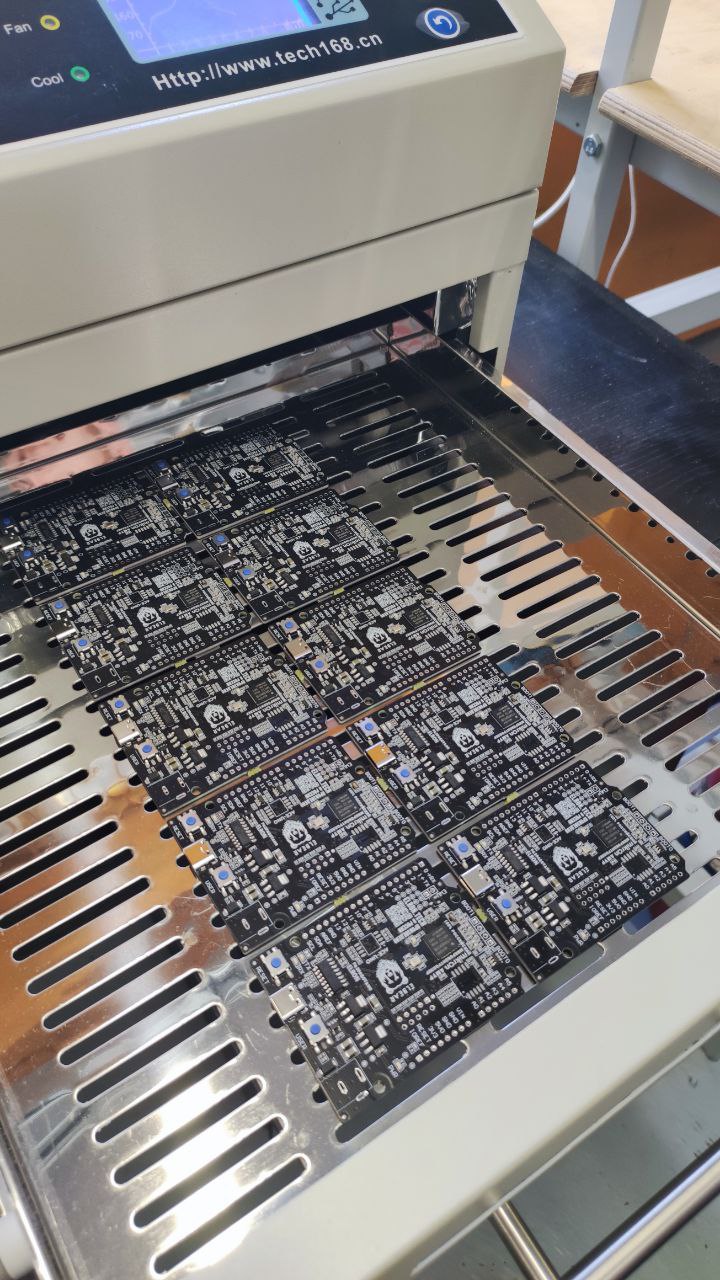
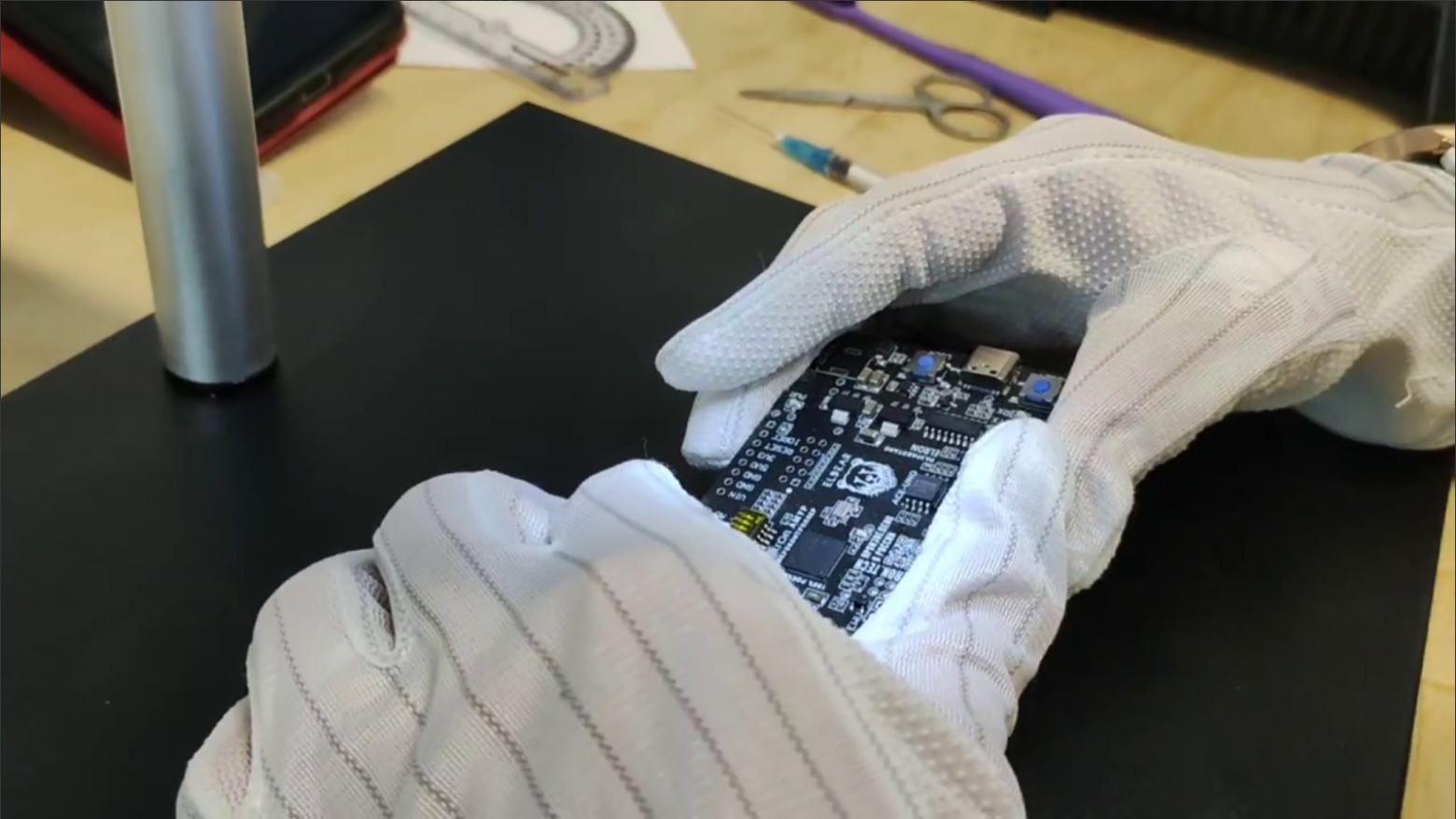
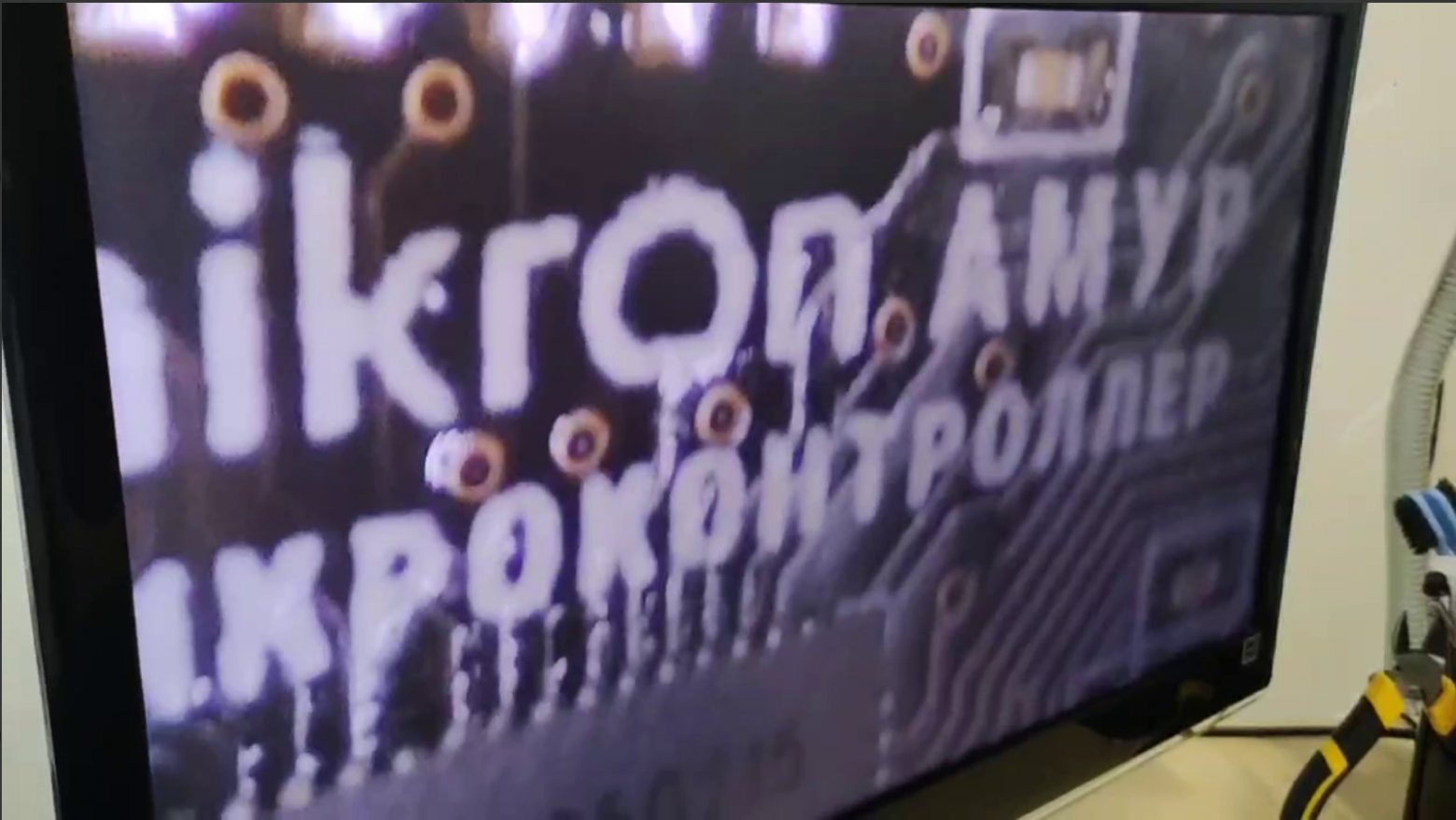
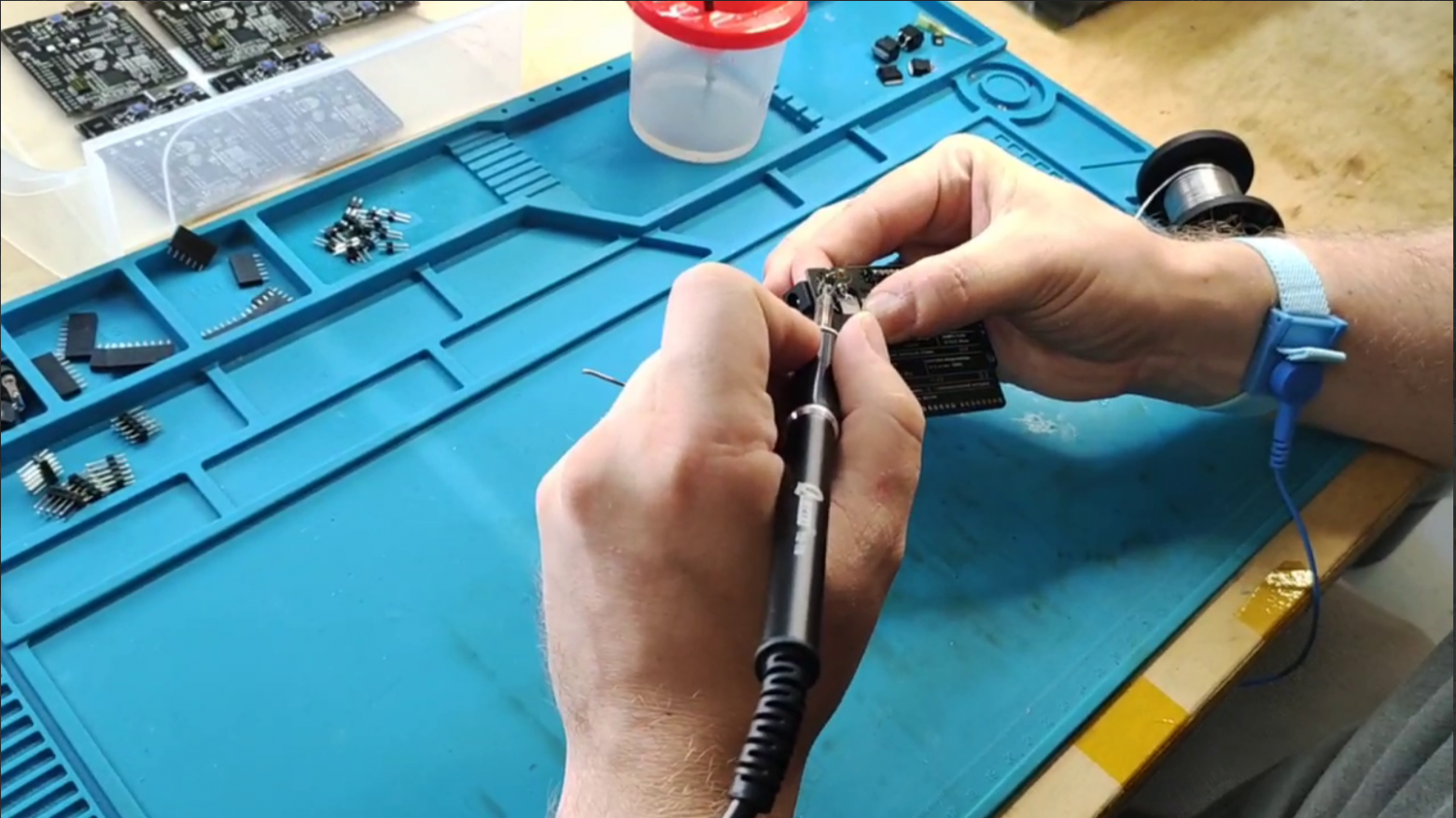
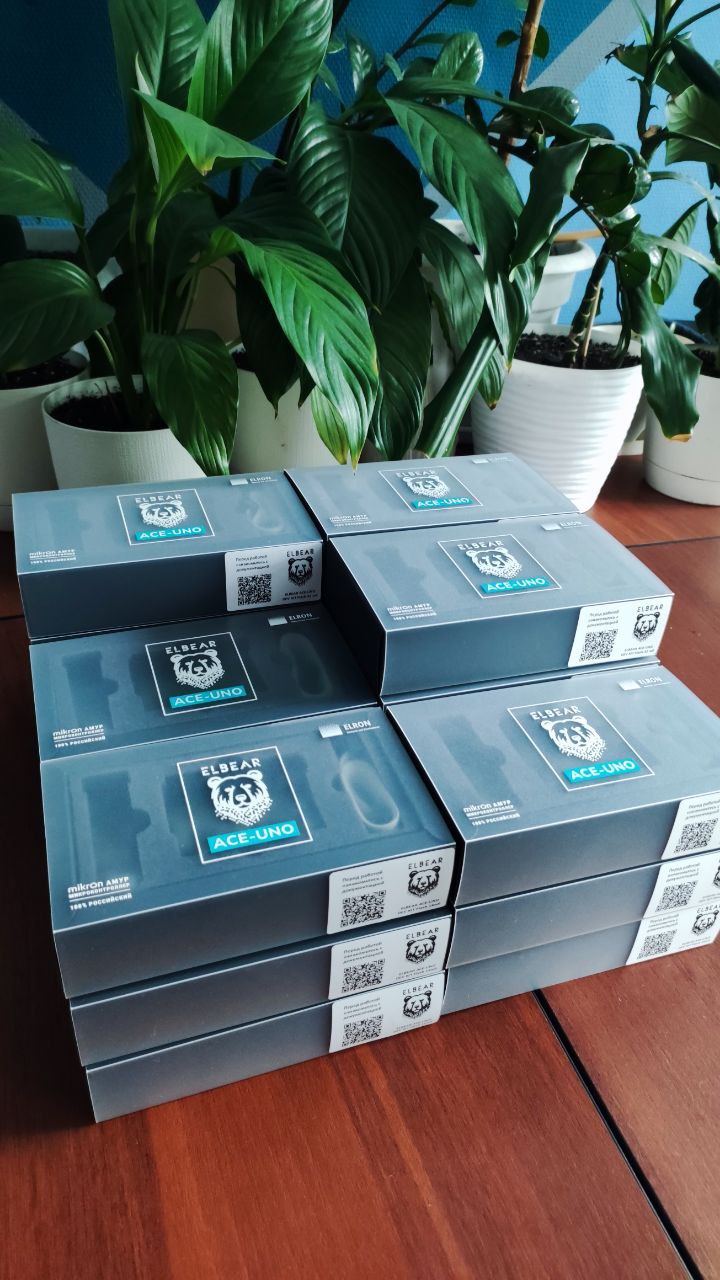
We put considerable effort into launching the production processes at our facility, and most importantly, into establishing multi-level quality control and fully automated testing. How many boards went into the trash, how many microcontrollers were sacrificed, how many nerve cells our production manager lost — it's simply uncountable...
Educational Kit
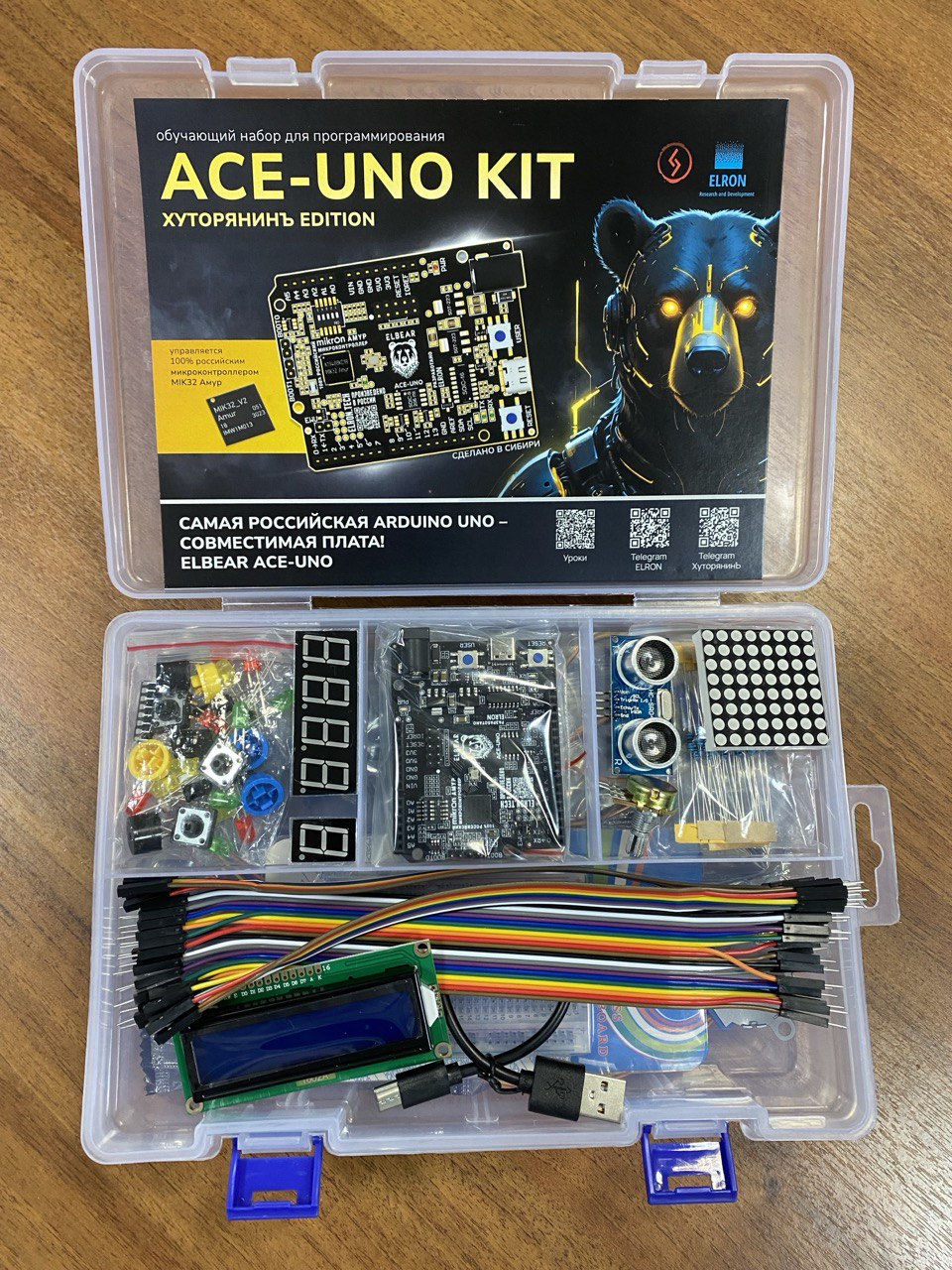
At the end of 2024, in collaboration with the blogger KhutoryaninЪ (who has tested about 40 different sensors and recorded a video for each one!), we released a programming kit with our board — ELBEAR ACE-UNO KIT, featuring 24 components and 26 lessons. The lessons are available to everyone on the website, by the way.
Ecosystem Growth
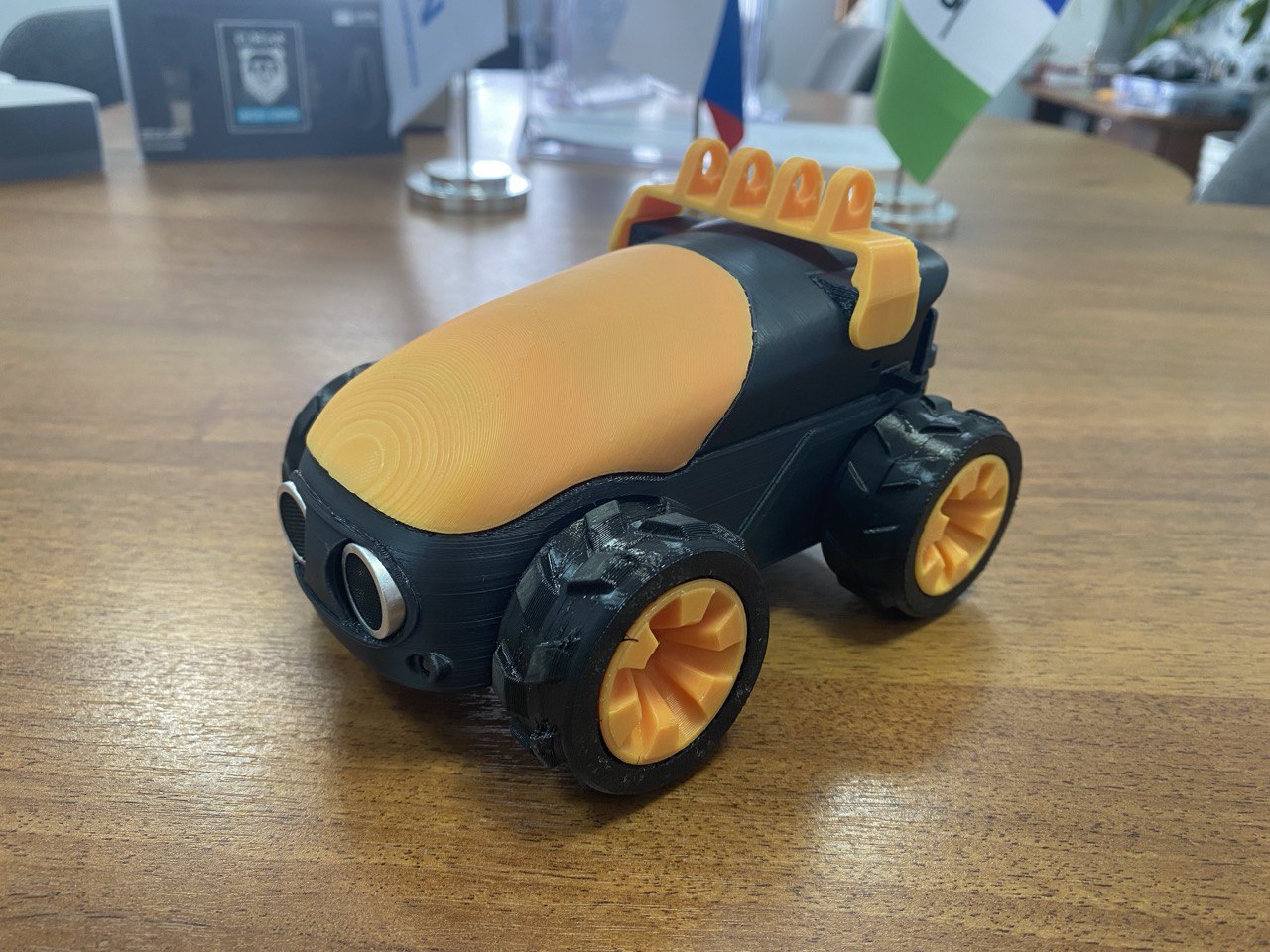
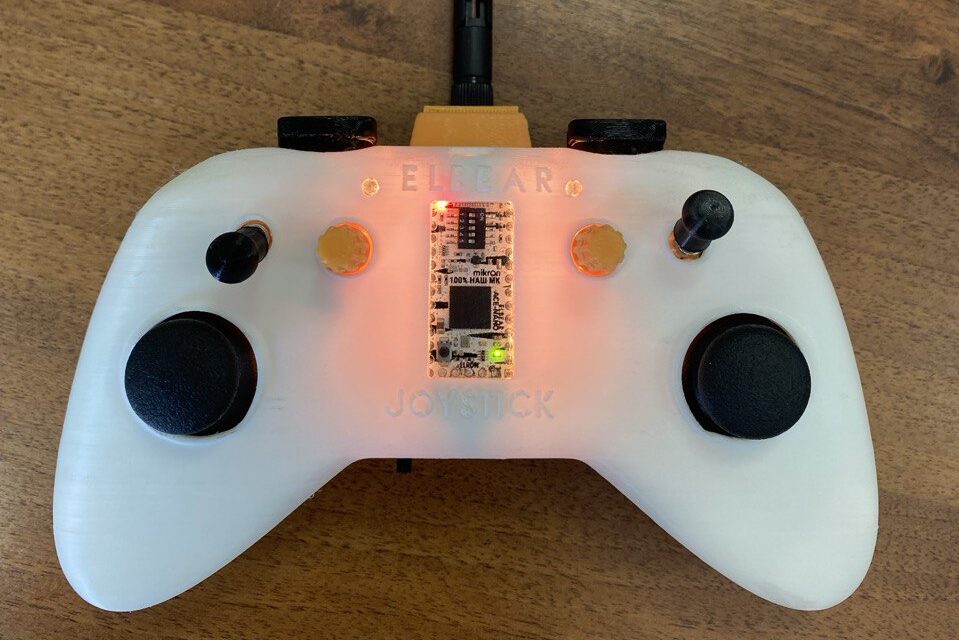
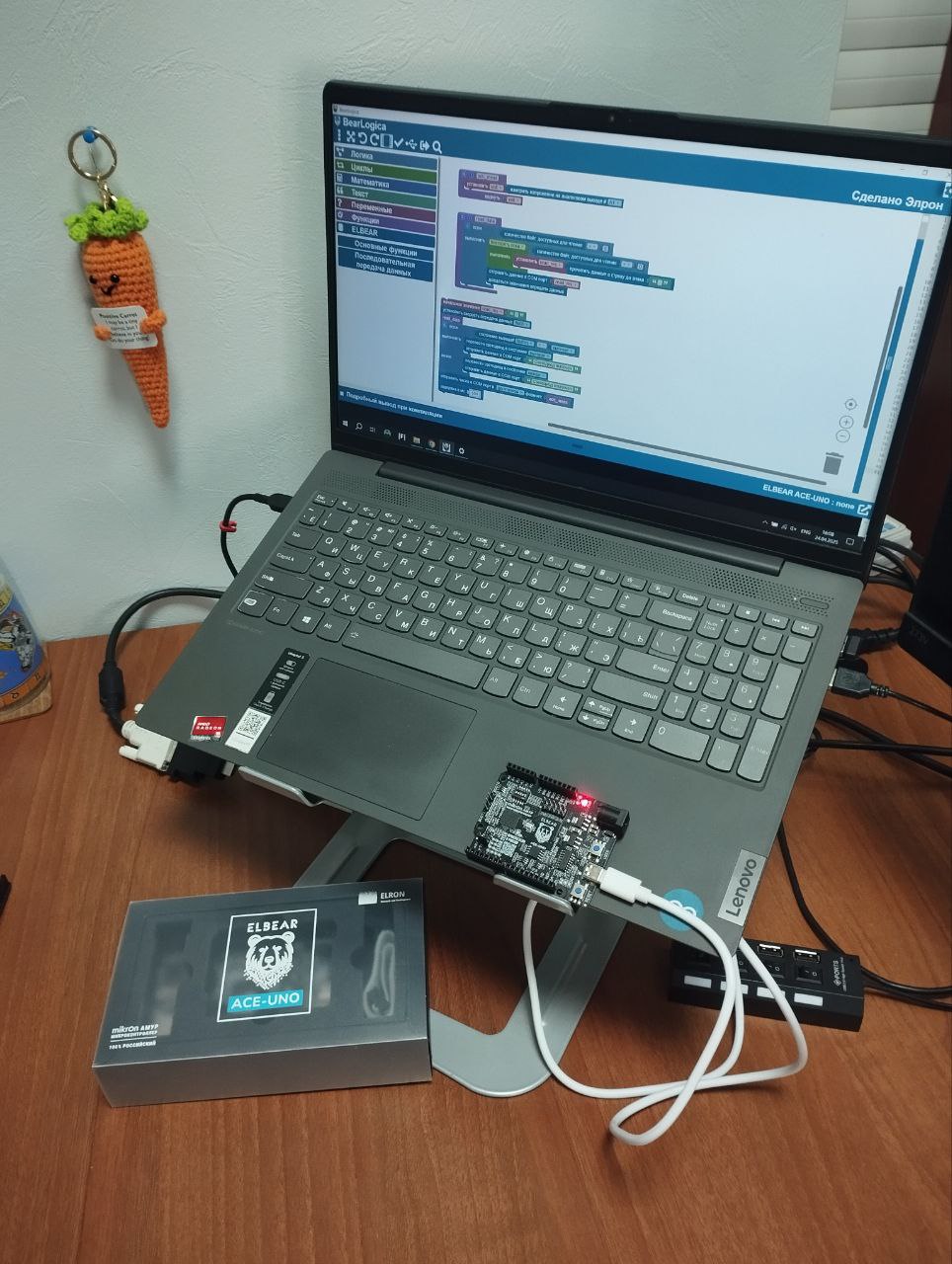
Today the project is actively developing. There are already first prototypes of the ELBEAR VZHIK robotics platform and ELBEAR JOYSTICK based on ELBEAR boards. The first version of the block-based (graphical) programming language BearLogica has been released, and new kits are being developed...
Frequently Asked Questions
What's so smart about what you did? Why not your own thing — why Arduino?
The Arduino form factor and Arduino IDE were chosen to make it easier for users to get acquainted with MIK32 Amur: the entire world knows Arduino IDE, a huge number of shields have been produced and are being manufactured, and they can already be used with our boards. It's no secret that many people want to try something new, but without having to retrain and spend time on it.
What's actually Russian inside?
The MIK32 Amur microcontroller from JSC Mikron (a Level 1 Russian MCU — currently the only one actually manufactured in Russia, in Zelenograd), the PCB substrate from Novosibirsk's Elektrokonnekt factory, some "small" components, as well as our design and manufacturing. By the way, we invite everyone to the Priborium rev.2.0 forum next year, tentatively in May, where you can take a tour of Elektrokonnekt and visit us.
Why are the components in the ACE-UNO KIT (besides ELBEAR) Chinese?
This was done intentionally — this kit consists of standard elements, and if you already have a similar kit with a Chinese Arduino, you can purchase our ELBEAR board separately, download the lessons and examples from the website (they're available for free), and enjoy! We're also working on a premium kit, but it will appear a bit later.
Why this price? Chinese Arduino is cheaper!
Our Asian colleagues have been on the market for a long time and ship devices by the tens and hundreds of thousands. As our production volumes grow, we plan to get closer to our colleagues' pricing. For example, in the transition from 2024 to 2025 — unlike most companies — we didn't raise prices but reduced the cost of the base ELBEAR ACE-UNO 8 MB board by 30%. We're confident we'll be able to continue pleasing customers with further reductions.
Conclusion
Developing any industry is no easy task, and Russian instrument engineering is no exception. We believe that students in our universities, technical colleges, and schools should encounter and work with Russian microelectronics as early as possible (it used to be virtually unavailable for civilian use, but times are changing) — it's quite good, and you can and should work with it! This way, more engineers will emerge, making all kinds of cool devices not somewhere far away, but right here, next to all of us. That is the essence of the ELBEAR project — a true Russian ElectroBear!



