On the Joy of Programming and the Weightlessness of Achievement
A veteran programmer reflects on how AI coding assistants have eliminated the creative struggle and deep cognitive engagement that once made software development deeply satisfying, leaving achievements that feel weightless and unreal.
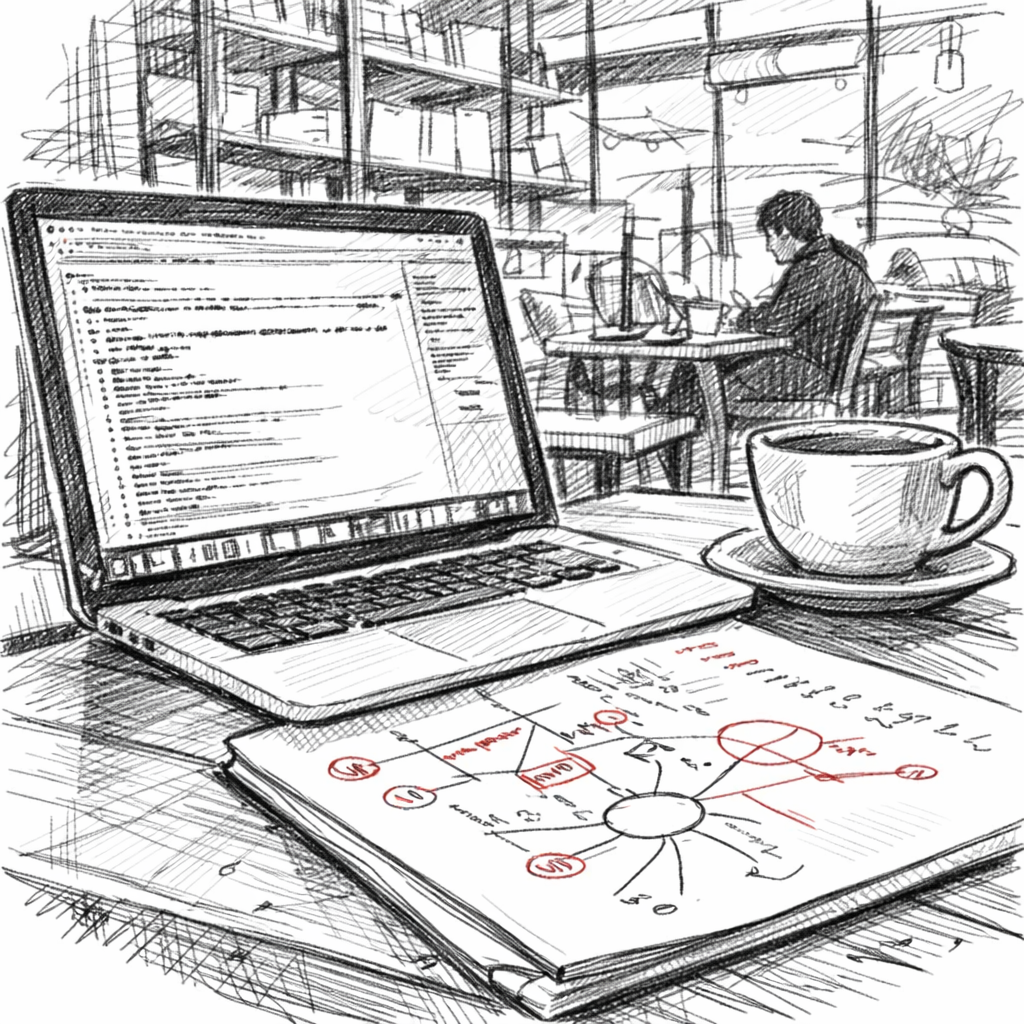
I belong to that gradually fading generation of programmers who had the strange privilege of writing code in its purest form. Not generating it, not prompting it, not delegating it — but creating it with their own hands, line by line, from a blank file to a working system.
The Joy of Manual Coding
There was a special kind of satisfaction in building working systems from nothing. Fixing complex bugs, constructing intricate architectures from simple components. I remember spending hours in a state of deep concentration, forgetting to eat, experiencing what I can only describe as authentic delight from creation.
One time I embedded an ECMA sandbox into a project for hot-reloading configurations. That system is still in use ten years later. I didn't just write the code — I understood every branch, every edge case, every design decision. It was mine in the deepest sense of the word.
The Architecture of Understanding
Manual code writing forced you to maintain a mental model of the entire system. Each solved bug deepened your expertise through real cognitive struggle. Knowledge became embodied through the physical act of typing and debugging.
When you write code yourself, you build a three-dimensional model of the system in your head. You know why each function exists, where each variable lives, which path execution takes in different edge cases. This knowledge isn't stored in documentation or comments — it lives in your muscle memory, in the neural pathways formed during hours of concentrated work.
There's a phenomenon well known to musicians: you can't truly master a piece by reading the sheet music. You have to play it, stumble, replay passages, feel it through your fingertips. Programming was like that. The keyboard was our instrument, and the code was our music.
The AI-Assisted Transition
In recent months, using AI coding assistants, I've generated more code than I once wrote manually in an entire year. Entire modules, complex integrations, test suites — all produced in minutes rather than days.
Yet something crucial vanished. The work feels weightless, unreal, lacking the deep satisfaction that comes from genuine struggle. The process of code creation stopped emerging from profound cognitive effort and internal struggle with the task.
It's like the difference between climbing a mountain on foot and being helicoptered to the summit. The view is the same, but the experience is fundamentally different. One transforms you; the other is merely a transaction.
The Loss of Flow State
Before AI assistance, developers entered states of deep concentration for hours. The physical process of typing created a synchronization between brain and hands, fostering deep encoding of knowledge. Every keystroke was a micro-decision, every line a small creative act.
Now, prompting an AI model breaks this flow. You type a prompt, wait for output, review it, accept or reject it. The brain becomes idle between interactions. Attention fragments toward notifications and feeds. The "useful friction" that encoded knowledge deeply has been removed.
That friction wasn't a bug — it was a feature. It forced you to think carefully before writing, to consider alternatives, to understand the problem deeply before committing to a solution. Remove the friction, and the thinking becomes shallow.
The Debugging Problem
When AI-generated code breaks in production, the developer lacks intuitive understanding of its architecture. If I wrote the code myself, I could often intuit where the problem lies — I'd feel the shape of the bug before I could articulate it. But with unfamiliar code, that intuition is gone. You have to read line by line, reconstruct the logic, understand someone else's (or some thing else's) design decisions.
The depth of knowledge fundamentally differs between writing and reviewing code. When you write, you understand not just what the code does, but why it does it that way and not another. When you only review, you see the what but miss the why.
Three Cognitive Levels
I've identified a spectrum of engagement with code:
- Level 1 — Writing code from scratch: The deepest engagement. You understand every decision, every trade-off. The knowledge is embodied, intuitive, lasting.
- Level 2 — Carefully reviewing existing code: Good understanding, but gaps remain. You see the structure but miss the reasoning behind non-obvious decisions.
- Level 3 — Briefly skimming code: Surface-level understanding. You can describe what the code does but not why, and you'll forget it within days.
Our profession is shifting from level one toward level three. We're becoming code skimmers rather than code craftsmen. This fundamentally alters how professional knowledge becomes integrated into our minds.
Professional Evolution
Rather than resisting AI tools, we need conscious evolution. True mastery may now involve:
- Designing complex system architectures at high abstraction levels
- Asking precise requirement questions
- Understanding trade-offs between different approaches
- Deep knowledge of algorithms and data structures that inform your prompts
- The ability to evaluate generated code critically, not just superficially
The programmer's craft isn't disappearing — it's transforming. But we must be honest about what we're losing in the transition.
The Generational Divide
New developers trained alongside AI assistants may never experience the satisfaction of manual system creation. They might find different fulfillment in higher-level architectural work — orchestrating complex systems from AI-generated components, solving problems at a scale that was previously impossible.
But the transition feels uncomfortable because older developers experience both paradigms acutely. We remember what it felt like to struggle with a problem for days and finally crack it. We know that the victory celebration after AI generates a solution in seconds doesn't feel the same. It can't.
Personal Stance
I continue writing code manually — partly due to contractual restrictions, partly from genuine preference. While companies now grant AI access for bug analysis and code review, I maintain skepticism about fully delegating creative construction.
This isn't Luddism. I use AI tools where they help — exploring unfamiliar APIs, generating boilerplate, rubber-ducking design ideas. But for the core creative work, for the architecture and logic that defines a system, I still prefer my own hands on the keyboard.
The Central Paradox
When the process of creating something becomes too easy and fast through automation, the achievement itself begins feeling weightless, unreal, lacking the value it once possessed.
This isn't about AI specifically — it's a universal principle. A hand-carved wooden chair means something different from a mass-produced one, even if they're identical in function. The struggle is part of the value, both for the creator and for the creation.
I'm not calling for us to abandon AI tools. They're here, they're powerful, they're inevitable. But I am calling for awareness. Don't let the creative joy that attracted talented people to programming disappear unconsciously. Recognize what you're trading away. Make the choice deliberately, not by default.
Because one day you may look back at your career of prompt-engineering and wonder: did I build anything, or did I just ask for things?