IT Hiring Is Dead After All
Finding a job in IT in 2025 has become nearly impossible: fewer vacancies, more applicants, higher requirements, and stagnant salaries. The author examines why the market has cracked and what it means for developers at every level.
Or Why Finding a Job in 2025 Has Become Virtually Impossible
I used to think finding a job was just a matter of desire. Seriously: update your resume, apply X times, get a couple of interview invitations, pass them — and there's your offer. The whole problem was solved by widening the funnel: more applications meant more offers.
But now everything is different.
Job searching in 2025 is like completing a survival quest. The conditions are roughly these: you need five years of experience, but you must be under 30, able to do the work of three people, proficient in neural networks and TypeScript — and you shouldn't ask questions during the interview. Ideally, you should be ready for stress, low pay, KPIs, and results-oriented work — without a mentor or clear specifications.
I look at the market, read chats, talk to friends — and the feeling is the same: finding a job right now is nearly impossible.
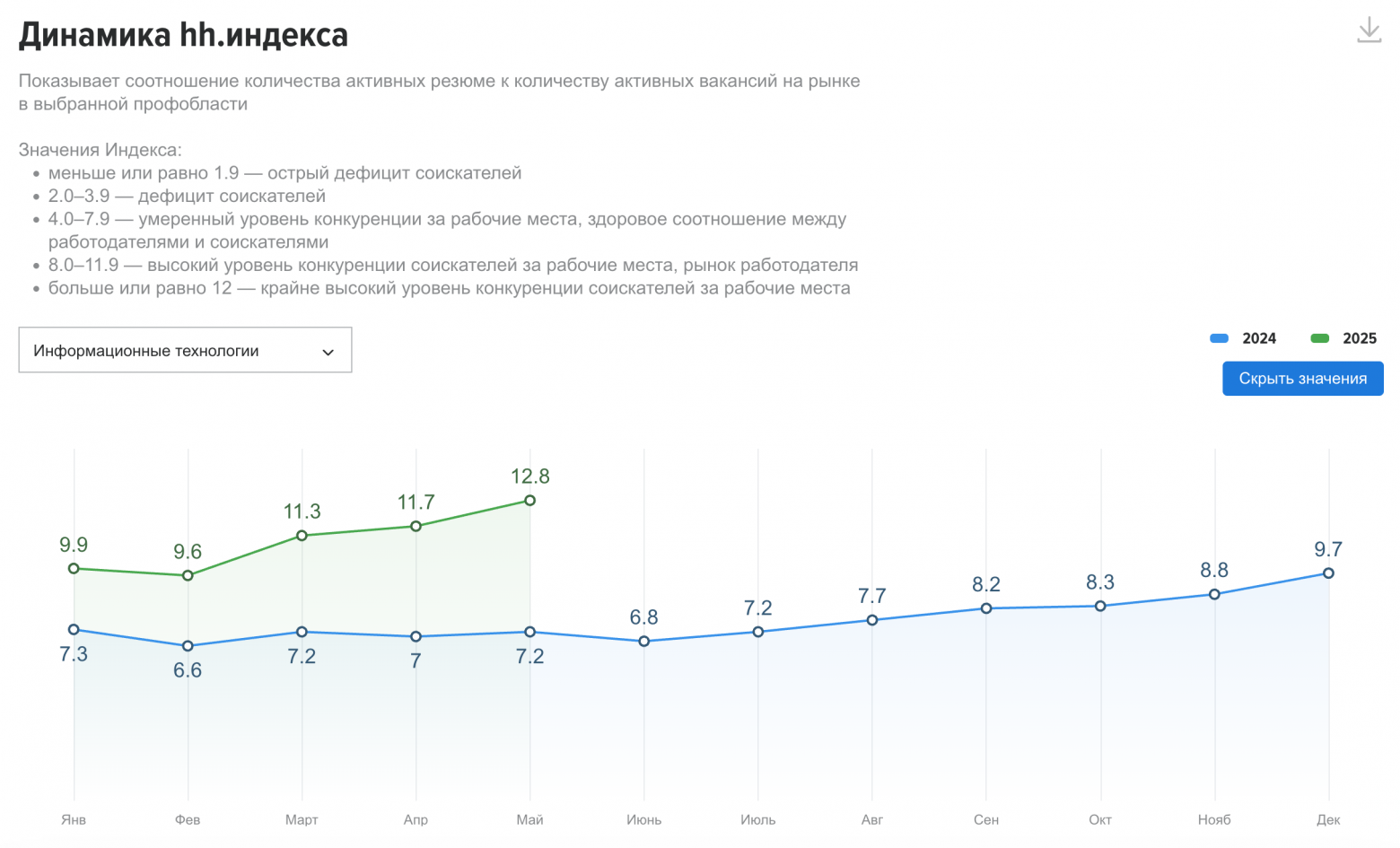
Not because you're bad. But because the market has cracked. We'll figure out why below, but first take a look at the hh.index and be horrified...
Pay special attention to the trend compared to last year.
"Low Unemployment" Is a Myth
If you open Rosstat (Russia's statistical agency), everything seems fine: the country's unemployment rate is about 2.4%. That's a historic low. But personally, I don't know a single person who would say: "The market is great, there's plenty of work."
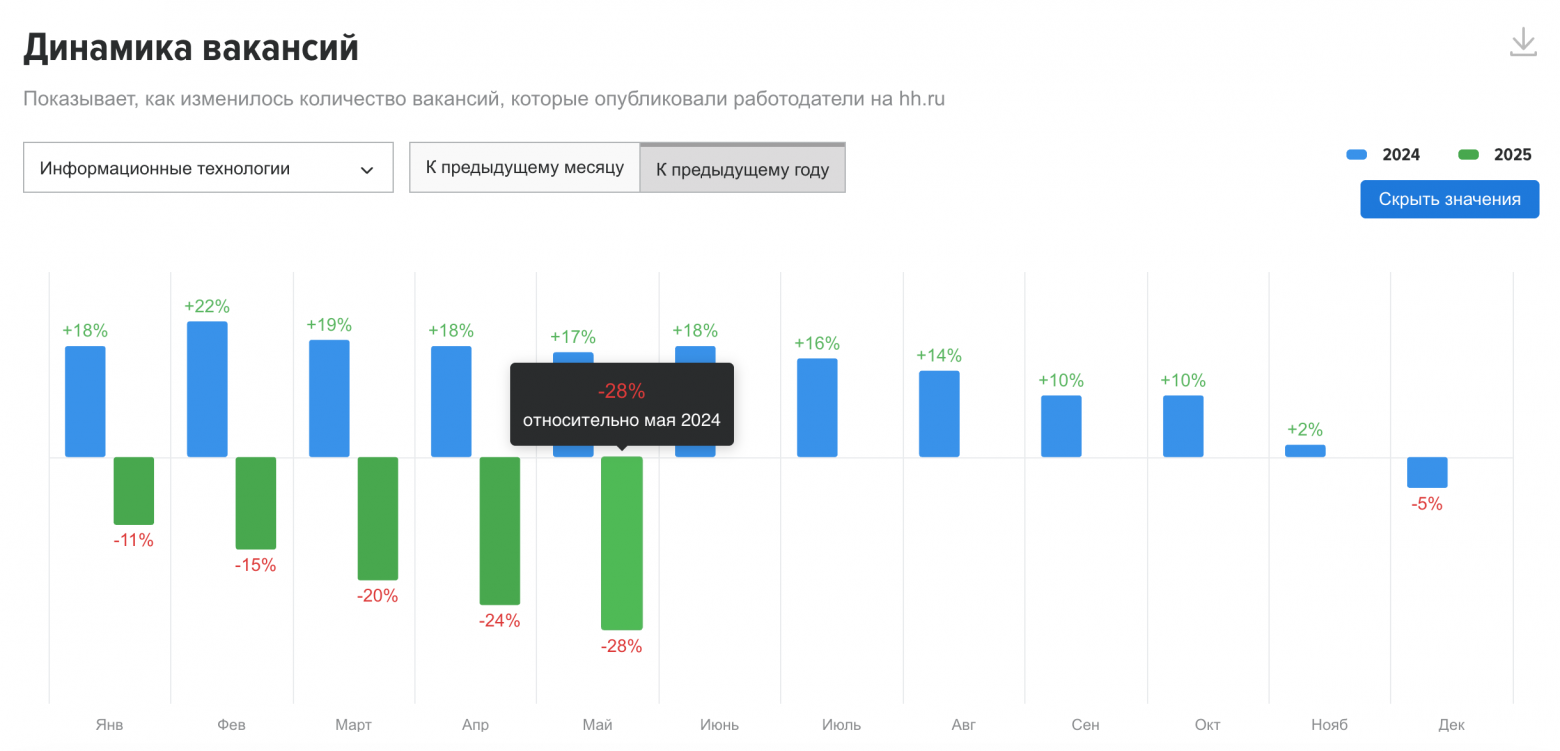
On hh.ru in May 2025, new job listings dropped by 28% compared to May 2024.
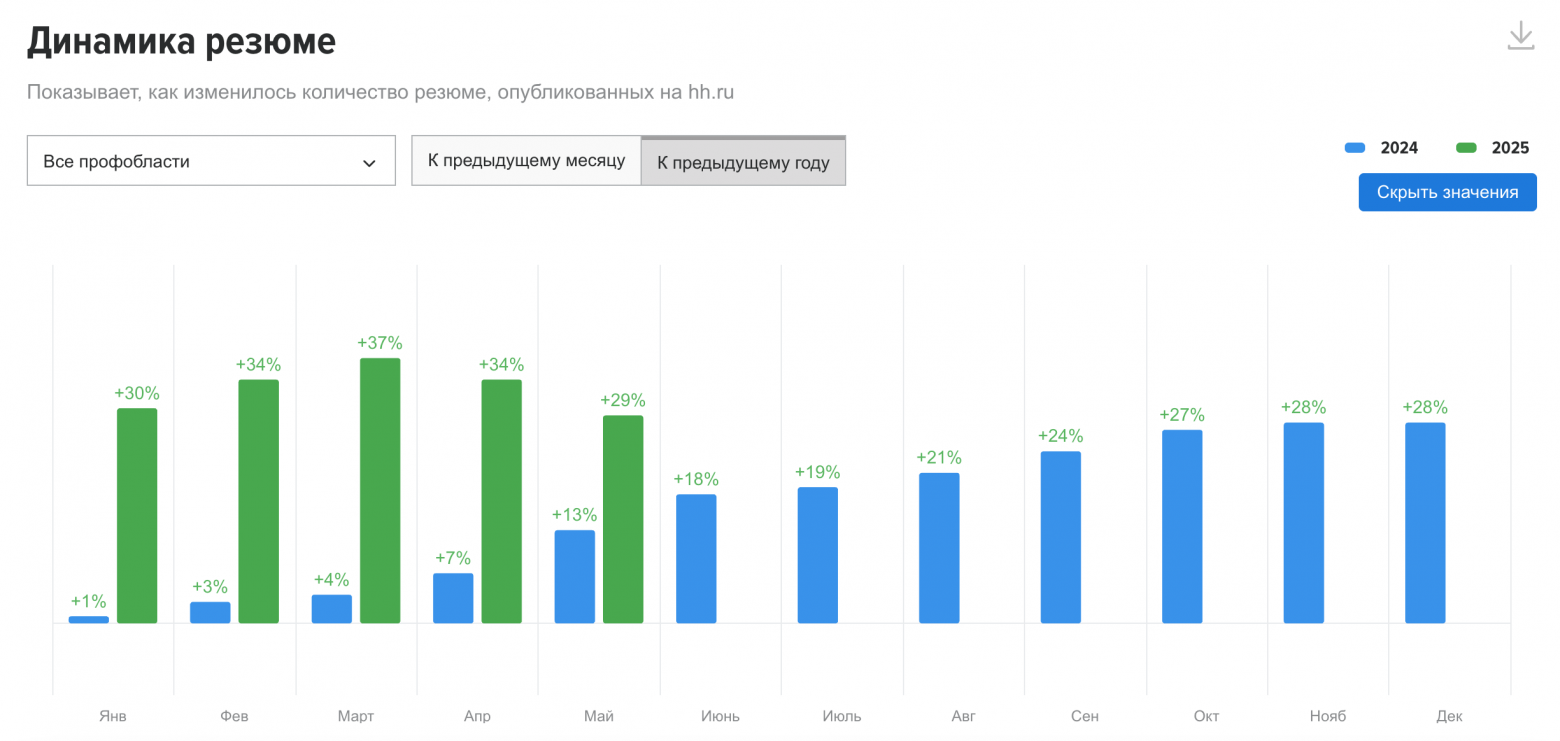
Meanwhile, resumes increased by 29%. Accordingly, there are significantly more applicants per vacancy.
HR managers in public interviews say that developer vacancies receive a minimum of 100–200 applications, sometimes over 500.
The Door Has Completely Shut for Juniors
It's especially tough for those who've just graduated or want to change careers. Most job listings require "3+ years of experience." Meanwhile:
- There are fewer and fewer internships. Companies aren't willing to train — everyone wants "ready-made" employees, at least mid-level, so they don't have to bother.
- Junior positions attract not just young people but also experienced specialists who've been laid off.
IT Was an Island of Stability. Was.
What job searching looked like before 2022: you'd open your resume on hh — and fend off messages and calls. Seriously, I remember times when you could quit without having anything lined up and be confident you'd find a job within 1–2 weeks. Provided you were mid-level or above.
Now, if you find a job within 3 months — you're incredibly lucky. And these are people with 5+ years of experience. Many of my acquaintances with strong backgrounds still can't find work after being let go — and these are people with real experience.
Why?
- Companies are hiring less. Especially after 2022: many people left the country, budgets were cut, the market became provincial.
- AI is squeezing out beginners: trivial tasks are done by auto-generation, and now juniors don't even get to "hold the pen." This might still be barely visible and quite debatable. But it will grow in significance. Because it's easier for a senior to give a task to Cursor than to deal with students.
- The "get into IT" hype led to every frontend vacancy getting three hundred identical resumes from graduates of the same courses.
Salaries Aren't Growing, Requirements Are
The market is skewed: there's money in the economy, but it's not going to you. Employers know they can be choosy. Therefore:
- Salaries aren't growing, and in some regions they're even declining.
- Part-time or project-based roles are often offered, but with full responsibility.
- Conditions have gotten tougher, and entry is no longer at the "HR phone call" stage but through 3-stage interviews and test assignments that nobody reviews.
So What Do We Do?
I'd like to offer some conclusion. Something like: "We'll get through this." But the reality is that the market has narrowed. And getting hired has become not just difficult — but nearly impossible:
- Few vacancies
- Heavy competition
- High requirements
- Employers are economizing
- Nobody needs training
If you got a job in 2025 — that's not normal. That's a feat.
P.S.
The point of this article isn't to complain or scare anyone, but to call things by their proper names. If you can't find work right now — it's not just about you. It's a symptom of a market that overheated, narrowed, and forgot about newcomers.
Those who are interested in IT regardless of demand — they'll be just fine.
FAQ
What is this article about in one sentence?
This article explains the core idea in practical terms and focuses on what you can apply in real work.
Who is this article for?
It is written for engineers, technical leaders, and curious readers who want a clear, implementation-focused explanation.
What should I read next?
Use the related articles below to continue with closely connected topics and concrete examples.