Improving the Ribosome: One of Nature's Most Inefficient Nanomachines
An engineering analysis of why the ribosome is shockingly inefficient — burning 90% of its energy as waste heat and finding the right tRNA by brute force — and a conceptual blueprint for a redesigned protein synthesis machine that could enable 30x faster regeneration, radical intelligence enhancement, and near-instant immune response.
If you've ever held a biology textbook, you've formed an image of the ribosome as an ideal molecular conveyor. A nanofactory humming in every cell, reading blueprints from mRNA and stamping out proteins with cosmic precision. A beautiful picture. But from an engineering standpoint, it's a monstrously inefficient contraption.
The truth is: the ribosome is a relic, a molecular leftover from the RNA world era that nature has never properly modernized in billions of years. Its efficiency is abysmal, and its working method is somewhere between brute-force search and a lottery. But there's good news: as engineers, we can already propose a conceptual design that will one day consign this ancient construction to the scrapheap.
Efficient ribosomes could give an organism colossal advantages. The prospects are fantastic. We'll discuss them at the end of the article.
An Etymological Digression: Why Does the Ribosome Have a "Sugar Body"?
Before we start designing a replacement for this monster, let's understand the name. Why "ribosome"?
The word "ribosome" indeed traces back to one of the sugars — ribose. Behind this "sugary" name hides one of life's most important cellular machines, built on the solid foundation of organic chemistry.
In 1891, the great chemist Emil Fischer synthesized a new five-carbon sugar. He took the name of an already known sugar — arabinose (extracted from gum arabic), rearranged the letters, and got ribose. A chemical play on words. The suffix "-ose" became firmly associated with sugars.
Ribose turned out to be the very sugar that formed the basis of RNA (ribonucleic acid).
Who discovered the ribosome and how did it get its name? The ribosome is a relatively young structure from a scientific perspective. Its discovery and naming are connected to the work of two different but complementary scientists.
Ribosomes were first visually observed and described as dense granules in the cell cytoplasm by American biologist of Romanian origin George Palade (George Emil Palade). This occurred in the mid-1950s thanks to the emergence of electron microscopes. Palade studied the ultrastructure of cells under such a microscope. In 1955, he described these small dense particles, which at the time were called microsomes (which included ribosomes and fragments of the endoplasmic reticulum).
For his outstanding research, including the discovery of ribosomes, Palade was awarded the Nobel Prize in Physiology or Medicine in 1974, jointly with Albert Claude and Christian de Duve.
The term "ribosome" was proposed later — in 1958 — by American biochemist Richard Roberts (Richard B. Roberts). Before this, descriptive and less precise terms like "ribonucleoprotein particles" or "microsomes" were used. Roberts introduced a shorter and more precise word "ribosome," based on the chemical composition (predominance of ribonucleic acid) and the organelle's function.
So, the word ribosome consists of:
- ribo- (from ribonucleic acid, which is based on ribose)
- -some (from Greek soma — body)
Literally: ribonucleic body.
So in a sense, playing on school memories, you could call the ribosome a "sugar body." Behind this almost poetic name lies a harsh reality: we're dealing with a construction assembled on the basis of an archaic sugar (ribose) and catalytic RNA.
A Few Words About RNA
There are many types of RNA, but the main ones are three:
- Ribosomal RNA. Transcribed from DNA; in the cytoplasm, special proteins attach to it and the ribosome organelle is formed. Which in turn "prints" all proteins.
- Messenger or informational RNA. Also transcribed from DNA, it contains codon-encoded instructions for protein synthesis for the ribosome.
- Transfer RNA. Small pieces of RNA that on one side contain specific hooks (scientifically called "acceptor ends") for different amino acids, and on the other side specific keys (called "anticodons") that connect with specific codons on messenger RNA during protein synthesis in the ribosome.
You can imagine DNA as a kind of iron ruler with bumps, onto which you place a paper tape and press to create holes (in the cell, this imprint is not made all at once, but is printed by an enzyme that rides along the DNA and assembles the RNA tape one letter at a time). Then the resulting punched tape (messenger RNA) enters the 3D printer — the ribosome — which prints biological nanorobots: proteins that perform various tasks in the cell.
Another analogy: there's an art called lithography, where a master print is made and working copies are printed from it for people to view in art galleries.
Or there's a press mold, a master disc, from which vinyl records are made that music lovers then listen to. So the master print or press mold is DNA, and the prints or records are messenger or matrix RNA. From one master copy you can print 10,000 records that will provide millions of listenings. A listening, in this analogy, is printing a protein.
Several music lovers can listen to one record simultaneously. That is, several ribosomes can synthesize protein from the same mRNA. The first ribosome just needs to move a bit forward along the tape. In biology, this structure is called a polyribosome (or polysome for short).
Part 1. The Energy Hole: Where Does 90% of the Cell's Energy Go?
Let's start with dry numbers that would shock anyone accustomed to measuring efficiency.
To insert one amino acid into a growing protein chain, the cell burns 4 high-energy bonds (read: ATP and GTP molecules). That's about 120 kJ/mol of energy.
Now for the trick question: how much energy is stored in that peptide bond for which all this was undertaken? A measly 8-10 kJ/mol.
Wait. We spend 120 kJ to get 10? Where's the rest?
The rest (over 90%!) dissipates as heat. The ribosome works like an old incandescent bulb — it shines (synthesizes protein) mainly by heating the surrounding space.
In principle, it doesn't matter exactly how much energy the peptide bond contains — we don't use them to fuel the organism. What matters is that protein synthesis is extraordinarily energy-expensive for the cell and proceeds with incredibly low efficiency.
Where does the money (energy) go?
- Activation (2 ATP): An amino acid doesn't just fall into the ribosome. It first needs to be "cocked." For this, an enzyme (aminoacyl-tRNA synthetase) attaches the amino acid to its personal carrier — tRNA. A high-energy ester bond is formed (storing 30-40 kJ/mol). It's like cocking a spring.
- Delivery and stepping (2 GTP): Then this complex (tRNA-amino acid) needs to be delivered to the ribosome and the mechanism itself needs to turn over. That costs another two high-energy bonds.
And here lies the main engineering crime. The ribosome takes the "cocked spring" (high-energy ester bond), clicks — and uses this energy to create a wimpy peptide bond. Imagine swinging a sledgehammer to carefully drive in a tiny nail. A huge portion of the energy goes simply nowhere — into heating the cytoplasm.
By the way, about heating. People often think the main danger for a cell is getting cold. Wrong. The problem is actually the opposite — overheating. Even slight overheating causes proteins to misfold and stop working properly. The cell dies. The organism has to spend resources on heat dissipation to avoid cooking in its own juices from the work of these inefficient "heaters." Of course, you could argue that this heat is needed to enhance diffusion and mixing of tRNA. But that's like justifying a leaky bucket by saying it waters the flowers along the way.
Part 2. The Ribosome Works by Brute Force
But energy inefficiency is just the beginning. The ribosome's main disgrace is its working algorithm. How does it find the right tRNA?
At each stage of synthesis, the ribosome doesn't "search" for the right tRNA purposefully — it simply tests whichever molecules happen to collide with its active center. This mechanism resembles random brute force: by estimates, on average 10 to 30 tRNAs "try on" the current codon before the right one is found.
Most of these attempts don't require energy expenditure, since mismatched tRNAs are quickly rejected before GTP hydrolysis. However, this strategy requires enormous molecular "traffic" and a large number of tRNA molecules and delivery factors, creating time delays and indirect energy costs inevitable in a system built on statistics rather than directed search.
It's important to note that the ribosome can recognize several different codons using the same tRNA — through so-called wobble. This phenomenon allows slight "looseness" when pairing the third position of the codon with the first position of the tRNA anticodon, allowing one anticodon to correspond to several codons.
Thanks to this, the cell needs only about 40-45 types of tRNA instead of the 61 possible. This simplifies the system but remains a compromise between accuracy and efficiency. Yes, by eliminating wobble, we turn off one of the previous mechanisms of variability, but for agricultural animals, transplant organs, and eventually genomes of intelligent beings evolving through genetic engineering variability, this mechanism is unnecessary.
Part 3. How Much Time Does the Ribosome Waste?
The cycle of attaching one amino acid to a growing peptide in the ribosome typically takes 50 to 200 milliseconds. Of this, approximately 60-80% of the time is spent not on the catalytic act of peptide bond formation and ribosome translocation, but on searching for the right tRNA. This stage looks like a series of random "fittings" of tRNA anticodons to the current mRNA codon.
Under typical conditions, on average 10-30 tRNAs collide with the ribosome before the right one ends up in the active center. The "fitting" time for one tRNA is about 1-3 ms, meaning that the search alone takes 100-300 ms, which is comparable to the total cycle time.
However, the situation deteriorates sharply if the cytoplasmic concentration of the needed amino acid (and its tRNA) is noticeably lower than its frequency in the protein being synthesized. This happens, for example, during expression of proteins rich in rare amino acids (such as tryptophan or arginine), or during amino acid deficiency under changing cellular metabolism. (That's why biohackers eat arginine and tryptophan!)
In these cases, the number of unsuccessful fittings can increase by tens of times — up to 100-500 attempts per success. This extends the synthesis cycle for one amino acid to 1-2 seconds, which is already critical for cell performance.
Moreover, even despite energy savings at the level of individual unsuccessful collisions (GTP is not spent if the tRNA doesn't pass the matching check), the cell is forced to maintain high concentrations of all tRNAs and accelerated delivery mechanisms (EF-Tu factor), which requires significant resources and further reduces the energy efficiency of the translation process.
You have "magic stickers" — these are tRNAs. You scatter them, and each sticker attaches itself to a bead of "its kind." Then you look at the instructions and begin, one by one, blindly picking up beads, comparing the three letters on the sticker with what's written in the instructions.
In our alphabet, there are only four letters: A, T, G, C. A three-letter word — a codon — turns out to be one of 64. No match with the needed codon... again and again. You'll agree, this is not the most intelligent strategy.
If you're at all familiar with technology, studied at a polytechnic, or simply enjoy engineering thinking — how would you organize the bead-stringing process?
Imagine a bead-stringing machine. You have a box with colored beads (amino acids already attached to tRNA) and instructions (mRNA). A logical engineer would build a sorter. But here's what the ribosome does: it dumps all the beads in a pile, blindly grabs the first one it finds, and compares three letters on its tag (anticodon) with three letters in the instructions (codon). Doesn't match? Tossed out. Grabs the next one.
Part 4. Why Evolution Cannot Fix the Ribosome
And here a legitimate question arises: if the ribosome is so pathetic, why hasn't evolution improved it over 3-4 billion years?
The answer is harsh: it can't. The ribosome is a victim of its own success. It's such a fundamental structure that any serious mutation in it is lethal. Comparative genomics shows that the catalytic center (peptidyl transferase) is identical in bacteria, archaea, and humans. We add additional proteins on top, build up "flesh," but the core remains untouched.
Stabilizing selection works like an incantation: "if it works, don't touch it." Any change that could increase efficiency has a 99.9% chance of breaking accuracy. And an erroneous protein means death. The ribosome has hit an evolutionary dead end. It's a frozen artifact, a molecular fossil.
Part 5. The Engineering Approach: Project "New Ribosome"
Now let's imagine we're not nature randomly poking with mutations, but engineers with a computer. How would we design a protein synthesis factory from scratch?
Forget about stochastics. Forget about tRNA as universal carriers. Let's build an assembly line.
Old ribosome operating scheme:
- Gather amino acids into a bucket.
- Attach a personal tag (tRNA) to each one at an energy cost.
- Dump everything into a common pot.
- Blindly dig through the pot until you find the right tag.
New scheme (following engineering principles):
- Separator: Install a receiving hopper with a sorting system. Similar to how ion channels or selective pumps work. Amino acids are sorted by type and accumulated in separate micro-reservoir accumulators. No "universal carriers" like tRNA.
- Reader: Build three protein "probes" that sequentially analyze three letters (nucleotides) on the messenger RNA.
- Gate system: These three proteins control gates. Each opens its "door" in the corresponding accumulator.
- Match: The needed amino acid "drops" into the reaction zone only if all three gates are open simultaneously. Like a combination lock or safe lock. Random coincidence is impossible.
- Spot welding: In the active center zone, instead of the chemical "explosion" of an ester bond, we use transmembrane potential for precise formation of the peptide bond.
What do we get as output?
- Speed: Instant access to the needed amino acid. No dozens of wasted cycles.
- Energy efficiency: Energy is spent only on maintaining the gradient (voltage) and the synthesis reaction itself, not on heating the cytoplasm by sorting through options.
- tRNA obsolescence: They become unnecessary. Their functions transfer to separator proteins and channels. (Farewell, archaic RNA world!)
- Durability: The framework can be assembled not from fragile rRNA but from DNA or structural proteins, increasing reliability and modularity.
Yes, this is only the first step. A "cart" instead of a "pack horse." But this is a paradigm shift. Nature couldn't build such a mechanism because assembling it requires a plan. Random variability will never assemble three protein probes that must open three different gates simultaneously. It's too complex a coupled system.
Part 6. Where to Go Next: The Road from Biology to Bioengineering
We stand on the threshold where we can not just edit individual genes, but redesign fundamental processes. Here are several directions along which genetic engineering evolution (or, if you prefer, biotechno-evolution) will proceed:
- Abandoning tRNA: As described above. Replacing carriers with directed transport.
- Abandoning mRNA: Why do we need this unstable polymer? We can switch to more durable information carriers, for example, saturated hydrocarbon chains with side groups. Essentially — create an organic analogue of magnetic tape, resistant to hydrolysis.
- Expanding the alphabet: Nature uses 20 amino acids. We can use hundreds of non-natural ones, obtaining proteins and plastics with incredible properties.
- Abandoning complementarity: The "central dogma" of biology (DNA to RNA to Protein) rests on chain complementarity. DNA complementarity is a primitive version of checksums in DNA. But in technology, we don't make an "opposite" copy when copying a file, do we? There are Reed-Solomon codes and others for ensuring reliable information storage. Future nanomachines will be able to copy a polymer chain by direct reading, without silly anticodons and complementary bases.
Part 7. The Most Important. What Does a Perfect Ribosome Give Us?
Protein synthesis is the cell's most expensive process. Up to 70% of all energy in fast-growing cells goes precisely to ribosomes.
A new ribosome means that protein ceases to be an expensive resource.
Consequences:
- More enzymes
- Faster reactions
- Higher metabolism
- Faster adaptation
Near-Instantaneous Regeneration
Let's start with simple, universally understandable things. Probably everyone has dreamed of being a person with enhanced regeneration, practically invulnerable, with wounds healing instantly. As we already discussed, the ribosome currently synthesizes proteins by brute force, requiring 30 to 500 attempts per amino acid insertion into the protein chain. Even with extremely conservative estimates, protein synthesis speed can be increased 30-fold. This means wounds would heal 30 times faster.
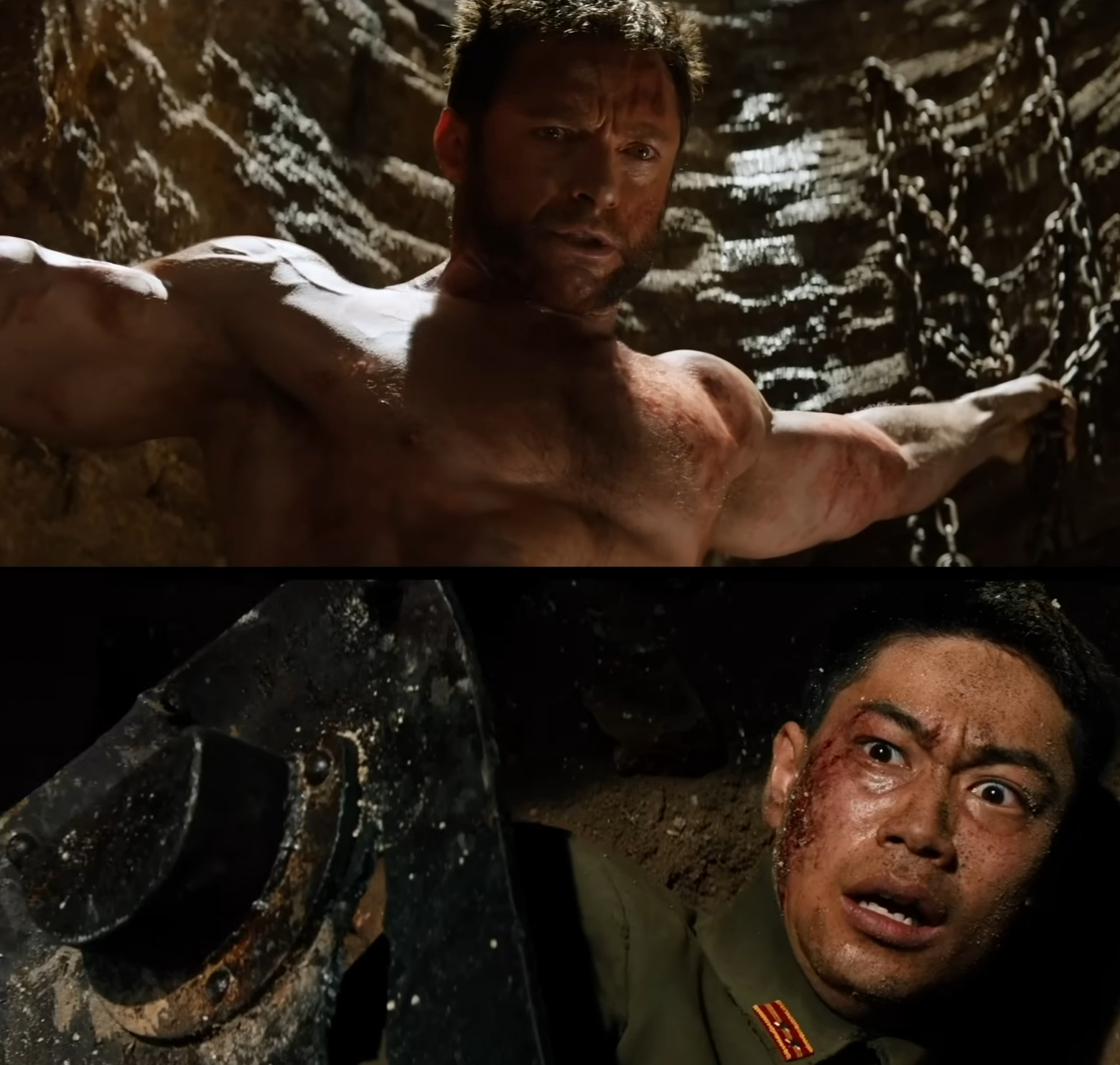
After all, regeneration is mass protein production. If it's accelerated, then possibilities include:
- Organ regeneration
- Nerve restoration
- Limb restoration (combined with DNA editing)
Athletic Achievements
Many people are frustrated by sports where achieving anything requires extraordinary willpower or a natural love for it, which not everyone has. Now imagine that you could get fit in 1-2 days without torturing yourself for months. That's wonderful!
Radical Intelligence Enhancement
Now for the strategic part. Enhanced protein synthesis will make humanity tens of times smarter, since various proteins are synthesized in the brain during learning.
After all, the brain is also protein. It's receptors, ion channels, synaptic proteins. Learning requires synthesis of new proteins. Today this is the memory bottleneck. A new ribosome will accelerate memory formation, learning, and brain adaptation.
The organism will be able to learn significantly faster.
New Children: Growth, Embryogenesis
Embryogenesis and growth will accelerate. This means children of the new human race will grow up in six months to a year and intellectually develop to adult level in that time.
Currently, parenthood is hard labor for a couple of decades, but it would become a simple activity. Anyone can create their own dynasty, clan, or lineage within a reasonable time.
Remember Leeloo from "The Fifth Element," who read all encyclopedias in a couple of days? These are the new children of the future.
Immunity Revolution
The immune system is a protein factory: antibodies, receptors, signaling molecules. A new ribosome will provide near-instantaneous immune response, rapid antibody evolution within the organism.
The human immune system will be able to produce antibodies before malicious bacteria and viruses can develop in the body. Currently, there are diseases considered nearly 100% fatal because of slow immune response. So farewell rabies, Ebola, and other infections!
Resistance to Stress and Extreme Conditions
But that's not all. Increased protein synthesis speed, combined with new chromosome organization and checksums, will make humans extraordinarily resistant to radiation.
Because when a cell is damaged, protective proteins need to be urgently synthesized.
If synthesis is accelerated, then beyond radiation, the organism will become more resistant to toxins and extreme temperatures. This is the path to super-resistant life forms.
Currently, if a person flies to Mars and back, they receive the maximum radiation dose one can receive in a lifetime. With new ribosomes, genome reassembly, and DNA checksums, such journeys could be made regularly.
Reduced Need for Food
We already talked about the incredible energy wastefulness of ribosomes. Now imagine that you need to eat 10 times fewer carbohydrates. Perhaps just 1 piece of chicken would suffice for the entire day, or 1 cup of protein shake with minimal carbohydrates, vitamins, and minerals. This means hunger will simply not exist. Because the main energy consumer has been optimized.
Slowing of Aging
Ribosomes, their quantity, and activity are directly linked to aging.
It has already been observed that long-lived individuals never have a deficit of ribosomal repeats in their genome, which determines the presence of a decent number of active ribosomes in cells. With age, protein synthesis declines. Naturally, people with the correct number of ribosomal genes and super-ribosomes will age much more slowly, if at all.
To be fair... Schizophrenics have an elevated number of ribosomal repeats, but they are not long-lived. The thing is, they have defective genes, but if they were lucky (or unlucky, depending on how you look at it) and have many ribosomes, then their embryos survive. Many ribosomes are needed for embryo survival against a background of pathology. But with defective genes due to severe oxidative stress, they cannot become long-lived.
The Deepest Consequence: Changing the Duration and Tempo of Subjective Life
If all processes are accelerated, then subjectively the organism will live more slowly relative to the outside world. It will be able to think faster, react faster. This is biological time acceleration.
And the subjective lifespan may increase by tens of times!
Conclusion: This Is No Longer Science Fiction, but a Scientific Direction
Nature is not a temple but a workshop. And this workshop runs on antiquated equipment. The ribosome is a vivid example of how blind evolution has reached a dead end, hit a local optimum, and frozen. An intelligent engineer, armed with modern methods of genetic engineering and synthetic biology, is capable of creating a system that will be orders of magnitude more efficient. And this is not blasphemous "interference with nature" — it's nature's natural continuation, the next stage where design replaces randomness.
Modern synthetic biology is already moving in this direction.
In 2015, the laboratories of Michael Jewett (Northwestern University) and Alexander Mankin (University of Illinois) created Ribo-T — the world's first artificial ribosome.
Yes, on this path there are many difficulties and complex questions. For example, with overly fast protein synthesis, some types of proteins may not have time to fold into the correct shape and become junk. It may be necessary to redesign many proteins for compatibility with new ribosomes.
But the game is worth the candle.
Welcome to the beautiful world of the future! For now at the level of ideas, and later — reality as well.
Idea author — Yuri Novikov (MD). Additions and literary editing — Sergey Kamenev.