I Won't Connect My Dishwasher to Your Stupid Cloud
A frustrated owner discovers that essential features of his new Bosch dishwasher require mandatory cloud connectivity through the Home Connect app, sparking a broader discussion about IoT design, planned obsolescence, and the local-first principle.
Installation: Mostly Problem-Free
The installation of the new Bosch Series 500 dishwasher went smoothly compared to the previous GE model. The only hiccup was the factory-tightened leveling feet, which required a 10mm hex coupler to adjust properly. Once that was sorted out, the unit slid right into place without issues.
First Startup: Mandatory Cloud Encounter
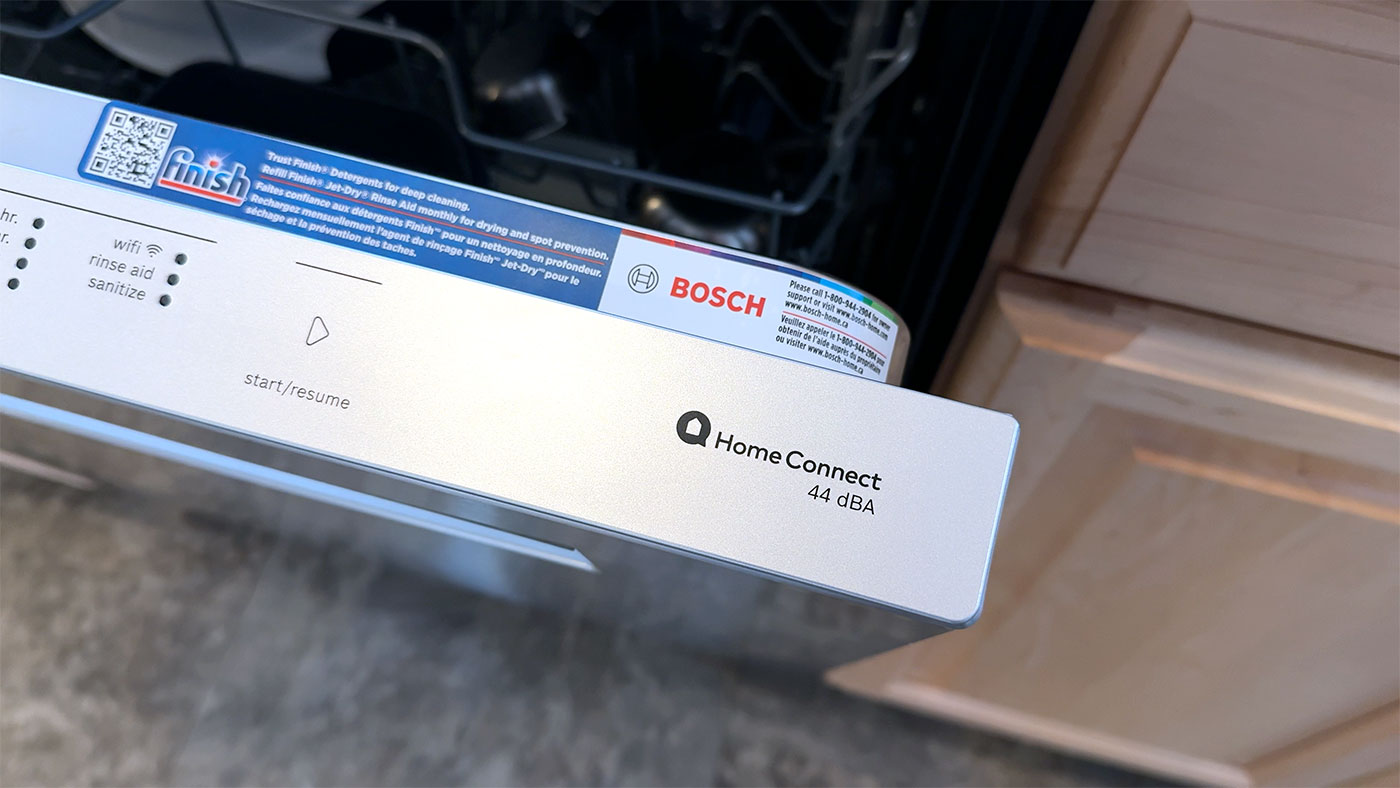
The touchscreen controls turned out to be far less intuitive than the mechanical buttons on the old model. But the real frustration came from the user manual. Features like the rinse cycle, machine care mode, half-load mode, and eco mode all carried asterisks. The footnote read: "Available only through the Home Connect app and not on all models."
Let that sink in. You buy a dishwasher for over a thousand dollars, and some of its basic features are locked behind a cloud-connected smartphone app. Without it, the dishwasher is essentially a dumb box with a touchscreen veneer.
The Available Options
Faced with this reality, the author identified three possible paths forward:
- Give up on those features entirely — simply accept the crippled device as-is.
- Connect it to Wi-Fi via an IoT VLAN — isolate the dishwasher on a separate network segment and use the Home Connect app. This requires networking expertise that 99% of consumers don't have.
- Reverse-engineer the protocol — using the HCPY library, an open-source project that attempts to communicate with Home Connect devices locally. But this is fragile, unsupported, and could break at any firmware update.
All three options are impractical compromises for what should be standard built-in functionality.
Design Laziness
The root of the problem is cost-cutting disguised as "smart" features. The budget models in the Bosch lineup lack even a small seven-segment display that could show cycle progress or error codes. Instead, Bosch forces consumers who want physical controls to pay an extra $400 for the Series 800 model. The cloud dependency on the cheaper models isn't innovation — it's a way to save pennies on hardware while claiming a premium feature set.
Planned Obsolescence
Cloud services require ongoing infrastructure and support costs. The Home Connect service currently has no subscription fee, which raises an obvious question: where's the money coming from? There are only two realistic explanations:
- Data monetization is already happening. Your dishwasher usage patterns, run times, detergent habits — all of this has value to advertisers and data brokers.
- The service will eventually be shut down or converted to a subscription model. When Bosch decides the servers aren't worth maintaining, your dishwasher loses features you paid for. Or they'll start charging a monthly fee for access to functions that should have been on the device from day one.
We've seen this pattern before with numerous IoT products. Devices that worked perfectly fine one day suddenly become paperweights when the manufacturer pulls the plug on the cloud backend.
Security Risks
The Home Connect API gains internet access to your local network. For the app to control the dishwasher, it communicates through Bosch's cloud servers, which means your home network has yet another attack surface. The vast majority of consumers — probably 99% — have never heard of VLAN segmentation and have no idea how to isolate IoT devices from their computers, phones, and other sensitive devices on the same network.
Every internet-connected appliance is a potential entry point for attackers, and the security track record of IoT manufacturers is, to put it mildly, not inspiring.
The Proposed Solution: Local First, Then Cloud
The principle is simple: devices should function completely offline, with cloud connectivity as an optional convenience layer, never a mandatory requirement. Every feature the dishwasher advertises should work via its physical controls or local interface without requiring internet access, an app, or an account.
Cloud can add value on top — remote notifications, energy usage tracking, integration with smart home systems — but the core device must stand on its own.
As the author puts it: "A $1 ESP32 chip could manage all of this locally without any cloud." The technology to provide full local control exists, is cheap, and is well-understood. The only reason manufacturers don't use it is because they've decided your data and your dependency are more valuable than your satisfaction.
The bottom line: stop building appliances that are hostages to cloud infrastructure. Build devices that work first, and connect second.