How One Person Created a Series of Highly Complex Instruments
The story of Yaroslav Menshikov, a Moscow-based engineer who single-handedly designed and manufactured a full line of certified battery and supercapacitor analyzers — from concept to state measurement registry.
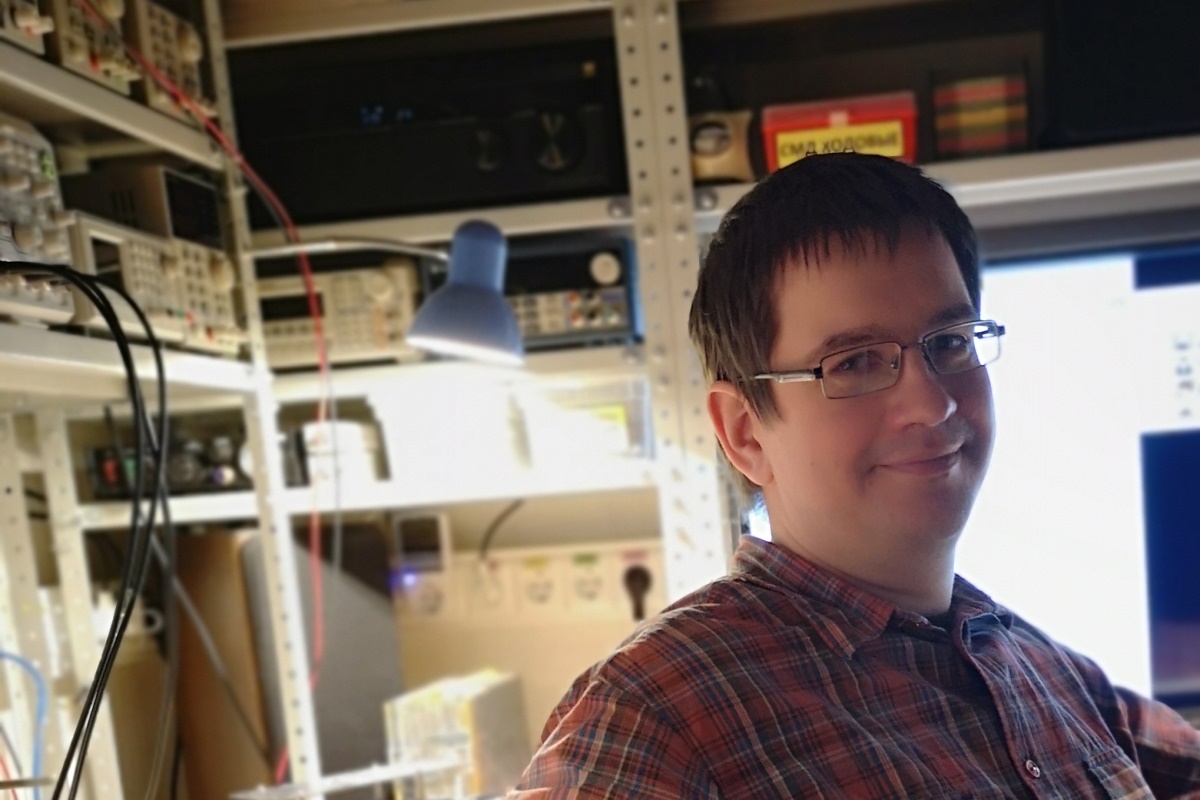
When I first heard about the Yarostanmash battery and accumulator testing device, I assumed there was a large factory somewhere in Yaroslavl that developed and manufactured it. It turned out the device was created by one person — Yaroslav Menshikov, and he lives in Moscow.
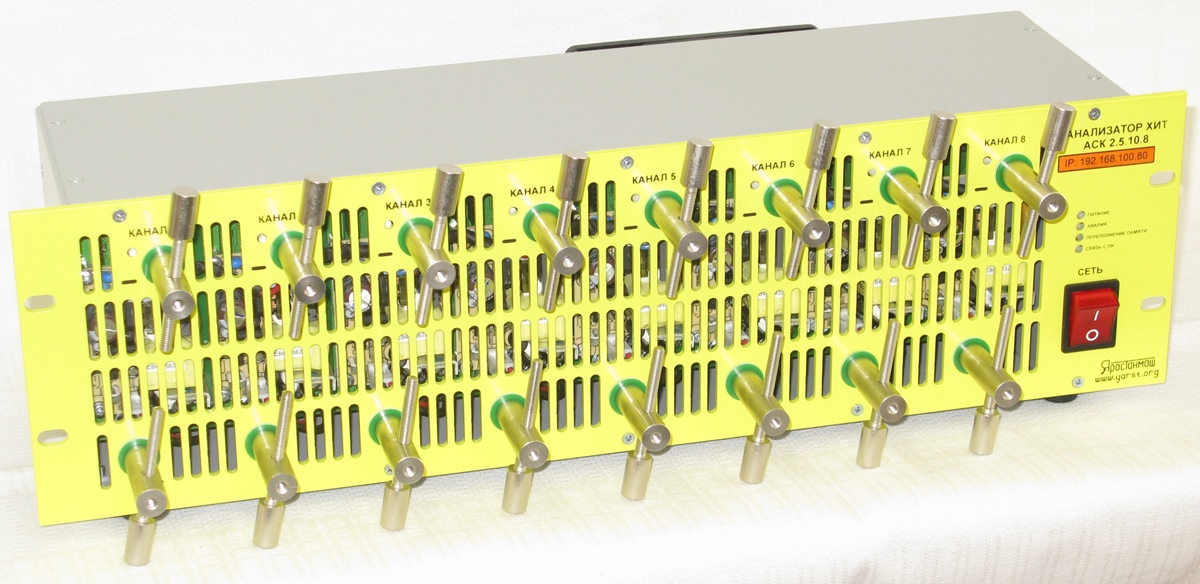
For a year and a half now, I have been testing batteries and accumulators using the eight-channel chemical power source analyzer ASK2.5.10.8. Even now, as I write this article, the analyzer is testing another batch of batteries.
Today I will tell you about the person who created this device.
Early Years and First Projects
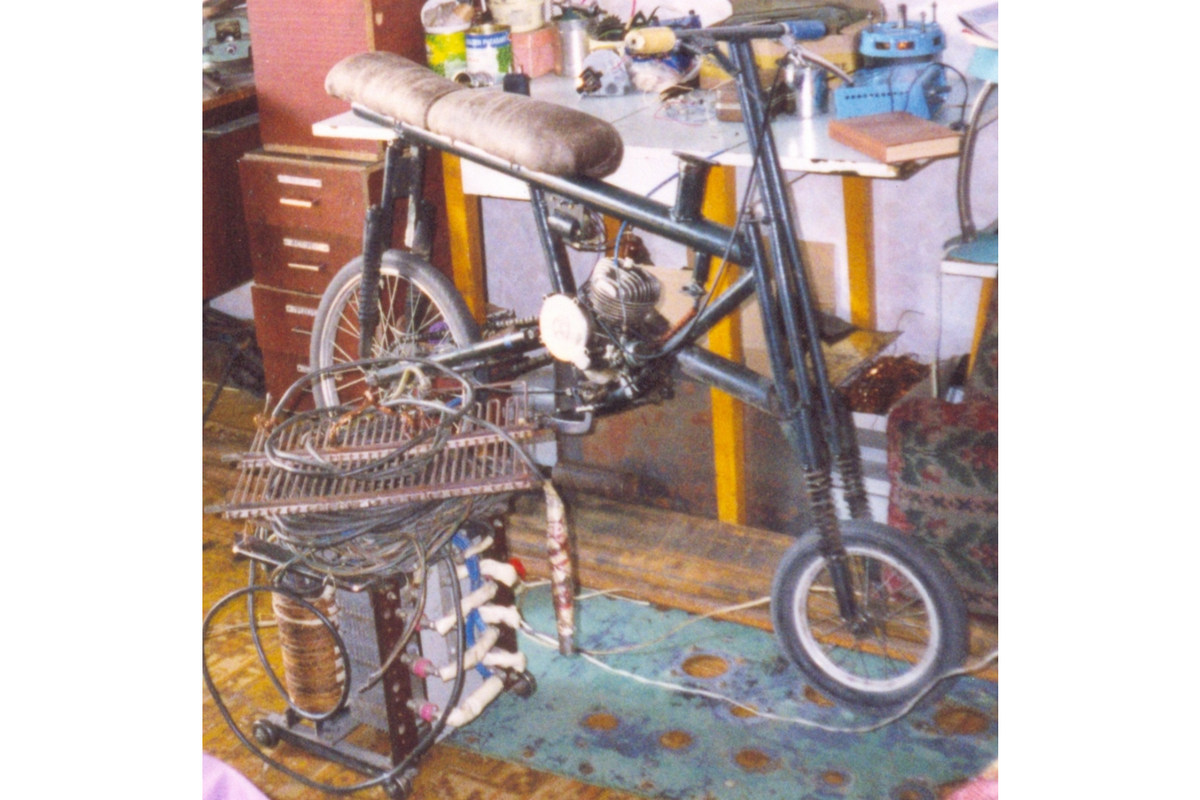
Yaroslav Menshikov has been passionate about technology, mechanics, electrical engineering, and electronics since childhood. Starting at age 12, Yaroslav began his attempts to build a homemade arc welding apparatus. After several unsuccessful creations with varying degrees of functionality, he finally managed to build a working welding rectifier and independently mastered arc welding of metals. At age 15, he independently assembled a completely homemade moped based on a Soviet D8M gasoline engine. Yaroslav fabricated the moped's frame from steel water pipes, took the wheels from a children's bicycle, and the roughly two-liter fuel tank and muffler were integrated into the frame — exhaust gases were expelled through a footrest tube (from both sides simultaneously). The moped even had suspension springs — made from elevator mechanism springs.
This 1996 photo shows the moped and Yaroslav's homemade welding rectifier.
The moped was in service for over two years, undergoing numerous minor modifications during that time.
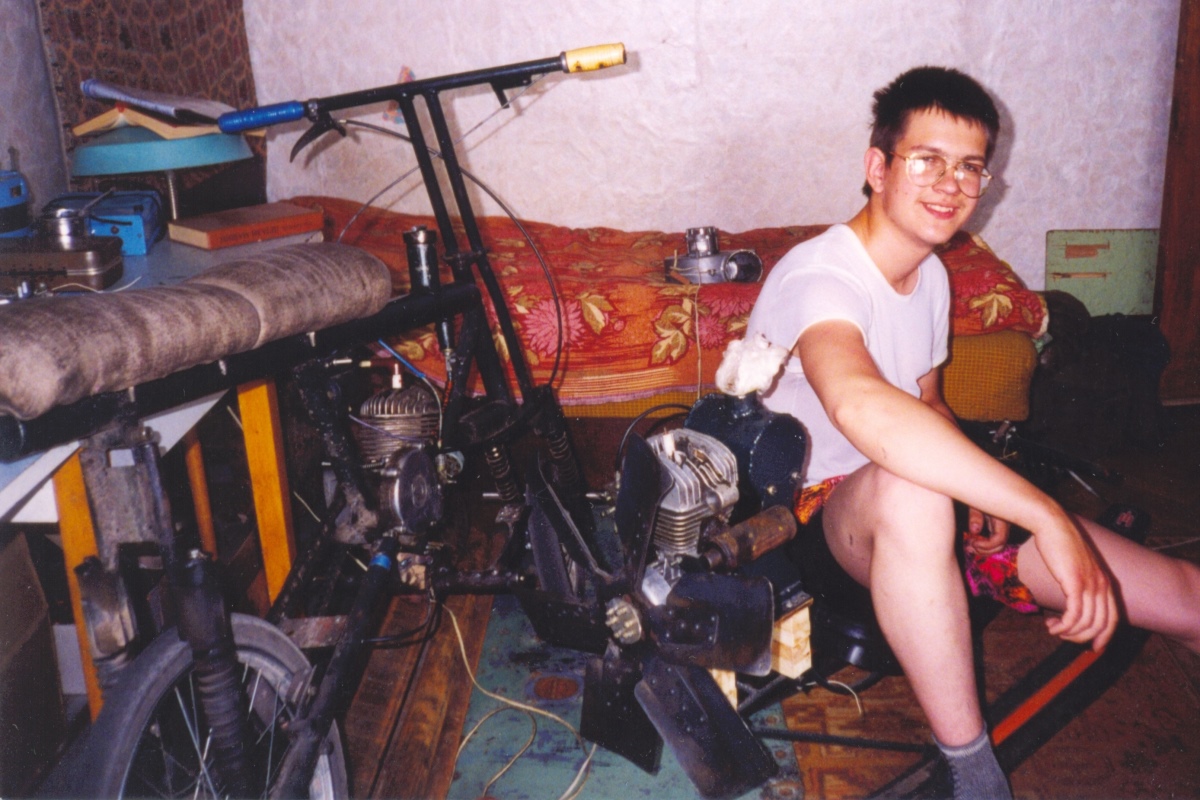
Another historical photograph. It shows the same moped from a different angle and Yaroslav himself, astride yet another homemade creation — an aerosled made from a children's snow scooter, a gasoline engine from a Soviet moped found in a junkyard with a broken gearbox, and a metal cooling fan from a diesel forklift. Unfortunately, these "aerosleds" with their heavy propeller never managed to start, although the engine itself started and ran normally without the propeller.
Another project was a homemade electric bicycle based on a motor from a washing machine and batteries from uninterruptible power supplies.
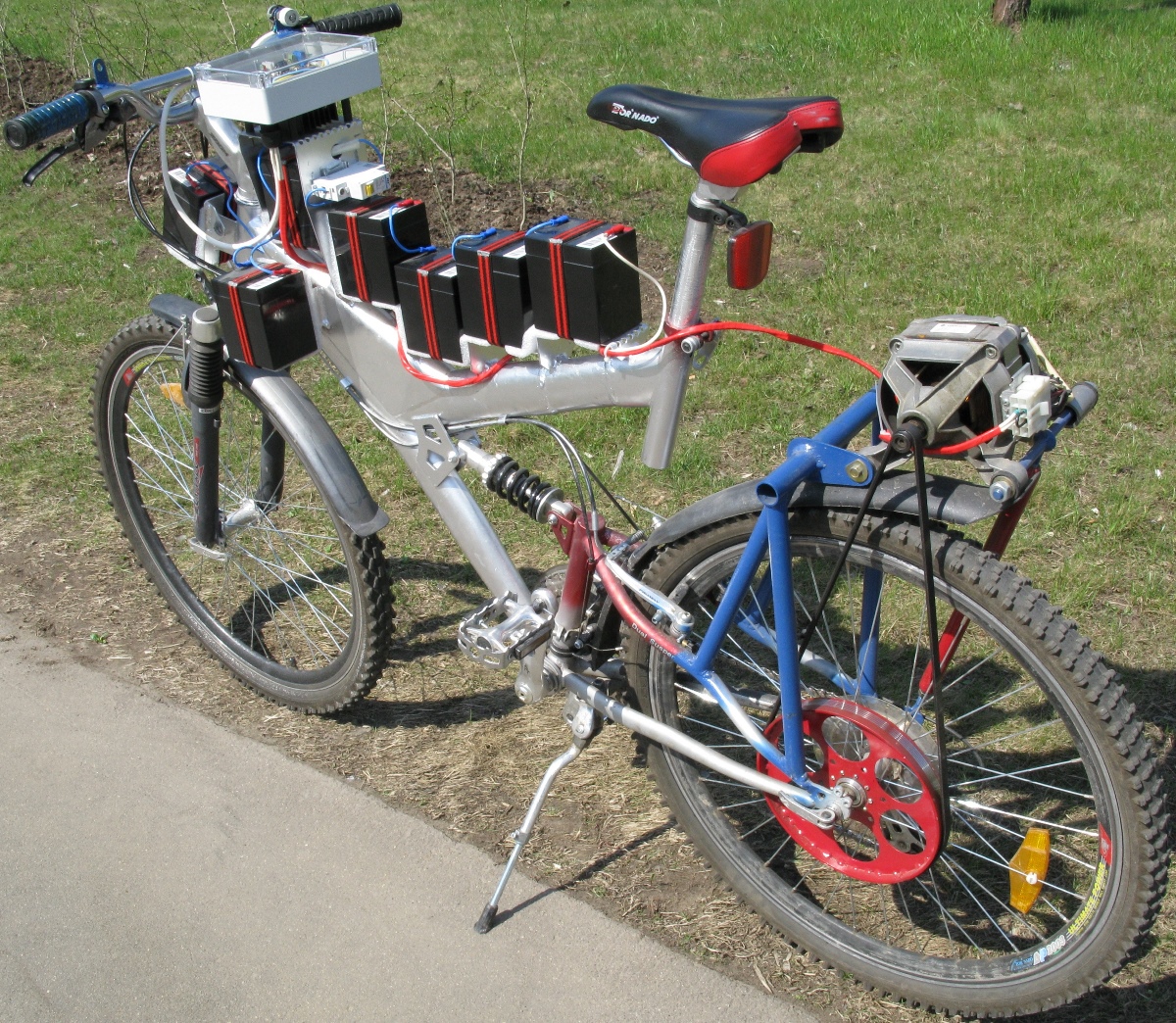
The manufacturing process is described in detail on Yaroslav's website.
Education and Career
In 2001, Yaroslav graduated with honors from the Moscow Industrial-Economic College and enrolled in the Moscow Power Engineering Institute (MEI), which he completed with honors in 2007, receiving a red diploma with a master's degree in "Technical Physics."
Alongside his studies at college and university, Yaroslav independently mastered electronics, power conversion technology, microcontroller programming, creating applications for personal computers, and also fulfilled a long-held dream — he acquired a benchtop metal lathe.
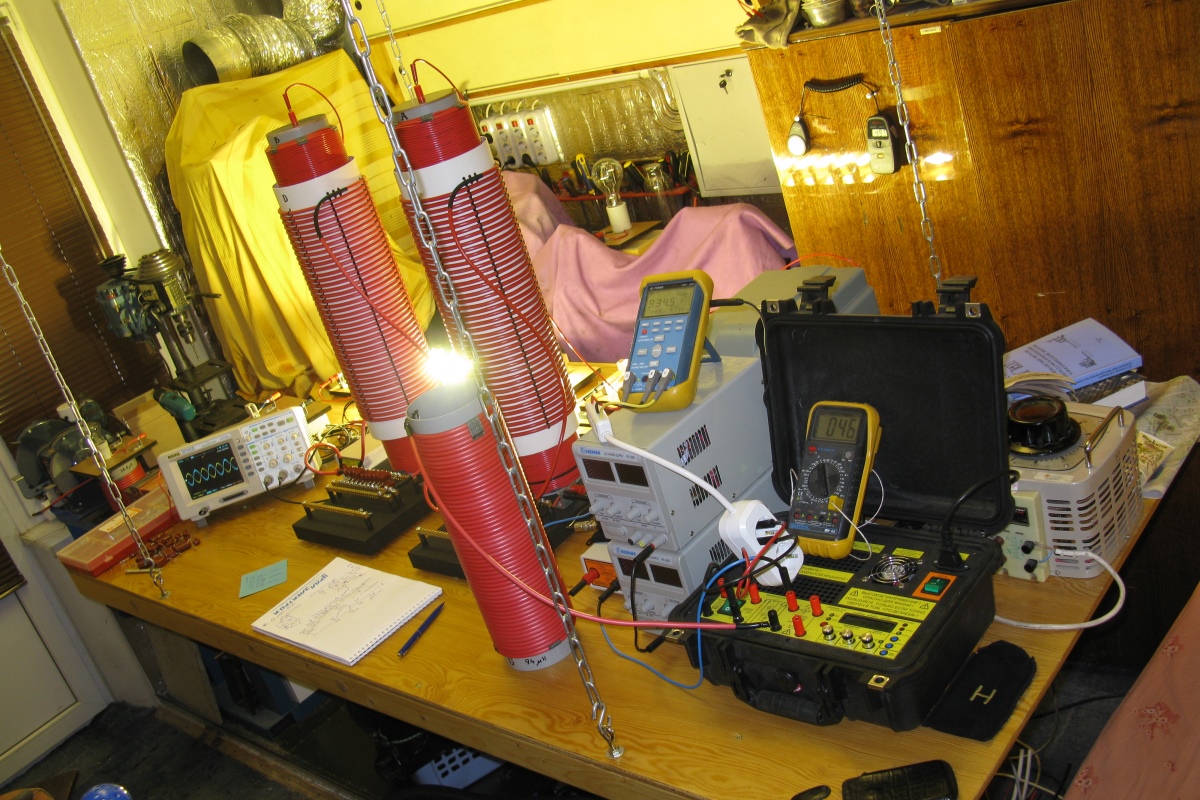
After university, Yaroslav began working at Yo-Auto (the same company that created the Yo-mobile, which unfortunately never went into mass production). In 2012, while working at this company, Yaroslav Menshikov participated in developing a prototype single-wire resonant street lighting system. A necessary component of the system was a power inverter with an adjustable frequency range from 1 to 150 kHz, which Yaroslav designed and built in a briefcase form factor.
A video with an explanation of the operating principle and tests of the manufactured prototype is available.
First Battery Analyzers
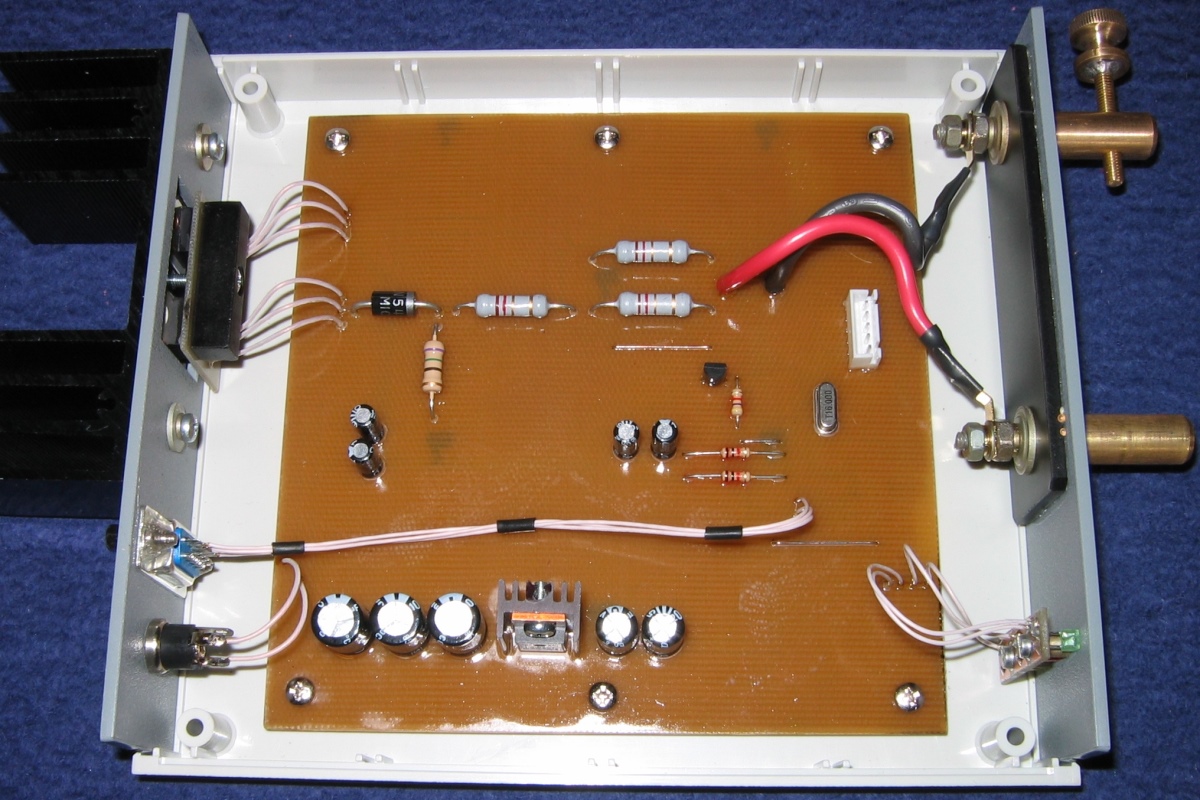
The first analyzer for testing accumulators was designed and built by Yaroslav in 2005. The device was capable of charging and discharging the tested accumulator at up to 1A current in a voltage range from 0.8 to 4.5V. The analyzer connected to a personal computer. Yaroslav wrote specialized software for working with the device.
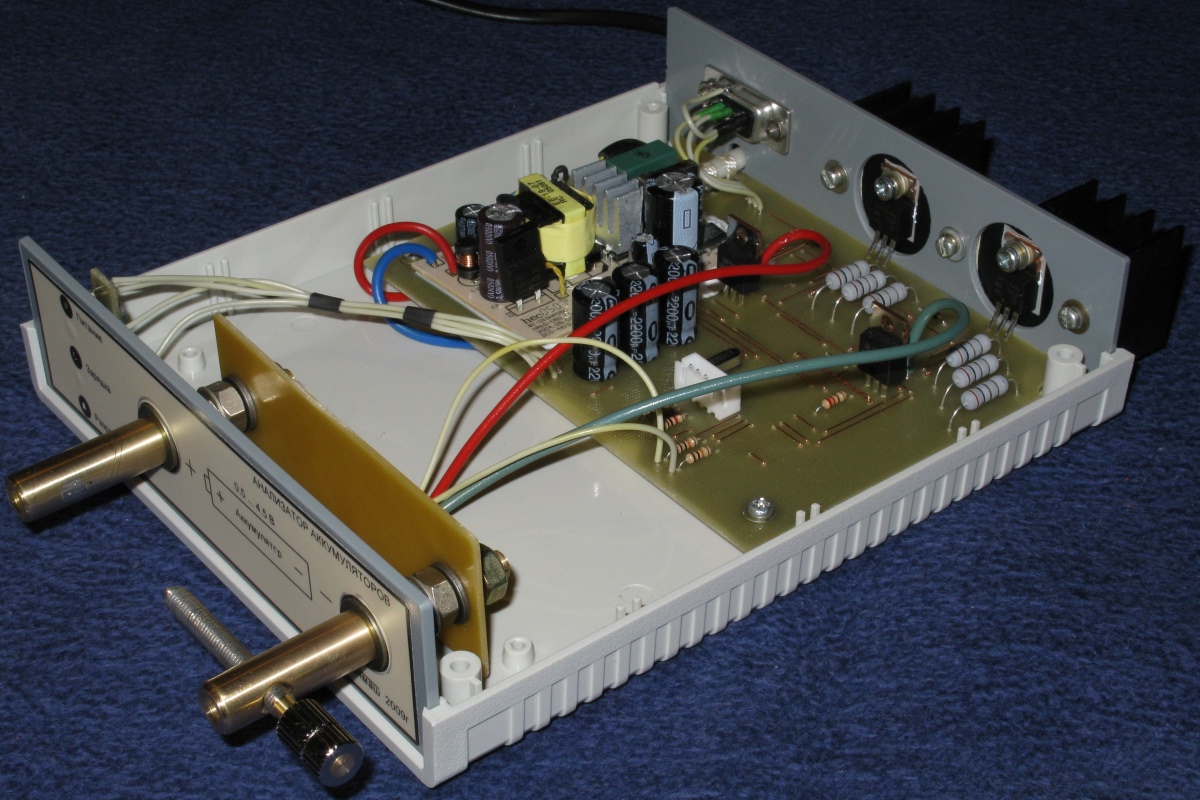
From 2005 to 2010, several more accumulator analyzers with similar parameters were designed and built. Yaroslav posted information, photographs, and usage examples for each device on his personal website. Sooner or later, each created device found its buyer. The buyers were various companies involved in importing batteries into Russia.
Using the devices he designed and built, Yaroslav Menshikov performed a series of tests on various types of batteries and published the results on his website, gaining some recognition among internet users.
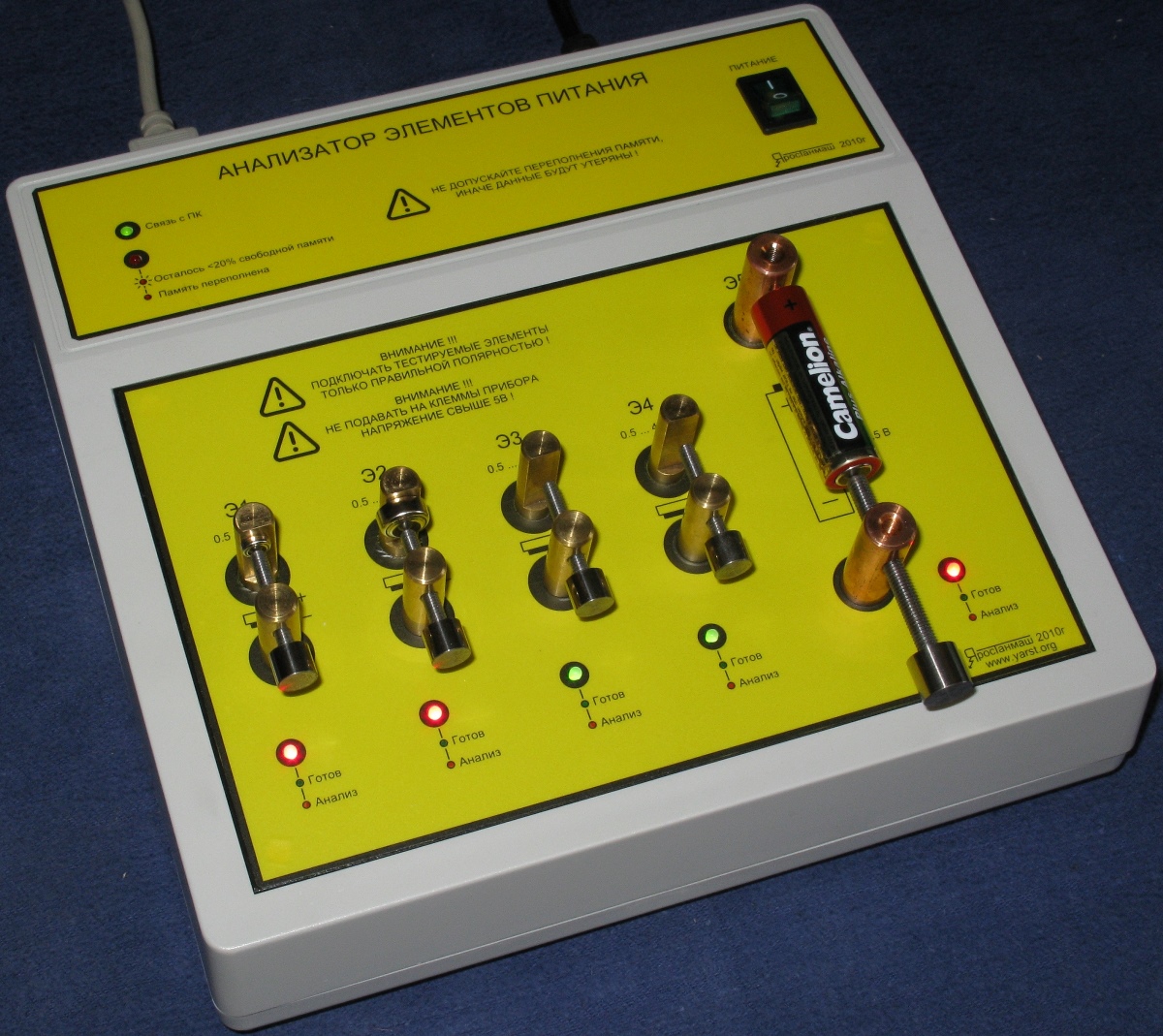
In 2010, Yaroslav received his first order to develop battery testing equipment. As a result, this battery analyzer was born, capable of simultaneously testing four coin cell batteries and one battery ranging in size from AAA to D.
Supercapacitor Era
A revolutionary leap in the development of accumulator testing equipment designed and built by Yaroslav occurred when he began working at Yo-Auto. It was an ambitious project to create a domestic urban hybrid vehicle. One of its most critical components was an energy storage unit based on supercapacitors. Alongside the development of the vehicle itself, work began on creating domestic supercapacitors, first using aqueous and then organic electrolytes.
A laboratory for supercapacitor development was established on the grounds of the Moscow Institute of Steel and Alloys (MISiS). Yaroslav Menshikov was there from the very beginning and began working on creating domestic supercapacitor variants together with Gennady Petrovich Fedotov, under the direction of Vladimir Leonidovich Tumanov.
After conducting a vast number of experiments and selecting suitable materials and manufacturing technologies, Yaroslav and Gennady learned to create laboratory samples of supercapacitors that were at least somewhat capable of storing electrical energy. From that point, an acute need arose for testing equipment that could measure the real characteristics of the manufactured samples and enable further improvement of supercapacitor design and production technology.
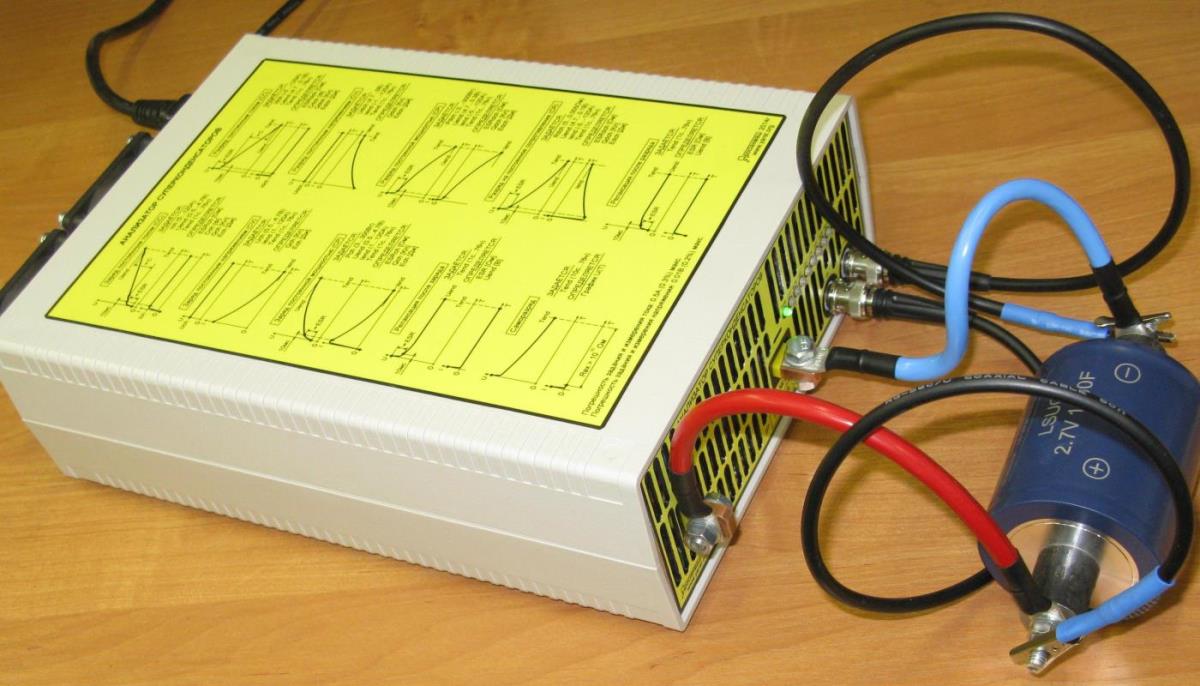
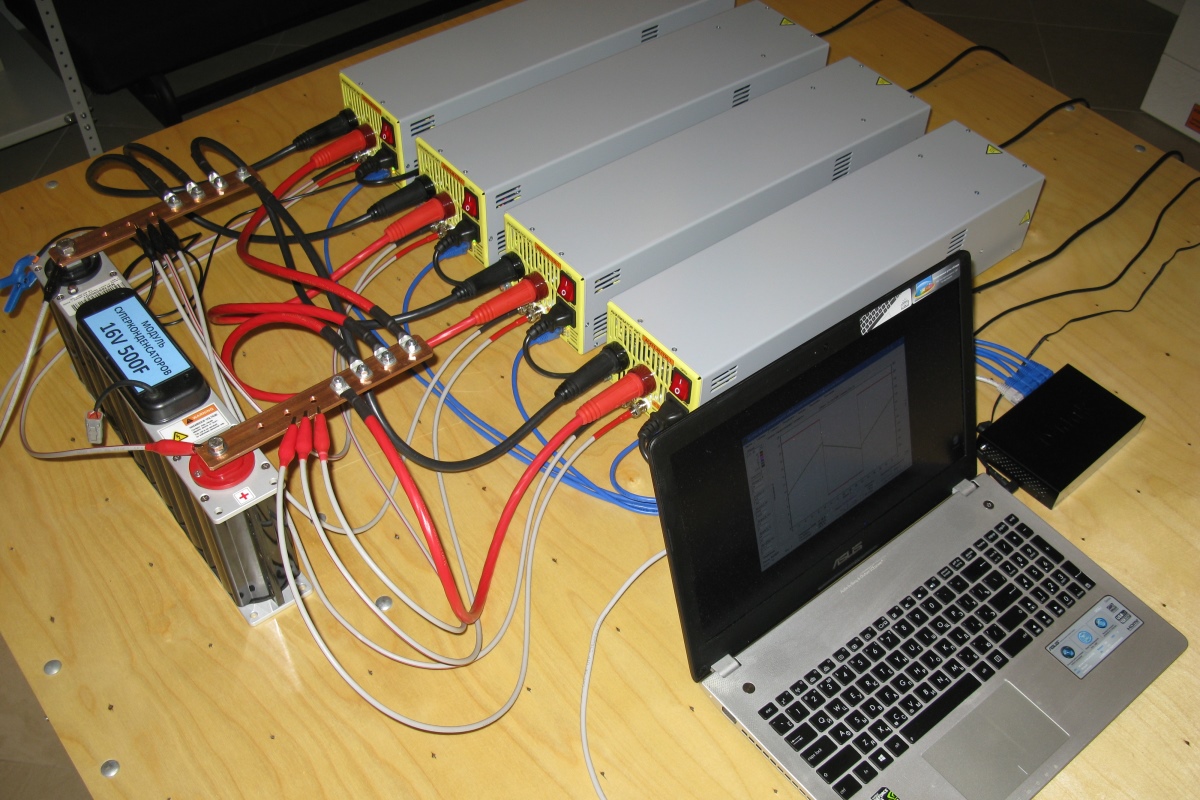
Yaroslav Menshikov then designed and built his own supercapacitor analyzer, rated for 125A charge and discharge current, capable of testing supercapacitors in a voltage range from 0.5 to 4.5V. The analyzer was named ASK125.5.300.1. This device operated at maximum currents for several years and has maintained full functionality to this day.
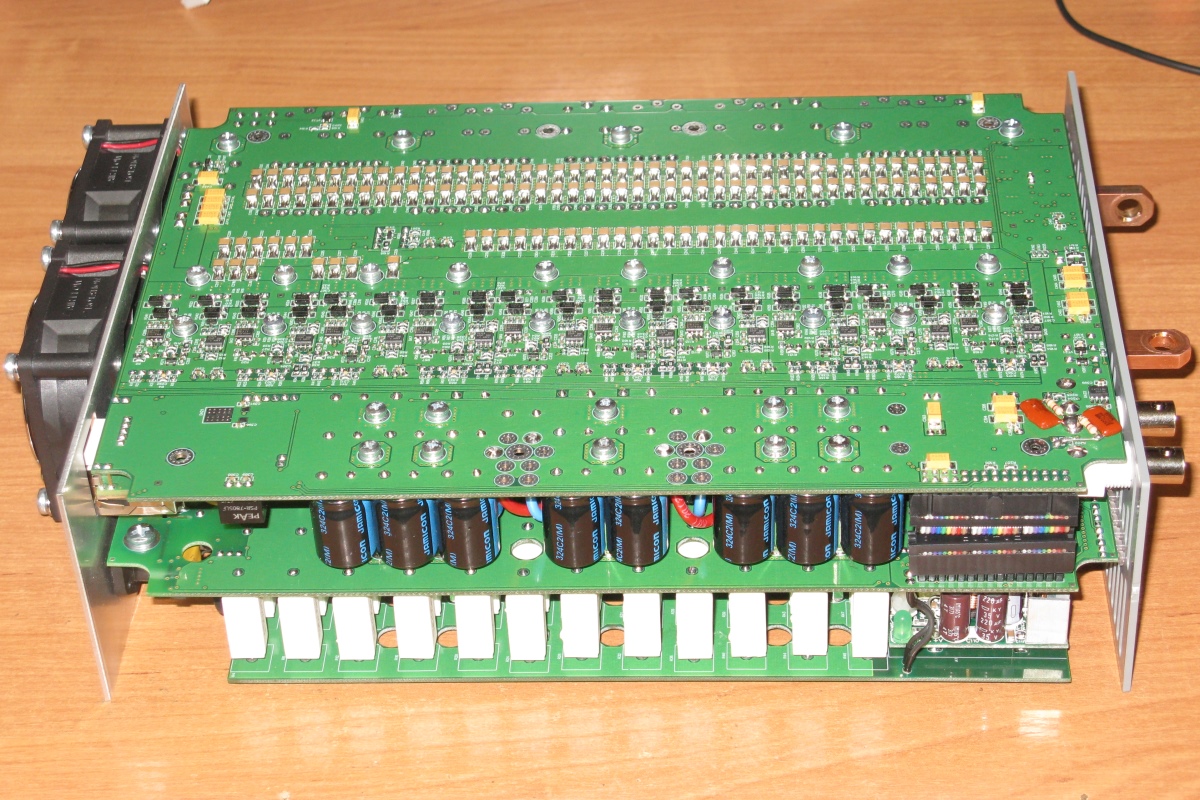
Following it, a high-voltage version of the supercapacitor analyzer was designed and built, rated for 50V, with a maximum charge and discharge current of up to 15A (ASK15.50.300.1):
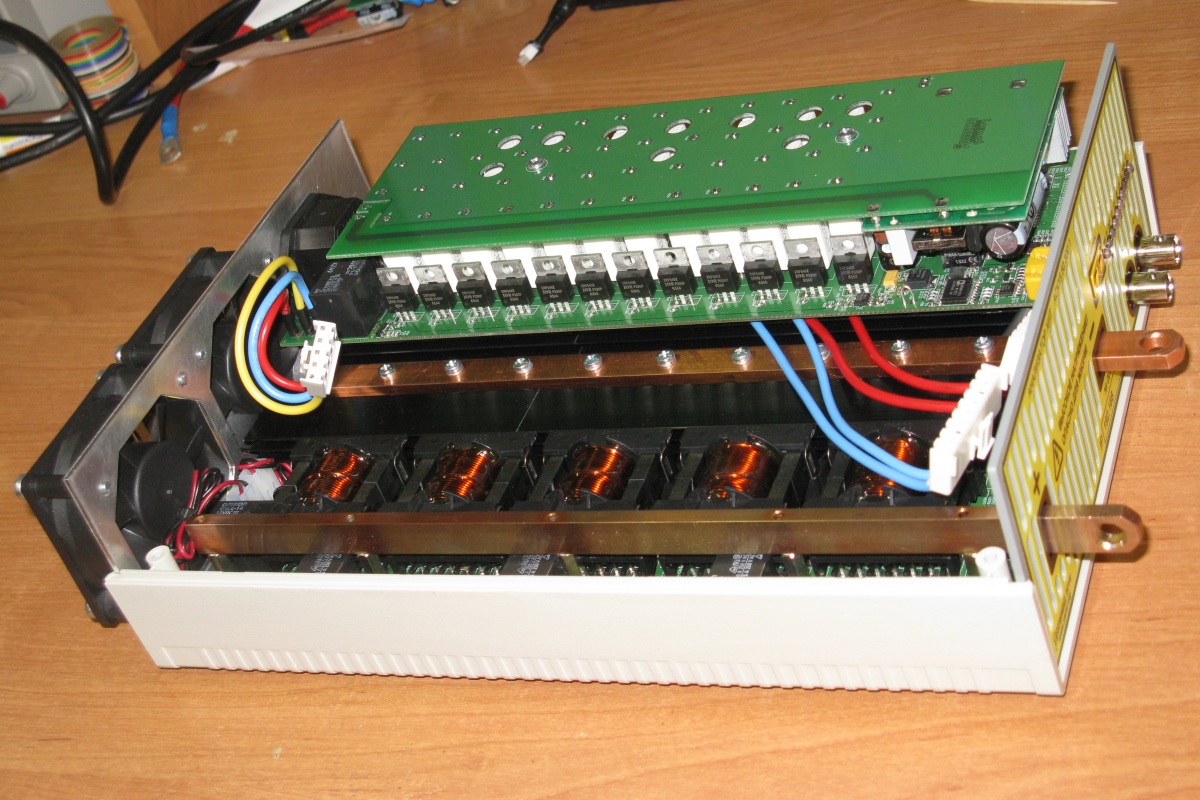
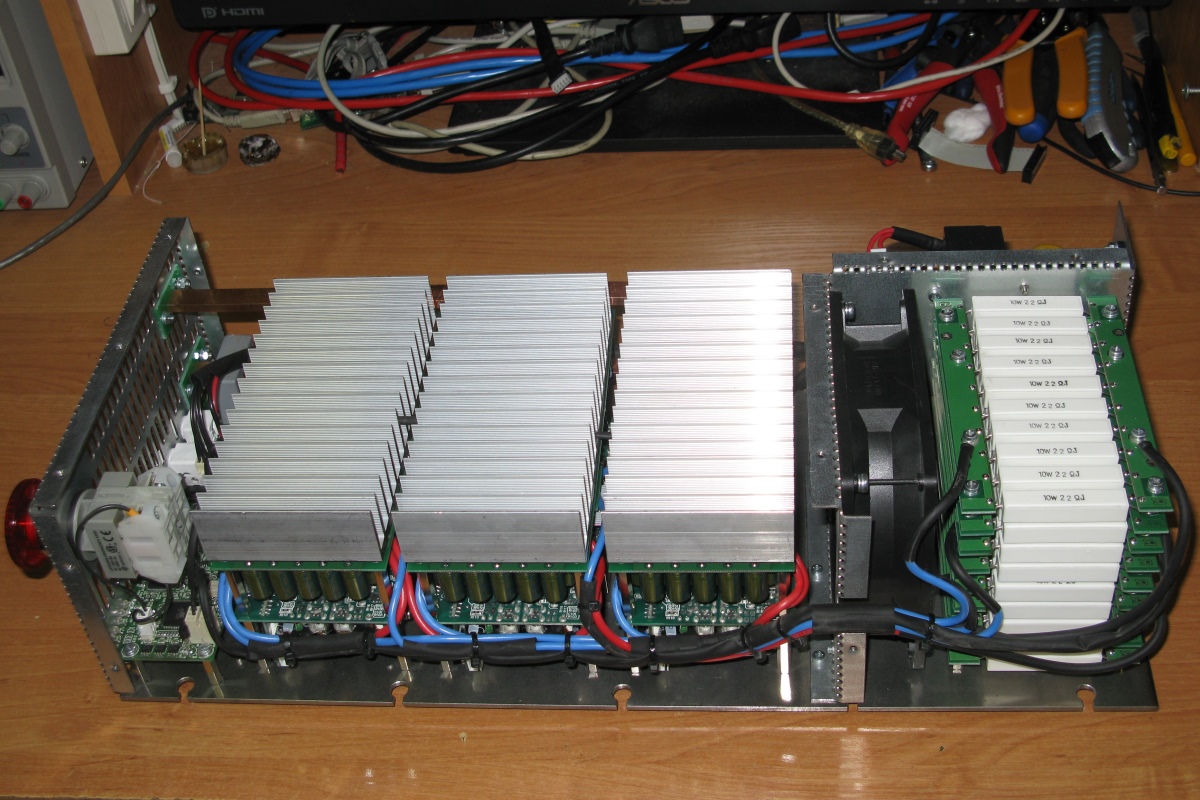
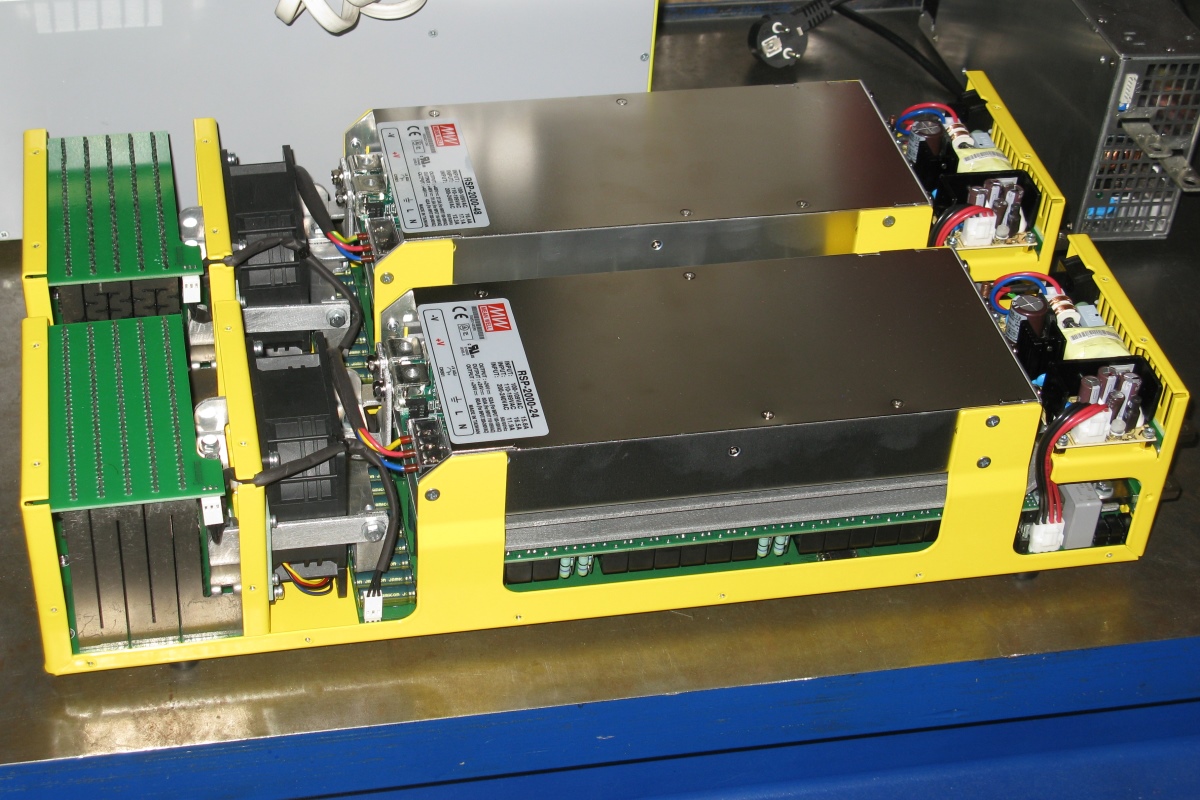
The next analyzer sample was designed and created as a prototype for a series of devices rated for 150A charge and discharge current and a working voltage range from 0.5 to 24V. This sample was used to test the layout, adequacy of the cooling system, and numerous other design nuances. Incidentally, the many holes along the bend lines of the housing parts are specifically there to allow easy bending at designated points during manual fabrication.
Serial Production and Certification
In 2014, Yaroslav manufactured the first serial batch of analyzers under his own legal entity (LLC "YAROSTANMASH"), for which all necessary safety certificates were obtained. This was a batch of ASK150.24.1500.1 devices. The analyzers were delivered to MISiS laboratories for testing supercapacitor and accumulator samples.
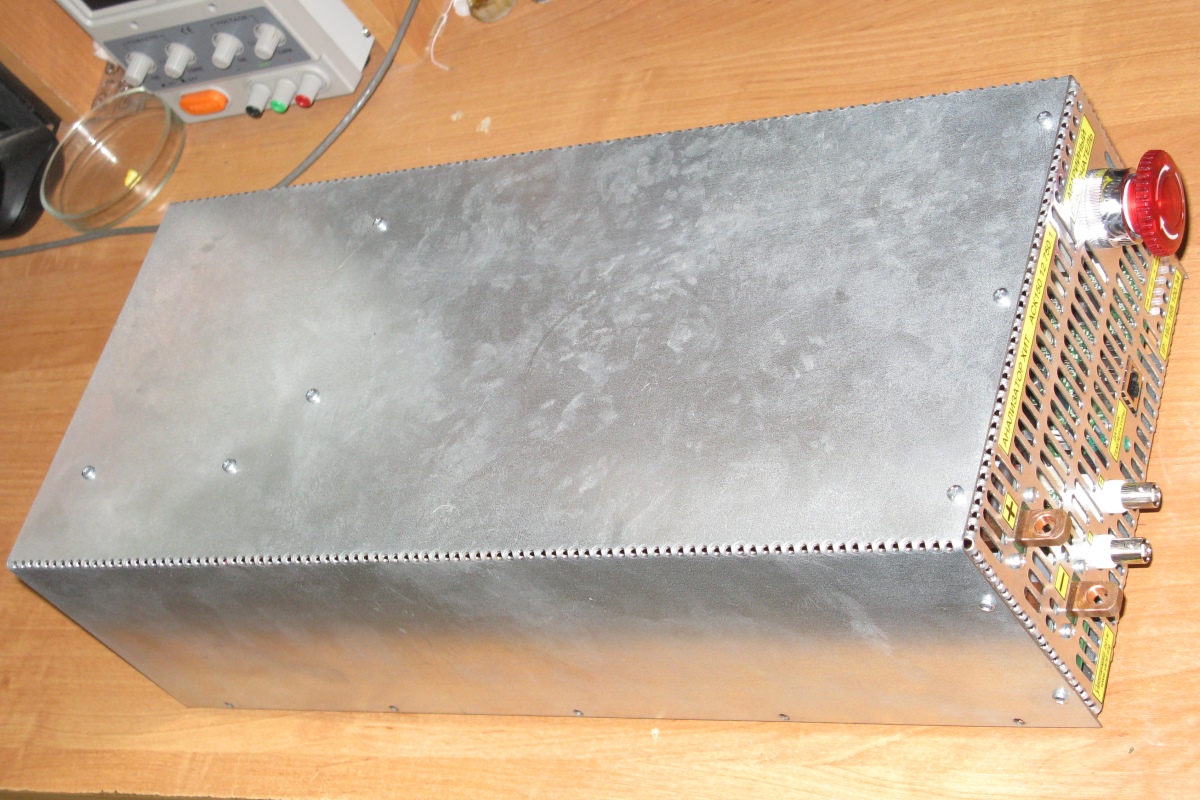
As the complex of supercapacitor development laboratories grew, a need arose for a large number of low-current analyzers designed for testing experimental supercapacitor cells with various material combinations and various preparation recipes.
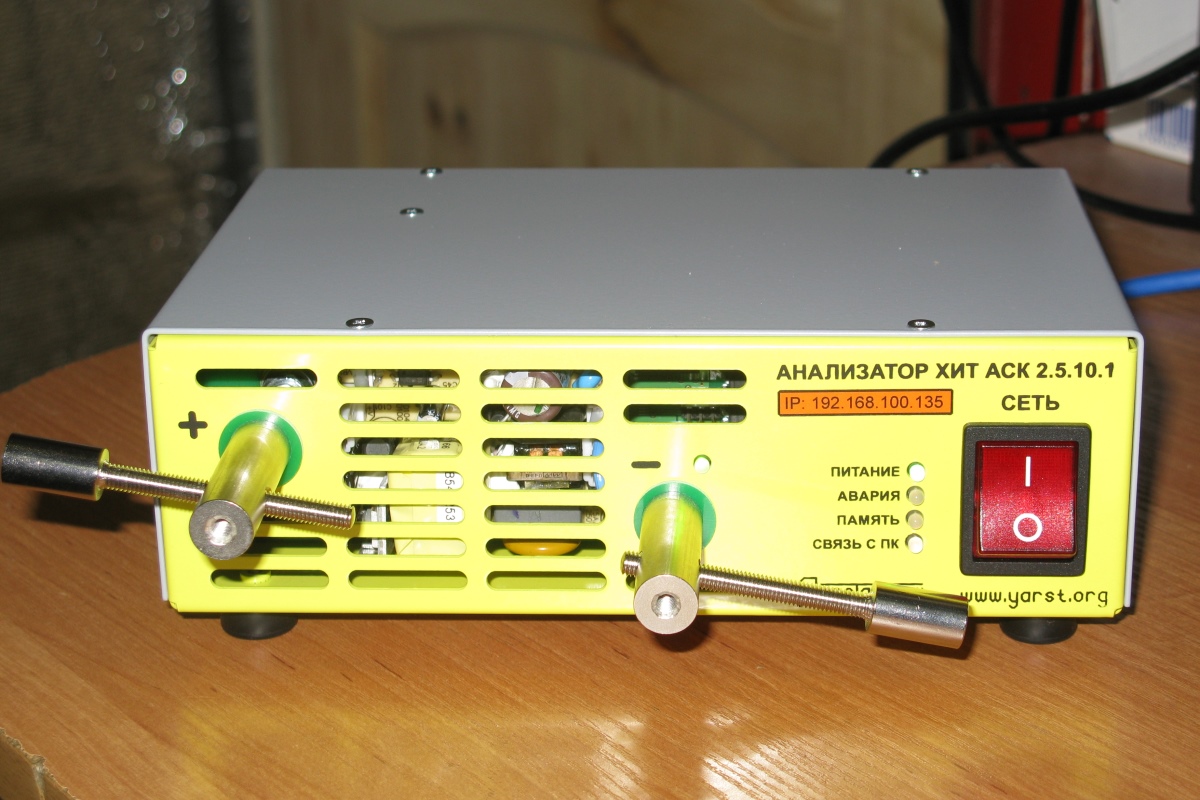
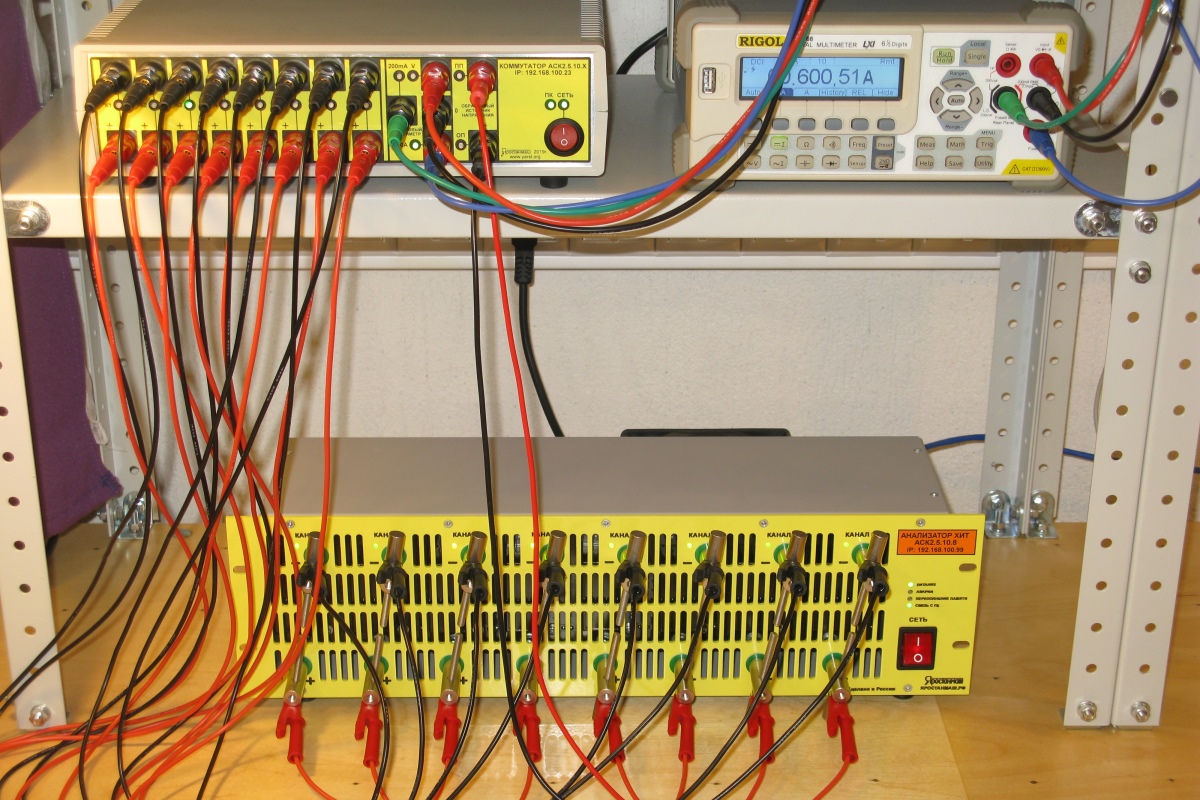
In response to this demand, Yaroslav developed the ASK2.5.10.x series of devices. The ASK2.5.10.1 analyzer has one channel, the ASK2.5.10.2 has two, and the ASK2.5.10.8 has 8 channels. These analyzers can charge and discharge test samples with currents from 2.5 microamps to 2.5A (per channel), and the 2-channel and 8-channel versions have the ability to combine channels for parallel operation to increase the maximum charge and discharge current to 5A and 20A respectively.
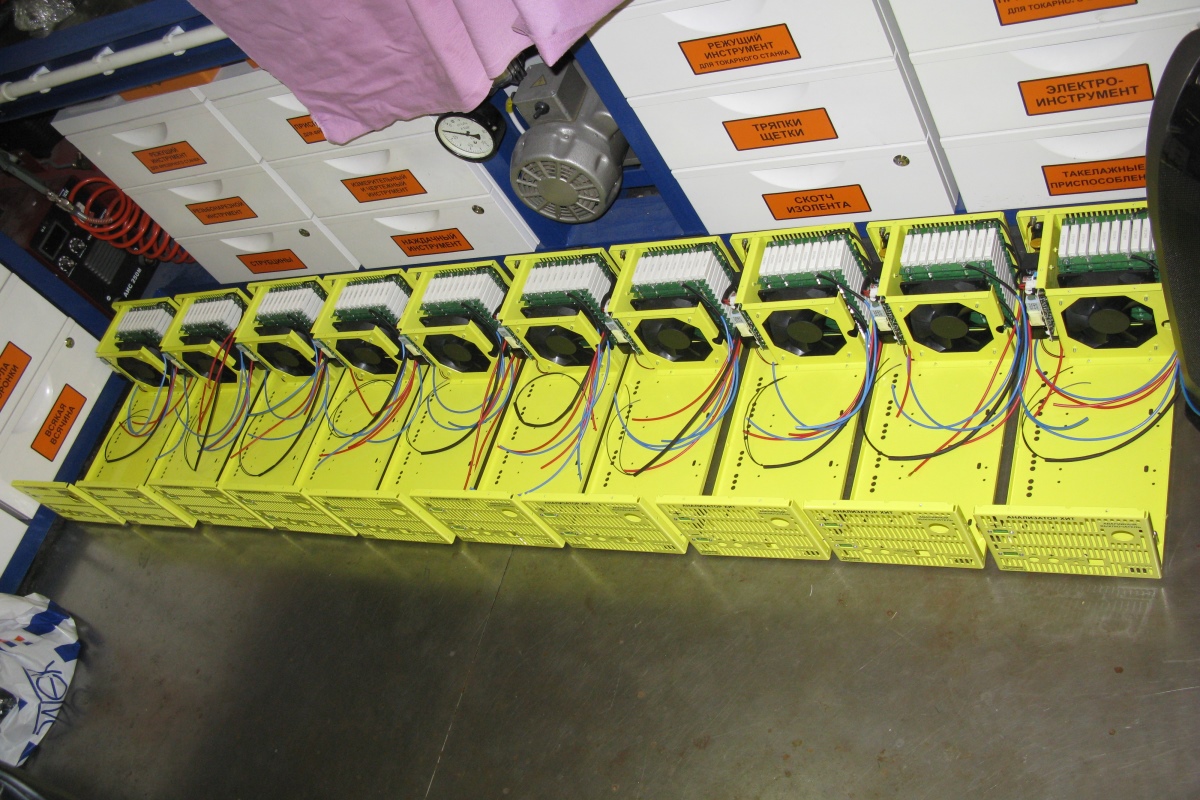
The ASK2.5.10.x series analyzers were entered into the State Register of Measuring Instruments of the Russian Federation. To more clearly explain the operating principle and characteristics of these devices, Yaroslav Menshikov filmed, edited, and uploaded a video to YouTube.
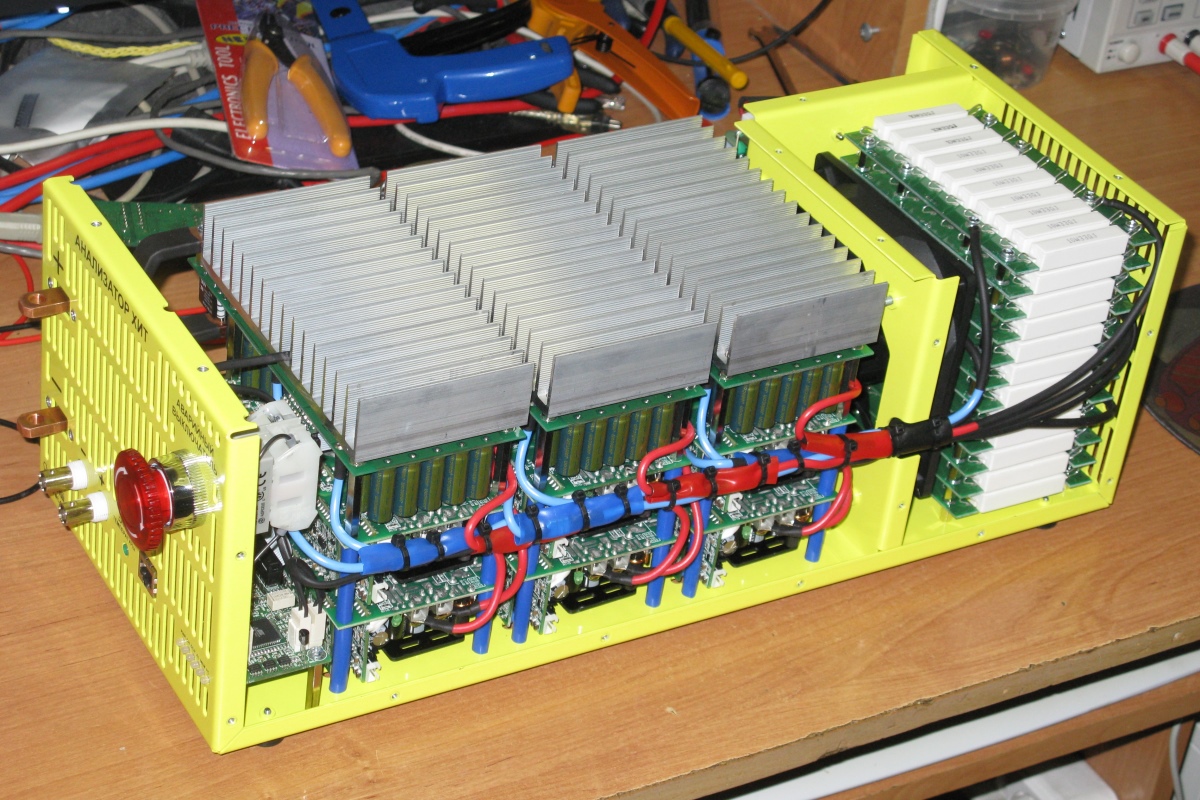
The ASK2.5.10.x analyzers are technically complex devices. Each channel has 8 current subranges and can operate in both forward and reverse polarity on the test sample. Each unit undergoes a calibration procedure after manufacturing. To eliminate errors that may occur during calibration due to human factors, Yaroslav, in addition to the analyzers, developed and created an equipment complex that allows performing the analyzer calibration procedure in a fully automatic mode, without human involvement.
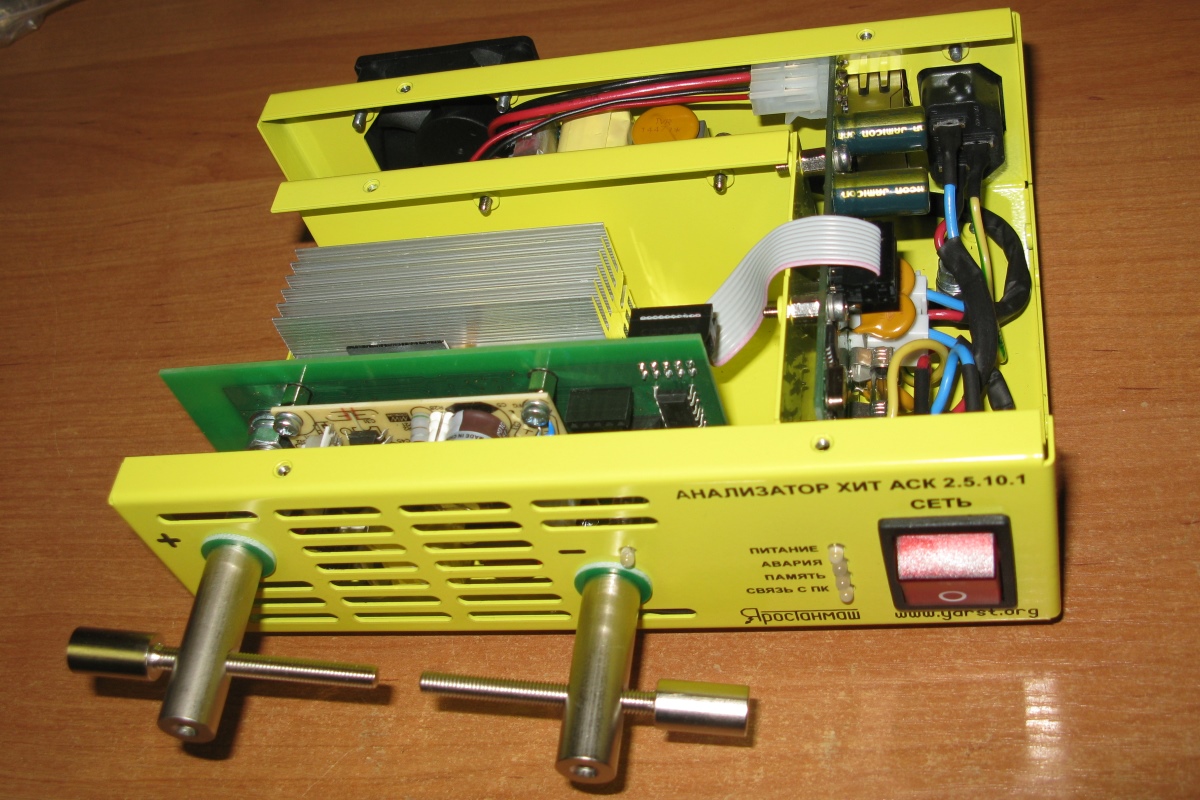
Using ASK2.5.10.8 analyzers, Yaroslav performed a series of comparative tests of batteries from various manufacturers and posted videos about them on his channel.
Next Generation
The next stage in the development of chemical power source testing equipment was the ASK150.24.1750.1 analyzers with a large number of possible testing modes, their combinations, the ability to work from tables, and the capability to operate in parallel. This made it possible to cover a charge and discharge current range up to 3000A, and the maximum charge and discharge power reached up to 35kW.
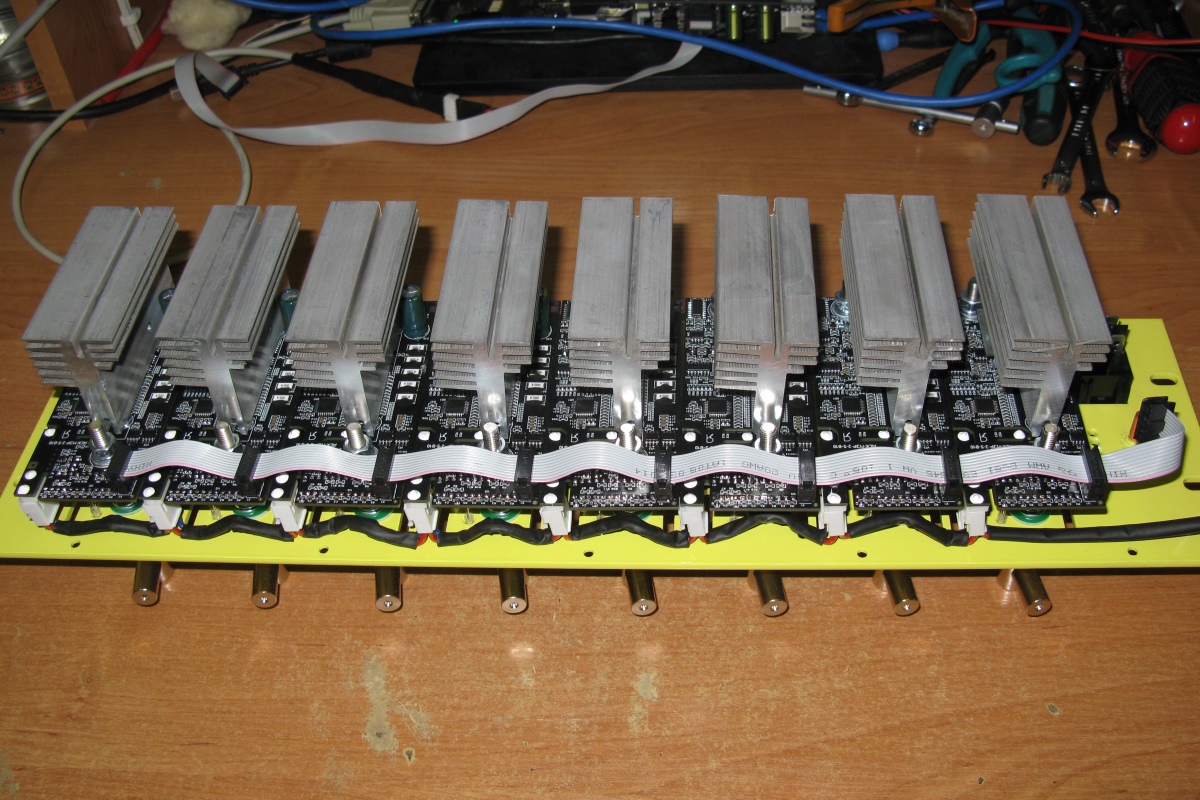
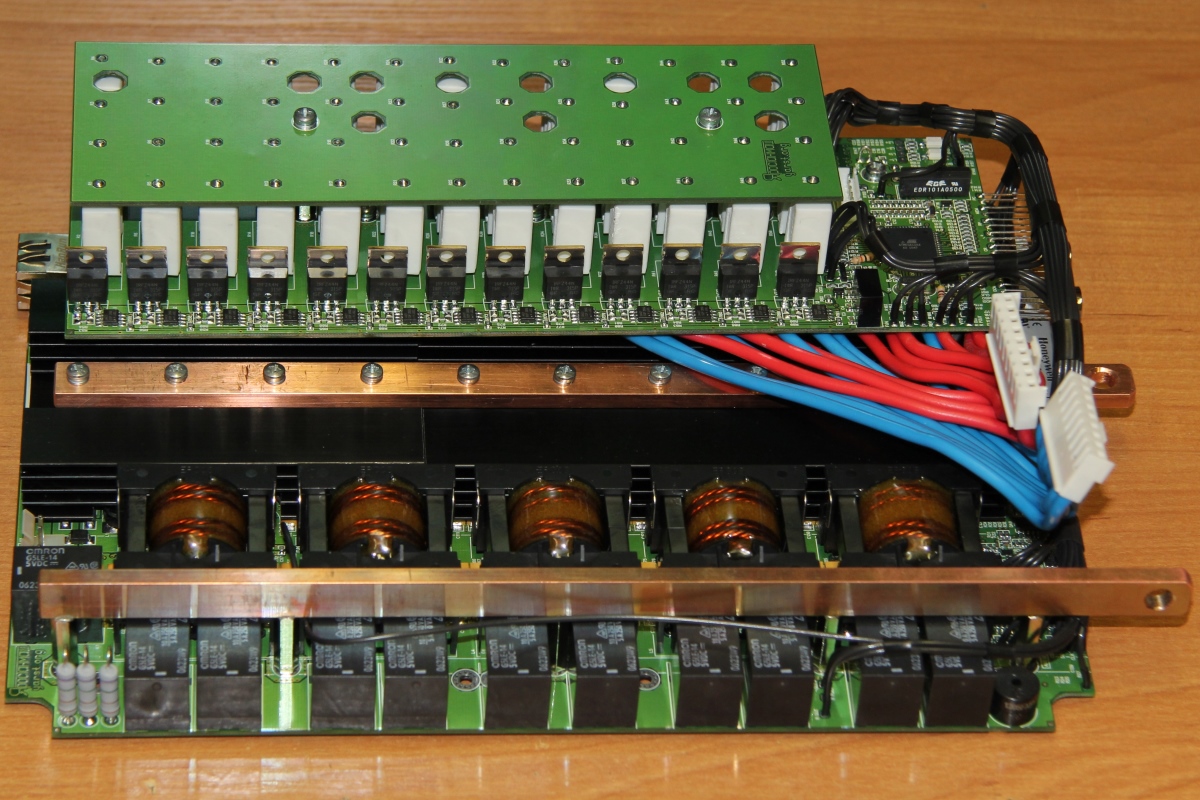
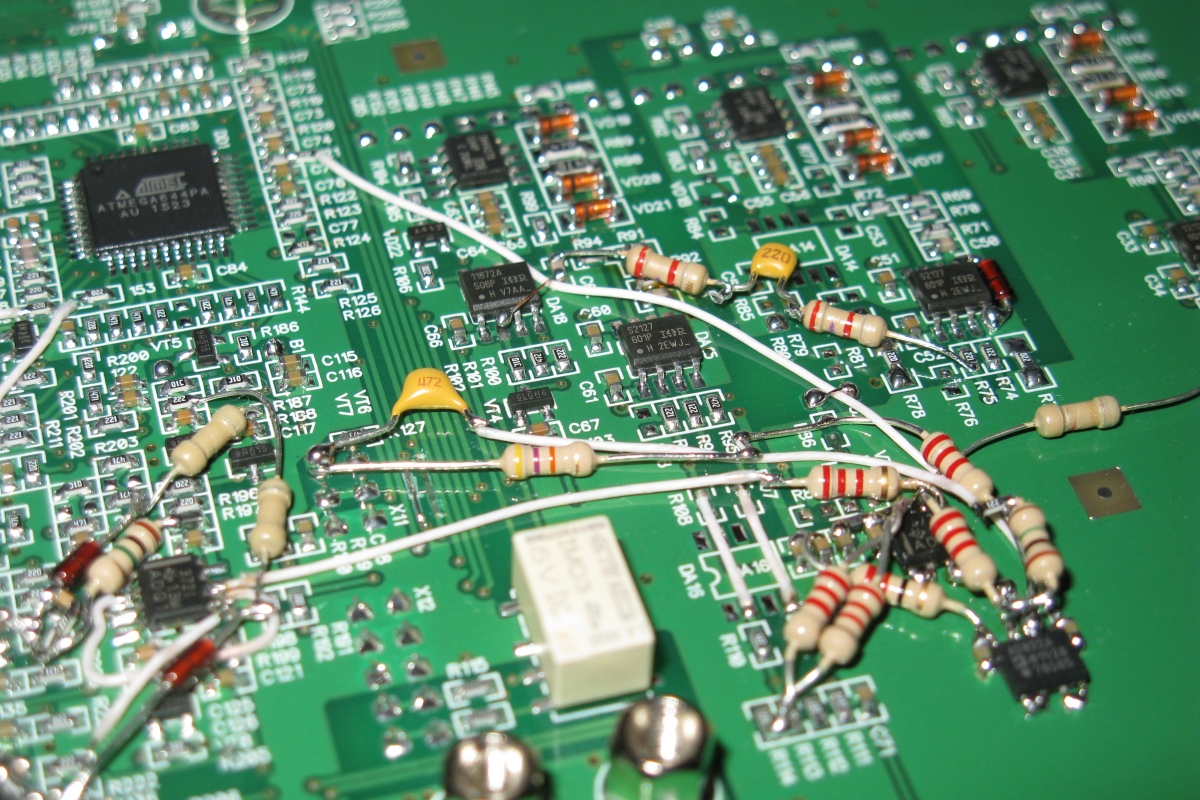
By the way, if you think equipment of this complexity can be designed correctly on the first try, think again. Here is what the very first board of the ASK150.24.1750.1 accumulator analyzer controller looks like after debugging. Of course, the second version of the controller board was designed with all these changes and additions taken into account.
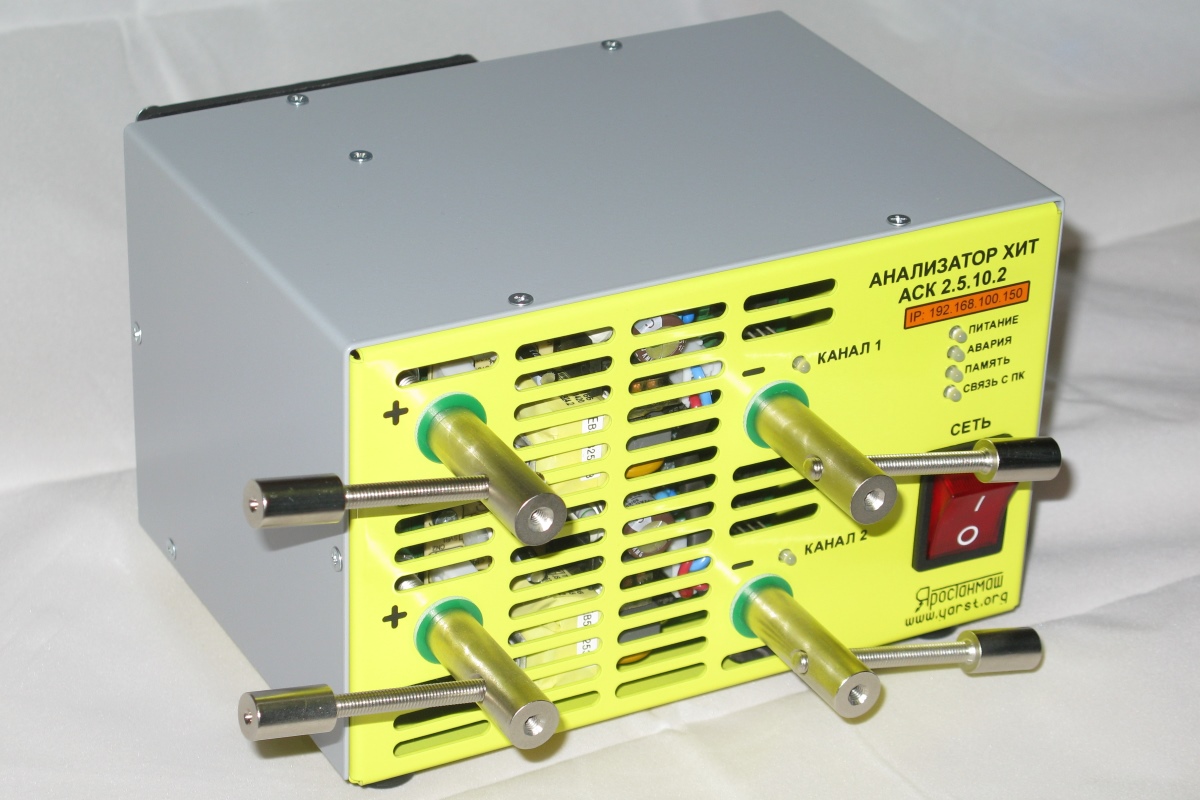
The ASK150.24.1750.1 series analyzers were also included in the State Register of Measuring Instruments.
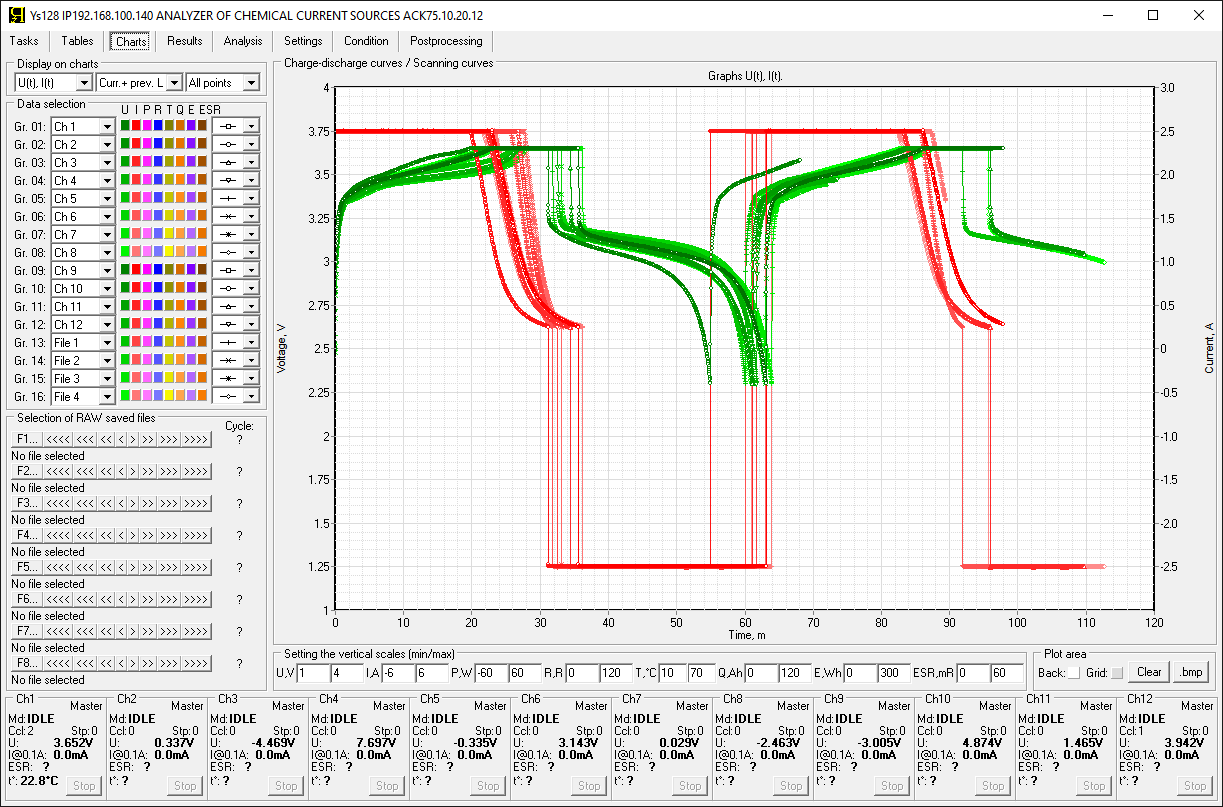
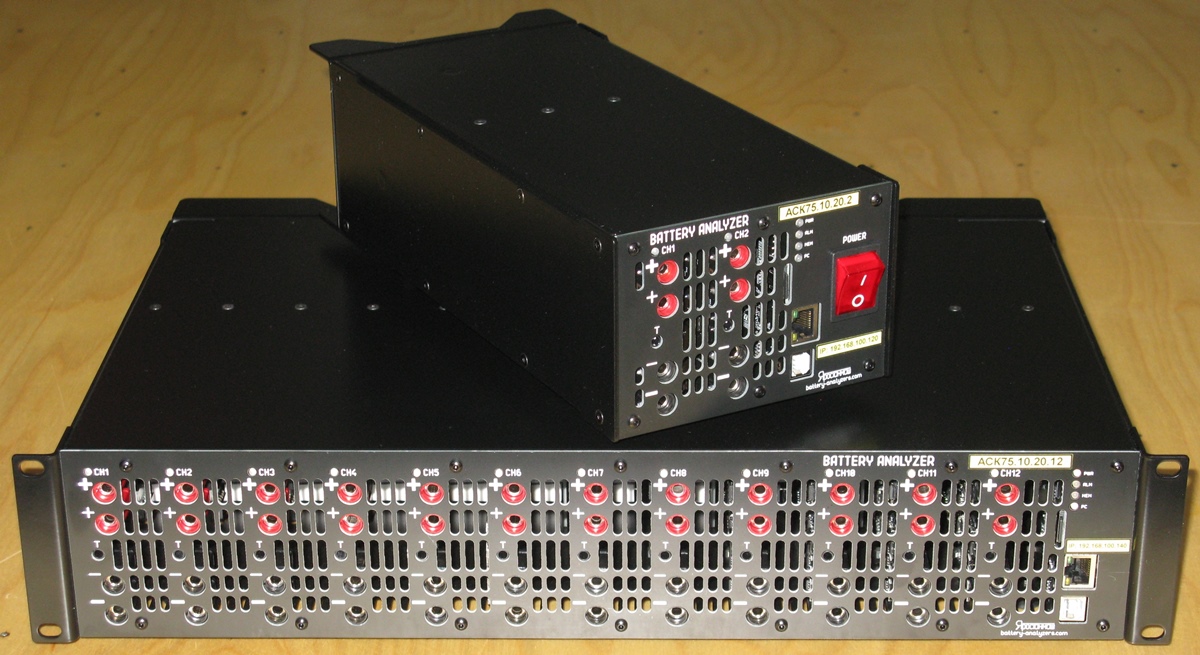
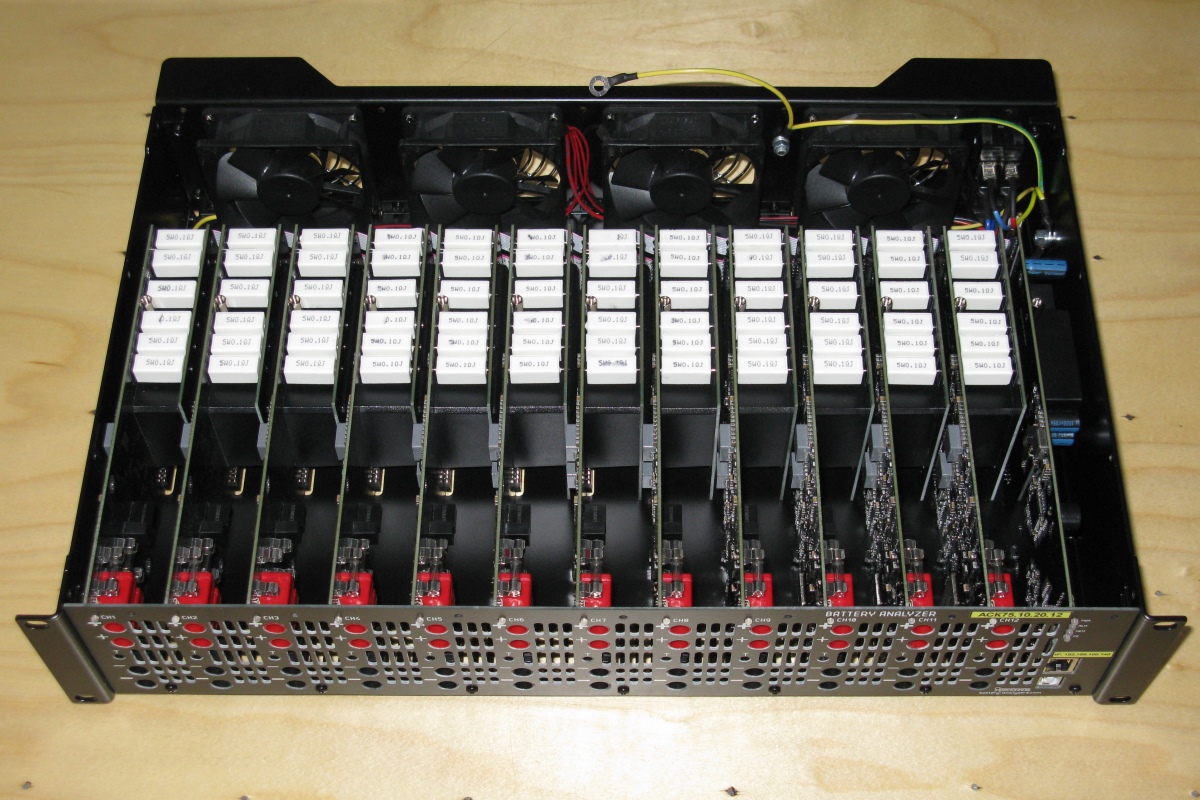
In 2021, new ASK75.10.20.x analyzers were released. Devices in this series have 2 or 12 channels (ASK75.10.20.2 and ASK75.10.20.12), each capable of providing charge and discharge current from 10mA to 10A. The voltage range on test samples is from 1 to 20V. For these devices, Yaroslav developed a fundamentally new software and hardware platform based on specialized STM32F334 microcontrollers.
As operating statistics accumulate, new user requests come in, and new device series are developed, the analyzer software — also developed by Yaroslav Menshikov — undergoes regular improvements, expanded functionality, and usability enhancements.
Conclusion
And so, through the efforts of essentially one person, a new branch of measurement equipment emerged — chemical power source testing equipment by YAROSTANMASH. It is remarkable how one person is capable of developing from scratch and establishing serial production of such technically complex devices, including the full development cycle — from idea to state measurement registry.
I am confident that it is people like Yaroslav Menshikov who are the backbone of science and technology, and it is precisely through the efforts of such individuals that scientific and technological progress is achieved.
Peace to all!
© 2022, Alexey Nadezhdin