How I Installed a Payphone at Home
A nostalgic story spanning from 1990s credit card fraud for dial-up internet access to a modern DIY project: mounting a vintage Pacific Bell payphone at home so a five-year-old can call dad during work.
As a kid growing up in the 90s, I really wanted to have the Internet. My parents weren't going to get it connected, so I called an ISP and said I wanted to create an account. They asked for my last name, and I gave a fake one. Then they asked for my credit card number, and I said I needed to find my wallet and would call back.
From the book Big Secrets and several issues of 2600 magazine, I knew a couple of facts about credit cards. American Express card numbers were always 15 digits long and started with a 3, while Visa card numbers were 16 digits long and started with a 4. The first few digits indicated the issuing bank, followed by the account number; the last digit was calculated using the Luhn algorithm and served as a checksum for all the preceding digits.
Let's take this credit card number as an example:
4123456741234122The algorithm worked like this: remove the last (check) digit and set it aside:
412345674123412 2Now reverse the order of the digits:
214321476543214Multiply every second digit by 2, starting from the first digit:
2*2 1 4*2 3 2*2 1 4*2 7 6*2 5 4*2 3 2*2 1 4*2We get:
4 1 8 3 4 1 8 7 12 5 8 3 4 1 8Then split all two-digit numbers into individual digits:
4 1 8 3 4 1 8 7 1 2 5 8 3 4 1 8Add them all up:
4+1+8+3+4+1+8+7+1+2+5+8+3+4+1+8 = 68Divide by 10 and keep the remainder:
68 mod 10 = 8Subtract the remainder from ten:
10-8 = 2This digit should equal the check digit.
This algorithm is used to validate credit card numbers. If someone enters a number with a typo or mishears it over the phone, the check digit won't match. But it also means you can generate valid credit card numbers. To generate a Visa card number, start with a 4, add some random digits, then calculate the check digit and append it to the end. The resulting number almost certainly won't match a real card number, but it will look like a genuine one.
I wrote a program to generate credit card numbers using the algorithm described above, then called the ISP back, gave them the number and an arbitrary expiration date. The representative said: "Great, now we just need a phone number to call you back."
I don't know if it's the first rule of credit card fraud, but it could very well be: "Don't give the person you're trying to scam your real phone number." I said I'd recently moved, needed to look it up, and that I'd call back. I walked to the payphone near the store by my house, wrote down its number, called the ISP back, and gave them the details. The person on the other end hung up, waited a few minutes, and called the payphone back. I answered. They asked me to choose a username, gave me a random password, and thanked me.
The Internet turned out to be everything I'd hoped for — at least for a couple of weeks. But one day the username and password stopped working. Obviously, the ISP had tried to charge the card and failed. I generated a new credit card number, went back to the store, called from the payphone again, and asked to create a new account. Everything went smoothly until I gave the payphone number, at which point they didn't thank me.
The payphone number had been blacklisted, but the advantage of living in a big American city in the 90s was that you could always find another payphone. I called the ISP from a different one, created a new account, and got Internet access again.
For the next several months, this turned into a kind of cat-and-mouse game between me and the ISP. I printed out a list of generated credit card numbers and carried it with me. If I found a payphone, I'd either call to create a new account or write down its address for future use. Sometimes I'd get the same employee who recognized my voice, sometimes an employee would insist on calling back the next day, which meant I'd have to hang around the payphone hoping it would ring. If I was with a friend, I'd ask them to call and read the script I'd written on a piece of paper.
Eventually, I finally got more permanent Internet access, but this experience made me love payphones for being so useful when I needed them most.
Last year, my daughter Aurora and I were walking through Muir Woods and came across this payphone.
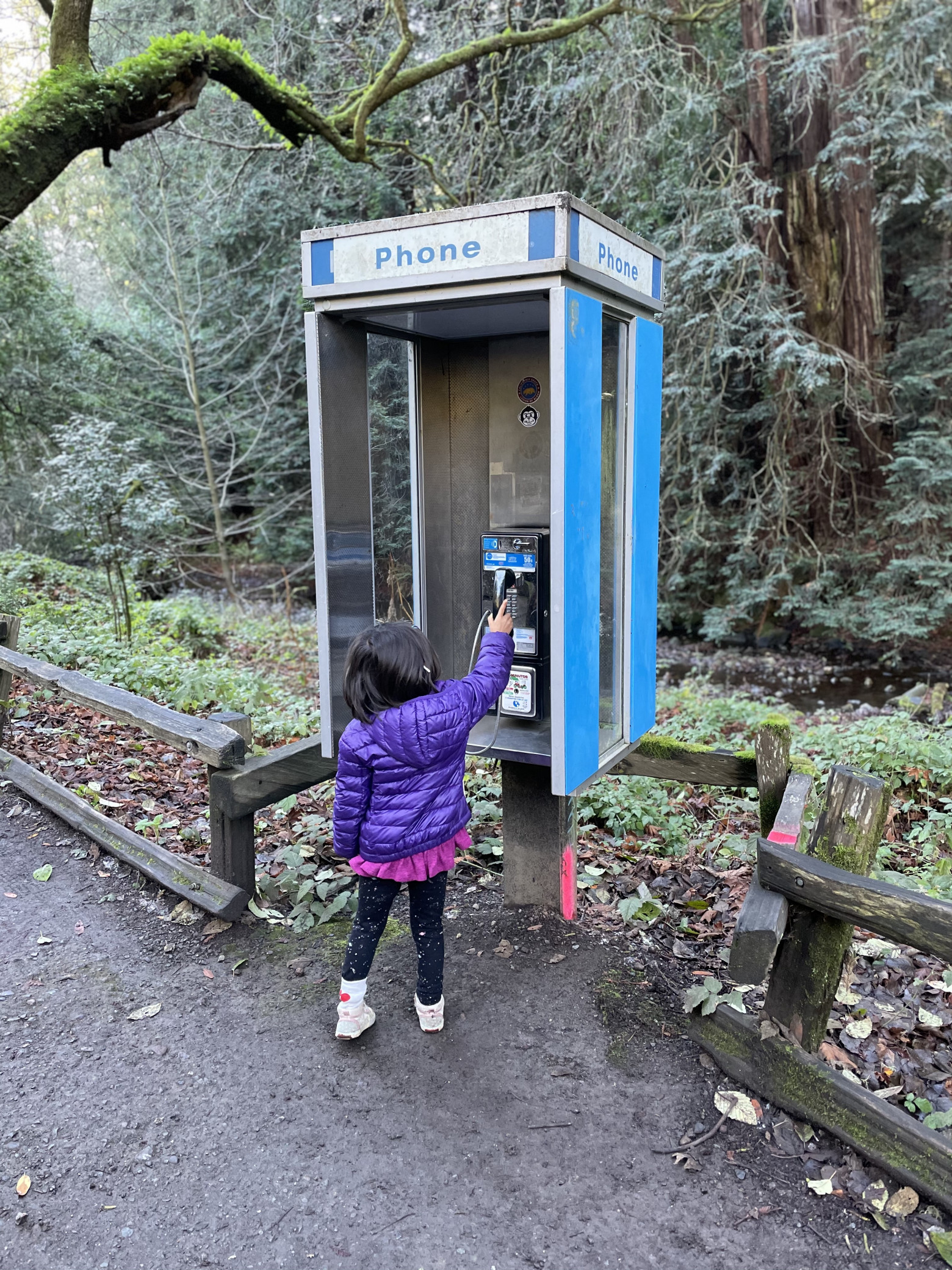
Excitedly, I explained to her what it was, and we took turns picking up the receiver to listen to the dial tone. I put a few quarters in and called my cell phone to show her how it worked.
Recently I moved and was finally able to switch from Comcast to Sonic, which hadn't had coverage at my previous address. There were many advantages. They had fiber, so upload speeds were much faster. For some reason, this ISP still had a server where you could play door games (multiplayer text-based games):
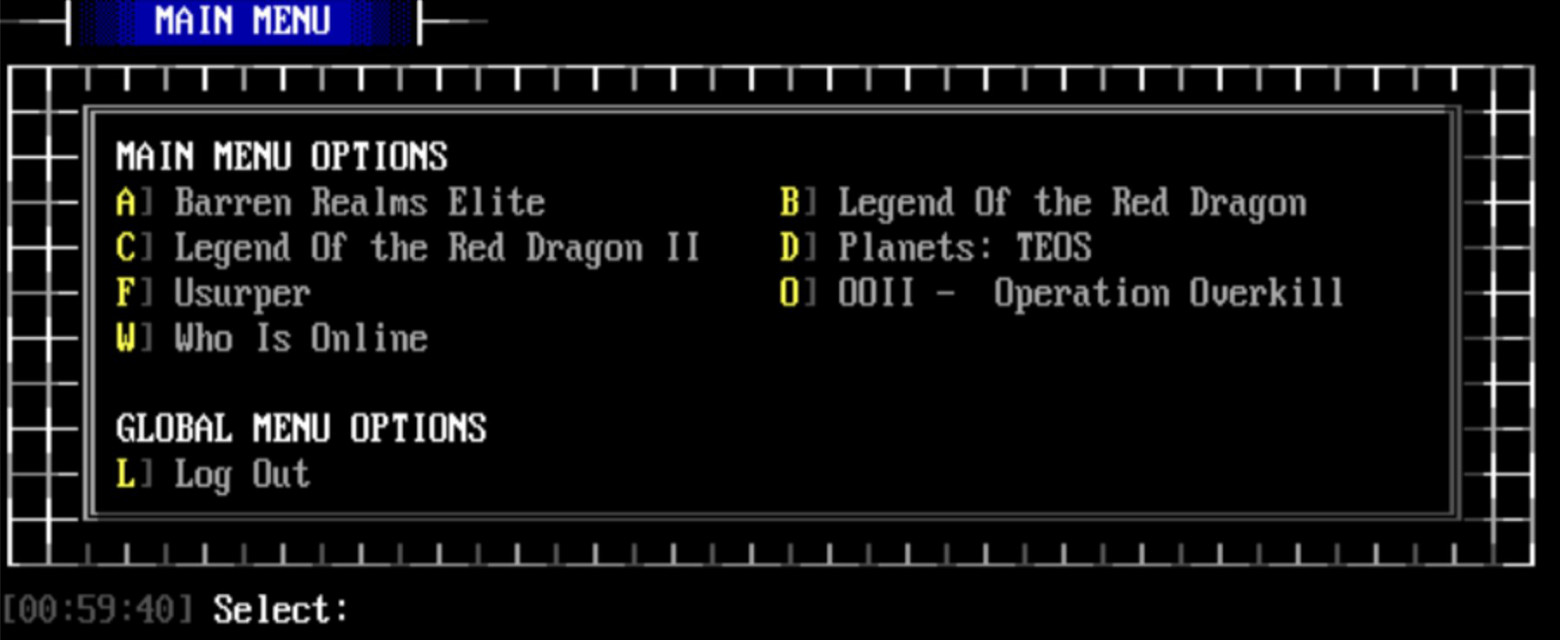


On top of that, they provided local telephone service. At first I tried to ignore it, but I was bothered by having a phone jack with nothing to plug into it.
I went online with this question (I have permanent access now!) and found the phone from my childhood.
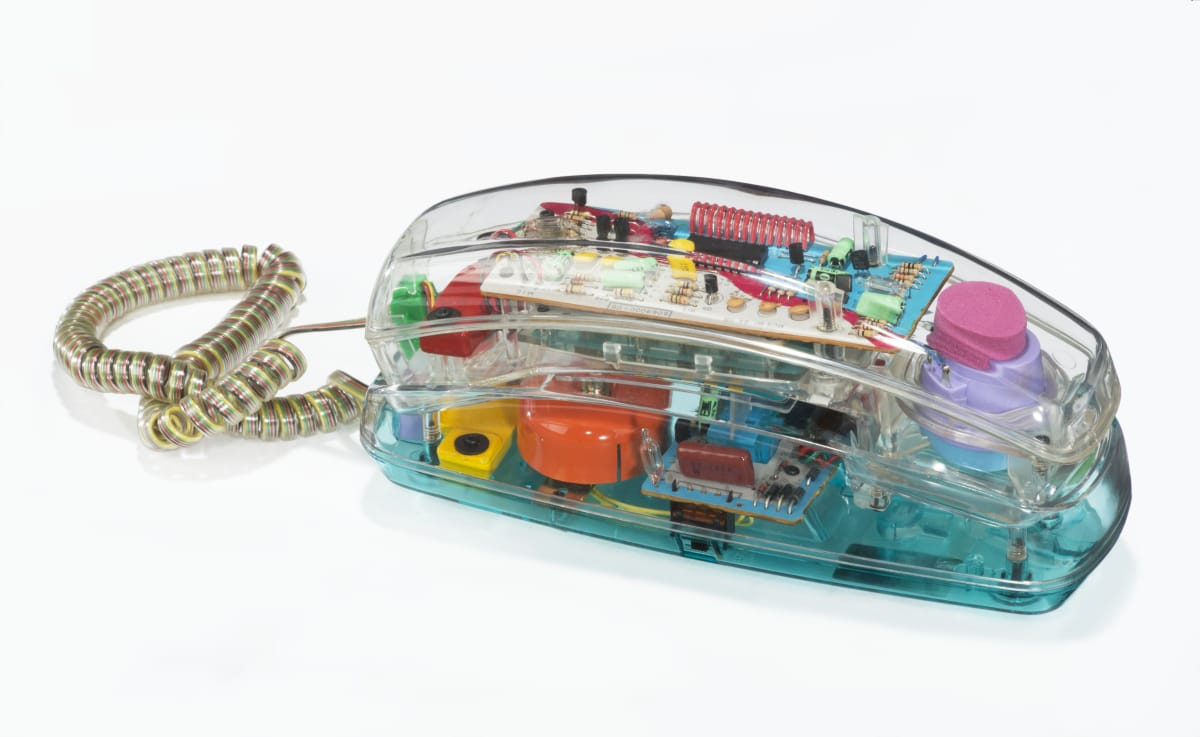
Unisonic Model 6700 ZX telephone, circa 1989
Apparently, they were mass-produced: the one I found was old stock, still in its original packaging. I plugged it into the phone jack and showed it to Aurora. I called it from my cell phone, it rang, she picked up, and we chatted for a bit.
But I didn't stop there. I had another idea.
I started researching payphones. Probably the easiest thing would have been to buy a payphone from payphone.com:
Have you ever thought that a payphone could make a great decor idea for a pool room, living room, or office?
Yes, payphone.com, I had thought about that.
But I didn't like that they just sent you a random payphone, so I started looking on eBay. I managed to find a seller with several payphones. His photos seemed to have been taken with a potato, so I had to take a risk and order a Pacific Bell payphone. It arrived fairly quickly.
The smell was atrocious; it had seen some stuff (hopefully not literally), but the handset seemed to be in reasonably good condition. I looked up the address printed on it and it turned out it used to be in a Las Vegas casino — which probably explains why it smelled like it had personally smoked a pack of cigarettes. I put it on the balcony to air out, and that seemed to help.
I'd never opened a payphone before, but the seller had sent keys and a barrel key along with it; all I had to do was turn the key and carefully remove the front panel. It wouldn't budge, so I had to disconnect a plug that apparently connected the front panel electronics to the payphone internals:
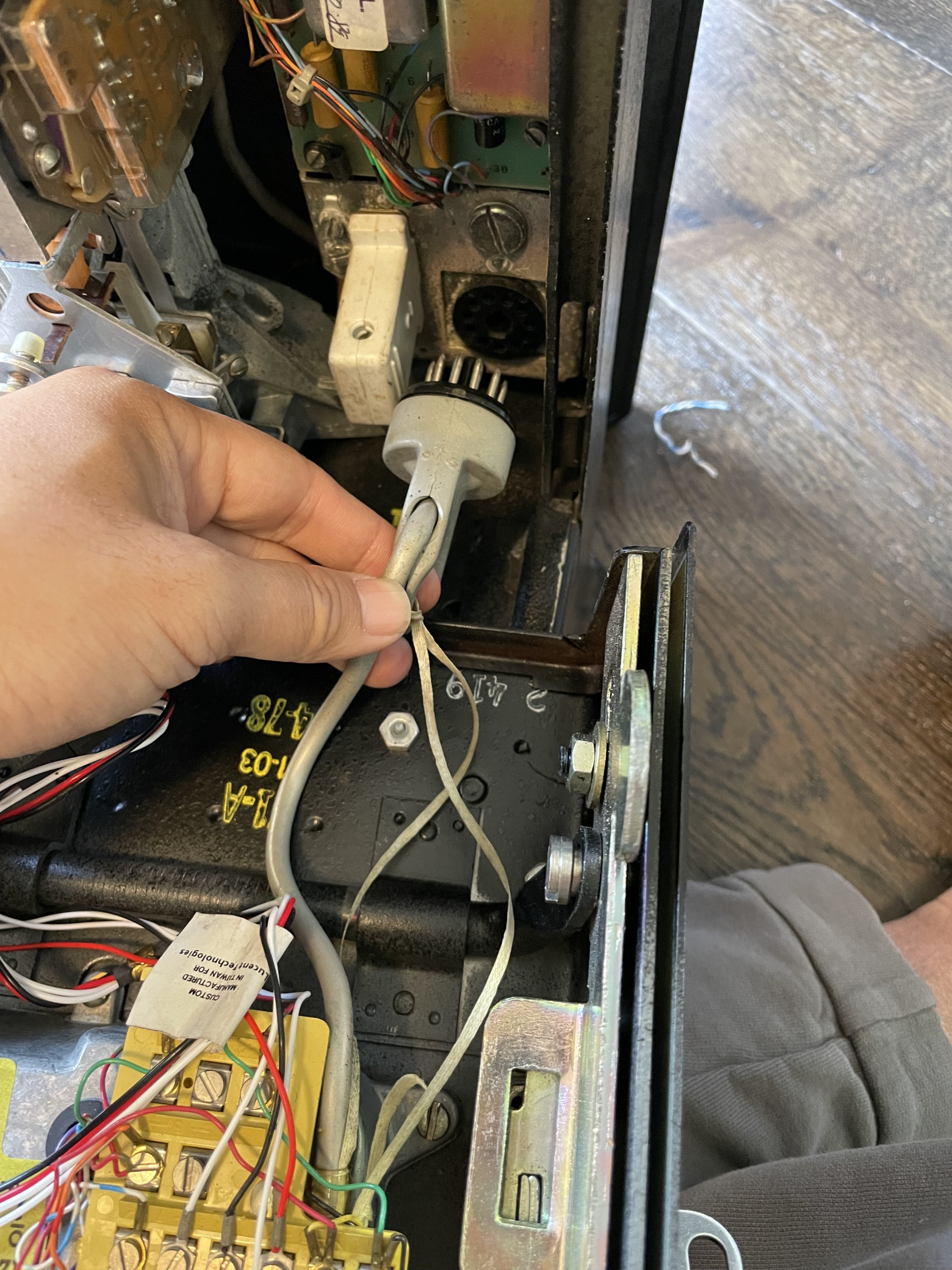
With the plug disconnected, I was able to remove the entire front panel and saw the following:
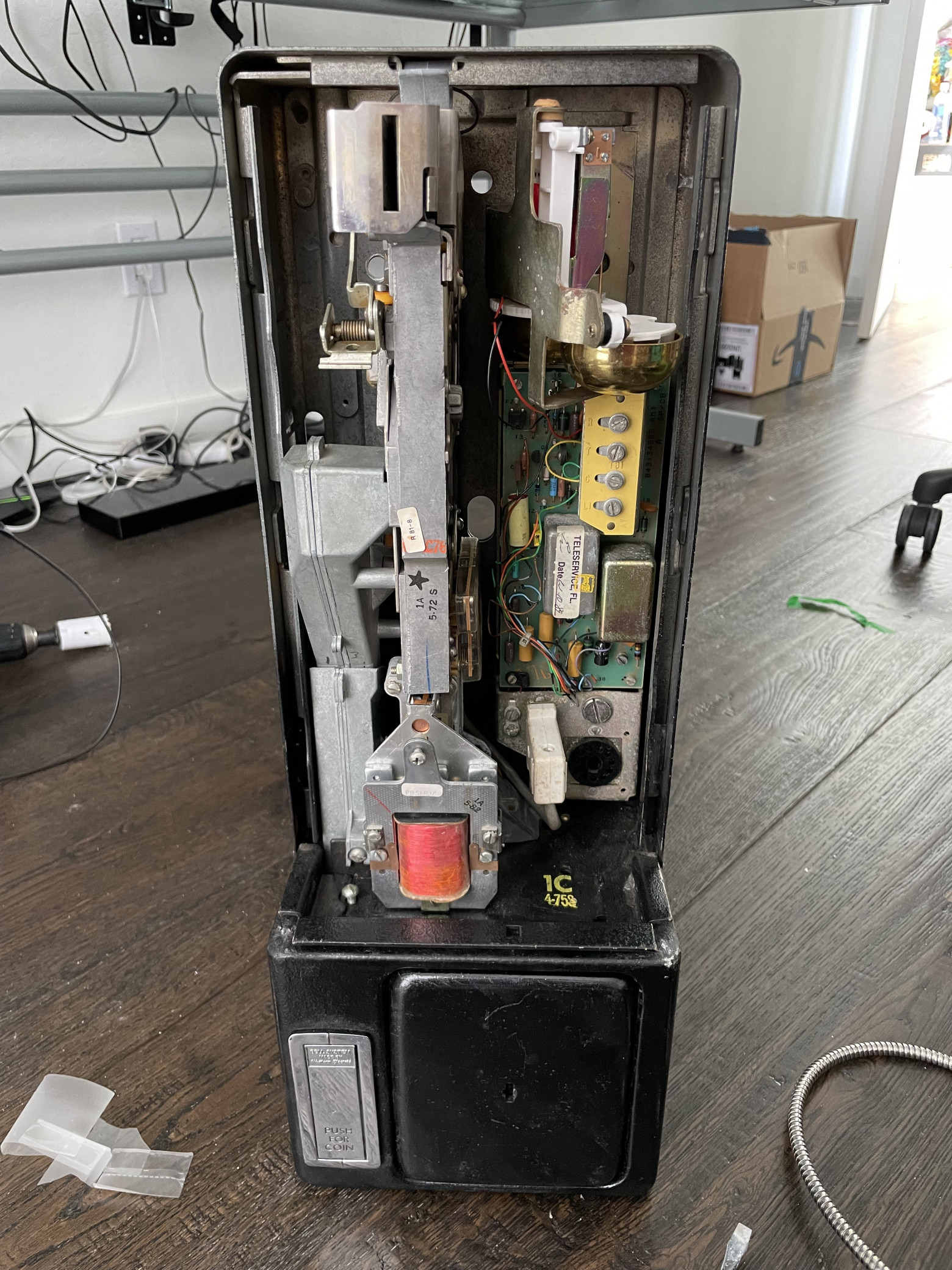
I also opened the coin compartment with the barrel key, hoping to offset my costs, but it was empty and putting it back was quite difficult. I must confess that I had to use a hammer to get it back in place, so the quarters I'll be dropping into the payphone will probably stay there for a long time.
To test that it worked, I made a few calls, then started figuring out how to mount it.
From payphone.com, I ordered a mounting plate with additional "phone mounting equipment," which turned out to be twenty screws. I scratched my head and pondered how it was all supposed to work — you could hang the mounting plate on the wall, but I didn't understand how to hold a 44-pound payphone while screwing it into the plate. Soon I discovered that I needed mounting studs, which I ordered separately. The shipping cost for four studs was upsetting, but I wasn't sure I'd find the right ones elsewhere. Once I received the studs, I screwed them into the payphone, hung it on the mounting plate, and tightened the screws. The front panel needs to be removed while tightening the remaining screws.
Then I marked on the wall where the mounting plate should go. This was tricky because I wanted the RJ-11 cable to run behind the wall rather than just hang behind the payphone, but I also didn't want to mount the plate directly onto a stud. Here's a good photo that I called "Measure Once, Cut Three Times":
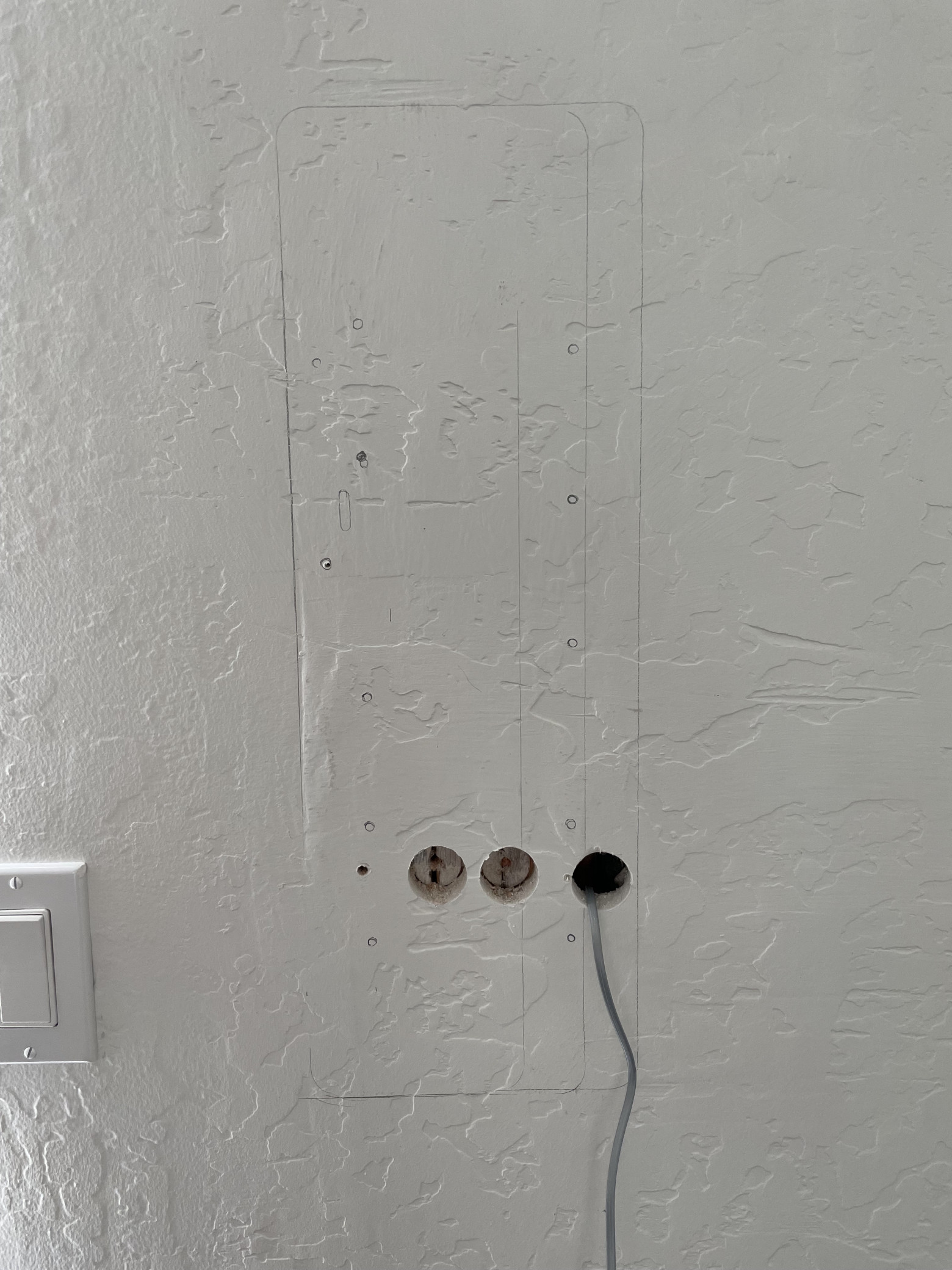
I used a hole saw to drill the hole. Below it, I drilled another identical hole and used fishing line to pull an RJ-11 cable through.
Then, using 1/4" x 3" hex-head lag screws, I mounted the plate to a stud, which held quite firmly. At the payphone's weight, I probably could have used drywall anchors, but I wanted to mount it to a stud. I think it looks pretty good:
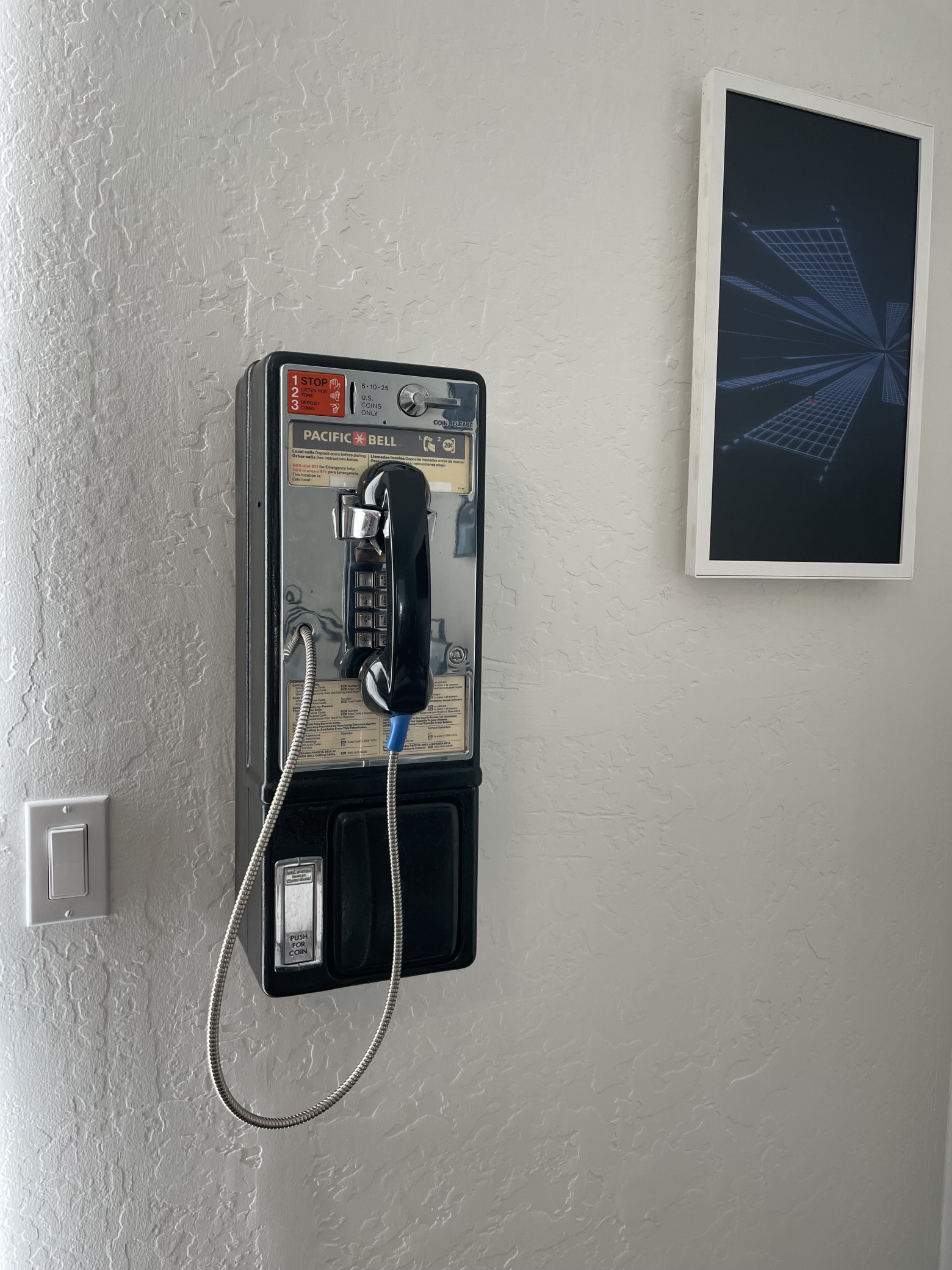
As for the hole below, I took the easy route: I got an RJ-11 Keystone Coupler so I could simply plug in the RJ-11, mounted it in a single-gang wall plate, and covered the hole with the plate. Then I ran a cable from that jack to the phone jack and tried making a call. It worked!
The next logical step might have been to buy a phone line splitter and connect another phone so both could make and receive calls and communicate with each other. But this solution had several problems:
- My daughter is five years old and I don't want her accidentally calling 911.
- I also don't want her calling the ISP and asking them to create an account for her: I'm not ready to reap what I've sown.
- In theory, two phones could talk to each other, but you'd first need to make an external call. Are there still phone numbers that tell you the exact time? Do they ever stop telling you?
And that's when I discovered a wonderful marvel of technology — a telephone line simulator.
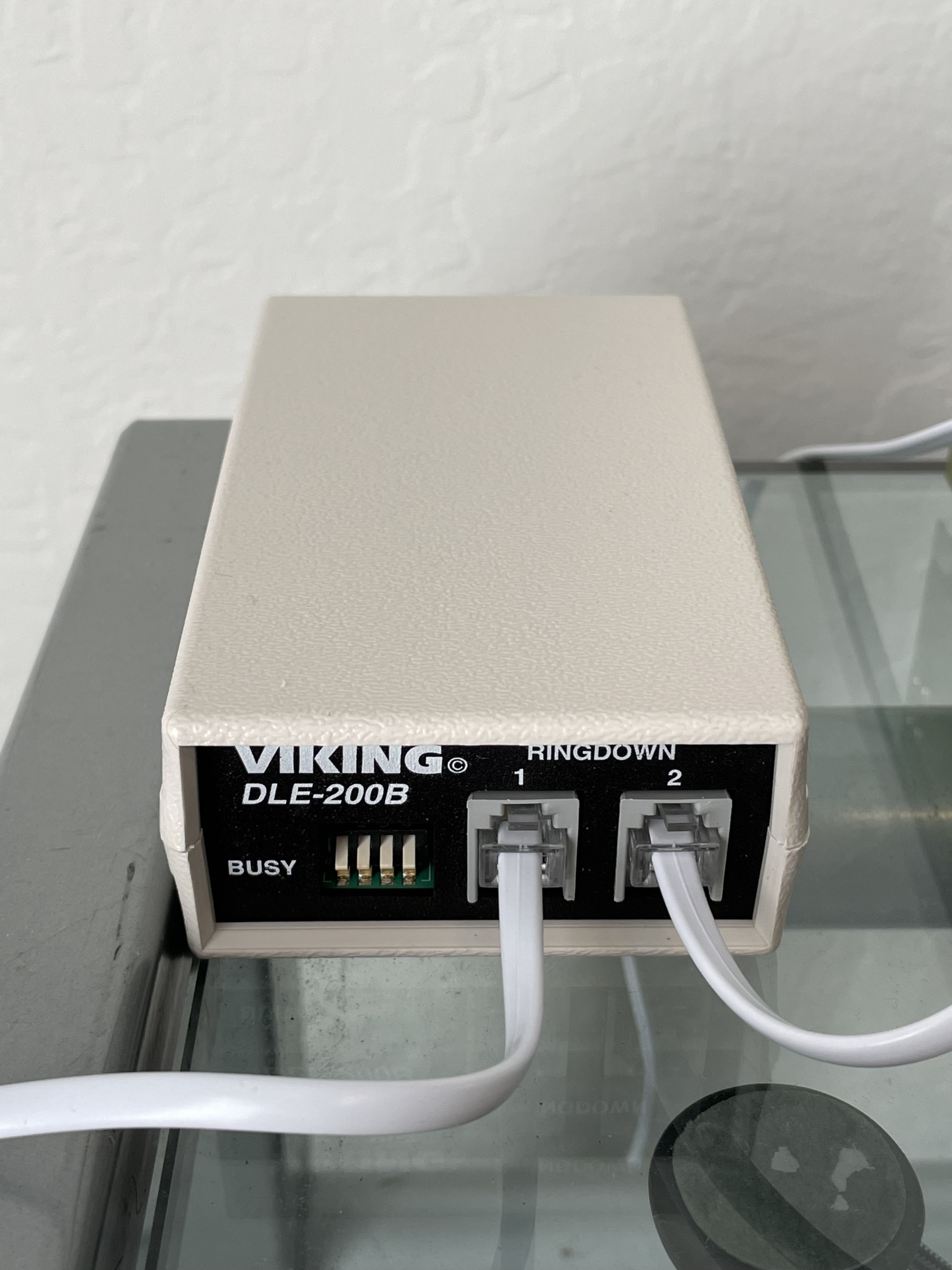
Essentially, it creates a closed network between two phones. You can set it up so that when you pick up the receiver on one phone, the other one rings, and when the other receiver is picked up, you can talk — and vice versa. I bought the device, drilled a hole into my daughter's room, and ran another RJ-11 cable to her phone.
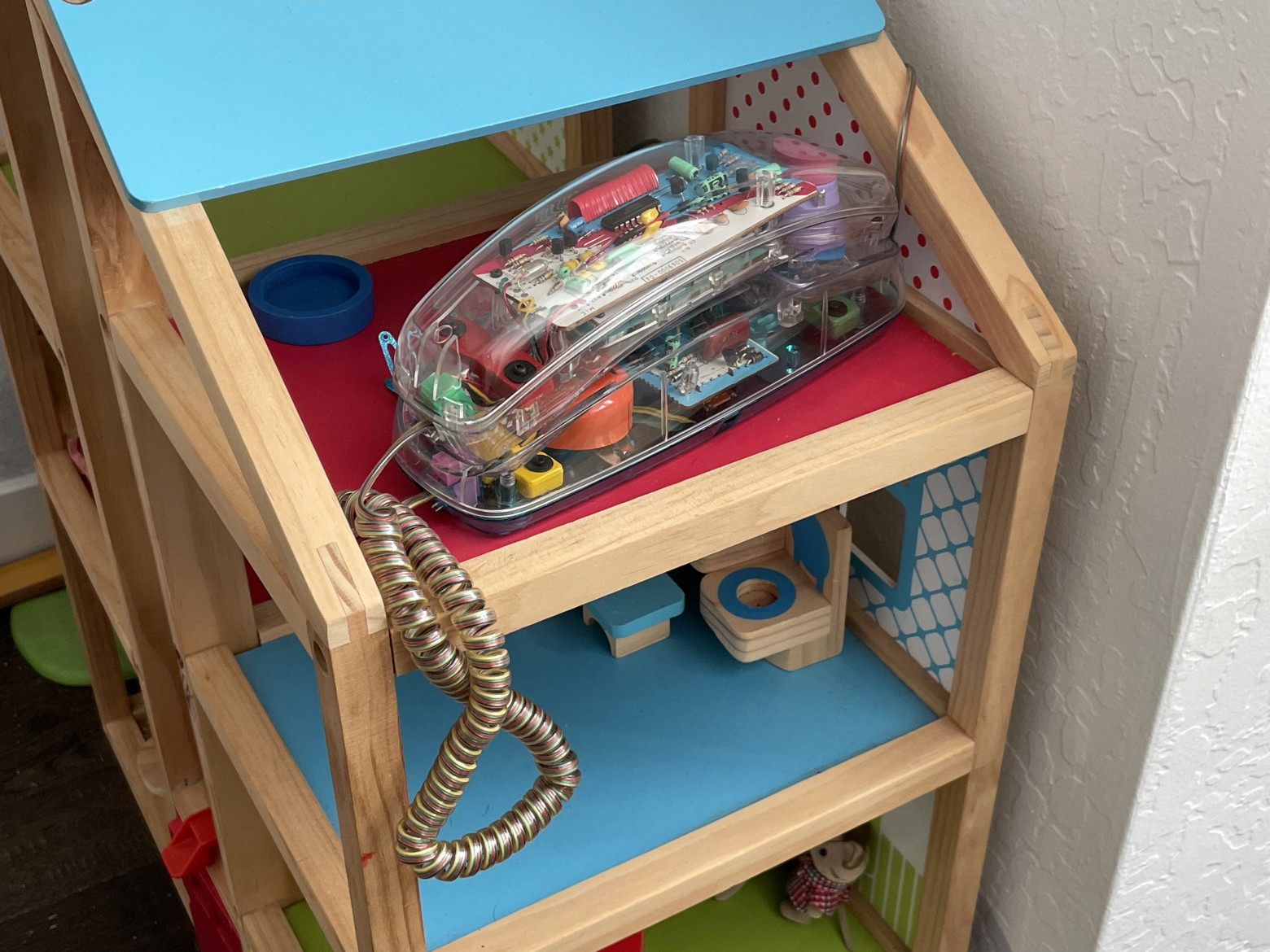
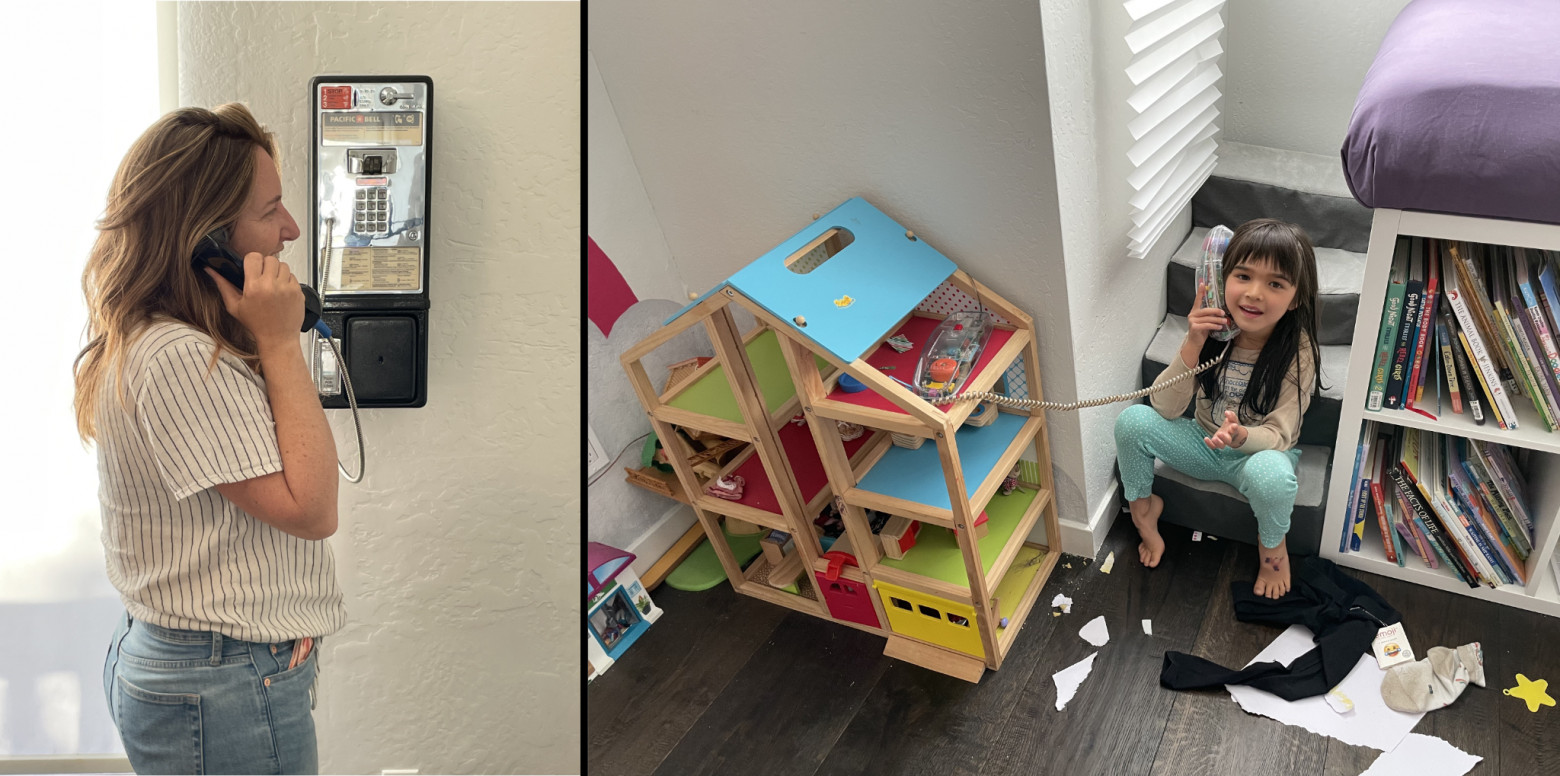
I'm not entirely sure what I expected, but from time to time, when I'm working in my home office, my payphone rings and my daughter spends a minute telling me about her dolls. Then I say: "That's great, but I need to get back to work," and we say goodbye until the next call. More often than not, it turns out to be a nice break from work.