How a Quick Game Pulled Me Into Game Development for 20 Years
A retrospective spanning two decades of indie game development, tracing the Endless War Flash game series from a three-week side project on Newgrounds to a Hall of Fame nomination, and the lessons learned about gameplay, feedback, burnout, and engine transitions.
Introduction
I've already done a series of posts about the history of Flash games (one, two, three), and now it's time to tell how I ended up in this industry myself.
After enrolling at ITMO University, I decided it wouldn't hurt to study some trendy technology of the time, and bought a "Flash MX Self-Study Guide" disc at an underground walkway shop. Once I could program decently, I wanted to make my own game. Writing some arcade games wasn't interesting, so I aimed for nothing less than a full-blown flight simulator (yes, in a program designed for 2D animation). But overall, I pulled it off! The gameplay was terrible, the graphics even worse, but there were dogfights and even ground-attack missions. The game was shown to friends and shelved, but a couple of months later I discovered Newgrounds — at the time it was the biggest Flash community where anyone and everyone uploaded their games and animations.
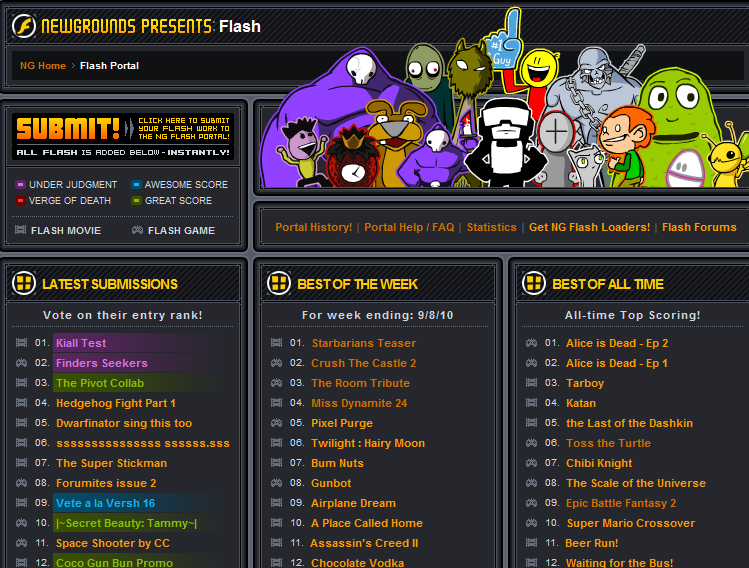
Most of the games there were simple as dirt, and I figured a flight sim would surely make a splash. The game was hastily translated into English and uploaded. However, no miracle happened. Nobody declared it a masterpiece, and no one erected a monument in my honor. The ratings were pretty average, and in the reviews players rightfully wrote that while there might be potential, the game was unplayable.
The answer to the question "How do you get into game development?" is actually very simple: pick an engine, make a game with it, and that's it — you're in game development.
Endless War 1
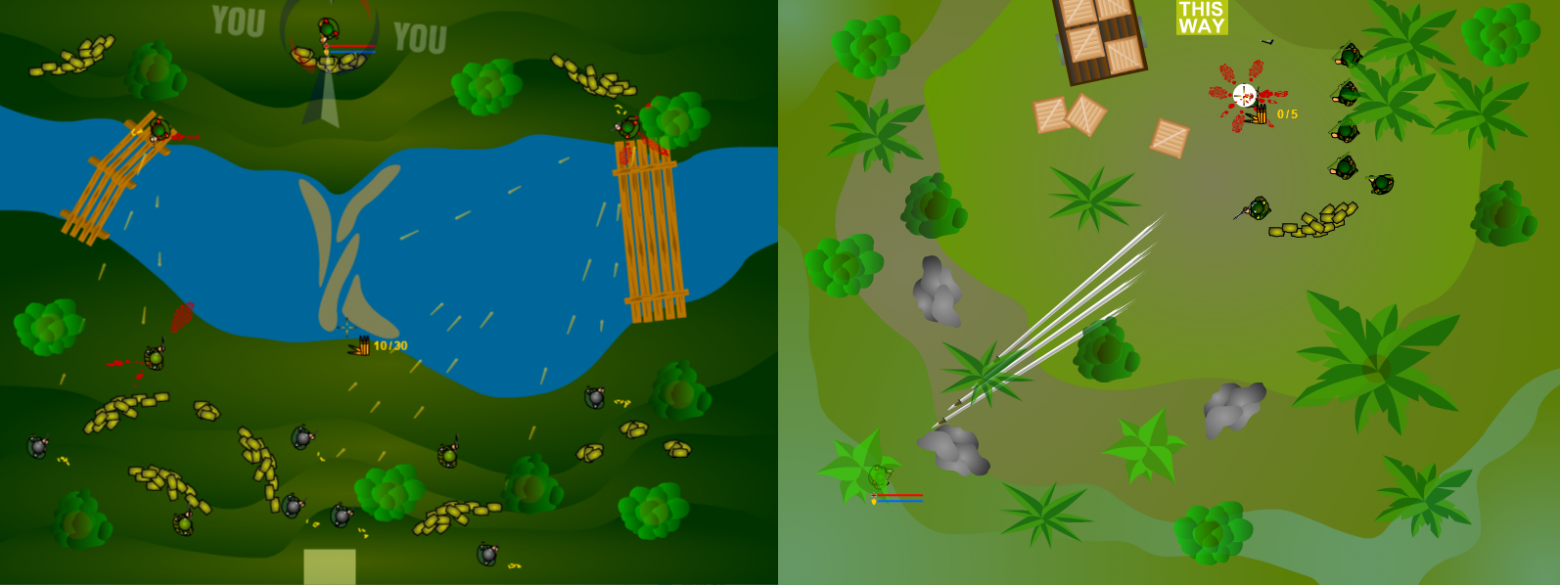
Now I completely agree with those reviews, but at the time it made me furious. Here I am delivering a breakthrough, and you want simple shooters? Fine, have it your way — I decided to make a very simple game as fast as possible and see how it goes. I chose a top-down shooter: easy to make and a popular genre. As a reference — a popular hunting game, but with proper controls like Crimsonland, and enemies that shoot back.
The game took literally 3 weeks. One mission — one screen where you have to reach the exit, optionally killing all enemies. In each mission the player starts with different weapons. I made 15 guns and, accordingly, 15 World War II missions (5 each for the Americans, Germans, and Soviets). That felt too few, so I added 14 more about the Vietnam War (7 missions each for the USA and the Viet Cong).
I released the game in the summer of 2005, and it was received much better than the first one: ratings were around 4/5, and in the comments players were surprised how a game like this didn't make it to the front page. It didn't actually make the front page or any top lists, but the experiment was deemed a success and shelved for a long time.
Players don't need "breakthroughs" and technology — they need engaging gameplay. Everything else in the game should serve exactly that.
Endless War 2
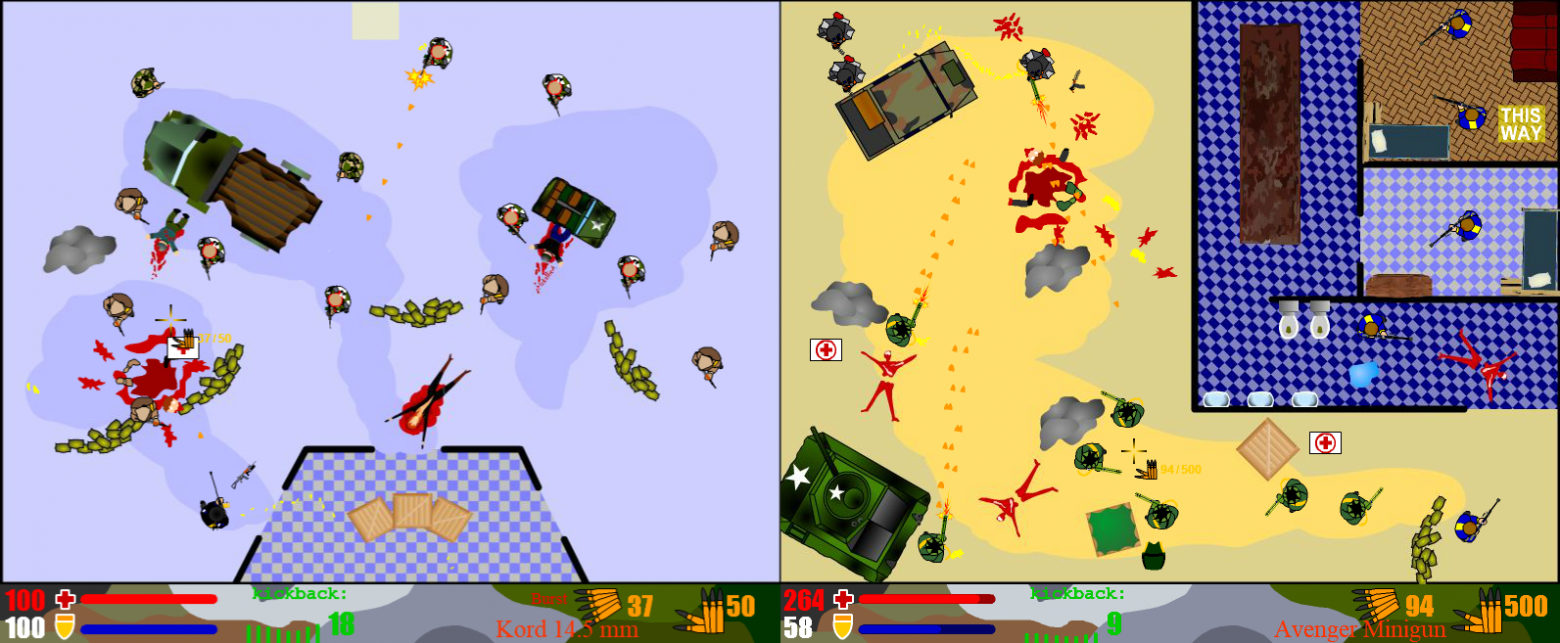
A few months later I returned to the idea of creating a serious game built on the Endless War framework. It was supposed to be a long, story-driven shooter with large levels and tons of enemies. But Flash just couldn't handle those ambitions. After struggling one way and another, I decided to simply make a sequel to Endless War, but with modern weapons. That's how two campaigns of 10 missions each appeared — one for the "counter-terrorists" and one for the "terrorists." I was also actively playing 90s games at the time, and inspired by Blood and Fallout, I made 2 more small campaigns themed after those games. Both included corresponding weapons like miniguns and Gauss rifles.
And this game, to my great surprise, did make the Newgrounds front page and received even more enthusiastic reviews than the previous one.
I had left my email in the game, and a few days later the owner of the portal freeonlinegames.com wrote to me and offered to commission a reskin of Endless War 2 — just put together new levels and weapons, but keep the entire "engine" as is. The game would work only on his site. The price was rather symbolic, but it was my first money earned in game development. And of course, it was a great motivation to keep going.
Feedback is very important. It's not just a way to learn what needs to be improved in the game — at the early stage, player reviews are practically the only thing that inspires us to keep creating.
Endless War 3
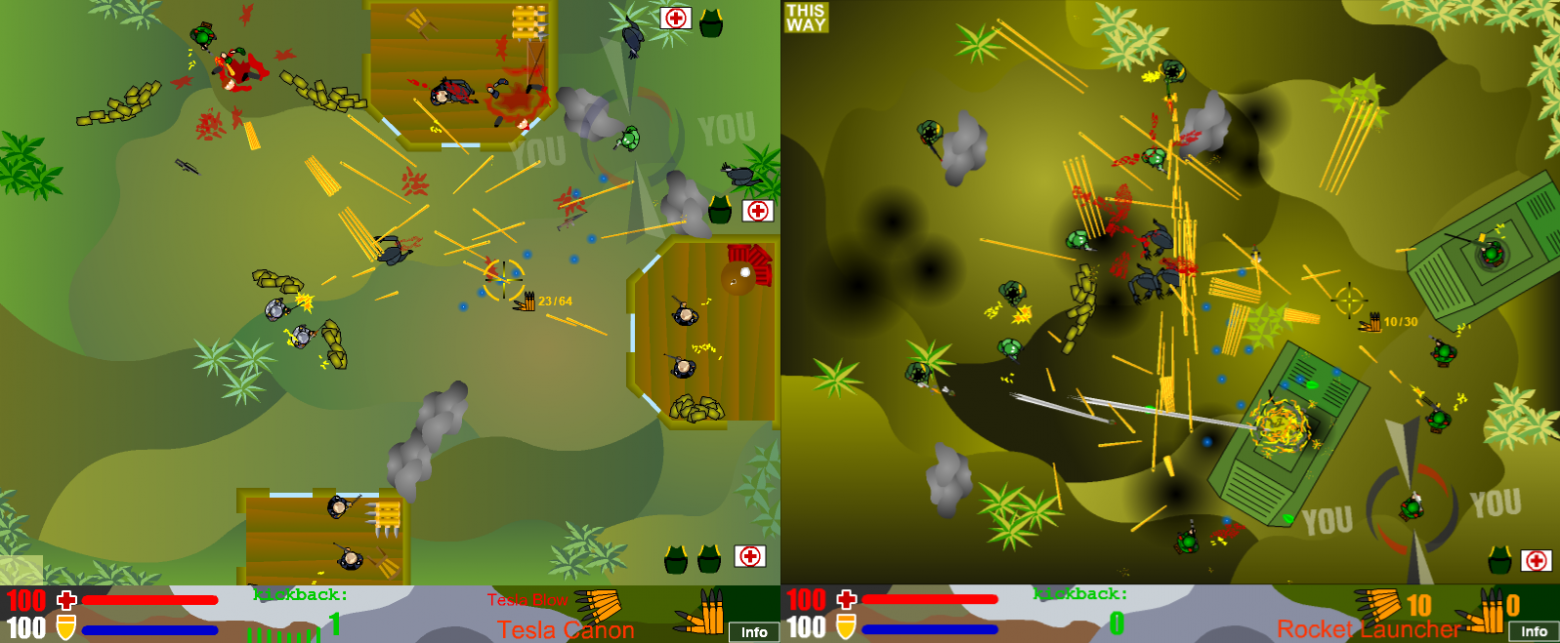
For the next several months I made games on commission for my new acquaintance. Working with him was pleasant, but I wanted to realize my own ideas, and for the whole internet — not just one site. On top of that, I learned you could earn money through game sponsorship. It looked both more profitable and far more interesting.
I decided to take the beaten path and make another Endless War game. To make each new installment, I would simply take the source code of the previous one, throw out the old levels and weapons, and insert new ones in their place. But this time I thought: why let all that go to waste? I'll make not just part 3, but 3-in-1: add all the weapons and levels from the previous parts and create 30 more. Remember, I had one weapon type per level? That's not counting pistols, grenades, and knives. In the end the game had 90 levels and over 120 weapons! But the art was still terrible.
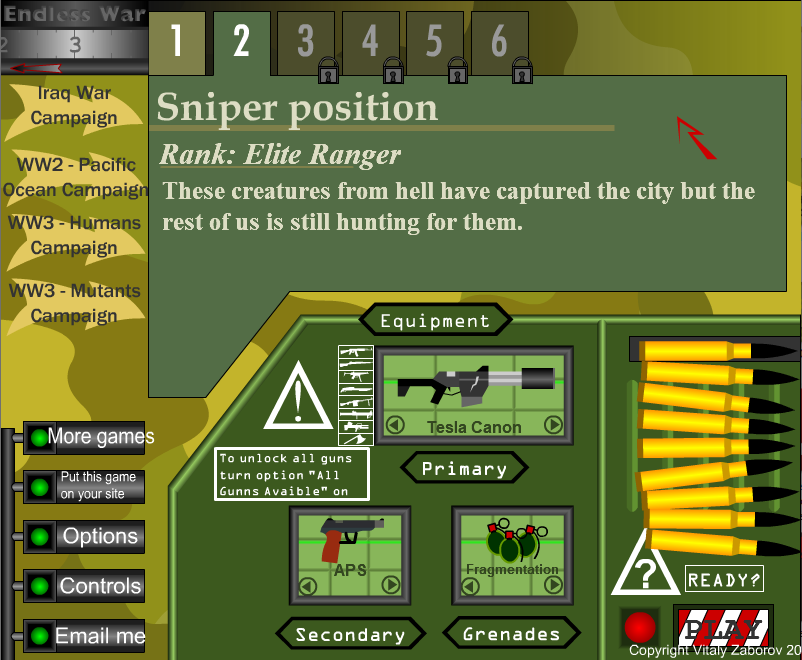
I knocked on the doors of several major sponsors, but nobody was interested in the game. Fortunately, I stumbled upon a small site called ArcadeTown.com. They sold indie casual games and sponsored Flash games to attract audiences. I managed to strike a deal with them for something like $700. That was a big step for me, but pocket change compared to how the game ultimately performed.

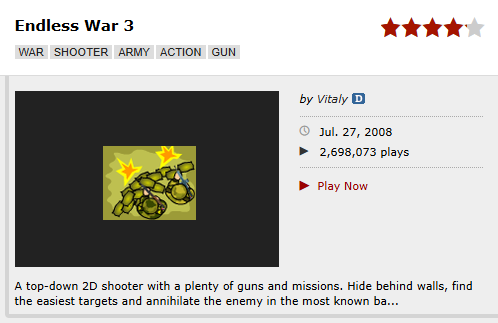
Endless War 3 became one of my most successful games: it took 1st place for the day on Newgrounds, hit the front page, racked up millions of views on ArmorGames and Kongregate, and years later ended up in the Flash Games Hall of Fame according to FlashpointArchive.org.
Players don't always need innovation and incredible features. If you have gameplay they haven't grown tired of — just give them "more of the same, on top of more of the same, with a little bit more of the same inside."
Endless War 4
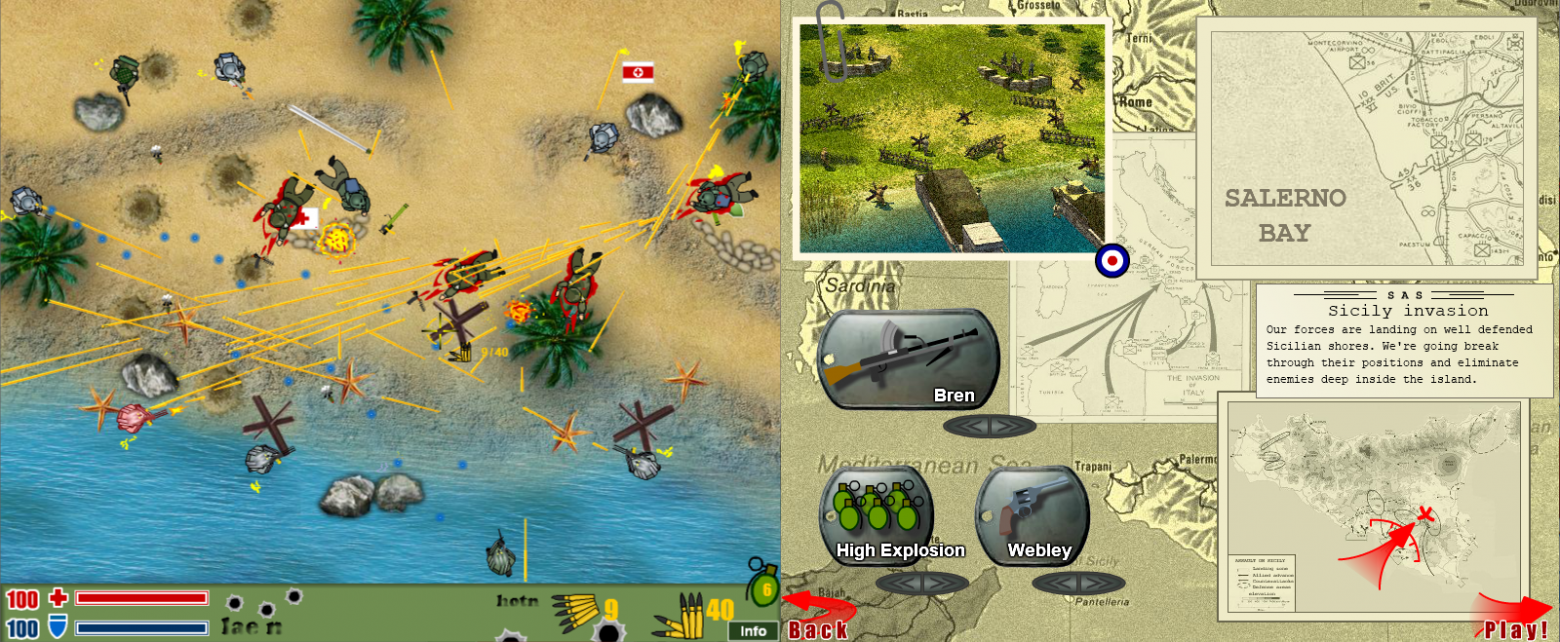
After the third installment I worked on other games, finished university, and only returned to the Endless War series over a year later. The plan was simple: quickly make the next installment and earn from it. I didn't even draw the levels myself — I commissioned some from an artist. But development wasn't going anywhere; I just didn't want to return to this game. I should say that Endless War was never my favorite series. It went over well with players and didn't require complex logic, but level design, balancing, and enemy placement somehow drained all my energy. Plus, across three installments the code had changed little and turned into legacy code that I didn't want to work with and saw no point in rewriting. I'd start several projects in parallel, then see how much work lay ahead and go back to working on the fourth installment. In the end, development took almost another year, and when the game came out it was like a weight off my shoulders. This time I only made new levels, keeping the weapons from the previous part and adding new ones.
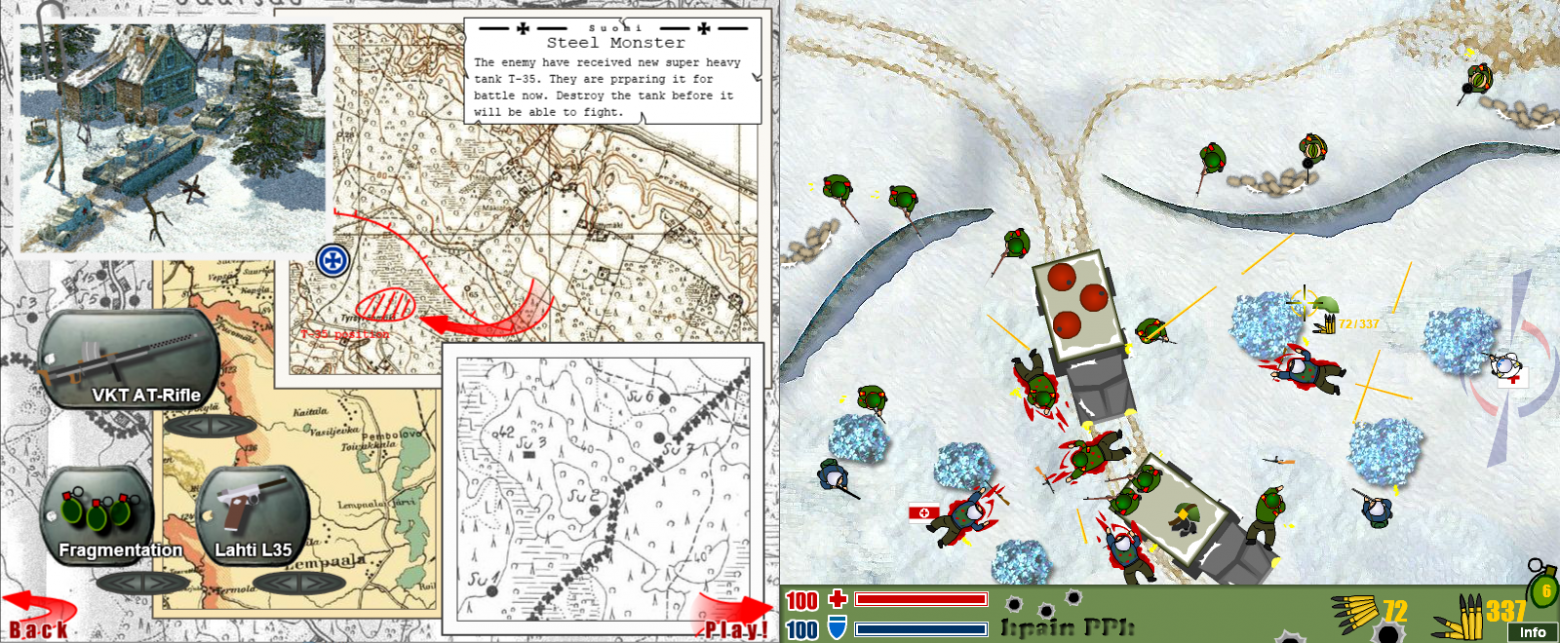
I had to add lots of rare Italian, French, and Finnish weapons from World War II, since there were campaigns about the landing in Sicily and the Winter War. The game was received well, but not as well as the previous installment. Probably the biggest problem was the art style and interface. Drawing a level from directly above so that all objects are easily recognizable is no easy task. What the artist drew leaned too far into realism and clashed with the overall style. The interface was on its own wavelength entirely — too rasterized and cluttered in the menus, and too bright and garish in combat. To fix that, I would've had to redraw all the level assets and all the weapons. It became clear the horse was dead and it was time to switch.
If the work isn't going anywhere — don't force yourself and push through the project by sheer willpower. It's better to step back and look for other ways to achieve your goals.
Endless War: Defense
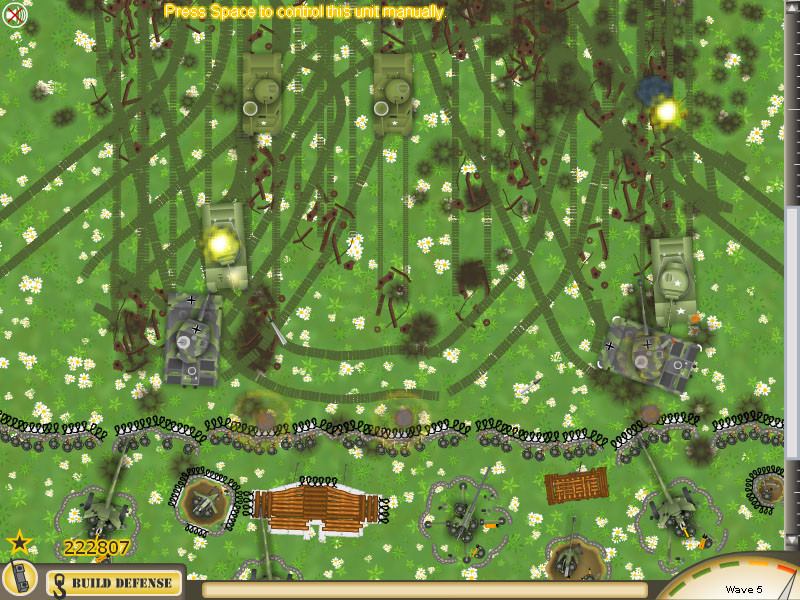
I had long wanted to make something large-scale — a strategy game with vehicles, lots of units on screen, and all that. But in Flash, lots of units could only be done either with a side view or a top-down view. The "Diablo-style" isometric view was more complex both in animations and build size. Top-down view allowed more gameplay-wise, and I had experience with it. So I returned to the series once more, but this time the game was built from scratch. I even redrew the soldiers. I drew many different tanks, cannons, trenches, and bunkers. The genre chosen was Line Defense — easy to implement, spectacular, and popular.
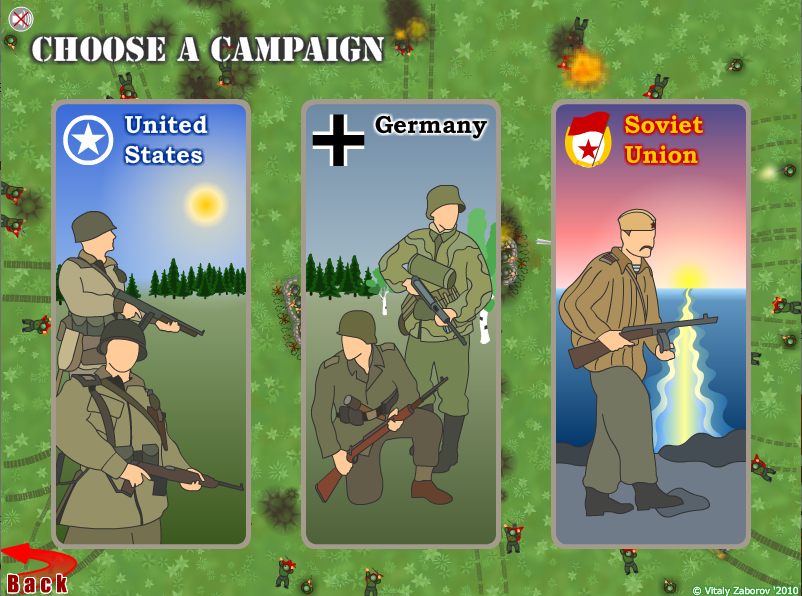
The gameplay was very simple: spend starting points to buy cannons and soldiers, launch a wave of enemies. Infantry and various armored vehicles start coming at you. You earn points for killed enemies, which you spend on more cannons and soldiers, repair, and repeat. You could even call in reinforcements in the form of your own tanks and even control them. As you completed missions, new cannons, tanks, and infantry types unlocked. In total there were about a hundred different units.
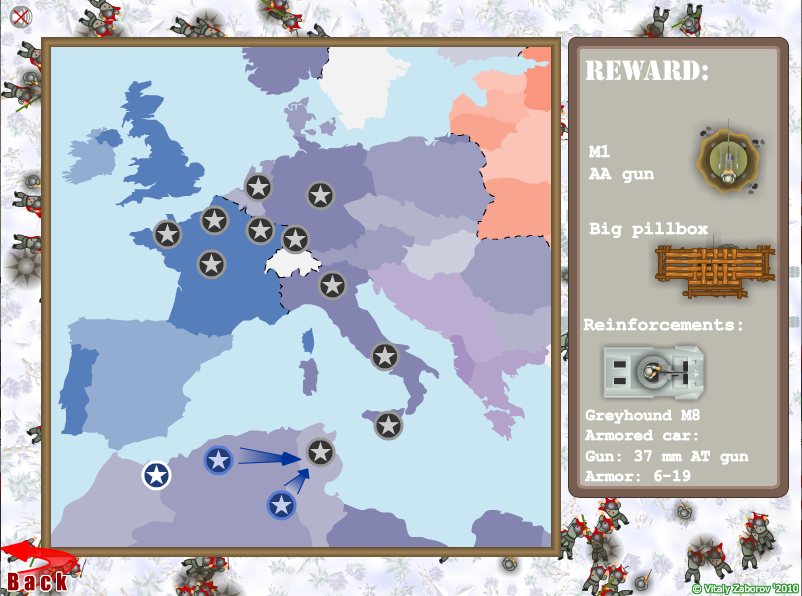
The game saw the light of day in the summer of 2010 and did quite well: it made the front pages of major sites and got good ratings. For some reason it did best on ArmorGames — it currently has over 4 million views there. At the time it didn't seem like a huge success to me, and making it into a full-fledged strategy game instead of a line defense would have been too difficult. So I shelved the series once again.
If your game isn't resonating with your audience, maybe you're presenting it to the wrong audience.
Endless War 5
I spent all of 2011 on one failed game that brought nothing but bitter experience, and by spring 2012 the amount in my account was approaching the critical mark. I was more experienced and pragmatic by then. I needed a game that would take weeks (not months), wouldn't require drawing tons of art and animations, and wouldn't completely lose to competitors in art quality. The quality bar, especially for art, had noticeably risen since the release of part 4. I returned to the series once more. From Endless War: Defense there was lots of leftover vehicles and fortifications, and you could even control tanks. If I built the game around tanks instead of infantry, it would be both easy to make and look good, because the scale of the vehicles was small.
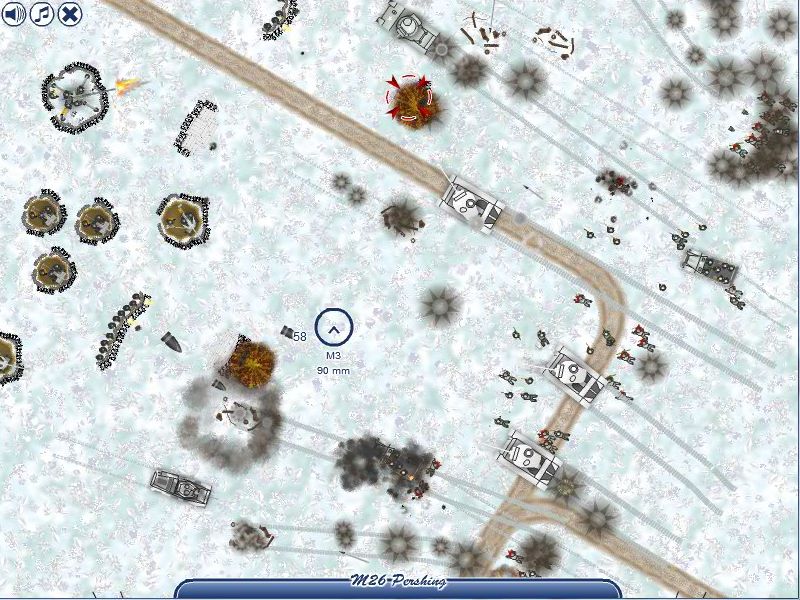
I decided to make only one campaign, for the main target audience — Americans. Of course, I had to refine the shooting mechanics, add new unit types, and completely overhaul the balance. But the game was ready in a couple of months. Another couple went to finding a sponsor, negotiations, and in the summer of 2012 the game was released.
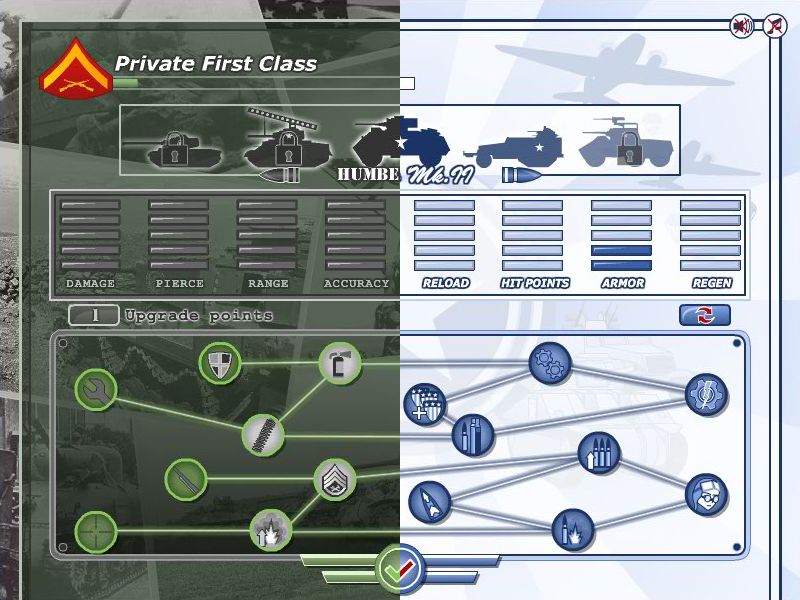
For this game I even specially commissioned music and spent a long time sweating over the interface style, until I came up with the idea of styling it in the colors of the American flag. Player opinions were divided: some were unhappy that we now played as a tank, while others were glad the game came out at all. We made the front pages, but the view counts weren't anything extraordinary. The increased competition and the exodus of players to Steam and mobile also took their toll.
If you've created engaging gameplay, players will likely forgive the same old code and assets.
Endless War 6
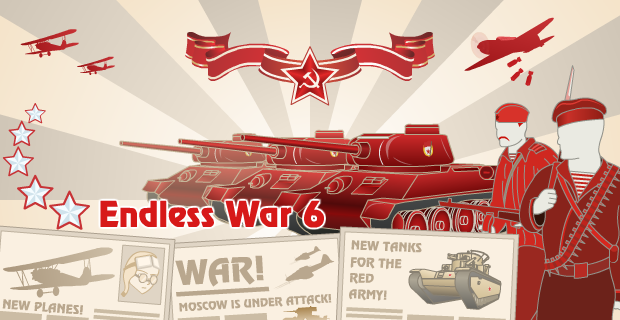
This was the only time I decided to strike while the iron was hot and immediately sat down to work on the sequel. Naturally, it was a Soviet campaign. I added more vehicles and tried to bring variety: flamethrower tanks appeared, and I put infantry on one self-propelled gun to create action. An "ultimate" ability also appeared: calling in air support, and the very first tank the player gets was the mighty T-35.
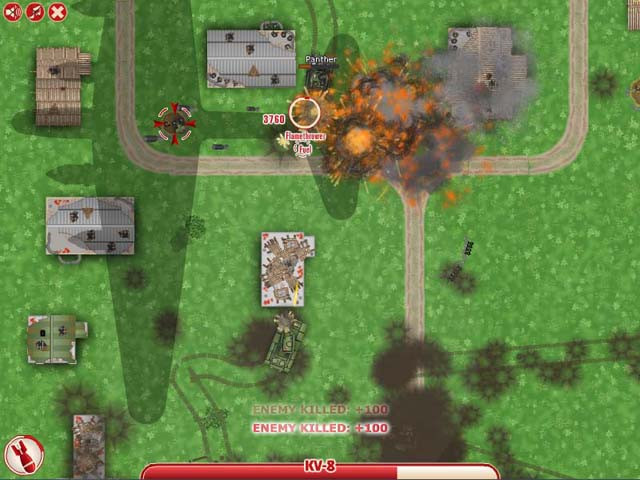
Due to the new features, development also took about three months. In terms of gameplay, I personally liked this installment more than the previous one, but due to the setting its views and ratings were somewhat lower. Overall it was a success, but continuing to churn out clones didn't seem like a great idea.
You can ride on clones as long as their development pays for itself. That is, for quite a long time.
Endless War 7
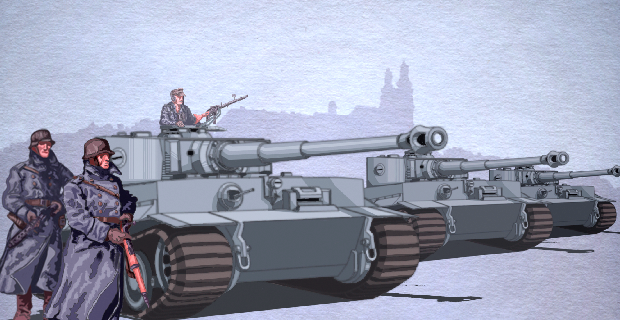
Six months later I was already working on a different game, but I teamed up with an artist regarding the next installment in the series: we decided to make a German campaign, he drew a very atmospheric interface, I added new vehicles and tweaked the balance once more, and we designed the levels together.
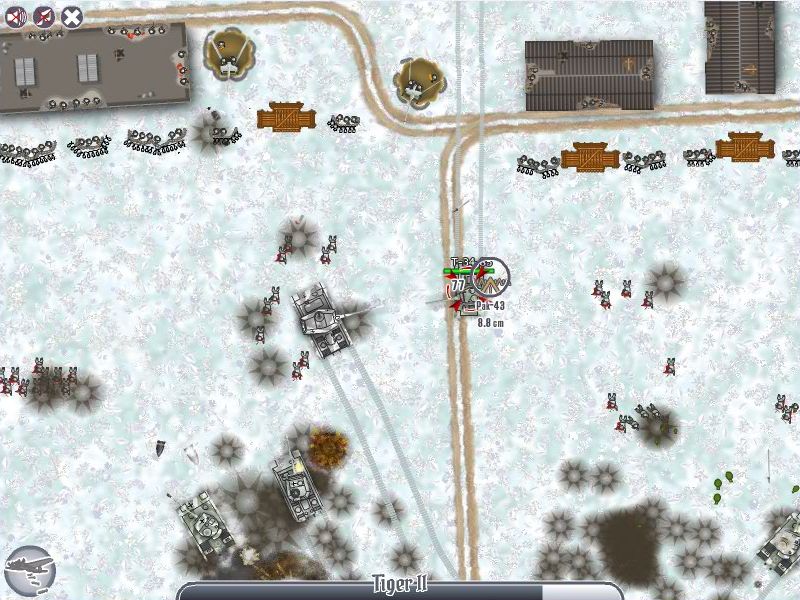
The game came out in the summer of 2013 and was received no worse than part 6. But the view numbers, compared to the third and even the fourth installment, filled me with gloom. It seemed to me that I was losing my touch, that my games weren't good or popular enough. I didn't fully understand how much the Flash game market had declined and how many players had migrated to other platforms. I should have been switching to Unity by then, but I was clinging too tightly to my existing codebase.
In reality, the seventh installment was also an excellent game. It was even nominated for Game of the Year on Armor Games in the shooters category. We didn't win the nomination, of course, but even making it into the ~50 best games of the year was a huge achievement.
Switching to a different engine is hard, but not a catastrophe. We'll have to change technology more than once in our careers.
What's Next?
At that point the series went on a long hiatus. I released a few more games, but the death of Flash was already inevitable, and there was no point in sticking with it. I abandoned my projects for a long time, but the first game in the series came out in 2005, which means this year it turns 20.
I really wanted to celebrate this milestone, especially since over all these years players have continued to write to me asking about a sequel. I gathered my willpower and all my free time and started working on a full-fledged sequel for Steam. But I'll tell you about that — and what I came up with for the anniversary — in the next article.
FAQ
What is this article about in one sentence?
This article explains the core idea in practical terms and focuses on what you can apply in real work.
Who is this article for?
It is written for engineers, technical leaders, and curious readers who want a clear, implementation-focused explanation.
What should I read next?
Use the related articles below to continue with closely connected topics and concrete examples.