Hatred of Broccoli: How Taste Protects Us from Bacteria and Toxins
An exploration of the science of taste perception, from taste bud biology and receptor genetics to why some people can't stand broccoli — and how bitter taste receptors double as immune sentinels in the respiratory tract.
Taste Is Not Really Taste
Taste is not really what you think it is. Specialists frequently see patients complaining that food has started tasting "off," but their chemosensory function is perfectly fine. Upon thorough examination, the problem turns out to be related to anosmia, impaired sense of smell, or trigeminal nerve dysfunction.
People often don't realize how many signals from dozens of sensory systems they blend when tasting food. Smell during eating can work in two modes: orthonasally (the traditional way) and retronasally (when volatile aromatic compounds reach the nasal cavity through the pharynx).
This multisensory integration explains why food seems tasteless when you have a cold. During COVID-19, this effect became even more pronounced, when an onion tasted like a sweet apple.
The Taste Bud
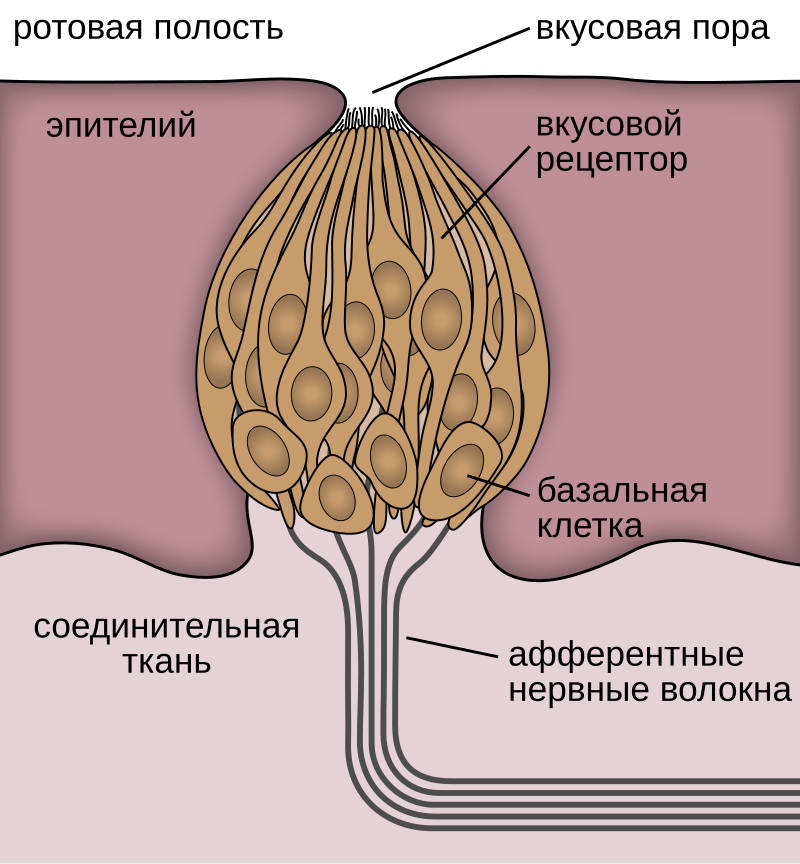
The functional unit of taste perception is the taste bud — a microscopic oval cluster of 50-150 cells. It is not simply a set of sensors but a complex, constantly renewing micro-organ.
Inside, there are four cell types:
- Receptor cells (Type II): equipped with receptors for sweet, bitter, and umami.
- Presynaptic cells (Type III): responsible for sour taste perception.
- Supporting cells (Type I): perform structural functions.
- Basal cells (Type IV): stem cells that replace dying taste cells.
The complete life cycle of a taste cell is 10-14 days.
Types of Papillae
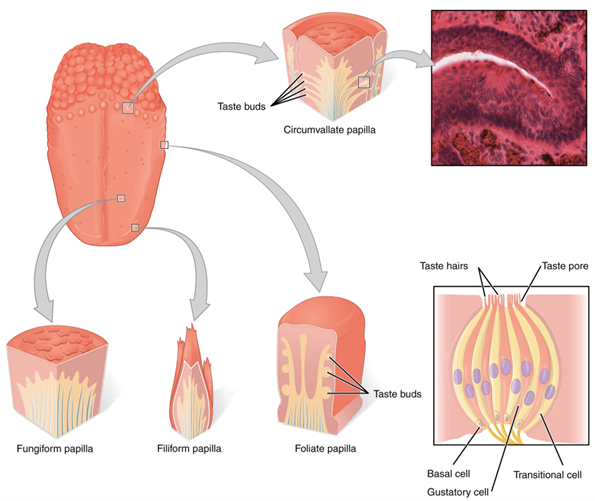
- Filiform papillae: the most numerous, performing a mechanical function. They contain no taste buds.
- Fungiform papillae: located on the front two-thirds of the tongue, each containing 6-9 taste buds.
- Circumvallate papillae: the largest (8-12 total), forming a V-shaped line at the back of the tongue, containing hundreds of taste buds.
- Foliate papillae: folds on the lateral surfaces of the posterior tongue with numerous taste buds.
The myth of "taste zones" on the tongue has long been debunked. All tastes can be perceived across the entire tongue surface.
Receptors — Like Yeast, but Better
For simple ions (salts, acids), a fast ion channel mechanism is used. For complex organic molecules (sugars, amino acids, toxins), a slower G-protein coupled receptor (GPCR) cascade is used.
GPCRs are employed in vision, smell, taste, and approximately 34% of all drugs target them.
The Five Canonical Tastes
- Salty: detection of sodium ions through the epithelial sodium channel (ENaC).
- Sour: perception of protons through the proton-selective ion channel OTOP1.
- Sweet: the paired receptor T1R2/T1R3 recognizes sugars and sweeteners.
- Umami: the paired receptor T1R1/T1R3, specific to L-glutamate.
- Bitter: a family of approximately 25 TAS2R (T2R) receptors for recognizing potential toxins.
Hacking the Receptors
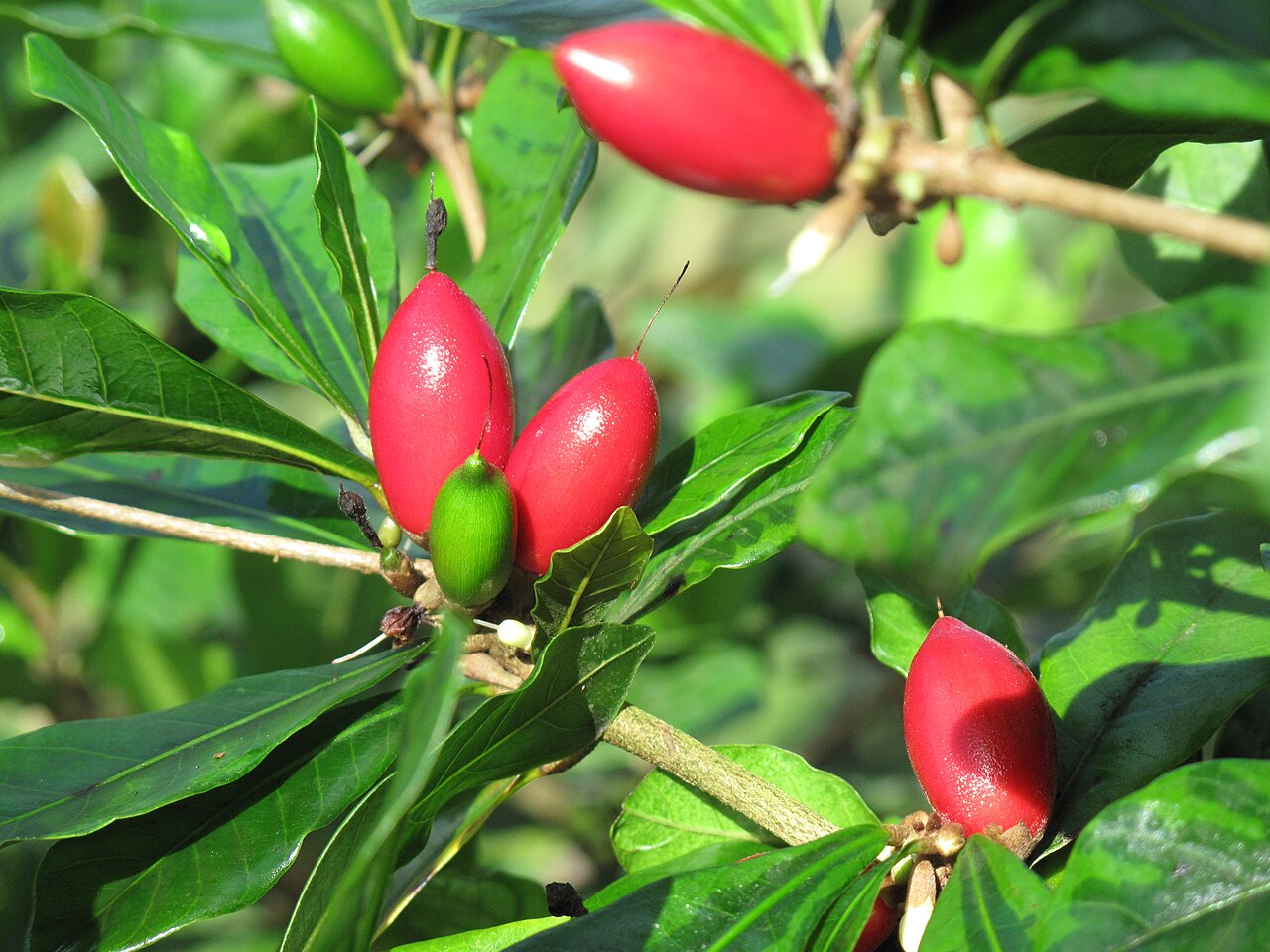
Miracle fruit (Richadella dulcifica): contains the glycoprotein miraculin, which at normal pH acts as an antagonist of the sweet taste receptor. When pH drops, it converts into an agonist, causing the receptor to perceive sour as sweet.
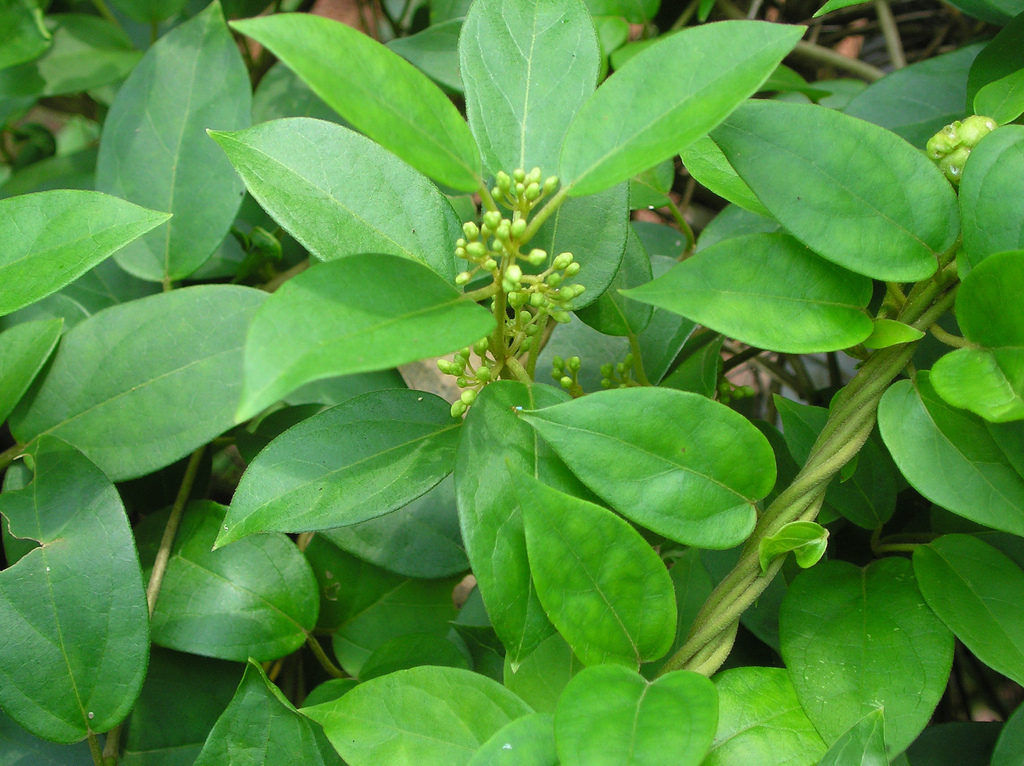
Gymnema sylvestre: produces gymnemic acids, powerful inhibitors of sweet taste. After chewing it, sugar feels like flavorless sand.
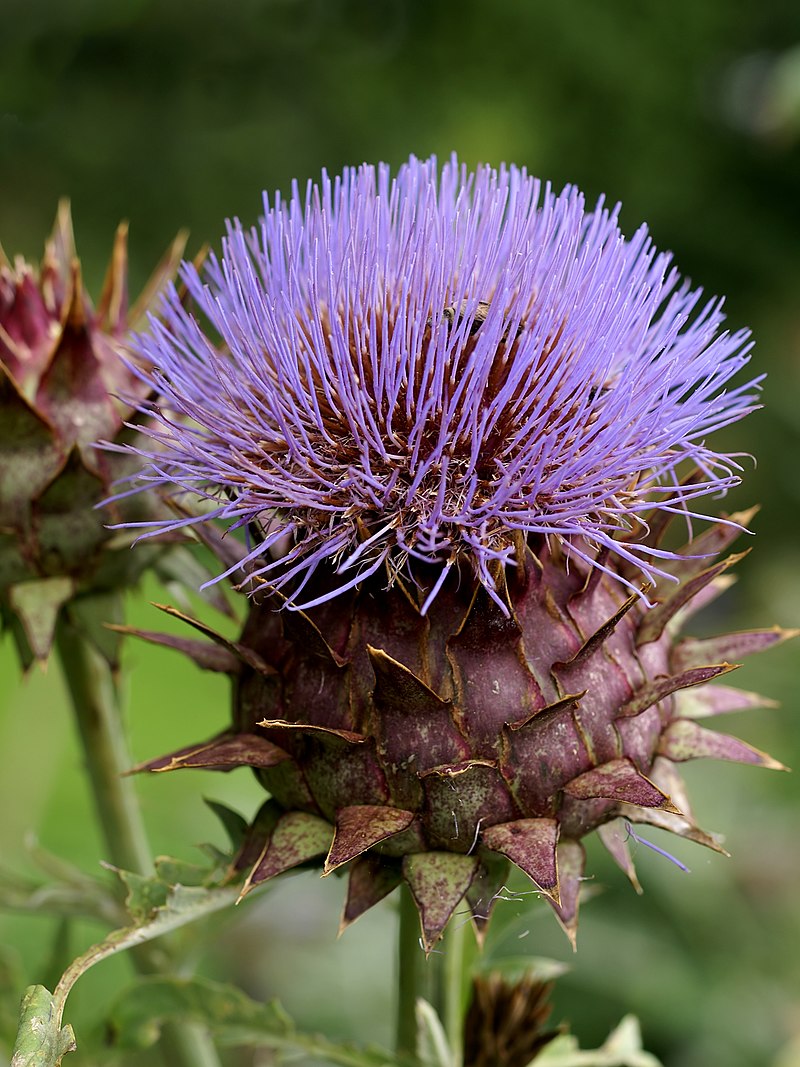
The artichoke effect: compounds it contains (cynarin, chlorogenic acid) act as weak inhibitors of sweet taste receptors, making water taste sweet after they are washed away.
Genetics of Taste: Why You Hate Broccoli
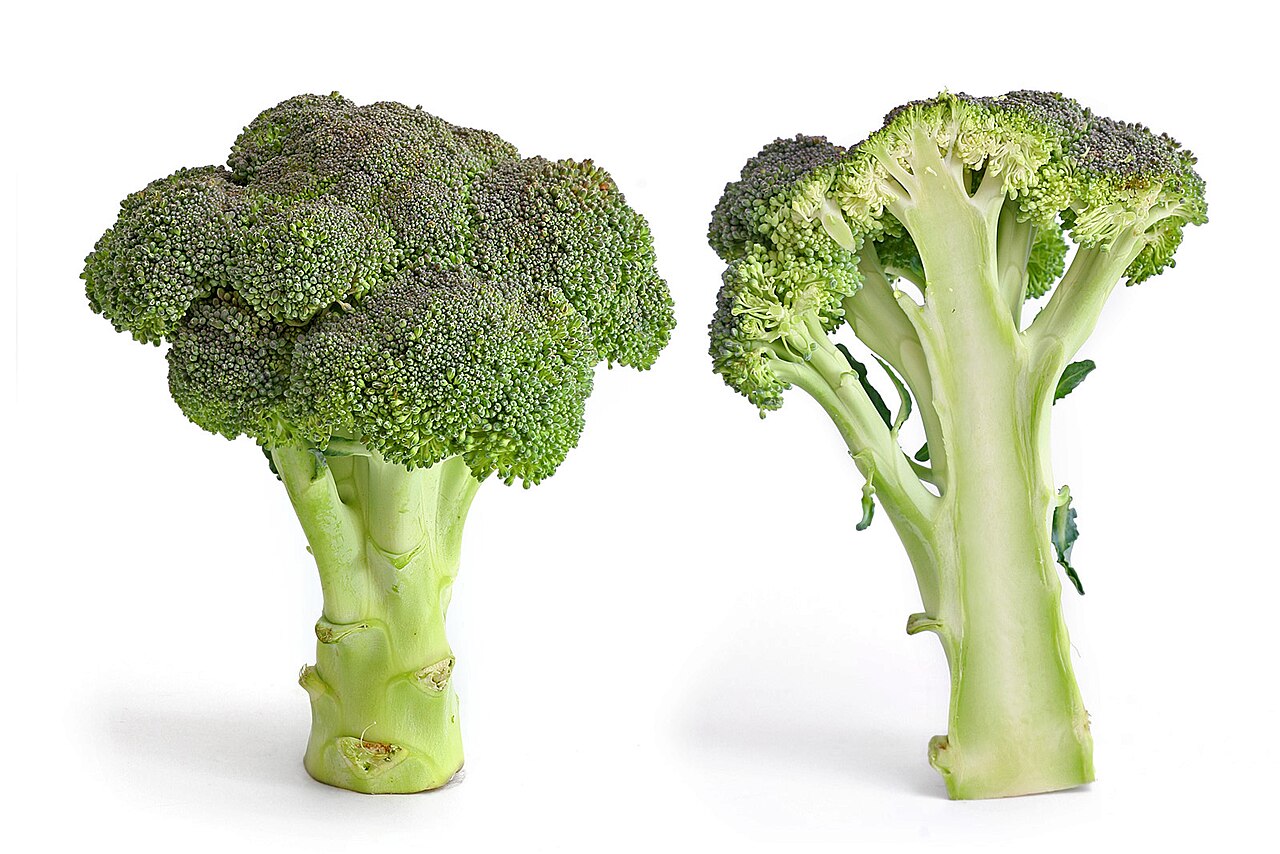
The ability to perceive bitter compounds (phenylthiocarbamide, PROP) is controlled by the TAS2R38 gene. There are two main variants:
- PAV (Proline-Alanine-Valine): the "sensitive" variant with a fully functional receptor.
- AVI (Alanine-Valine-Isoleucine): the "insensitive" variant.
People fall into three groups:
- Insensitive (AVI/AVI): approximately 24% of the population, eat broccoli without issue.
- Sensitive (PAV/AVI): approximately 44% of the population, perceive bitterness moderately.
- Super-sensitive (PAV/PAV): approximately 32% of the population, perceive unbearable bitterness.
The chemical group N-C=S in glucosinolates (cruciferous vegetables) is recognized by the TAS2R38 receptor.
The Evolutionary Arms Race: Why Different Tastes Exist
Balancing Selection: The Compromise Between Poison and Food
The coexistence of sensitive and insensitive individuals is a classic example of balancing selection.
- Advantage of the sensitive (PAV): high sensitivity allowed ancestors to avoid toxic plants and goitrogens.
- Advantage of the insensitive (AVI): dietary flexibility — access to a wider diet during famine.
A population with both variants is more resilient. In a toxic environment, the sensitive have the advantage; in a safe one, the insensitive do.
Taste Receptors and Immunity
Bitter taste receptors are expressed in ciliated epithelial cells of the respiratory tract. They detect quorum-sensing molecules released by pathogenic bacteria and trigger an immune response — production of nitric oxide that kills bacteria.
The sensitive gene variant (PAV) is associated with better defense against upper respiratory tract infections and rhinosinusitis.
Positive Selection: The Unconditional Benefit of Umami
The ability to recognize protein-rich food (L-glutamate) was critically important for primate survival. Umami receptor genes (T1R1/T1R3) spread rapidly as an unconditionally beneficial trait.
Back to the Battery: Galvanism in the Dentist's Chair
Oral galvanism is a phenomenon where the oral cavity becomes a weak battery. It requires:
- Two dissimilar metals: an amalgam filling and a gold-containing crown, or a cobalt-chromium prosthesis.
- Saliva (electrolyte): salt-rich saliva provides ionic exchange.
In modern practice, this is rare. Clinics minimize metallic elements and prevent galvanic couples.
Conclusion
The tongue is a complex chemical laboratory performing high-precision substance detection. For salty and sour, simple mechanisms are used; for complex components, highly precise GPCR cascades.
Your hatred of broccoli or love of cilantro is encoded in the TAS2R38 and OR6A2 genes. The taste world is an imprint of ancestral diets, a result of evolutionary compromises and genetic lottery.
FAQ
What is this article about in one sentence?
This article explains the core idea in practical terms and focuses on what you can apply in real work.
Who is this article for?
It is written for engineers, technical leaders, and curious readers who want a clear, implementation-focused explanation.
What should I read next?
Use the related articles below to continue with closely connected topics and concrete examples.