Harrison's Chronometer: The Device That Saved Hundreds of Sailors' Lives
The story of self-taught clockmaker John Harrison, who spent 50 years perfecting marine chronometers to solve the longitude problem -- from the devastating Scilly Islands disaster of 1707 to the mass adoption of chronometers by the Royal Navy.
Imagine it's the early 18th century, the very heyday of the age of sail. Thousands of ships ply the boundless ocean expanses in search of earnings, undiscovered lands, or enemies. But there is one big problem: vessels regularly get lost at sea. This ends either in shipwreck or death from hunger and thirst. All because sailors have no reliable way to determine longitude -- no one really knows where the ship is.
To solve this problem, the British government -- possessor of the most powerful fleet at the time -- establishes a prize of 20,000 pounds. And such a person is found. His name is John Harrison, and he is a clockmaker.
The Problem of Determining Longitude: From Huygens to Newton
1707 -- the height of the War of the Spanish Succession. On one side, Great Britain, Holland, and the Holy Roman Empire. On the other, France and Spain, without going into details.
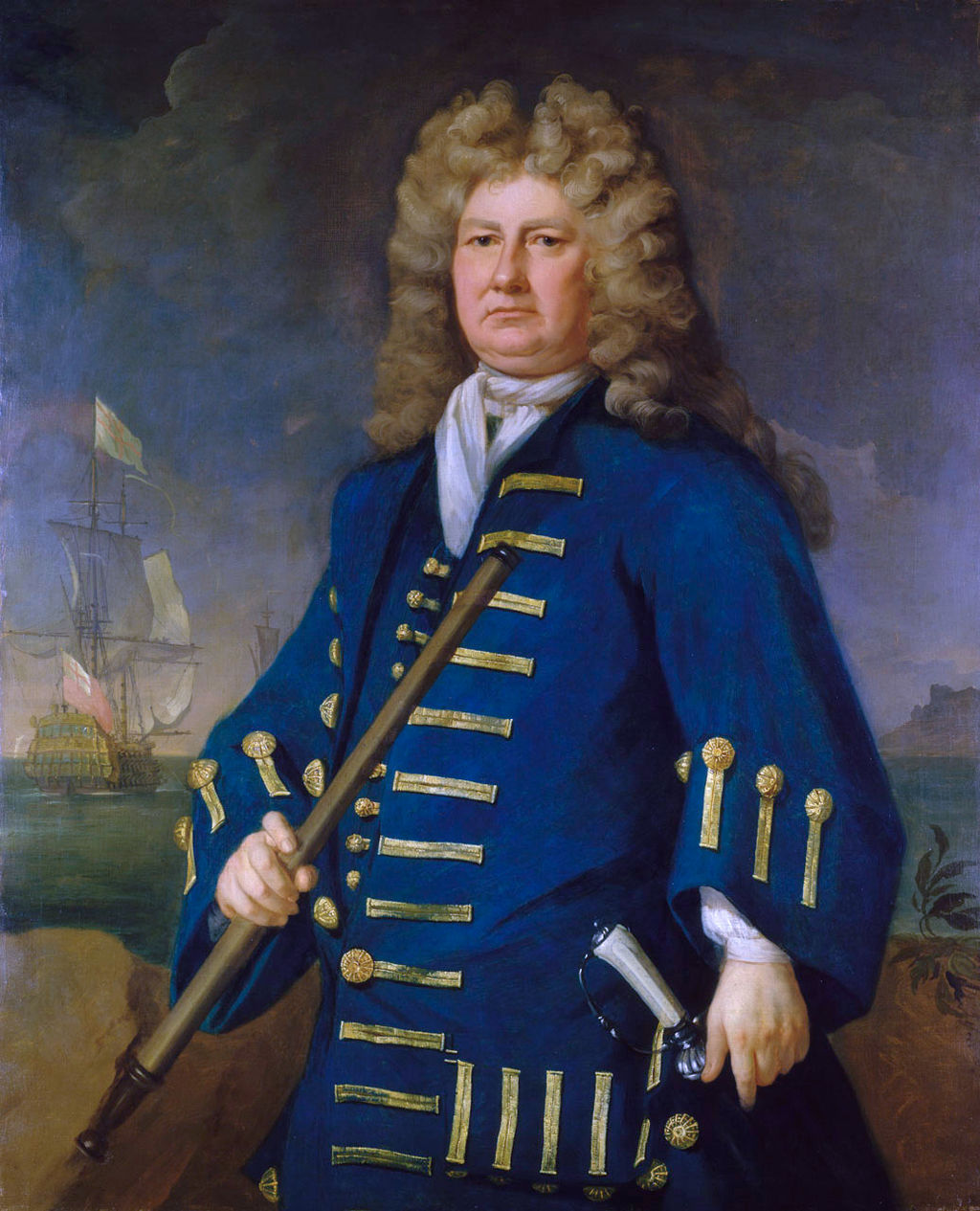
In the summer of 1707, British and allied forces besieged the French port of Toulon. For naval support, the British Admiralty dispatched an expedition of 21 ships under the command of Sir Cloudesley Shovell. The vessels entered the Mediterranean, approached the port, and delivered a devastating blow to the French fleet stationed in the harbor.
However, by September 1707, the military campaign had stalled, and Shovell received orders to return home. When the fleet rounded Gibraltar, the weather deteriorated sharply -- the sky was overcast, and navigators had no way to determine longitude. When they finally managed to do so, they estimated they were 200 miles from the Scilly Islands, additionally measuring the depth at their current location and cross-referencing with charts.
But they could not know their exact coordinates, since reliable methods for determining longitude did not exist at the time. They merely estimated, and they were gravely wrong: in reality, the fleet was very close to the dangerous rocks of the Scilly Islands archipelago, not 200 miles away.
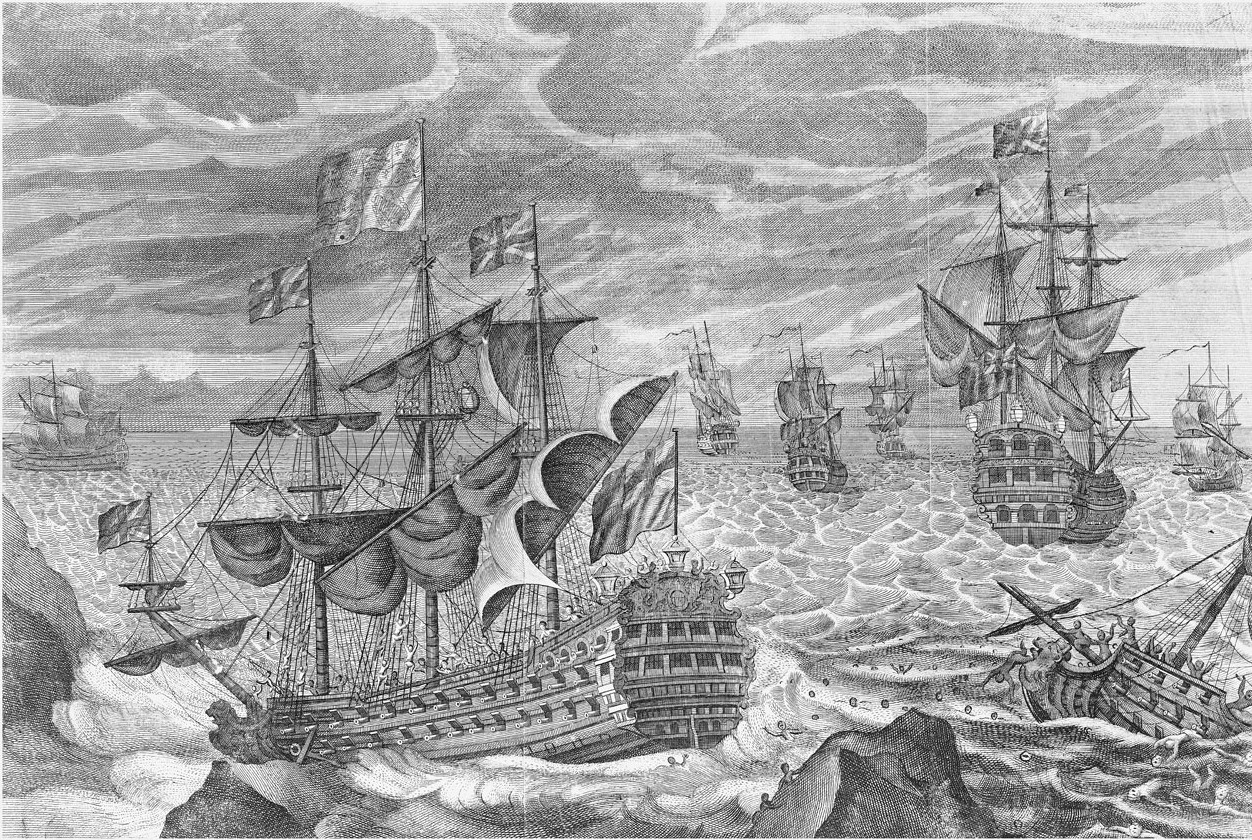
On the evening of October 21st, the weather worsened again, visibility dropped to zero, but the wind was favorable. Shovell ordered the fleet to continue, using dead reckoning. In other words, navigating only by approximate current course and the initial coordinates, which had been determined incorrectly. On the night of October 22nd, four ships crashed on the rocks:
- HMS Association, a 90-gun ship of the line
- HMS Eagle, a 70-gun ship
- HMS Romney, a 50-gun ship
- HMS Firebrand, a fireship
The tragedy resulted in the deaths of 1,400 to 2,000 sailors, whose bodies washed ashore for several more days. Shovell himself perished along with his two stepsons.
The government organized an investigation: examined the ships' logs of surviving vessels and interviewed dozens of witnesses. They concluded that the catastrophe, as often happens, occurred due to a whole series of factors:
- Inaccurate navigational charts of the area
- A malfunctioning compass
- Terrible weather conditions
- Shovell's risky maneuver of proceeding in conditions of zero visibility
But the main cause was still the fundamental problem of determining longitude. At that time, no reliable methods existed. And therefore, it was impossible to know precisely where the ship actually was.
The commission examined statistics for the previous 200 years and realized that such cases were, to put it mildly, far from isolated. Between 1550 and 1650, one out of every five vessels was lost traveling between Portugal and India.
There was no problem with latitude: you measure the height of the Sun above the horizon at noon using a sextant, then look up the Sun's declination in an astronomical table for the specific date of measurement and calculate latitude using the simplest formulas:
- For the Northern Hemisphere: latitude = 90 degrees - Sun's altitude + Sun's declination
- For the Southern Hemisphere: latitude = Sun's altitude - 90 degrees - Sun's declination
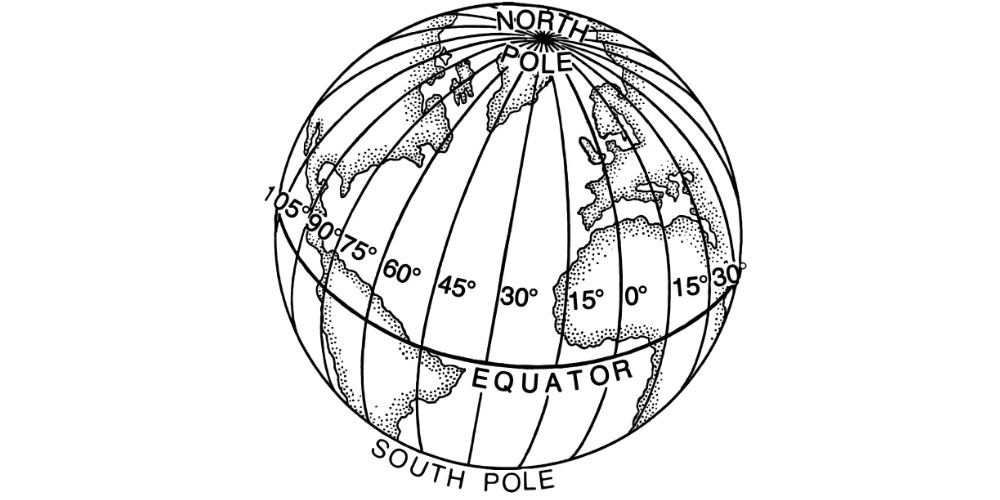
But to determine longitude, you only need to know the time (this idea was first expressed by Gemma Frisius in 1530). More precisely, the current time at the point of measurement and a reference time. For example, look at noon when the Sun is at its highest point, check a clock that steadily keeps some reference time, find the difference, and multiply it by 15 degrees -- which is exactly how much the Earth rotates every hour.
But first, what time to choose as the reference? Strangely enough, for another century and a half no single prime meridian existed. The British used the Greenwich meridian, the French the Paris meridian, the Russians the Pulkovo meridian, and there was the Ferro meridian (used by Ptolemy himself) among others. Only the International Meridian Conference of 1884 proposed using Greenwich as the universal line of reference.
Second, you need accurate clocks that will work perfectly throughout months (and sometimes years) of travel, with minimal deviation under conditions of constant rocking. And in the 17th and early 18th centuries, such mechanisms simply did not exist.
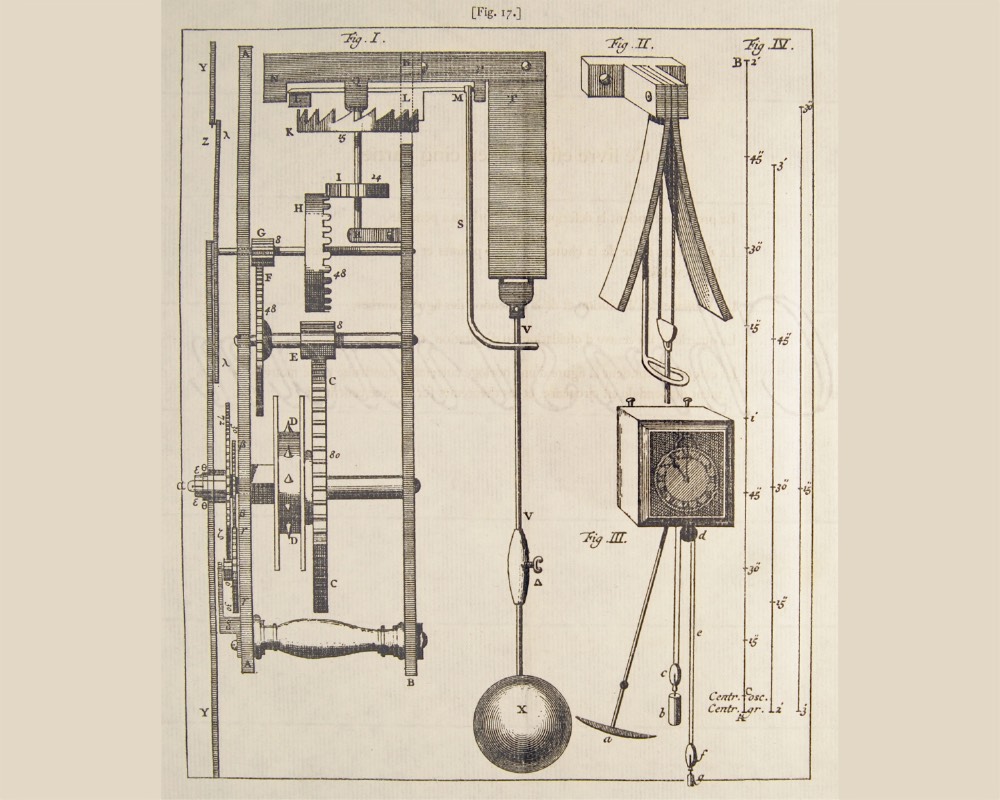
In 1657, the great Christiaan Huygens proposed the design of a pendulum clock. They quickly became popular worldwide: compact, lightweight, showing excellent timekeeping accuracy thanks to the original design for maintaining undamped oscillations. And they were inexpensive. It seemed the longitude problem was solved.
However, it quickly became clear that the period of a pendulum's oscillations depends on two parameters: the length of the suspension and the acceleration of gravity. And at different latitudes it differs significantly, as established by J. Richer, so this option was unsuitable for sea travel.
In 1674, Huygens began work on an improved clock model in which the pendulum would be replaced by a spiral spring and balance wheel. Simultaneously, Robert Hooke was working on a spring clock mechanism, slightly ahead of the Dutchman. Both were trying to solve the longitude problem.
But nothing worked -- the mechanism was extremely sensitive to temperature changes, which were a normal occurrence on sea voyages. The warmer it got, the more the spring lengthened, and the clock's rate increased. Not to mention the problem of lubricant hygroscopicity due to constantly high humidity.
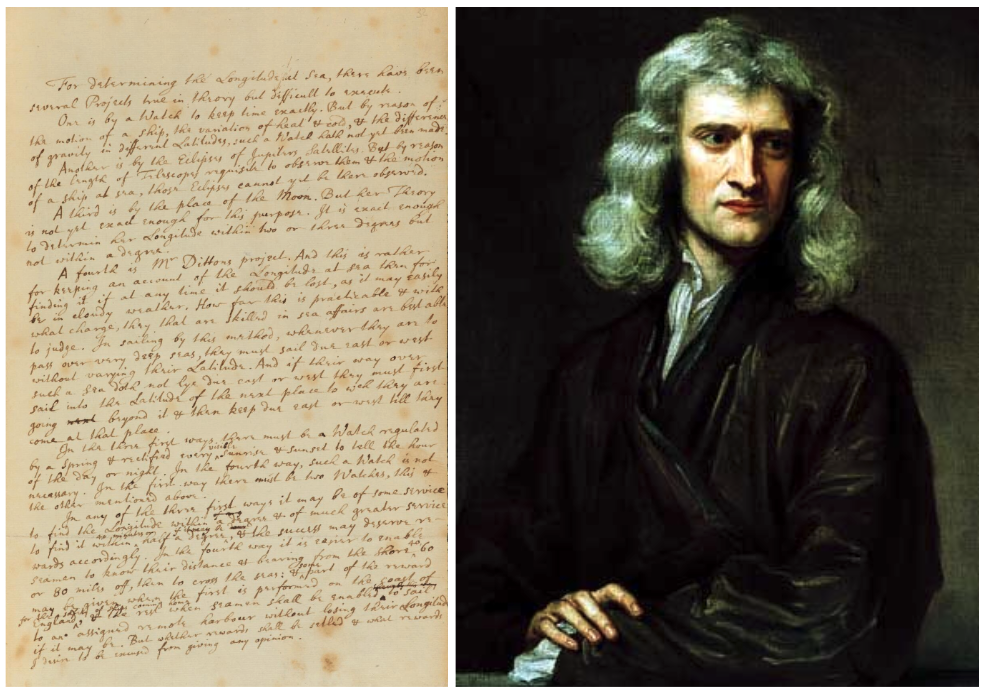
It reached the point where the scientific community increasingly leaned toward calculating longitude using complex astronomical observations (for example, by observing Jupiter's four moons), magnetic declination, and other methods. The idea that the longitude problem couldn't be solved with mechanical devices was also held by the great Isaac Newton, who participated in the work of the "government longitude commission" in the early 1710s.
Then in 1714, the government issued the Longitude Act, which offered rewards to those who could solve the problem of determining longitude:
- 10,000 pounds sterling if the error did not exceed 1 degree (approximately 110 km at the equator)
- 15,000 pounds for an error of no more than 2/3 of a degree (40 arc minutes)
- 20,000 pounds (for reference, approximately 4 million pounds today) if the deviation did not exceed 1/2 degree, or 30 arc minutes
Similar rewards had been offered much earlier: for example, by Spanish King Philip II in 1567. But no one had proposed a worthy solution, until a modest and little-known self-taught clockmaker in Britain took on the problem.
What Harrison Proposed
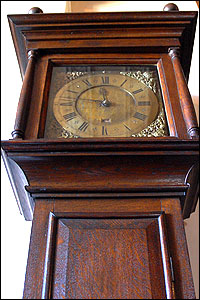
John Harrison was born in West Yorkshire on March 24, 1693. His father Henry worked as a carpenter at the Nostell Priory estate. In the early 1700s, the son began helping his father in his craft. And in his spare time, he built clocks. For example, one of his first examples from 1713 survives in the estate. Naturally, being a carpenter, he made the case himself, not limiting himself to just clock mechanisms.
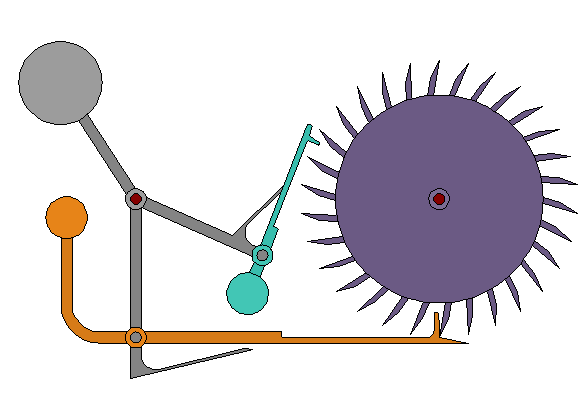
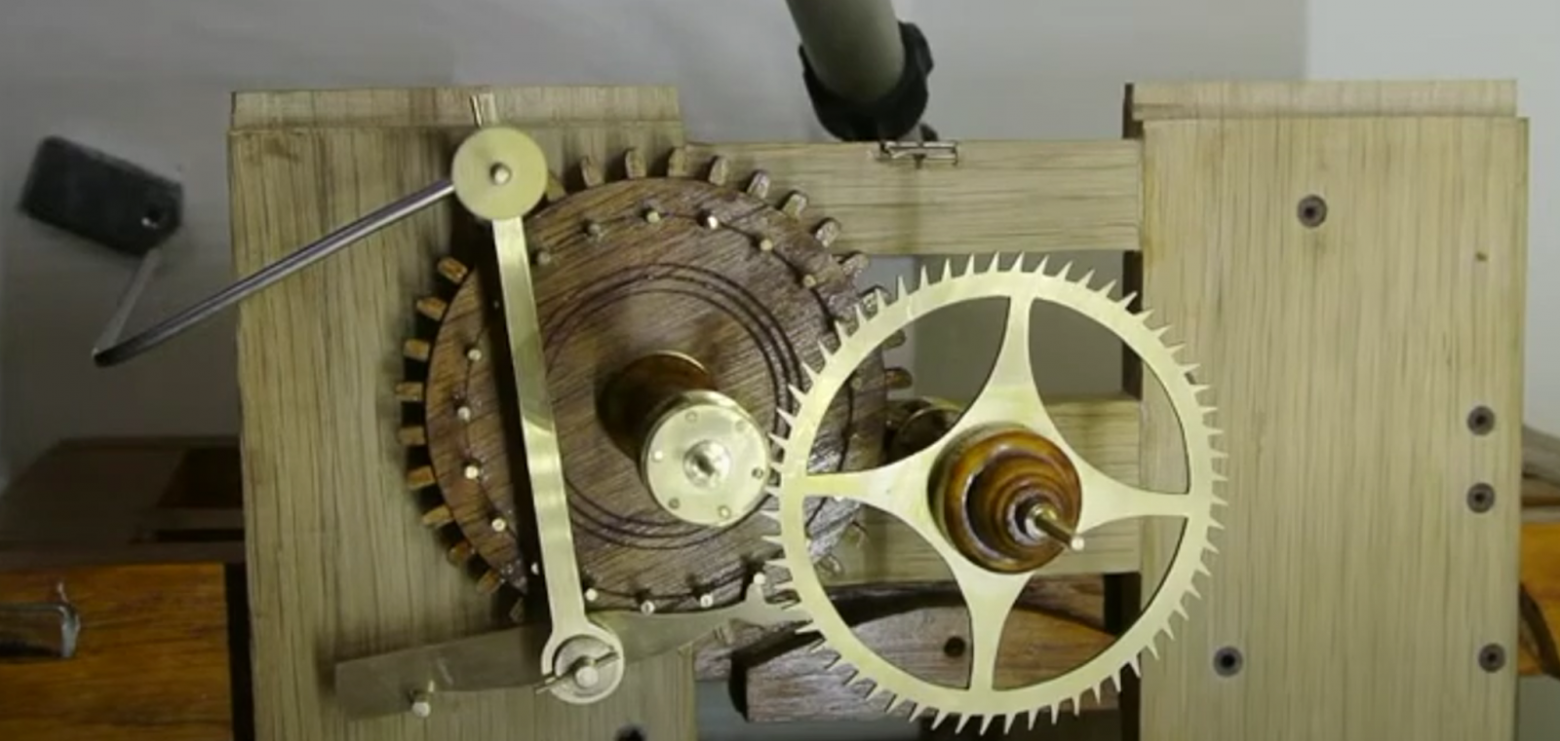
Between 1715 and 1725, he created more than a dozen clock models and invented a special mechanism for them called the "grasshopper" based on the traditional anchor escapement. The escapement mechanism gives the clock's pendulum periodic impulses to maintain its swinging. The gears move by a strictly fixed angle, so the clock hands move at a constant speed.
The advantage of the mechanism was its minimal dependence on friction: it required no constant lubrication. But a problem arose when the clock needed winding -- the "grasshopper" needed constant impulses to keep working. So Harrison invented an original "maintaining mechanism": an additional ratchet wheel with a spring was added to the design. When the clock was wound, it engaged and continued to maintain the grasshopper's operation. After winding was complete, the main wheel reconnected.
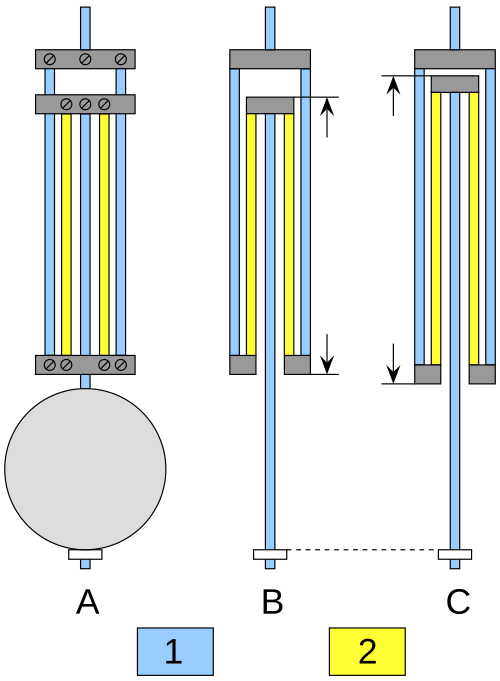
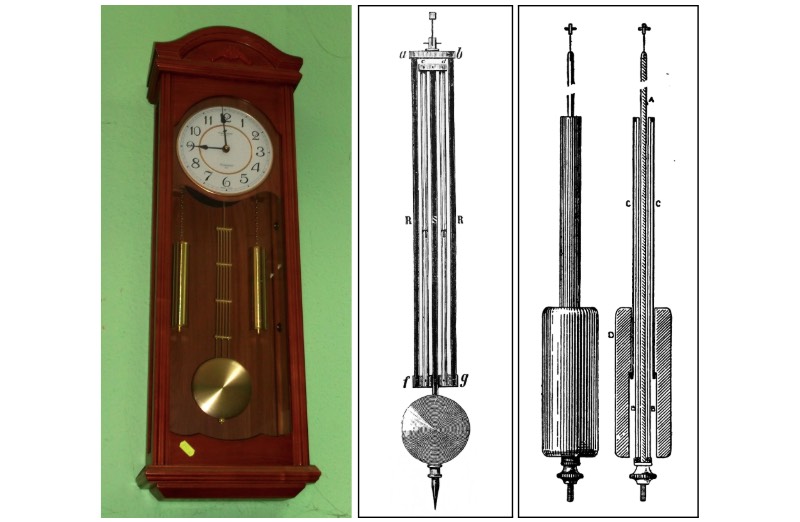
But the inventor didn't stop there, and in 1726 devised a temperature-compensated pendulum clock system. This solved the problem of rod lengthening (and consequently, changes in the pendulum's oscillation period) with temperature changes. Harrison's design consisted of alternating five steel and four brass rods connected in a grid pattern. Due to the different thermal expansion coefficients of the two metals, the rods compensated for each other's effects.
And as you recall, one of the main problems preventing clocks from working accurately during sea voyages was temperature compensation. Harrison correctly understood the essence: you need two dissimilar metals. But so far, this worked in pendulum clocks, which were unsuitable for sea travel.
An important point: while Harrison was quietly creating clockwork masterpieces and perfecting mechanisms, he had heard nothing about the prize from the "Board of Longitude." Meanwhile, other inventors were eagerly proposing solutions.
For example, in 1714, Jeremy Thacker first introduced the term "chronometer" for accurate timepieces and proposed using a gimbal mount to compensate for external forces and placing the mechanism in a vacuum flask.
The most progress was made by English clockmaker Henry Sully, who in 1716 developed the first working marine chronometers. It was a device with a balance wheel driven by an escapement mechanism with a friction stop. Oscillations were provided by a weight at the end of a pivoting horizontal arm attached to the balance by a cord. This solved the thermal expansion problem but didn't allow operation during heavy seas: the weight would stop moving cyclically, and the clock would start running incorrectly.
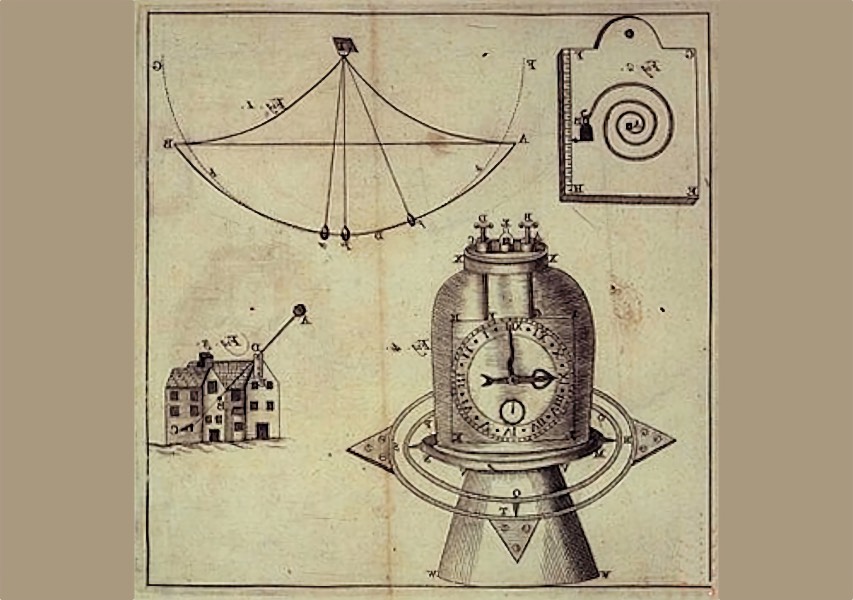
Only in 1730 did John Harrison learn about the longitude problem and travel to London, where he met Edmond Halley (the Astronomer Royal and member of the "Board of Longitude") as well as George Graham -- the most famous clockmaker in England and a Fellow of the Royal Society.
After demonstrating his clock mechanism innovations, Graham enthusiastically provided Harrison with funds to develop a marine chronometer. But he explained what difficulties lay ahead:
- High timekeeping accuracy with minimal lubrication, due to high humidity
- Spring energy would have to be used for the clock's operation -- pendulum mechanisms, which Harrison had worked with until then, would not be suitable
- A method of temperature compensation for springs needed to be invented
The inventor returned to his home village and began developing a marine chronometer, which took him more than five years with the assistance of his elder brother James.
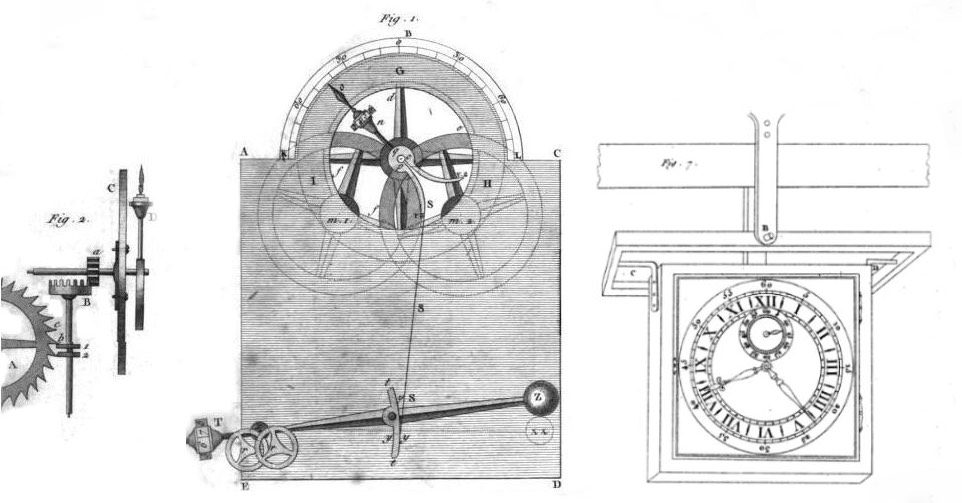
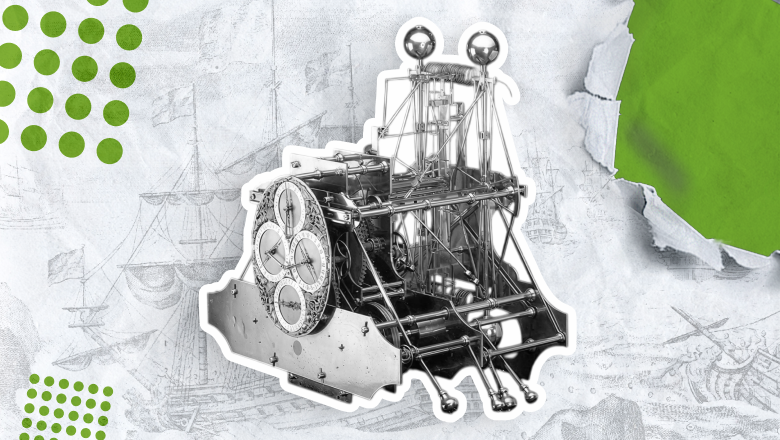
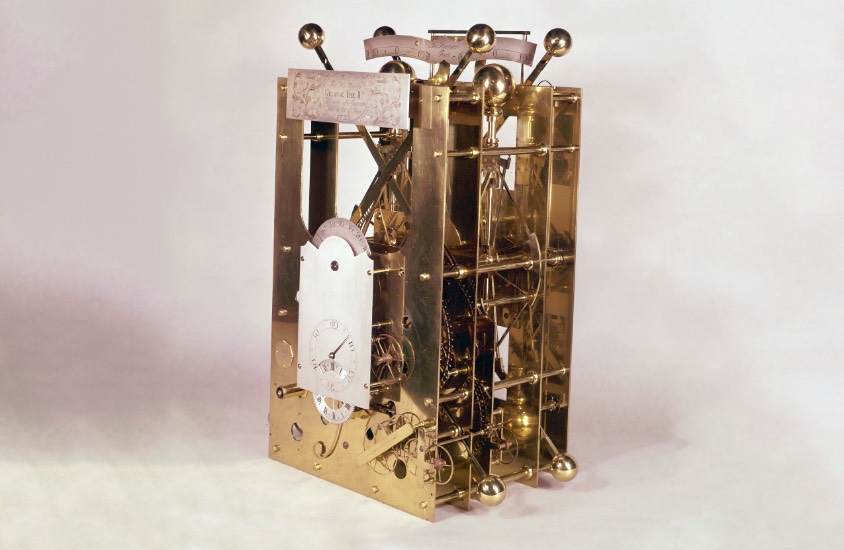
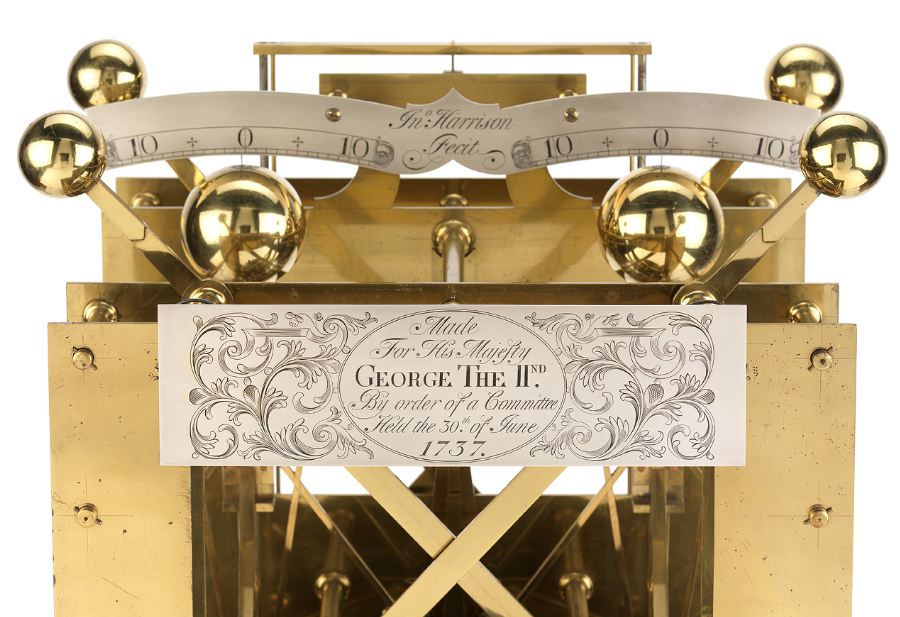
In 1735, he presented the first working model called H1. It was fairly bulky: weighing 35 kg with a height of about 70 cm. Having been forced to abandon the pendulum, he used two oscillating balance wheels connected by a spring. This allowed compensation for the effect of rocking, and the oscillation period did not change during travel at different latitudes.
H1 also incorporated Harrison's previous innovations: the "grasshopper," requiring no lubrication; the "maintaining mechanism" for continuous operation during winding; and several other interesting developments.
The clock presented to the "Board of Longitude" was well received by everyone. Harrison was given the opportunity to conduct trials in real conditions.
A 50-Year Path of Refinement: From H1 to H4
In May 1736, Harrison and the H1 chronometer found themselves aboard the newly built HMS Centurion -- a handsome 60-gun ship that was part of John Norris's expedition to Lisbon.
On the way to the Portuguese capital, the ship encountered serious storms. At the end of the voyage, the clock was behind by dozens of seconds. But during the return to London aboard HMS Orford, the sea was relatively calm, and the inventor confidently determined longitude with an error of 1.5 degrees. He was able to recognize that the ship was actually passing Cape Lizard, not Start Point, which are located at nearly the same latitude. The navigator had made a mistake, and it was fortunate that they listened to Harrison.
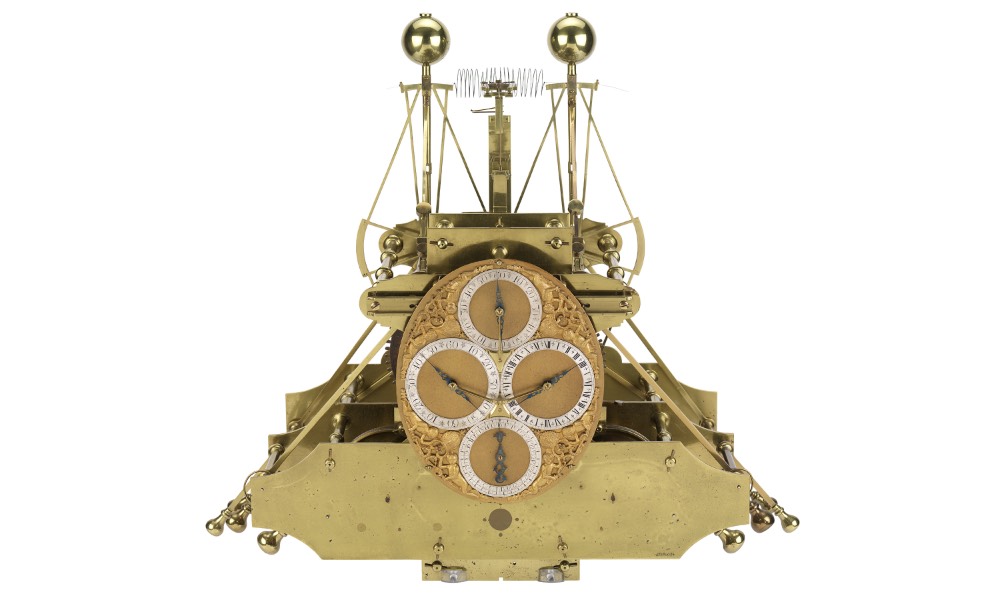
The "Board of Longitude" was impressed, since essentially H1 could have potentially saved the crew if the weather on the return trip had been bad. Yes, its accuracy was not yet sufficient for the prize, and in heavy seas on the way to Lisbon, H1 had fallen behind significantly. But in any case, it was a good attempt, and Harrison received a prize of 250 pounds for improving the chronometer.
In 1737, the inventor moved to London and spent three years developing the next version, H2. This was a more massive and stable model, to which an additional pair of balance wheels was added and the connecting spring was removed. The idea was that this should help eliminate the influence of sea rocking.
But during land-based tests, Harrison discovered that in the case of yawing during tacking (which can happen frequently), the oscillation period of the balance wheels changed significantly -- the clock would become inaccurate. For this reason, he never conducted sea trials and realized he needed to radically change his approach and move to a fully spring-based mechanism.
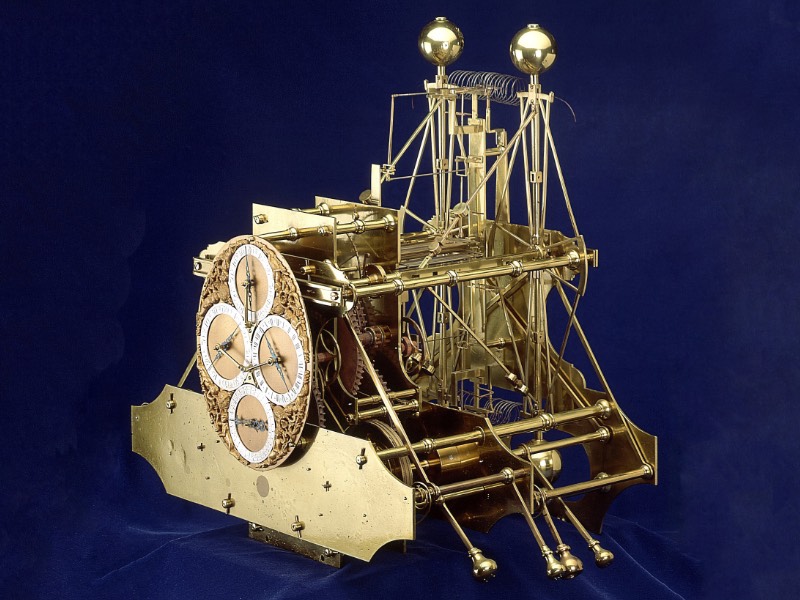
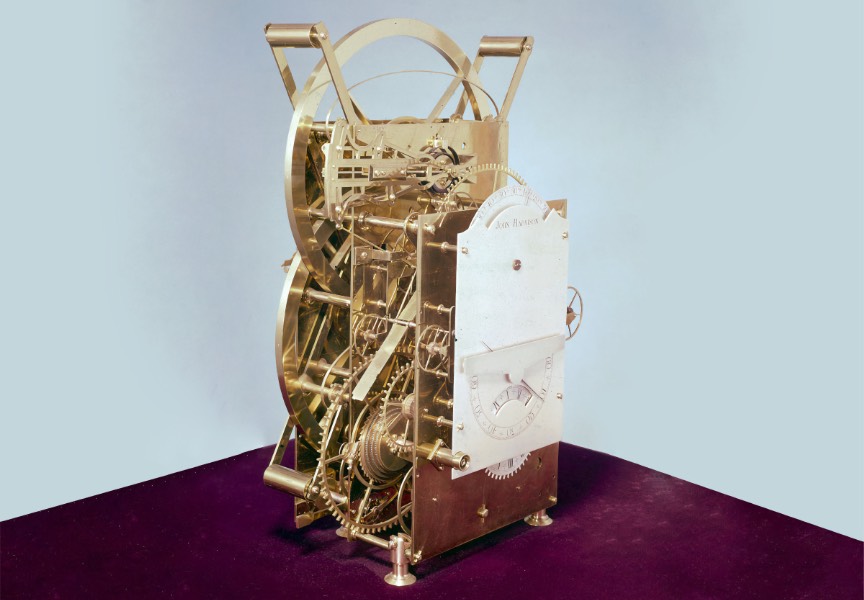
Development of the H3 modification lasted a long 19 years. During work on it, Harrison literally re-learned the physics of spring mechanisms and perfected every detail. For example, he invented:
- The bimetallic strip, without which no modern mechanical thermostat or industrial thermometer can function. Thanks to the combination of steel and brass in the clock's escapement mechanism, he achieved full temperature compensation and solved the problem that Huygens and Hooke had failed to crack.
- The caged roller bearing with a brass separator, radically improving smoothness and resistance to external forces.
But even here, Harrison could not achieve acceptable accuracy over time due to the large size and weight of the two balance wheels. Even just running on land without external influences, after 1-2 weeks they would begin to lag or gain too much. So the inventor decided to take a different path and make the chronometer compact, resembling a pocket watch.
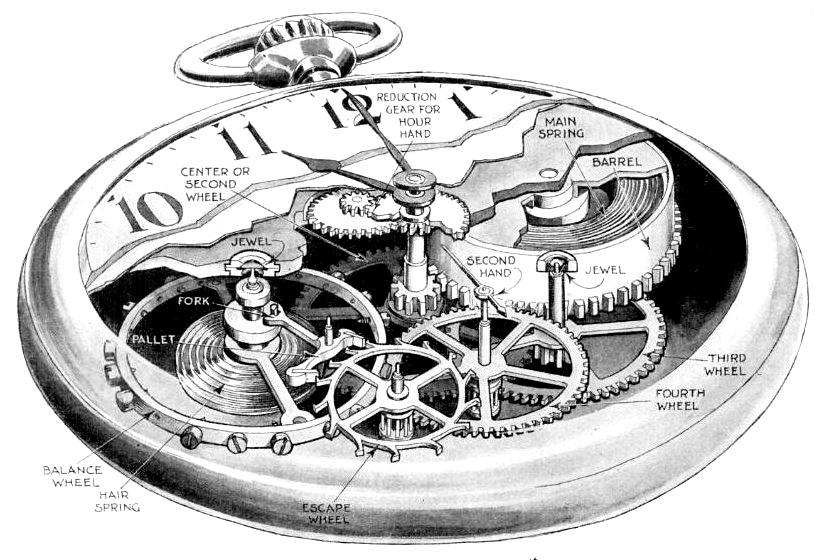
In 1751, in parallel with work on the enormous H3, he began developing a compact version of the chronometer, H4. He took as his basis the "pocket watch" case by Thomas Mudge, 13 cm in diameter.
Of course, a great many aspects needed refinement:
- He added a fusee -- a device in the form of a truncated cone with a chain, designed to equalize the torque.
- He used an improved temperature compensation design -- a spiral steel spring inside a brass barrel, connected to the fusee.
- He retained the "maintaining mechanism": the clock itself could run for 30 hours, and during winding an additional spring allowed it to run for another 11 minutes. Additionally, the clock had a remontoire, allowing it to work for about 30 minutes even if the main spring lost its elasticity.
- The tick frequency was 5 times per second, due to the mechanism's characteristics and for increased resistance to external vibrations.
- For the escapement mechanism, he used jeweled bearings and pallets made from diamonds smaller than 2 mm in diameter for the first time, for a radical reduction in friction.
- He radically changed the component layout, using a more conventional gear arrangement.
Harrison commissioned the first model from clockmaker John Jeffreys in 1753. Only after 6 years, in 1759, did he finally receive a chronometer with which he was completely satisfied. Here is what he wrote in his later memoirs:
"This is the fruit of fifty years of self-denial, unrelenting labor, and continuous concentration... I think I can safely say that there is no more perfect mechanical device in the world than my chronometer for determining longitude."
Harrison was, mind you, already 68 years old at that point. He again petitioned the "Board of Longitude" for permission to conduct trials aboard a ship. He was allowed to do so on HMS Deptford during a voyage from Portsmouth to Kingston, Jamaica. However, due to his advanced age, the inventor declined to attend in person and sent his son William.
The ship departed port on November 18, 1761, and arrived at its destination on January 19, 1762. The clock was wound every morning under the supervision of the ship's captain Digges and the Board of Longitude's representative Robinson, and locked in a box with a key. Cheating was impossible.
Upon arrival, it was found that the chronometer showed a deviation of just 5.1 seconds. This corresponded to an error of 1.25 arc minutes, or approximately one nautical mile. It seemed that all conditions for receiving the 20,000-pound prize (for accuracy within 30 arc minutes) had been fulfilled.
But the "Board of Longitude" disagreed, considering it a mere coincidence.
Harrison's Long-Awaited Recognition: How Chronometers Saved Hundreds of Lives
The Harrisons were dissatisfied but agreed to a repeat trial. It took place in 1764 aboard HMS Tartar during an expedition to Barbados. Together with William Harrison, Nevil Maskelyne was also on board to test another method of determining longitude -- the method of lunar distances.
During the voyage, the H4 chronometer showed a deviation of less than 1 second per day -- equivalent to an error of approximately 16 km. Maskelyne's measurements, based on observing the Moon's position relative to prominent stars in the night sky, showed accuracy of approximately 48 km. And those required serious calculations and observations, impossible in bad weather (just like latitude determination, in fact).
But once again, the "Board of Longitude" did not see fit to pay the full prize, limiting it to half -- 10,000 pounds. They intended to pay the rest only after other craftsmen could copy the H4 and chronometers became widespread.
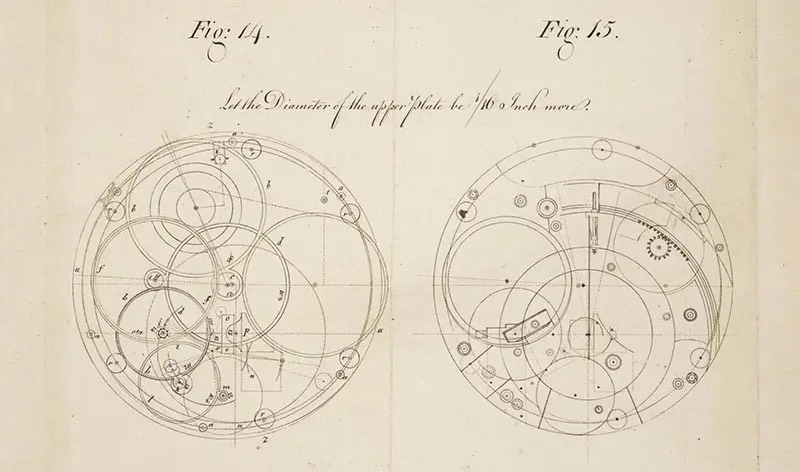
Simultaneously, in 1770, the 77-year-old Harrison presented King George III with the final version of the chronometer -- H5. The design largely resembled H4 but was more compact and refined. The monarch personally conducted tests at the palace and confirmed that H5 was accurate. At his personal petition, the "Board of Longitude" finally agreed to pay the inventor the remainder of the prize in 1773, when he was 80 years old.
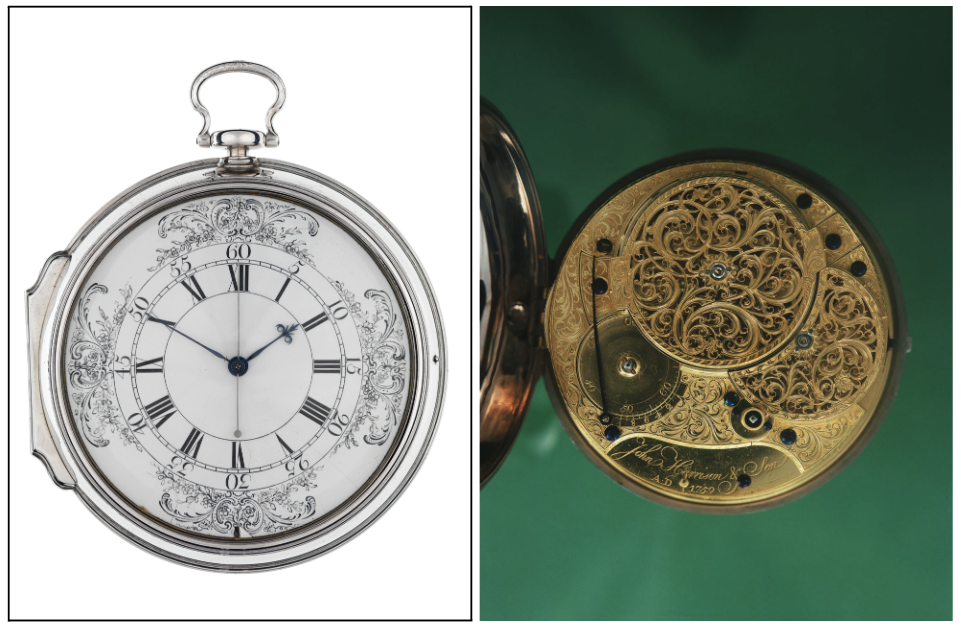
However, Harrison's chronometers were quite expensive at that time, and the government could not use them on all fleet ships. Nor was the inventor able to organize their mass production due to his advanced age, and his son William did not possess the necessary ambition.
The dissemination of his remarkable devices was aided by clockmaker Larcum Kendall, a student of John Jeffreys, who had once built the first H4 model for Harrison.
In the early 1770s, Kendall assembled several models called K1 (which were exact copies of H4), each costing 450 pounds. For example, they were used by:
- James Cook during his second voyage to the South Seas aboard HMS Resolution. The captain, upon returning, reported to the Admiralty that "Kendall's watch exceeded all expectations and saved our ship more than once."
- William Bligh on the infamous HMS Bounty, during whose mutiny the chronometer ended up in the hands of the conspirators.
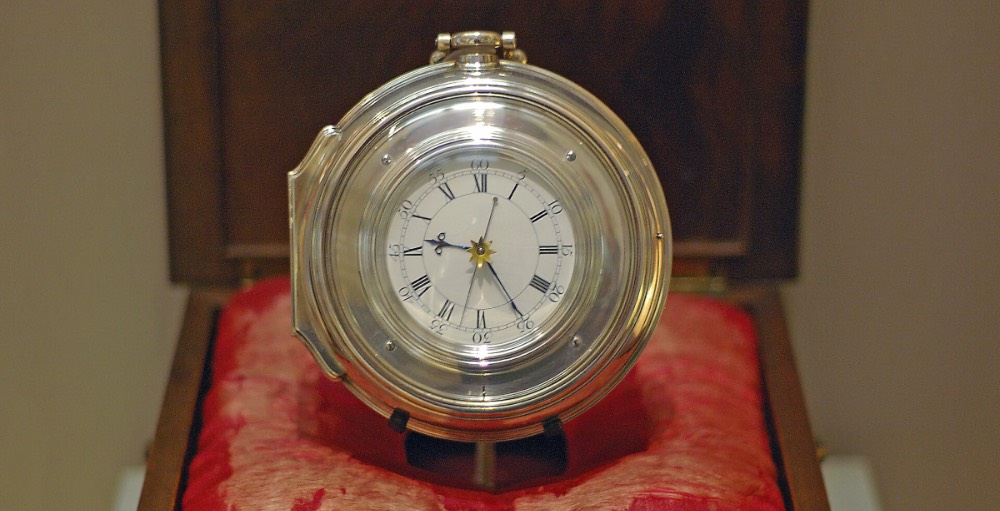
In 1774, Kendall developed the K3 version, managing to reduce the cost to 100 pounds. These were also used by James Cook during his voyage on HMS Discovery and George Vancouver on HMS Discovery. According to crew members, the watch showed remarkable accuracy: "throughout the entire journey, we never once found ourselves uncertain of our ship's location."
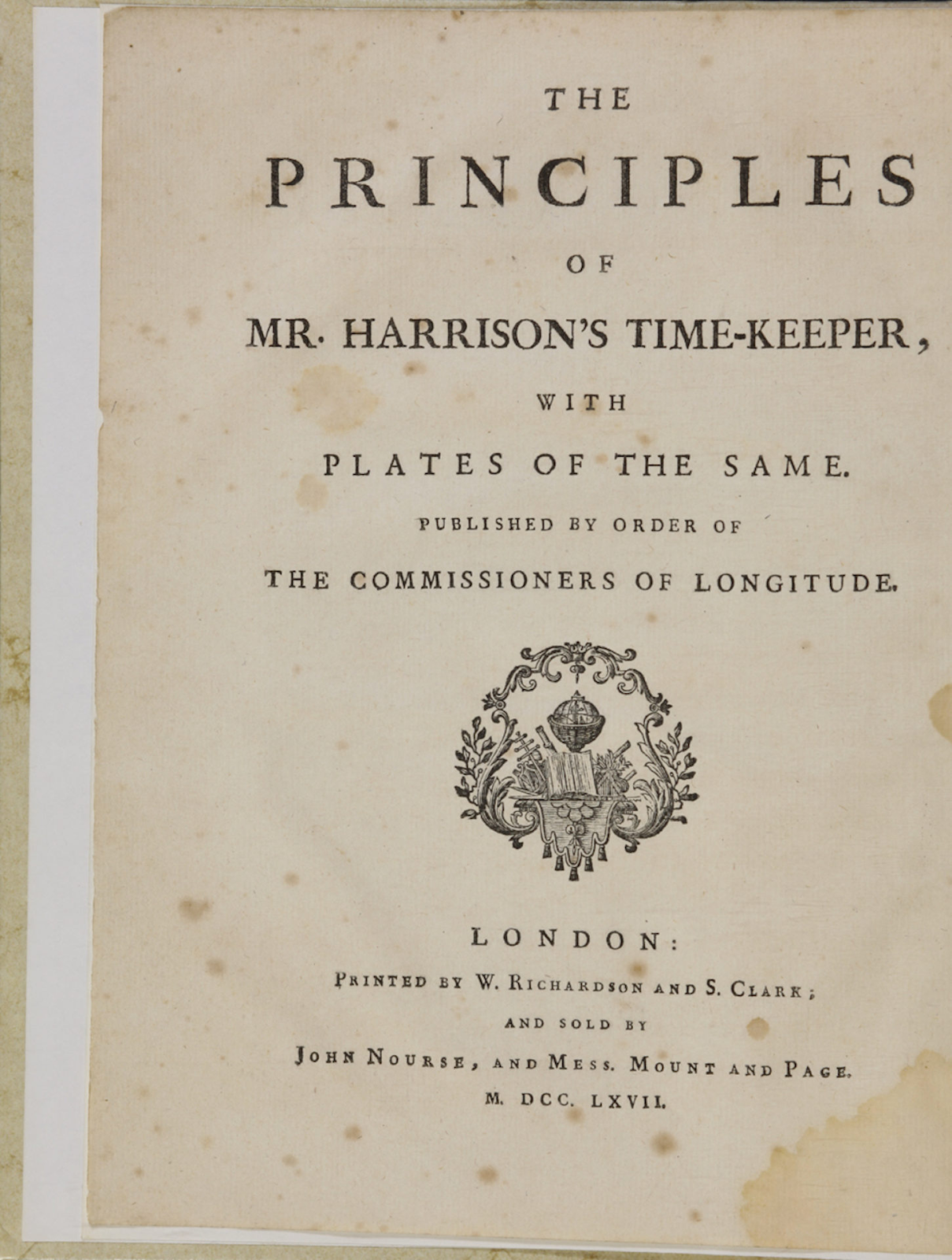
It should be noted that besides Harrison in England, French clockmakers Pierre Le Roy (whose device successfully passed longitude trials aboard the Aurore in 1767) and Ferdinand Berthoud also constructed their chronometers in the 1760s.
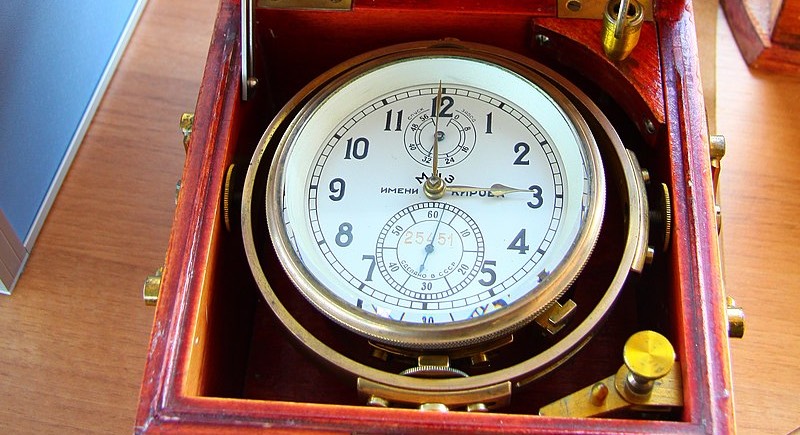
But the true golden age of chronometers began in 1780, after John Harrison's death. Clockmakers John Arnold and Thomas Earnshaw, independently of each other, significantly refined Harrison's design, improving the clock mechanisms and using a gimbal mount to make the chronometers even more stable.
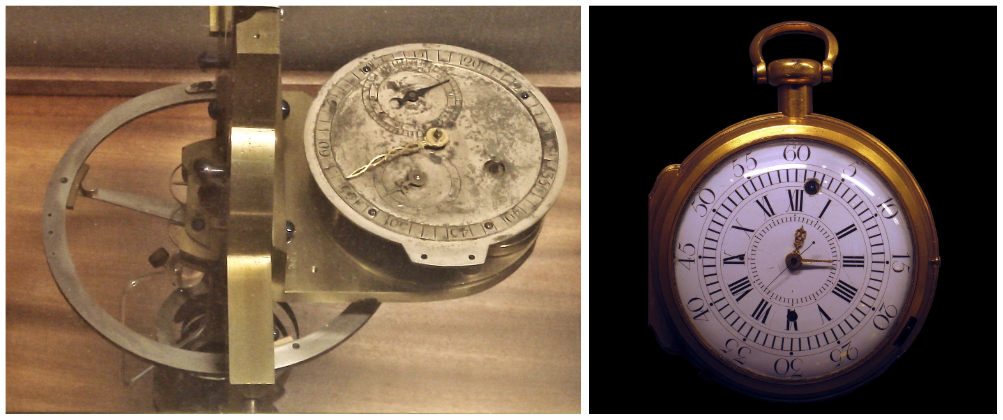
However, it was only after the Arniston disaster of 1815, where 372 sailors died due to the lack of navigation instruments and bad weather, that the Royal Navy mandated all vessels be equipped with chronometers. From 1825 onward, this became the norm. From that point, the count of lives saved likely numbered in the thousands -- and the credit for this, without doubt, belongs to the hero of this article.
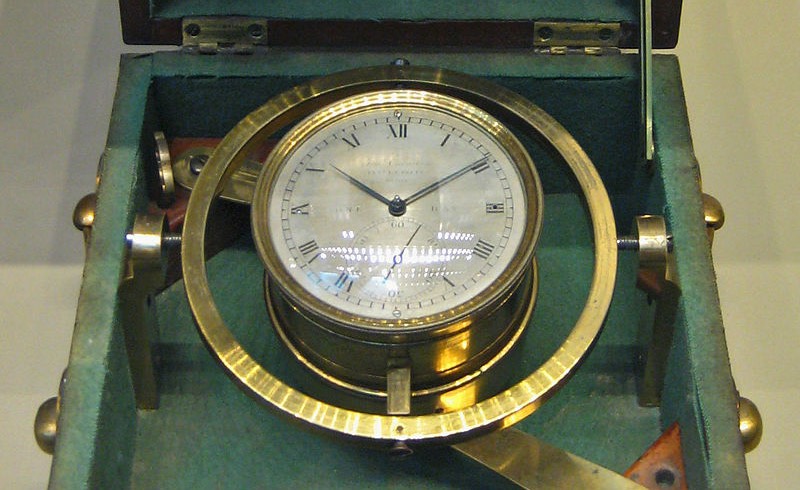
But the history of marine chronometers after Harrison (which, incidentally, were produced throughout the 19th and 20th centuries and only began to be phased out in the 1950s with the advent of electronic analogs and the development of navigation systems like LORAN through to GPS) we will examine in a future article.
We also recommend the 2000 TV series "Longitude" about this very story -- Harrison is played by Michael Gambon, also known as Albus Dumbledore.