EMG TR4401: Reviving a Hungarian Oscilloscope
A detailed restoration chronicle of the EMG TR4401 — a 40 kg, 63-tube Hungarian oscilloscope from the 1960s that borrowed heavily from the Tektronix 541A — covering its Cold War-era history, vacuum tube sourcing, and painstaking repair process.
The Avito Puzzle
It all started with a listing on Avito — Russia's equivalent of Craigslist. A massive green box, clearly old, clearly heavy, labeled as an oscilloscope. The seller knew little about it beyond the weight (40 kg) and the fact that it didn't turn on. The front panel had labels in Hungarian, not Russian. For a tube electronics enthusiast, this was irresistible.
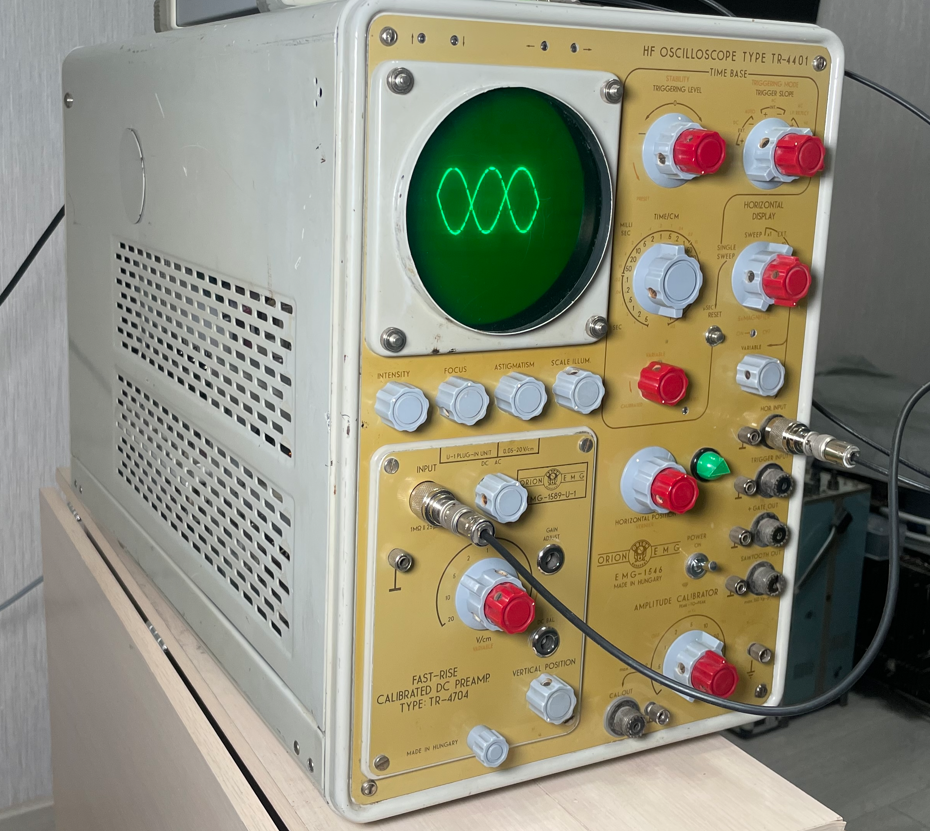
The device turned out to be an EMG TR4401 — a laboratory oscilloscope manufactured in Hungary, likely in the mid-1960s. It arrived with fewer than half of its 63 vacuum tubes installed, and some of the tubes present were clearly wrong types — someone had been scavenging parts.
EMG: The Hungarian Tektronix
EMG (Elektronikus Merokezulekek Gyara — Electronic Measuring Instruments Factory) was established in 1950, carved out of the Orion Radio Works in Budapest. Initially a small operation, the factory grew rapidly through the COMECON trade bloc's demand for test equipment.
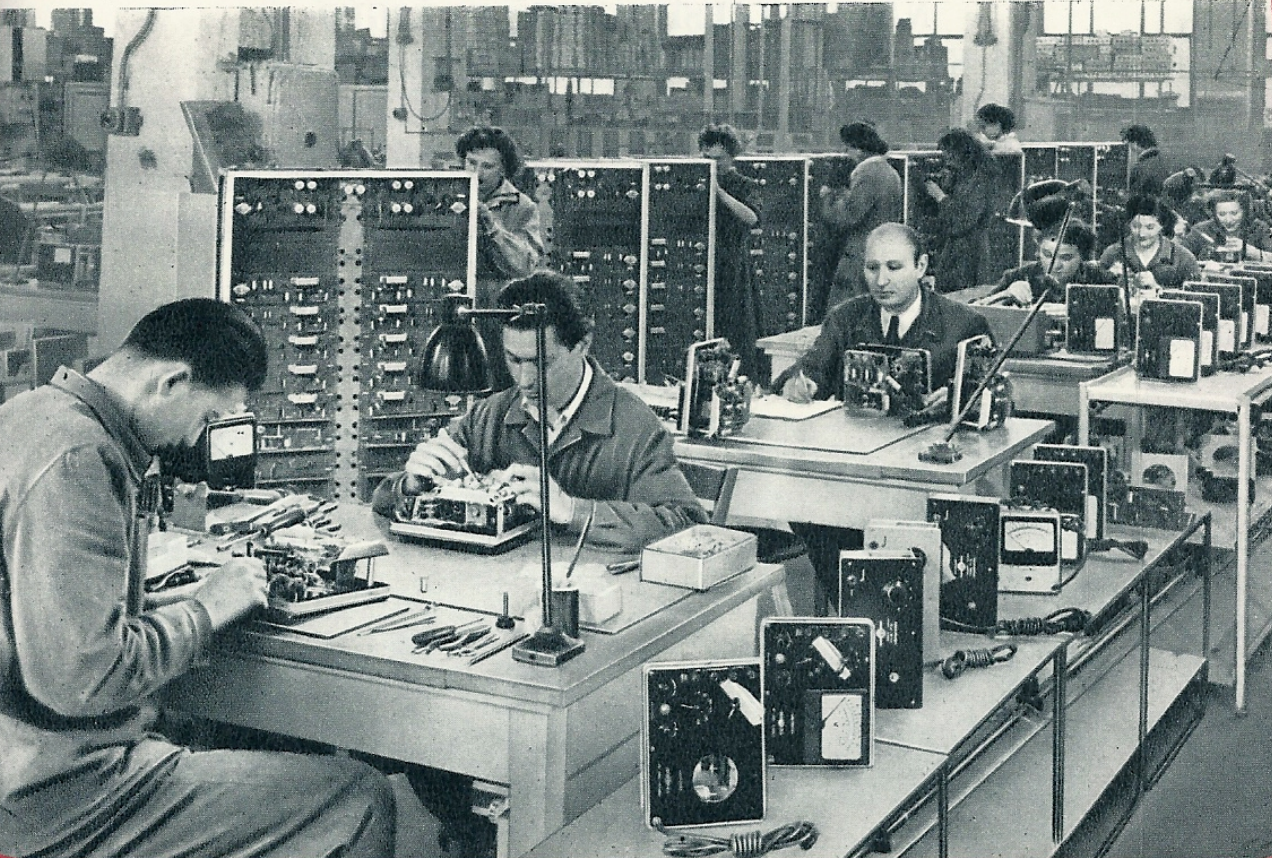
The numbers tell the story of growth: annual production went from 28 million forints in 1951 to 145 million by 1960, reaching 469 million by 1970. In 1953-1954, production moved from central Budapest to a larger facility in Sashalom, on the city's outskirts.
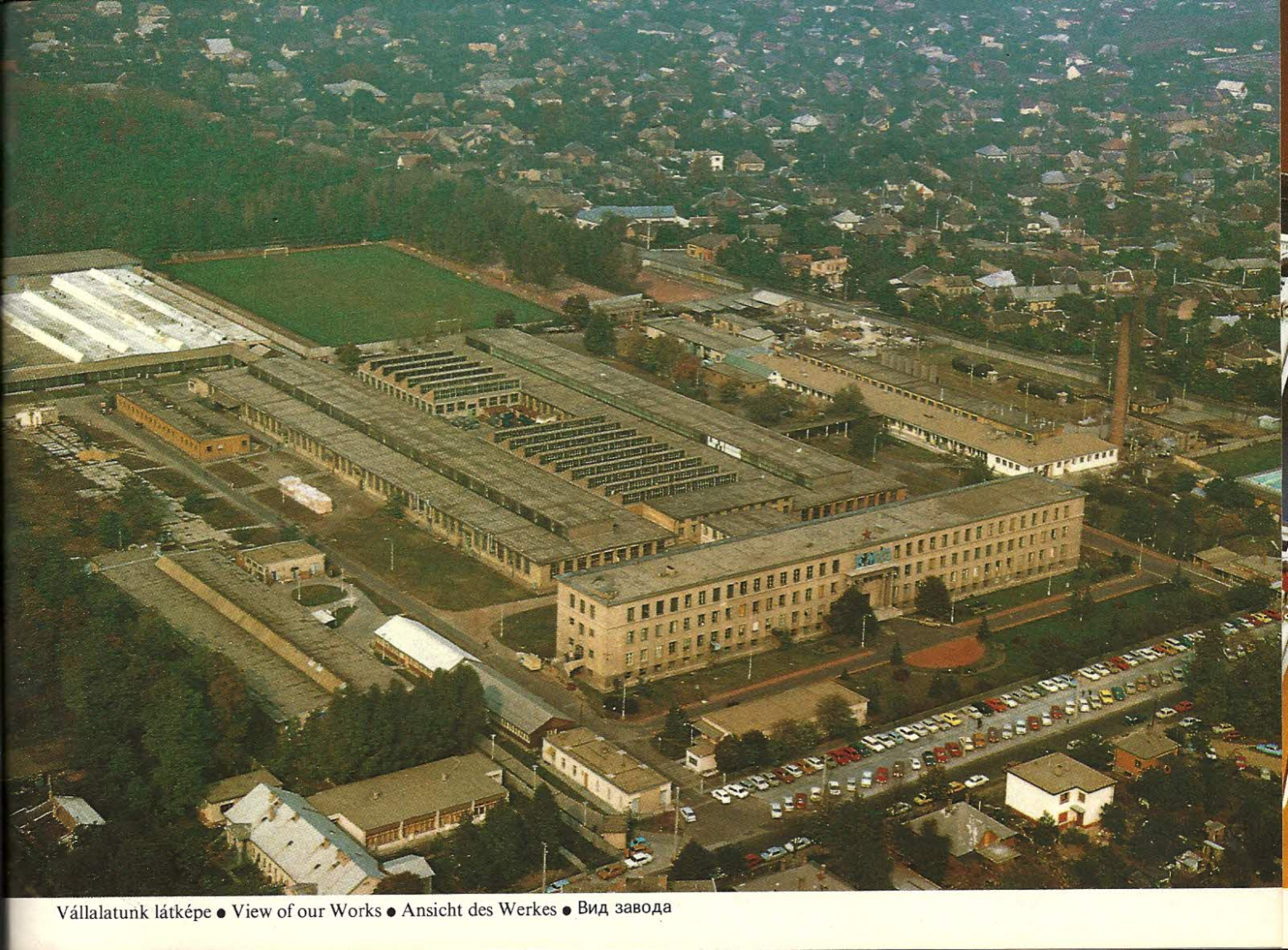
EMG instruments were exported throughout the Eastern Bloc and beyond. Their oscilloscopes, signal generators, and impedance bridges were standard equipment in universities and research institutes across Hungary, the Soviet Union, Poland, Czechoslovakia, and East Germany. The company survived for four decades before succumbing to the collapse of the COMECON trading system, declaring bankruptcy on August 24, 1991.
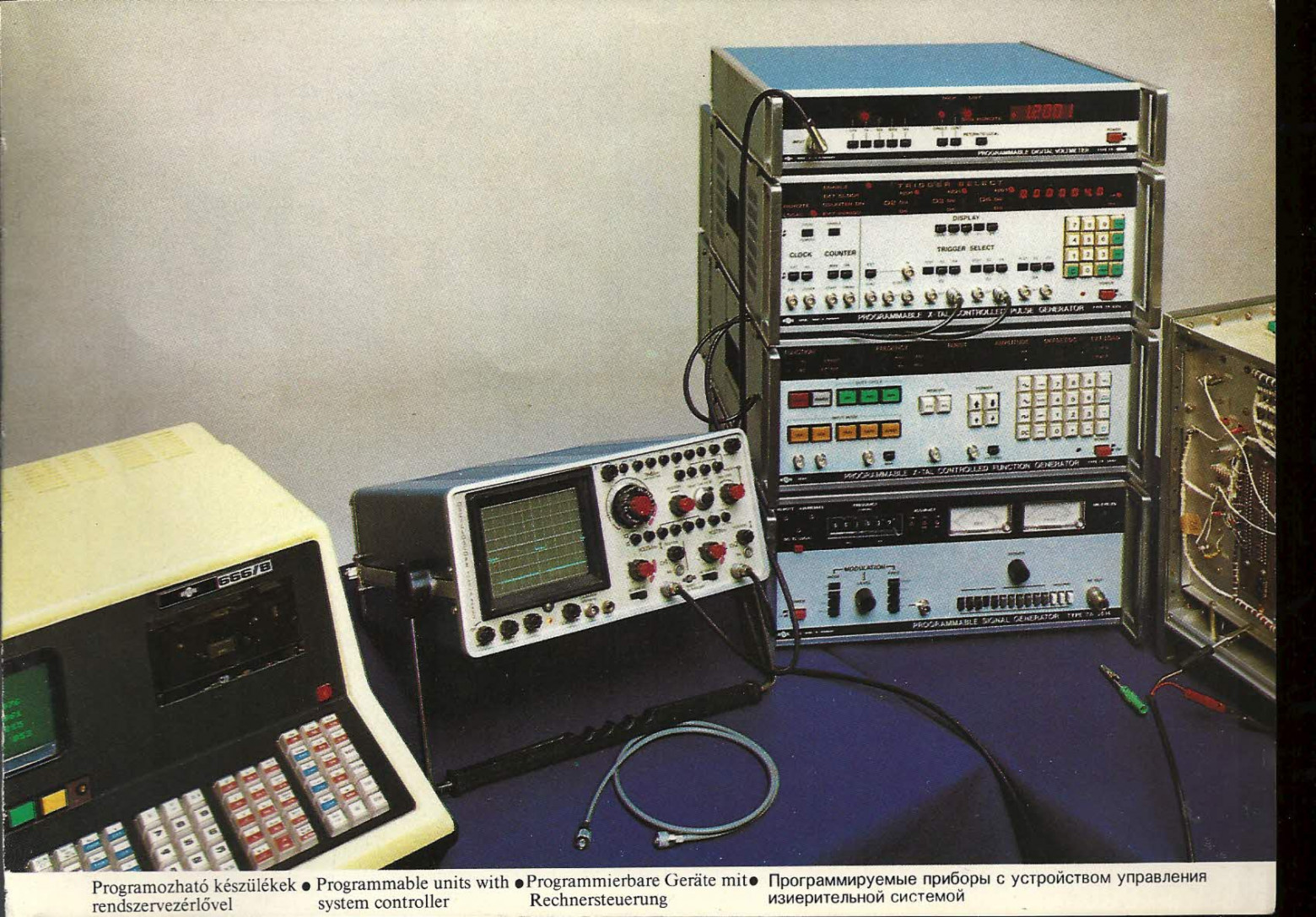
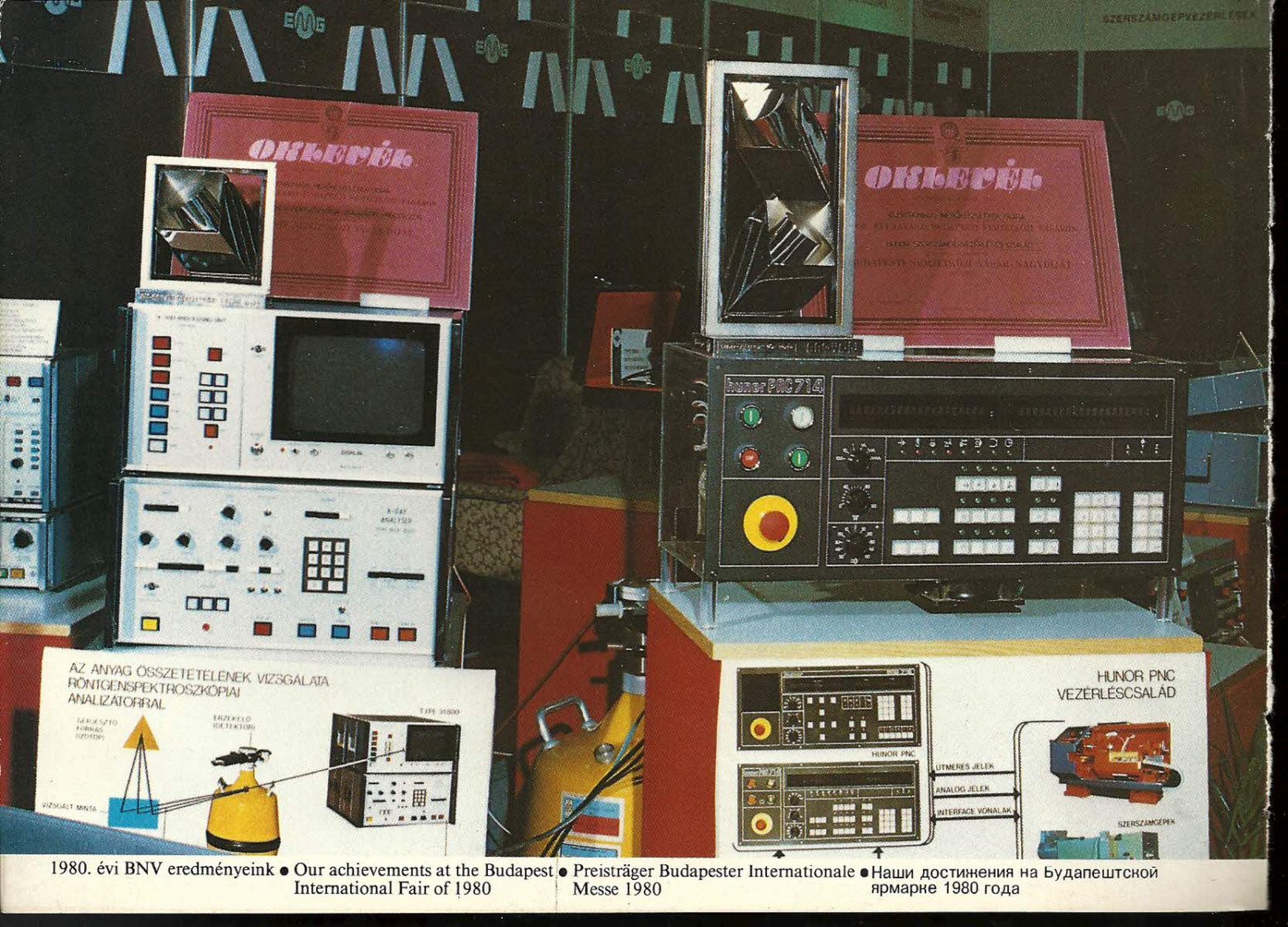
Orion EMG-1546 or TR4401
The TR4401 has a complicated lineage. It was originally designated EMG-1546, part of a family that included the earlier EMG-1545. The "TR" numbering came from a later standardization effort. Confusingly, some documentation refers to it by one name, some by the other.
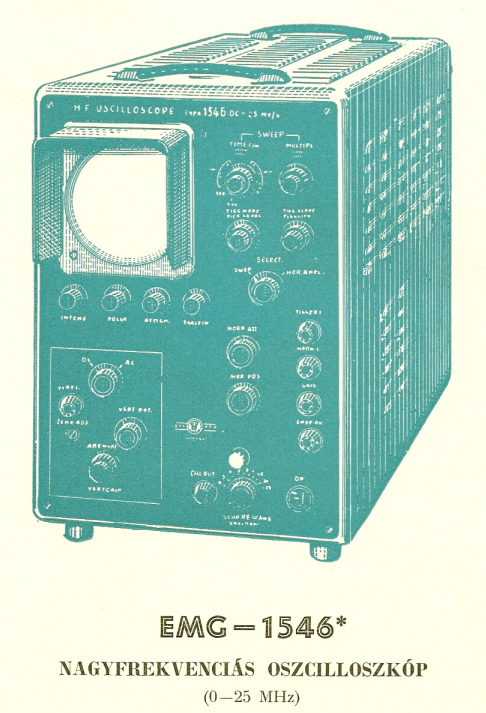
The specifications are impressive for a 1960s instrument:
- Dimensions: 320 x 420 x 620 mm
- Weight: 40 kg, with two robust carrying handles
- CRT: 130 mm diameter with electrostatic deflection, green phosphor
- Bandwidth: up to 30 MHz
- Sweep speed: 5 sec/cm to 20 ns/cm
- Vertical sensitivity: 50 mV/cm to 20 V/cm
- Input impedance: 1 MOhm, 25 pF
- Power consumption: approximately 500 W
- Tube count: 63 vacuum tubes total
- Internal voltages: +500V, +350V, +225V, +100V, and -150V
A distinctive feature is the interchangeable vertical deflection module system — a plug-in architecture clearly inspired by Tektronix:
- 1589-U-1: Single-channel adapter (the one present in my unit)
- 1589-U-2: Dual-channel trace adapter
- 1589-U-3: Differential high-gain adapter
- 1589-U-4 (TR4710): Transistor curve tracer unit
And here's where the Tektronix connection becomes undeniable. When I compared the vertical amplifier schematic of the TR4401 with the Tektronix 541A service manual, they were essentially identical. The same multi-stage triode cascade topology, the same delay line design, the same distributed amplifier approach. The Hungarians had studied the Tektronix 541A carefully and adapted its core signal path for their own tube types.
The delay line is particularly telling — it's a capacitive and inductive network that serves a critical purpose: delaying the signal just long enough that the sweep circuit can start drawing before the signal arrives at the vertical deflection plates. Without it, you'd miss the leading edge of every waveform. The TR4401's delay line implementation matches the Tektronix reference almost component for component.
However, not everything was copied. The power supply architecture represents genuinely independent Hungarian engineering. The TR4401 uses passive regulation with series-pass triode stages in a cathode-biased configuration — a different approach from Tektronix's designs of the era. Filament heating is cleverly staggered across separate voltage groups, with some tube heaters floating at +350V potential above ground to prevent ionization in the high-voltage stages. An electromagnetic relay provides a warm-up delay of approximately one minute before applying high voltage, protecting the tubes during the initial heating phase.
Reviving the Beast
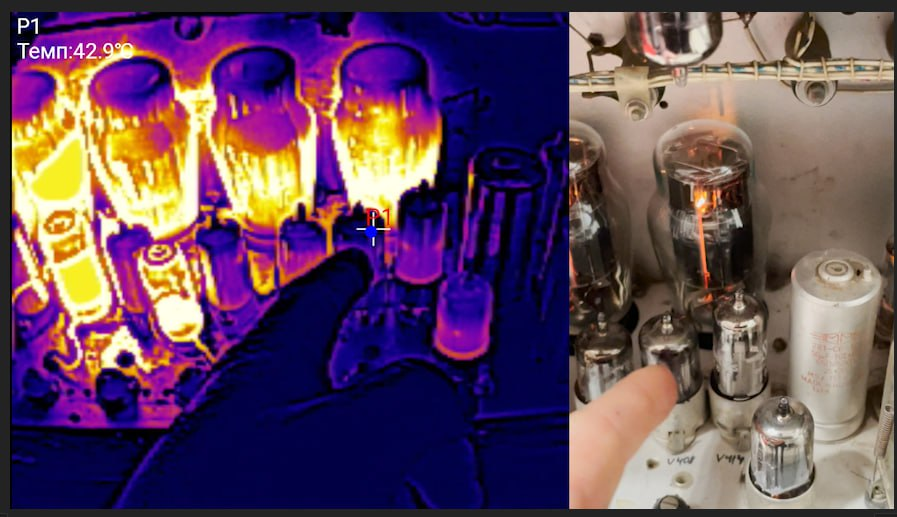
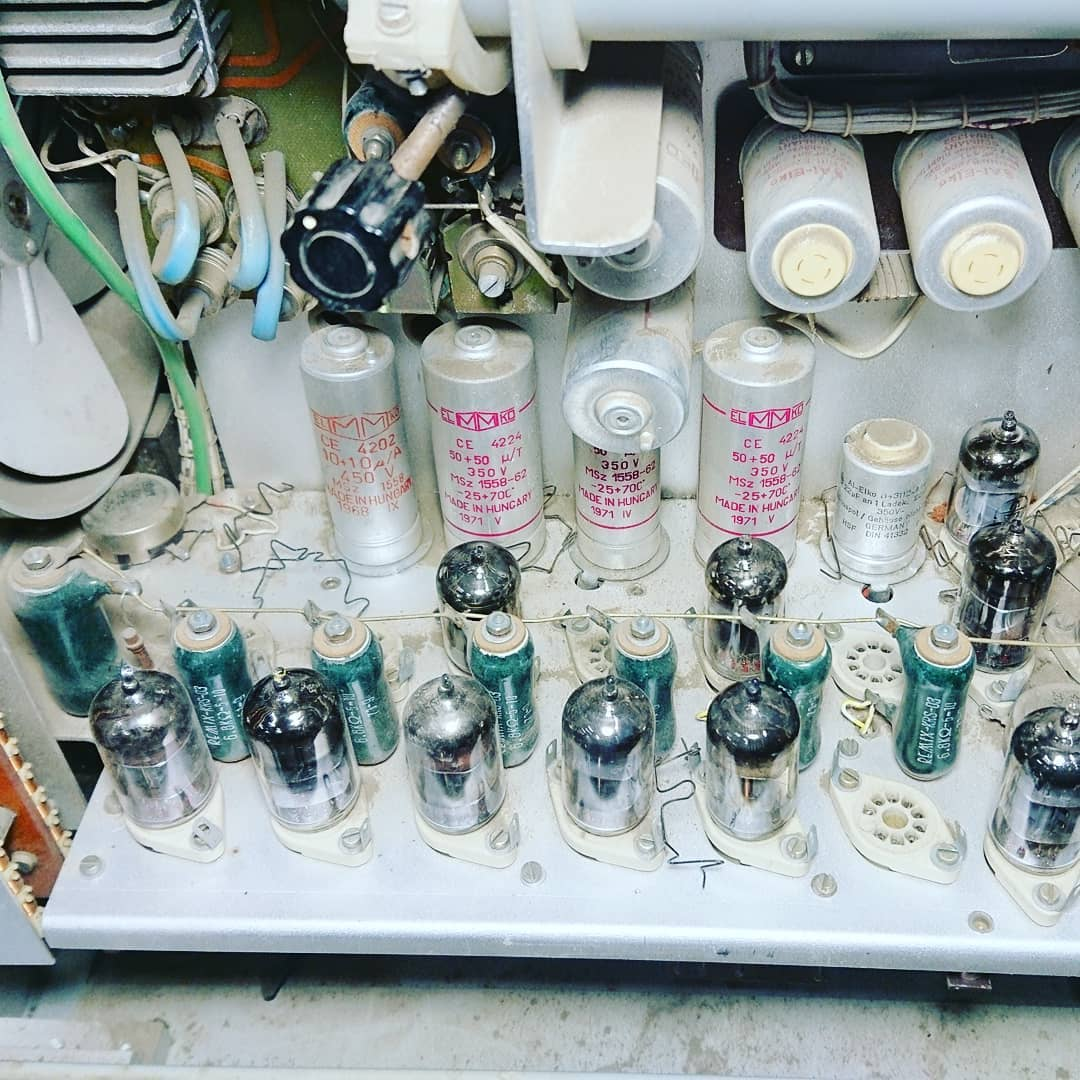
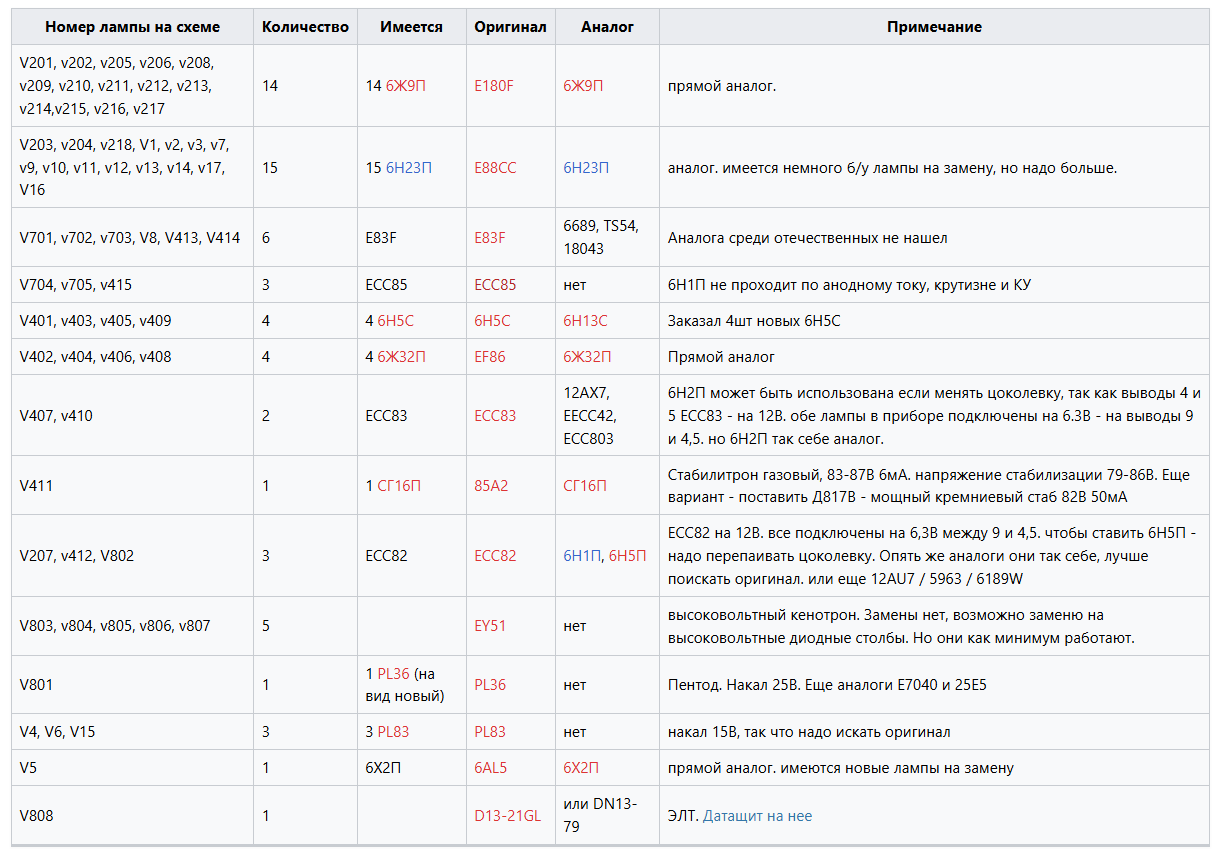
The restoration began with the most fundamental problem: tubes. Of the required 63 tubes, fewer than 30 were present, and several of those were incorrect types.
Sourcing replacements was an international effort. Some Soviet equivalents were available locally — the 6N5S dual triode for the stabilization circuits, for example. The E180F pentodes (equivalent to the Soviet 6Zh9P) required hunting on eBay. Several rare Hungarian types came from a generous donation by a fellow collector associated with the "Usagi Electric" YouTube channel.
A particular challenge was the mix of 12V and 25V filament voltage tubes used throughout the instrument. Unlike most Western designs that standardized on 6.3V or 12.6V heaters, the TR4401 uses tubes from multiple voltage families, complicating substitution.
Mechanical repairs came next. The attenuator switch — a precision multi-position rotary switch — was missing a ball bearing that provides the click detent. Without it, the switch wouldn't hold position reliably. I found a suitable replacement bearing from a hardware store. One damaged potentiometer was swapped for a Soviet SP-1 equivalent, which was electrically identical though physically slightly different, requiring minor bracket modification.
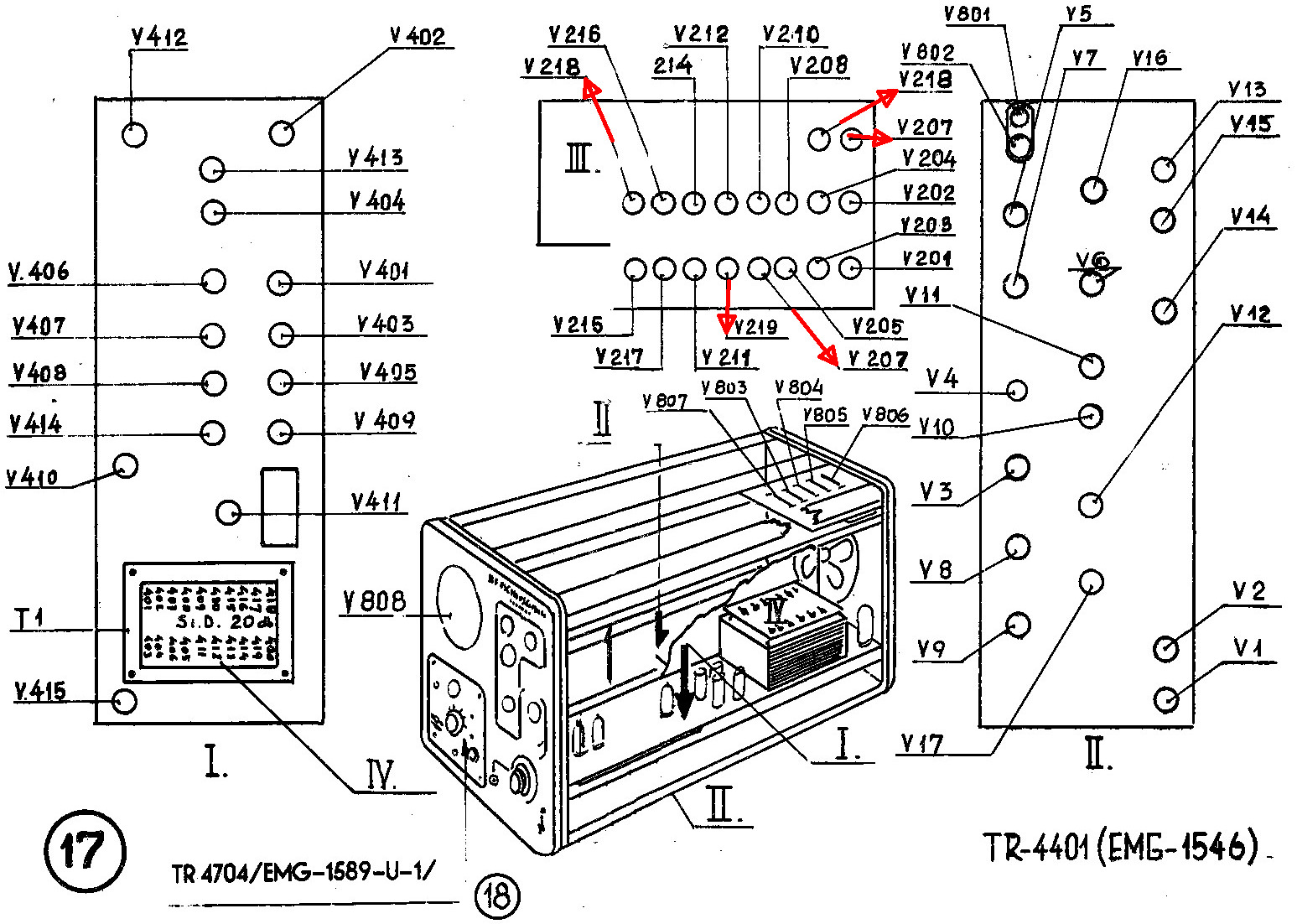
Documentation proved its own adventure. The original schematics I found were in Russian — clearly translated from Hungarian for Soviet distribution. Unfortunately, the Russian printing introduced several errors: incorrect component values, missing connections, and at least one circuit section where a stabilizer tube was shown connected backwards. Cross-referencing against Western-sourced scans of the Hungarian original resolved most discrepancies, but it meant I couldn't trust any single documentation source.
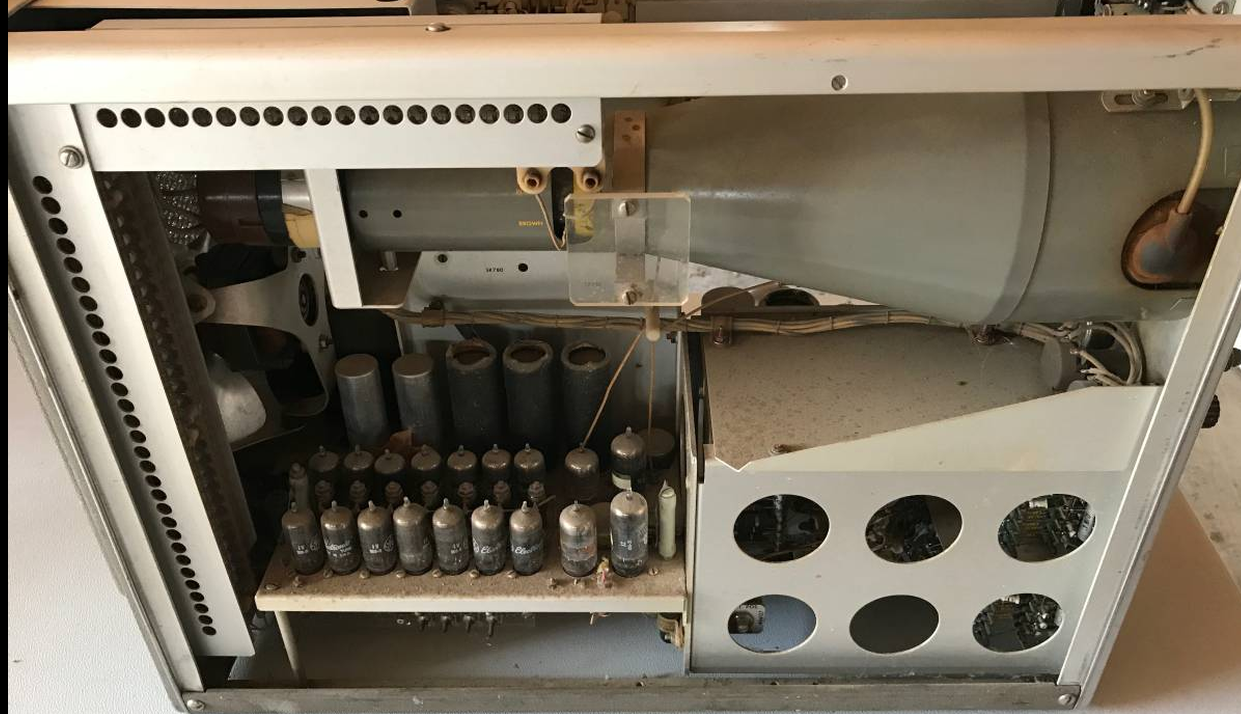
With all tubes installed and mechanical issues addressed, the moment of truth: power-on. The electromagnetic warm-up relay clicked, filaments began to glow, and after the one-minute delay, high voltage appeared. The power supply stabilizers came up cleanly with minimal adjustment needed — a testament to the robust design.
Current Status
The results are mixed, as is typical with complex restorations:
- X-axis amplifier: Fully functional. Horizontal positioning and gain controls work perfectly.
- Y-axis signal path: The signal reaches the CRT but with approximately 20x gain loss. At the most sensitive setting (50 mV/cm), maximum beam displacement is only about 1 cm instead of the expected full-screen deflection. The gain loss is consistent across all attenuator positions, suggesting a problem in the main vertical amplifier rather than the input stages.
- Horizontal sweep: Completely non-functional. This is the most puzzling fault — all component voltage and resistance measurements read nominal, yet the sweep generator produces no output. Not a weak output, not an incorrect frequency — complete silence.
- Power supplies: All five regulated supplies (+500V, +350V, +225V, +100V, -150V) operate within specification.
The sweep generator fault is particularly baffling. In my experience, this type of total silence with correct voltages typically points to a capacitor fault — perhaps a film capacitor that has developed an internal short, shunting the oscillation. But film and ceramic capacitors from this era rarely fail in this mode. The investigation continues.
Summary
The EMG TR4401 is a fascinating artifact of Cold War-era electronics engineering. It represents the intersection of Western innovation (the Tektronix 541A's signal path design) and Eastern Bloc industrial capability (EMG's manufacturing and power supply engineering). At 40 kg and 500 watts, it's a monument to an era when test equipment was built like industrial machinery.
The restoration is ongoing. The sweep generator mystery remains unsolved, and the Y-axis gain loss needs tracking down. But the instrument is alive — tubes glowing, high voltage humming, and a green dot obediently following the X-axis controls across a 60-year-old CRT. For a device that arrived as a half-empty shell of missing tubes and Hungarian mystery, that's meaningful progress.