Disassembling the Octopus
Octopuses are strange creatures with semi-autonomous tentacles, distributed neural networks, blue blood, RNA self-editing capabilities, and a tragically short lifespan despite remarkable intelligence.
Editor's Context
This article is an English adaptation with additional editorial framing for an international audience.
- Terminology and structure were localized for clarity.
- Examples were rewritten for practical readability.
- Technical claims were preserved with source attribution.
Source: the original publication
Octopuses are weird.
Imagine you're an octopus. You spend most of your life as a child, because the moment you become an adult and reproduce, it triggers an endocrine death switch. In principle, you could choose not to reproduce, but then the trigger will just fire on a timer anyway.
Basically, you have 4 years. In that time you can develop intelligence from scratch — and as soon as you figure things out, it's already time to reproduce.
And you won't be able to preserve any of your discoveries about the world. You'll never see your children, and teaching your neighbors and friends won't work — most octopuses are loners.
You will leave no legacy.
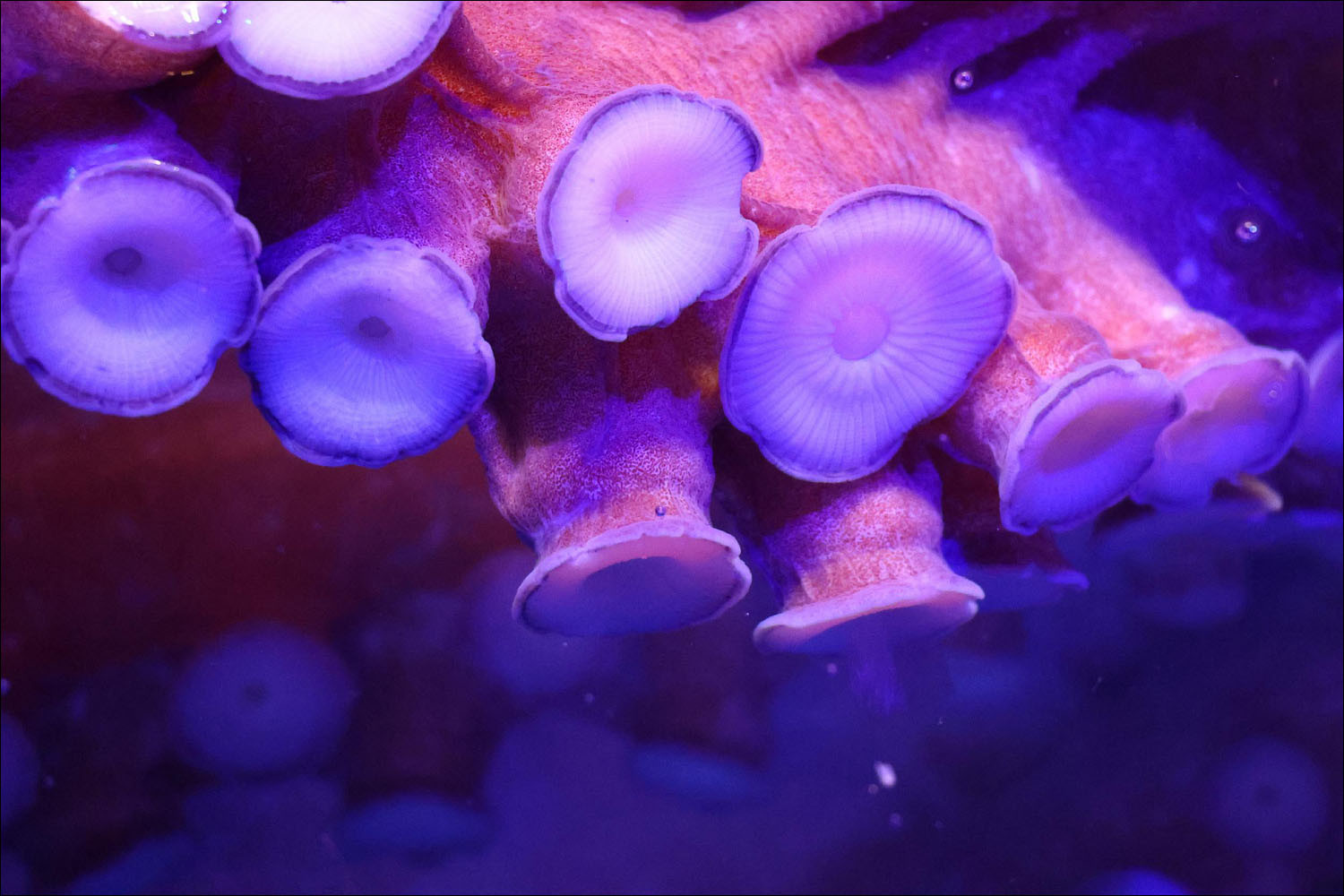
If that's not enough for you, you should also know that in this role you smell with your feet, see with your skin (though it doesn't reach the brain anyway), let your tentacles make some decisions on their own, have developed the best camouflage in the galaxy, learned to glow and leave a volumetric body imprint, can edit your own RNA code (up to 60%). Instead of color vision you have polarized vision (incredibly useful at depth), so a square reveals its full glory only when tilted. Oh, and octopuses eat with their rear end, poop through their head (in transit through the brain), have blue blood, and generally a rather unconventional architecture.
Let me explain why octopuses are magnificent.
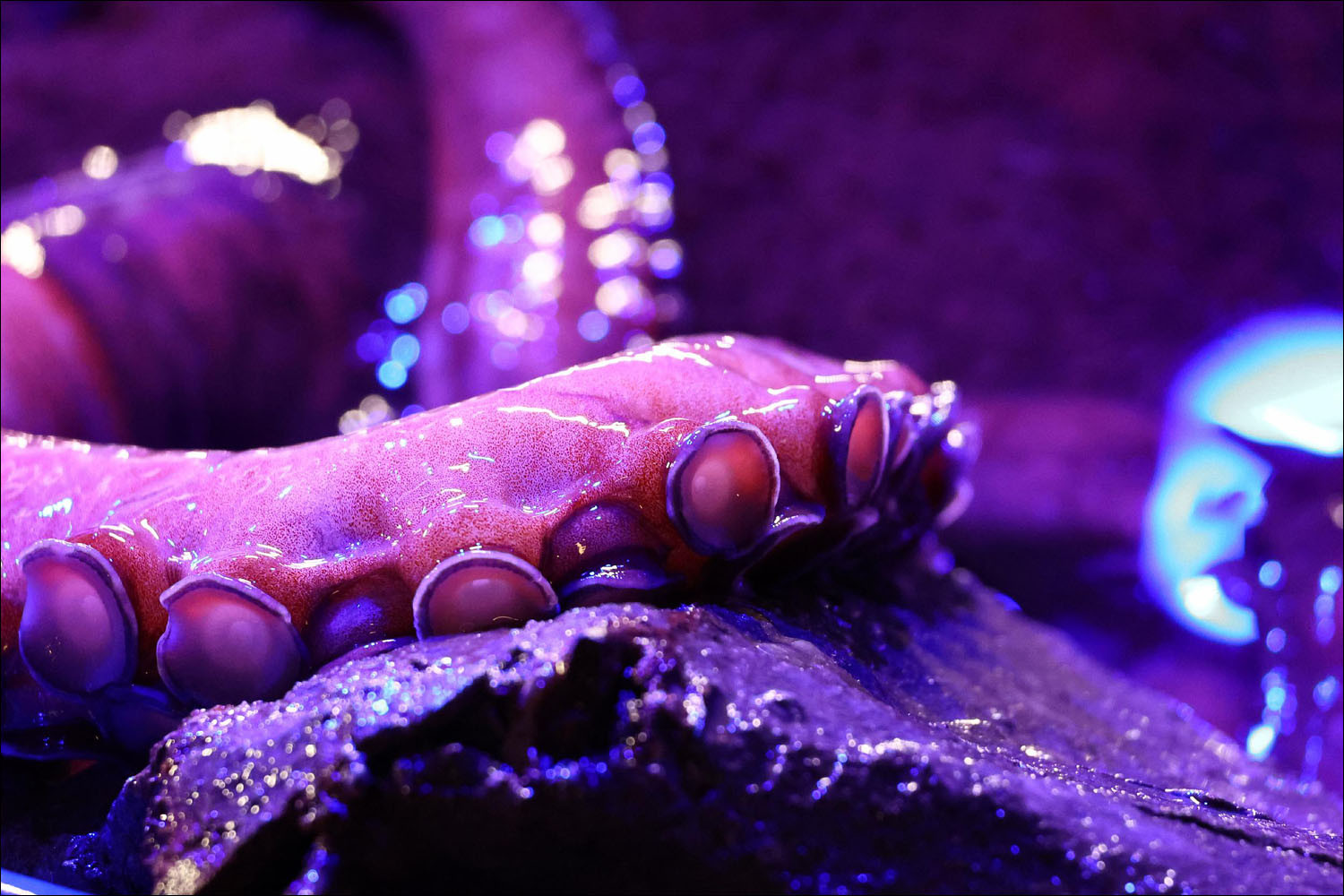
A small disclaimer: despite a pile of research papers and several fundamental books, octopuses are too alien for us to study sufficiently. For example, they only relatively recently learned to do EEG on them (here's a rather tragic description of the technology), but haven't understood anything yet. You should understand that some of the foundational data contains obvious speculation, but in the case of octopuses, "obvious" could be an error. We're trying to guess the how, why, and what-for in many cases.
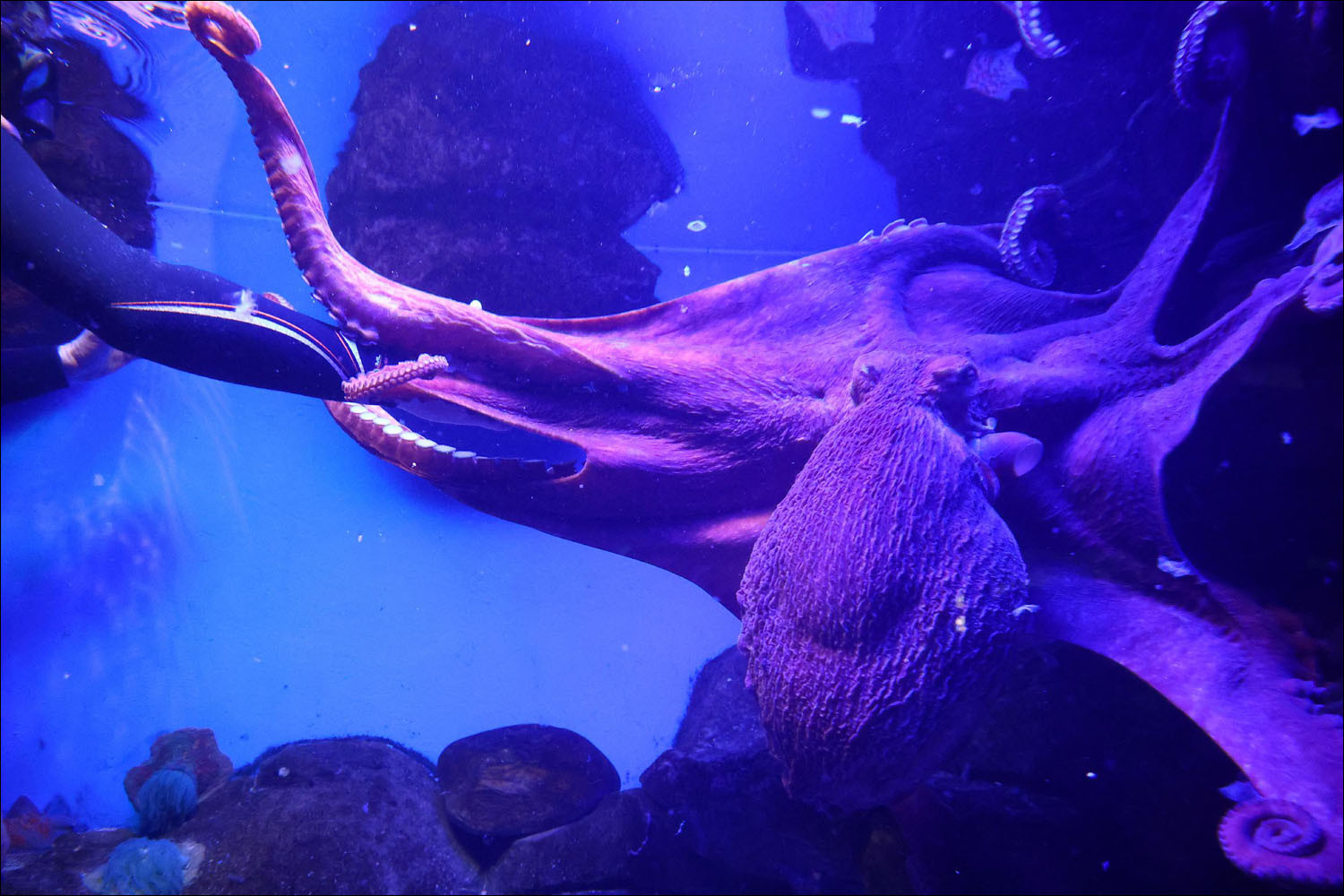
Tentacles
There are as many as 8 tentacles. And that's a whole lot. Humans have significantly fewer arms and legs, and even though they all have fingers, it's still tough. But neither we nor the octopus get confused by our limbs. Well, when sober. And it's much harder for the octopus, because its tentacles bend at any point. There are no sticks and joints like ours — it's literally a tentacle that you can do absolutely anything with in any direction. It's complex.
And the octopus is very well optimized for its tentacles.
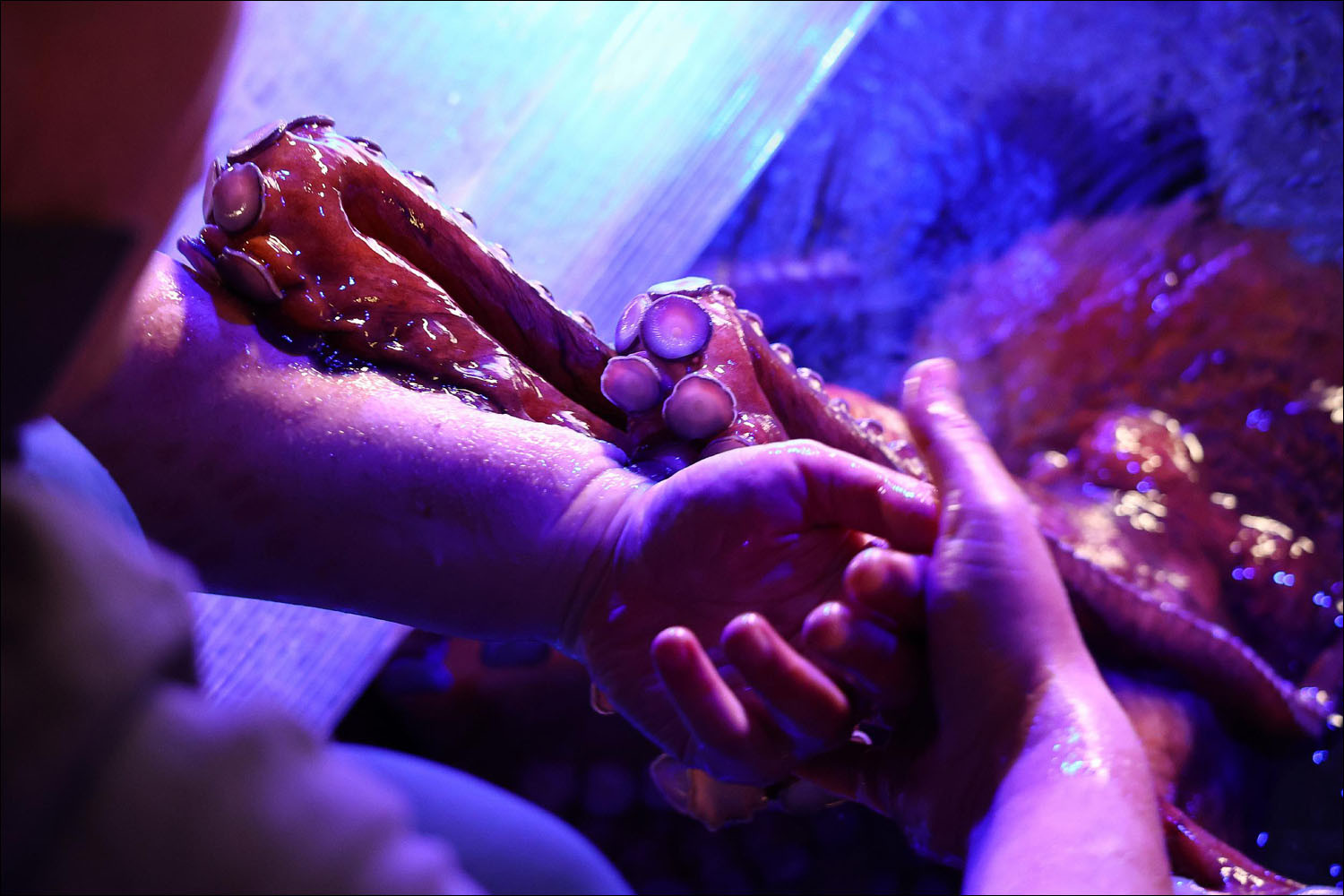
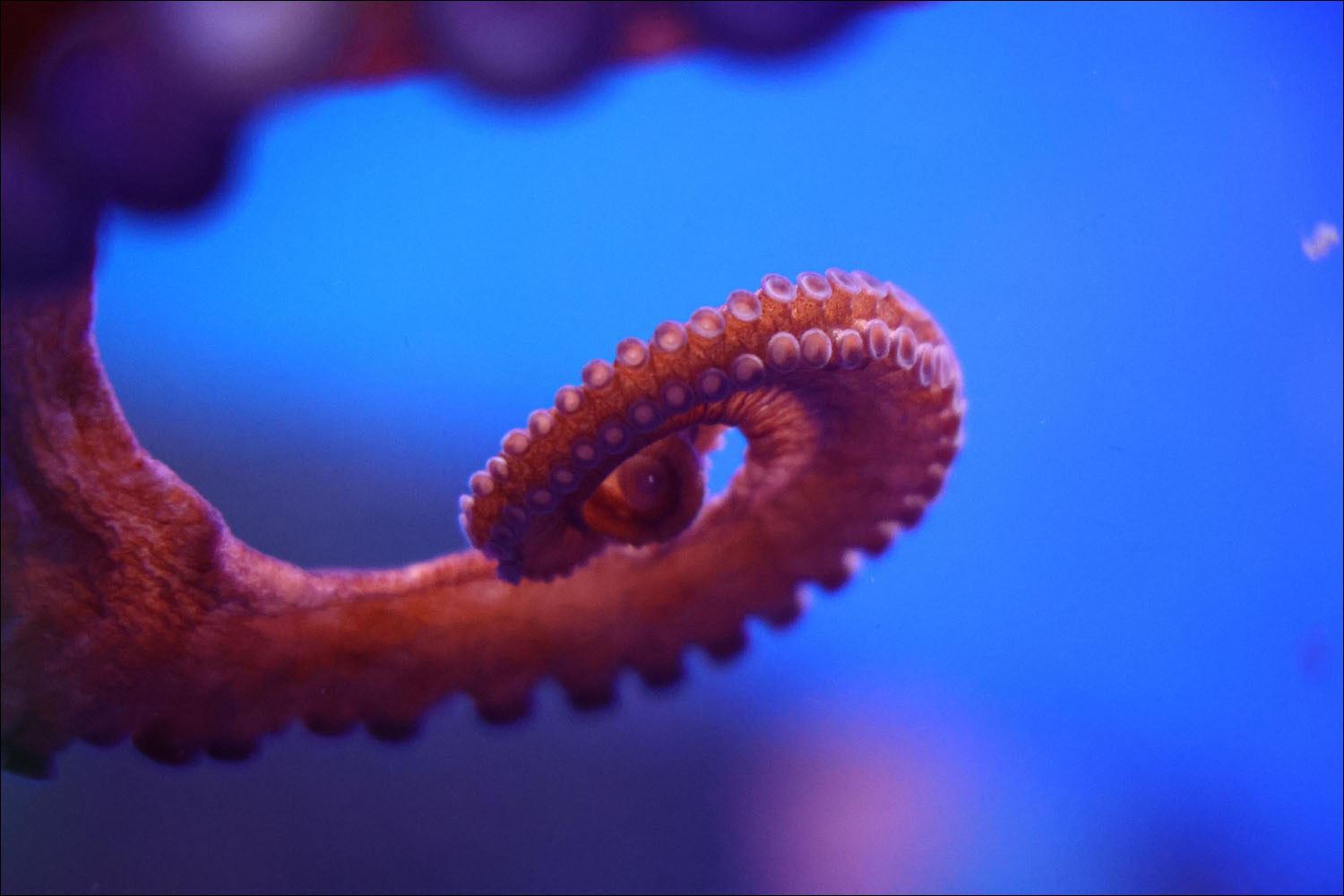
First, it has macros for them. It's roughly like how our legs work. We barely consciously control them — we have a macro for stepping. Nobody thinks "lift leg, start falling onto it, extend leg" — we just step. Few people fully unlock their leg's capabilities, even though you can hold a fork or write with it. Most of the time we just use the default settings. The octopus works similarly: the brain sends one simple signal to the tentacle's nervous system, and there's already a stored set of actions. Essentially, that macro gets executed.
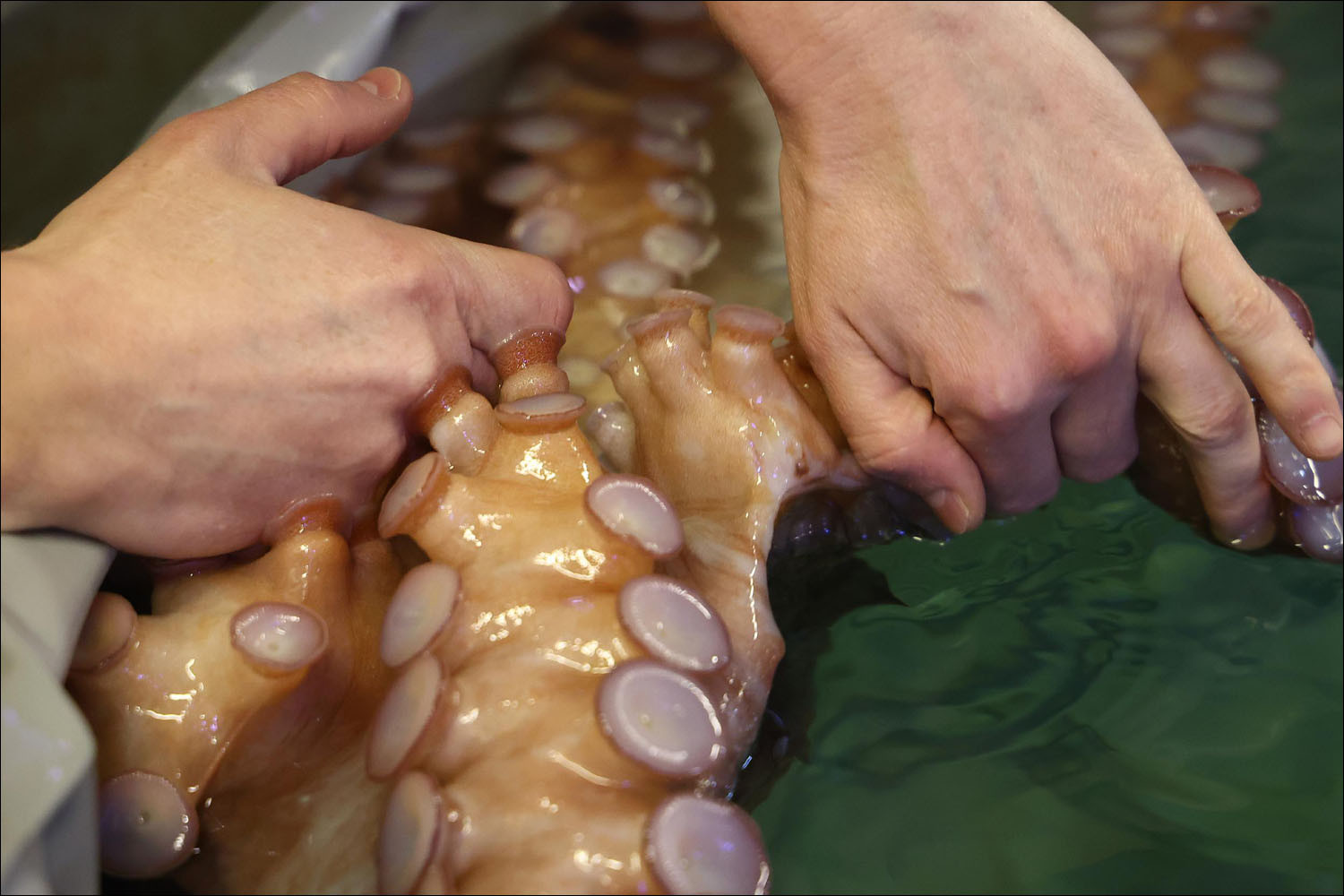
Second, its tentacles have independent processing centers. Each one thinks for itself. Each has a separate controller. That is, the octopus itself swims separately, and the legs separately. You have to negotiate with them, not just make them do what the part it eats through thinks. What's interesting is that the brain simply sends a "state" signal, the limb controllers read this state, and then they decide how to act. In practice it's even more complex — this hierarchy of controllers has several levels, resulting in complex movements composed of several simple macro-commands, each triggered by a state transmitted by the central brain. Here's an excellent study about this.
Third, the upshot is that it doesn't need to think about how to grab things with its tentacles. The octopus sticks to everything it touches. Moreover, it sticks to living things more strongly, faster, and more painfully than to rocks or keyboards. Anything with the chemical signature of food is held significantly more firmly than something of unclear utility to the octopus.
Here's how it works: it just needs to extend a tentacle toward the prey (or even better, launch the macro "catch things in this sector"), and one of them will immediately stick to the fish. The tentacle itself chooses both the moment of sucker engagement and the holding force. The tentacles are smart.
The general assumption is that when given a high-level task, the tentacle figures out how to solve it on its own. For example, a common task might be "gather information about this object," and the tentacle decides on its own exactly how to feel it up. The octopus itself only knows how to press E on an object.
And if you happen to be sitting on the bottom thinking a philosophical thought, there's a good chance a tentacle goes idle and performs one of its default tasks. For example, just reflexively feeling everything around, exploring the environment. So if the thought was a long one, at the end you might find you're already holding something new and interesting. Like a shell. Or a diver.
To give you a sense of how autonomous the tentacles are: there's an octopus called Argonauta argo that can detach its hectocotylus (a modified tentacle used for transferring spermatophores) before mating, to simply hand it to the female or to have it swim around and search on its own.
However, while I was looking for evidence about how long it can swim...
...I found about fifty papers where this tentacle can do everything, but they all cite each other in circles, and if you untangle the chain, they point to Naef, 1923, which exists on paper in Germany. And with papers from 1923, there are certain difficulties with fact-checking, you know. Let's put it this way: a few minutes autonomously seems reliable, but claims about days are dubious.
So here's the real kicker: the octopus "by itself" sticks perfectly well to other octopuses too. It eats them, including its own species (we're talking about Octopus vulgaris, for example). But for some reason it doesn't stick to itself. If it did, it would be a catastrophe, because then it would get all tangled up and lie contemplatively on the bottom, trying to figure out how to extricate itself from itself.
In inhumane experiments, octopuses had their tentacles cut off and were given them to hold. Those with weak nerves should look away now, but:
- The tentacles still behave quite independently for some time. That is, they wiggle just fine, grab various things, catch fish, and generally behave as tentacles should when part of a larger octopus.
- The now seven-armed octopus grabs its former tentacle with interest, holds it, attaches and detaches easily (meaning it can at minimum override sucker action from the brain), but doesn't eat it — probably because it suspects the scientists are messing with it.
- The tentacle (remember, without overrides from higher hierarchical centers) also doesn't stick to the octopus!
- If you remove the skin from the detached tentacle and apply it to a disc, the seven-armed octopus won't stick to the side of the disc with the skin, but will stick where there's no skin.
In short, through further experimentation they discovered that the skin contains a chemical agent that connects with a receptor at the edge of the sucker and prevents it from grabbing. So the octopus doesn't grab itself because its entire surface is signed with a shared key.
The next part is even more fun. The octopus is so advanced that it has no dedicated subnetwork in its nervous system for motor control. This creature is fully virtualized, and the neurons available work in tight network integration. In simpler terms, they use the same networks for solving different tasks. Here's a quote from "Nonsomatotopic Organization of the Higher Motor Centers in Octopus," where they cynically filled octopus brains with cobalt:
"Unlike the brains of vertebrates, insects, and even other mollusks... the octopus represents a unique case among other mollusks and invertebrates... The mixed and distributed neural networks evidenced by our results may indicate a unique organization in which individual cells or groups of cells are dynamically recruited into several different higher control networks. This raises the question of whether the integration of multimodal sensory information [31] is achieved through this special nonsomatotopic organization of higher motor centers. Preliminary recordings in higher motor areas of freely behaving octopuses (L.Z. and B.H., unpublished data) detected cells responding to different modalities (i.e., visual, tactile) within the same discrete area. This finding may support the hypothesis that cross-modal integration is indeed achieved in the higher motor centers of the octopus."
As for the precision of motor control — it's very high. It can clean a langoustine, carefully removing the shell. It opens bivalve shells excellently. You can try to teach them to draw, but since there are no suitable manipulators for tentacles (and all manipulators for octopuses need to be converted, for example, from "brush for hands" to "brush for tentacles," which is roughly similar to converting to polar coordinates) — it performs poorly in a Cartesian coordinate system.
General Anatomy
First there was a certain, with all due respect, proto-bio-slime living in a shell. Something similar you may eat in fancy restaurants. The shell is a very ancient defense; it came from those times when it was enough to just block yourself from a predator. And it didn't know what to do next. It would stand there confused, knocking, like, "open up, please."
Since those glorious times the world has changed a bit, and competition started to grow. Suddenly it turned out that if you fill the shell with air, it can become a float. At first this makes it easier to crawl, because it becomes effectively weightless. Then some mollusks learned to fly. Because if you don't fill the shell to full buoyancy, but just a little, you get an ocean equivalent of a hot air balloon.
Next, you need to attach an engine to this balloon. They went with jet propulsion: take in water, build up pressure, expel water in the desired direction. Here it is:
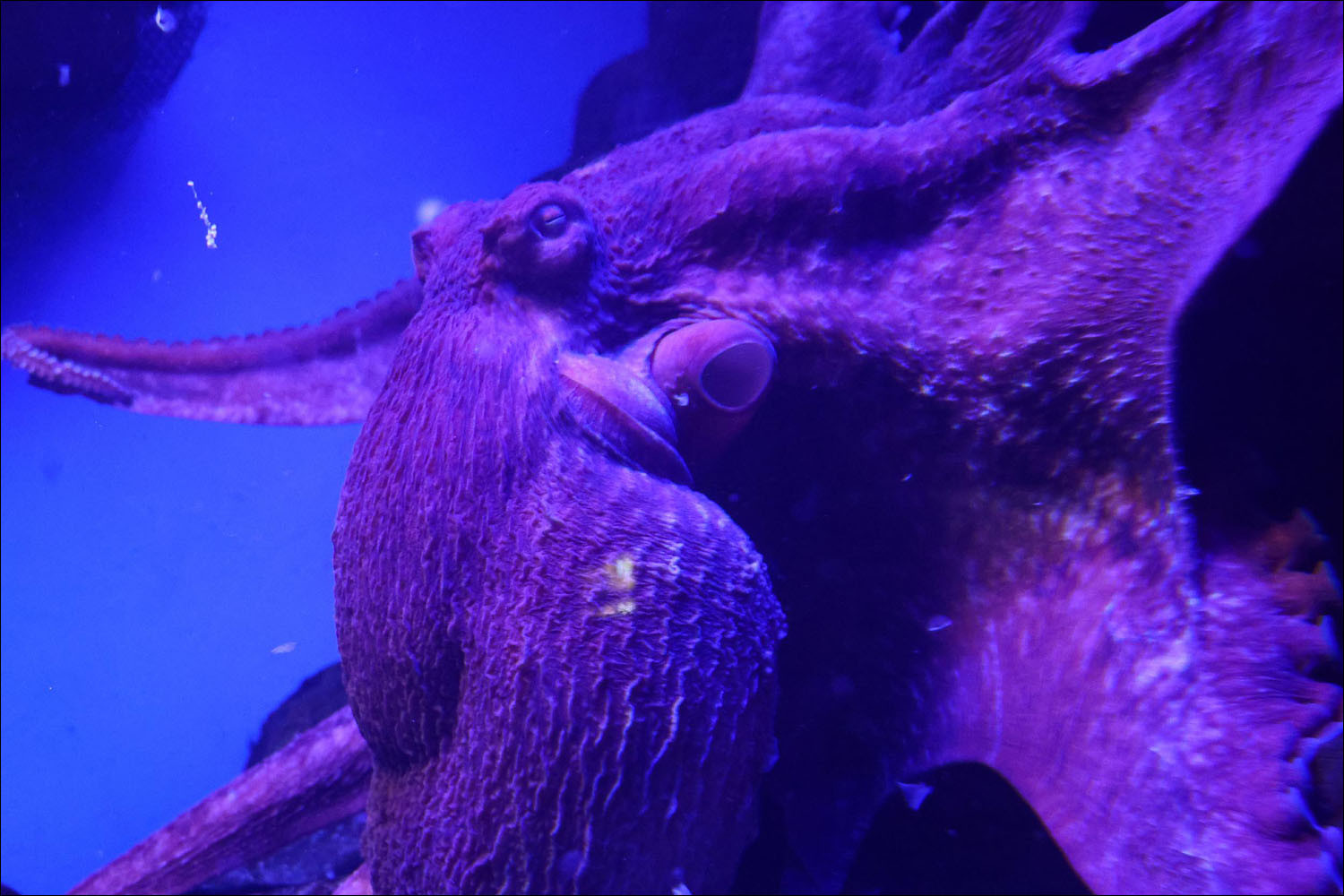
Then the crawling foot could be repurposed into a grabbing appendage, since it wasn't participating in "flight" anyway. And when you're grabbing things, tentacles usually start growing. On land we call the analogs fingers, and even elephants have them on their trunks, but mollusks had actual tentacles on their feet. Overall, one could say there are more tentacles than needed, and their number is determined not by rationality but by the bio-assembly platform. Whatever platform was available, that's what the octopus was written on. Feature requests once per million years. All prior wishes — please submit to the backlog, we'll get to it eventually.
The technology turned out to be so effective that we still find pieces of reinforcement like this in limestone:
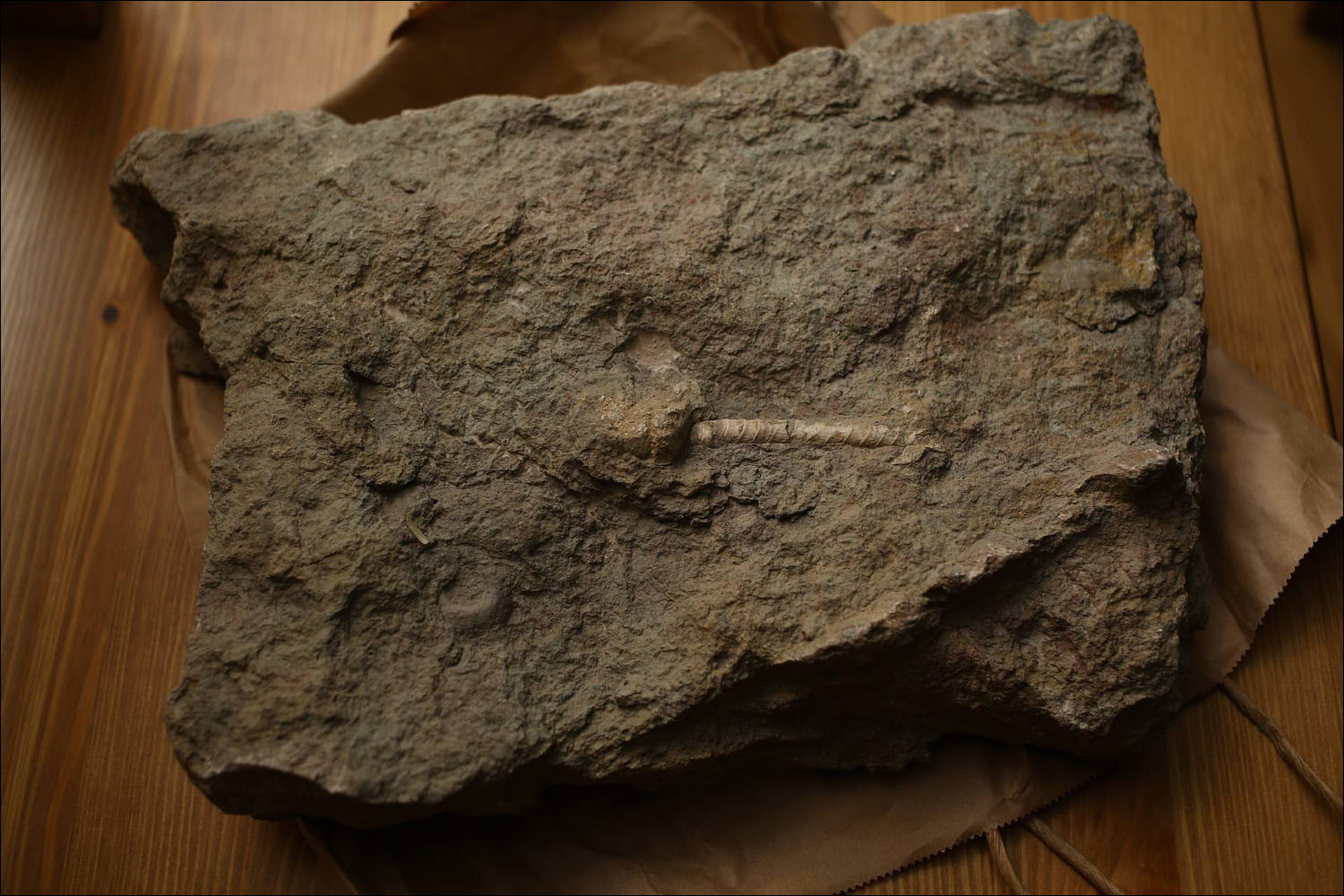

Specialized tentacles, an efficient engine, flight — and so from a small proto-bio-slime we got very effective predators.
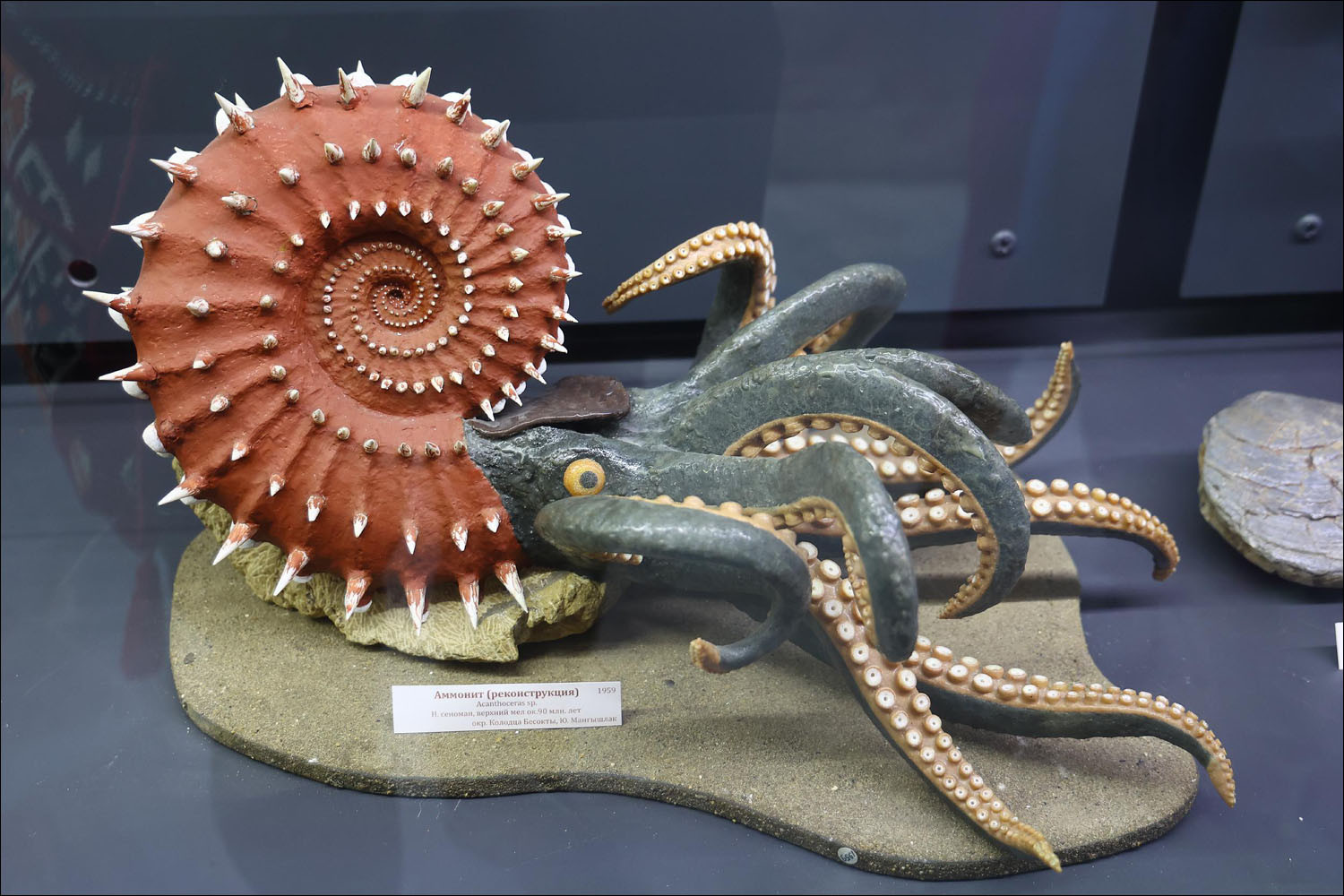
This is our octopus's relative. If you're interested, there are also finned octopuses, through which you can observe another interesting stage of development.
As locomotion systems developed, there was less and less need for the "balloon." An airplane doesn't need to be lighter than air — it has a propulsion system. Cephalopods either fully reduced the shell, or placed it deep inside as a small float, or it's evolutionarily disappearing (like the gladius). Stability was lost, vulnerability skyrocketed, but being fast and deadly was evolutionarily advantageous. The ancestors of octopuses dumped all their skill points into attack and agility. And also into intelligence, which is rather strange.
Why strange — because, reminder, it lives only 4-6 years, doesn't pass on knowledge, learns slowly (because everything is from scratch), gets few attempts (and for each failure you pay at minimum with a tentacle), and just when it figures out how to live — the story ends. So nature can be truly cruel. Or romantic in the Japanese sense, whichever you prefer.
But back to evolution. In the end, the octopus has no hard parts left except its cartilaginous beak — those are the jaws. It bites painfully with them, tested and confirmed. Also, its eye doesn't compress very much, so the minimum hole size an octopus can "flow" through is slightly smaller than its eye diameter or equal to the size of its beak, whichever is larger.
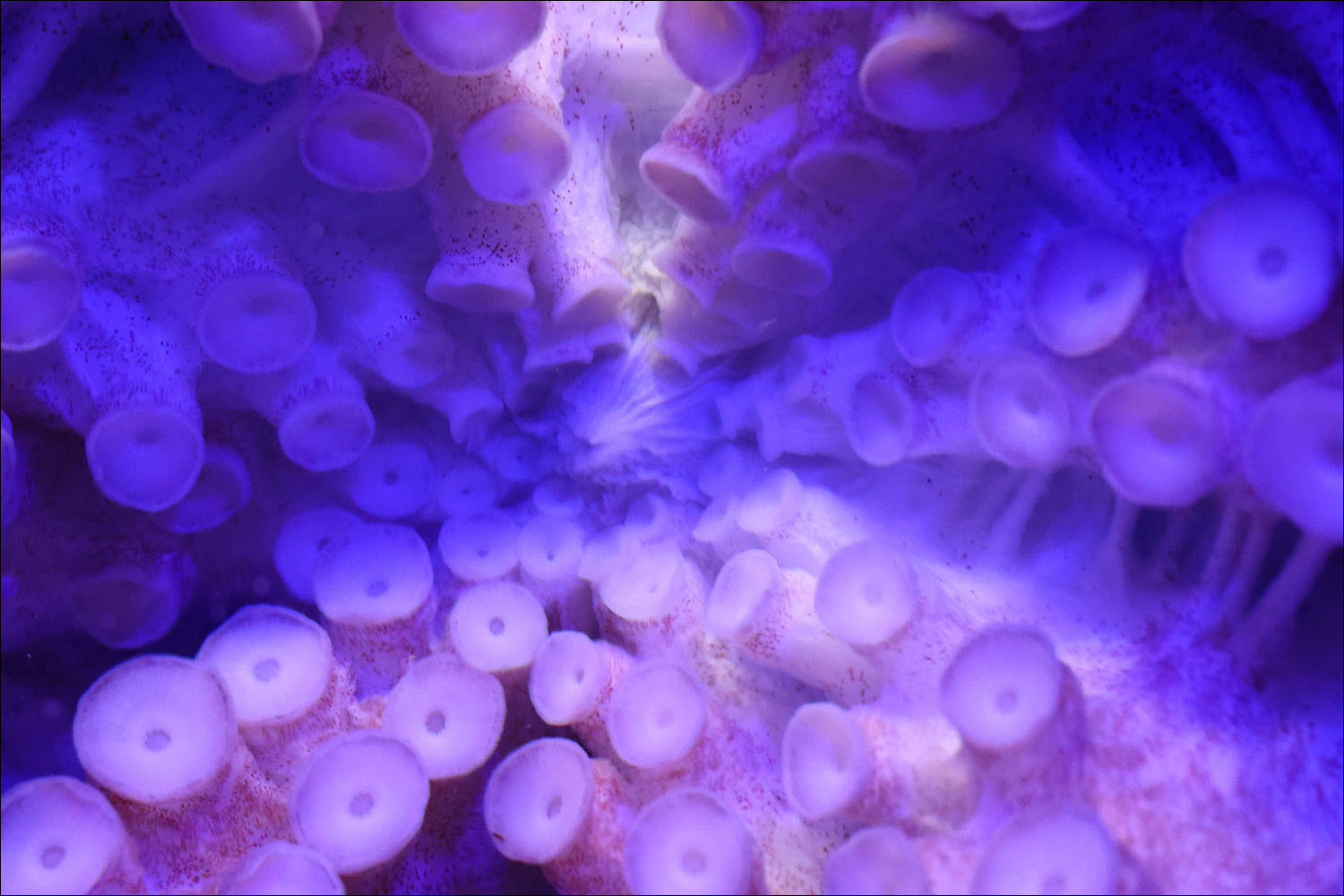
This is the mouth
So the octopus is basically a pure concentrate of protein. One solid muscle in terms of nutritional value. Everything wants to eat it — from bottom-dwelling sharks in crevices and literally any fish to modern mammals like seals. Even birds hunt it. Meanwhile, the octopus can't really escape — many fish easily catch up to it, and many it can't overpower with its tentacles.
Intelligence doesn't help much here either. When a predator has already spotted you, it's a bit late to think.
But then another organ appeared — the ink generator. It allows the octopus to release a disgusting masking cloud a couple of times and use its intelligence to hide. Octopuses and their close relatives squids do it like this: they swim right up to the predator, release an ink cloud (which roughly mimics their shape and size), abruptly change color to white, and dart off to the side. The predator reflexively bites the cloud, is puzzled and spits out the revolting slime, and also loses tracking because the octopus changed its color, direction, and apparent size behind the cloud.
How does it change color? Very simply — it has colored cells distributed all over its body, controlled by skin controllers. Many mollusks can change their color, but octopuses have gone further than anyone. While a cuttlefish, roughly speaking, changes color from a catalog of templates based on what it sees nearby (not directly beneath itself — but can add new templates to the catalog over time), the octopus can literally copy the texture of what's beneath it, because it sees with its skin. It's not the eyes sending a signal to the brain, which then sends a command to the skin — the skin itself decides what to do.
And they're incredibly good at camouflage — but this is more for offense than defense. Combined with movement control, it's a slow flowing from rock to rock, or outright mimicry of a fish (the mimic octopus).
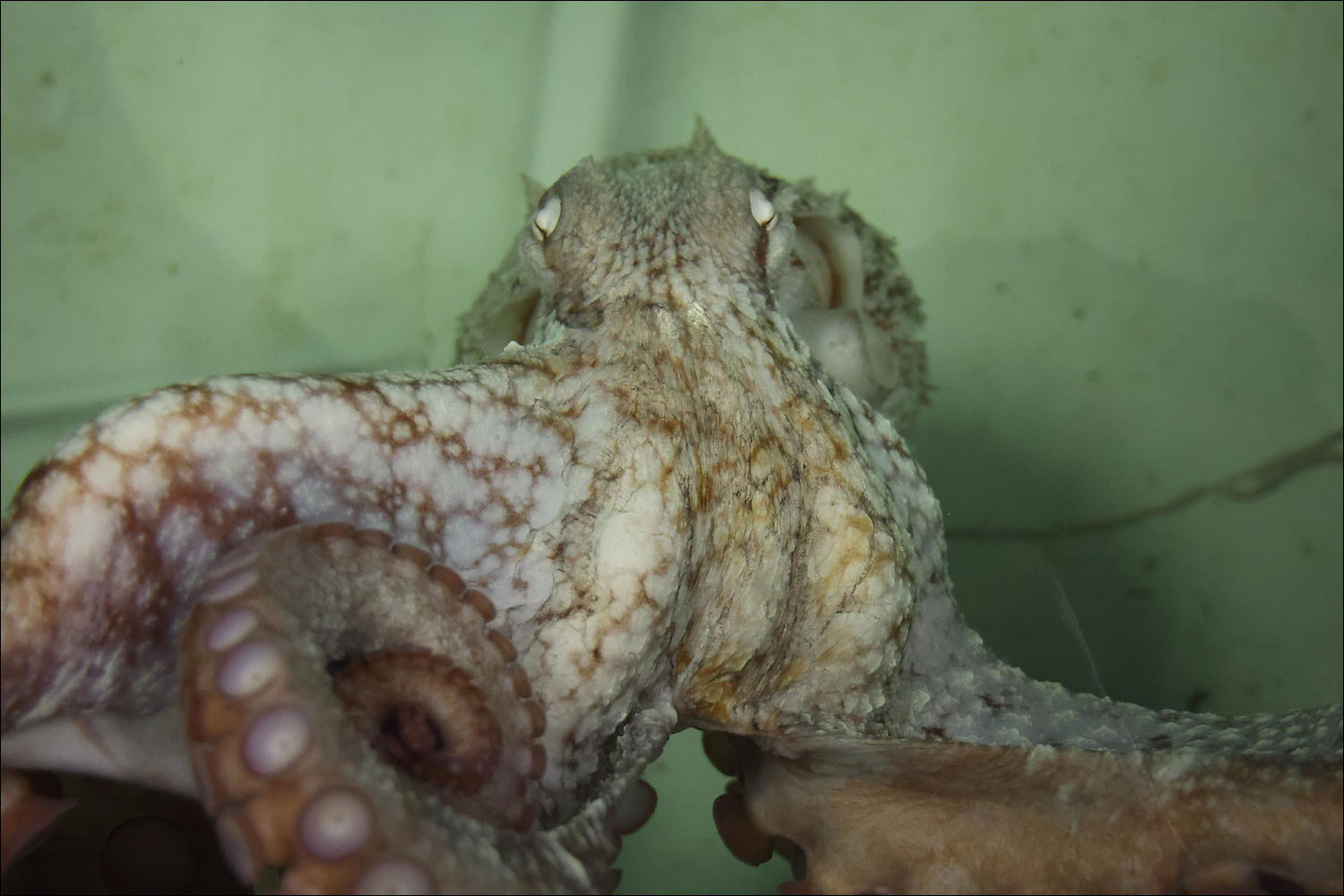
Octopuses also express emotions through color. For example, here's a white octopus from Moskvarium — it's currently thinking:
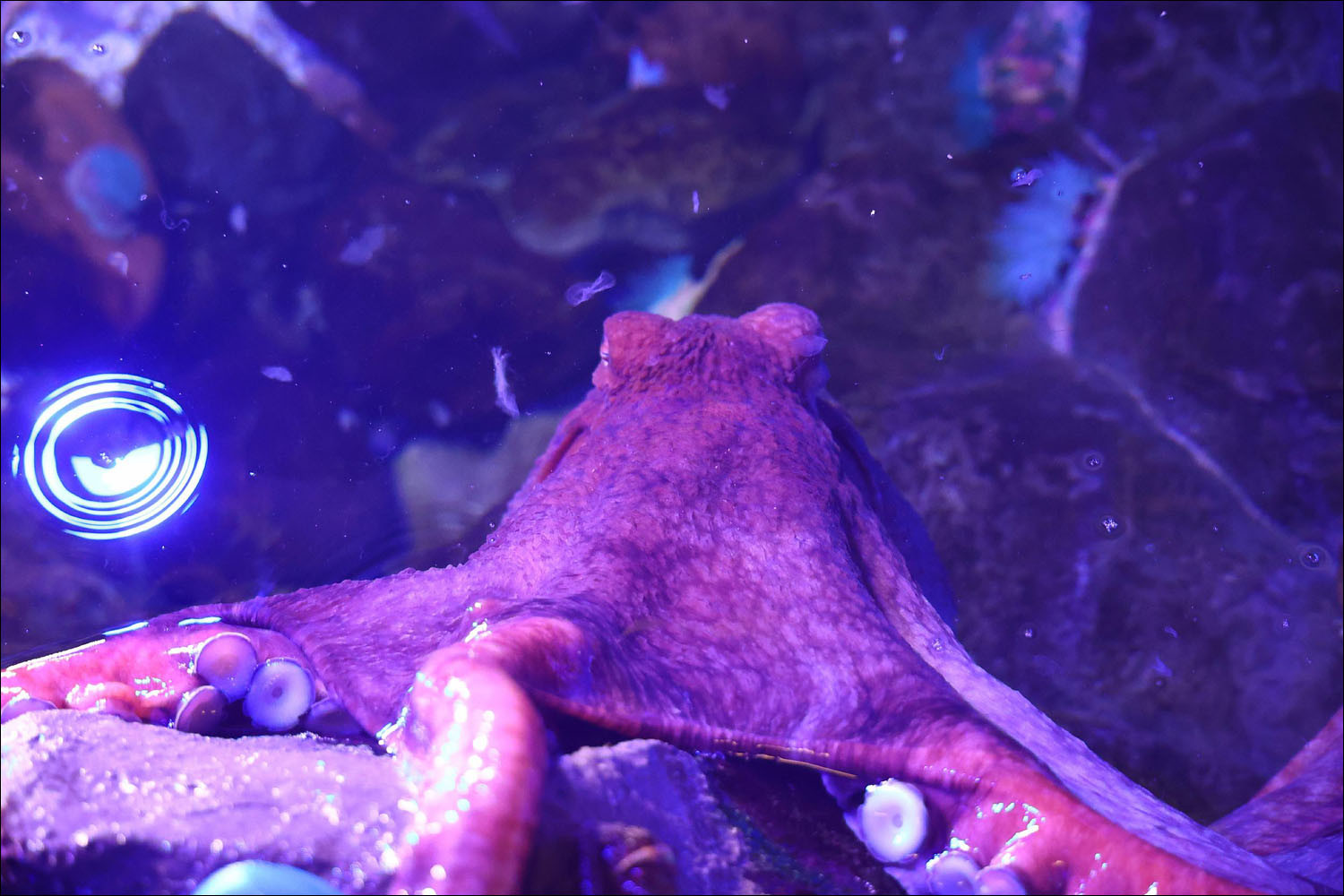
And here's a red female, currently very interested in a test box she needs to open:
The important thing for now is that an adult octopus who's figured out life is in relative safety. It knows where and how to hide, it constructs shelters, it has excellent situational awareness, it's invisible, it doesn't stray far from home, it has a last-resort weapon — plus 8 tentacles that can be lost if needed. Painful and unpleasant, but multiple redundancy allows it.
The greatest population losses come from small fish eating the young. Out of hundreds of offspring from one octopus, only a handful get lucky. Statistically two. The rest are an important link in the food chain, and other species would suffer without that biomass.
The octopus itself eats invertebrates, crustaceans, small fish, and mollusks. It can devour a lobster. It prefers fatty and sweet foods, naturally, so it gives mussels and langoustines five stars. It mostly forages from hard-to-reach places, which is why it needs to be smart and have a good understanding of where, what, when, and how things will be. It learns very quickly — every experience becomes a signal to do it as often and as well as possible.
If you're interested, here's a story about how I gave them wooden boxes made by Central Asian hackers.
Our hero's brain is one of the most developed among invertebrates, with a rudimentary cortex. Given the "hole-rear-head" architecture, it wraps around the esophagus. At Moskvarium, after 2 years of adaptation, the animal confidently distinguishes and recognizes "its" people (including through the aquarium glass on the exhibition), solves puzzles like the one above (while interns and schoolchildren build them), is less prone to stress, and advances further intellectually. The smartest octopuses live in laboratories, where they constantly encounter something new.
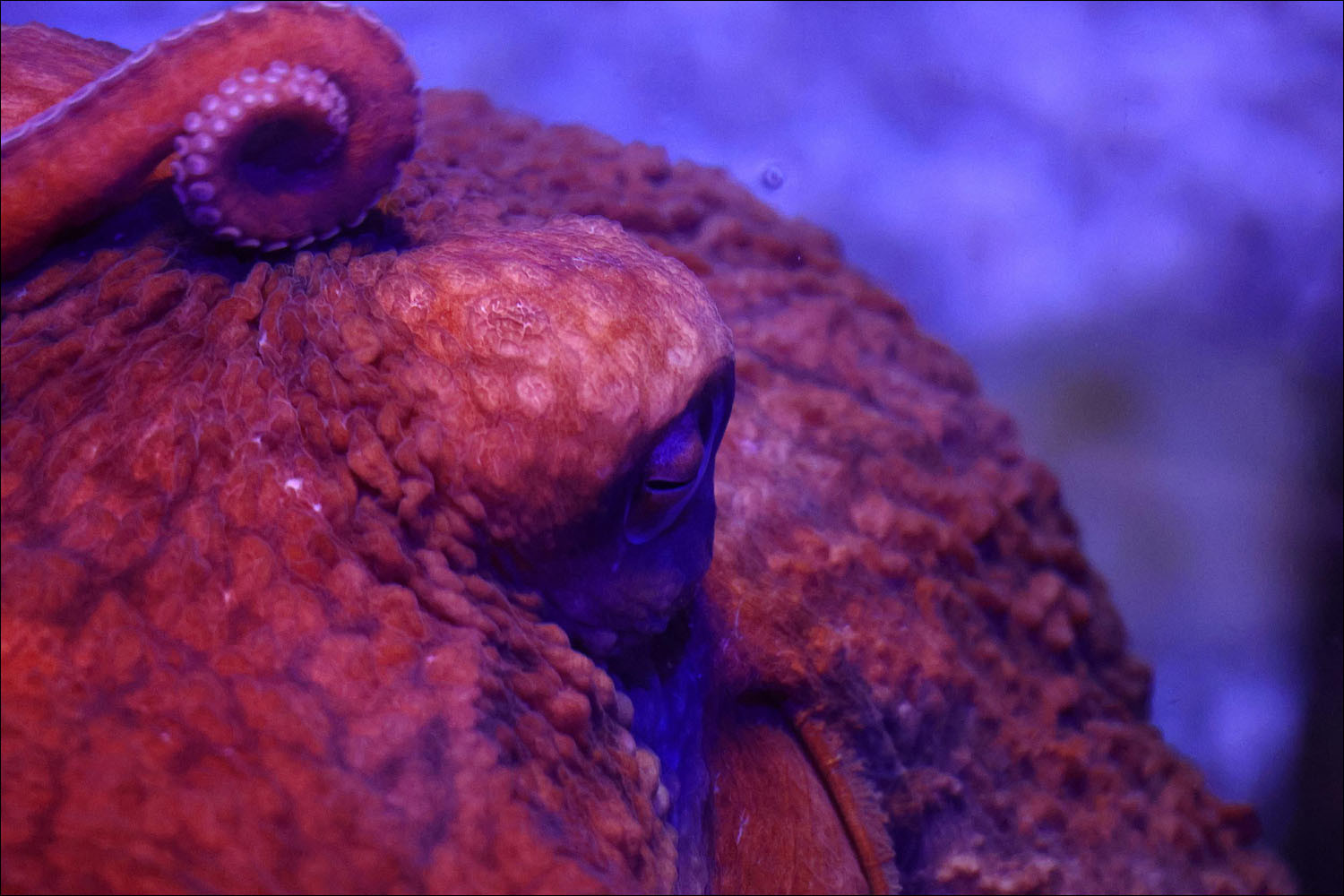
Octopus vulgaris has about 500 million neurons, with roughly 10% concentrated in the brain; the rest are distributed. Each tentacle has about the same amount, with most of the remainder in the skin. For comparison, we have 100 billion neurons (86% in the brain), elephants have 300 billion (similar proportion), crows have 2.2 billion, dogs have 530 million, and cats have about 250 million.
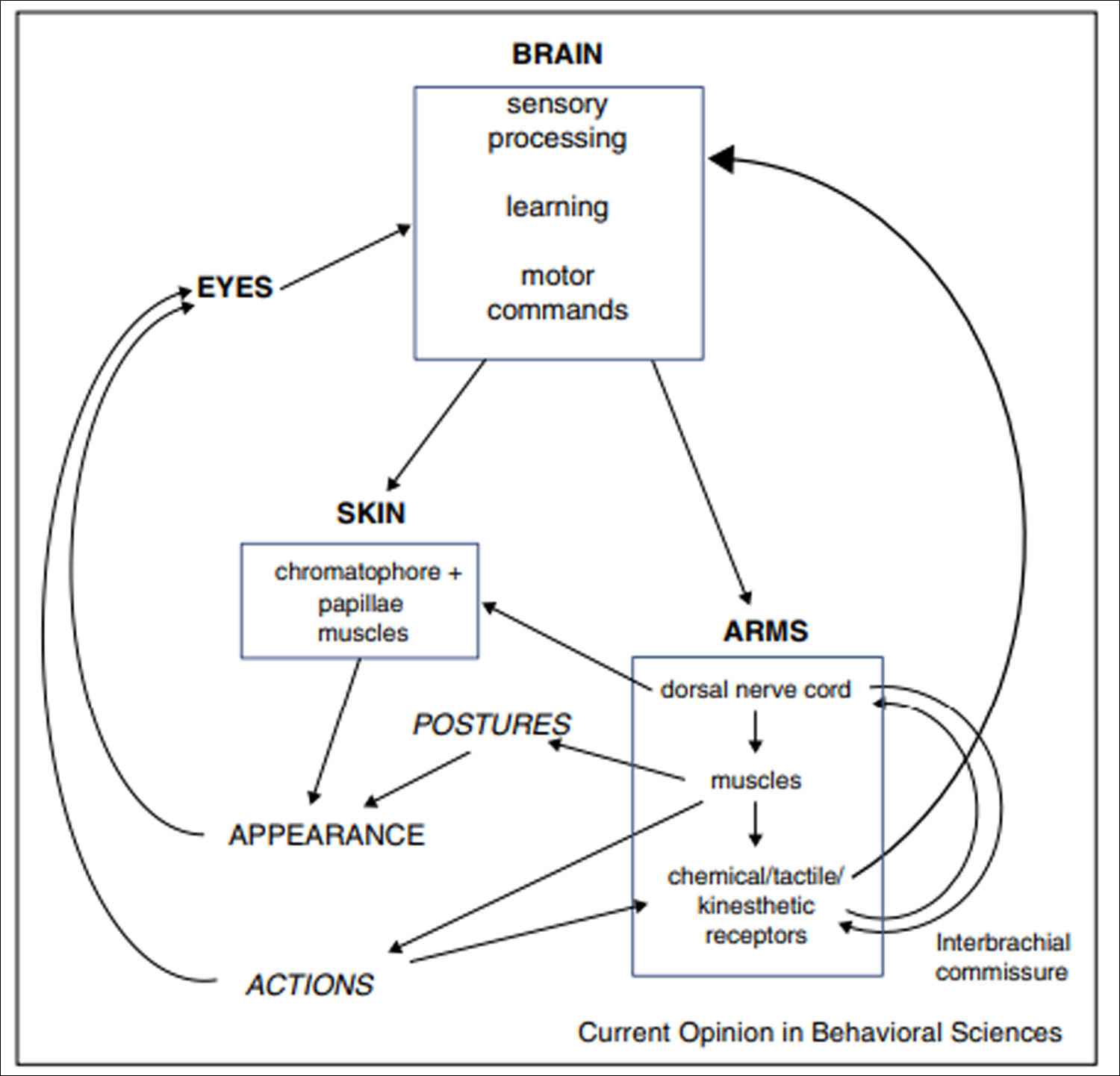
Mather, J. A., & Dickel, L. (2017). Cephalopod complex cognition, doi:10.1016/j.cobeha.2017.06.008, which also covers camouflage extensively.
Their intelligence is highly developed — importantly, for example, they go home (or to a temporary base) in a straight line, no matter how much they zigzagged before, meaning they build a map. They can find food that will be ready (e.g., will grow or ripen) later. They remember where tasty things have been found before and check those spots periodically as a priority.
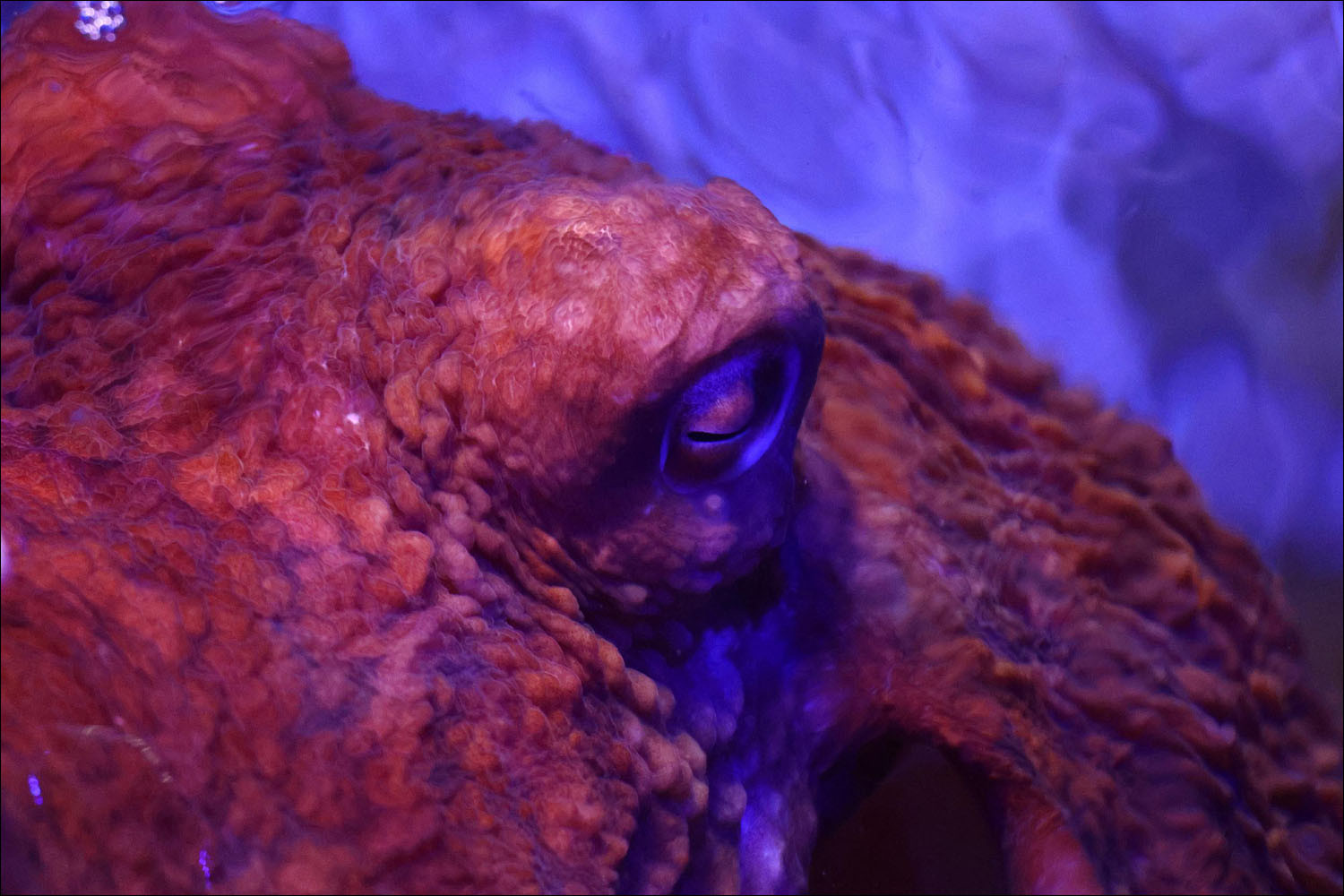
Their eyes have a lens, almost like ours, except the pupil is rectangular and the retina's photoreceptors face toward the light. We and, for example, some spiders do it slightly differently — photoreceptors face an inner reflective layer. For us this is for image correction; for spiders it means a photon can fly through the receptor the first time without registering on any plate along the way, then bounce back, increasing the chance of detecting something. Noisier, but provides better ISO.
BugM writes in the comments: "Their eye is even more interesting. They've mastered chromatic aberration with their lens. And by changing the depth of the eye, octopuses can look at the wavelengths they want and distinguish colors without any cone cells."
They themselves are colorblind (with their eyes, not their skin), but they can distinguish light polarization.
"The chromatophore-based skin appearance system is probably an open loop and inaccessible to the octopus's vision. In contrast, under laboratory conditions that are not ecologically appropriate for the octopus, learning of shapes and extent of visual figures was extensive and flexible, probably consciously planned. Similarly, the local location of octopuses in space and navigation through it may be determined by the plane of light polarization and the arrangement of visual landmarks; they are learned and controlled."
Octopus Consciousness: The Role of Perceptual Richness
Polarization can replace color vision, and at depth it's much better because you can look from below upward at fish swimming in the sunlight and separate them from the background. On the other hand, there will be problems with crosses almost like in "Blindsight":
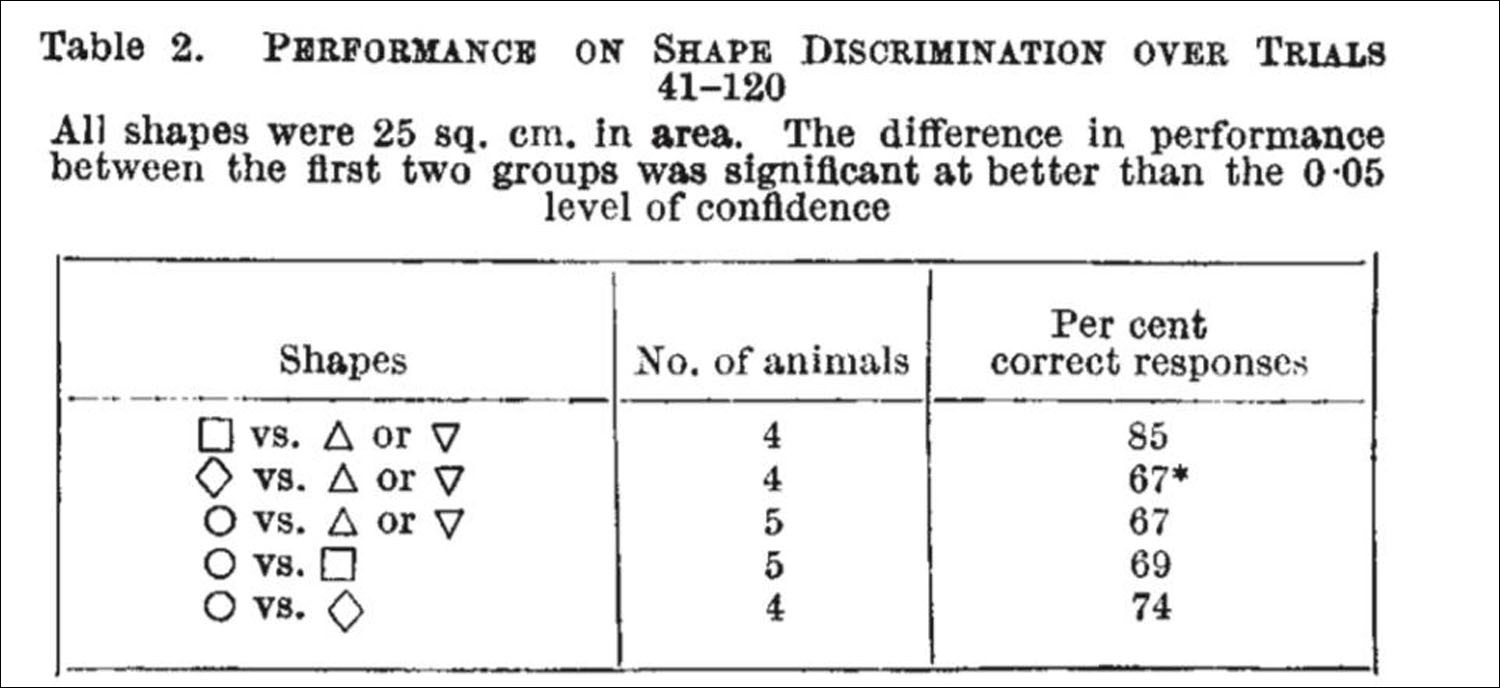
The creature hears well, including frequencies below those accessible to us.
There's one heart (people often say three, but if you open it up and look, you can see the situation is slightly different). The main heart is irreplaceable — it's needed to support the entire octopus. There are two venous auxiliary nodes, something like substations providing pressure to the gills. These are supporting organs, not a full backup. They're needed to stabilize blood flow through the gills, both at idle and during peak activity. A giraffe, for example, could use something like that, since its head has migrated quite far during requirements changes to the project, and after every bend it needs about 30 seconds to restore pressure in the hydraulic system. Here's an example of a giraffe fight I filmed, by the way.
The blood is blue because instead of iron, the transport protein uses copper to hold oxygen. Hemocyanin is the analog of hemoglobin. Its oxidized form is precisely blue and glows slightly. Hemoglobin is more efficient as transport — it carries almost 3 times more per unit mass, loads and unloads faster, but requires precise tuning and precise control within the organism, plus it's more complex to assemble. On the other hand, in the octopus's conditions, a simpler and more stable agent is better because it's more reliable. Hemocyanin distributes better through tissues, is harder to lose from the organism, oxidizes less where it shouldn't, and most importantly, works much better than hemoglobin at low temperatures.
The RNA editing story is both simple and complex at the same time. Many organisms edit RNA, but usually it's literally a few sites, allowing one type of protein to be assembled instead of another. In 2015 it was proven that some cephalopods can change up to 60% of RNA code, and in 2017 a new study about octopuses arrived. It's a very interesting trade-off: on one hand, it slows down genome evolution overall (editable code is very hard to maintain), but on the other hand it gives enormous adaptability, because the octopus itself can choose on the spot which proteins to use. The nervous system signals "too cold" — and from the same general genetic blueprint, your peaceful warm-water octopus becomes a tough polar variant. I was recently in Yakutia looking at frost-resistant horses and cows (I'll tell you about it later) — those are separate evolutionary branches, different species. But an octopus can just go ahead and change during its own lifetime.
What an Octopus Usually Does
In the wild, it spends most of its time looking for food and solving the problem of not becoming food itself. This involves watching who's swimming nearby and what they're doing, then choosing a pause between predators dangerous to itself and searching for its own prey. The octopus hides perfectly, using various tactics from "rock crawling along the bottom" to mimicry of a dangerous fish thanks to its ability to assume any shape. Also, by the way, it can color itself as something poisonous, but that's only when it's already been spotted. Squids have also been observed drawing eyes opposite their real ones, so the presumed opponent doesn't know which end is the front and which is the back — meaning they don't know which direction THIS thing might swim. A squid can also turn on "high beams" of a revolting blue spectrum on its tentacle tips using its bioluminophores, to blind the pursuer right in the face.
As a home, the octopus uses practically any cavity of sufficiently small size, squeezes in there and sits comfortably like a cat in a jar. It can block the entrance with rocks to a comfortable size and generally renovate to taste. If there's no suitable cavity available — it can bring one. There's a species that carries its shelter around, for example, a coconut half (that's Amphioctopus marginatus). Almost like a snail, except it can drop it, do something nearby, carry it further. Basically, a tourist with an armored tent. For doflein's octopuses, there's reliable correlation in captivity — if there's no shelter or niche to hide in, stress sets in significantly faster and lifespan is cut roughly in half. At Moskvarium there are two shelters right away: a large cave and a slightly smaller one. You can choose and take twice as long to clean up.
Also at Moskvarium, 3 times a week they play with the diver. They interact very actively: the diver doesn't just hand over food — you have to take it by force. Initially the octopus figures out that it's convenient to pull off certain parts of the diver, and apparently the diver doesn't mind much. It loves to confiscate all equipment. Everything gets taken, felt up, studied. There's a funny reaction when you take away the breathing tube — lots of bubbles, cool, but for some reason the diver immediately stops playing. Some dive without it, which triggers a desire to feel up the face and express bewilderment. It fairly quickly stops perceiving humans as a threat and begins to distinguish between divers. It treats different divers and biologists differently.
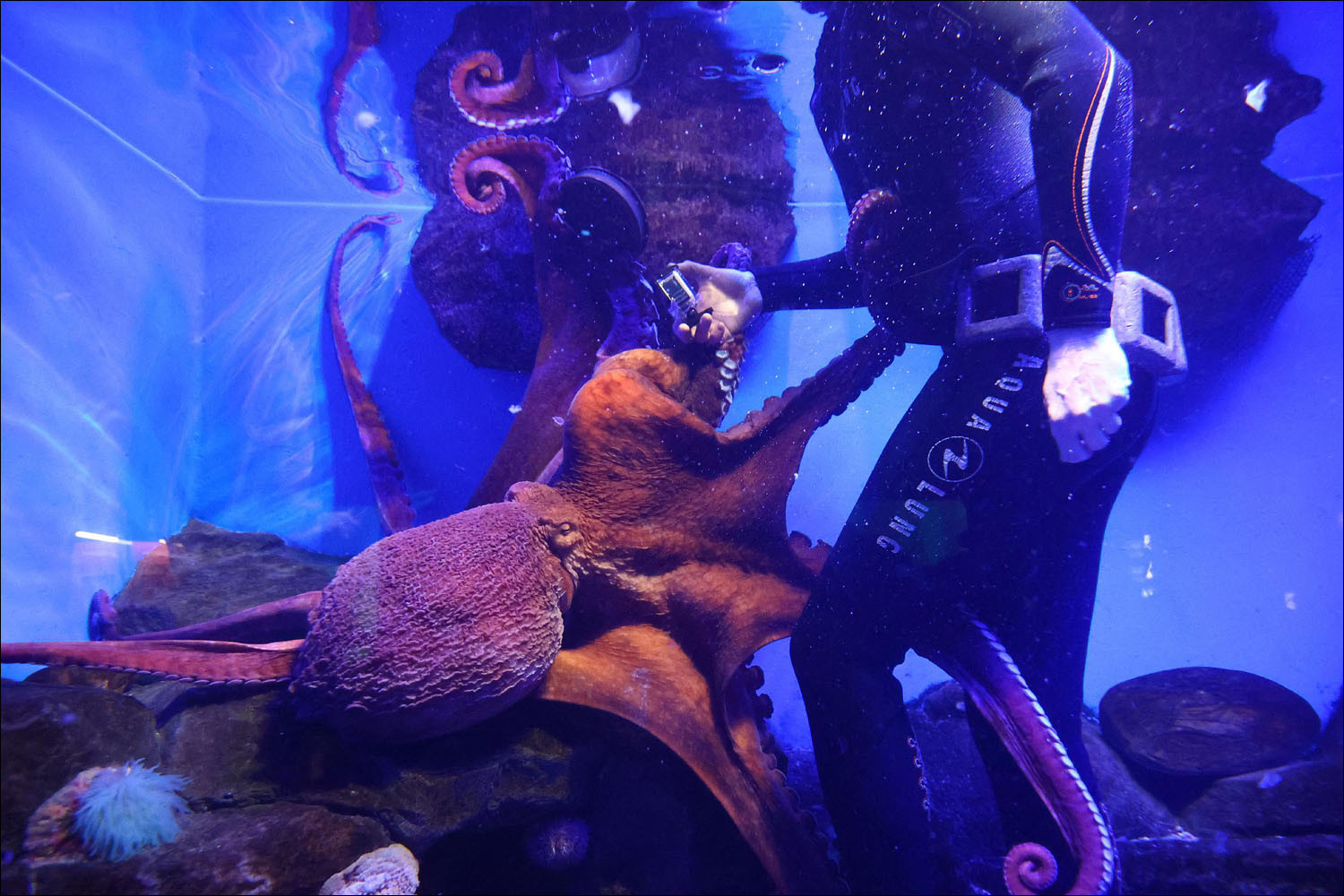
With favorite familiar divers, it can sit on their shoulder like a parrot on a pirate. Certain disliked ones (for unclear reasons) get singled out and immediately hit. It roughly figures out how the diver sees, so it can sit on the mask and block vision that way — this amuses them. Overall, the octopus constantly tries to suction onto the diver and pull it closer to take a bite. What happens next is unclear, because the diver is generally inedible (though the skin can "taste" — meaning if it touches a hand without neoprene, the edibility signal should get through). Here's a short account from a diver. Possibly this is a new-object exploration program: sequentially touching, grabbing more and more of the object.
"I used to think I was imagining this tendency, but several years ago I had a chance to talk with David Scheel, who works with octopuses full-time. He also said that octopuses apparently are capable of shrewdly tracking whether he's looking at them or not, and take action when he's not looking. I think this is satisfactorily explained as behavior natural to octopuses in the wild: it's better to flee from a barracuda when it's not looking than when it is. But the fact that octopuses quickly learn to apply this to a human — whether in a diving mask or without one — is impressive."
Peter Godfrey-Smith
The rest of the time, a well-fed octopus sits in its cave. It does housekeeping (throws out trash). Periodically goes on patrol, feels up new objects.
Then at some point mating season arrives. If the octopus has grown enough, it's time to find each other and do the whole thing. The male searches for a female to mate with. If he doesn't find one, he'll still deliver the genetic information packet, but to /dev/null. The female, if she doesn't meet a partner, will still ovulate, lay empty eggs, and die too. In mammals, after this the parents usually stay alive for some reason, but octopuses get one attempt.
Here's how it's described for cuttlefish:
"Toward the end of the southern winter, the cuttlefish abruptly entered a period of decline. It was observed over several weeks, sometimes even days — in those cases where I managed to track the fate of a specific individual. They suddenly began to literally fall apart. Soon it turned out that someone was missing tentacles and chunks of flesh. They began losing their magical skin. At first I thought the white patches were yet another color change, but looking closer I saw that the outer layer of skin, the living video screen, was peeling off, exposing monochrome white meat. Their eyes clouded over. By the end of this process, the cuttlefish could no longer stay afloat. Once begun, the degradation happens very quickly. Their health plummets. Ever since I learned about their future, interacting with these animals, especially those I had befriended, became hard for me. They had so little time left. Moreover, in light of this discovery, their large brain puzzled me even more. What's the point of building a powerful nervous system if you'll die in a year or two? The mechanics of intellect require considerable resources both to build and to operate. The benefit of being trainable — the advantage that a large brain provides — should logically depend on lifespan. Why invest resources in learning about the world if there's practically no time left to use the information?"
Seasonality is tuned to the abundance of the food base for the young. The female guards the eggs for some time, and during this period her digestive system gradually atrophies. It used to be thought they died of starvation — they tried supplemental feeding, but it didn't help much. In practice it's a biochemical process with endocrine regulation: the hormonal profile changes, then bald patches appear on the head, the skin cracks, and agonistic behavior begins.
Why do they die so quickly? Well, there's Medawar's hypothesis — accumulation of mutations that manifest in old age. It's assumed that if the main evolutionary pressure is exerted at a young age, and old age contributes nothing to the species' survival after reproduction, then higher selection priority goes to mutations that act early, and lower priority to those that act later. For example, old female elephants serve as knowledge keepers — they can accumulate skills and exceptions with application cycles of 20-30 years and teach them to young females. Octopuses have nothing like that: if they meet their children, they'll probably eat them rather than teach them.
Williams' second effect is much better supported by evidence. The idea is that genotypes that are more reproductively successful provide shorter lifespans. Reproduced enough — you're done. Not enough — work overtime. Mutations promoting aging can undergo positive selection if they're beneficial early in life, where "beneficial" means producing more offspring or earlier reproduction. Here's a more recent paper proving this using data from 276 thousand people in the UK.
In 1977 there was a hypothesis that timer-based scripts are launched from the optic glands (the ones near the eyes). They operated on Octopus hummelincki and found the following:
"Removal of the optic glands led to substantial behavioral changes: females abandoned their clutches, resumed feeding, gained weight, and some even mated again. Glandectomized individuals lived 5.75 months longer than their intact counterparts."
In 2015 they sequenced the genome of Octopus bimaculoides, then it took some time to dig through the code. In short, it turned out that indeed the optic glands are responsible. They launch molecular changes throughout the entire organism, using not one hormone but breaking literally everything at once: catecholamines, steroids, insulin, and simultaneously reducing the efficiency of protein assembly overall. The optic gland in its developed state kills the octopus. A controller in the brain inhibits its development until the octopus has matured.
They're Beautiful
There's a joke that you'll hardly find anything stranger in biology than an octopus. I personally know many other very strange things, like sponges that confused carbon with silicon (and calcium too), a penguin forgotten in the codebase, and so on. Octopuses — from what we know about them — appear very logical and well-designed, but logical and well-designed in a way very different from everything familiar to us.
P.S. With us were Irina Meintser, chief ichthyologist of Moskvarium, the divers and researchers of Moskvarium, and the octopuses from there too. For which we thank them all, octopuses included.
This story began in our small community, in the Fourier Series, where we do all sorts of silly things. There are a couple more stories about these specific octopuses there. Join the Fourier Series!
Why This Matters In Practice
Beyond the original publication, Disassembling the Octopus matters because teams need reusable decision patterns, not one-off anecdotes. Octopuses are strange creatures with semi-autonomous tentacles, distributed neural networks, blue blood, RNA self-editing capabilities, and...
Operational Takeaways
- Separate core principles from context-specific details before implementation.
- Define measurable success criteria before adopting the approach.
- Validate assumptions on a small scope, then scale based on evidence.
Quick Applicability Checklist
- Can this be reproduced with your current team and constraints?
- Do you have observable signals to confirm improvement?
- What trade-off (speed, cost, complexity, risk) are you accepting?