Devices We Lost: What Hardware Is Inside the Siemens M55?
A detailed hardware teardown of the Siemens M55 mobile phone, exploring its Infineon E-Gold platform, PMB7850 SoC with C166S microcontroller and TeakLITE DSP, memory configuration, power management, display technology, and the curious firmware limitations that held back its capabilities.
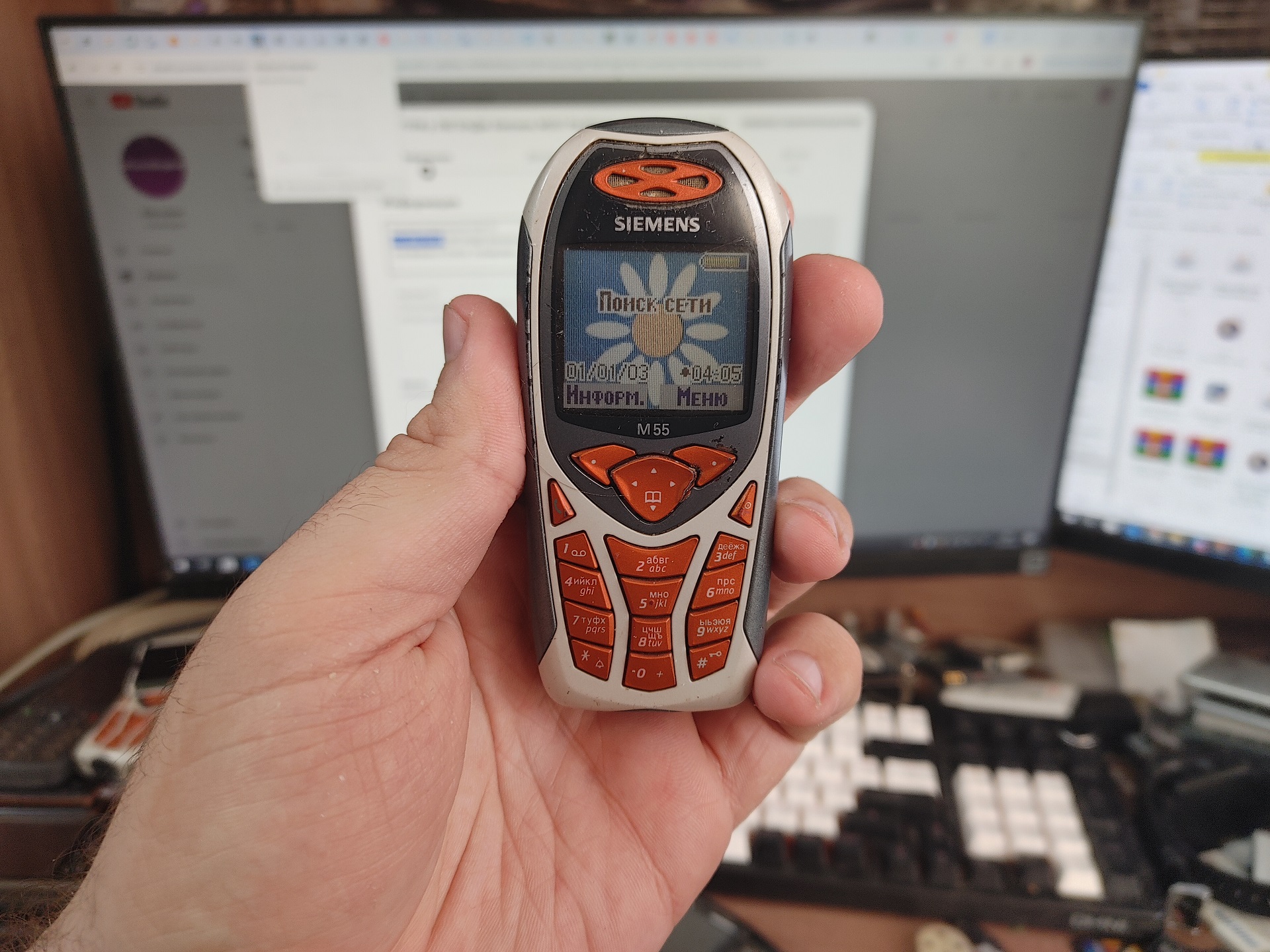
Let's take a deep dive into the hardware of the Siemens M55 — a phone from an era when mobile devices were stylish status symbols with impressive reliability. This teardown explores the Infineon E-Gold platform that powered an entire generation of Siemens phones.
Historical Context
Siemens entered mobile phone manufacturing in 1985 and achieved several industry firsts:
- The first color display phone — the Siemens S10
- The first phone with Java support — the SL45
- The first OLED display in a phone — the BenQ-Siemens S88
What made Siemens unique was that the company developed most of its hardware platforms internally through its semiconductor subsidiary, Infineon Technologies.
Physical Construction
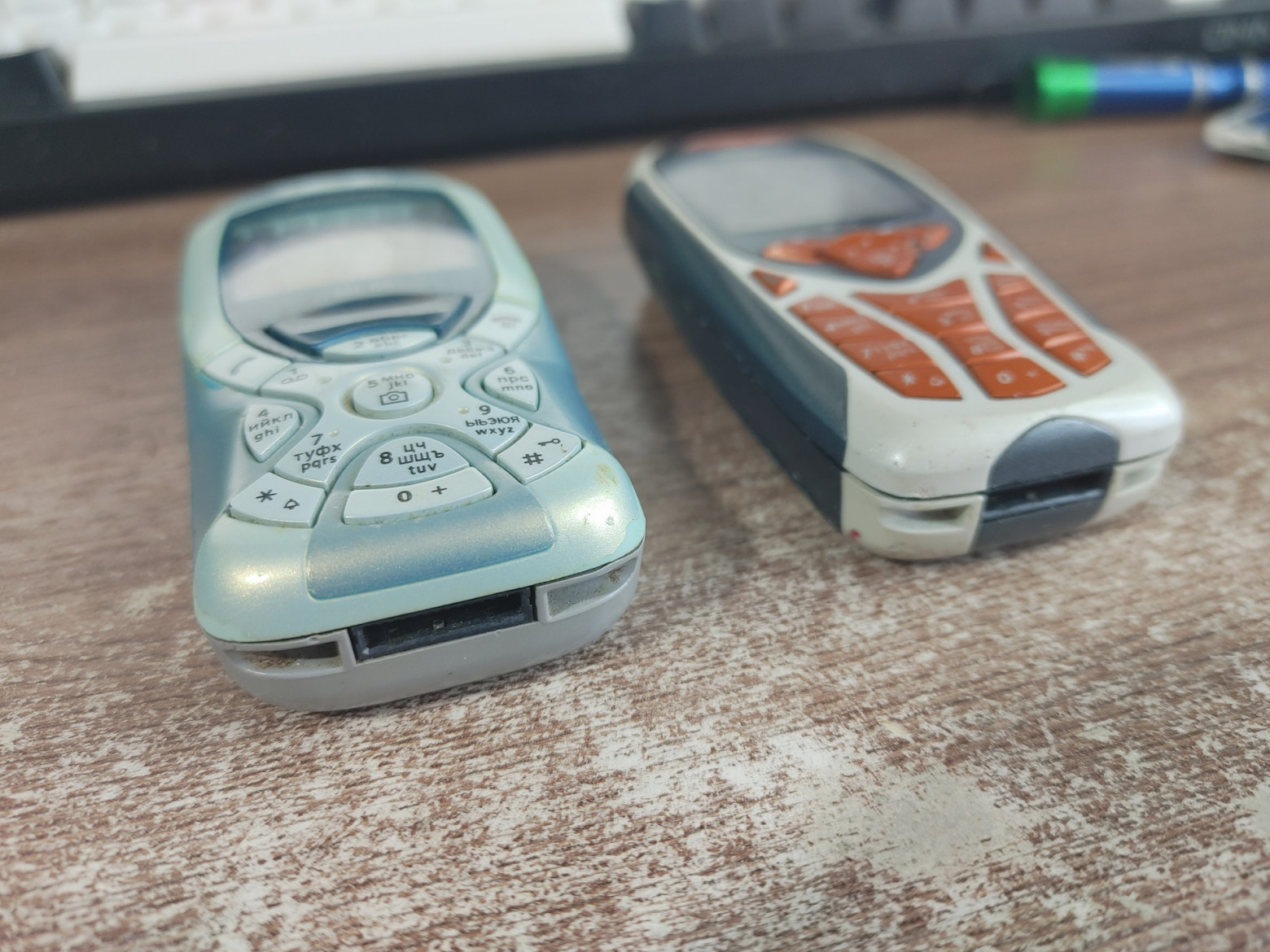
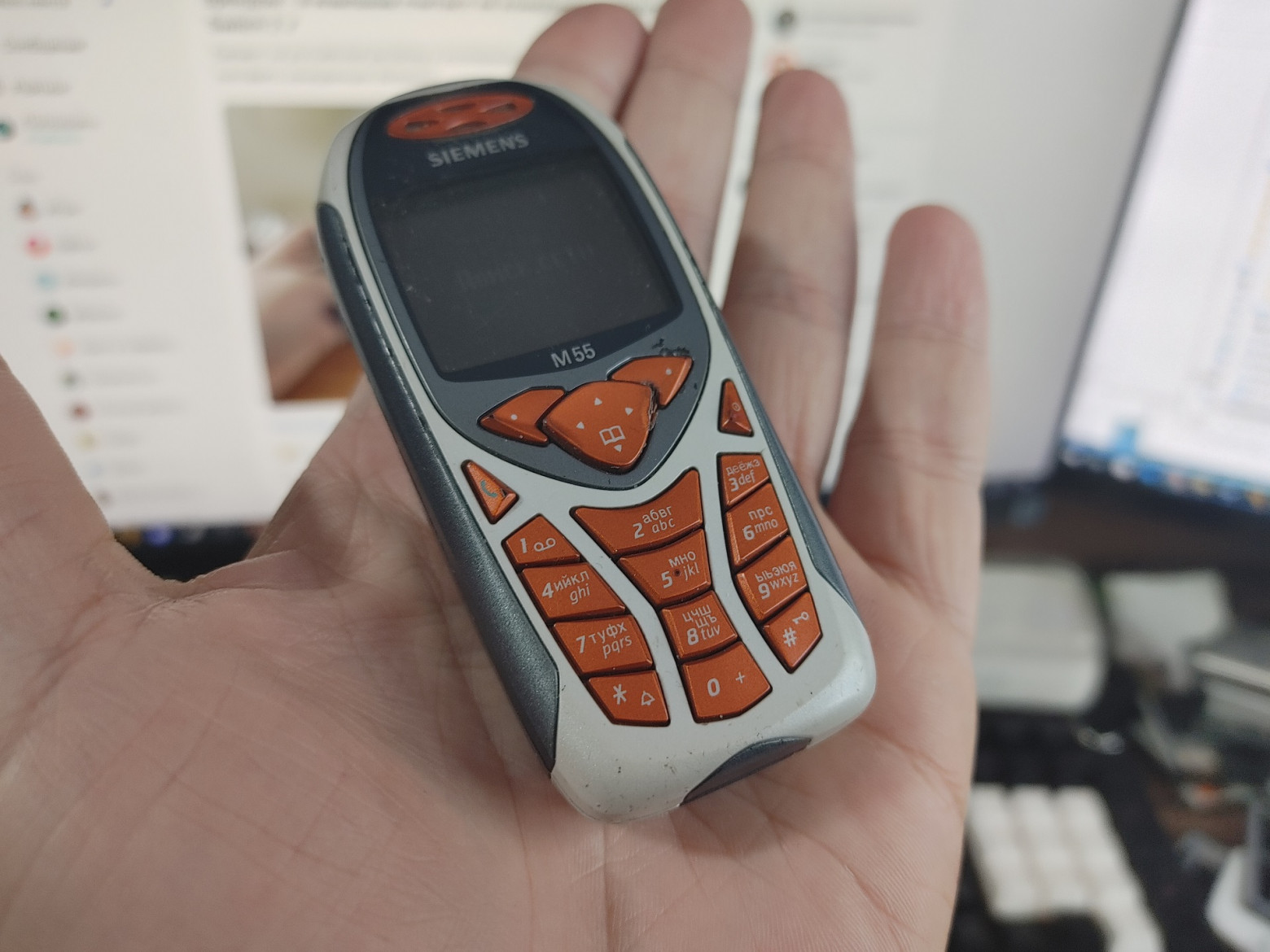
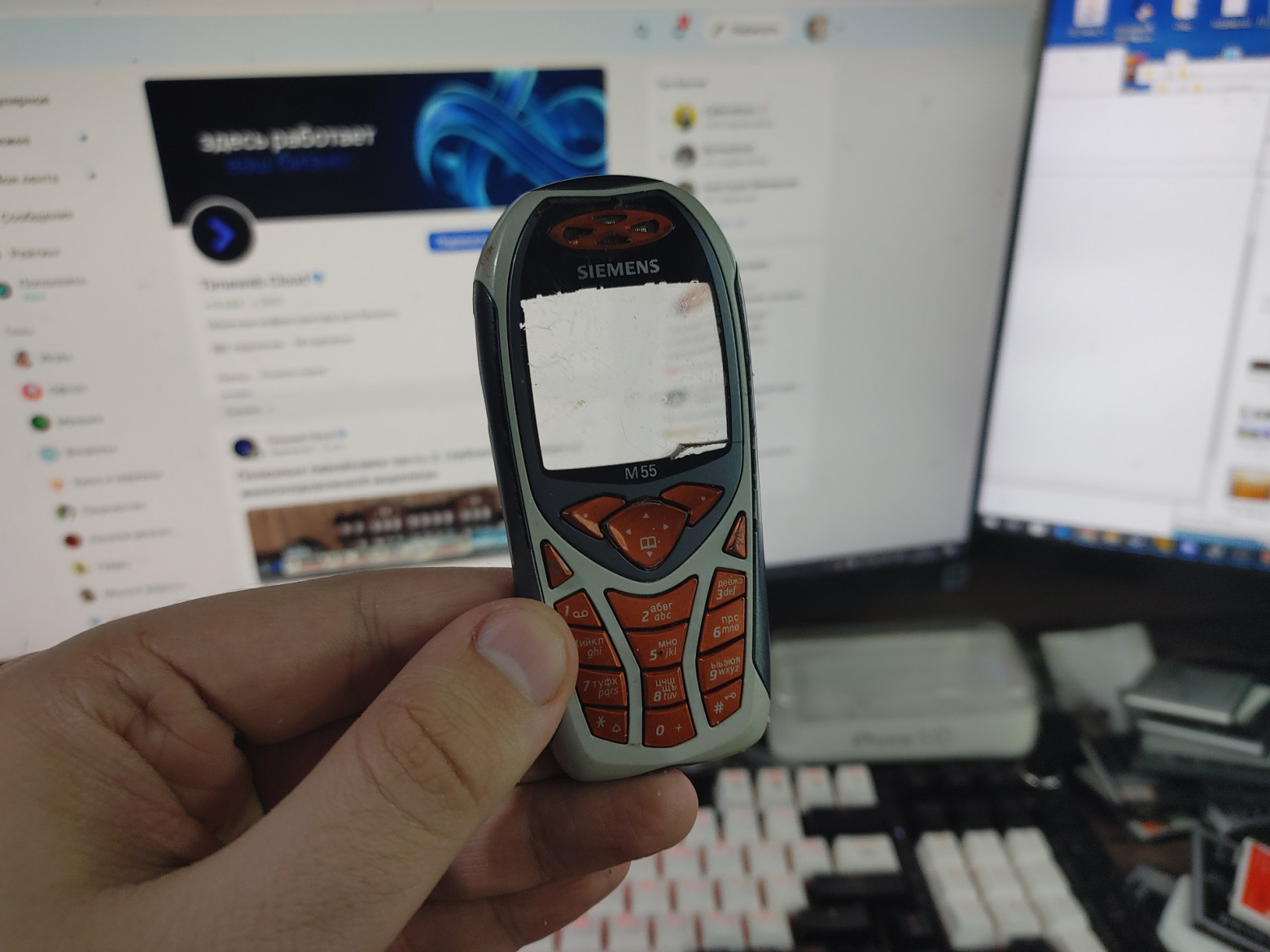
The M55 features a sandwich-like architecture with removable panels. One of its most impressive qualities is exceptional repairability — components are modular and interchangeable. Display modules, for example, worked across approximately five different models within the A, S, and C series lineups.
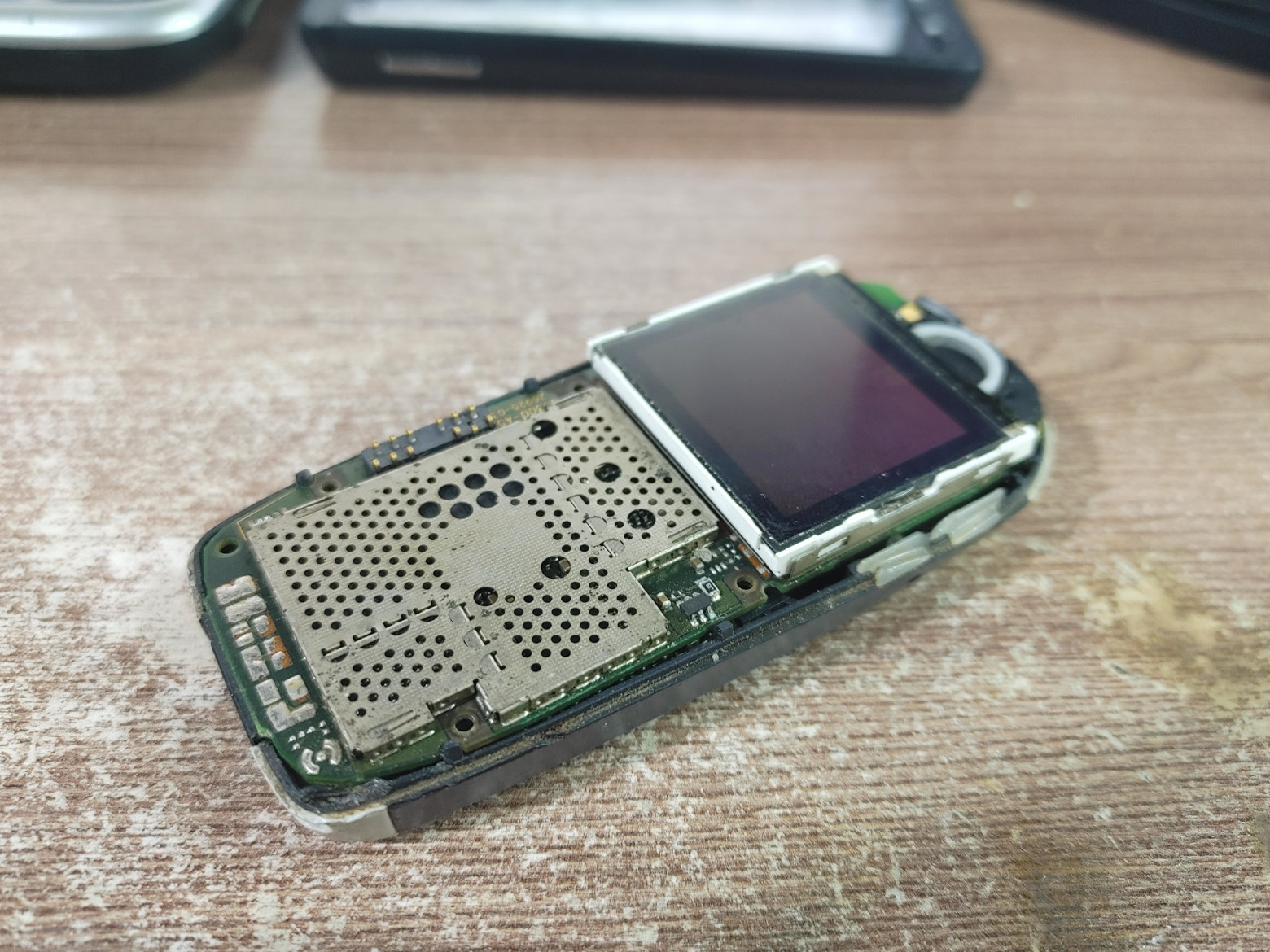
The Main Processor: Infineon PMB7850 System-on-Chip
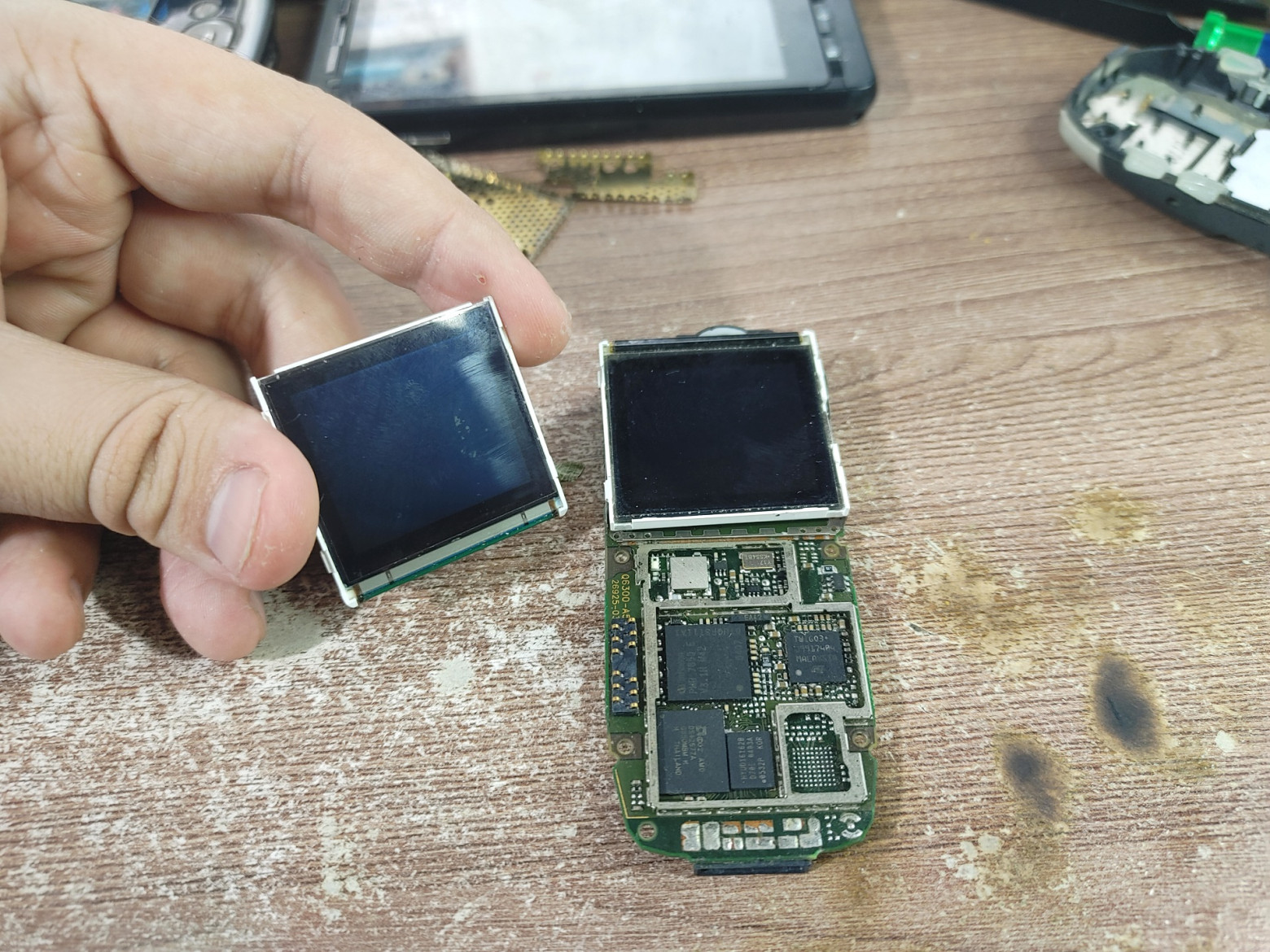
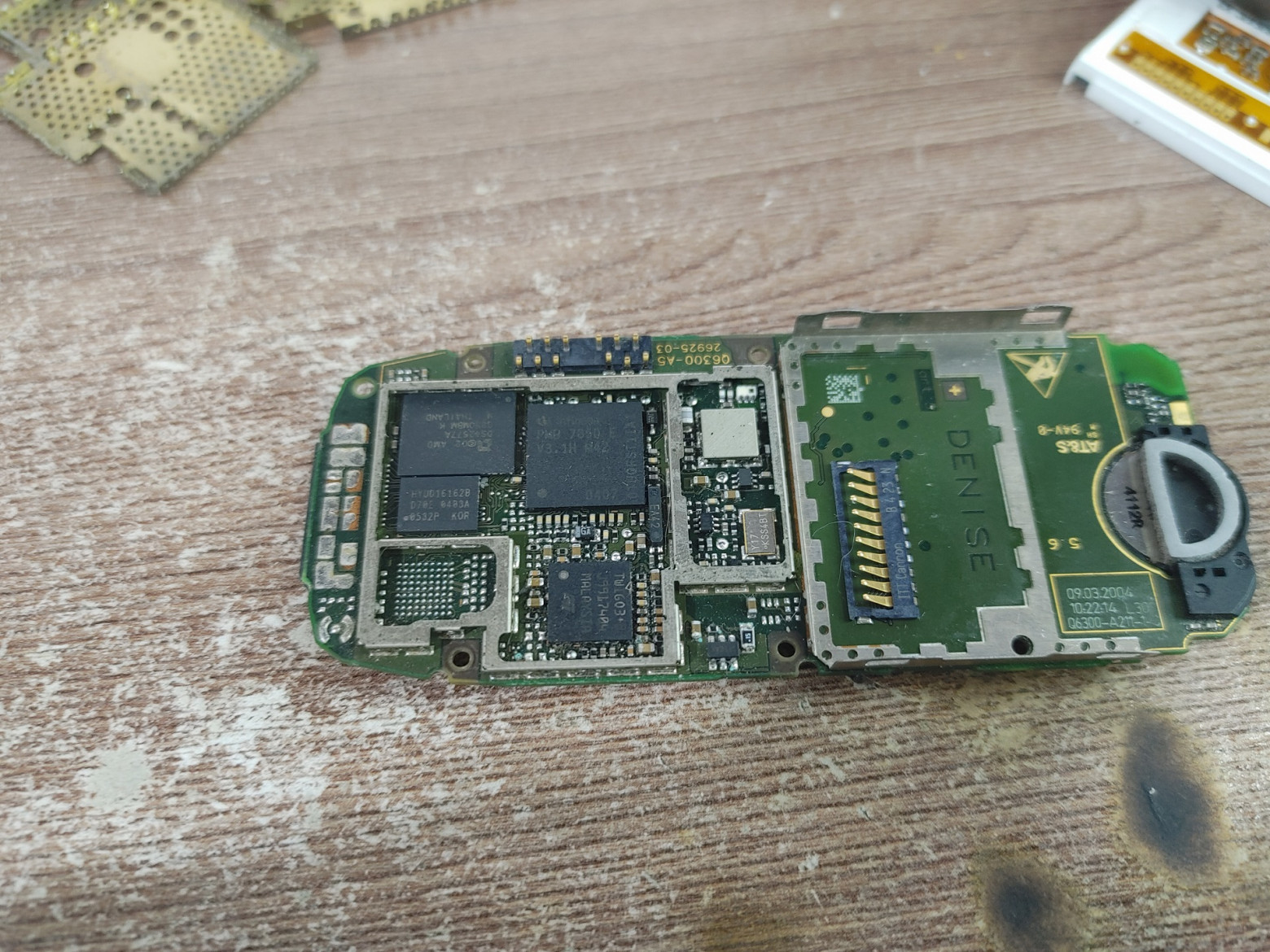
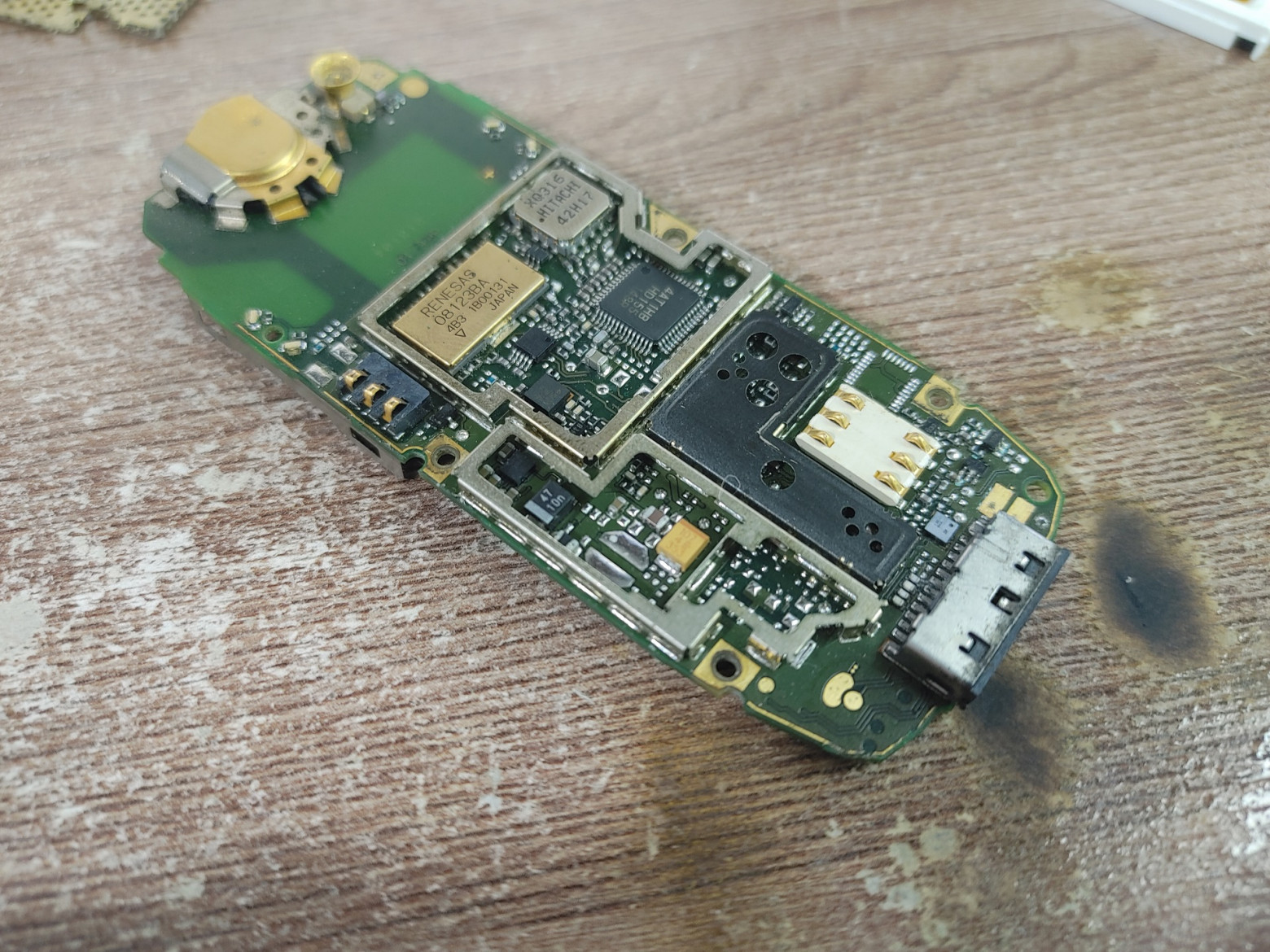
The heart of the M55 is the PMB7850 SoC, part of Infineon's E-Gold platform. It integrates two processors on a single die:
- C166S Microcontroller (52 MHz) — handles display rendering, sound playback, user interface operations, and all application-level tasks
- TeakLITE DSP Processor — manages GSM network functions and audio encoding/decoding (AMR format)
Additional integrated components:
- Flash and RAM controllers
- 2 Mbit internal SRAM
- Peripheral modules: UART, I2C, I2S, MMC support
Memory Configuration
- 2 MB PSRAM (pseudo-static RAM) manufactured by AMD — used as working memory
- 16 MB Flash Memory — stores the operating system, modem firmware, and user data
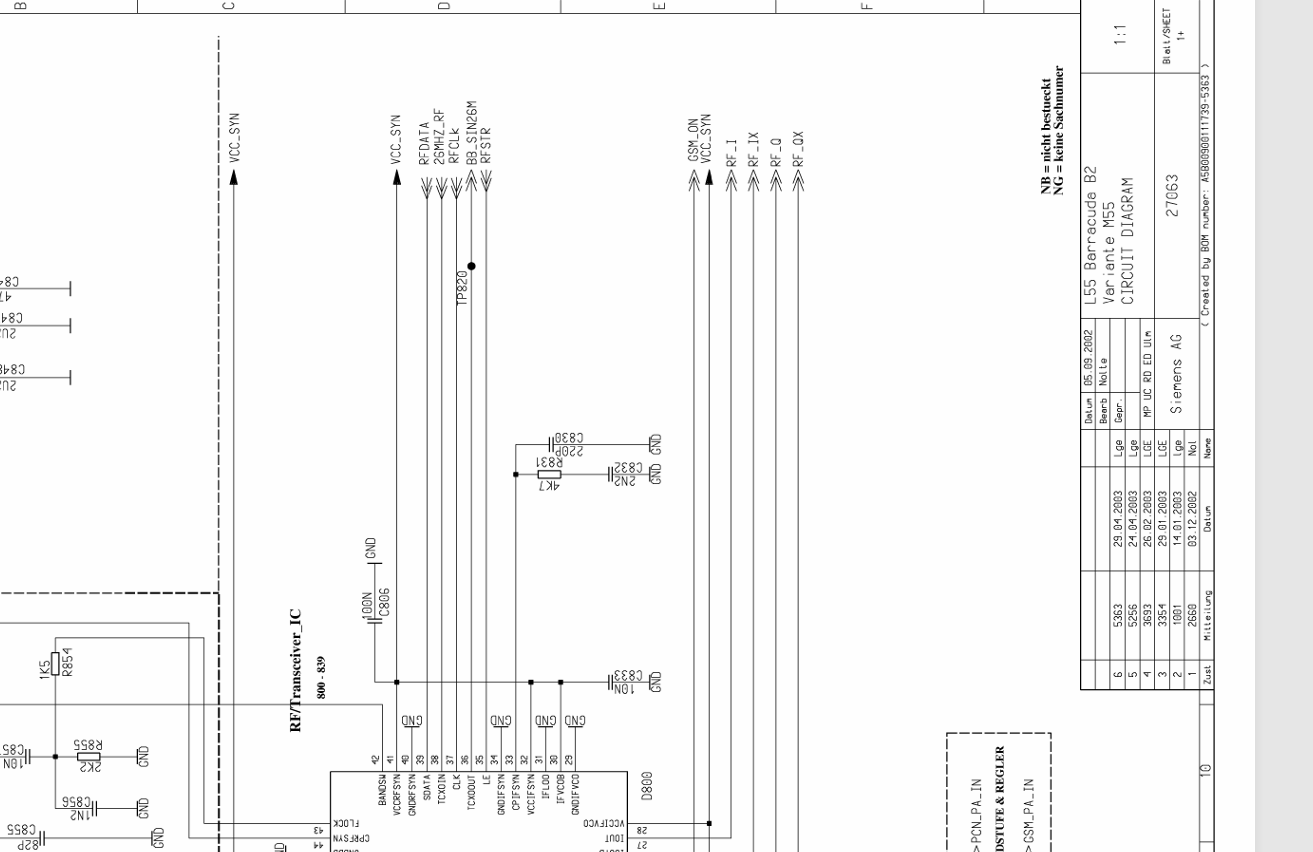
Power Management: The TWIGO Controller
The TWIGO power management IC is responsible for:
- Processor monitoring and watchdog functions
- Power button handling
- Voltage regulation across all chips
- Battery charging management
- Audio amplification
Display Technology
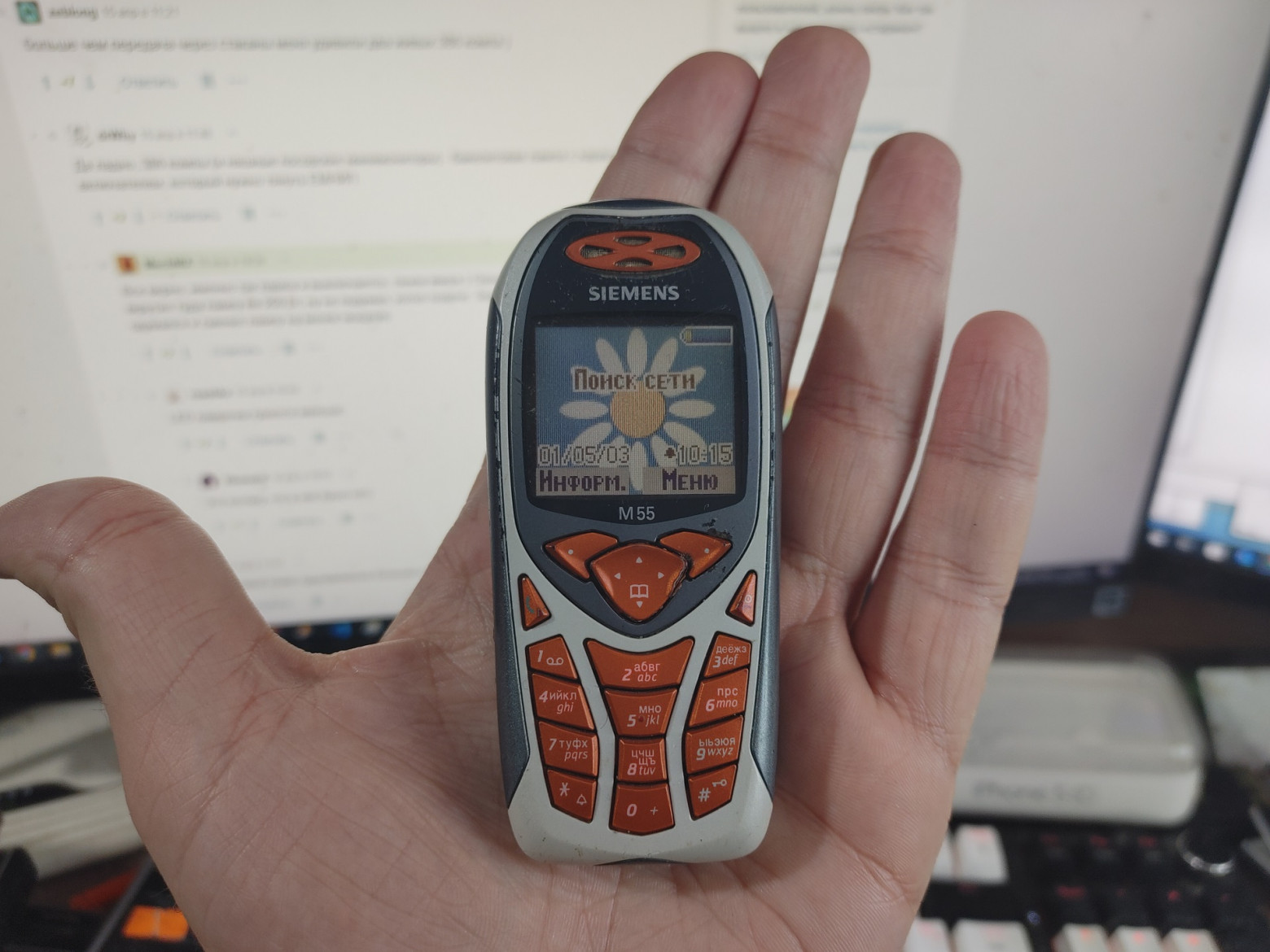
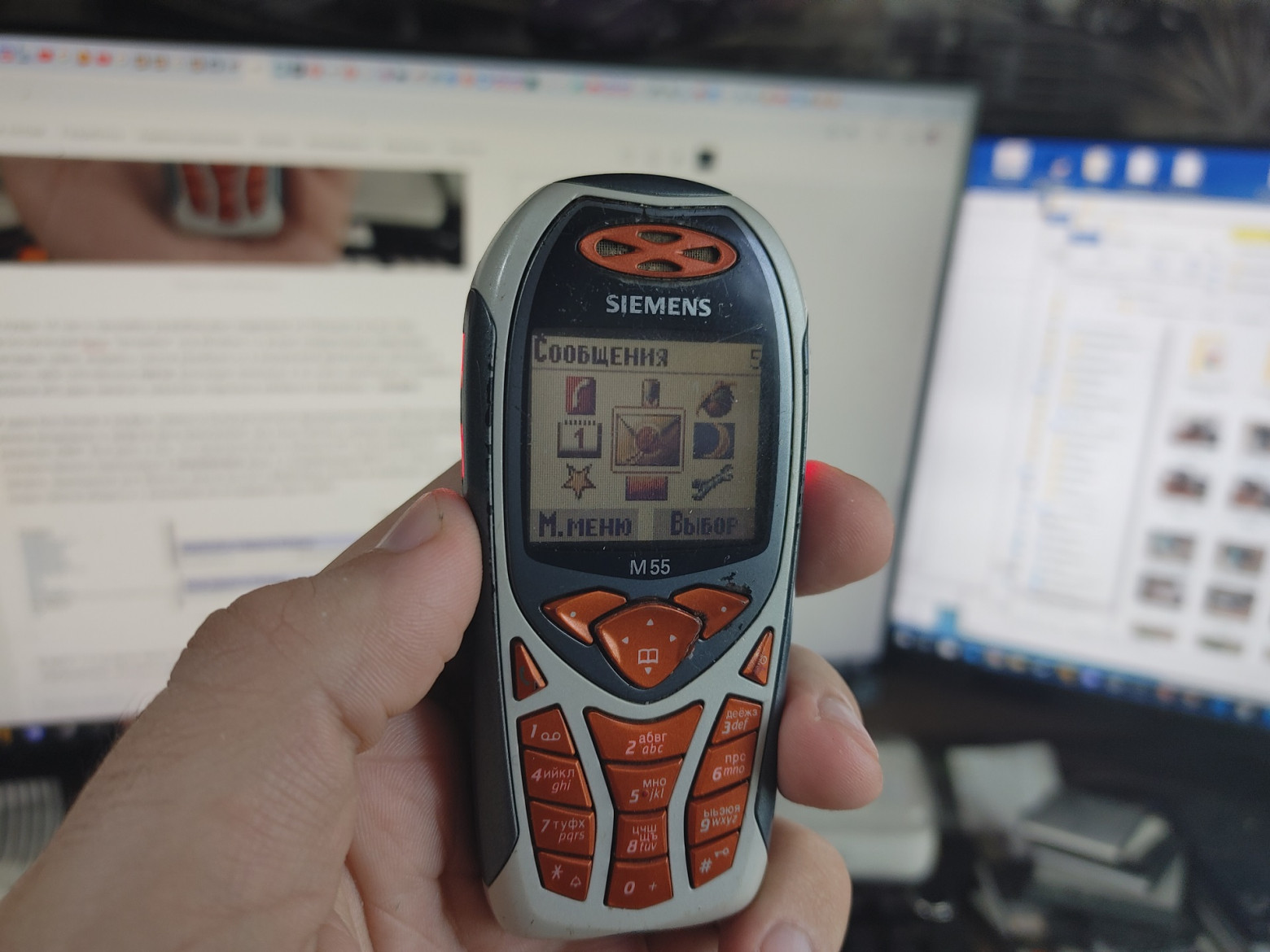
The M55 uses a CSTN matrix display with a resolution of 101x80 pixels, connected via a 2-pin SPI bus. The contact-based connection was practical for manufacturing and repairability but proved prone to oxidation issues in aged devices — a common failure point for surviving units.
Software Architecture and Firmware Limitations
Despite capable hardware, many features were disabled or limited in firmware:
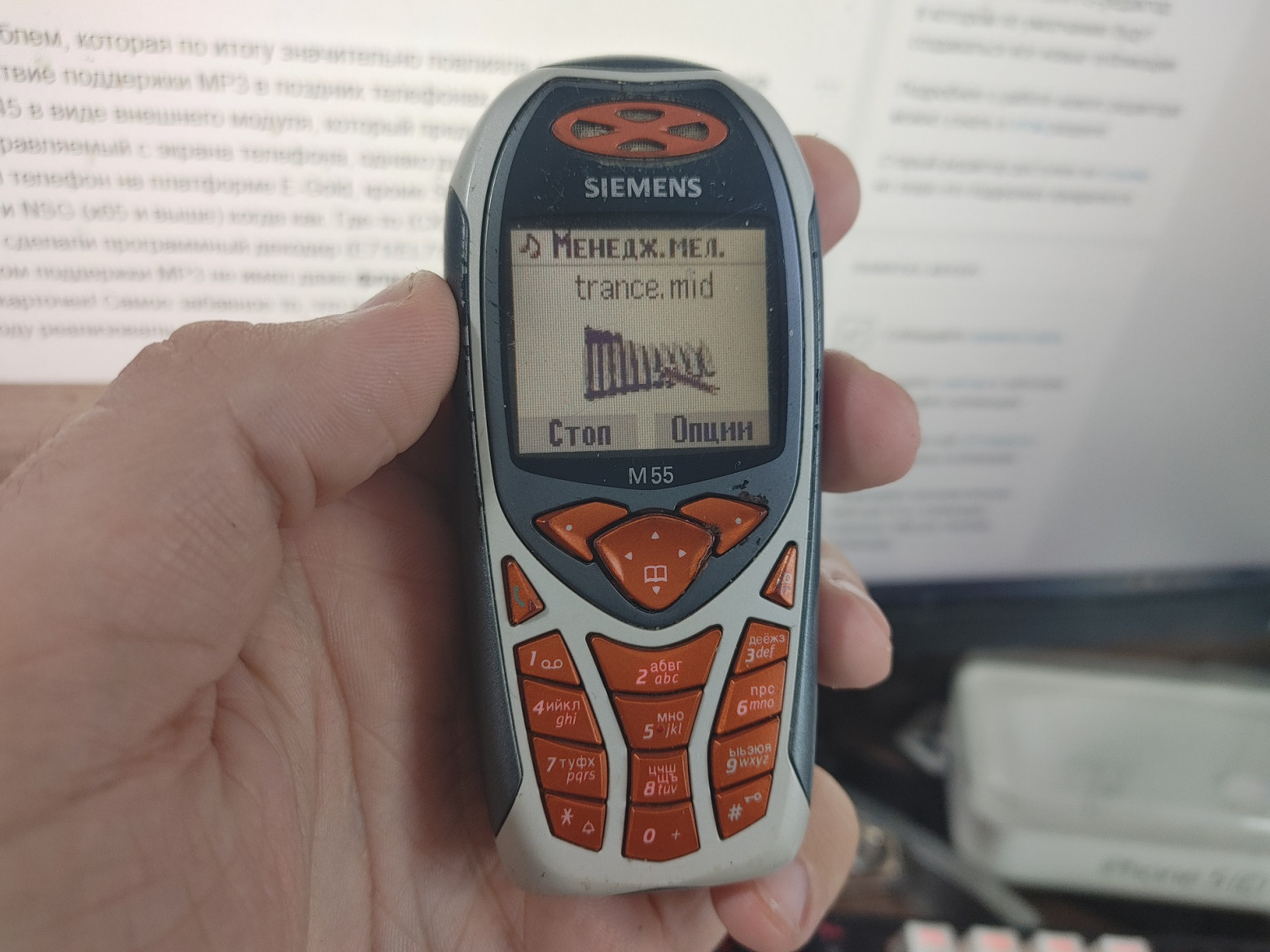
- The audio stack nominally supported only 16 kHz sampling rate (compared to the standard 44.1 kHz), severely limiting MIDI quality
- Community patches later unlocked improved audio support
- MP3 playback was completely absent despite the TeakLITE DSP containing a capable decoder — this remained one of the platform's most puzzling omissions
Java Implementation
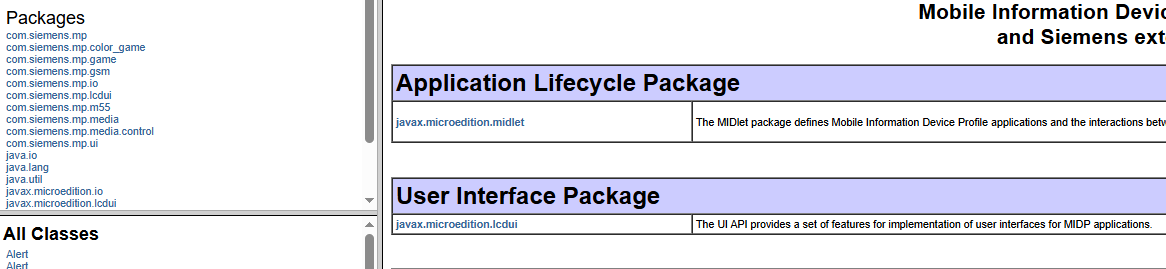
The M55 supported J2ME with Siemens-specific APIs that eventually became part of the MIDP 2.0 specification. Key differentiators from competitors:
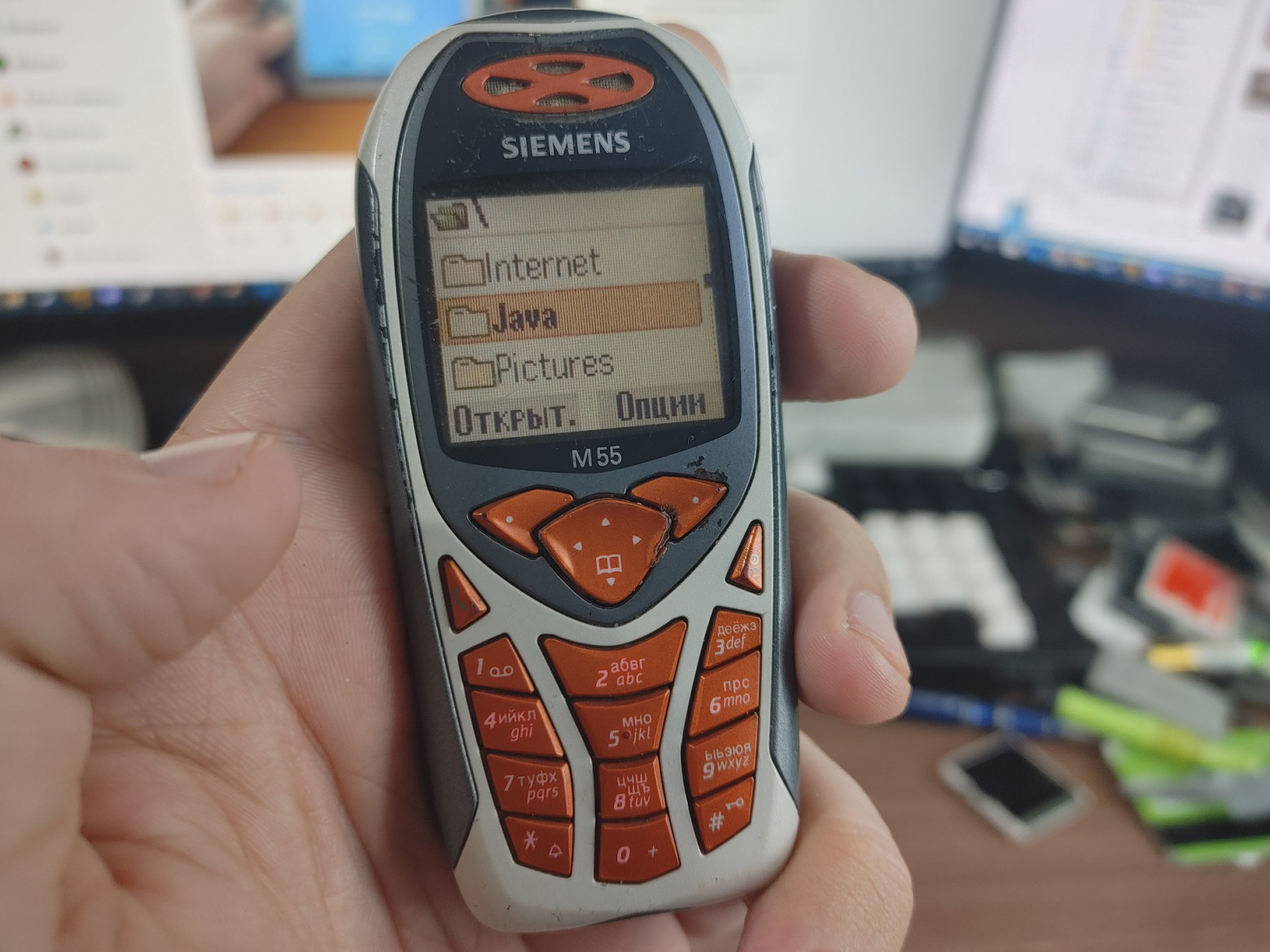
- Early file system access from Java applications
- External accessory communication via UART
- These features were ahead of their time and gave Siemens devices a significant edge for developers
Notable Design Choices
An empty Bluetooth pad on the PCB revealed that all M55-series phones shared identical hardware — the differences between models existed only in firmware variants. This was a common cost-saving measure that allowed Siemens to produce multiple product lines from a single PCB design.
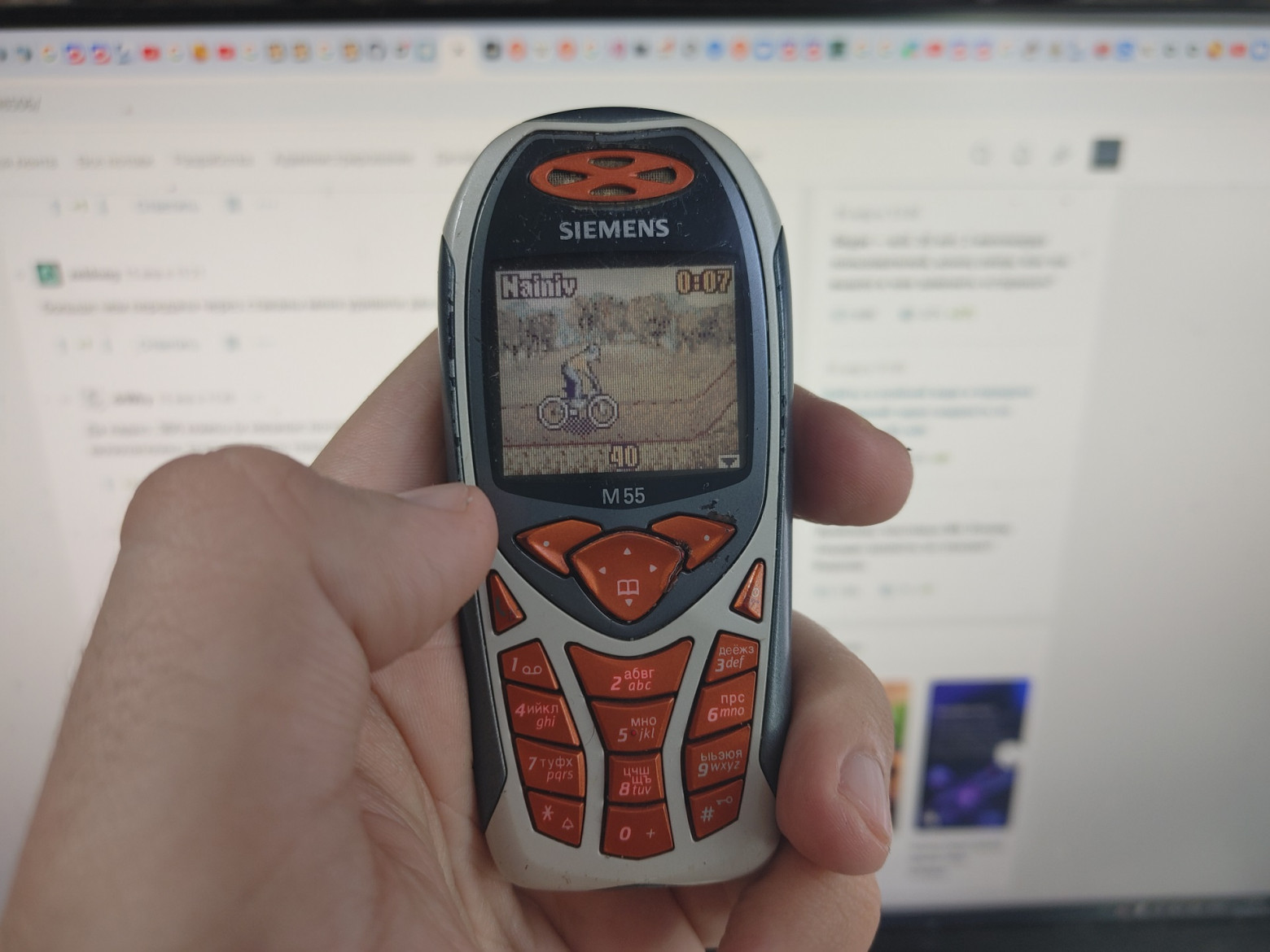
The 12-pin Lumberg connector supported charging, PC connection, headsets, and accessories including external cameras — an impressive level of versatility for the era.
The MP3 Mystery
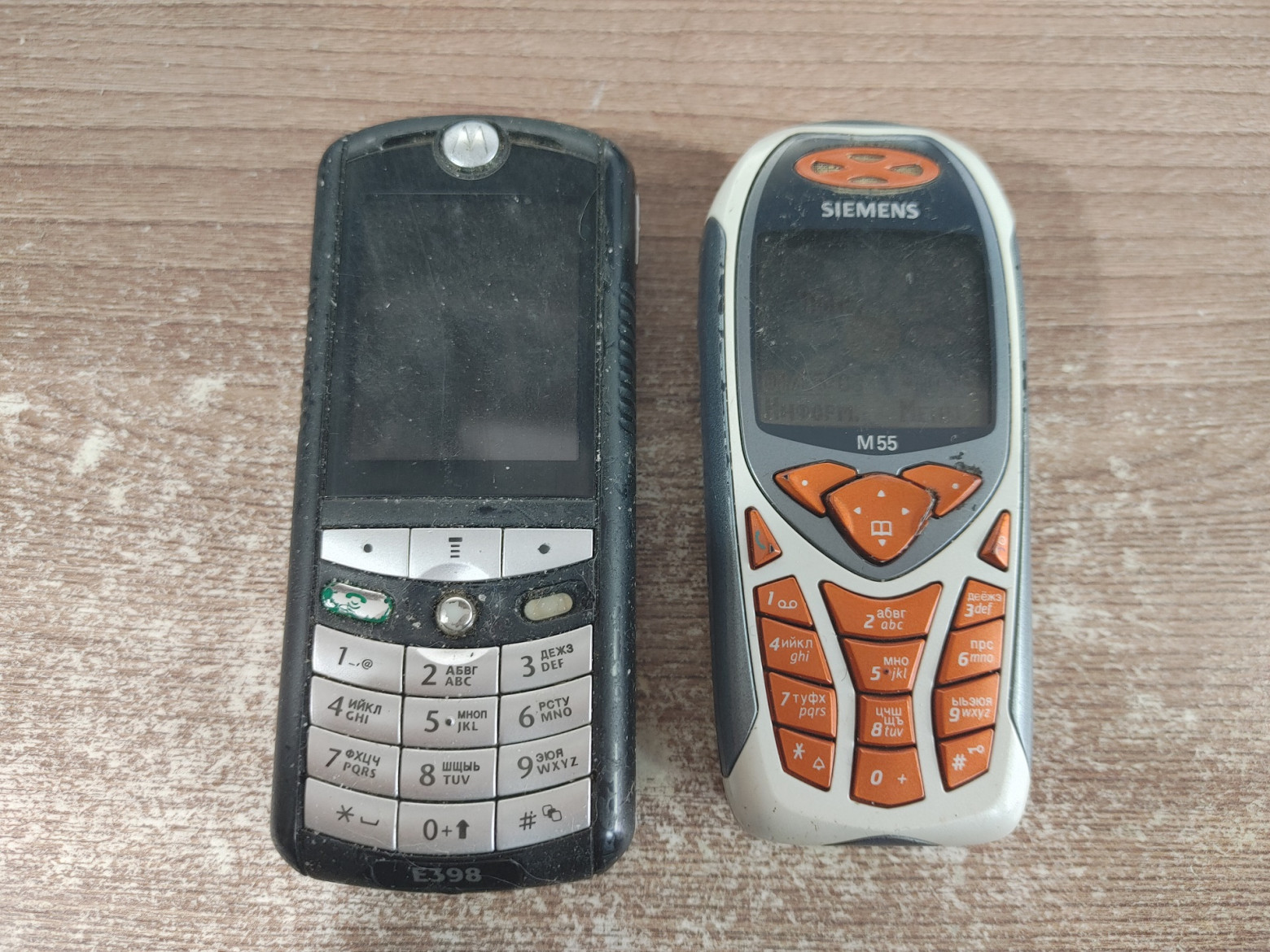
The most significant limitation of the entire E-Gold platform was the absence of MP3 support. No E-Gold-based phone except the SL45 could play MP3 files, despite the TeakLITE DSP containing a perfectly capable decoder. This omission significantly impacted market competitiveness against devices like the Motorola E398, which could play MP3s.
The community eventually found workarounds — developers created functional MP3 players even for less capable C65 models through creative software solutions, proving the hardware was never the bottleneck.
Legacy
The Siemens M55 represents an era of mobile phone design where hardware was over-engineered and built to last, but artificially constrained by firmware decisions. Its modular construction, robust Infineon chipset, and surprisingly capable DSP made it a device that was far more powerful than users ever experienced. The active modding community that grew around these phones is a testament to the untapped potential hidden within.
FAQ
What is this article about in one sentence?
This article explains the core idea in practical terms and focuses on what you can apply in real work.
Who is this article for?
It is written for engineers, technical leaders, and curious readers who want a clear, implementation-focused explanation.
What should I read next?
Use the related articles below to continue with closely connected topics and concrete examples.