Developers' Pain in Today's Reality: How I Found a Solution
An electronics engineer creates the 'Error Board' — a diagnostic PCB with intentional circuit errors — to identify passionate young engineering talent during job interviews, replacing ineffective traditional assessment methods.
The Problem
I want to start from afar. First, let me describe the background and explain what prompted me to create the Error Board.
I've been working in electronics development for over 15 years. Over this time I've seen how the industry has changed — and not always for the better. Here are the key pain points I've identified:
Growing complexity and workload
Project scope keeps increasing while development timelines remain the same. You're expected to deliver more in less time, and the complexity of modern electronics only makes things worse.
Talent shortage
Experienced engineers are retiring, while mid-career professionals have left the field entirely. We're left with a gap that's incredibly hard to fill.
Education gaps
Recent graduates lack practical skills despite having theoretical knowledge. Many studied remotely during COVID-19, which only made things worse. They can recite formulas but can't solder a simple circuit or read a schematic confidently.
Ineffective screening
HR departments can find candidates, but they cannot identify talented engineers in specialized fields. Traditional interviews with theoretical questions don't reveal whether someone truly understands electronics at a fundamental level.
All of this led me to think: there has to be a better way to find the right people.
The Idea
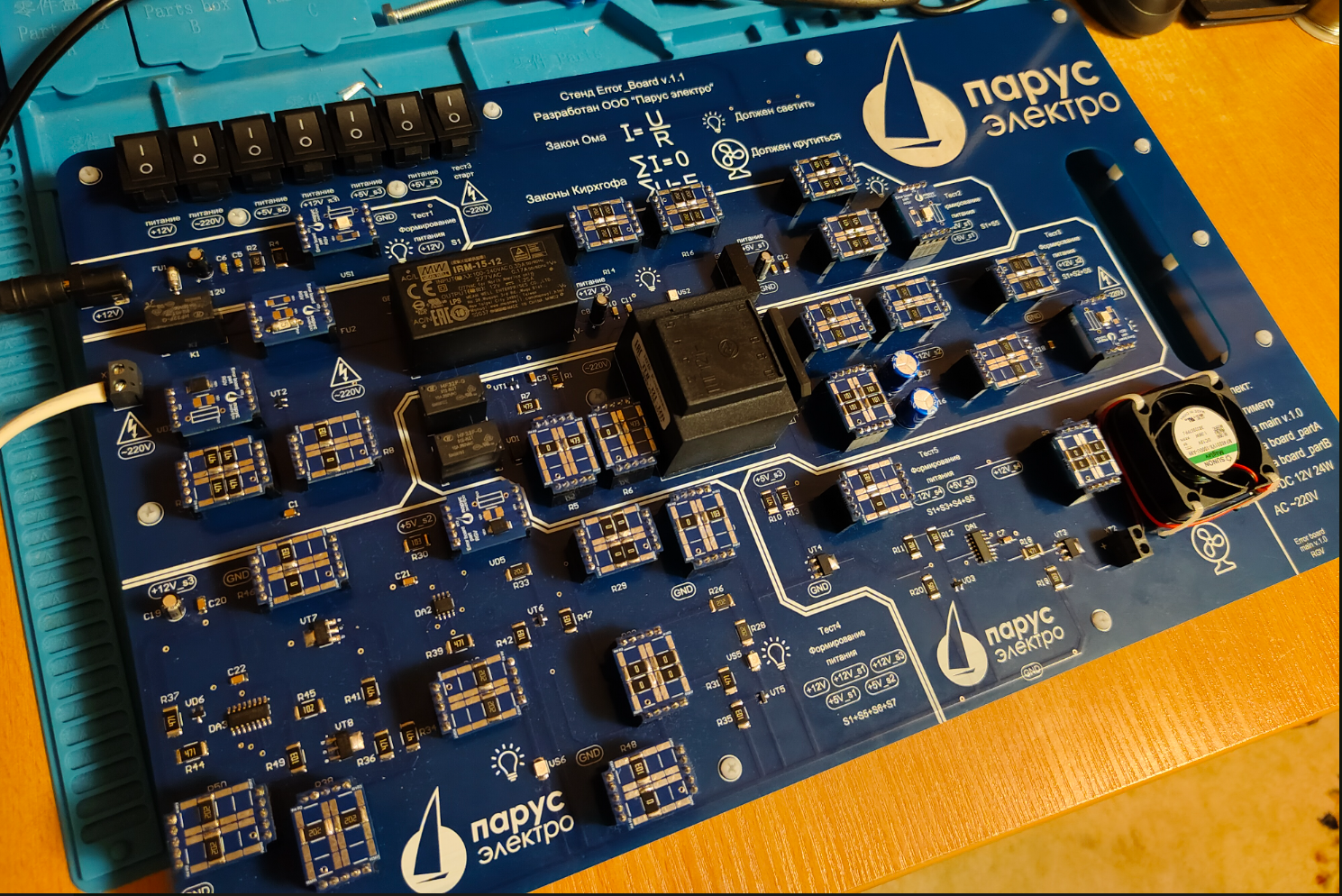
Instead of administering difficult technical tests or asking tricky interview questions, I decided to create something tangible — a physical device that would reveal a candidate's true abilities and, more importantly, their passion for electronics.
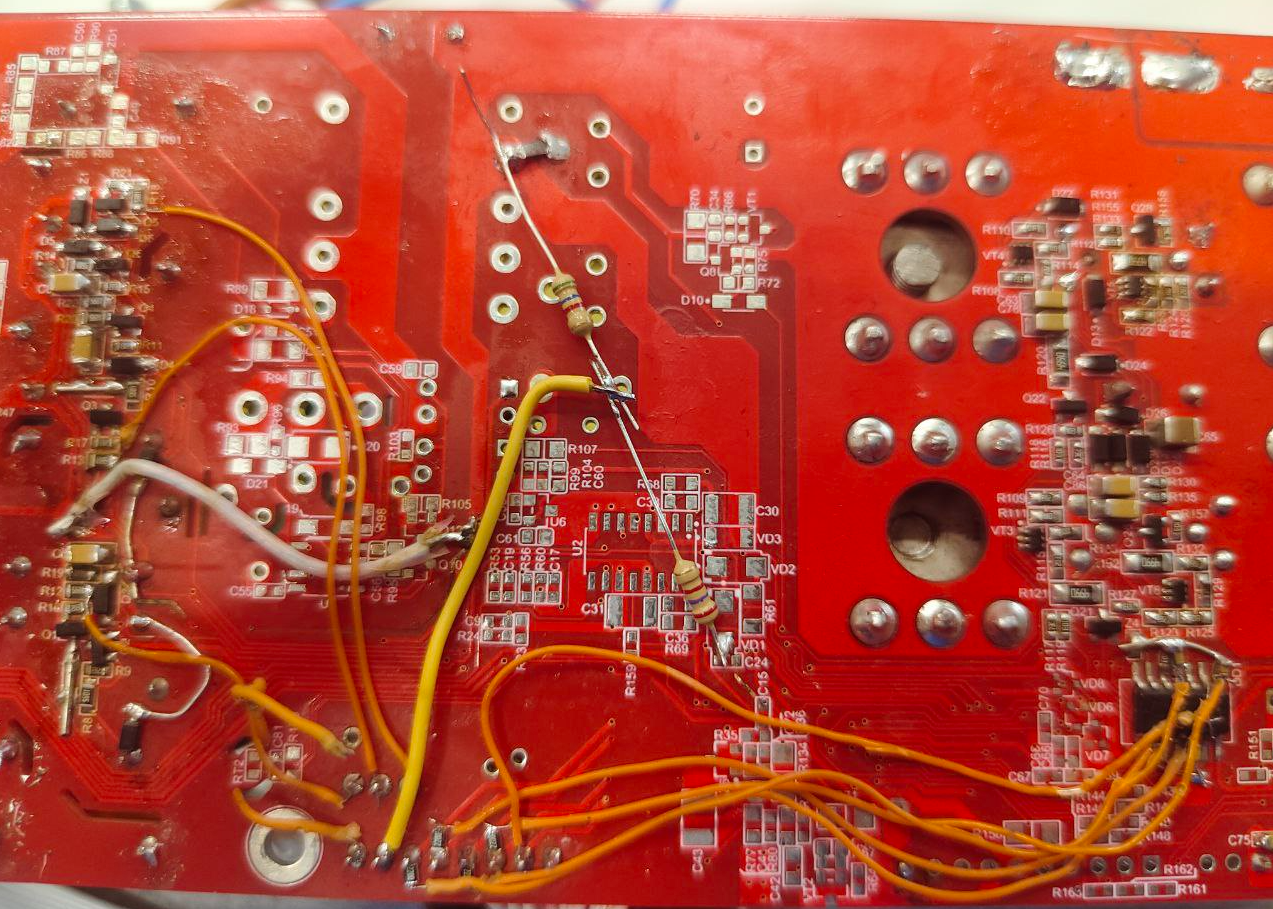
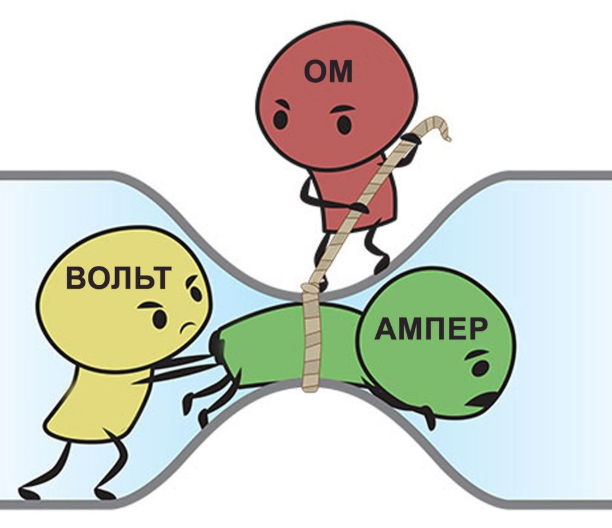
The idea was simple: build a portable PCB containing intentional circuit errors. Candidates would need to diagnose and repair the defects using nothing more than basic electronics principles — Ohm's Law, understanding of current flow, and fundamental component behavior.
Design and Construction
Physical Design
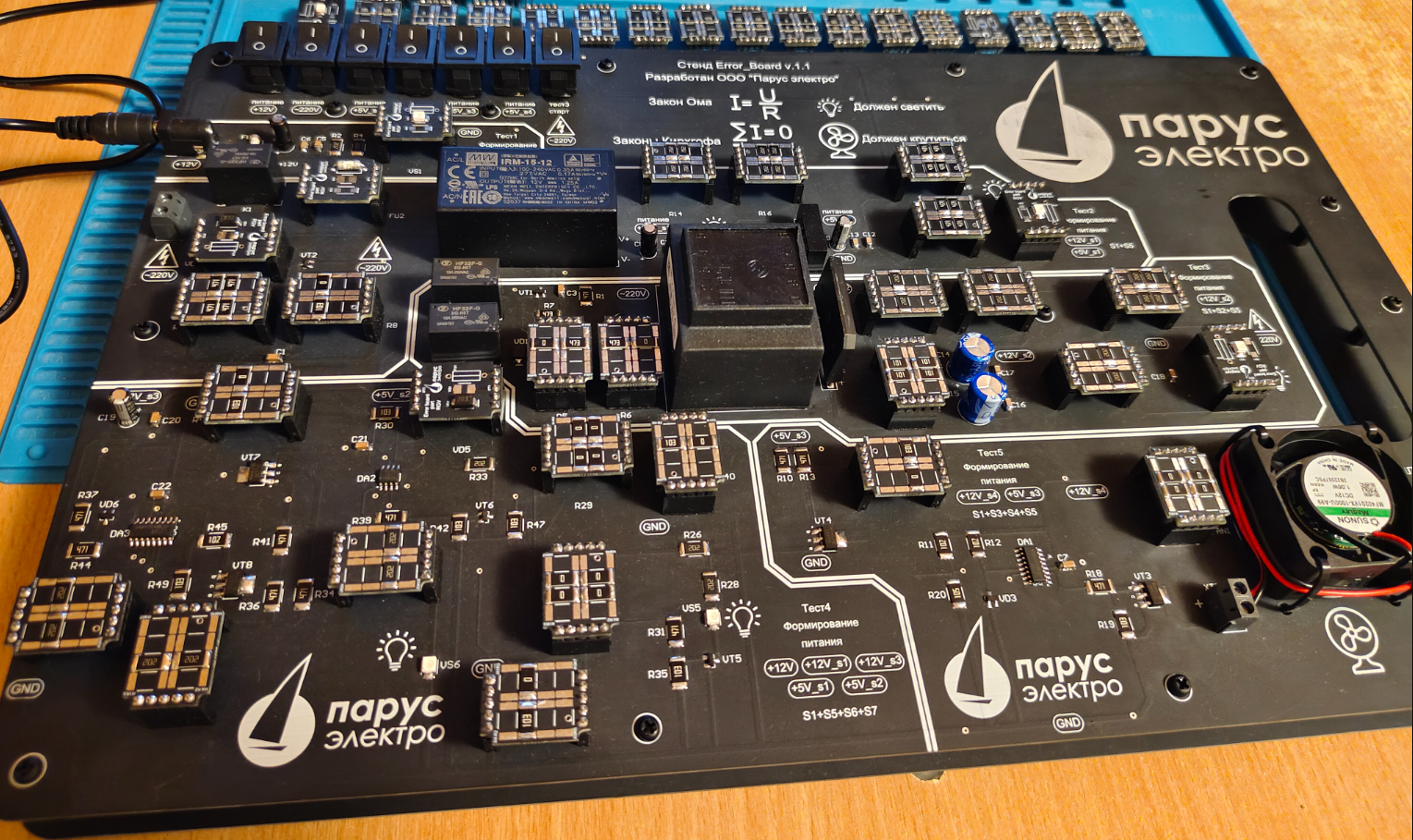
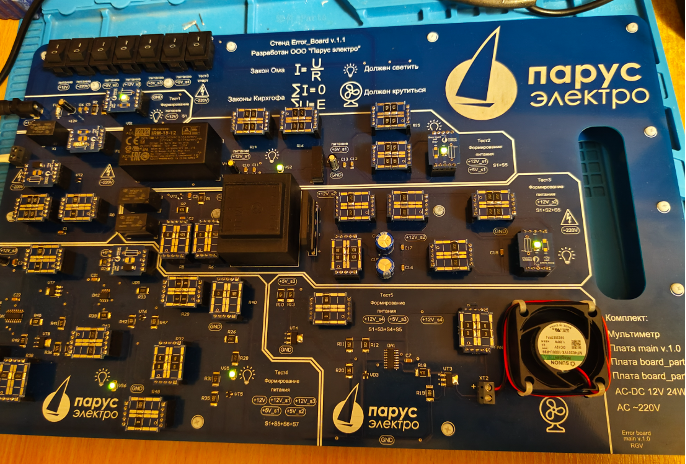
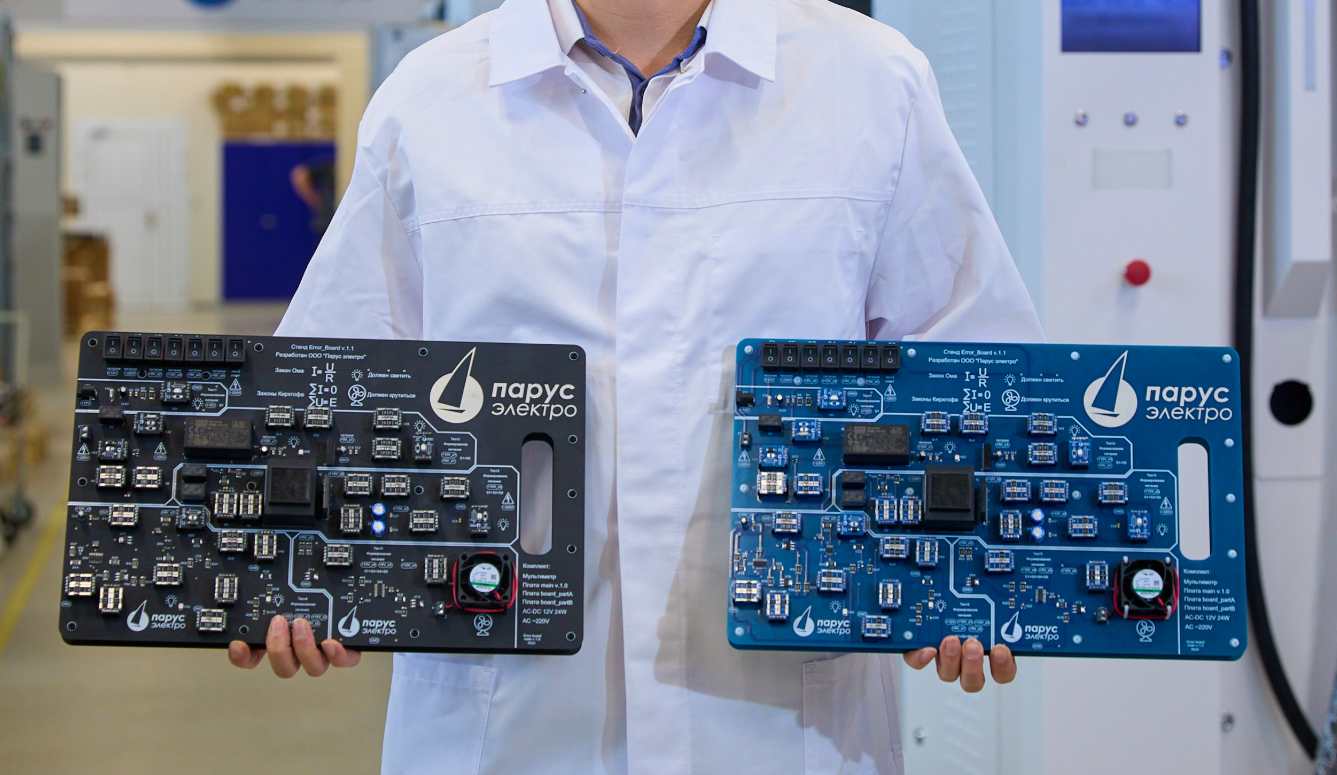
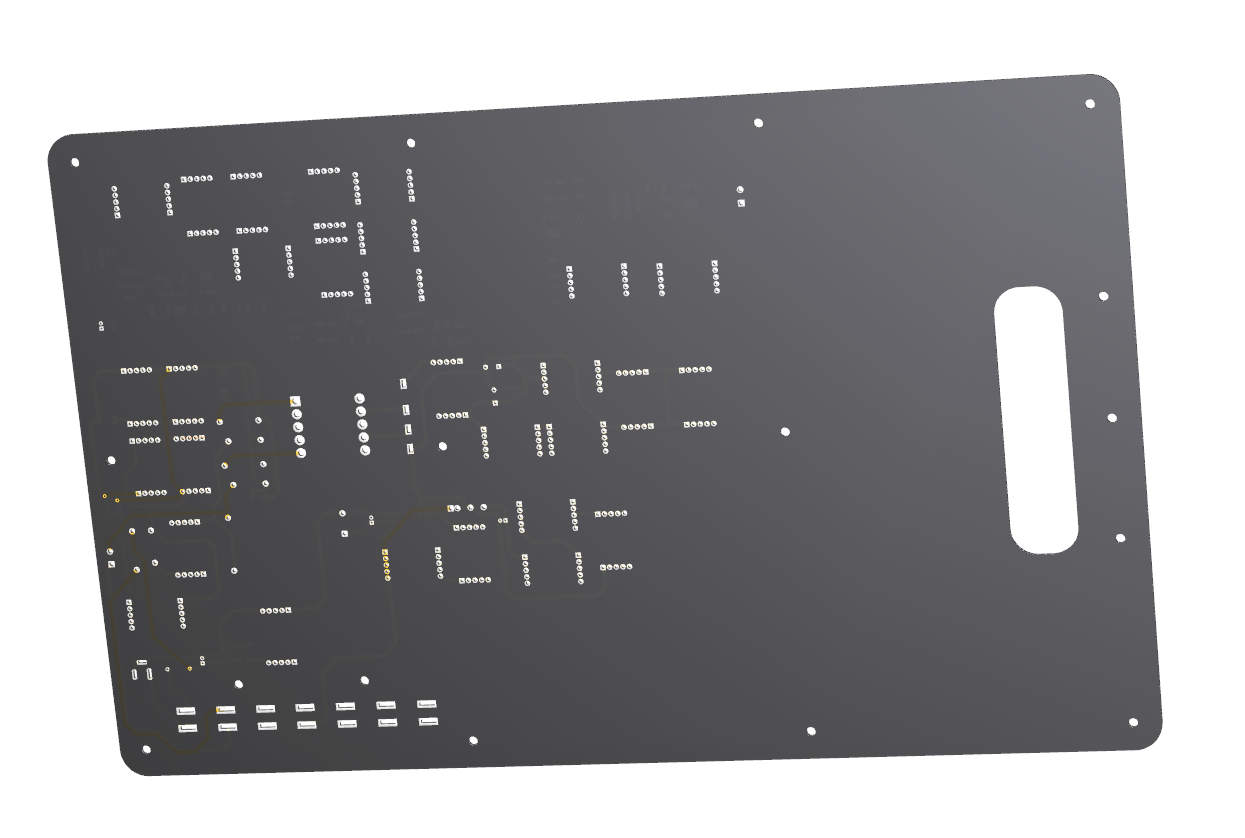
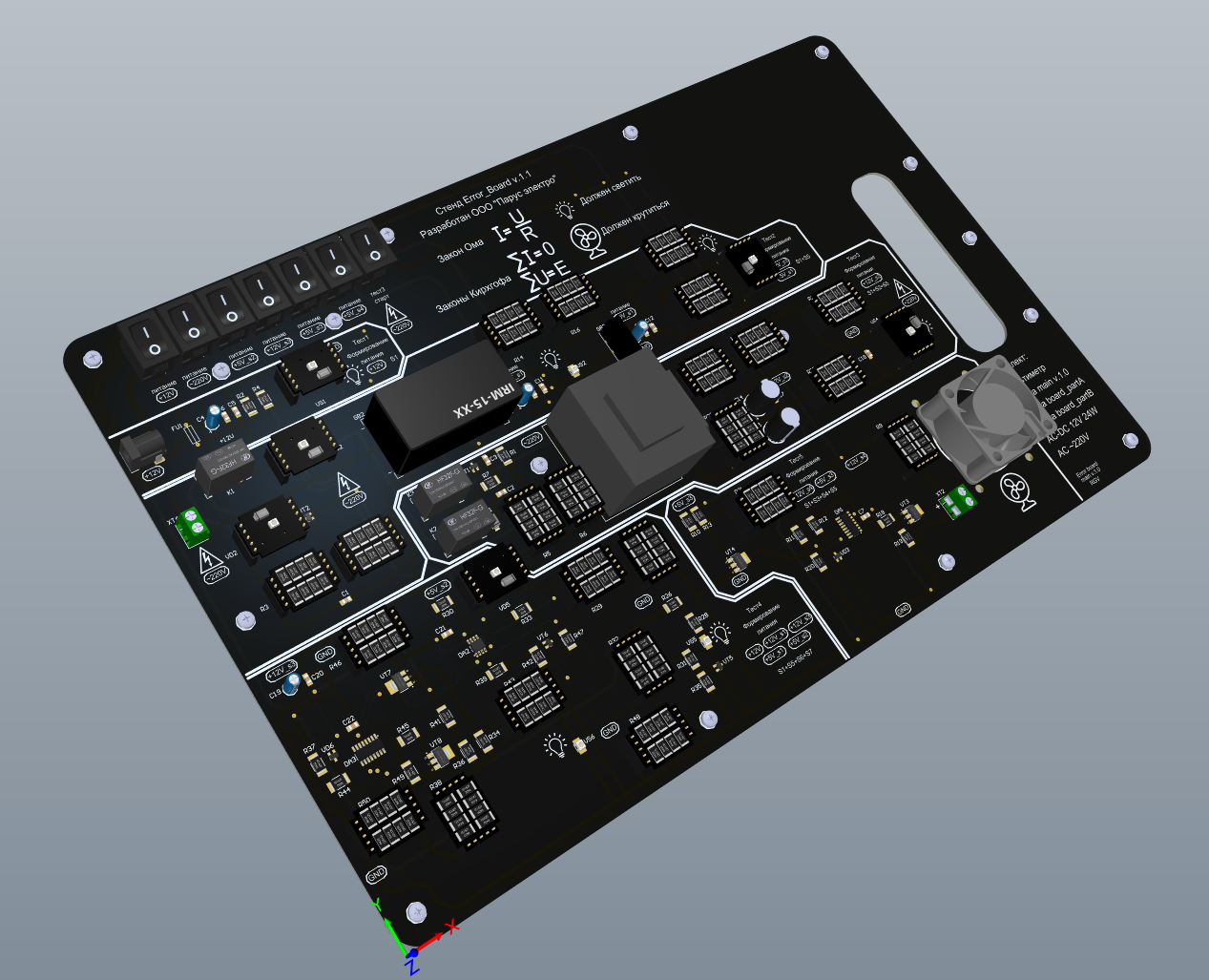
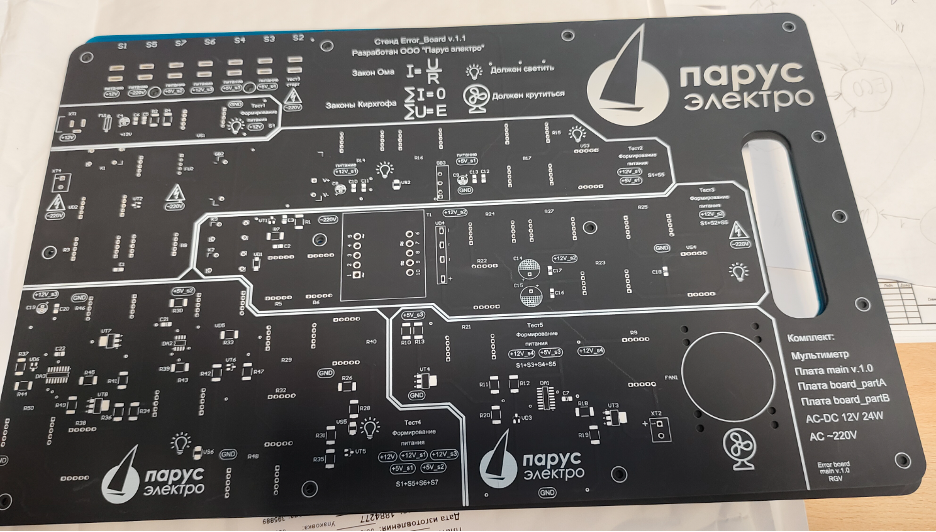
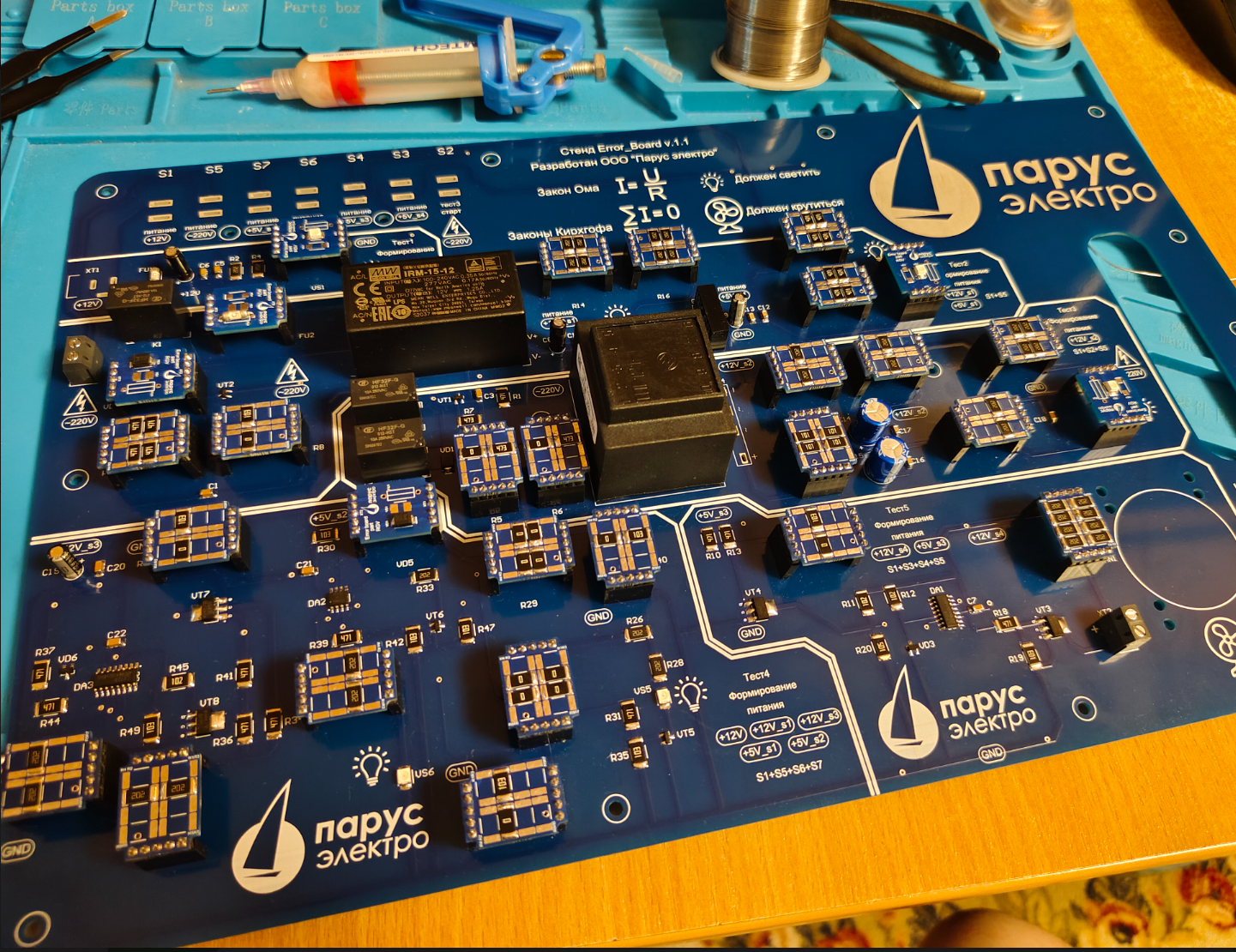
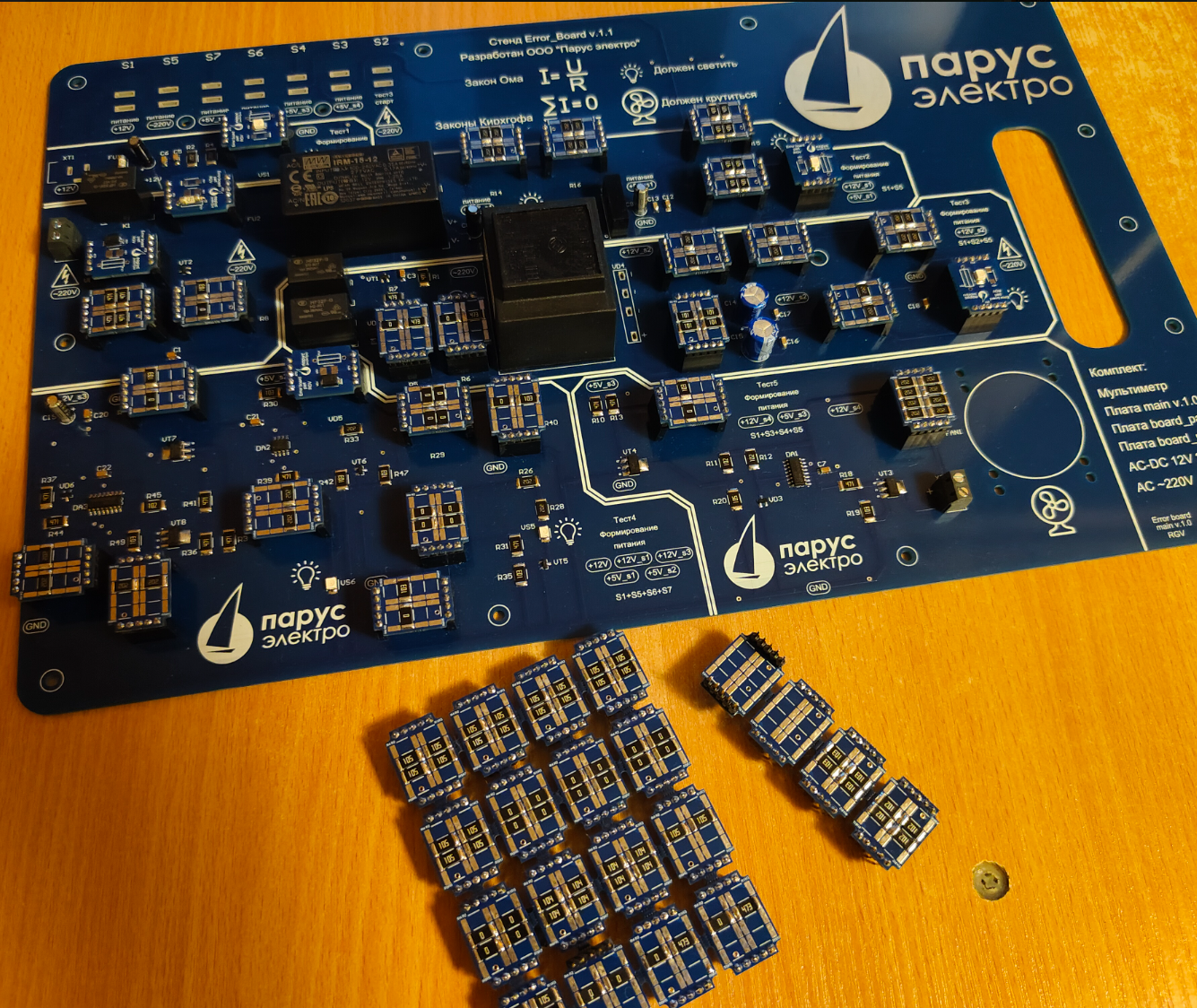
The board needed to be portable — something I could bring to any interview or recruitment event. I settled on a size comparable to a cutting board, complete with a handle cutout for easy carrying.
The construction uses a two-sided textolite "sandwich" design with nylon standoffs separating the layers. This gives it structural rigidity while keeping it lightweight.
Circuit Design
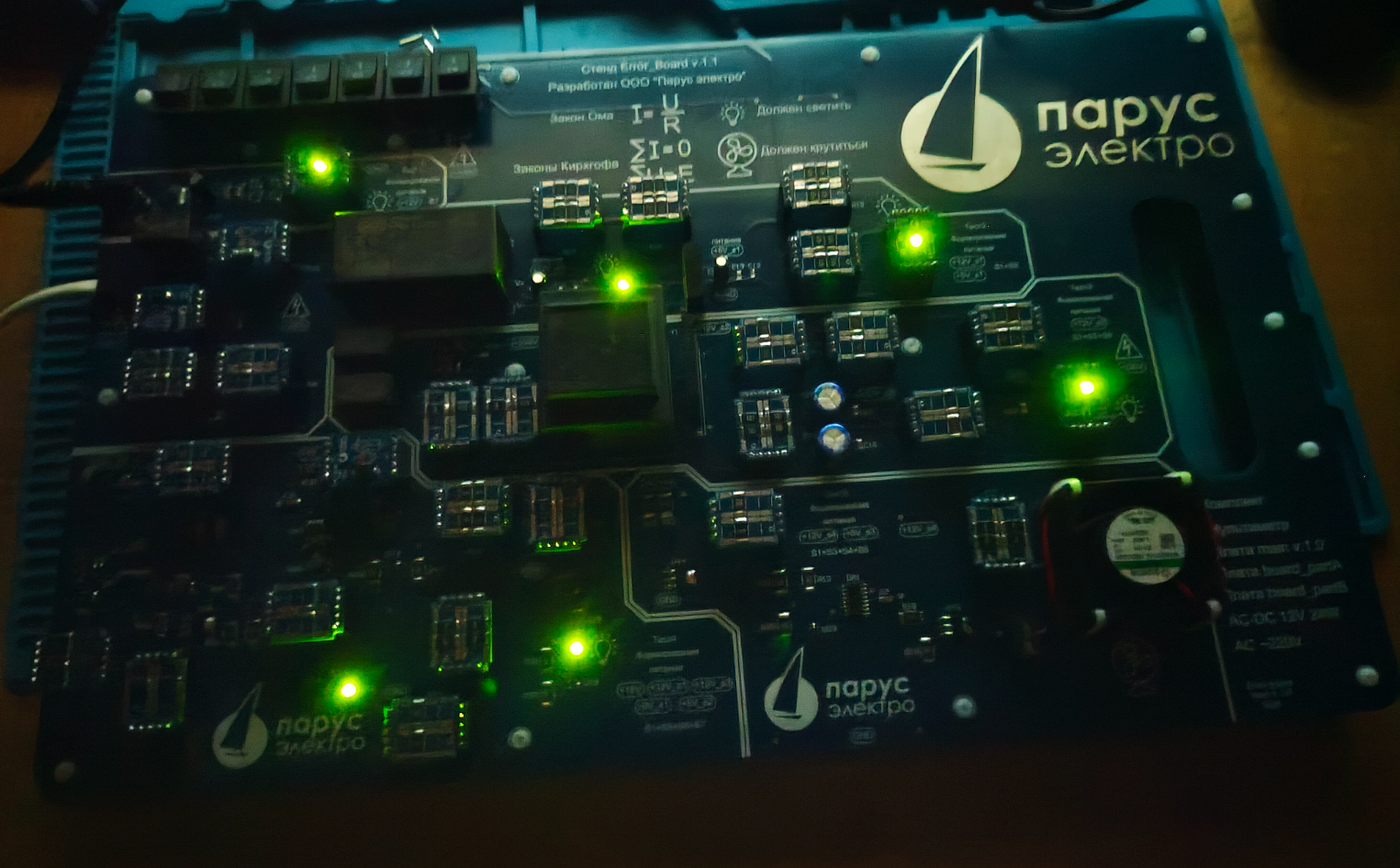
The board contains four independent LED circuits plus one fan circuit. Each circuit has a specific error that the candidate must find and fix:
- Reversed polarity on components
- Missing or incorrect resistor values
- Broken traces that need to be identified
- Incorrect component placement
There's also an optional fifth configuration for advanced testing of more experienced candidates.
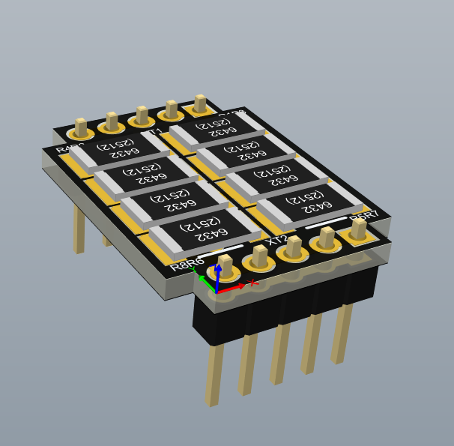
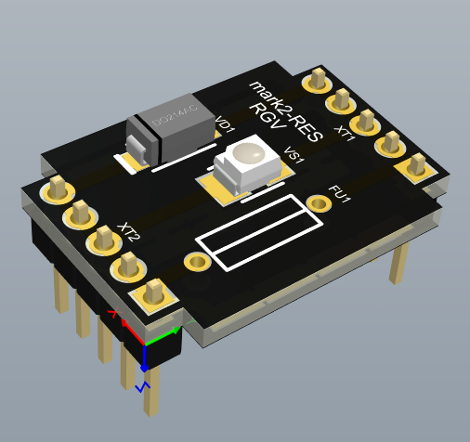
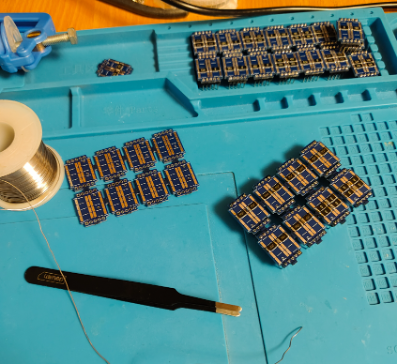
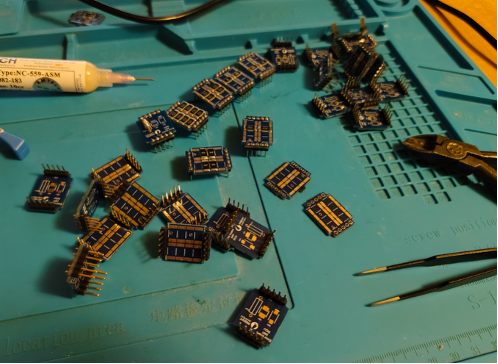
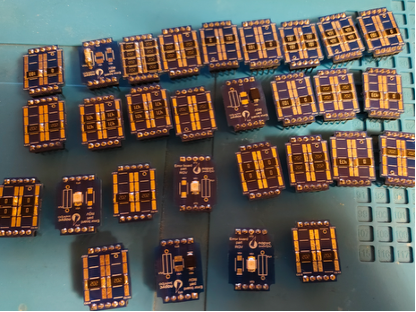
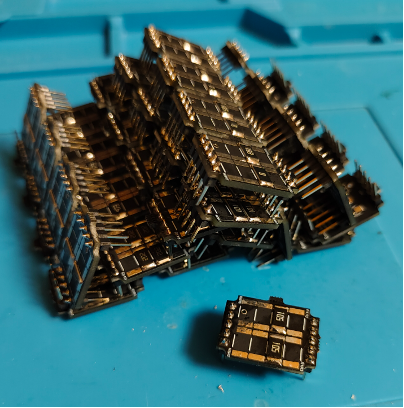
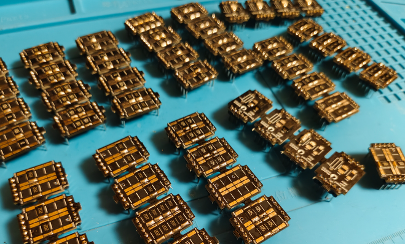
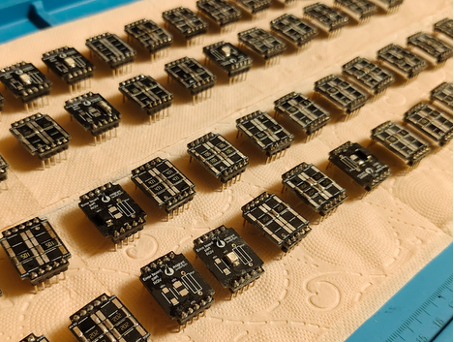
All components are mounted on small sub-modules rather than being loose components. This makes the board more durable and prevents parts from getting lost. PLS connectors allow for tool-free assembly and disassembly.
How It Works
The candidate's task is straightforward: make the LEDs light up and the fan spin. But to do that, they need to identify what's wrong with each circuit and correct it. No datasheets are provided — the candidate must rely on their fundamental understanding of electronics.
What makes this approach powerful is that it's not about memorizing specifications. It's about understanding how electricity flows through a circuit. If you truly understand the basics, you can figure out any of these errors.
Development Timeline
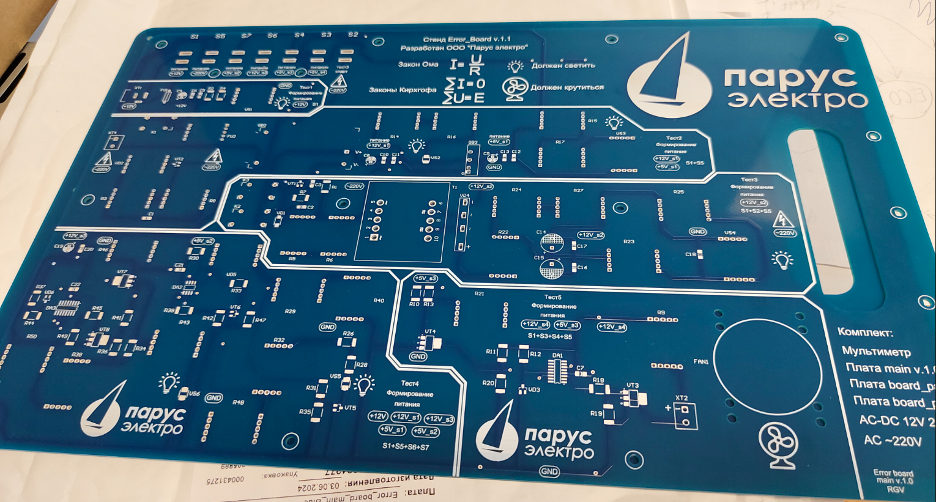
- April 2024: Conception and design phase. I sketched out the circuits, planned the error types, and ordered components.
- May 2024: Component soldering and assembly. Building the prototype took several weekends of careful work.
- June 2024: Testing with experienced engineers. This was a crucial step — I needed to make sure the errors were challenging but fair. The response exceeded my expectations. Experienced colleagues got genuinely excited about the board, spending far more time with it than I anticipated.
- July–September 2024: Implementation in the actual hiring process.
Results
The Error Board successfully identified two highly motivated junior engineers who, as I like to say, "have burning eyes" — professionals genuinely passionate about the field rather than just pursuing employment for salary alone.
The device also proved remarkably effective at recruitment events targeting students and recent graduates. Young people who might freeze up during a traditional interview come alive when presented with a physical puzzle to solve.
Key Takeaways
The methodology transforms interviews from abstract discussions into hands-on problem-solving that reveals genuine passion and fundamental understanding simultaneously. Here's what I learned:
- Hands-on assessment reveals far more than theoretical questions ever could
- Passion is visible — when someone's eyes light up at a circuit puzzle, you know you've found the right person
- Fundamental knowledge matters more than memorized specifications
- Making the interview process engaging benefits both the interviewer and the candidate
If you're struggling with hiring in a technical field, I encourage you to think beyond the traditional interview format. Sometimes the best way to find talent is to give people something real to work with.