Dennis Ritchie: The Man Who Gave Us Loops and Recursion
A deep profile of Dennis Ritchie, co-creator of C and Unix, whose quiet genius at Bell Labs shaped every aspect of modern computing — from smartphones to satellites.
Dennis Ritchie deserves monuments in technology parks and IT company campuses. The modern IT industry simply would not exist in its current form without his contributions. He played a key role in creating the C programming language and the Unix operating system — two pillars upon which virtually all of modern computing rests.
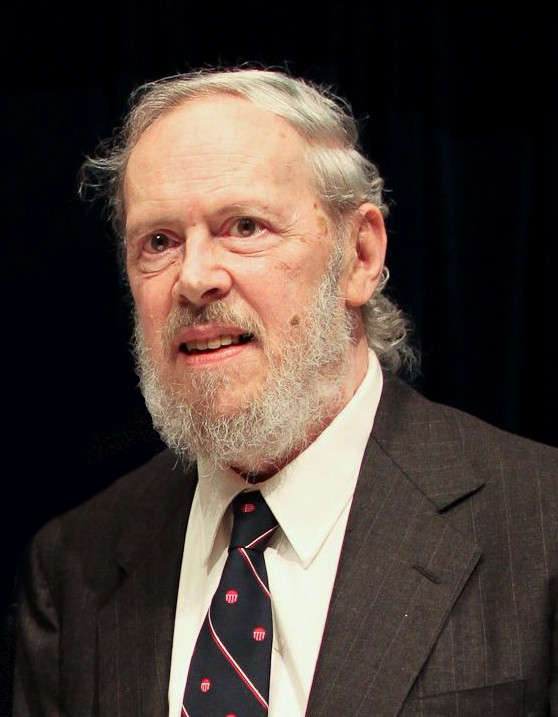
Before C appeared, anyone doing system-level work programmed in machine codes or assembly language. Imagine an alternative reality where Unix, Linux, and C were never invented. It's hard to even picture what computing would look like today.
Early Life and Education
Dennis McAllister Ritchie was born in 1941 in a prestigious New York suburb, into the family of Alistair Ritchie, a renowned Bell Labs scientist and co-author of a textbook on switching circuit theory. The family later relocated to Summit, New Jersey.
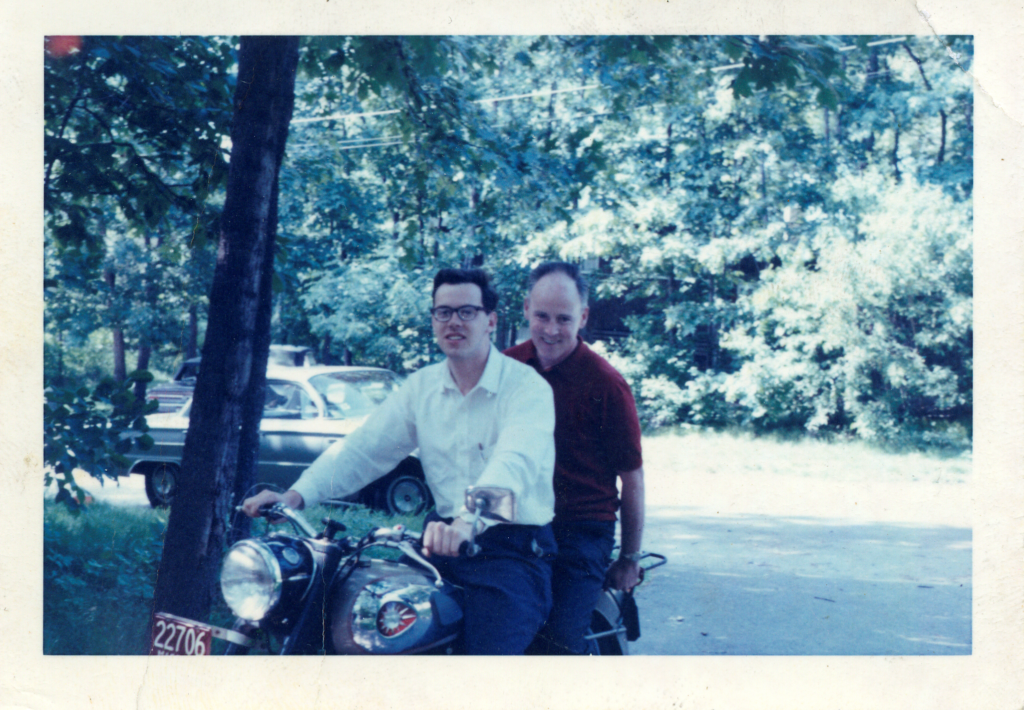
At that time, Bell Labs served as a global research center in physics and telecommunications. The company developed revolutionary technologies including the transistor, laser, and quartz clocks. Ritchie continued his father's legacy at this prestigious institution.
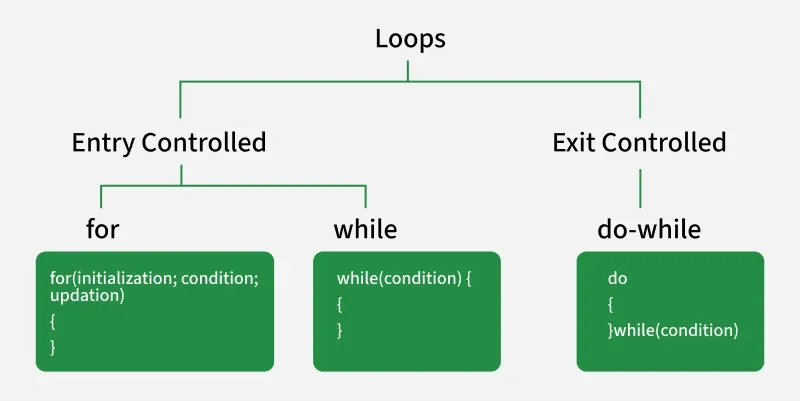
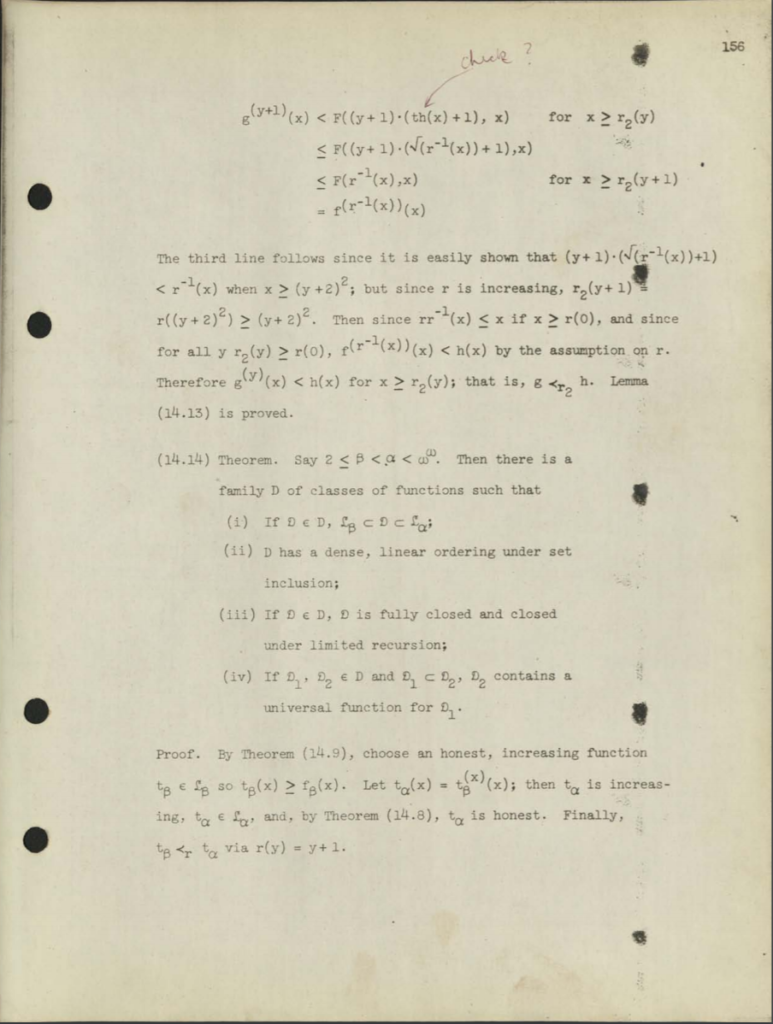
Ritchie earned a bachelor's degree in physics and applied mathematics from Harvard. His doctoral dissertation (1968), titled "Computational Complexity and Program Structure," described program loops as a tool for computing Godel's primitive recursive functions. Research published at the ACM'67 conference showed that loop nesting depth measures computational complexity.
Here's a curious detail: Ritchie never formally received his PhD degree, because he didn't complete the mandatory library manuscript submission procedure — which required students to pay binding costs. Friends joked he was "a doctor of science without binding."
His dissertation was considered lost until 2020, when researchers tracked it down. They were fascinated by how it was typed with complex mathematical symbols and multi-level typography — sixteen years before PostScript was invented.
In 1969, Ritchie officially joined Bell Labs to continue his work on what would become the C language.
Ritchie's Projects
Most of Ritchie's notable projects were created in collaboration with his longtime partner Ken Thompson.
Language B (1969)
Created by Ken Thompson with Ritchie's input, Language B was developed for Multics — Unix's predecessor system. The names Multics and Unix are connected as puns, and the language names follow an alphabetical sequence: B, then C.
The C Programming Language (1969-1973)
Ritchie was the primary developer of C, with Thompson assisting. While Ritchie focused on developing the language itself, Thompson simultaneously rewrote Unix in the new language. The work proceeded in parallel, each effort feeding into the other.
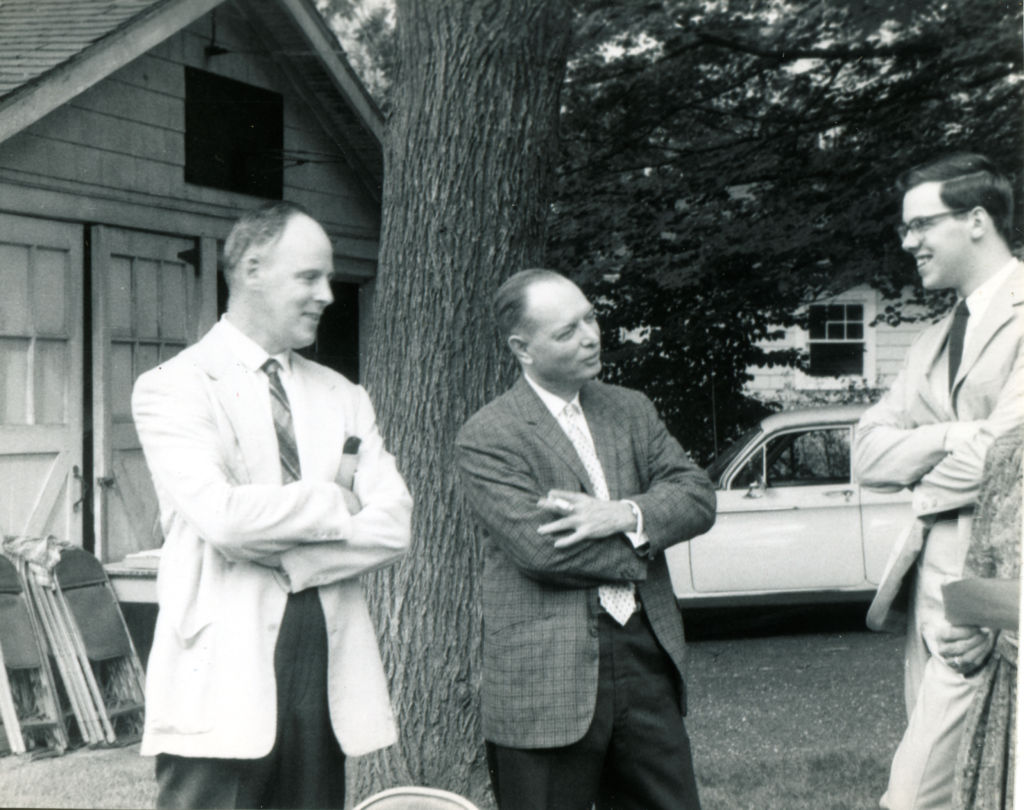
C was more than just a new programming language — it profoundly influenced how computer systems were developed. It introduced a new level of portability that transformed the situation completely. Unix became a universal system with open code, forks, and the ability to easily write new operating systems for new architectures. This was a genuine revolution.
The language enabled structured, procedural programming in a high-level language without sacrificing assembly language efficiency. It provided low-level memory access, required minimal OS support, and compiled to machine instructions very effectively.
Unix Operating System (1969-1973)
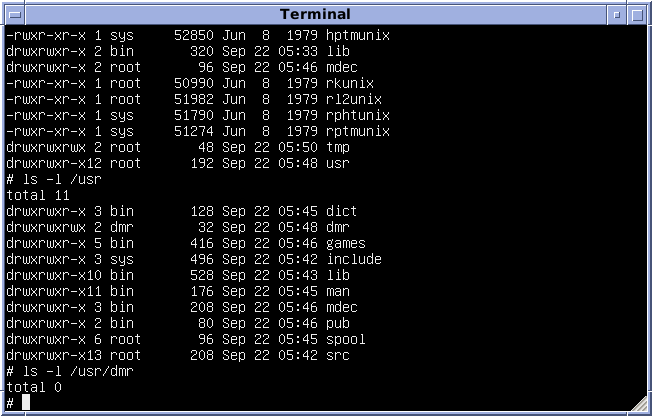
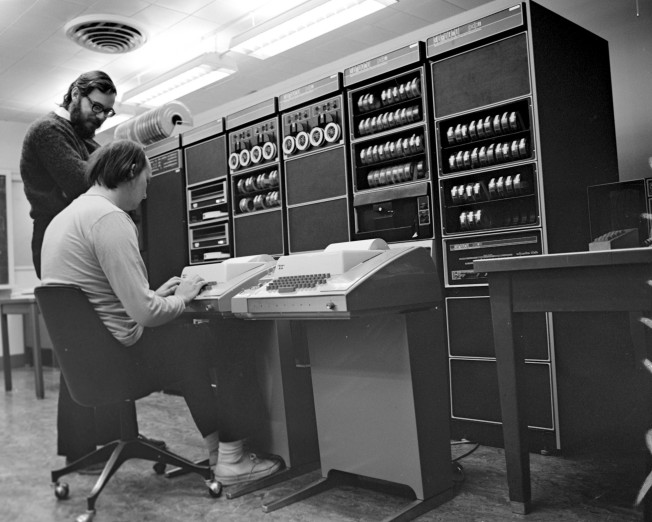
Unix was developed for early minicomputers. In the early 1970s, these "minicomputers" consisted of cabinet arrays occupying entire rooms. System performance was negligible compared to modern standards, and memory limitations required extremely efficient languages.
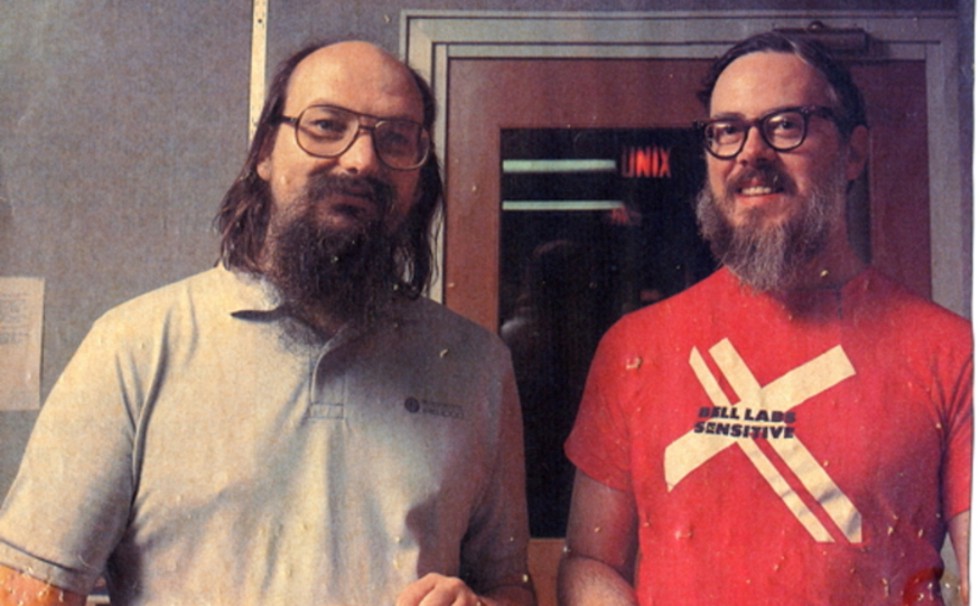
Early Unix versions were mostly written in assembly language. By 1973, Unix was nearly completely rewritten in C — a landmark achievement that proved high-level languages could be used for operating system development.
Other Projects
Ritchie participated in developing Plan 9 — a conceptual operating system with distributed resources that was ahead of its time but never officially released. He also contributed to the Inferno operating system and the Limbo programming language for distributed systems.
In 1978, Ritchie cracked the M-209 cipher machine jointly with James Reeds and Robert Morris. At the NSA's request, the authors didn't publish their findings, as the M-209 was still used by some foreign governments.
The K&R Book (1978)
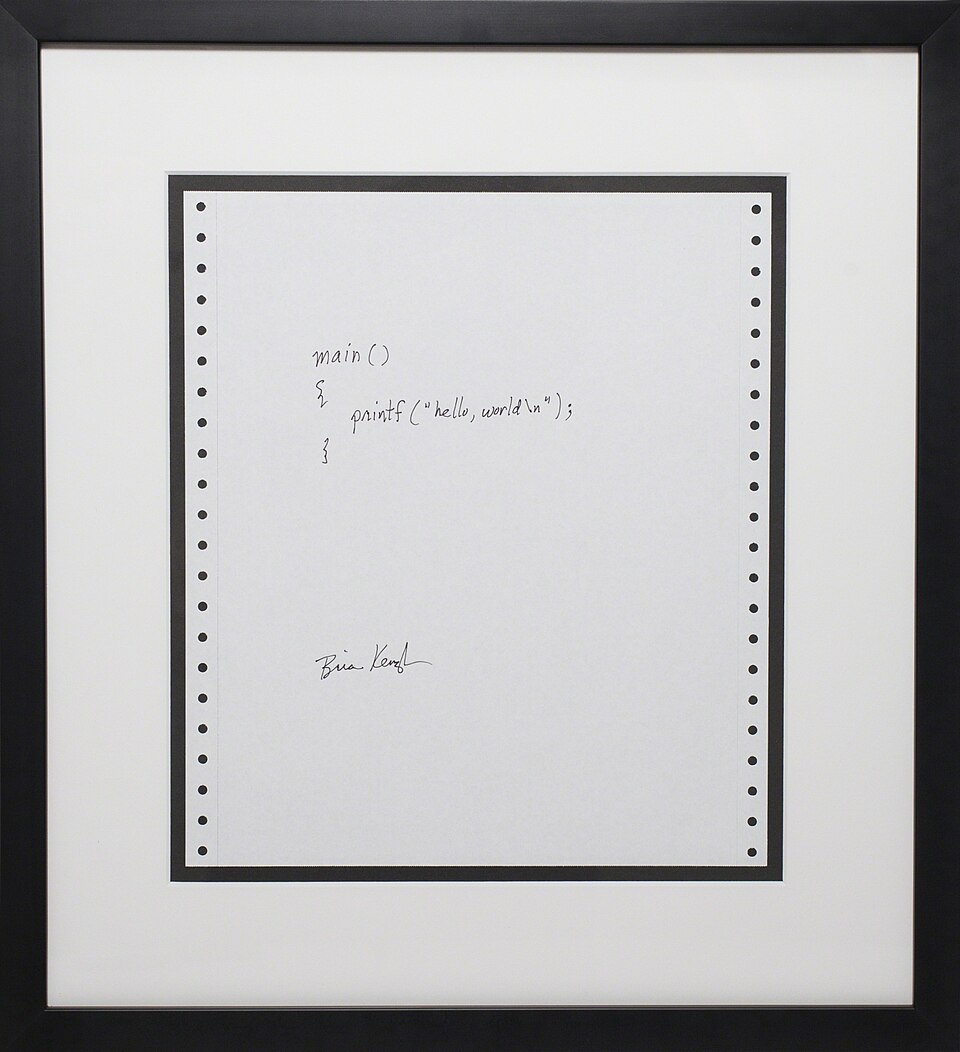
"The C Programming Language," co-authored with Brian Kernighan and widely known as "K&R," became the introduction to C for two generations of programmers. It set quality standards for both content and design, and established the tradition of starting programming education with the "Hello, world!" program.
In a curious piece of trivia, two lines of code with Kernighan's autograph were sold at New York's Algorithm auction as artwork.
Ritchie published 36 computer science papers over his career, covering topics from the QED text editor (1972) to the M4 macro processor to the Styx architecture for distributed systems (1999), which was implemented in Plan 9.
C's Impact on Computing
C was distributed alongside Unix, and developers quickly recognized it as an excellent systems programming language — suitable for operating systems, databases, compilers, and other demanding applications. It achieved an ideal balance between low-level control and high-level structure, becoming the primary language for serious development.
After Unix, C quickly gained popularity in both academic and commercial circles. Universities began teaching it as the primary programming language. Companies used it for operating systems, embedded systems, network tools, and much more.
C didn't just gain popularity — it shaped how modern languages are designed. Languages like C++, Java, C#, Go, and Python borrowed its syntax and fundamental concepts. C established standards for structure, style, and logic in programming. Developers familiar with C often find it easier to learn other languages.
Well-written standard C programs could compile on enormous numbers of hardware platforms with minimal changes — and this remains true today. C compilers are available for virtually any hardware platform.
Consider C's current applications: the Linux kernel is written in C; significant portions of Windows use C; embedded systems rely on it for speed and low memory consumption; the Python, Ruby, and PHP interpreters are written in C; Unreal Engine combines C and C++ for graphics processing; MySQL and PostgreSQL databases use C for fast, efficient data handling.
C may not be the most suitable language for web and mobile development, and there are legitimate concerns about memory safety. But it remains foundational to modern software systems, and developers who study C gain a deeper understanding of how computers actually function.
C and Unix were developed for programmers and engineers, prioritizing code brevity and efficiency. They cannot be called user-friendly or beginner-accessible — Unix command line or C code is guaranteed to render non-technical users speechless.
Comparison to Other Pioneers
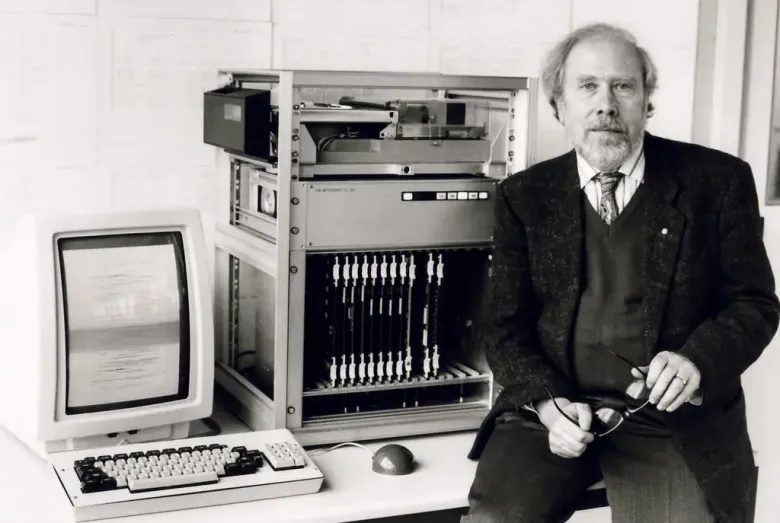
While Niklaus Wirth (Pascal's creator), Steve Jobs, and Steve Wozniak were all influential figures, Dennis Ritchie represents a significantly larger figure in computing history. He is one of the founding fathers of modern programming and the entire computer industry — a legend.
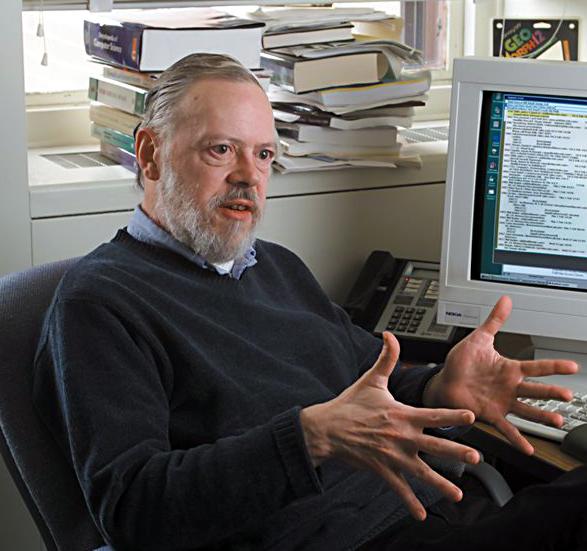
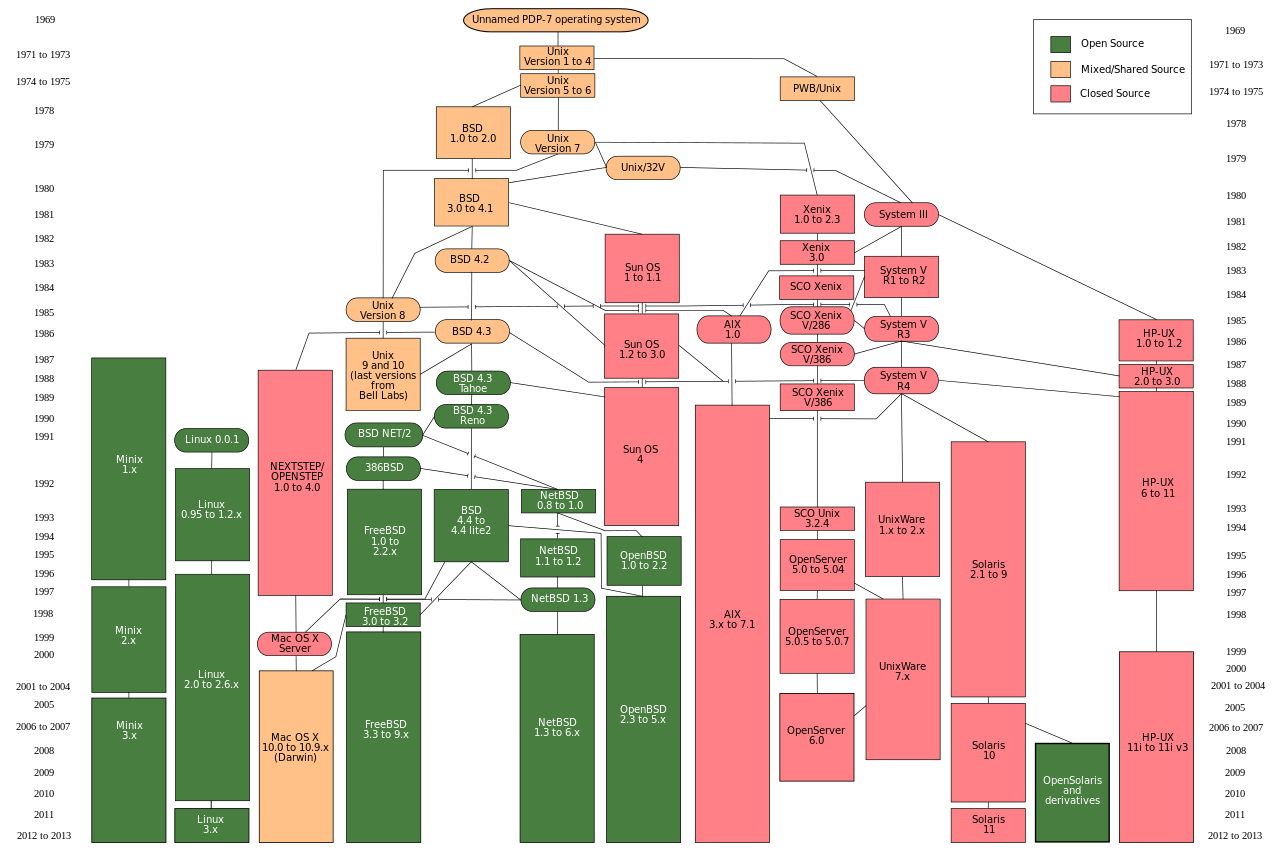
Unix code survives in Linux and forms the foundation of Android, iOS, and Apple's macOS. All contemporary technology is Ritchie's legacy.
Only Ken Thompson equals Ritchie in scale, as he was a collaborator on most projects. Pair programming creates synergistic effects and proves far more efficient than solo work — just as Jeff Dean and Sanjay Ghemawat proved later at Google.
Legacy and Ecosystem
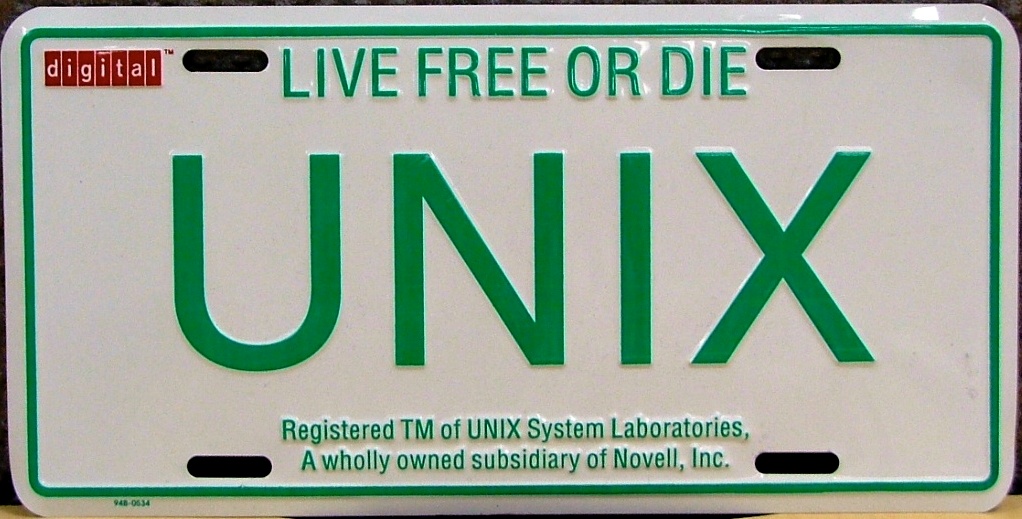
Unix and C created an incredibly broad and diverse technological ecosystem. Microcontrollers, GPS systems, satellites, automotive systems, traffic lights, internet routers, synthesizers, digital cameras, televisions, set-top boxes, web servers, computers, smartphones, tablets — and all their internal components. All of these are derivatives of Ritchie's work.
Final Years
In the mid-1990s, Ritchie became head of software research at Lucent Technologies following AT&T's restructuring. He retired in 2007.
Dennis Ritchie died on October 12, 2011, at age 70 — the same week as Steve Jobs. He lived a long, productive life and left a colossal legacy. Every contemporary developer could envy his achievements.
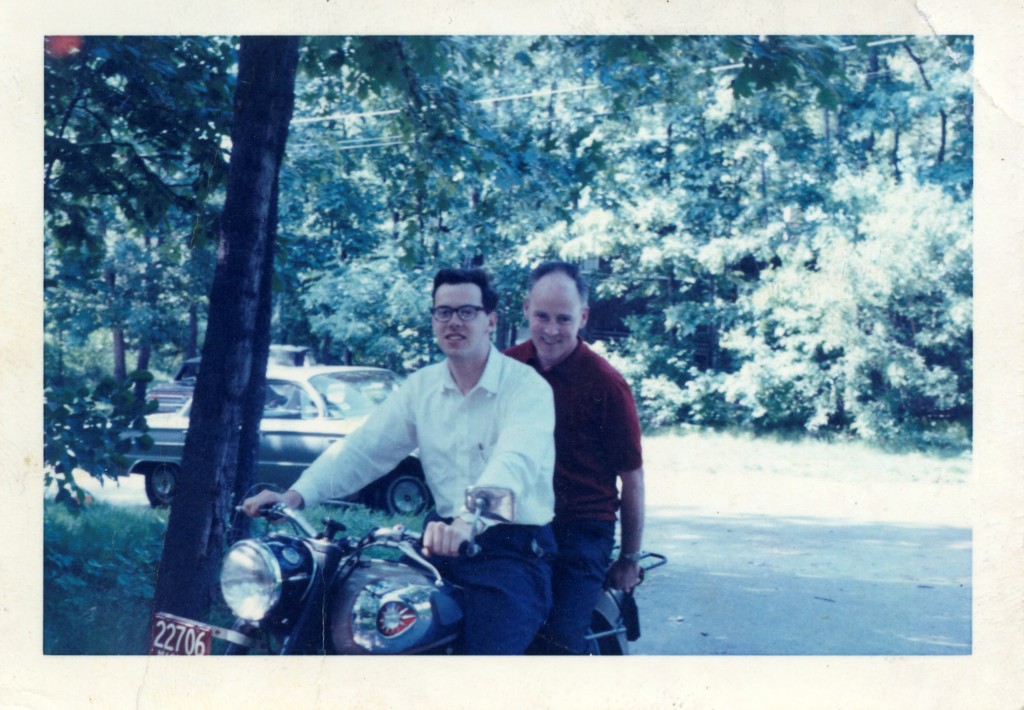
Despite his enormous legacy, Ritchie never pursued publicity, power, or wealth. By general consensus, he was a quiet, modest person with a strong work ethic and a "dry sense of humor." The world lost a giant — one whose contributions will outlive us all.