The Day Niagara Falls Ran Dry
On the night of March 28, 1848, Niagara Falls went almost completely silent. For 30 hours, people walked across the riverbed, danced quadrilles on exposed rocks, and salvaged War of 1812 weapons before the water thundered back.
Before the construction of power plants on the Niagara River, the volume of water flowing over the falls was more than double what it is today. Nevertheless, on the night of March 28–29, 1848, the flow nearly ceased entirely. At that time, thanks to canals and railroads, the local population and number of tourists were already substantial, so many detailed accounts of the event survive. The day began with people being awakened by an unfamiliar silence.
The roaring torrent had inexplicably diminished to a few thin trickles. Water mills and factories came to a halt. When the sun rose, crowds of the curious set out to explore the riverbed. For the first time in history, people could cross the river on foot — construction of a bridge across it had only just begun in January 1848.
They strolled about and picked up bayonets, sabers, musket parts, and tomahawks that had sunk into the river during the War of 1812. A detachment of American cavalry paraded up and down the dry riverbed as if on review. Dancing enthusiasts climbed onto a flat rock near the middle of the channel and danced a quadrille.
A certain George W. Holley drove his cart 275 meters to a logjam of trees stuck at the edge of Horseshoe Falls and began hauling away valuable timber. The owner of the tourist steamboat "Maid of the Mist" hurried to hire demolition experts to blast away the sharp underwater rocks that his vessel had, fortunately, never struck. This was promptly carried out.
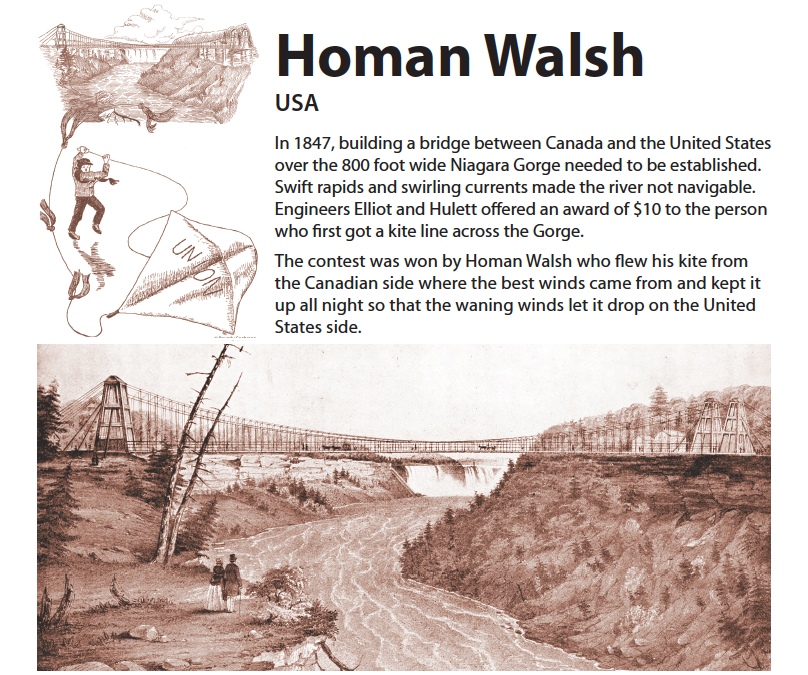
Engineer Charles Ellet marveled at an event that, had it occurred two months earlier, would have spared him the solution to a difficult problem: how to string a cable for a suspension bridge across rapids that could not be swum (ferries operated at a distance from them). Someone had proposed launching a rocket; another suggested tying the cable to a cannonball.
In the end, a prize of 5 or 10 dollars (accounts vary; equivalent to $175–350 today) was announced for the first boy whose kite could reach the other bank. The kite of 16-year-old Homan Walsh, who won the contest, stayed aloft continuously from morning until midnight, and he succeeded only on his second attempt — the first time, the line snapped as soon as the kite descended. With the second line, luck held: on January 30 it was secured on the far bank. A cord was tied to it and pulled across the water. To the cord, in turn, a rope was tied, and to the rope, a cable.
On the evening of March 29, people organized a torchlight procession along the rim of the enormous cliffs. But not everyone saw the strange phenomenon as merely entertainment or an opportunity to solve practical problems. Churches were overflowing with frightened parishioners who had decided that the end of the world was at hand. However, true panic did not have time to take hold.
Thirty hours after the falls "switched off," a powerful rumble and trembling of the earth announced the return of the water. No reports mention any destruction caused by the wave. Life went on as before.
What Actually Happened
The explanation came with news from Buffalo. Ice on Lake Erie that had begun to thaw was driven by strong winds to the mouth of the Niagara River. Then a frost struck, and the ice fragments froze together into a solid mass that blocked the current. When the wind shifted, the ice dam — approximately one kilometer long — began to break apart, and the flow resumed.
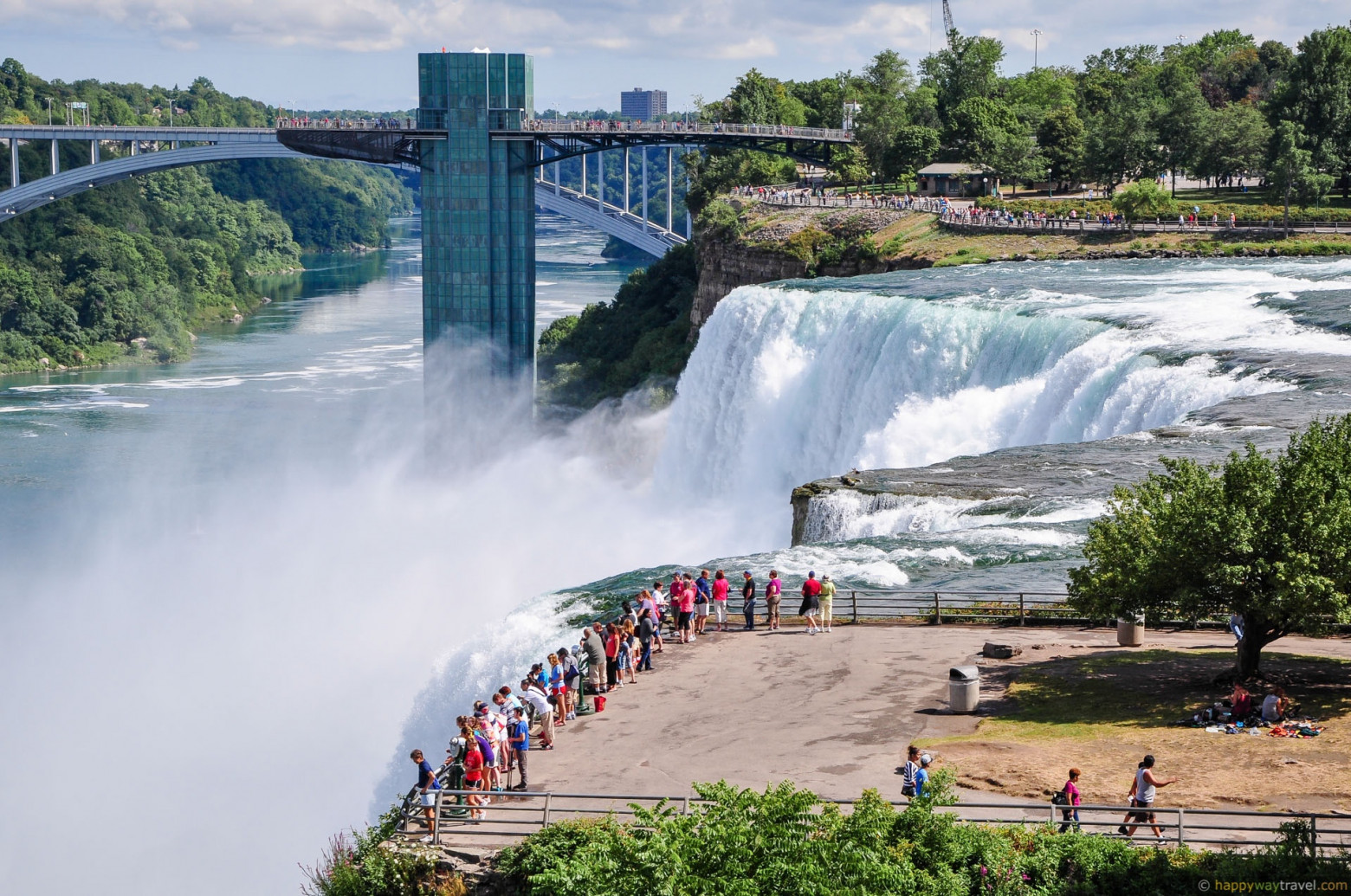
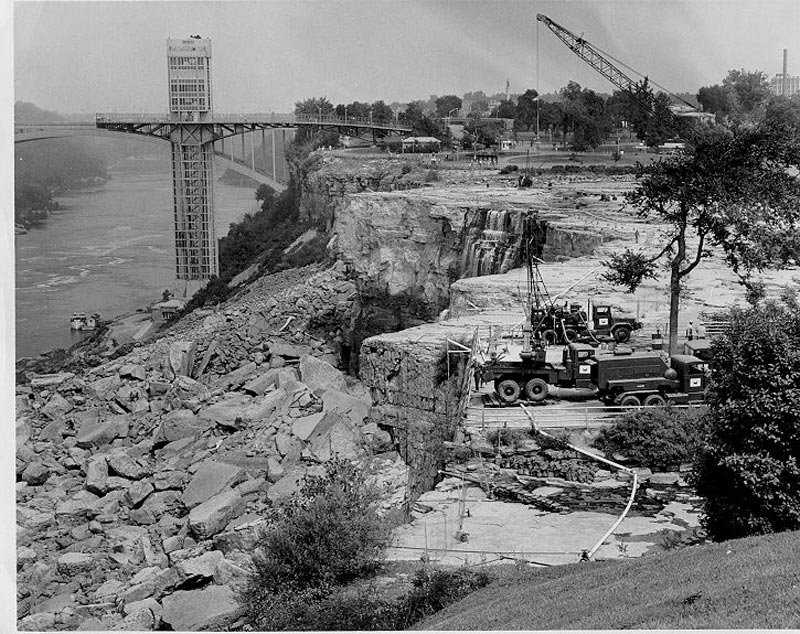
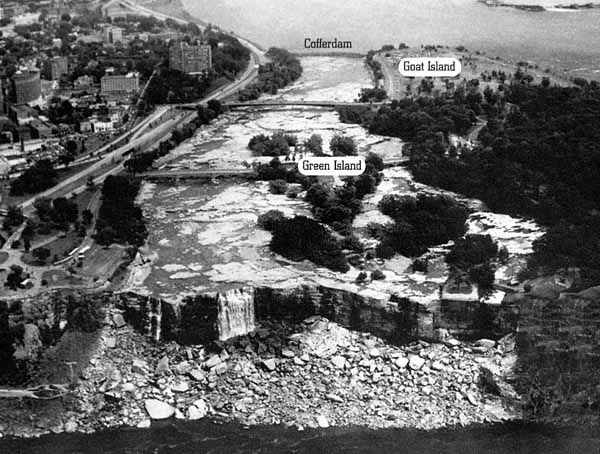
This natural phenomenon never repeated itself. But in 1969, US Army engineers artificially stopped part of the falls in order to study them and determine whether rock erosion could be halted. Several interventions were carried out (reinforcing the rock mass with steel cables, among other measures), and the erosion was slowed.
Author: Nina Mancheva