Children's Science Books That Explain Complex Things Better Than Textbooks
A maker builds working electric motors with his children using designs from a 1946 Soviet children's engineering book — and discovers that old Detgiz publications explain electromagnetic fundamentals more clearly than any modern textbook. Complete with construction photos and animated GIFs.
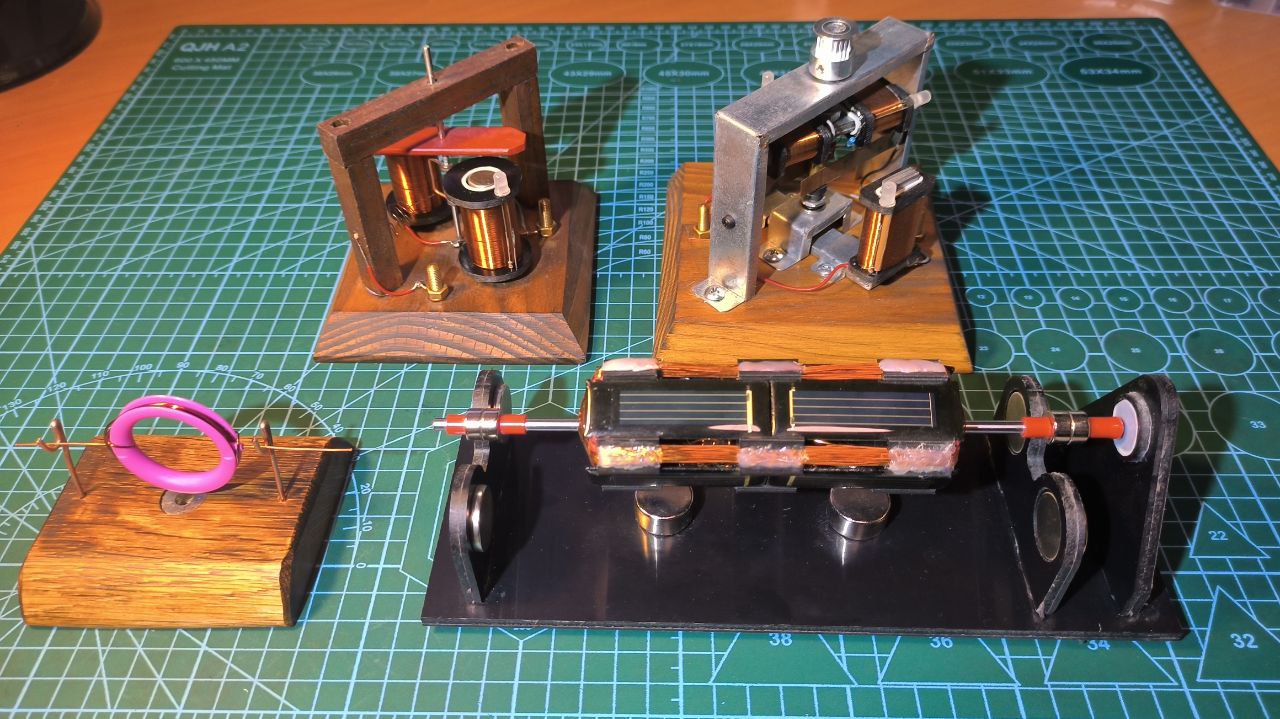
On my desk I keep two motors. One is a simple coil of thick lacquered wire balanced on copper forks — nudge it and it spins. The other runs off a window sill, powered by sunlight. Both get questions. Neither gets a fully satisfying answer from most adults who see them, including well-educated ones. That gap — between knowing a fact and understanding a mechanism — is what this article is about.
The Book That Started This
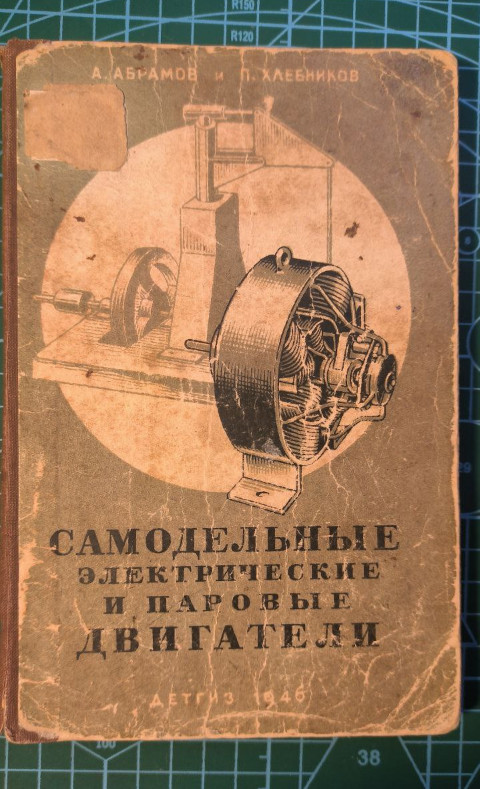
My father had a copy of Самодельные электрические и паровые двигатели ("Homemade Electric and Steam Engines"), published by Detgiz — the Soviet state children's publisher — in 1946. It is now digitized and available on rusneb.ru. The book's goal was to let a child build a functional motor from materials available in a hardware store. Seventy-five years later, that goal still holds up, and the explanations are, frankly, better than what you find in modern school textbooks.
The secret: instead of starting with equations, the book starts with mechanisms. You understand what is happening because you built the thing, touched the parts, and watched it stop when you blocked the interrupter spring.
Motor One: The Simplest Possible Electric Motor
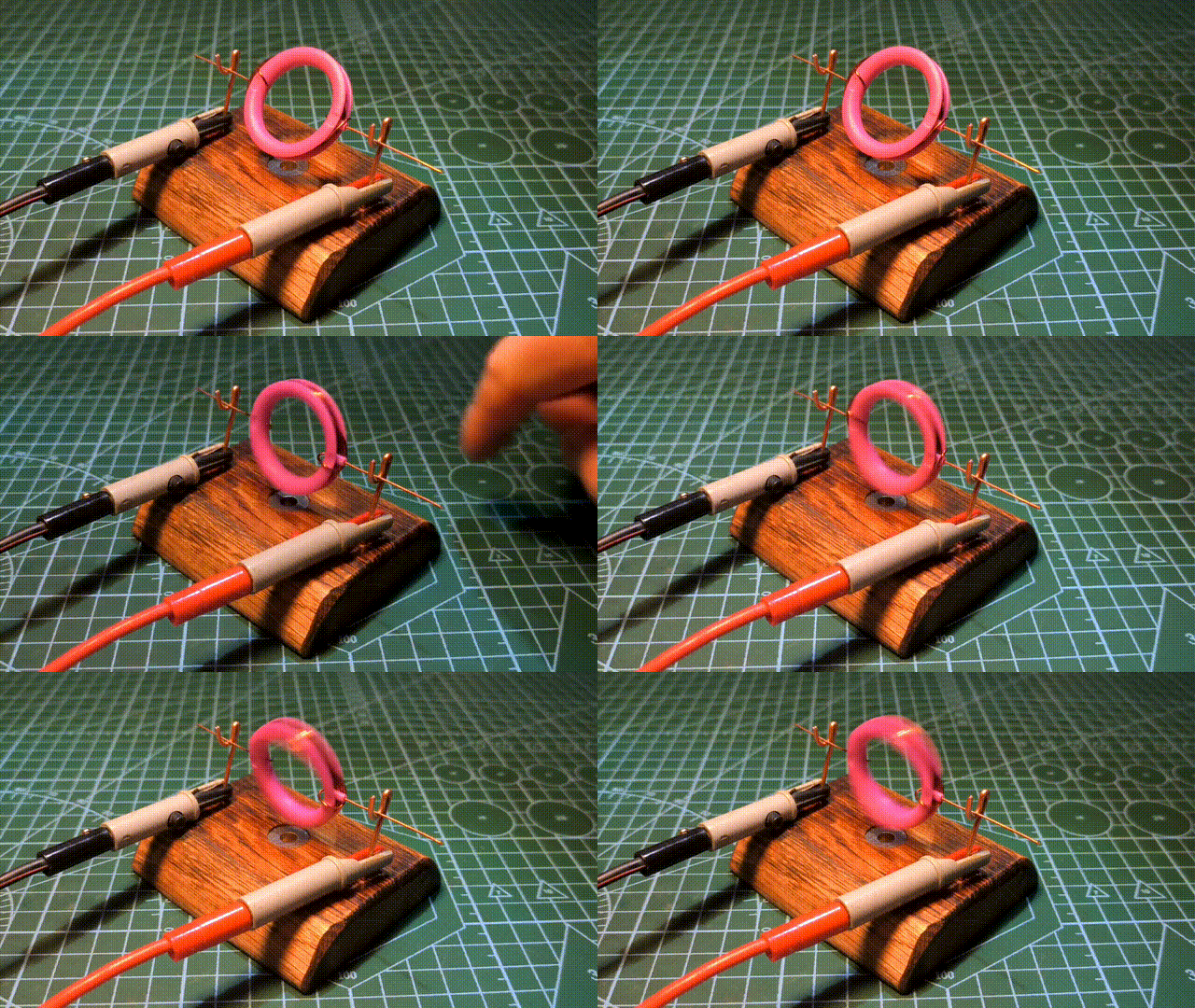
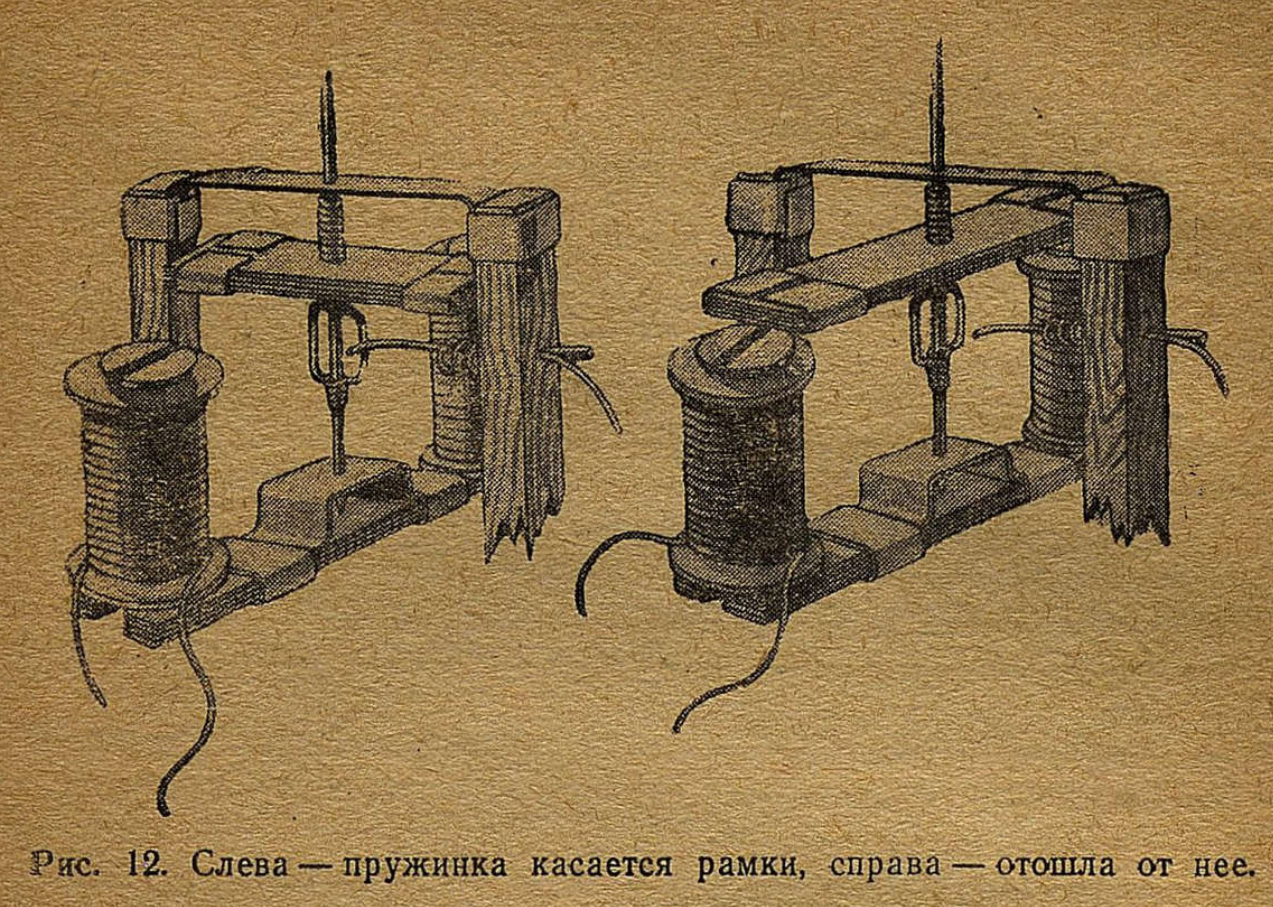
The first motor in the book is almost embarrassingly simple. It has two parts that matter: an electromagnet coil (the stator) and a steel armature (the rotor). When current flows through the coil, it attracts the steel armature. The armature swings toward the coil. At the point of maximum attraction, an interrupter — a spring contact that the rotating armature physically trips — breaks the circuit. The magnetic field collapses. Inertia carries the armature past center. The spring re-closes the contact. The cycle repeats.
The author of the book describes it as "a carousel spun by a stationary person": the person reaches out to pull the carousel toward them, then lets go at the last moment so momentum carries it around for the next pull. This analogy is better than any I have seen in a physics textbook.
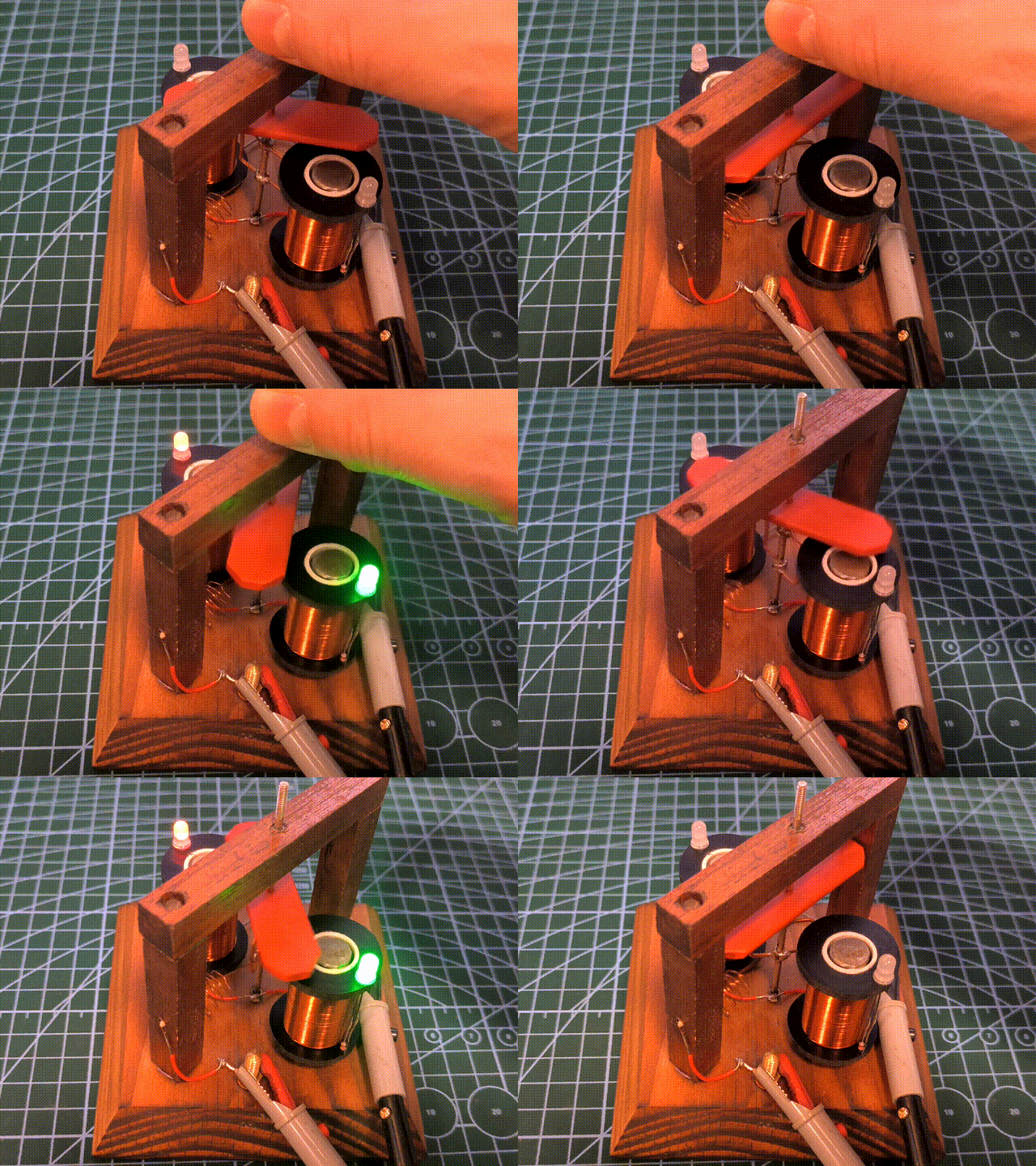
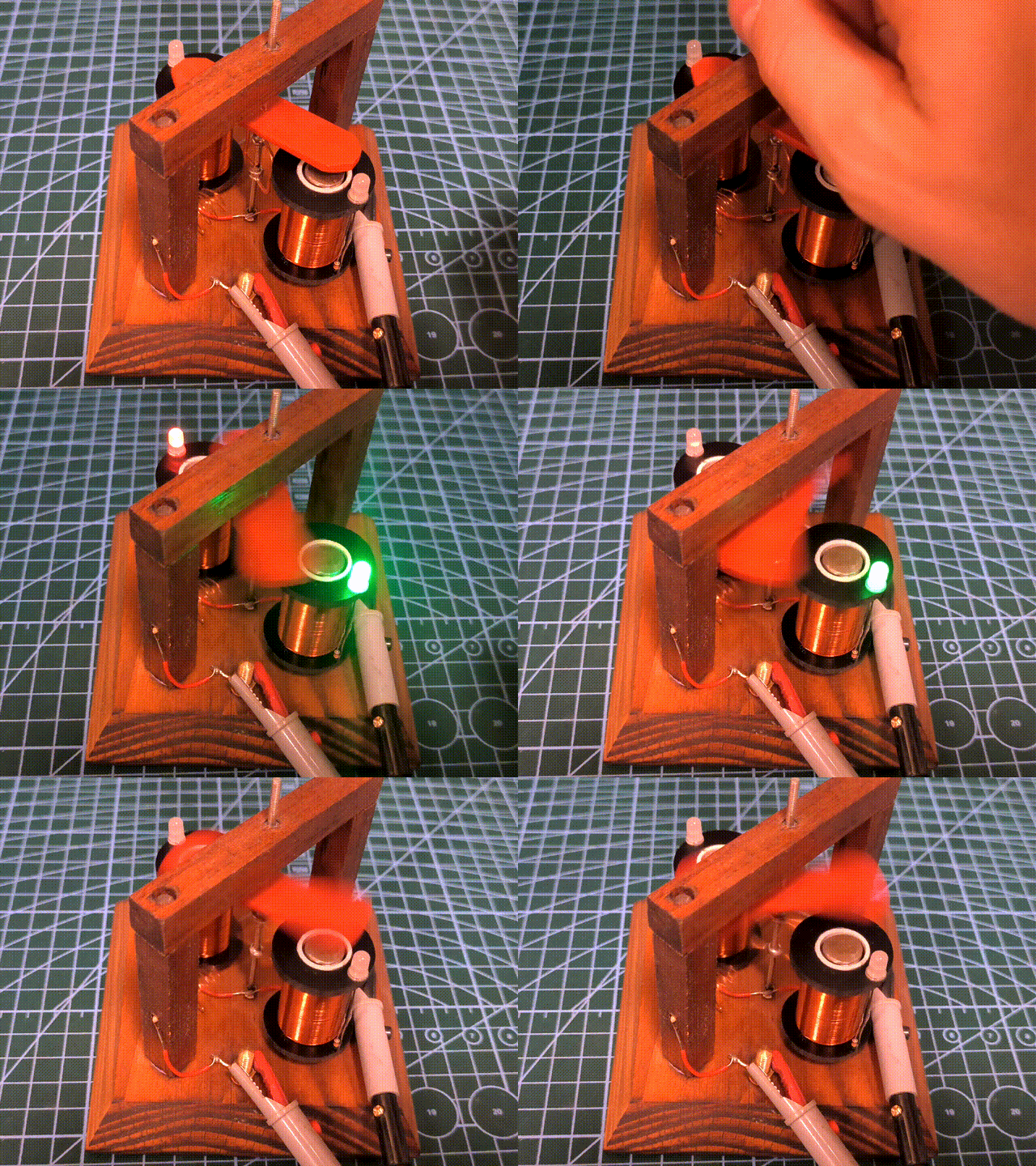
For my version, I added bicolor LEDs wired in parallel with the coils so you can see the current direction changing in real time. The rotor is made from a steel strip salvaged from a hacksaw blade, mounted on a bicycle spoke axle. The coil former is PVC sheet, heat-formed into flanges with a hot gun.
Why This Motor Requires a Push
The first motor has a dead spot: when the armature is perpendicular to the coil axis, there is no net torque regardless of whether current is flowing. The motor cannot start from this position on its own. You have to nudge it. This is not a flaw in the design — it is a teaching moment. Children immediately ask why, and the explanation (torque depends on the angle between the magnetic field and the rotor) is one of those things that clicks when you demonstrate it physically in a way it never quite does on a whiteboard.
Motor Two: Rotor Windings and a Commutator
The second design is more sophisticated. It has four coils in total: two on the stator and two on the rotor. The rotor coils are wound on cores made from galvanized sheet metal (permanent magnets were not readily available in 1946; electromagnets on both rotor and stator work just as well). A commutator made from brass tube segments switches current direction in the rotor coils based on angular position, ensuring that the rotor is always being attracted toward the nearest stator pole and repelled by the receding one.

Building the commutator is the hard part. Brass tube sections need to be cut, insulated from each other, and mounted on the axle with the correct angular offset. I used a hand saw, fine sandpaper, and a great deal of patience. The result — watching the LEDs blink alternately as the rotor turns, showing the current reversing — is worth every minute of it.
The Mendocino Motor: Sunlight as the Commutator
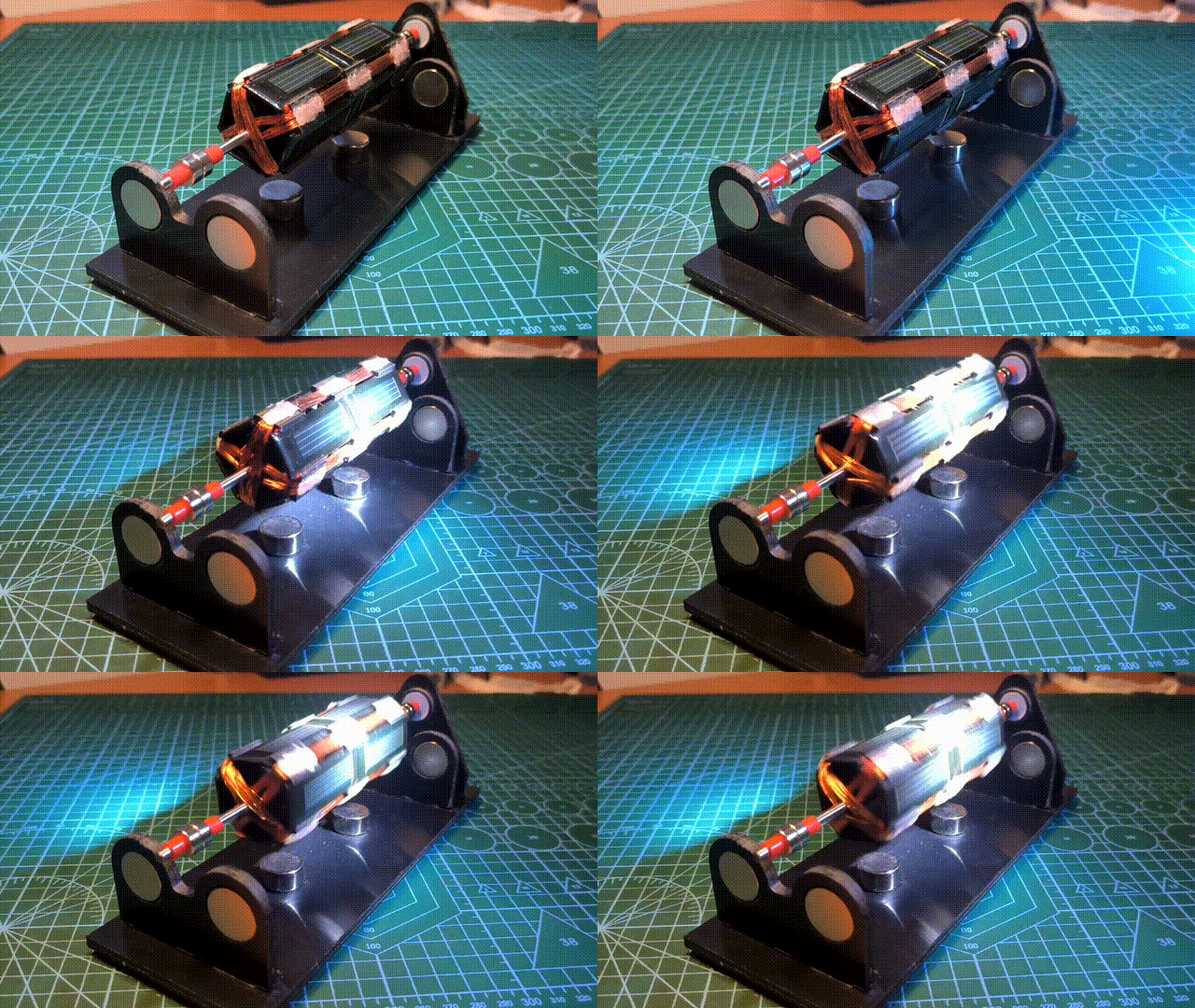
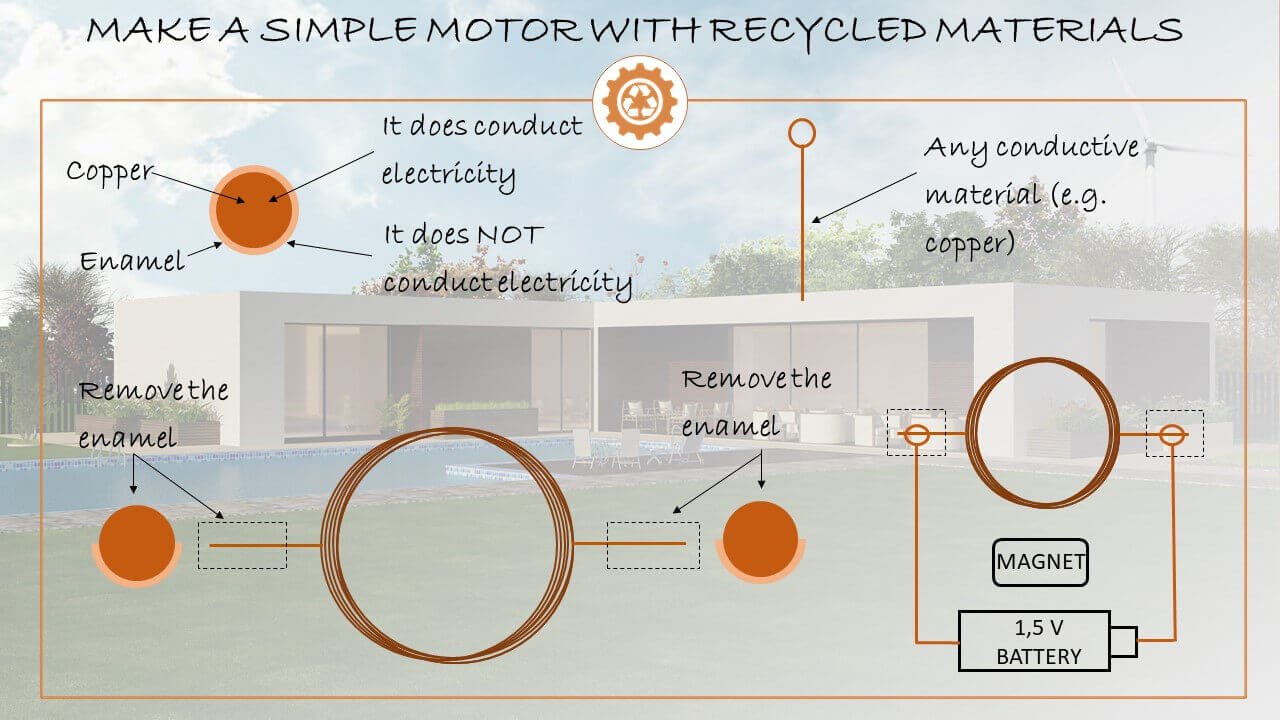
The second motor on my desk is a Mendocino motor — a variant of the solar-powered floating armature motor. It uses the same principle as the commutator motor, but the switching is done by solar panels mounted on the rotor itself. As the rotor turns, each panel rotates into and out of light. The panel facing the light generates current; the panel in shadow does not. The geometry is arranged so that the lit panel always drives the rotor forward. No contacts, no brushes, no mechanical switching at all — just physics.
When I explain this to visitors, the usual reaction is: "That's it? That's all it is?" Yes. That is all it is. And that moment of understanding — achieved without a single formula — is exactly what the old Detgiz books were designed to produce.
What These Old Books Get Right
Modern physics education has a tendency to front-load abstraction. Students learn Maxwell's equations before they have ever felt the click of a relay or seen a magnetic field deflect a compass. The Detgiz approach is the reverse: build first, formalize later. The equations become a description of something you have already experienced, rather than a map of territory you have never visited.
I am not arguing for abolishing theory. But the books from this era — aimed at children, printed on poor paper, illustrated with simple line drawings — understood something that many expensive modern textbooks do not: comprehension requires physical intuition, and physical intuition requires physical contact with the phenomenon.
If you have children and any interest in electronics, I strongly recommend tracking down digitized Detgiz engineering titles. They are freely available, they are honest about complexity without being discouraging, and they produce working objects. The 1946 motor book is a good place to start.