Building a Medical Exoskeleton
A former aerospace engineer, now working remotely from a wheelchair due to multiple sclerosis, spent two years designing and building an open-source medical exoskeleton for under 60,000 rubles — and is releasing everything publicly so others can build it for people who need it.
A short disclaimer first. I very much wish this article were purely an academic exercise — that no one who reads it would ever need an exoskeleton. Unfortunately, that is not the case. Statistically, everyone has at least one person close to them who needs one.
About the Author
I am a design engineer with extensive experience. I spent many years working in the aerospace industry. Now I work as a remote programmer. I didn't change careers for money. My legs stopped working due to a severe form of multiple sclerosis — which, incidentally, has nothing to do with old age. It's not only my legs. My hands don't cooperate well either. I'm dictating this article by voice. Spinal cord damage is hell — not like in the movies, far worse than that. But that's not what this article is about.
The Problem with Existing Solutions
Medical exoskeletons are not a new topic. There are markets, research papers, products. But there are at least two reasons why they remain science fiction for most people who need them.
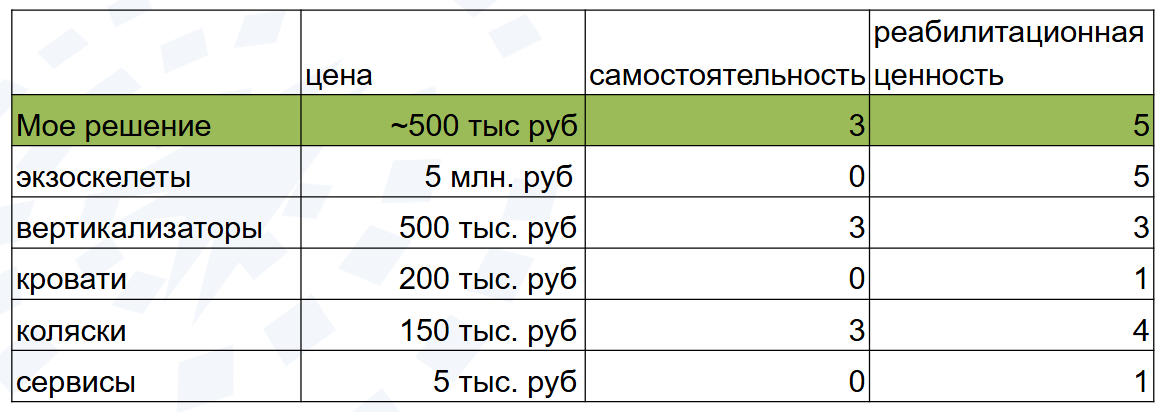
The first is price. At best, we're talking about the cost of a new car. The second is that consumer purchase is not permitted — exoskeletons are sold only to institutions and clinics, not to individuals.
The restriction on personal ownership is probably well-founded. As someone who sits in a wheelchair permanently, I understand what an unexpected shift in posture can do. What looks minor can end catastrophically if no one is present to help correctly. But the central point stands: like the tango, a wheelchair user is rarely alone. I genuinely cannot picture a scenario where a disabled person independently puts on an exoskeleton and uses it solo — there is always someone nearby.
Starting the Project
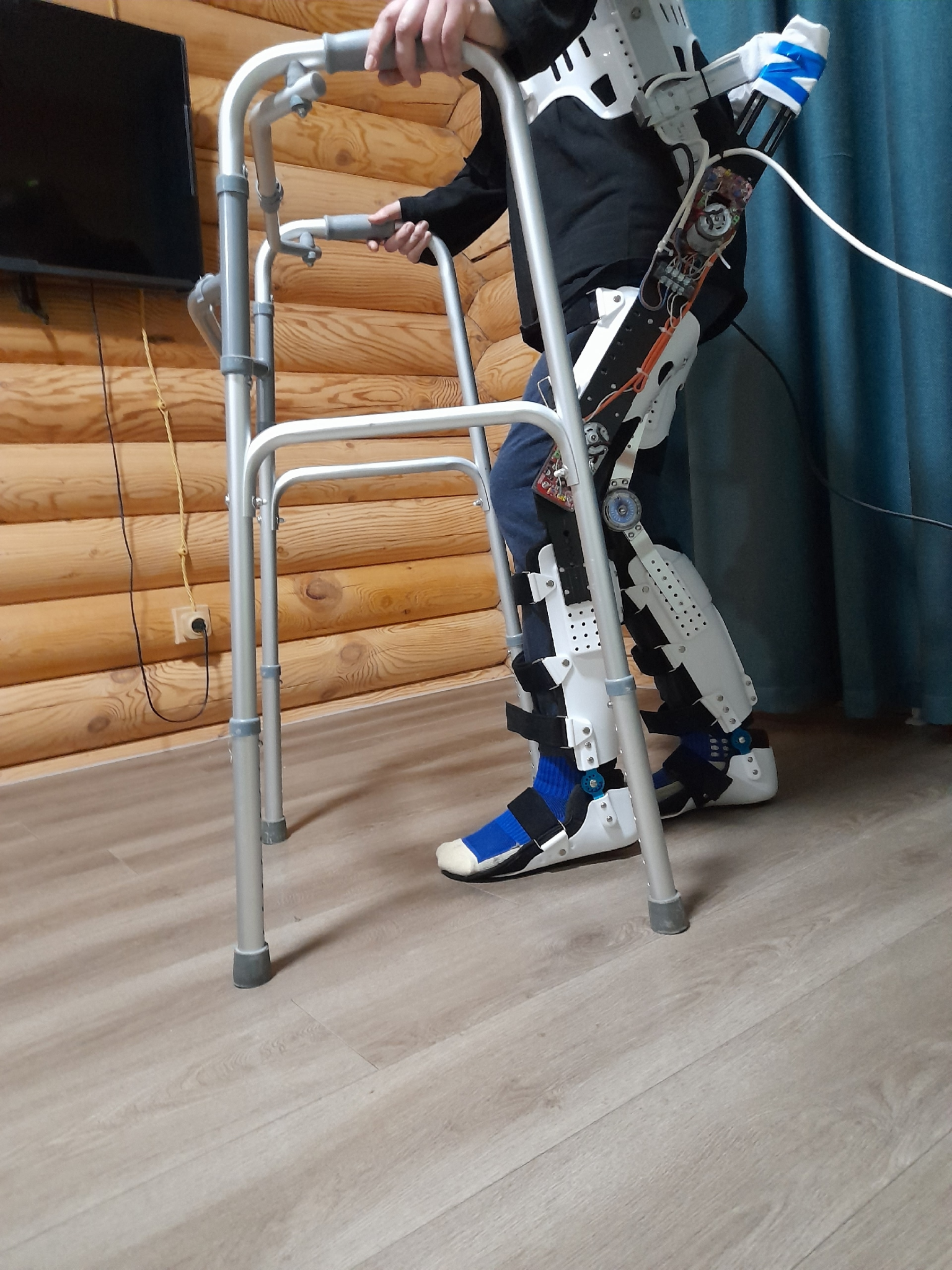
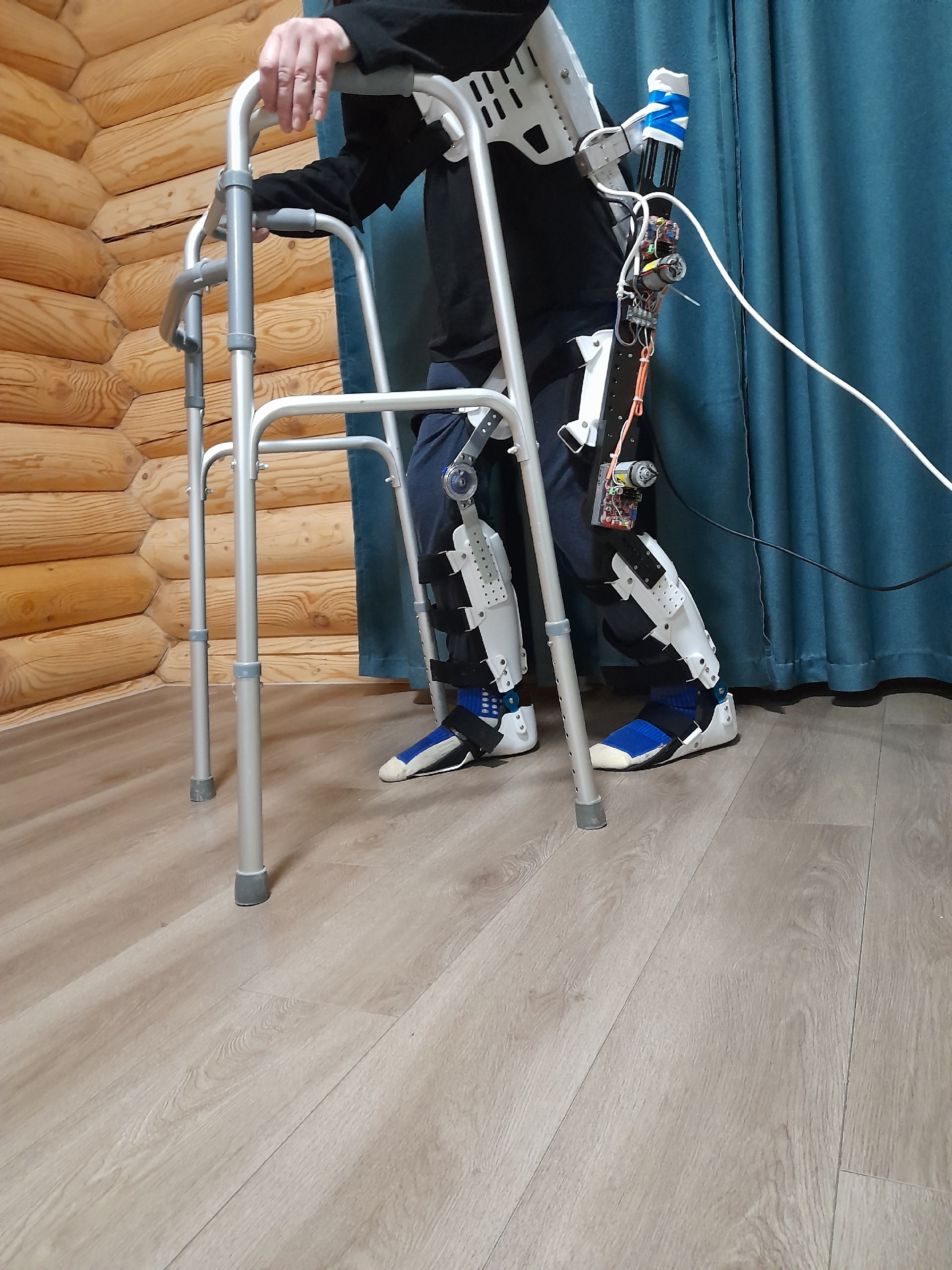
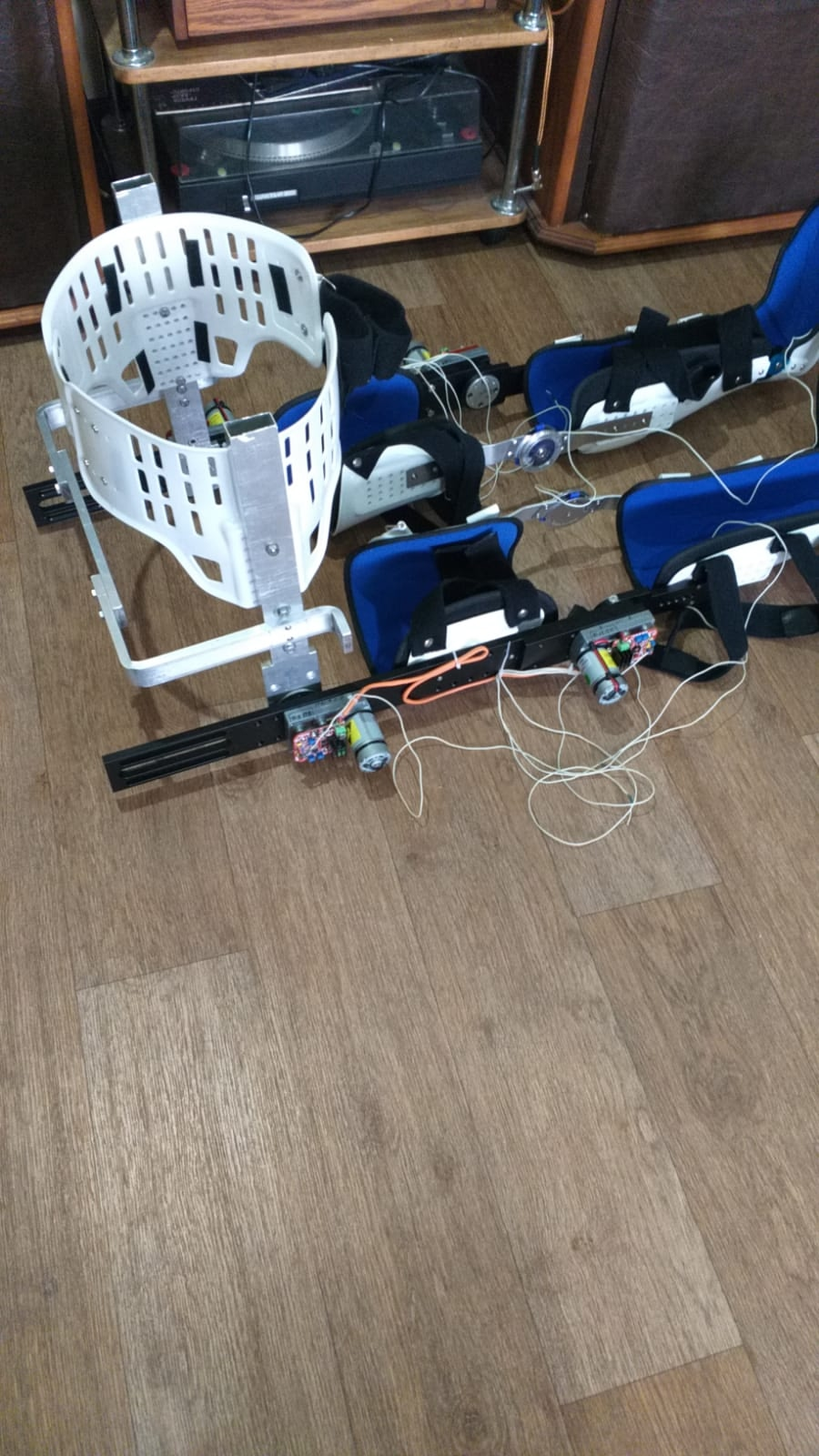
Almost as soon as I was confined to a chair, I began developing my own solution. That was two years ago. All the models and code are on GitHub. I'd like to explain some of the design decisions here. Assembly instructions will also be published there over time.
In terms of component cost, this comes to 50,000–60,000 rubles. The assembly labor is also modest — by my estimate, two to three hours per day over a month, at a very leisurely pace.
Over two years we built the first prototype. It works. Since my hands are of limited use, I handle the design and programming. How one programs without hands is a separate, rather sad story.
Technical Decisions
The prototype currently on me is made from aluminum. I worked extensively with that material in my previous career, so it was a natural starting point. The surprise: it's extremely expensive. The aluminum parts I'm wearing cost around 40,000 rubles, and I had to order them from China.
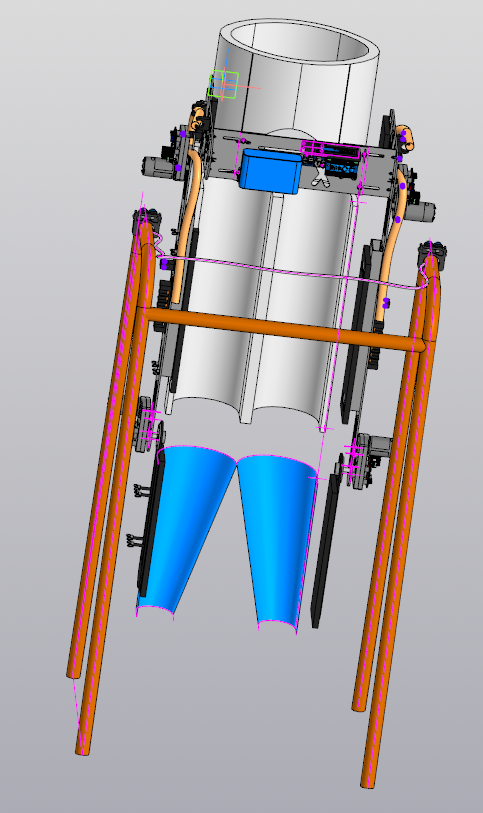
The solution came quickly: laser-cut thin sheet steel.
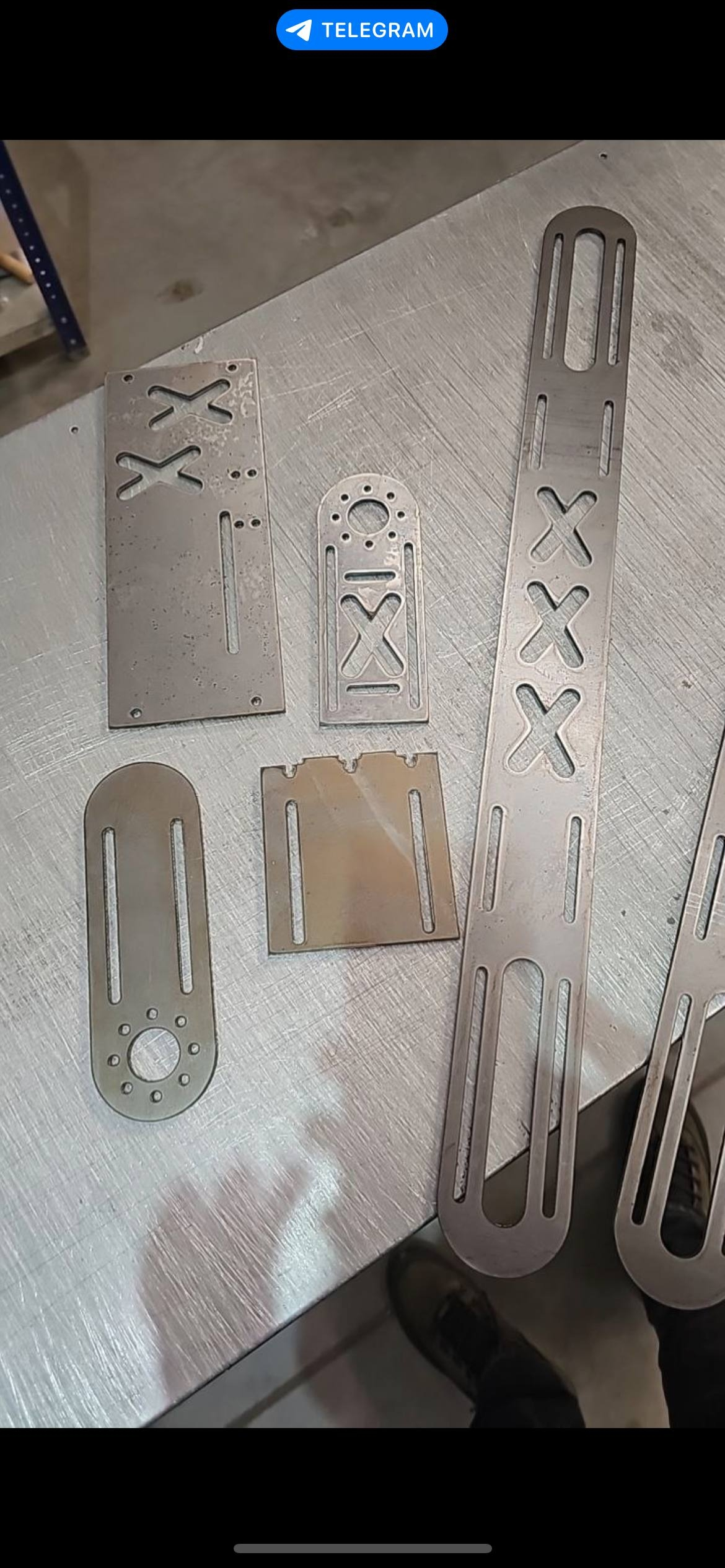
The photo shows zinc-coated steel grade 3. In terms of strength and weight, it's equivalent to 10mm aluminum. In terms of cost: approximately 3,000 rubles.
For the controller I used Actuino — simply because I didn't know other options existed at the time. This was my first work with any microcontroller, and with electronics in general. I had enormous motivation: life in a wheelchair is short. Look up hypokinesia if you want to understand why. I now have a project running on ESP32 as well, though there are projects I'm keeping private for now.
Why I'm Publishing This
Let me summarize the purpose of this post. When I started this development I had grandiose dreams of disrupting the market. Now I'm simply afraid I won't manage to publish even what I have — and there's a substantial body of work here, with many useful discoveries.
When I developed all of this and then showed people, I found that many of them couldn't build it — or rather, simply didn't want to. Which surprised me, because I worked hard to simplify the assembly. My wife said she could build it herself, which is my benchmark for "simple enough."
So I'm releasing this into the open. I want to see the results of my work. Please — build this for your friends. For the people who need it.