Deconstructing Beavers: Wild Terraforming Engineers in Action
A deep dive into the engineering marvels of river beavers — how they redirect rivers, build fortified lodges and dams, fell trees with surgical precision, and terraform entire landscapes for their survival.
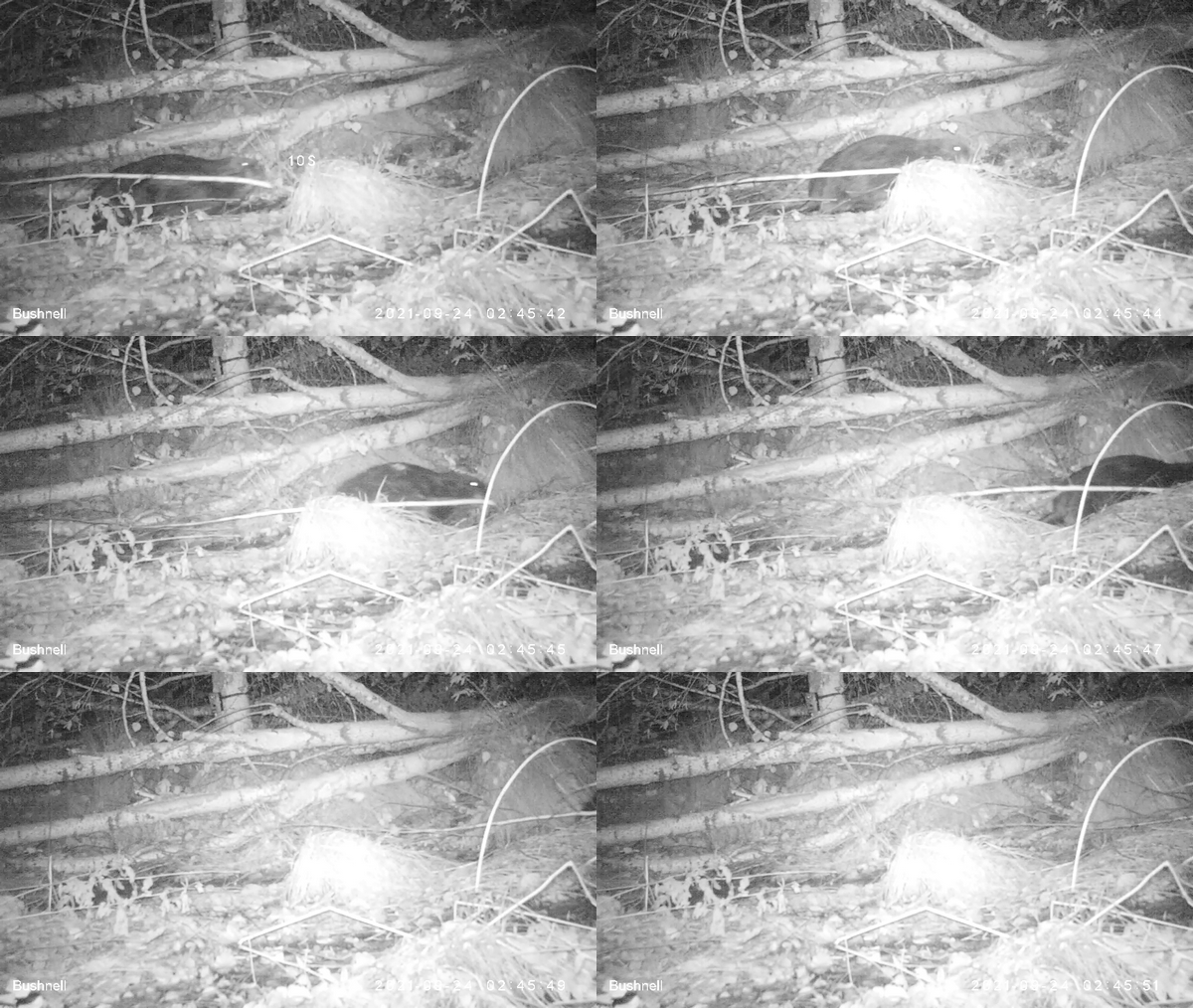
We nearly drove these little creatures to extinction by the early twentieth century. And now our hero is calmly gnawing on road signs near Yekaterinburg.
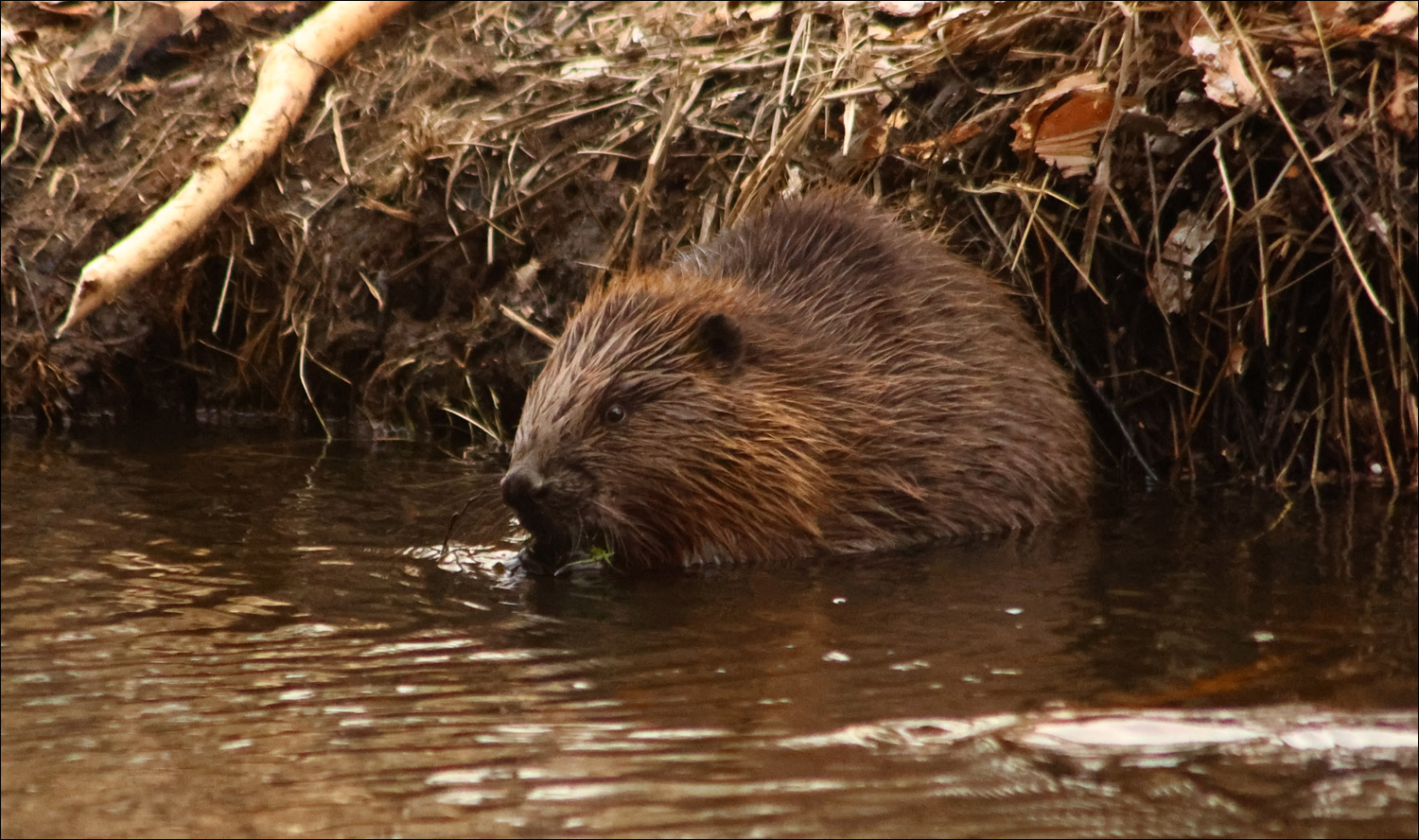
Imagine a massive rodent weighing a bit more than a roe deer, perfectly adapted for water. Add enormous teeth reinforced with metal (specifically ferrihydrite) and serious engineering skills when it comes to "how to derail a train" or "how to flood a village." Meet the beaver. Beavers are amazing because they terraform the surrounding landscape and reshape the planet around them into something safe for themselves.
Here's a specific example. A pair of beavers once settled on the Chyornaya River. First, they conducted a site survey. The bank turned out to be too low for them — not very convenient for operational bases and the main stronghold. So the beavers went ahead and redirected the river's channel. Then they built a lodge following all the rules of fortification. Right next to it — a dam. It's quite convenient to raise the water level so the entrance becomes submerged! Wolves don't approve of that.
Then they dug moats around the lodge and felled several trees to form an abatis. They made a diversion channel as a safety valve in case of flooding, so the dam wouldn't wash away. They stockpiled about a ton of branches on the bottom of the resulting pond for winter. And went off to doze.
In winter, the river froze over. Our heroes simply swam right out of the lodge under the ice, grabbed a branch from their bottom stash, and returned to munch on it.
The terraforming didn't end there. Of course, the following year they needed to build several more types of engineering structures at the base.
Main()
In principle, you already know the basic algorithm of beaver behavior from this pair on the Chyornaya River near Sysert (40 kilometers from Yekaterinburg). So, at some point in spring, a young two-year-old beaver realizes it's time to get out of the family lodge because the parents are tired of supporting him. More precisely, he might get a smack from dad, because after age two he gradually transitions from "dependent" to "competitor on my territory."
The young beaver begins a long romantic journey along the river, and sometimes crosses over to neighboring rivers nearby — searching for a mate. According to some data, a beaver can walk 8 kilometers along the bank, but cases of 40-kilometer treks have been documented. During these times, it sleeps in improvised shelters under roots or bank overhangs, without creating a permanent dwelling. During migration, there are two goals: find an amazing spot for a home and meet the love of its life. That is, the beaver notes unoccupied places on the river with an experienced engineering eye where it would be great to build a dam. And casually checks whether anyone else is wandering nearby. By the way, we'll talk about modeling such introductions using a shovel a bit later.
The key thing is that the beaver tries not to walk on land itself — and doesn't let others do it either. Essentially, this formula describes its entire life. This is what it strives for.
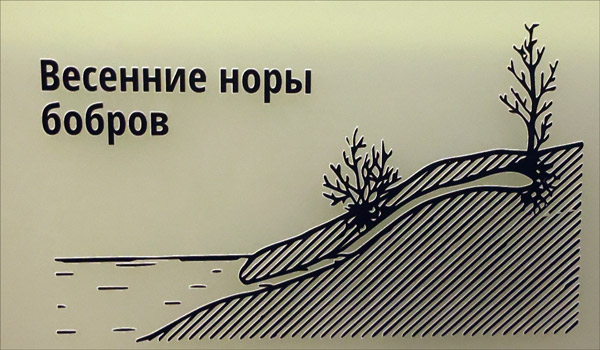
A happily acquainted pair (or less commonly, a single beaver later joined by a female) begins building a lodge, semi-lodge, or burrow. The first year's task is to obtain winter shelter, stockpile food, and if possible, secure the surrounding landscape. Where the bank allows, they dig a burrow, ideally bracing it against something that can reinforce it.
Burrows, by the way, are very dangerous for inspectors doing beaver counts: you can easily walk along their river and fall waist-deep into one of them.
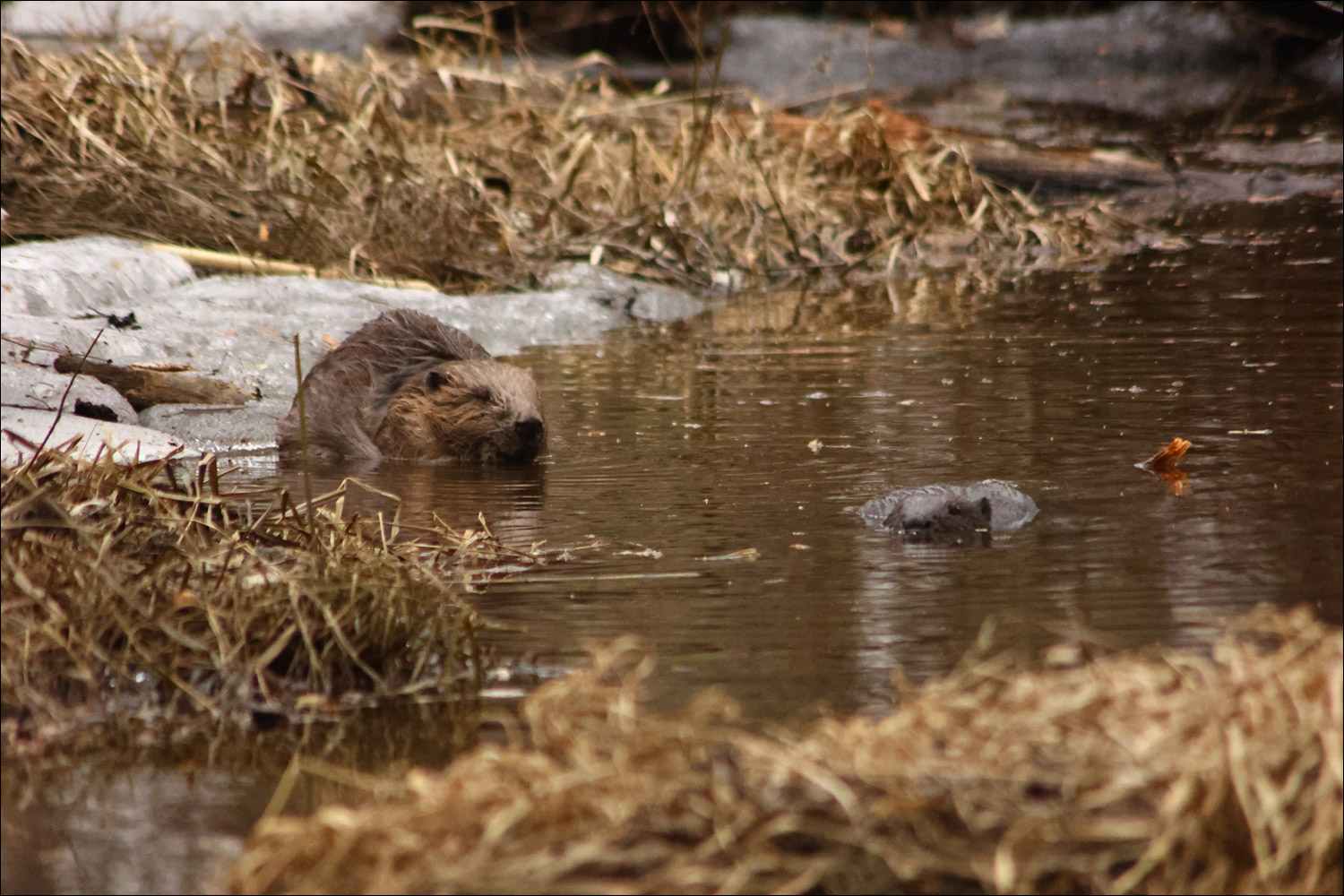
Went to fell a tree upstream so the current would carry it closer to the lodge
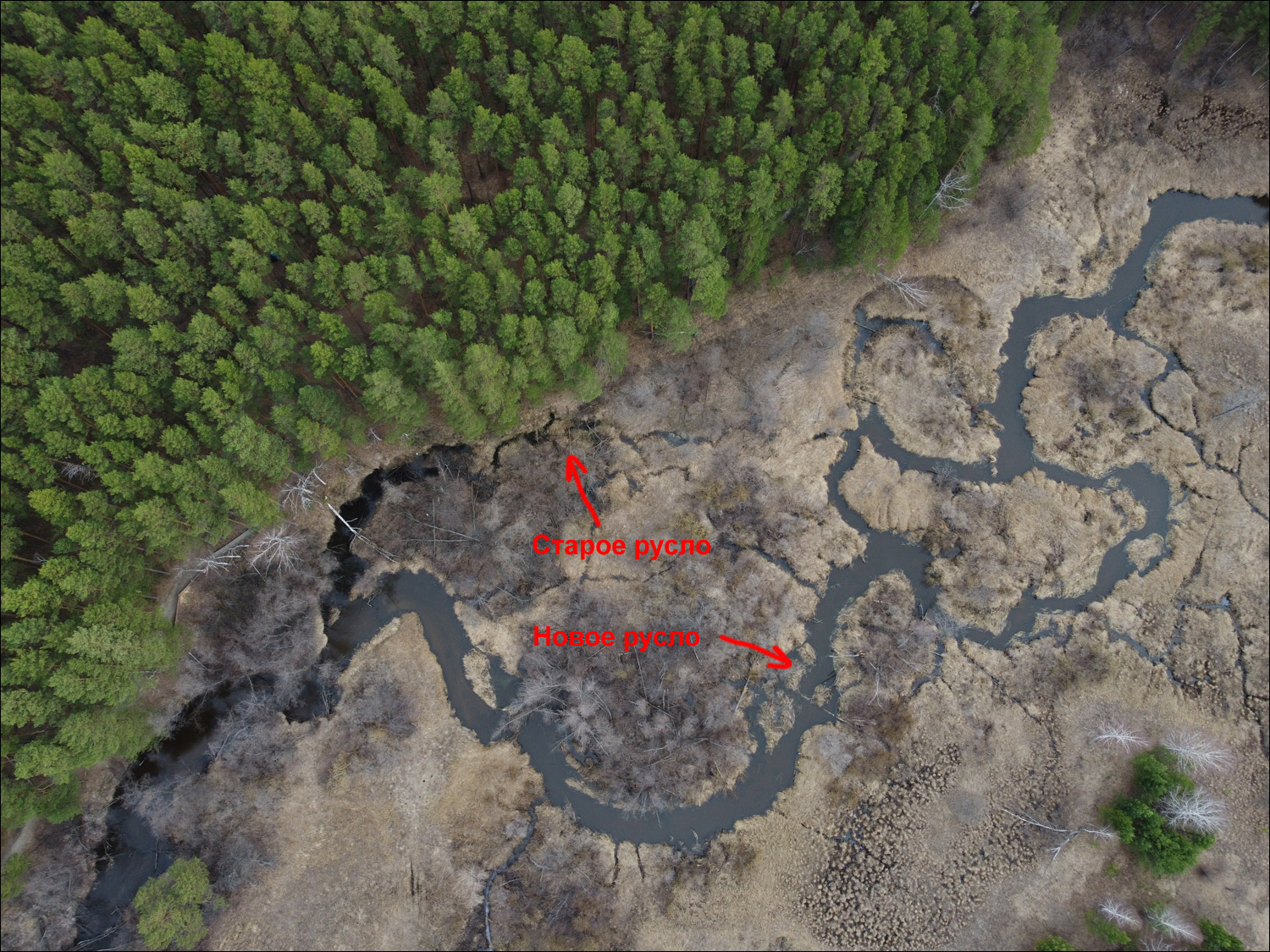
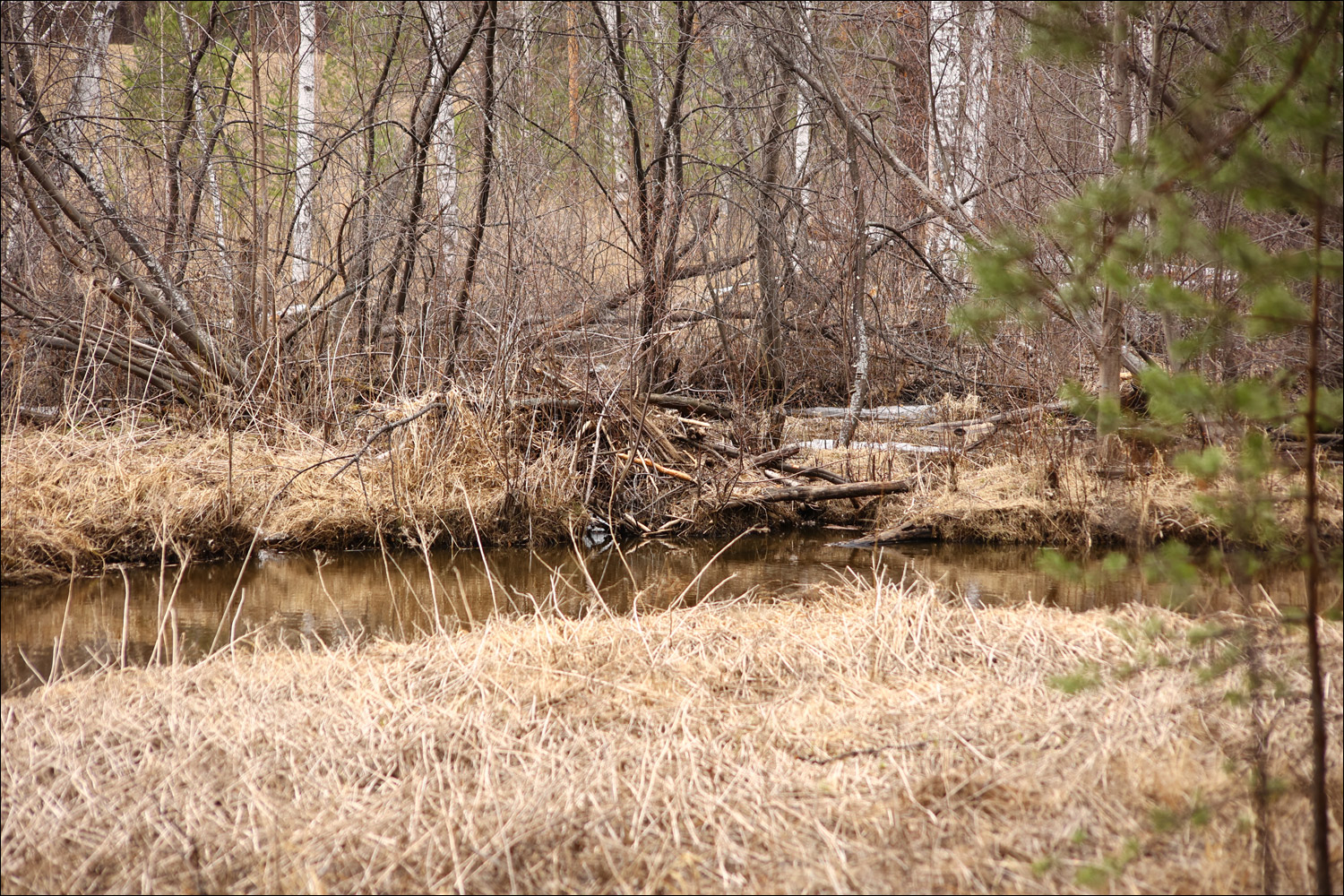
In our case, the beavers started by rerouting the Chyornaya so it would be more convenient to accomplish their tasks. You can clearly see the old channel and the new one further from the forest here:
The lodge works like this: the beaver's natural enemies like wolves can only attack from above, where sturdy branches are bonded with silt and clay. In practice, it's extremely difficult for a wolf or lynx to disassemble such a fortification because, well, they have paws. The beaver can simply hunker down as if in a fortress. A wolf either can't dive, or would get a serious slap upon surfacing, so it can't get through the main entrance. A bear, in theory, wouldn't mind snacking on some beaver and could even destroy the lodge, but while it's doing that, the beavers will retreat to another burrow that serves as an intermediate shelter during summer. Aquatic predators are too small to harm an adult beaver inside its lodge. If only because it's hard to harm a motivated engineer with 8-centimeter teeth that he is absolutely willing to use for purposes beyond woodworking.
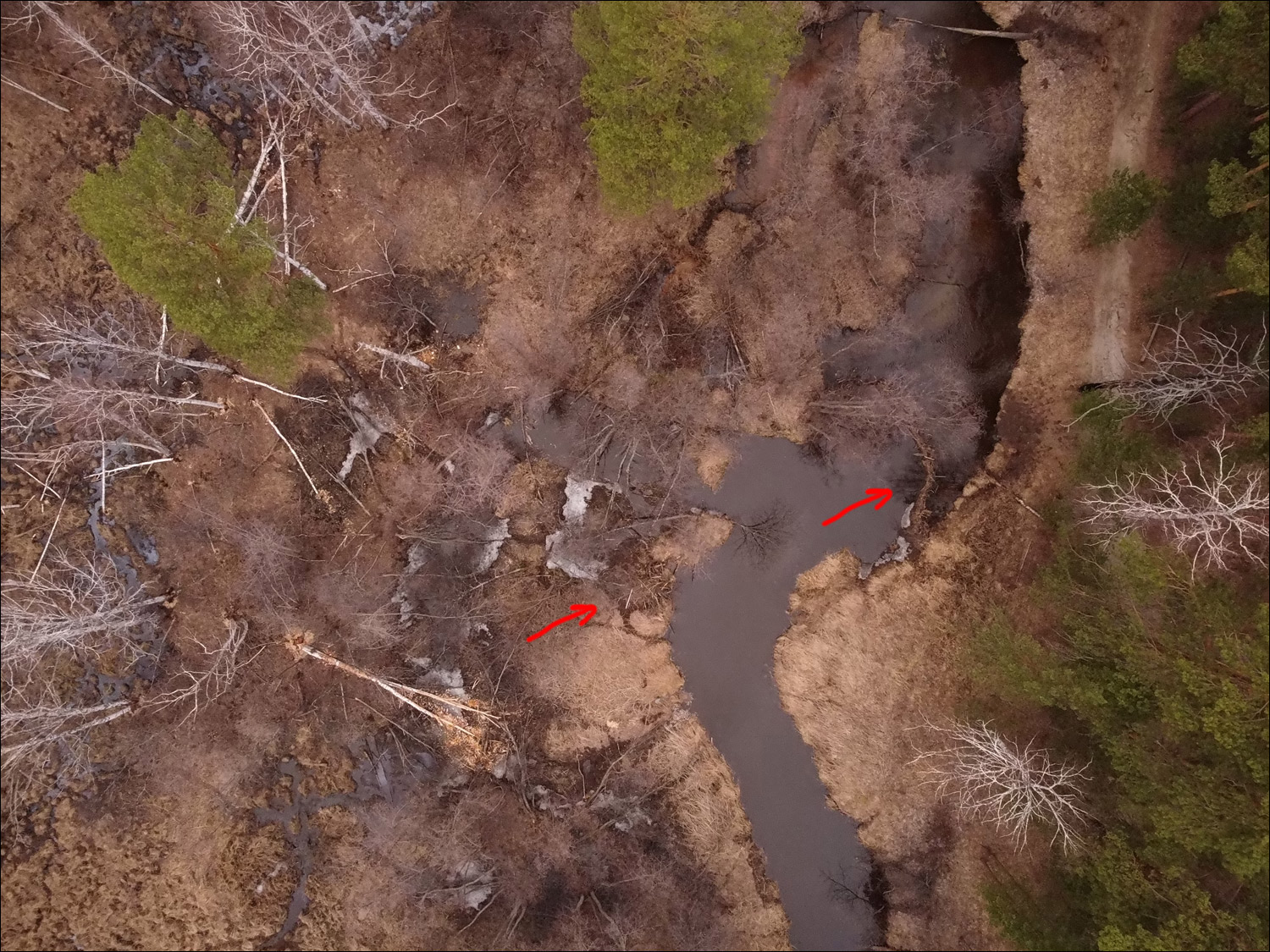
Here you can clearly see the lodge and dam, as well as the diversion channel. The lodge is right in the center, the dam is to the right under a tree.
Here's the same lodge from the ground
A semi-lodge is when beavers find a suitable root or something else that can be supplemented with branches to create a similar shelter.
Our beaver's lodges can reach sizes that drive archaeologists mad — they might excavate what they think is a sixteenth-century fisherman-peasant's wattle-and-daub dwelling, until biologists show up laughing hysterically. But our beavers are monogamous, while Canadian beavers are polygamous, so their lodges can be even bigger. Ours reach up to 3 meters in height and 12 meters in diameter (though more commonly it's 1 meter high and 3-4 meters across). There's even a "chimney" on top — actually an air vent. Incidentally, because of it you might think the beaver is cooking something in winter — it's actually just exhaled steam.
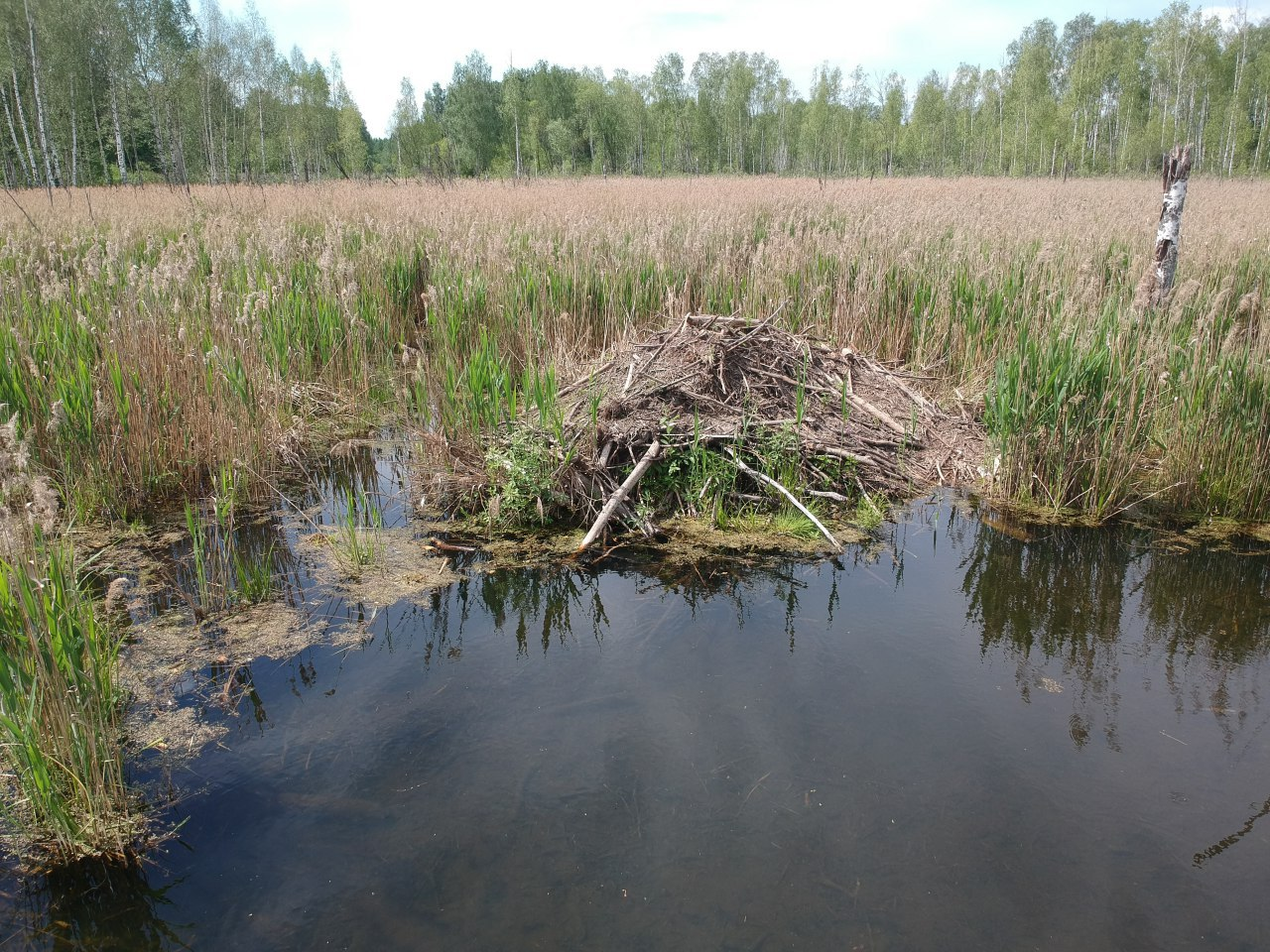
A typical lodge at Losiny Ostrov. By the way, it's called an "island" not because it's surrounded by water, but because it's a section of forest surrounded by something else. Such a patch of forest was also called an "island" in old times.
Around the lodge, they need to create food reserves, ensure safety from predators during routine activities, and ideally submerge the entrance reliably. In winter, all of this will turn to ice, providing an additional layer of protection. For this purpose, beavers build the main dam slightly downstream and flood the area. On the bottom of the resulting backwater, they can store branches for winter by sticking them into the mud or pressing them down with rocks. Beavers accumulate an underwater haystack (or several) of wood until they've gathered roughly 4 cubic meters per animal — about half a ton of food. In spring, leftover supplies sometimes protrude above the water.
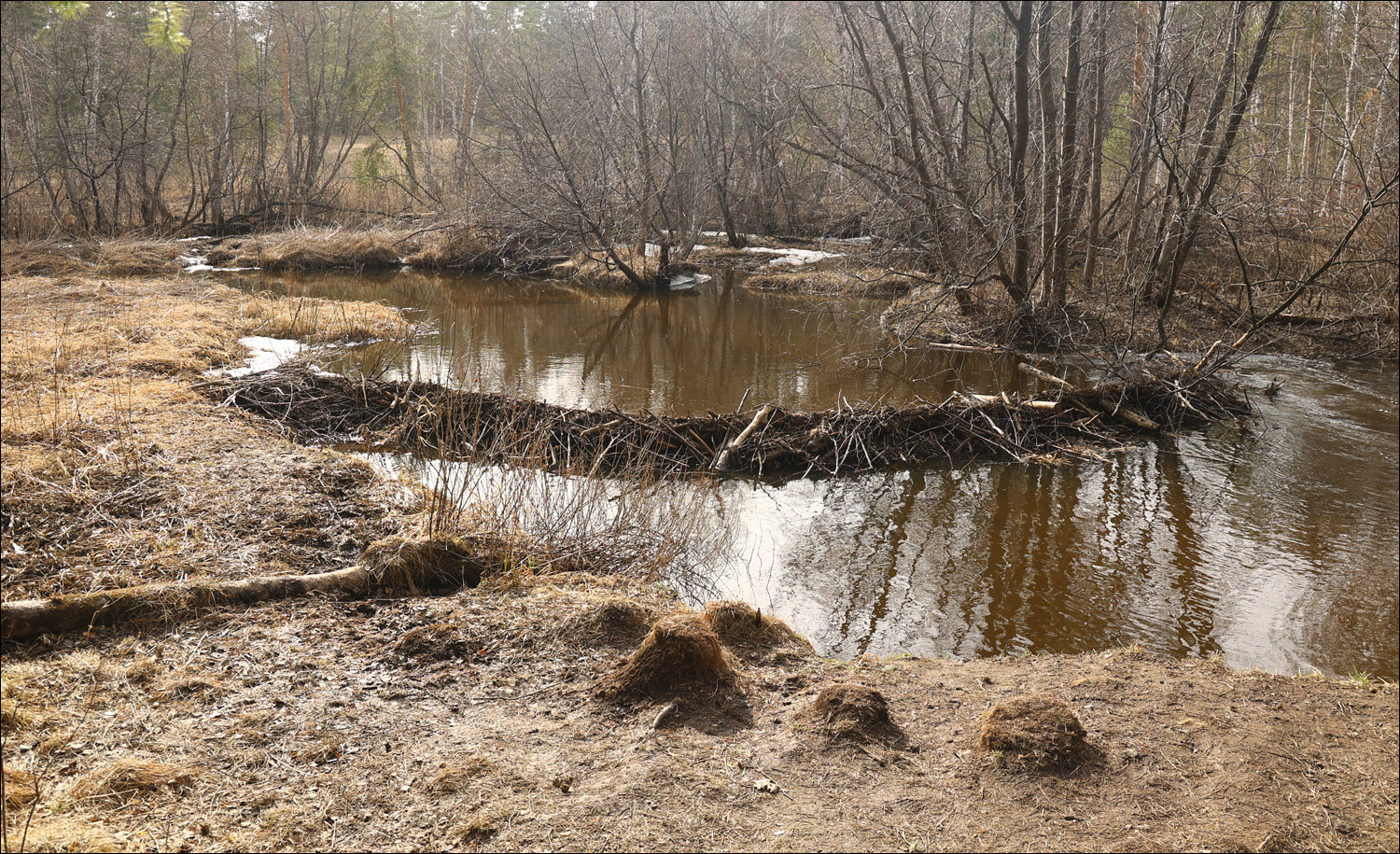
A dam — the reflections clearly show how it changes the flow velocity.
By the way, the second reason for raising the water level is to prevent the backwater from freezing solid to the bottom. First, they'd have nowhere to exit. Second, beavers mate in December through February, and they only reproduce in water. As in, yes, right there under the ice.
Usually, the lodge and one dam are sufficient for the first winter. The beavers climb into the lodge and begin dozing inside. This isn't hibernation or even torpor — they just sit there staring at the wall with interest. The beaver itself serves as the lodge's heater, and lowering its body temperature for hibernation would be counterproductive. Hence nearly normal energy expenditure and normal hunger. The beaver burns through fat accumulated over summer and occasionally dives into its backwater under the ice to fetch another branch to eat at home. Sometimes it forages for roots.
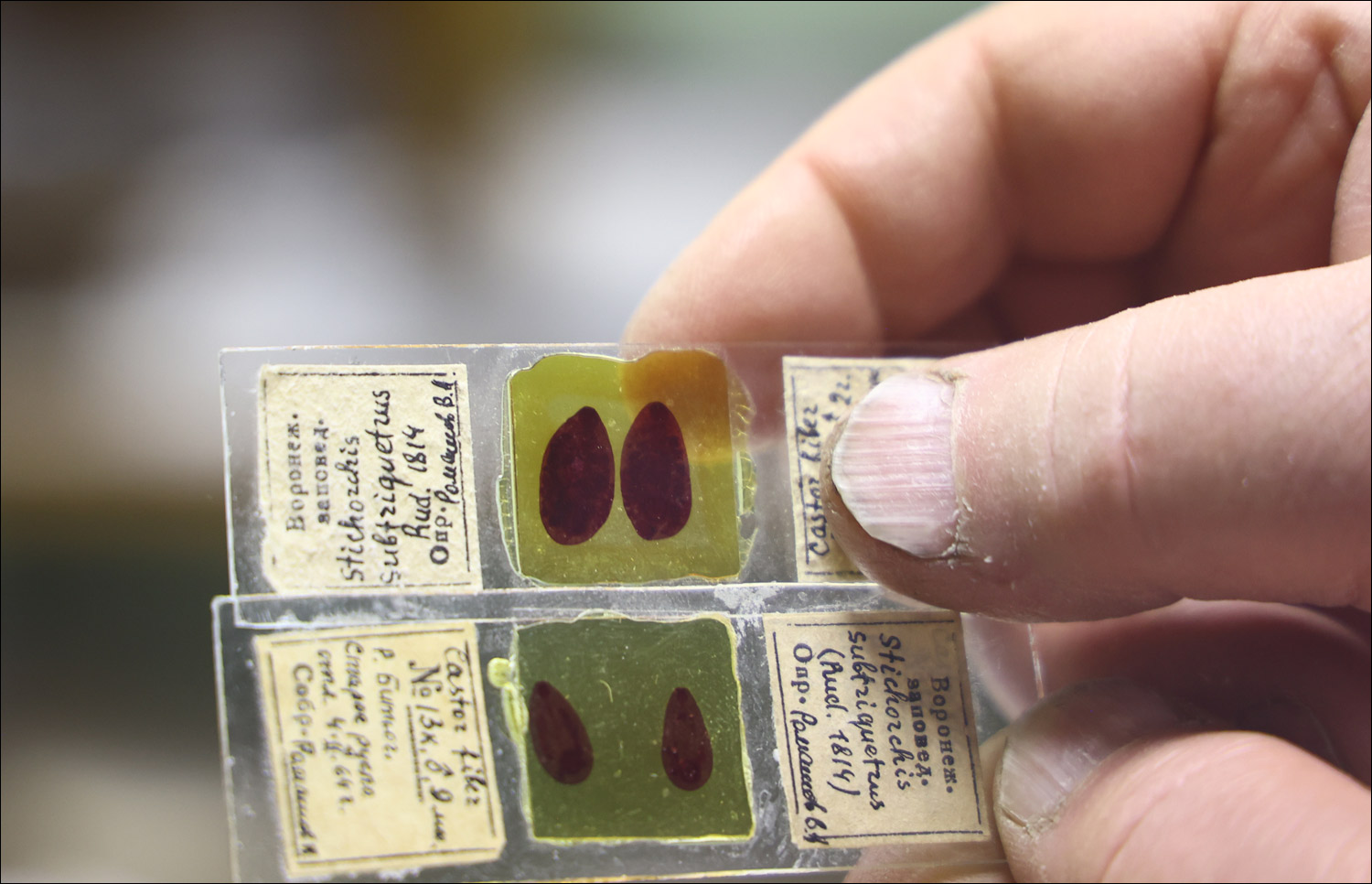
As we know from the Voronezh Nature Reserve laboratory, they apparently start catching and eating fish toward spring. In the sense that fish and a branch are entirely different things, but when you really have to, you can close your eyes and pretend you're gnawing on a branch. This conclusion was drawn from parasites found inside beavers whose intermediate host is exclusively fish.
UPDATE: This information came from a reserve laboratory scientist, but commenter Rumidu clarifies that the intermediate host could also be a mollusk.
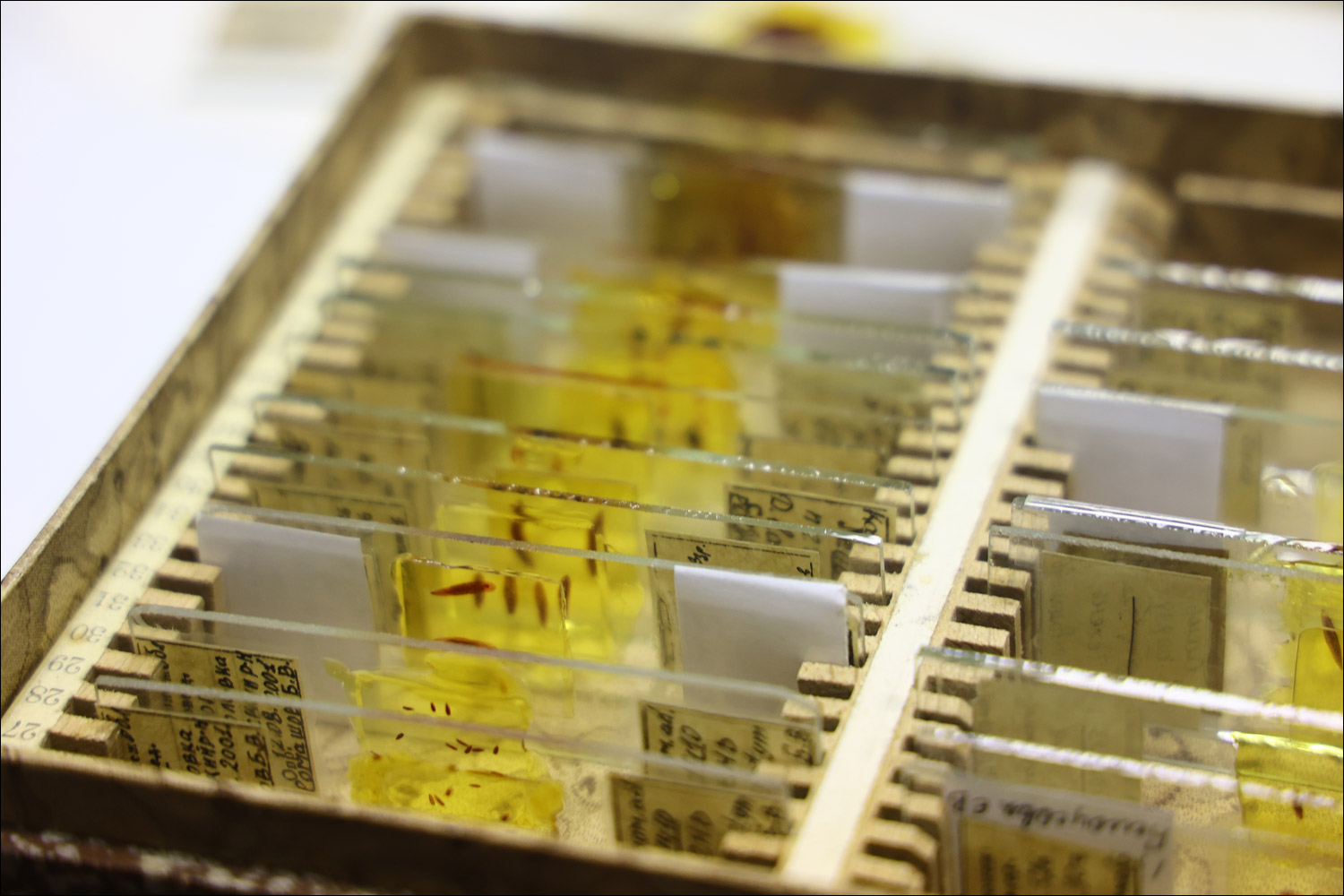
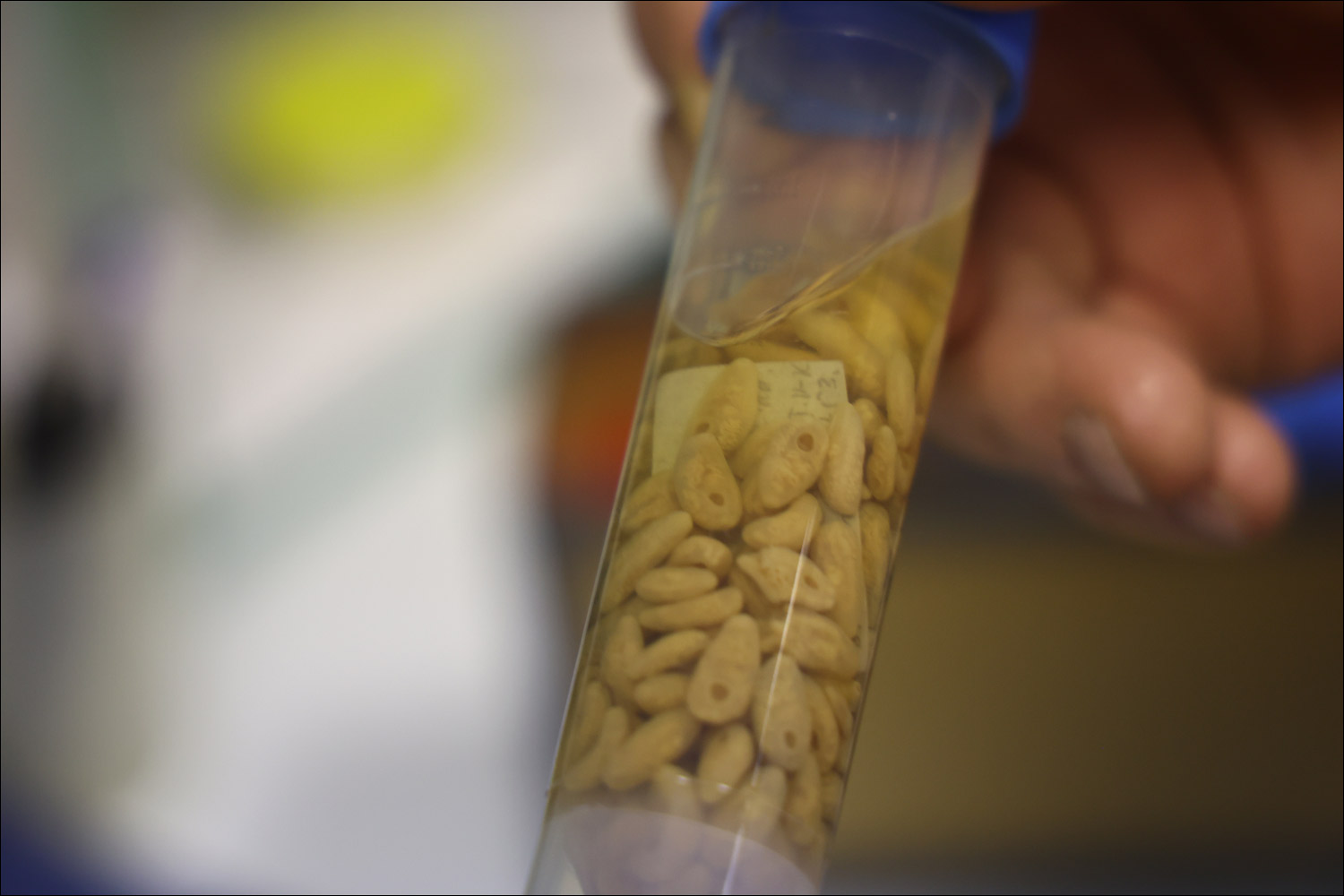
Here's what you can dig out of a single beaver:
In spring, beavers gnaw or punch through an ice hole and start climbing out of the river. This is the most dangerous moment of the year: for a wolf, this is a free beaver, because whereas normally it just flops into the river and becomes a submarine, in spring it still has to waddle to the ice hole. And on land, the beaver is not very agile or fast. Rather, it's funny and clumsy.
But if a beaver is startled while in water, it slaps its tail before diving, and the sound carries about 300 meters. Every beaver in the vicinity understands what's happening, which is why when you're observing these animals, the worst-case scenario is accidentally scaring the first one.
But let's return to our heroes. Suppose they survived spring. Now they need to work on defense and expansion. First, beaver kits will appear, and they need nursery channels. These are offshoots from the river where there's no strong current — young beavers struggle to swim against it. On the Chyornaya, the pair dug a nursery channel and dropped a soft, tasty tree into it so the kits would sit still and not venture out too much. They feed on milk but start trying to gnaw things within a few weeks, then transition to a mixed diet.
The nursery channel can be further protected by felling bushes and small trees along the bank — not with branches pointing into the water as usual (for eating from the river), but along the water. That is, to form an abatis or at least a pile of deadfall. This way, a predator either can't get through at all, or at least makes noise and gets delayed.
Similar protection is needed along the entire bank, plus burrows are needed at a distance from the lodge. Beavers can hide in these when threatened — they serve as intermediate operational bases.
If they haven't dug one the previous year, they need a diversion channel: this is a safety valve for flooding to prevent the lodge from being submerged. Beavers can compensate for some water level fluctuations: they raise the floor by scraping earth from the ceiling. But for significant rises, it's better to have a relief channel — usually dry, but diverting excess water during high water.
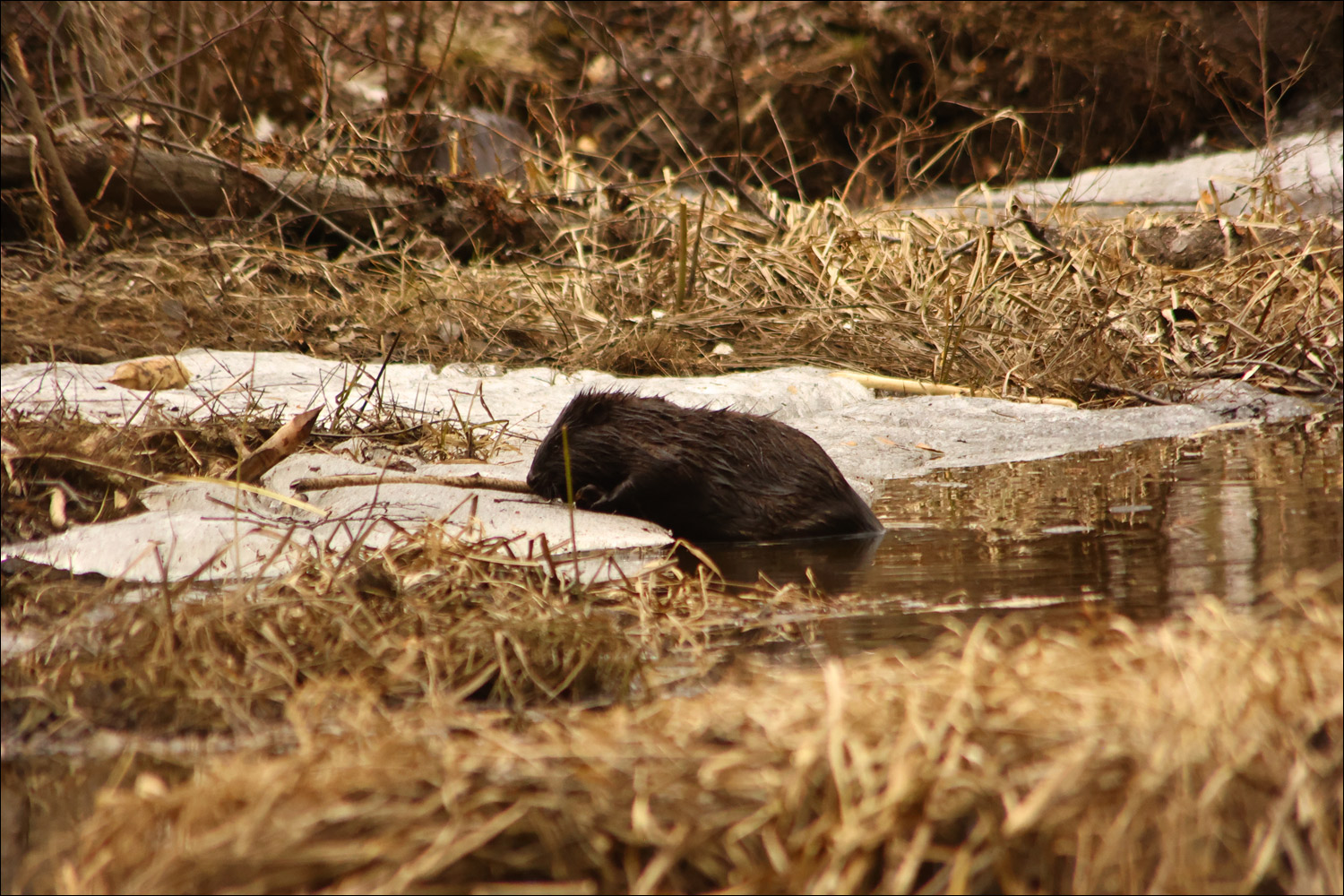
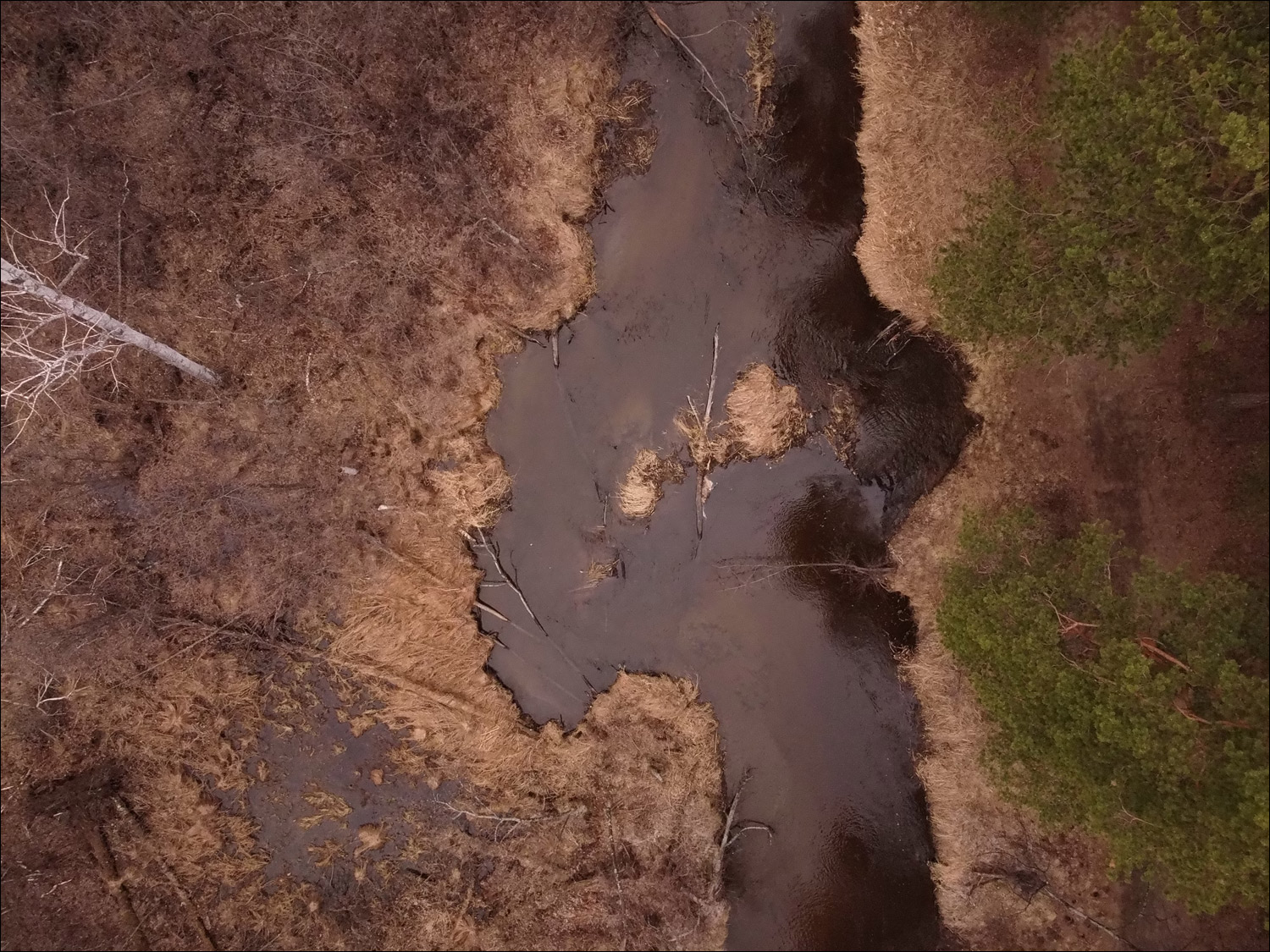
Our beavers also built a backup dam downstream — either as insurance in case the main one breaks (since they'd had that happen before and had to relocate), or simply because they wanted an additional reservoir. Here it is:
As you can see, they simply drove several large sticks into the riverbed in a crescent shape, and the river itself carried silt and soil in, meaning minimal effort was expended. And if anything happens, our beavers can block the gaps from this toothy islet in no time.
Incidentally, they build dams instinctively (it seems to be hardcoded), and the regulation is tied to the sound of running water. If I were programming beaver behavior, I'd make something like "let the sound of running water annoy him" so that he "turns it off" with a dam. By the way, if you play recorded sounds of running water for a beaver, you can really wind it up and motivate it to build a dam even on a concrete floor, although there are theories involving underwater flow detection as well.
For instance, a pipe laid through a dam was blocked with silt and branches by beavers even when it ran along the bottom and was "inaudible." At the same time, it remains unclear how beavers distribute responsibilities during collective work. They can work either in groups, as mentioned above, or alone. But both groups and independent builders follow a strange universal plan, absolutely precise and thought out to the smallest detail.
About Trees
Beavers don't fell trees randomly in a fit of madness — they do it strictly scientifically. Well, except for that crazed beaver from Olenyi Ruchyi who climbed a mountain and went on a rampage up there. Maybe he was just bored. Maybe he had some tactic and was sticking to it.
Here's how they do it (this is from "Animal Life" published in 1971, edited by Academician Zenkevich).
So, the beaver roughly knows which way a tree will fall and tries to drop it with branches pointing toward the water. There, it's convenient to eat from the water, and there it can become the foundation of a dam if needed. The problem is that the beaver doesn't really account for wind, so surprises happen. In any case, it carves the tree "pencil-shaped" with a deeper cut on the water side. Then it listens carefully for fibers to start tearing. As soon as that sound begins, it immediately runs and hides, hoping the calculation was correct.
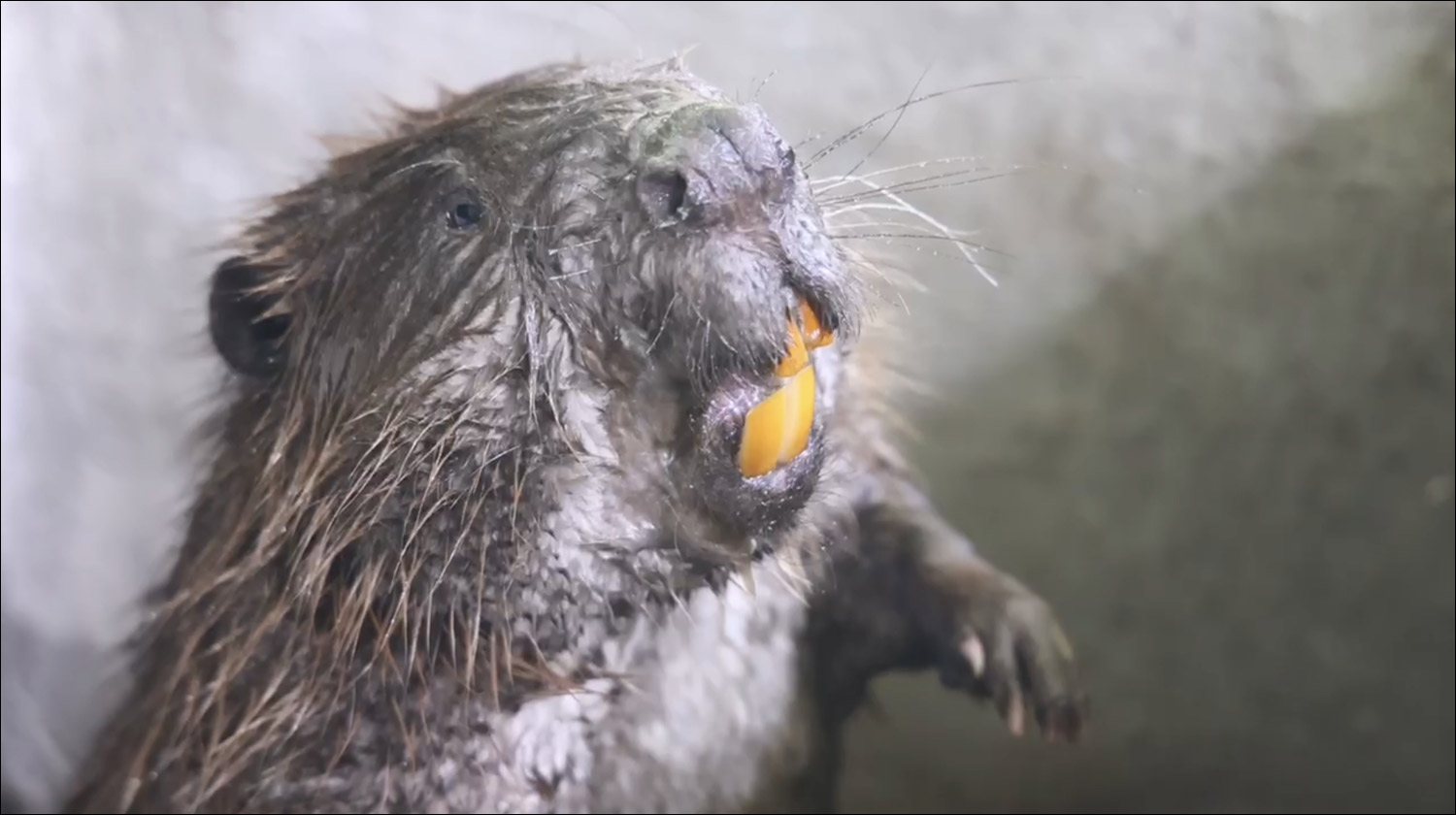
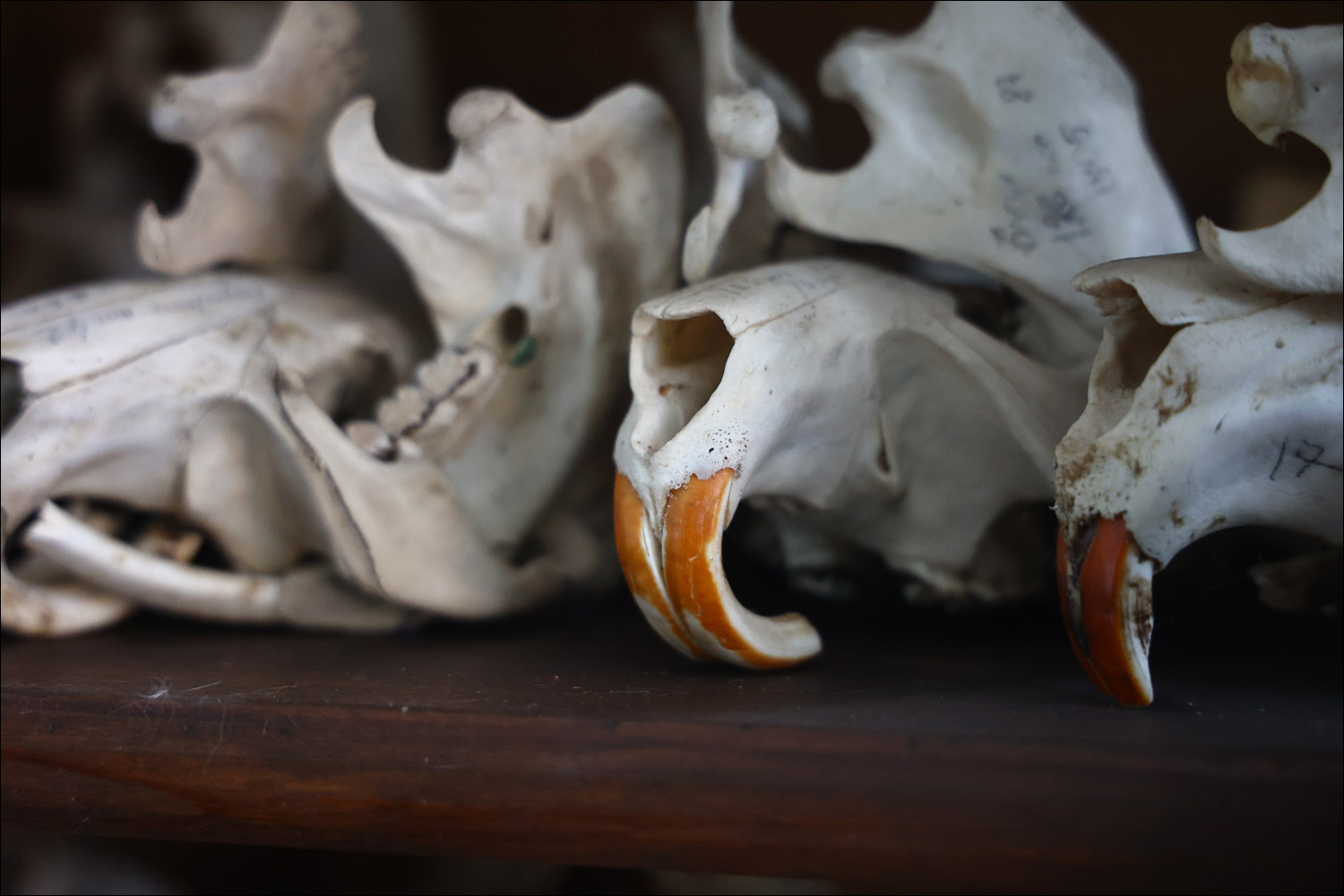
It gnaws the tree with horizontal movements, like a saw. Its teeth are self-sharpening: the front enamel layer is extremely hard, plus the body delivers iron there (which is why the teeth look rusty on the front). But the back enamel layer is much weaker, and the tooth wears down faster in the back than the front. And it keeps growing in both length and width throughout life, meaning the beaver constantly sharpens its tooth through use, and the tooth compensates for length loss through growth.
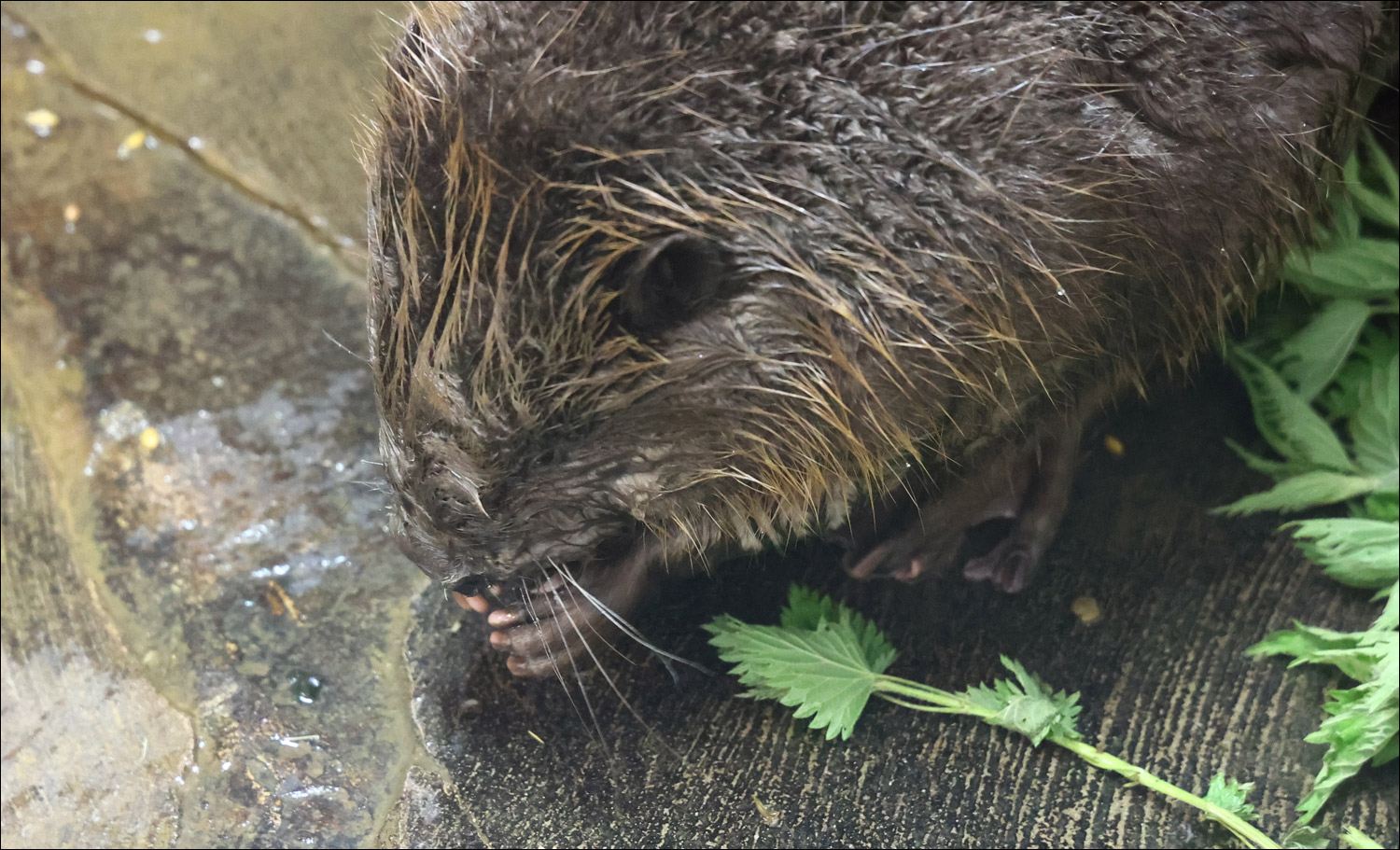
Incidentally, the incisors are separated from the main volume of the beaver by a lip-valve — meaning our hero can gnaw on things even underwater, but eating needs to happen above water. Behind the lip there are another 16 teeth for grinding.
And here's the skull:
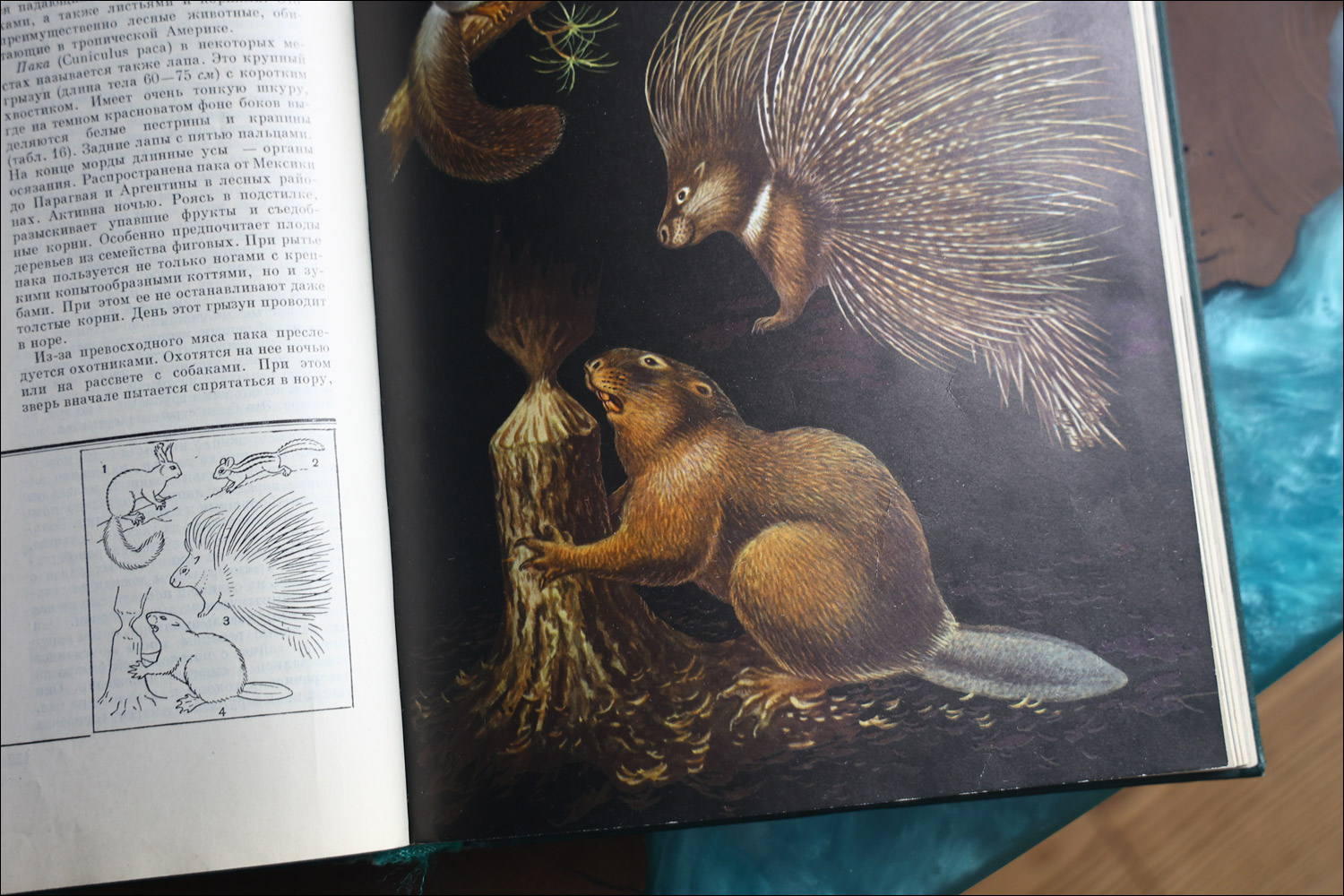
Beavers are quite selective about which trees to eat. But they fell not only what they plan to eat, but also signposts and markers. You already know about the support tree for the dam. Also, on the Chyornaya, beavers would slightly gnaw on a pine tree every year: due to the resins, they certainly won't eat it, and they don't need it as construction material. Most likely, it's like a visit to the dentist — pine resin's protection against parasites works for beaver teeth too. But this is only a hypothesis.
And beavers also gnaw materials for the lodge roof and dams, plus bedding. Incidentally, dams are made not only from branches but also from rocks. They quite energetically carry 5-kilogram stones in their paws wherever needed on the river bottom. At the Voronezh Reserve's traps, you can also clearly see them rolling balls of earth.
An aspen 7 centimeters thick can be felled in 7 minutes, while a tree 40 centimeters thick takes an entire night of work.
Beavers eat not just branches and bark but also aquatic plants. So yes, grass too, and lots of it. On the Chyornaya, they love aspen and birch, and don't mind water lilies, yellow pond-lilies, and so on. A beaver needs about 20% of its body weight in food per day. To prevent this from becoming recursive, each morning the beaver disposes of some accumulated mass and sends it downstream.
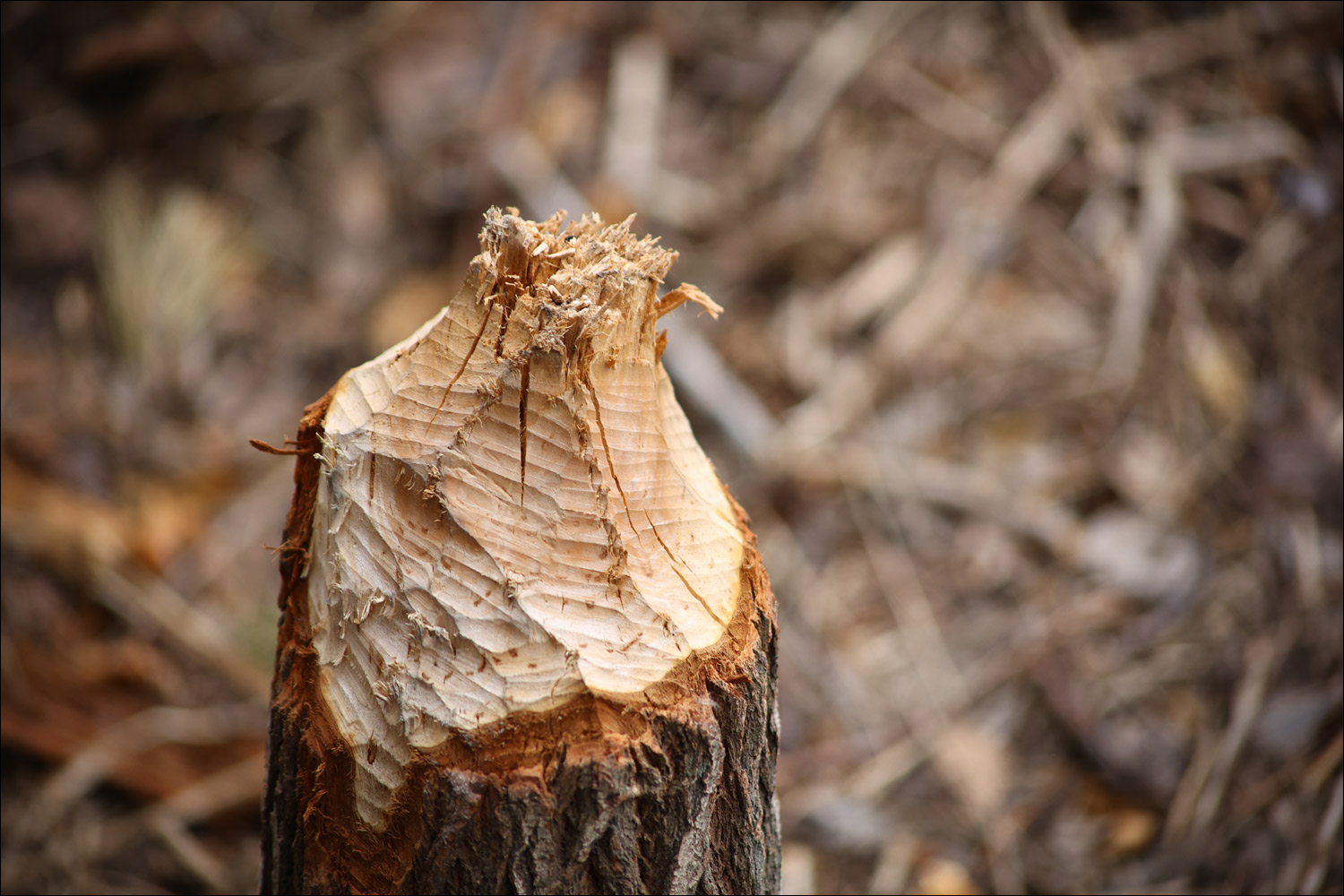
Feeding platforms form where the beaver eats small branches. Usually it fells a tree, then strips all the branches and drags them somewhere safer. The result is a spot where it can sit but from which it can very quickly tumble into the water.
Will eat this one at home
If the trees near the river run out, beavers start digging a canal to a tasty grove. That is, they consciously refuse to leave the water in order to always have protection from predators.
During floods, you can see yet another type of structure: our heroes build hammock-beds on top of bushes from branches and twigs with dry grass bedding. But here I'm going by the literature — I haven't seen this myself, unfortunately.
A Bit More About Beaver Architecture
The beaver is a rodent. Essentially, it's a giant mouse, squirrel, or guinea pig, just one that's highly adapted to water. Though this "mouse" in its prime weighs up to 30 kilograms (specimens up to 45 kg are documented in literature), so schoolchildren occasionally mistake it for a bear.
Most likely (though not definitely), the adaptation to aquatic environments appeared in proto-beavers earlier than the full suite of engineering skills.
Like many other rodents, they don't feed on the wood itself from the trunk, but on the outer layers, which are easier to digest with the help of symbiotic bacteria.
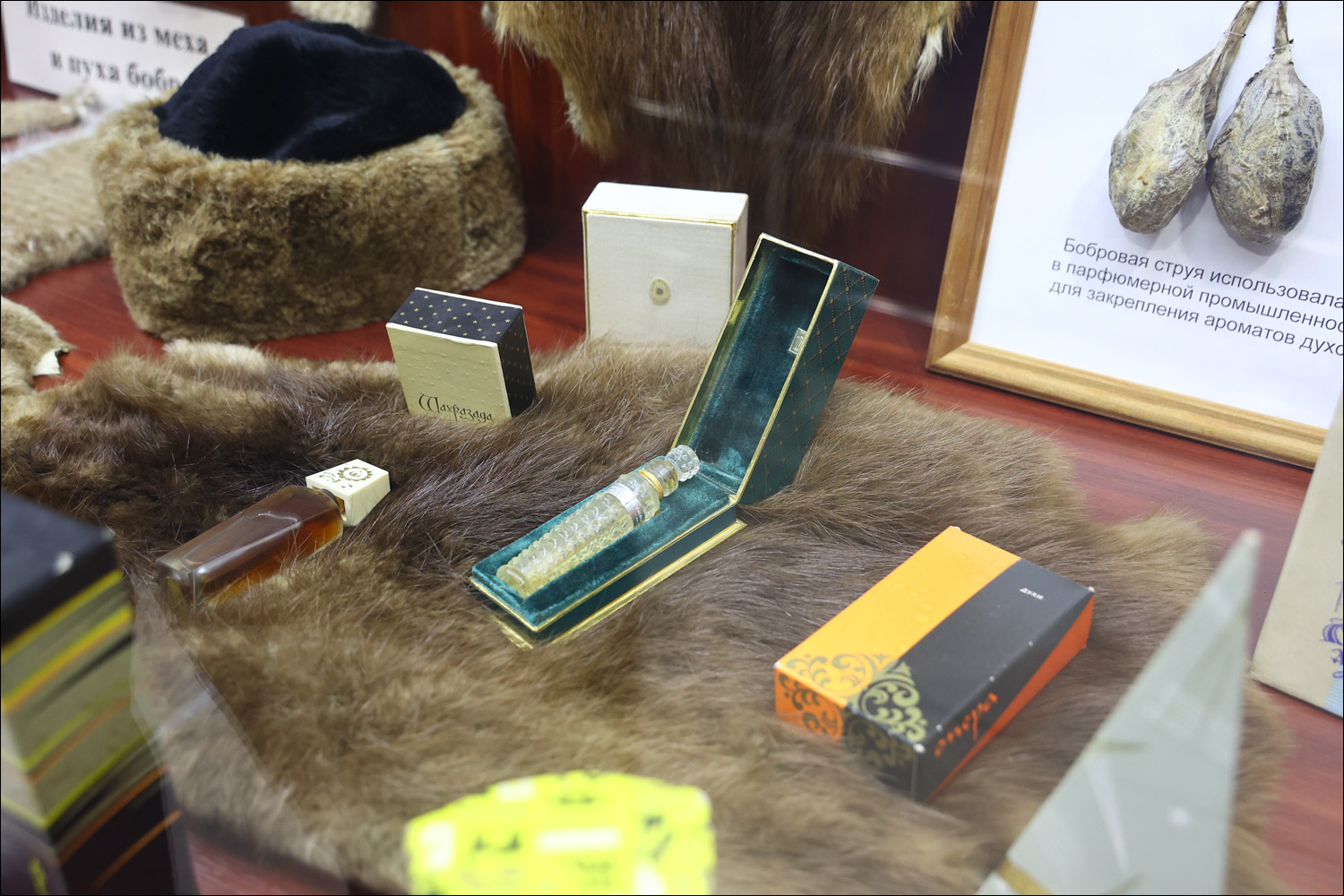
The beaver only looks terribly wet in photographs — actually, only the outer layer gets wet. It also coats itself with the secretion of musk glands — "castoreum" — which is used in perfumes, including some modern ones.
The fur needs to be carefully combed so the rest of the beaver doesn't get wet, which is why the animal comes equipped with a built-in comb on its hind foot:
Accordingly, you're now looking not only at a double claw but also at a webbed foot. The animal also seals itself well: besides the lip separating the incisors from most of the beaver, the nostrils close, the ears fold, and semi-transparent eyelids drop down like an underwater mask. The whiskers (vibrissae), which land animals typically use to navigate in the dark by touch, in the beaver's case have also become a very precise indicator of underwater currents and turbulence.
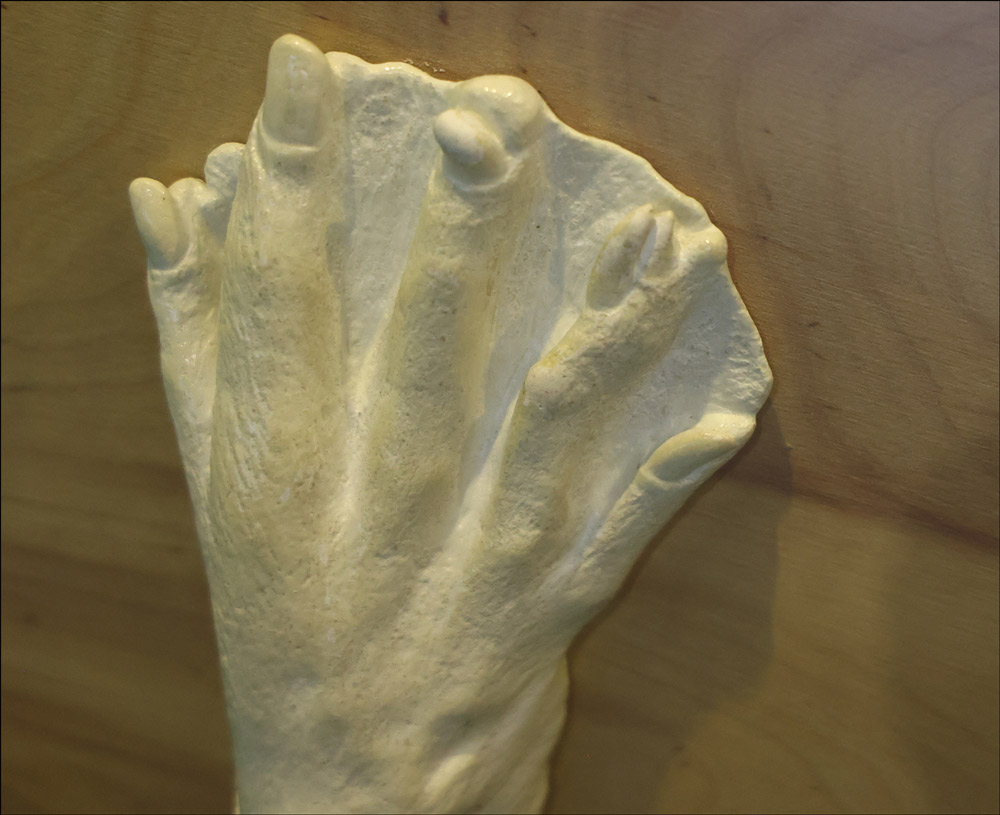
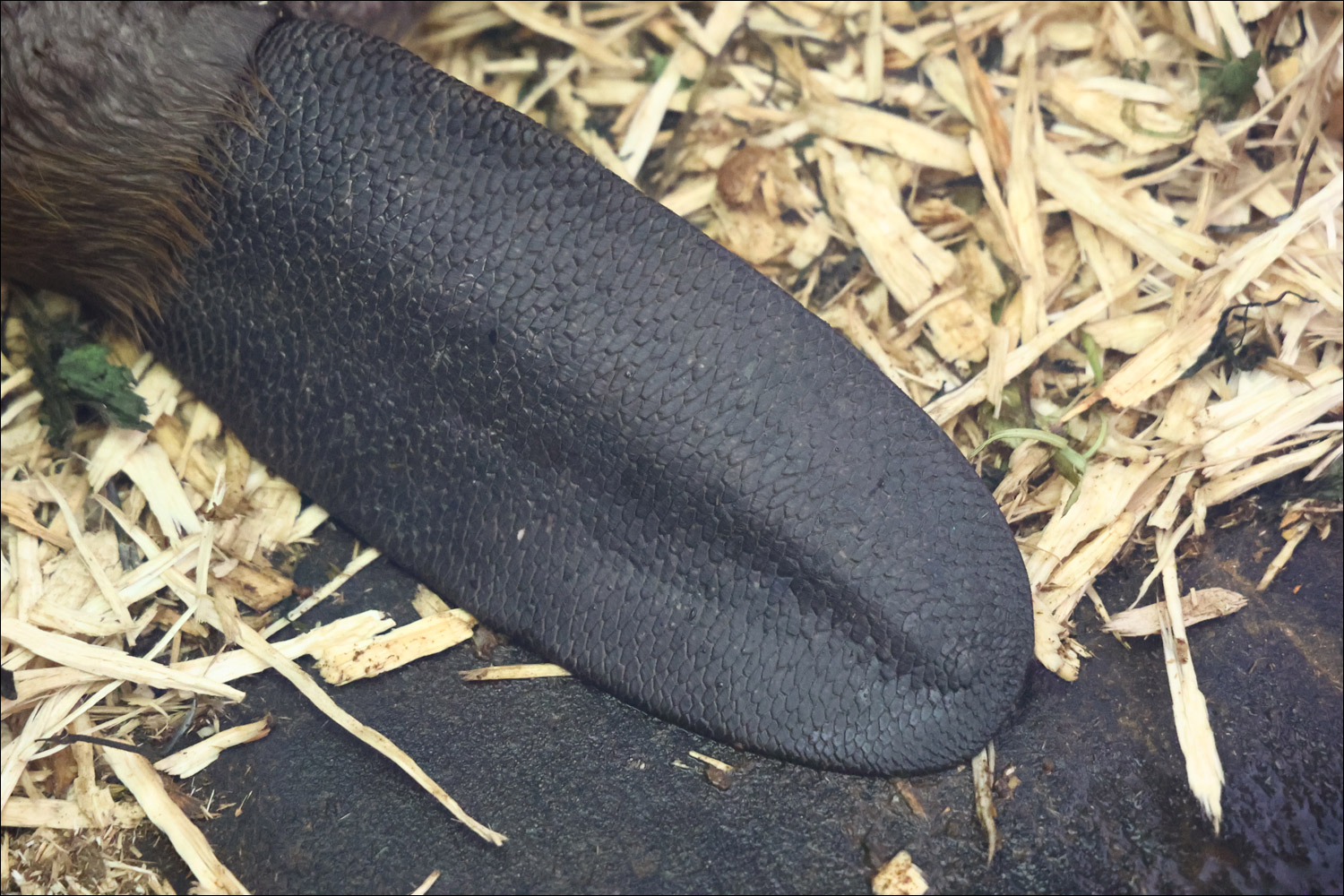
The tail is covered with skin. These aren't scales or plates — it's just how the tissue folds. A logical comparison is with a finger, which also has a fingerprint pattern, just like the tail. Beavers' tail prints, by the way, are also unique:
It was precisely because of this tail that the beaver was sometimes classified as a fish and happily eaten during Lent.
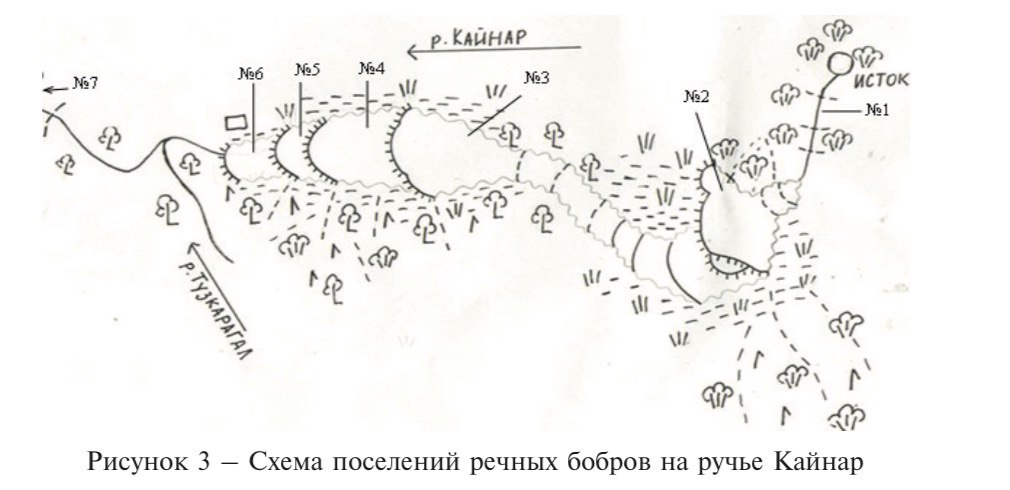
Through evolution, we arrived at a point where the beaver doesn't just occupy suitable landscapes but actively creates them. No, herbivores often reshape landscapes for themselves — for example, bison trample areas near watering holes into grasslands, creating positive feedback for population growth. More eating means more space for grasses. But this process is quite slow, and beavers can't wait that long. Within a fairly short time, a so-called "beaver landscape" appears around their habitats. This landscape tends to self-propagate: after all, in the second year the kits get dad's smack and go off to colonize new lands. A litter of our native beavers averages 2-3 kits.
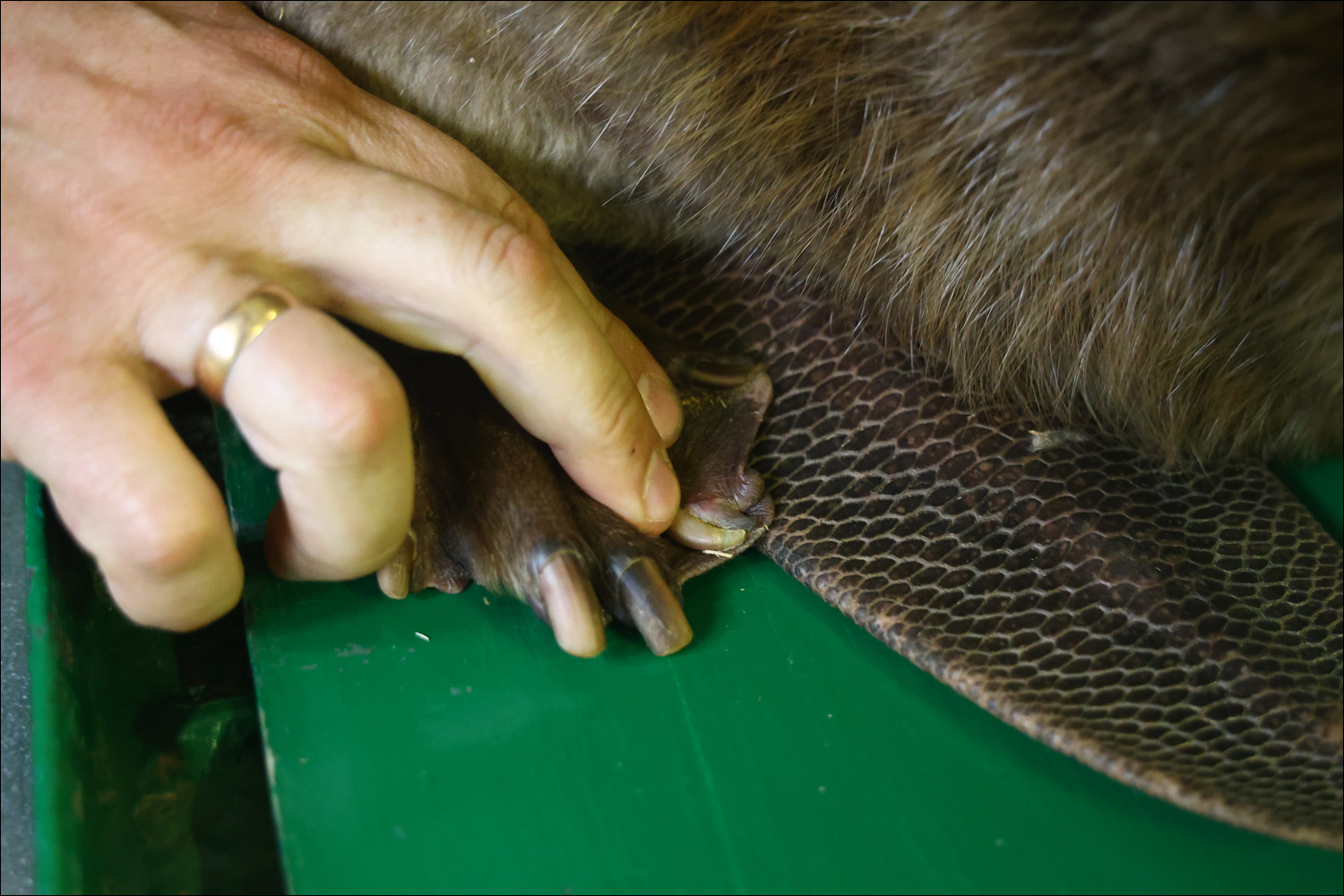
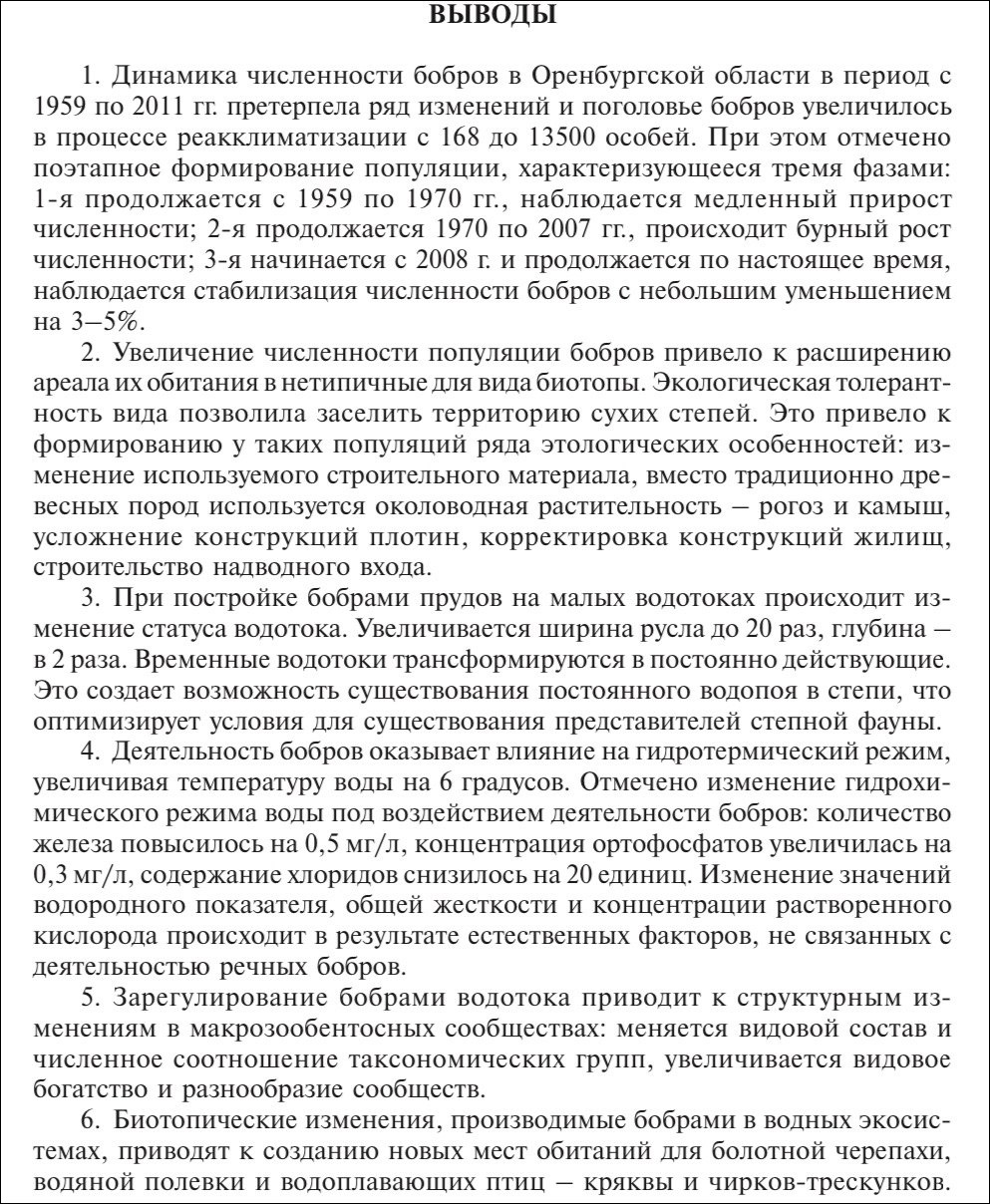
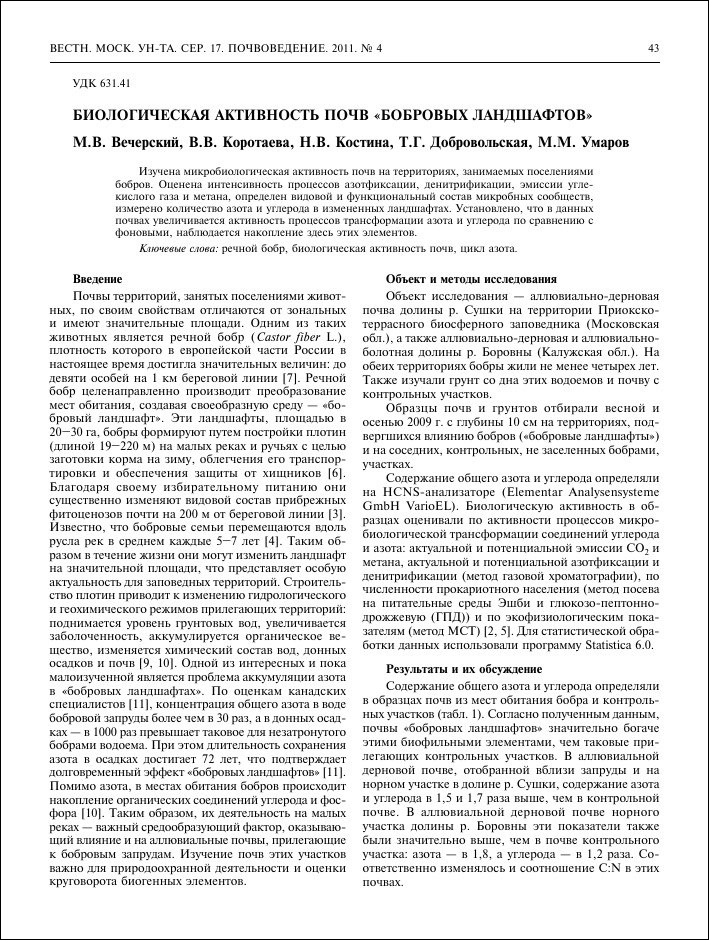
Diagram from the paper "Regional Ecological Features of River Beaver Populations with Assessment of Their Impact on Steppe Biocenoses of the Orenburg Oblast" by Ustabayeva E.V.
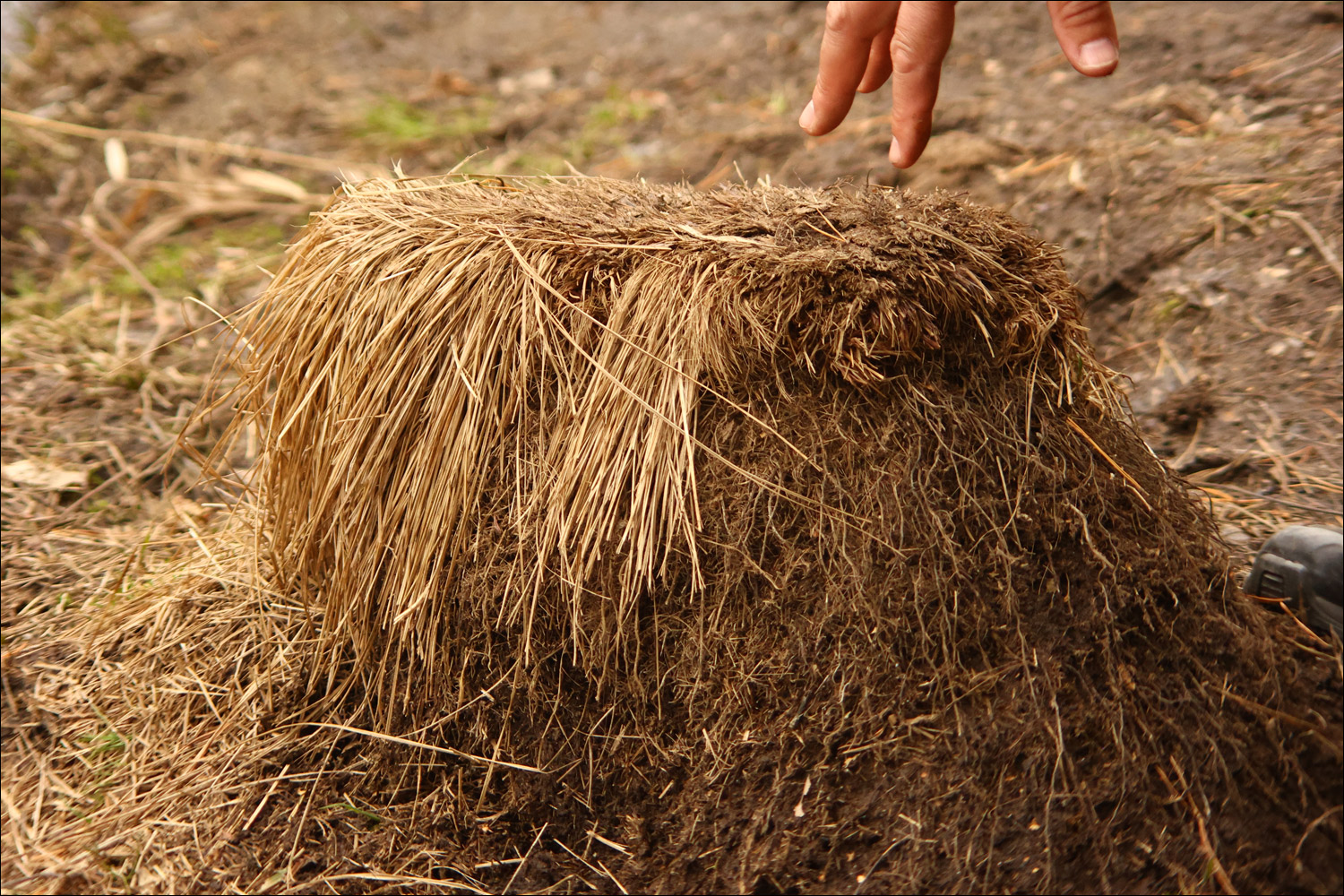
Different families divide territory using boundary mounds. The beaver piles up a border marker like this, then periodically refreshes it with its scent. Intraspecific aggression is quite high: as soon as a "stranger" appears on the territory, beaver wars begin.
But let's return to the landscape. In short — it's generally beneficial by the metric of "increasing biodiversity."
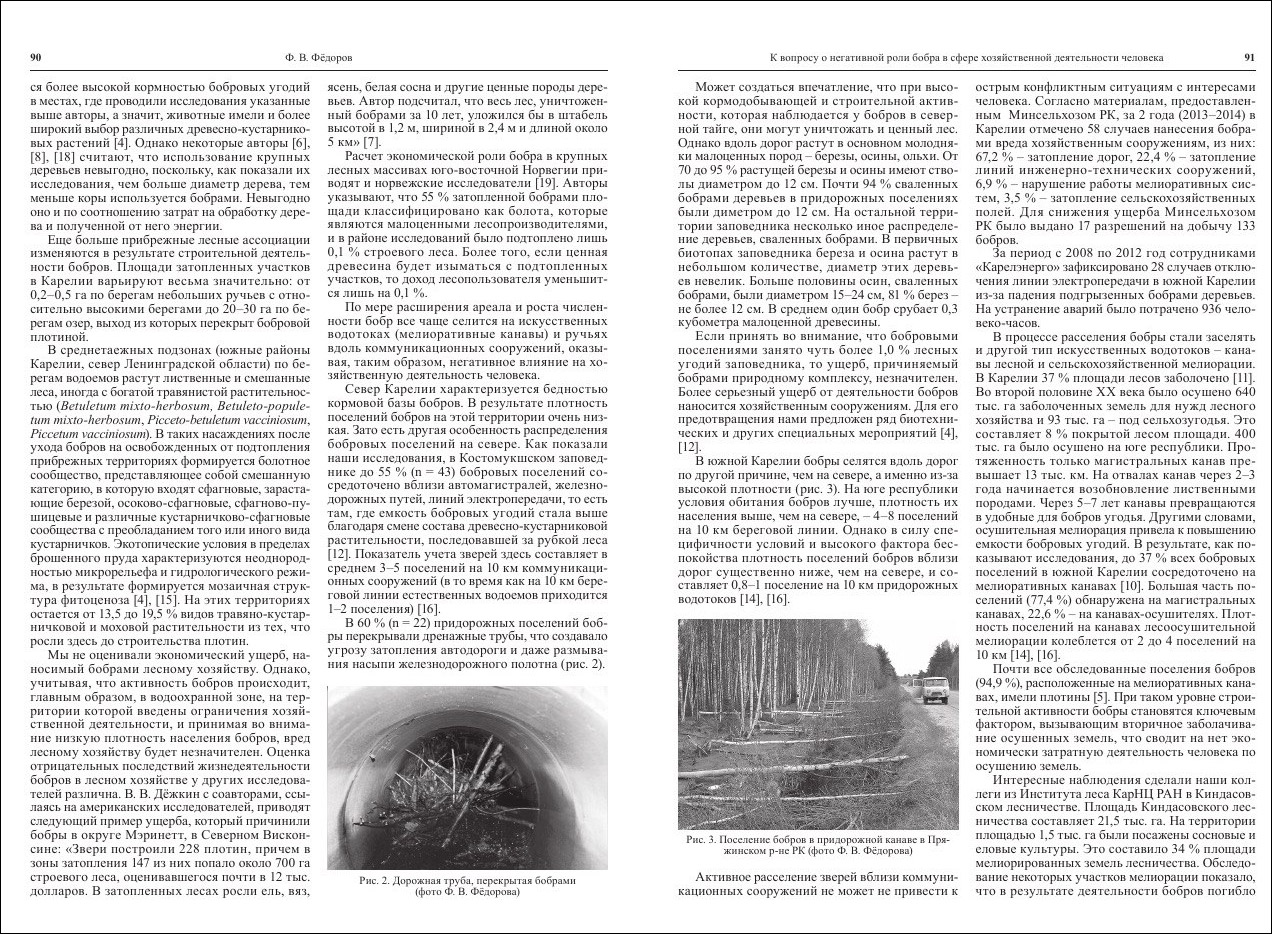
At this point you might ask what happens when a beaver's terraforming reaches human infrastructure. Well, there are many such cases, and I can only note that beavers very stubbornly plug everything that annoys them. Here's another wonderful quote:
There are known cases where beaver-caused flooding washed out streets and railroad tracks, even causing derailments.
Extermination and Recovery of Beavers
Because of their incredibly soft fur, for which Rus was famous — and castoreum, which served as both trap bait and perfume base, plus meat suitable for Lent — in short, because of the high concentration of valuable things packed into one animal — the beaver was nearly exterminated across most of the planet. Add protection of steam engines and railways, power lines, and so on — basically everything that required some kind of drainage pipe that could be quickly plugged with rocks and sticks to stop the annoying noise.
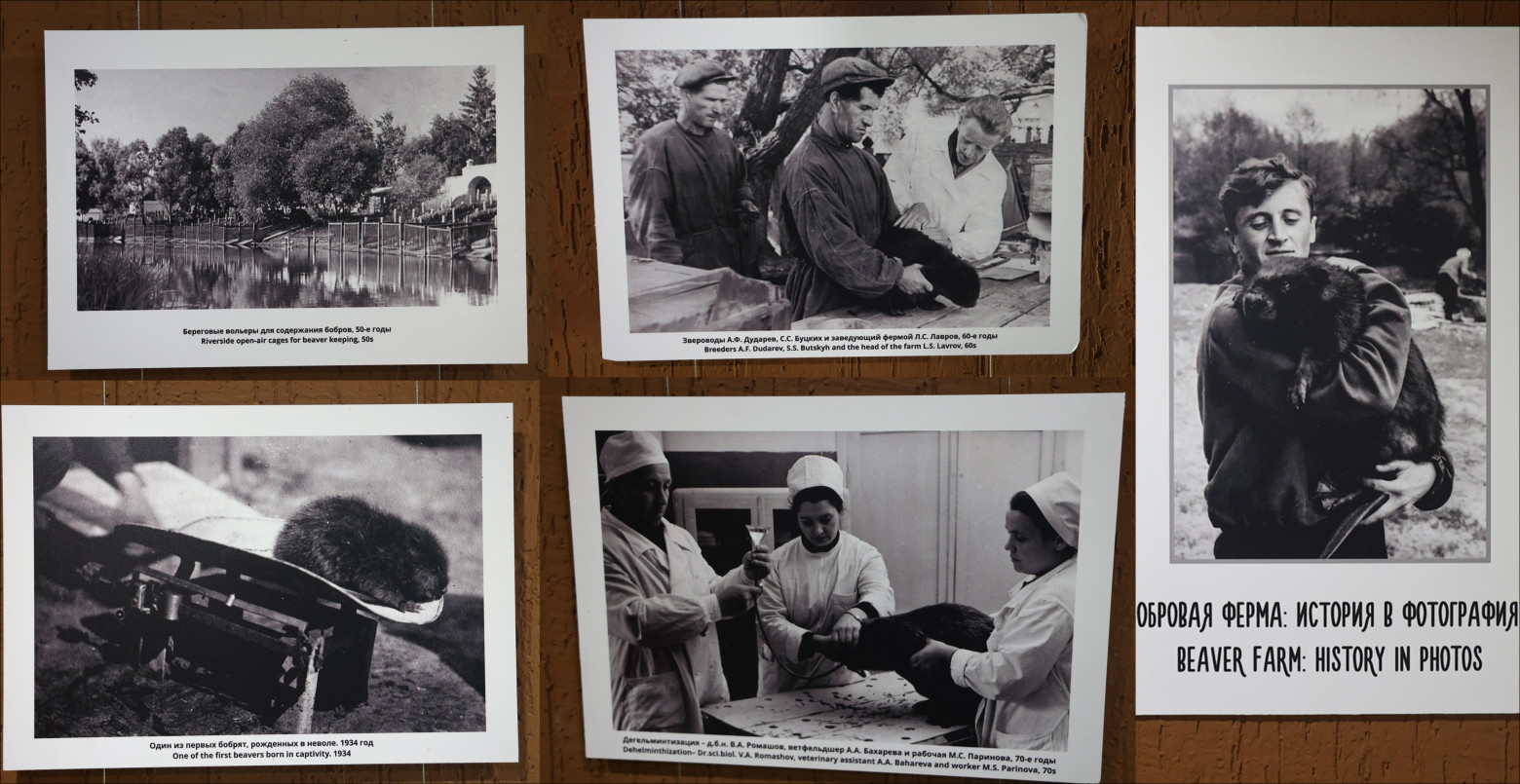
In 1932, a small colony was found near Voronezh, and about 20 individuals were captured. In 1934, the first kits were born. It seemed like great luck: it was decided to use this base to restore the valuable beaver and resettle them across all of Russia. But before doing anything, they needed to study the animal's complete life cycle to breed them effectively. In 1935, a biostation was founded (more precisely, a beaver farm — an experimental beaver nursery of the "Union Fur and Rabbit Breeding Trust").
To give you a sense of the thinking of biologists in those years — to support our beavers, they brought in 5 Canadian beavers. Big, beautiful beavers, just with a different number of chromosomes. Strangely enough, the Canadian beaver didn't produce offspring with the Voronezh one, although with similar foreign stud bulls that trick usually worked.
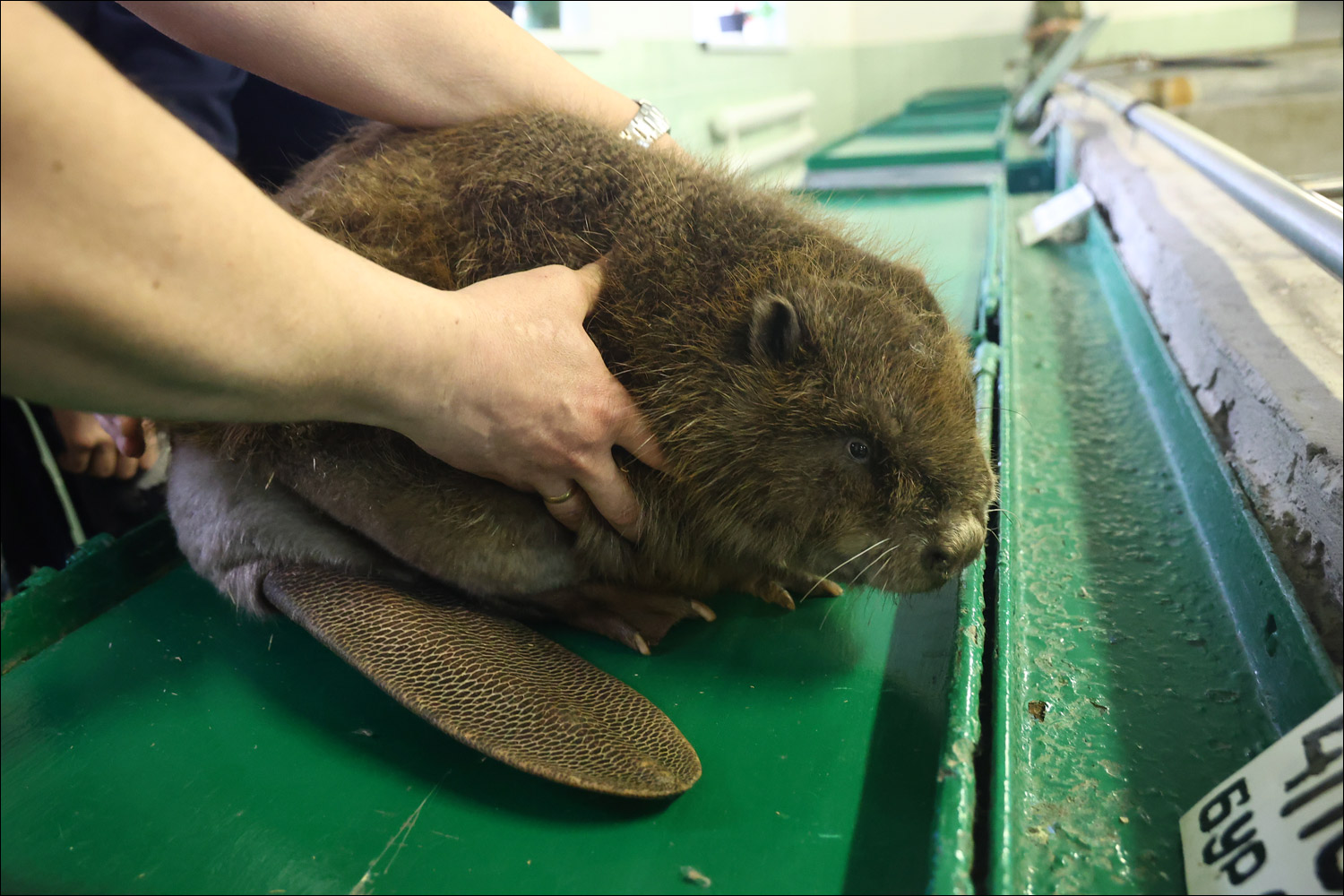
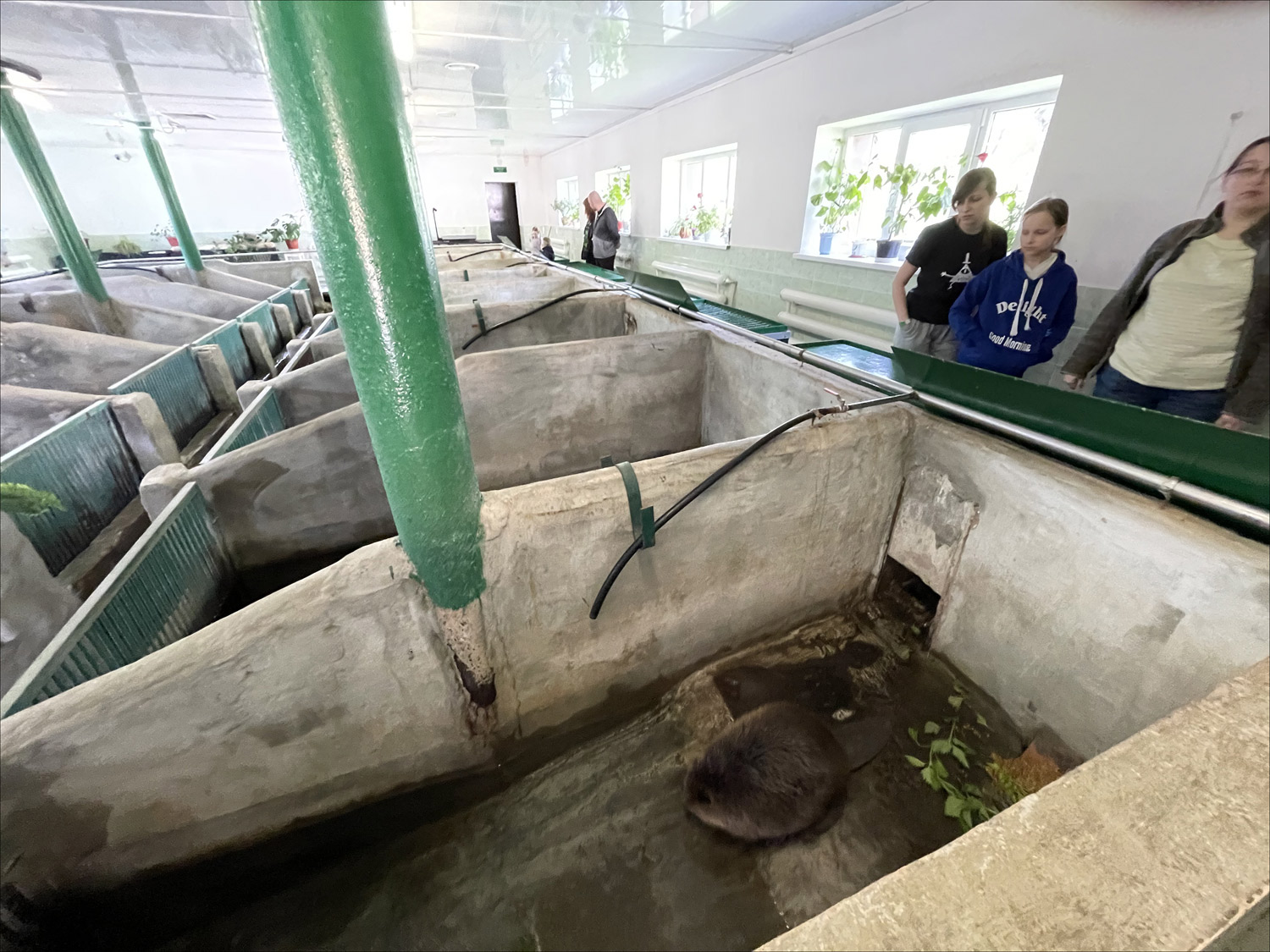
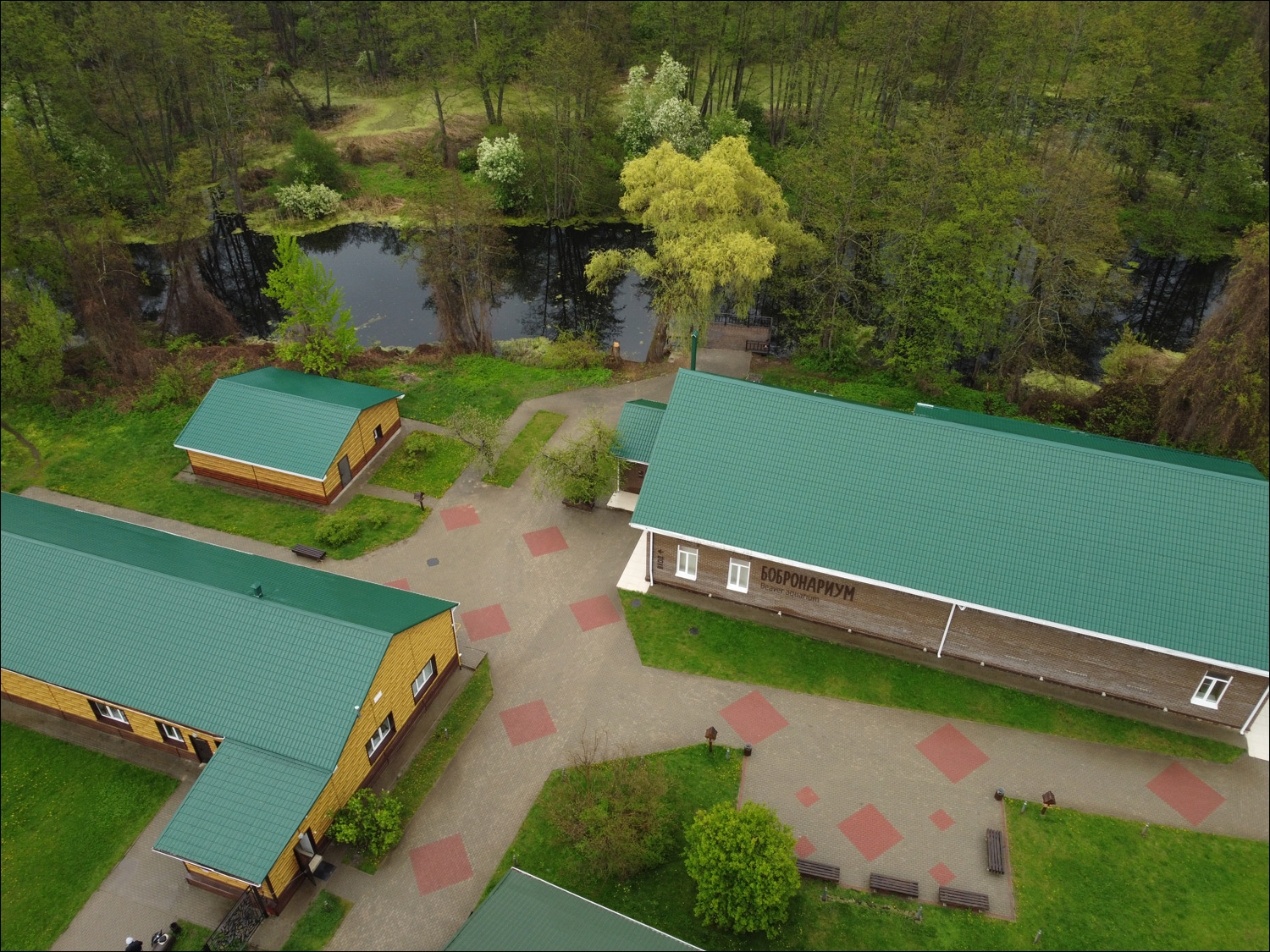
Very quickly, they began discovering vital facts: running water is needed, otherwise parasites proliferate; our beavers are monogamous and mate for life; a random pair won't just breed — only by mutual love and only underwater in winter in the cold, and so on. Housing conditions changed over time, and now they've arrived at enclosures like this inside the building:
As you understand, breeding success depends not only on sex ratios in the colony or the number of reproductively mature individuals, but also on the composition of pairs.
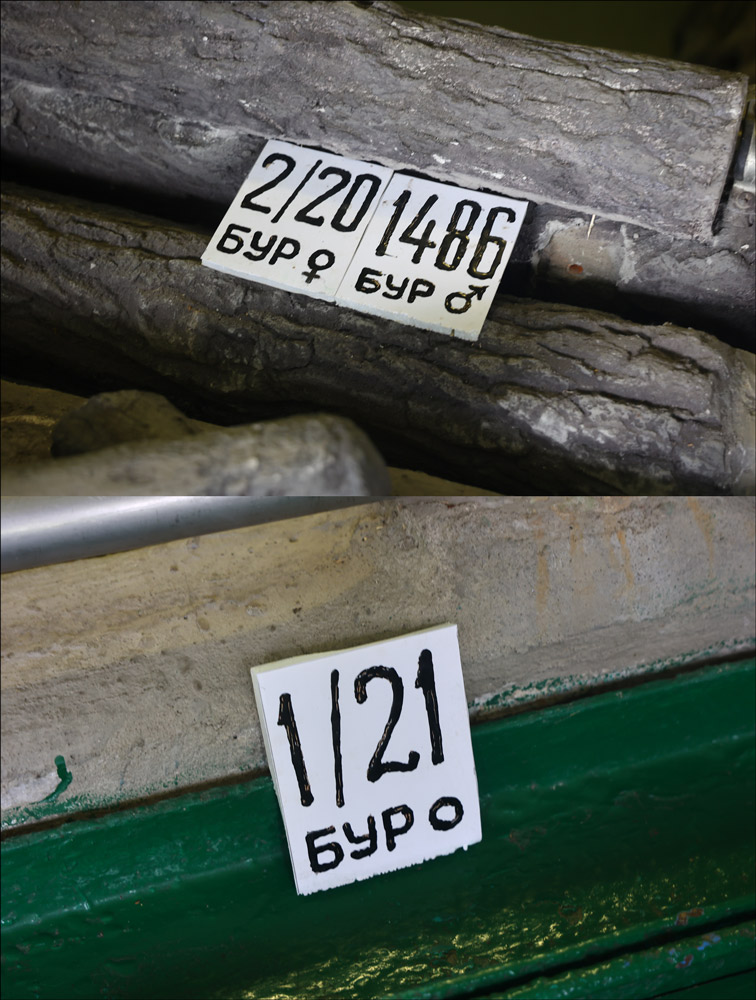
2/20 — the second beaver born in 2020, a brown female. 1486 was wild, caught without a passport, so either doesn't know or won't tell its birth year — it was given a serial number for wild beavers. 1/21 — a kit, coat color already known, but sex hasn't been precisely determined yet — it's difficult to establish before roughly 18 months.
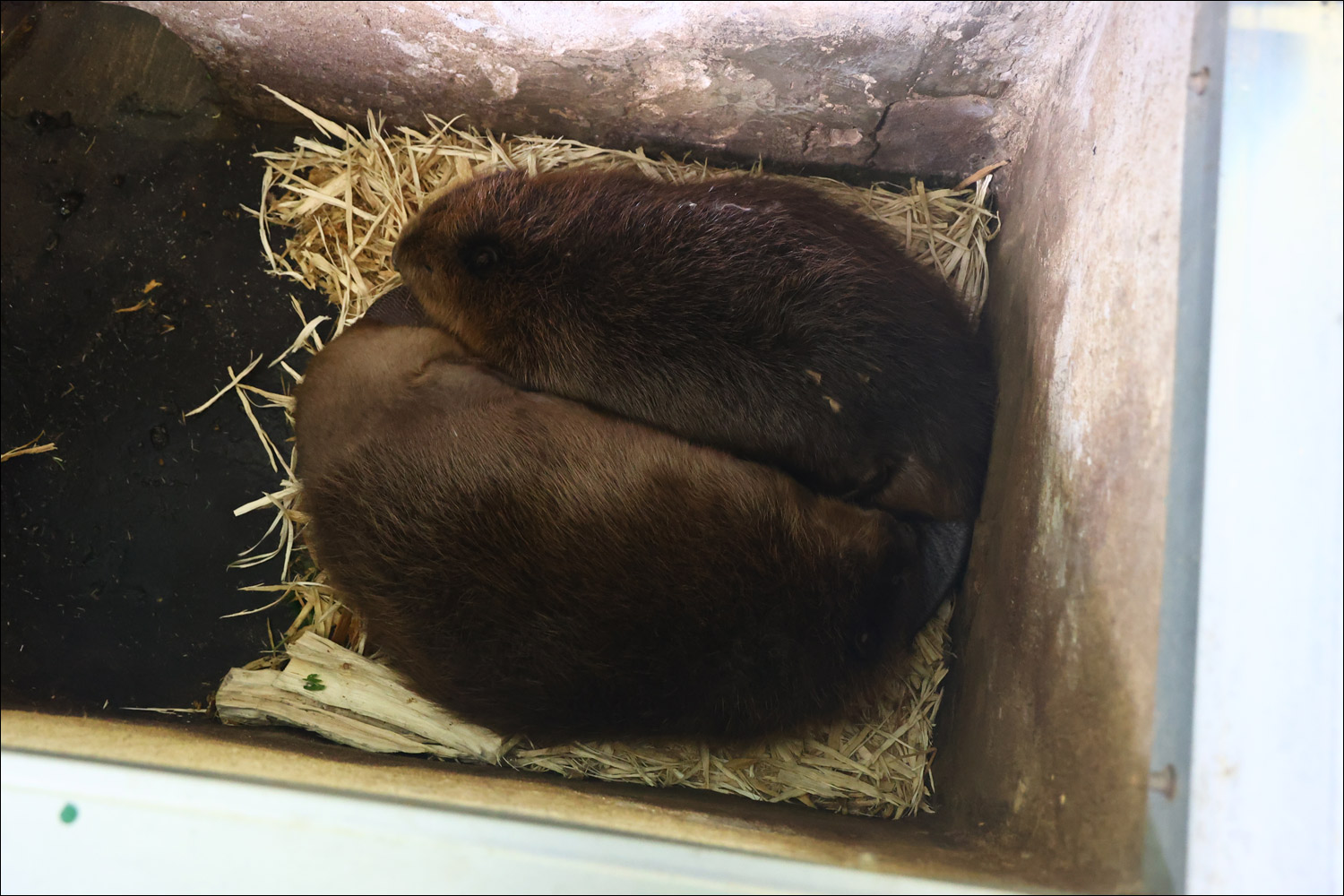
So, once two young beavers determine that one is male and the other female, they can be introduced. For this, they're placed in a box divided by a grate. Then they wait about a week to see whether they'll sleep head-to-tail, face in the other's warm tail, like a healthy family:
If they start doing that — on Monday, when there are the fewest visitors, the engagement ceremony of raising the grate begins. Several nursery staff stand nearby, one mandatory armed with a wooden shovel. If the beavers are sweet and courteous, everyone can relax and start celebrating. But if someone suddenly takes offense, it could end in a very vivid and memorable fight with injuries, so the shovel must immediately be inserted between the beavers, then both are wrangled in a "paws behind the head" fashion and the grate is lowered. After a couple of weeks, these animals can be tried with other potential partners.
What's even more interesting is that here they've learned to reassemble pairs — partially overcoming the monogamy. If beavers go 3-4 years without producing offspring, the pair is split up and each one is matched with a new partner using the same shovel technology. The key thing to remember is that reassembling the old pair is only possible after a couple of weeks, because the female is capable of delivering such epic punishment to the "straying" beaver for smelling like another girl that he'll remember it for the rest of his life.
In total, 2,757 beavers have passed through the holding facility at the nursery (where they were treated), and another 1,500 were born in captivity. In captivity, a beaver lives 15-25 years; in the wild, 5-17, depending on luck.
The population has now been restored — beavers live across nearly the entire country where suitable climate exists. From roughly a thousand individuals as of 1918, things look a couple of orders of magnitude better.
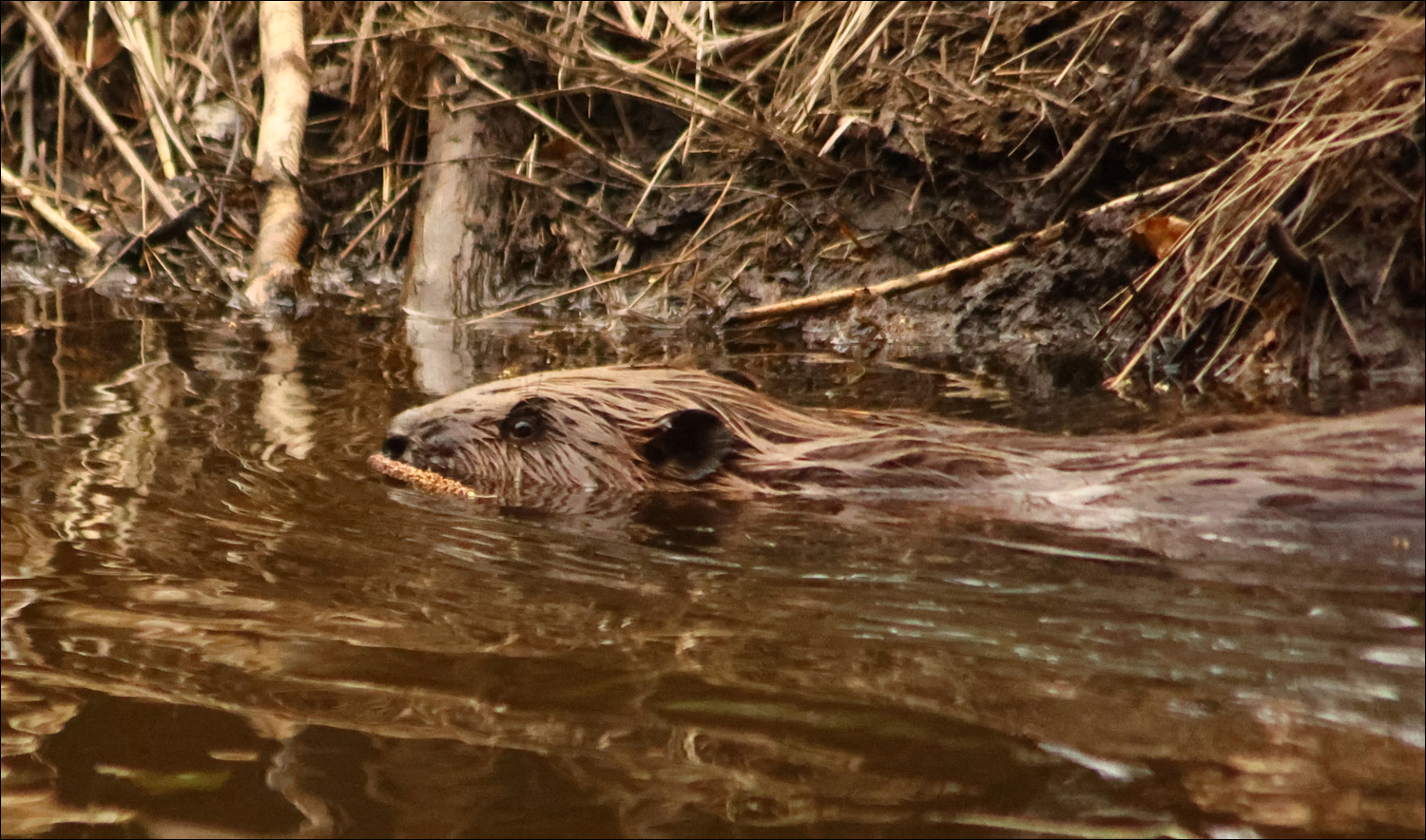
I highly recommend seeing beavers at the nursery at the Voronezh Nature Reserve (they also have a "beavernarium" — an aquarium for a pair of beavers, and it's better to come in the evening because during the day they're sleeping), at Losiny Ostrov in Moscow, and of course, if you want to see them in the wild going about their usual business and watch them for hours from 20-50 meters away — then at "Bazhov's Places" near Yekaterinburg on the Chyornaya River. The best time is April — the beavers are very active, they have tons of things to do, there are no kits yet, so they pay little attention to people. As a result, groups of schoolchildren visit throughout April and it's fine — the beavers are kind.
Joining us today were Vladislav Oleinikov from the Voronezh Nature Reserve and Sergei Sanatin from "Bazhov's Places."
That's all. Wishing everyone the best of luck!