Battery Capacity After Four Years of Storage
A four-year longitudinal study tracking the capacity degradation of 192 AAA batteries across eight brands, revealing surprising findings about which batteries maintain their charge and which ones leak during storage.
In 2021, I initiated an extended test to determine how ordinary battery capacity diminishes over several years of storage and whether manufacturers' claims about 12-year shelf life are credible.
I purchased 192 AAA-format batteries from eight brands. Each September, I test two batteries of each type and compare results with previously obtained data.
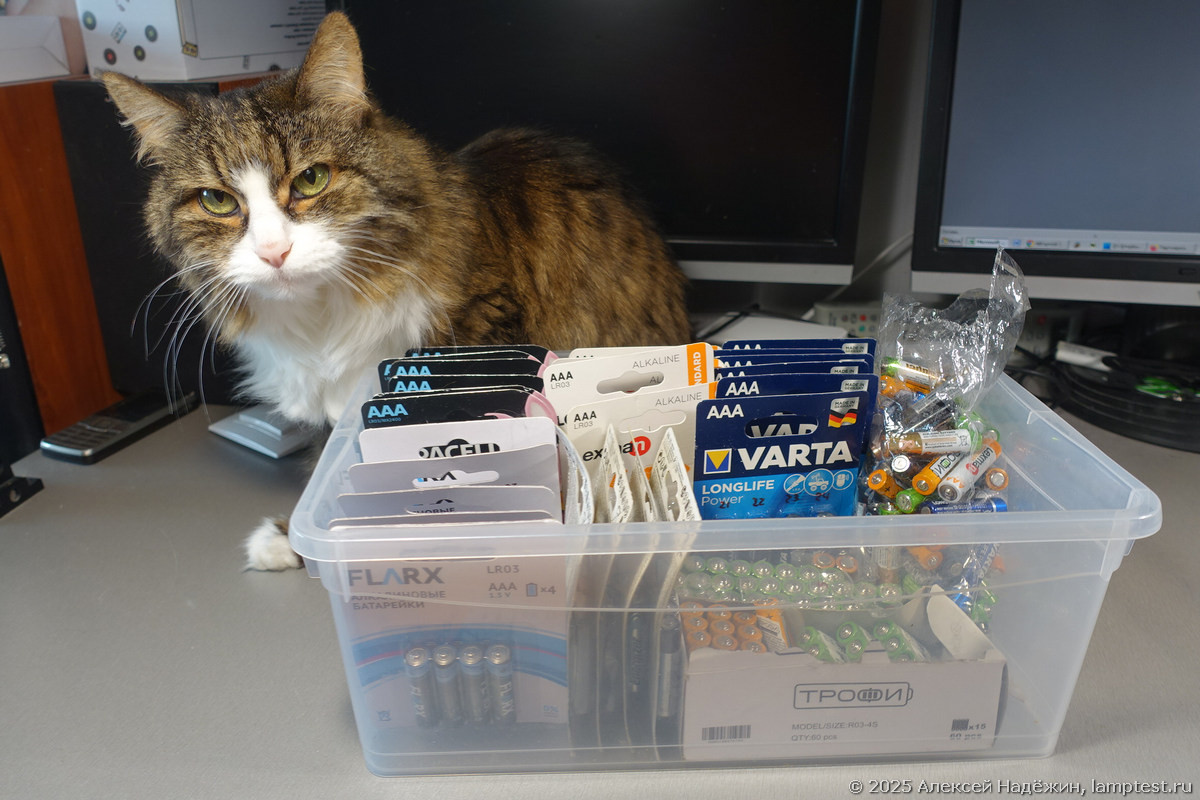
Test Subjects
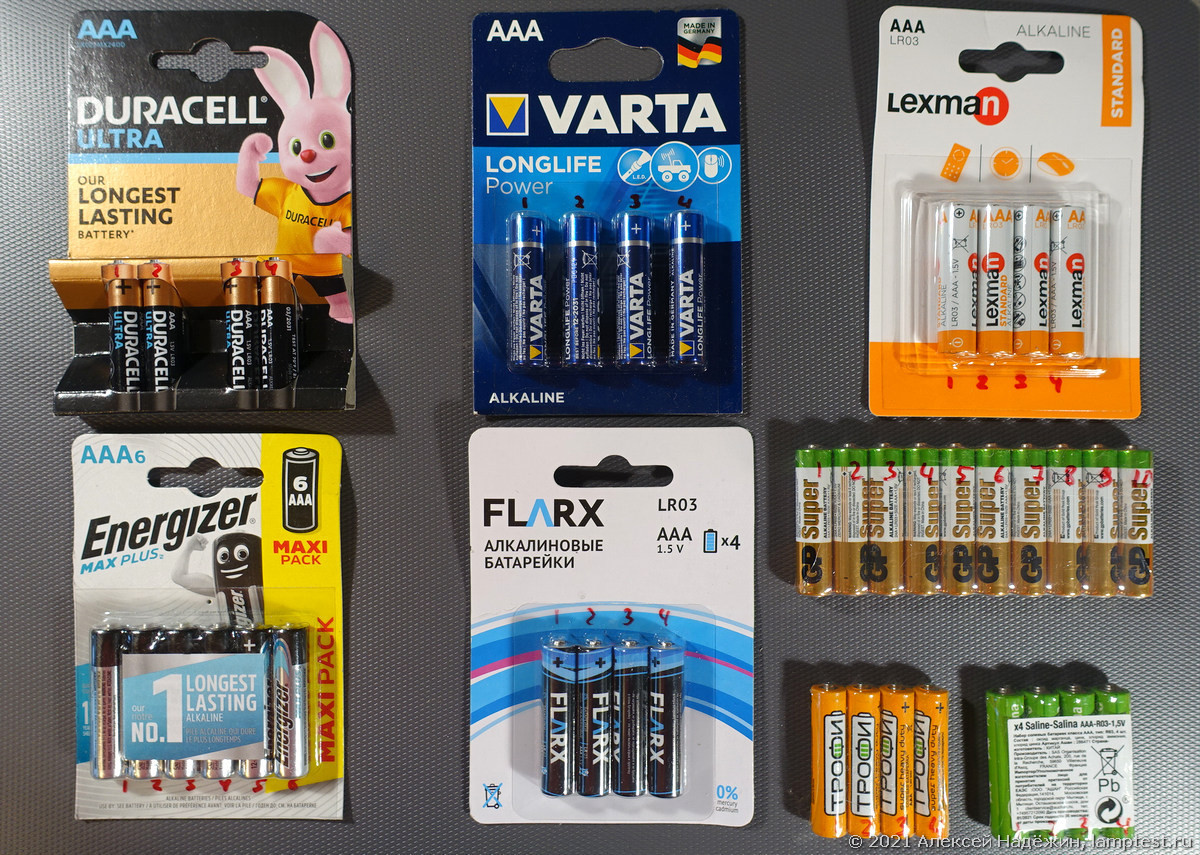
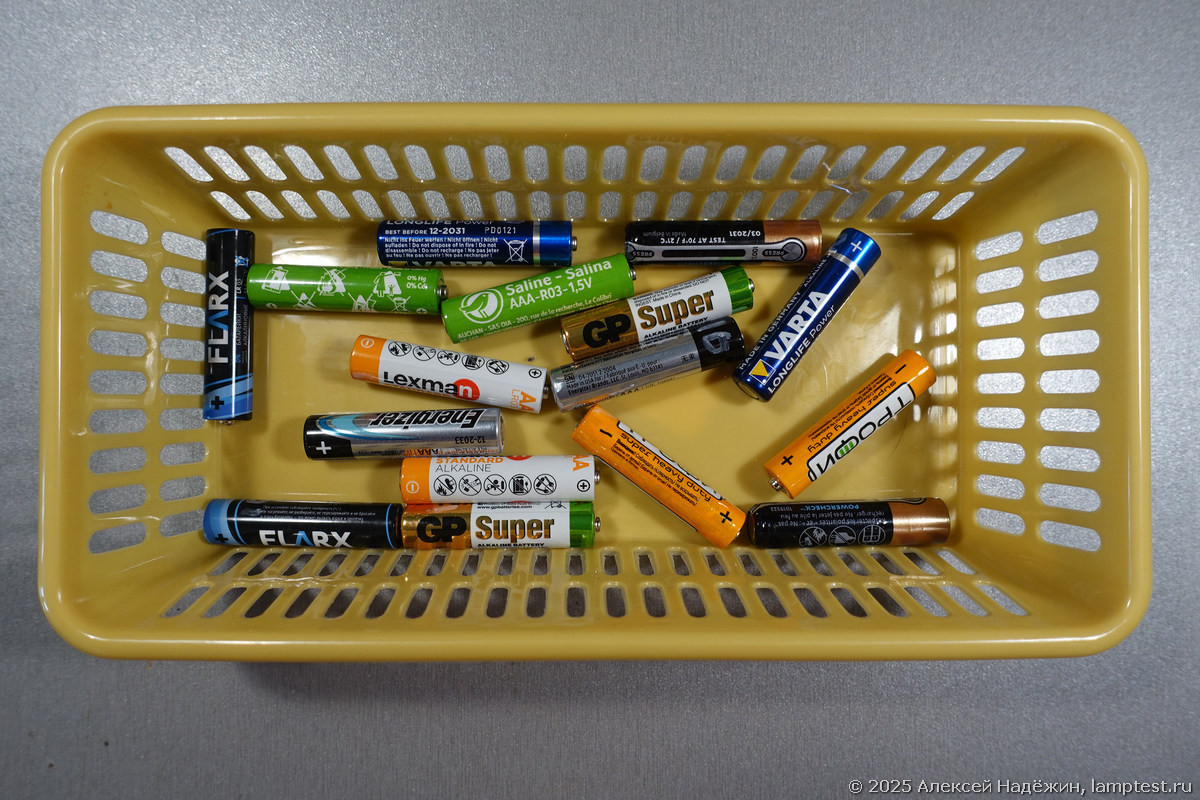
The test includes six alkaline (LR03) battery models:
- Duracell Ultra (manufactured in Belgium)
- Energizer Max+ with 12-year shelf life (made in USA)
- Varta Longlife Power (made in Germany)
- GP Super
- Lexman Standard (Leroy Merlin store brand)
- FLARX (Fix Price store brand)
Two salt-based (R03) battery types also participate:
- Auchan store brand with bird logo
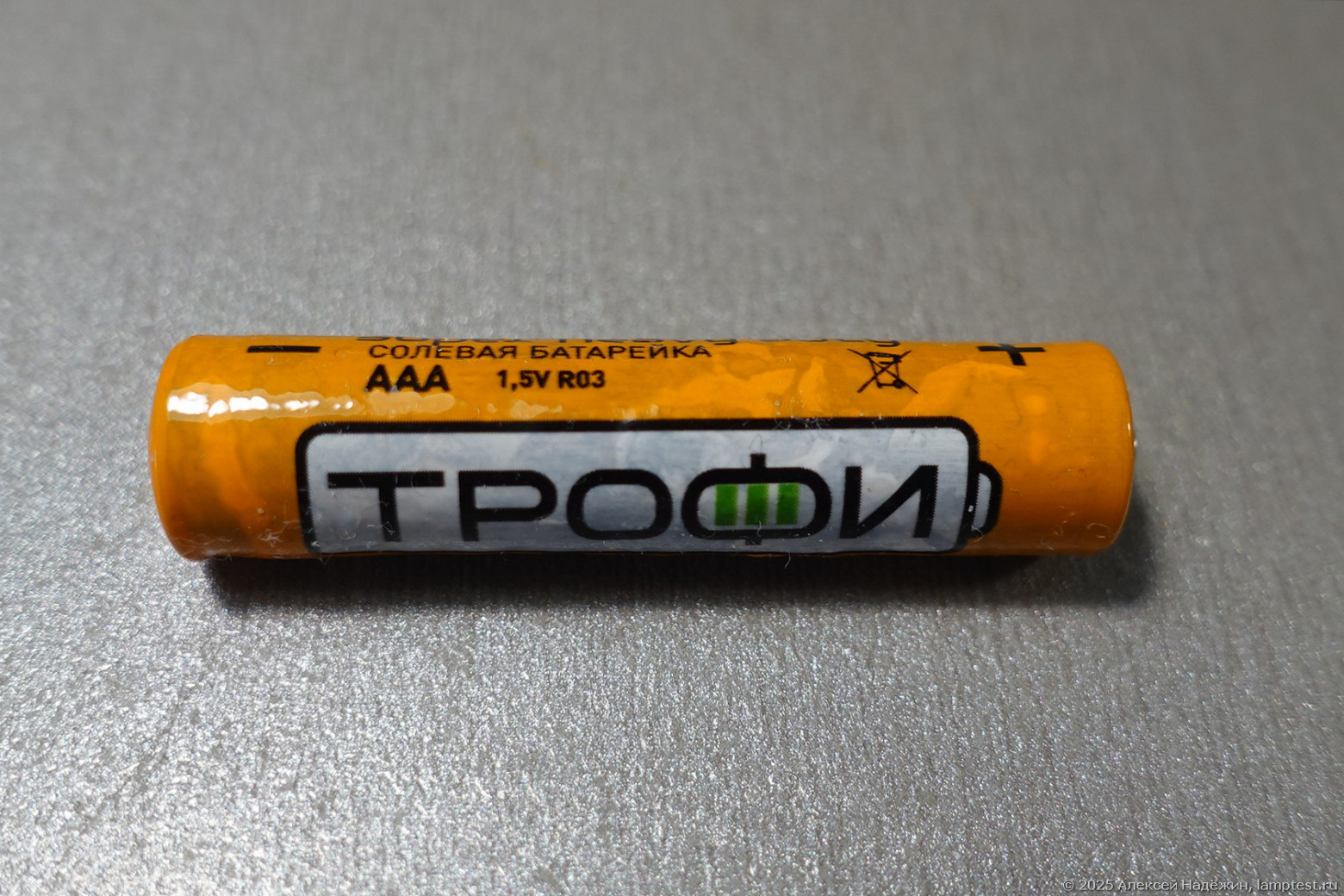
- Trofi
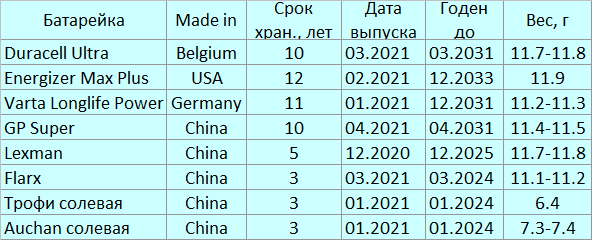
When purchasing, I selected the freshest available batteries — 5-10 months old from manufacturing date at initial testing.
Leakage Issues
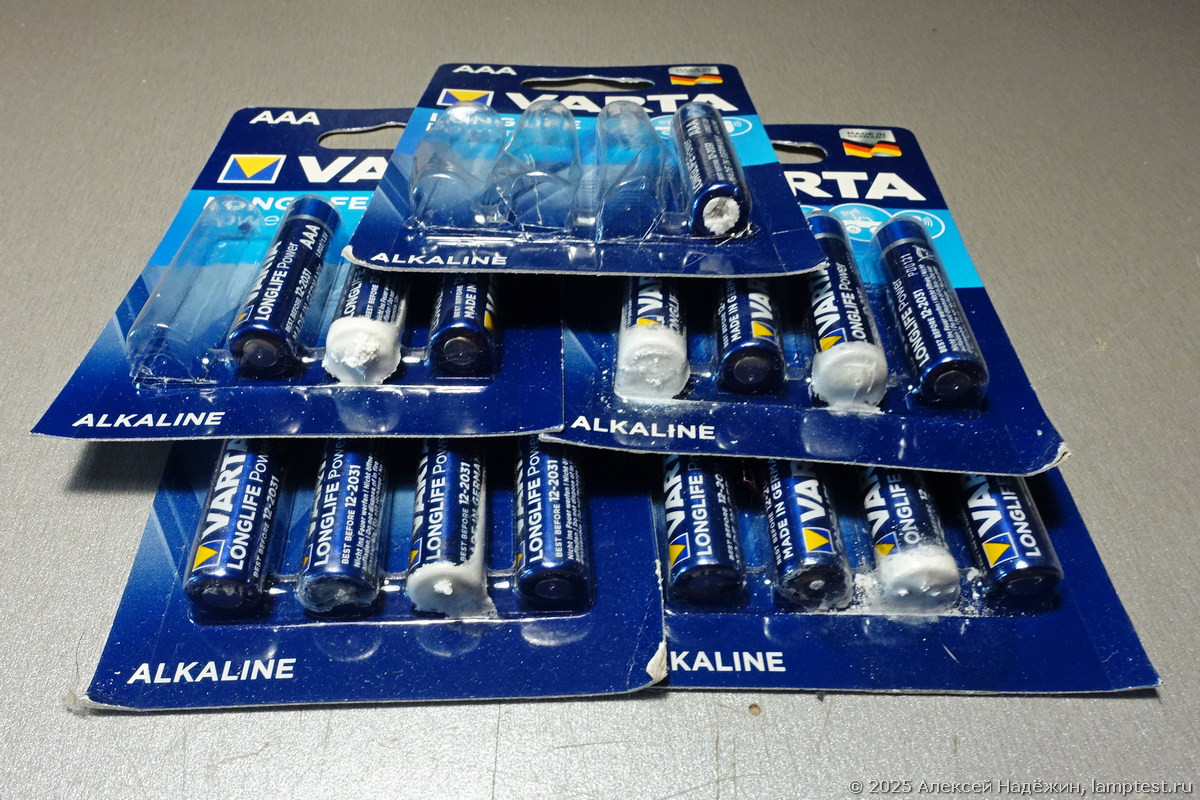
Before the first test, one Energizer Max+ unexpectedly leaked. After three years, Varta Longlife Power batteries leaked massively: five of sixteen remaining units failed. By year four, six had leaked severely with three more showing warning signs.
Salt batteries have a three-year shelf life, already expired 18 months prior to this test. Some Trofi salt batteries began degrading after four years — not leaking yet, but showing discoloration under the packaging with voltage dropping below 0.7V.
Voltage Measurements
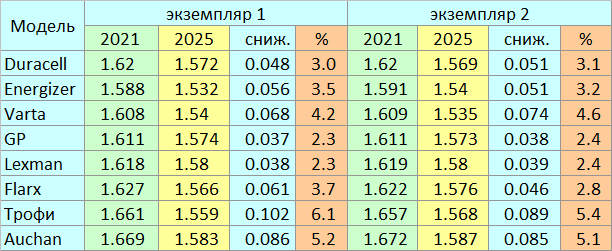
I test two specimens simultaneously to eliminate single-unit defects. Voltage was measured on identical samples using the same precision instrument throughout.
Voltage drop on alkaline batteries:
- 0.7-1.2% per year
- 1.2-2.7% over two years
- 1.9-2.9% over three years (except Varta at 3.6-7.5%)
- 2.3-3.5% over four years (Varta excluded due to leakage)
Salt battery voltage drop:
- 2-2.4% yearly
- 3.2-3.5% over two years
- 4.2-6.2% over three years
- 5.1-6.1% over four years
Capacity Testing
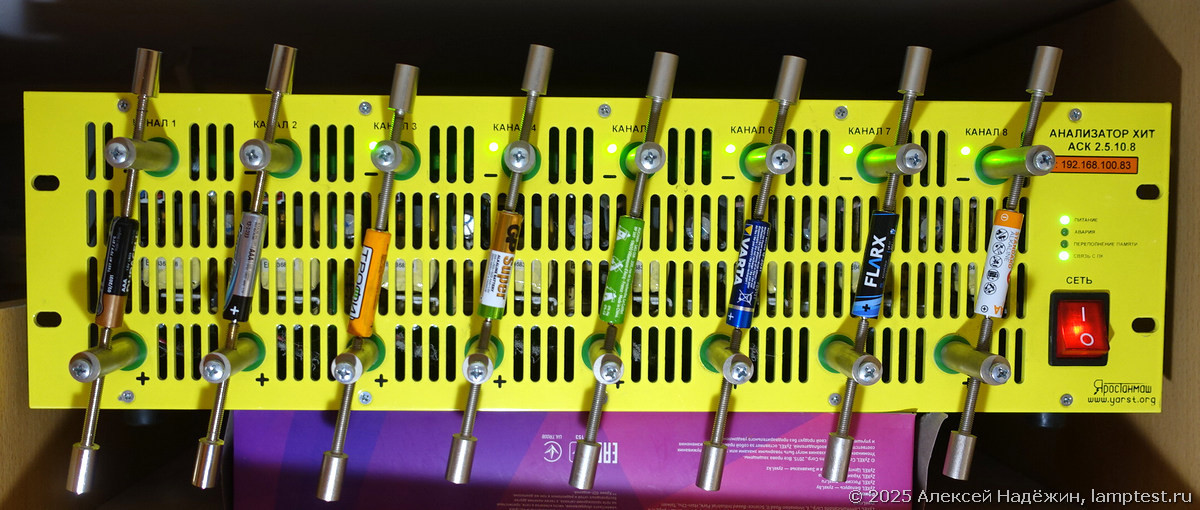
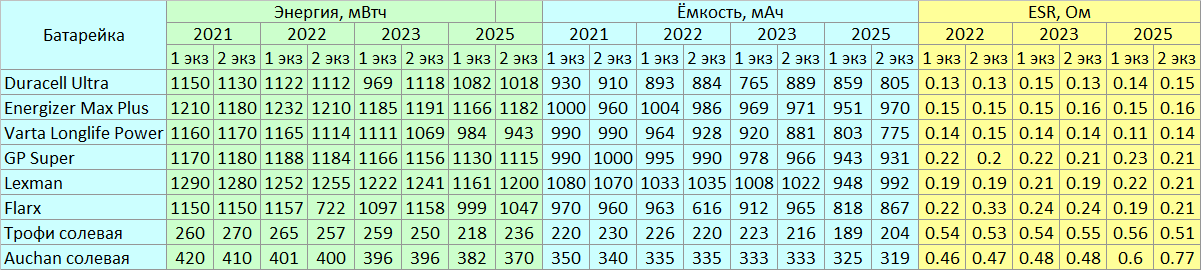
Batteries were tested using a "Yarostanmash ASK2.5.10.8" chemical source analyzer in early September 2025. Units were discharged at 100mA to 0.9V, recording energy output in milliwatt-hours, capacity in milliampere-hours, and internal resistance in ohms.
Key Findings
After four years, several conclusions emerge:
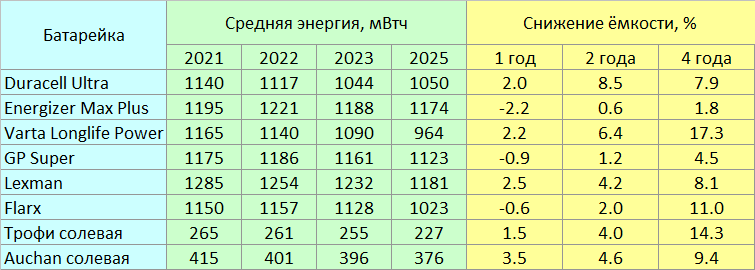
Quality extends beyond initial capacity. Some batteries lose significant capacity during storage and leak — notably Varta (authentic German manufacturing). This is the most important finding: a premium brand with real German production proved the least reliable for long-term storage.
Capacity loss varies substantially. Salt batteries lose over 10% in four years (acceptable given their three-year shelf life). Inexpensive FLARX alkaline units lost 11% over four years (justified by their stated three-year shelf life). Energizer performed best with under 2% loss over four years; GP lost 4.5%.
When purchasing, note manufacturing dates. Buy units no older than one year. Some manufacturers list only the shelf-life expiration date — subtract seven years from that date to determine the manufacturing date.
The test will continue. Next year I will test another pair of batteries from each brand and update the results.
FAQ
What is this article about in one sentence?
This article explains the core idea in practical terms and focuses on what you can apply in real work.
Who is this article for?
It is written for engineers, technical leaders, and curious readers who want a clear, implementation-focused explanation.
What should I read next?
Use the related articles below to continue with closely connected topics and concrete examples.