10 Forgotten Gadgets That Were Too Cool for Their Time
A retrospective of ten groundbreaking tech devices from the 1990s and early 2000s that were ahead of their time, from the Apple Newton and Nintendo Virtual Boy to the Electrolux Trilobite robot vacuum.
There are gadgets that were born too early. They were innovative, bold, sometimes eccentric — but the world simply wasn't ready for them. High price, lack of an app ecosystem, weak batteries, and user skepticism sent these devices into oblivion. Yet their ideas later came to life in modern technologies — smartphones, tablets, VR headsets, and smart homes.
Let's recall ten such devices that deserved a better fate.
1. Apple Newton MessagePad (1993)
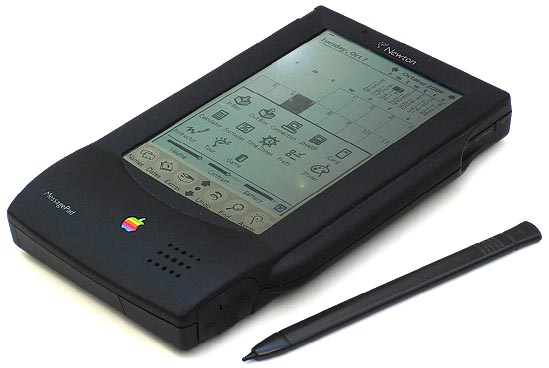
The Newton was the first PDA where you could not only take notes with a stylus but also expect the device to understand your handwriting. It featured an ARM 610 processor at 20 MHz, 4 MB ROM, and 640 KB RAM. The device had a monochrome 336x240 display with stylus-based input and handwriting recognition that could trigger calendar events.
Despite its innovation, it struggled due to a high cost (around $700), imperfect recognition technology, and a lack of an app ecosystem. However, its concepts — touchscreen input, stylus interaction, calendar integration — became the foundations for modern tablets and smartphones. Steve Jobs killed the Newton when he returned to Apple in 1997, but many of its ideas lived on in the iPhone.
2. Sega Dreamcast VMU (1998)
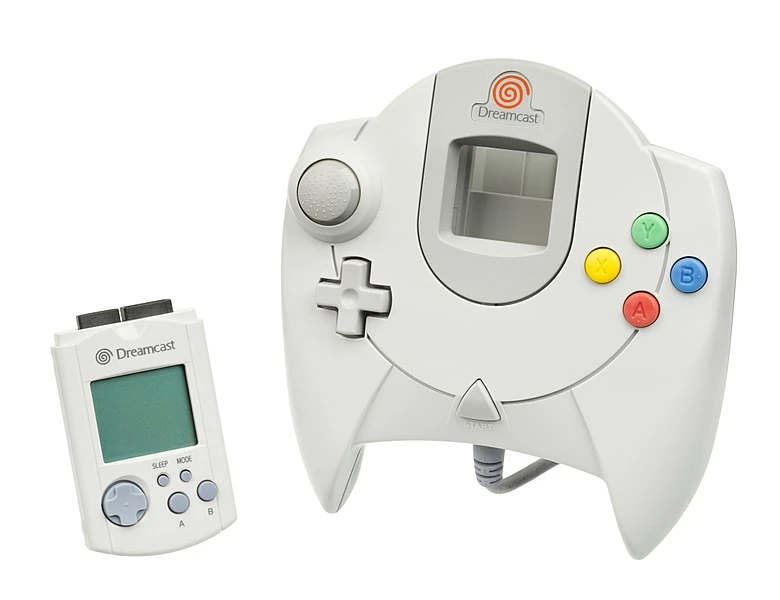
The VMU (Visual Memory Unit) was a full-fledged mini-device with a monochrome LCD display, its own processor, and control buttons. It inserted into the Dreamcast controller as a second screen, displaying secret maps and character stats invisible to opponents. You could load mini-games onto it, and even raise virtual pets like Chao that trained independently while you were away from the console.
Market challenges included the high cost of the console itself, limited developer support, battery drain, and storage constraints. Nevertheless, the VMU pioneered companion-device concepts now common in modern gaming — from the Wii U GamePad to smartphone companion apps for console games.
3. Sharp Zaurus SL-C1000 (2002)
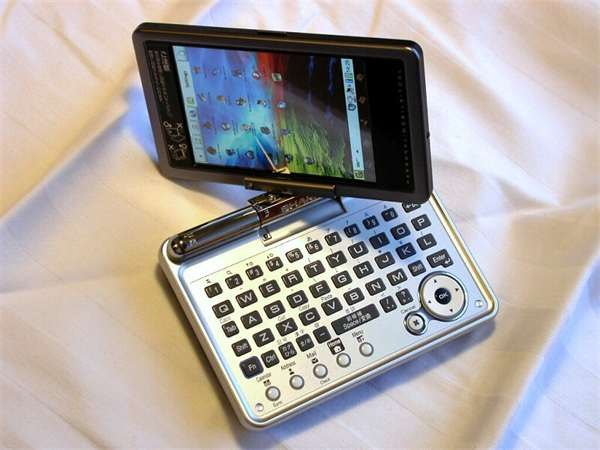
This was a full-fledged pocket Linux computer. It ran on an Intel XScale processor (416 MHz), had 64 MB of RAM, 128 MB of storage, and a 3.7-inch color touchscreen (640x480) with a fold-out QWERTY keyboard. Users could switch between laptop and tablet modes. It ran a full desktop Linux with a terminal, package manager, and the ability to install applications from repositories.
Despite its technical prowess and open-source flexibility, it required deep Linux knowledge, lacked localized firmware, and faced competition from more user-friendly alternatives. Sharp eventually exited the PDA market, but the Zaurus influenced the development of modular, customizable portable devices and Linux-based mobile platforms.
4. Nintendo Virtual Boy (1995)
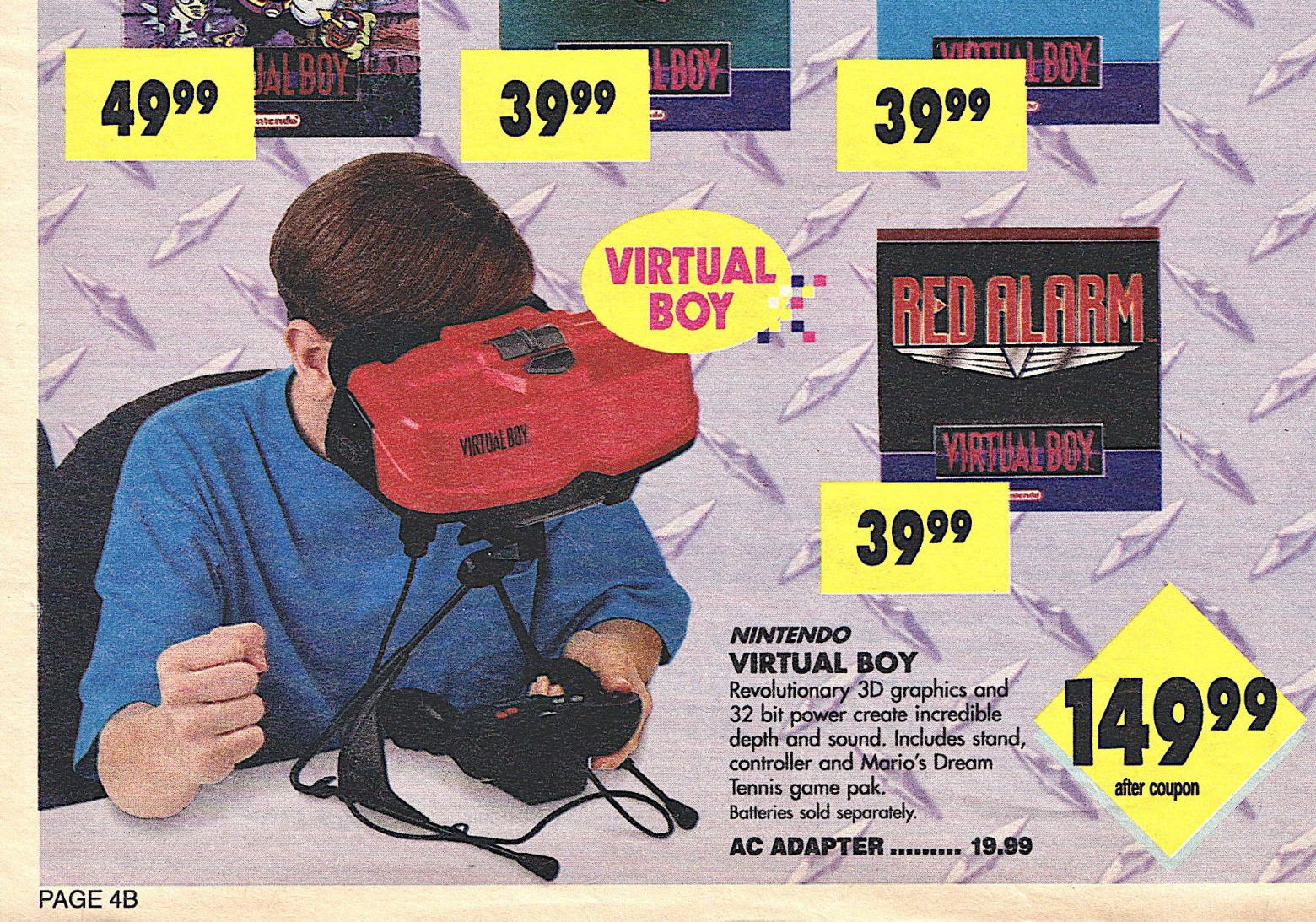
Nintendo's first portable stereoscopic 3D renderer used dual red-black monochrome screens (384x224) to create a sense of depth without glasses. The device was the brainchild of Gunpei Yokoi, creator of the Game Boy. Though technically ambitious, it suffered from a limited game library (only 22 titles), uncomfortable positioning that required a tabletop stand, and significant eye strain from the red-only LED display.
Only about 350,000 units were sold versus the planned 1.5 million. It became one of Nintendo's biggest commercial failures. Yet the concept ultimately influenced the development of VR headsets like the Oculus Rift and PlayStation VR, proving that the idea was right — the technology just wasn't there yet.
5. AT&T EO Personal Communicator (1993)
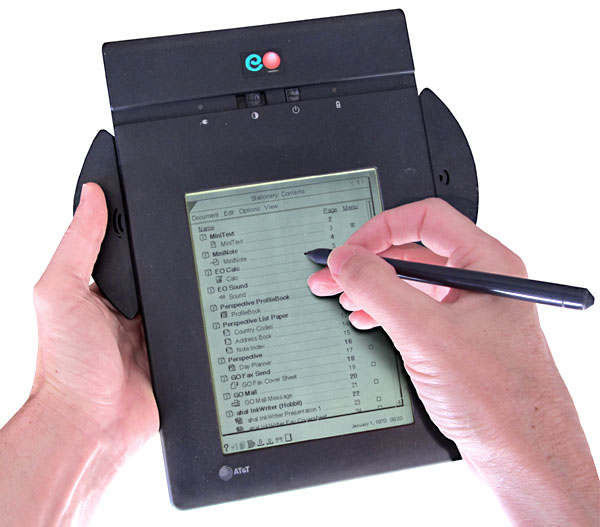
This device attempted to combine computer functions, a GSM modem, email, fax, and a browser into a single housing — essentially a smartphone concept, but a decade before smartphones existed. It ran on an AT&T Hobbit processor (20 MHz), offered 4-12 MB of RAM, and featured a 640x480 monochrome touchscreen supporting handwriting and gestures via the PenPoint OS.
Features included an integrated 14.4 Kbps modem and an optional GSM module for calls and email. Despite its innovation, it weighed about 1 kg, cost from $1,999, and offered only 45 minutes of battery life. Poor mobile infrastructure and high costs led to market failure by 1994, yet it pioneered the "all-in-one" mobile device concept that was later realized by smartphones.
6. Sony AIBO (1999)
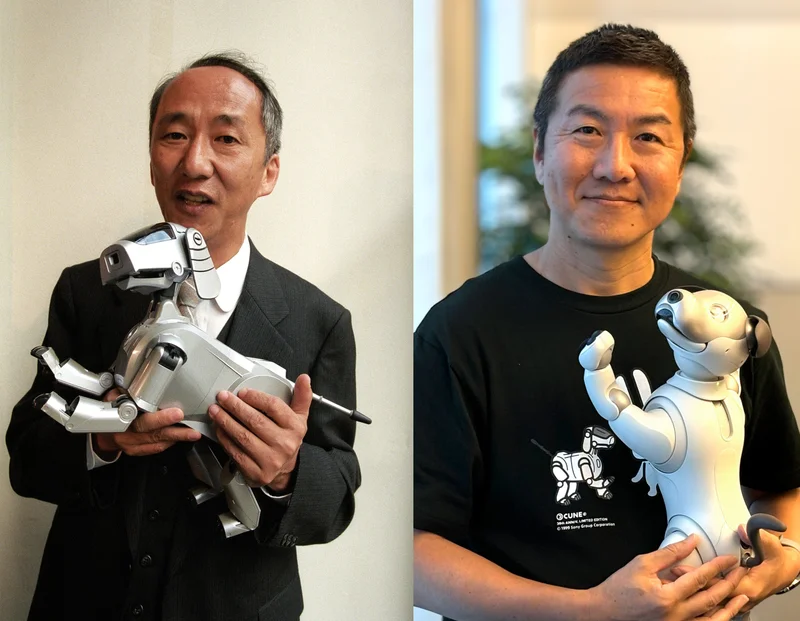
Sony's robotic dog launched in 1999 as the first commercially successful home robot with artificial intelligence elements. The device featured a 64-bit RISC processor, 64 MB RAM, a color CCD camera, and multiple sensors including temperature, distance, acceleration, and tactile inputs on the head, chin, back, and paws. Twenty servo motors provided degrees of freedom for walking, tail movement, and facial expressions, plus facial and voice recognition capabilities.
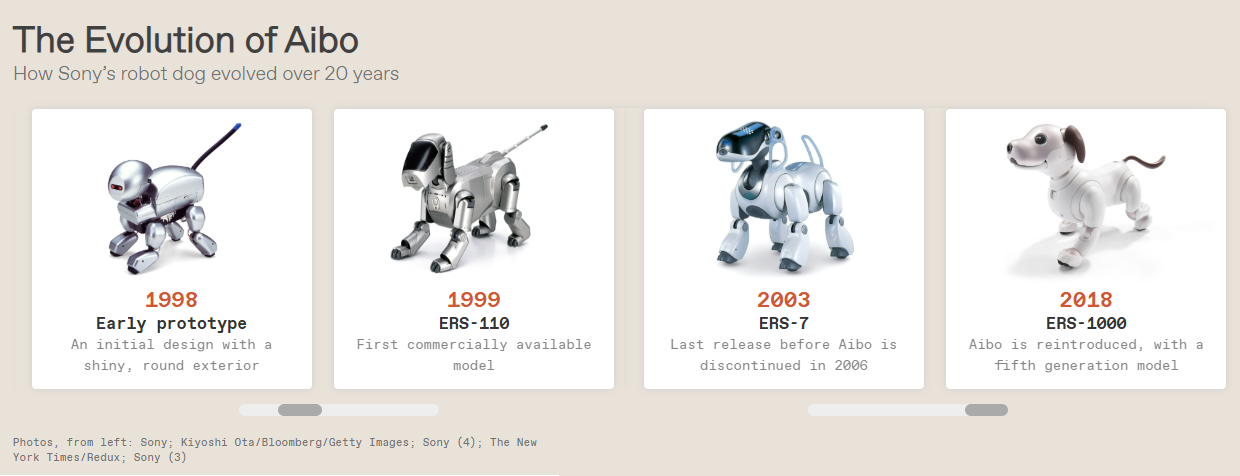
The platform's open architecture set it apart from typical toys. Users could train the robot and develop custom programs through AIBOware software and the OPEN-R architecture, making it popular among researchers and enthusiasts. Despite its $1,600 price tag (ERS-7 model, 2003), the concepts endured: modern social robots and therapeutic companions for elderly care reflect AIBO's engineering approach. Sony revived the brand in 2018 with a new generation of AIBO.
7. Paro, the Robot Seal (2004)

A soft robotic seal that emerged from Japan's AIST laboratories, developed since 1993 under Takanori Shibata's direction. The device featured tactile sensors throughout its body, microphones, speakers, and behavioral programming that responded to touch and sound. The seal could react to gentle strokes, wag its tail, and synchronize its sleep patterns with users.
Originally designed as an alternative to live animals in hospitals and care facilities, research demonstrated improved wellbeing among dementia and Alzheimer's patients through daily interaction. Japan and other nations integrated Paro into emotional support programs, inspiring the development of therapeutic social robots now applied in psychology and elder rehabilitation. What seemed like science fiction in the early 2000s has become standard practice in social robotics today.
8. Sony MiniDisc Walkman
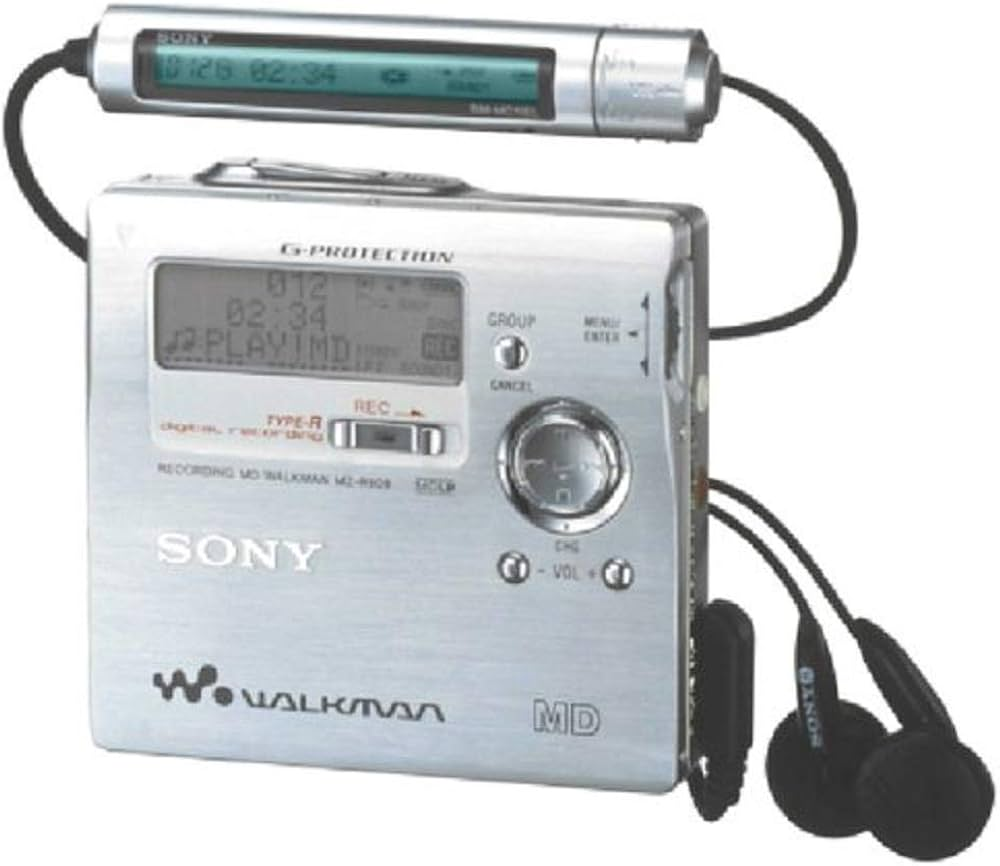
The 1990s introduced digital audio functionality through recordable minidiscs — offering digital sound quality, compactness, and the ability to repeatedly record music on dust-protected mini-discs. Users could quickly switch between tracks, edit playlists directly on the device, and record new compositions with minimal quality loss via the proprietary ATRAC compression algorithm.
By the end of the decade, devices became miniaturized with audio quality matching CDs. However, high device and media costs combined with the rise of MP3 players and file-sharing networks in the late 1990s relegated the format to niche status. The convenience of downloading and storing MP3 files outweighed MiniDisc's advantages.
The concepts influenced modern portable media players and smartphones. Contemporary playlist creation and sharing — now standard — emerged from this approach, reflecting MiniDisc's legacy in how we consume audio content.
9. Talkboy (1992)
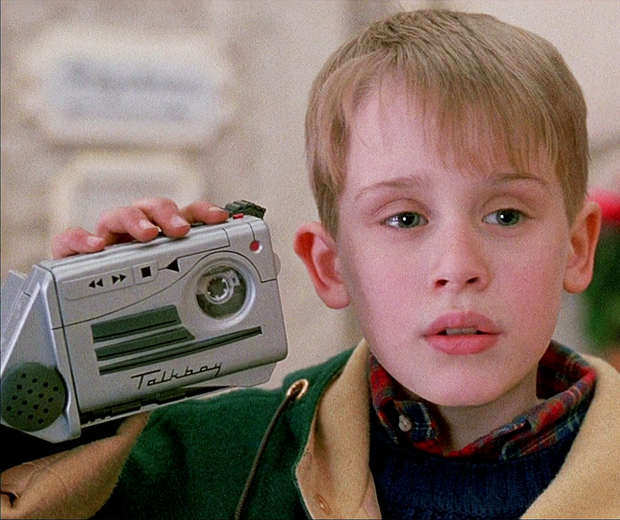
This portable cassette recorder became famous through Home Alone 2, where the protagonist recorded his voice and, by slowing playback, created an adult-sounding impersonation. Created initially as film props, overwhelming viewer demand prompted Tiger Electronics to release commercial versions in December 1992.
Early models were basic cassette recorders; the 1993 Deluxe version introduced playback and recording speed adjustment, enabling vocal manipulation without distortion and producing amusing audio effects. Though perceived as children's toys, the Talkboy represented one of the first truly mainstream devices allowing kids and teenagers to experiment with sound recording and processing.
Clones like Talkgirl emerged alongside mini-models for exchanging short audio tracks. The speed-adjustment effects foreshadowed contemporary podcast editors and smartphone audio filters.
10. Electrolux Trilobite (1996)
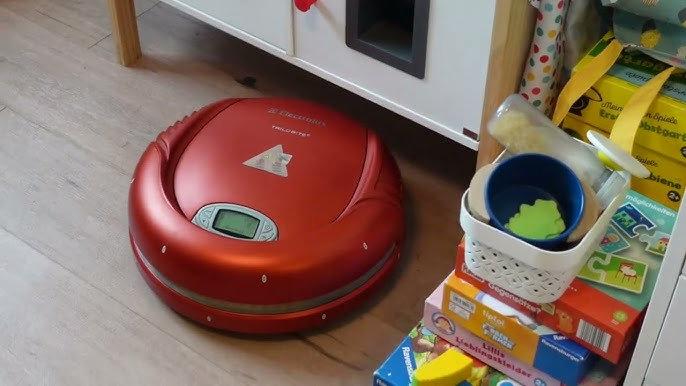
The Trilobite became the world's first mass-produced robotic vacuum cleaner, embodying autonomous cleaning concepts years before iRobot's Roomba. The 1996 prototype debuted on BBC; commercial models appeared in 2001 and reached retail shelves in 2002 at approximately $1,500.
Ultrasonic sensors enabled the robot to scan rooms, navigate around obstacles, and map layouts. Following an hour of operation, the robot independently located its charging dock and returned autonomously. Operation required only pressing the start button; the device then cleaned floors from walls to under-furniture areas.
Though technologically innovative for its time, pricing, limited functionality, and modest battery capacity restricted adoption. Nevertheless, this robot vacuum pioneered an entire category of home automation devices now standard in modern households — from the ubiquitous Roomba to advanced lidar-equipped models that map your home in 3D.